


Bloom and Bud enhancers. Are they worth it?

Maristuffstarted grow question 3mo ago
I was watching a you tube ( Scotty Real) and he claims that bud enhancers like Big Bud and Overdrive are not only useless but can be detrimental to your late flowers any thoughts on the subject of late bloom high PK products? Should I or shouldn't I ?😳
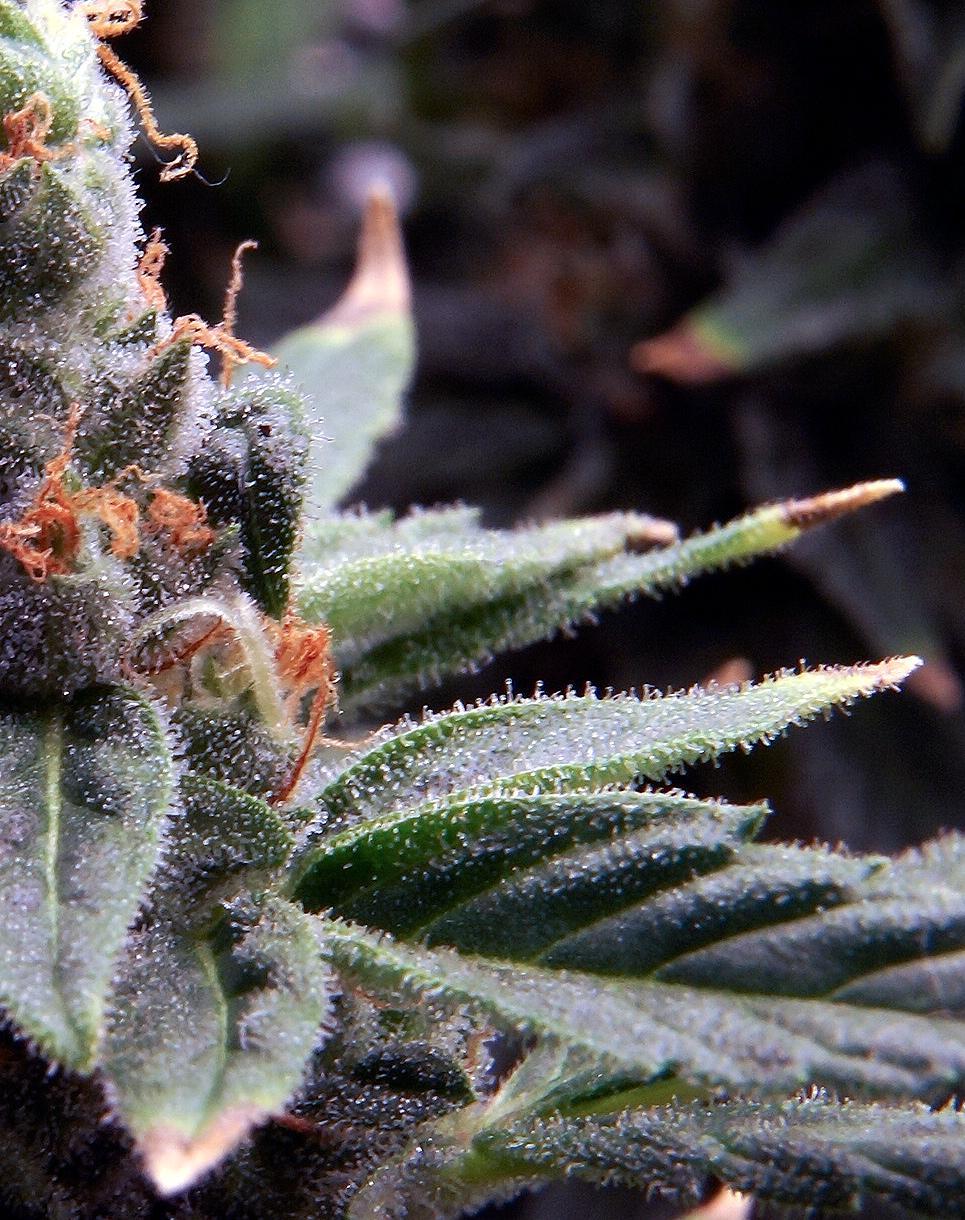
Open
Week 17 1 like
Answer

PharmaZanswered grow question 3mo ago
If you’re growing in hydro then yes they are worth it as you can reduce N and increase P/K
Anyone who says otherwise has never grown in Hydro or is happy with skinny airy loose weak tasting buds…
If in soil then your inputs and type of soil will regulate the NPK through the soil food web.
N - mainly for growth
P - mainly for early-mid flower
k - mainly for mid-late flower
The plant uses all nutrients at all stages of life, the above reference is a guide of where most is used.
2 likes
Complain


ATLien415answered grow question 3mo ago
zzz. some people that dont understand cannabis as a plant (the dynamic nature of one of the most complex botanicals on this planet, making one of the widest spectrum of secondary metabolites known to humans)... besides that fact, no other plant in the known history of the world has had so much genetic manipulation by humans, thousands of years of stewardship. these types of people will ask for studies that dont exist instead of answering your question, without talking about why they dont exist. [covariables, genetic spectrums, chemo spectrums, and pheno spectrums, variability with microbiome, and one and on and on and on....even when there is a study it is using a single cultivar from 20 years ago but okay]... these people will give you false flags to look for, that they use as a crutch, like price (rather than understanding) [price is a rather good indicator of quality for inputs, there are thousands of vendors and plenty of competition.........as long as you can read and understand the basics words used, price is a great indicator]. often times these same folks have most of the words, and can even speak to the topic at a discrete level, but they arent going to be able to communicate the science to you in a meaningful way [they'll throw the conversation into a qualitative space when you asked for something concrete; better yet they throw it into an esoteric space like "I dont understand synthetic versus organic, so Im gonna try to make sure you dont understand it either"].
so lets talk about where real science is right now.
cannabis as a whole uses PK in ratios that nobody else does. nothing. not a single cultivated plant on this planet has growers throwing PK at it like cannabis, so we are almost certainly wrong on the levels of PK.
PK issues are really easy to see when it comes time for PK to be important...you lose your stacking...
the gnitty gritty of PK uptake is really where the issues come from. fighting with other positive ions, being a stiffler for pH range, and not being understood by growers because this is one where chemistry is king (not bro science). at that point though, you are no longer talking about PK as a group...P and K have different uses.
so, yeah. your dude on YT is correct in most circumstances, if you are using soil I would never use a PK booster...id just take care of my soil. that is true for every input in soil though. soil is like bowling with bumper rails on your lane. if you are missing PK in a soil grow, id let someone else build your soil or try a different sport, because you got a gutter ball with bumper lanes.
in a soil-less medium, PK boost every time. and take care of your medium so that your plant uses it. thats just the name of the game on the audobon that are soilless mediums, where metabolism is at the fastest and being pushed the most. fact is, we need it in soil-less. that is how we yield more, faster. it is what it is.
4 likes
Complain

00110001001001111Oanswered grow question 3mo ago
If they can't prove a statistically significant measurable difference compared to a control group and at a scale worth caring about, or unwilling to test or frame results in such a proper way, then it most likely is marketing bullshit. Important to know we are mostly talking about ingredients that are cheap commodities... A premium price is also a red flag of utter bullshit being sold. Fertilizer is made from a pool of cheap commodities.
I would simply say that you should meet the nutritional needs of the plant. It's metabolic rate is the product of the environment provided. That is the ceiling, relative to genetic potential. If provision wasn't keeping up with growth, you'd see symptoms of deficiencies as it cannibalized what was stored in the leaves to make up the deficit. How you fed prior is probably the biggest factor for p/k needs later in the grow.. It's not foie gras - you can't force feed it to make it fat. Uptake being an active process is relevant too. It doesn't just flow in at the concentration around the roots... not how it works.
Give more, but if you see toxicities, don't blame senescence, lol.
Reputable studies show the futility of "boosting" p/k. It won't magically add yield and potency above certain thresholds that should be applied long before mid or late flower. It is not a "maxxing strategy" context (also not referring to current social media 'maxxing' nonsense, lol, but refering to min/max strategies)... This is easier to define as a specific concentration threshold for each in soilless/hydro contexts, but there is an equivalent for soil, too. This stuff is measurable. it's not mystical.
Plus, what you add after the flowers are built aren't going to influence the flower growth much after it's already done forming, obviously. Proper fertilization is less about what you do on any particular day or week and more about a culmination of what you've done since day 1.
-----
Organoman - It is easy to misrepresent someone else's opinion, but it lacks integrity and is fallacious. "boosting products" are not anything different than everyday fertilizer and should be used the same way as all other fertilizers relative to stage of life needs... better to be consistent that whimsically and drastically change the nutrition around the roots for 1-2 weeks at a time.. that's just masturbatorial in nature without any evidence to prove its effectiveness..
4 likes
Complain

DudeGrowsWeedanswered grow question 3mo ago
Simple answer… if you are growing with synthetic nutrients, PK boosters in flower can work to some degree. If you are growing with organics, PK boosters in flower are a waste. It would take too long for them to break down and be available to the plant.
3 likes
Complain

Condocannibusanswered grow question 3mo ago
Scotty wants you to buy grow dots and recharge. Lol
4 likes
Complain
Organomananswered grow question 3mo ago
Boosters for late flower?..............no, it is too late.
Boosters for the beginning of flowering?..............yes, this is when to use them.
I believe in P/K boosters, others like 0011 will tell you they don't do anything.
3 likes
Complain