


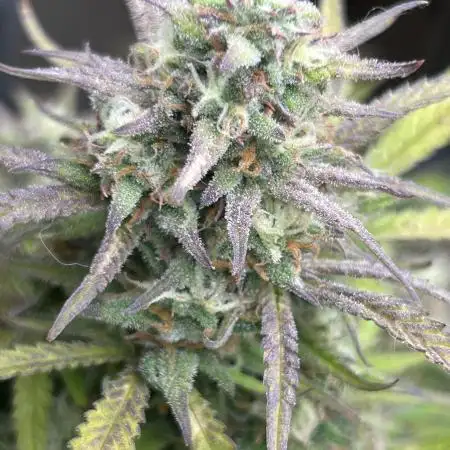
Schafe1001started grow question 2mo ago
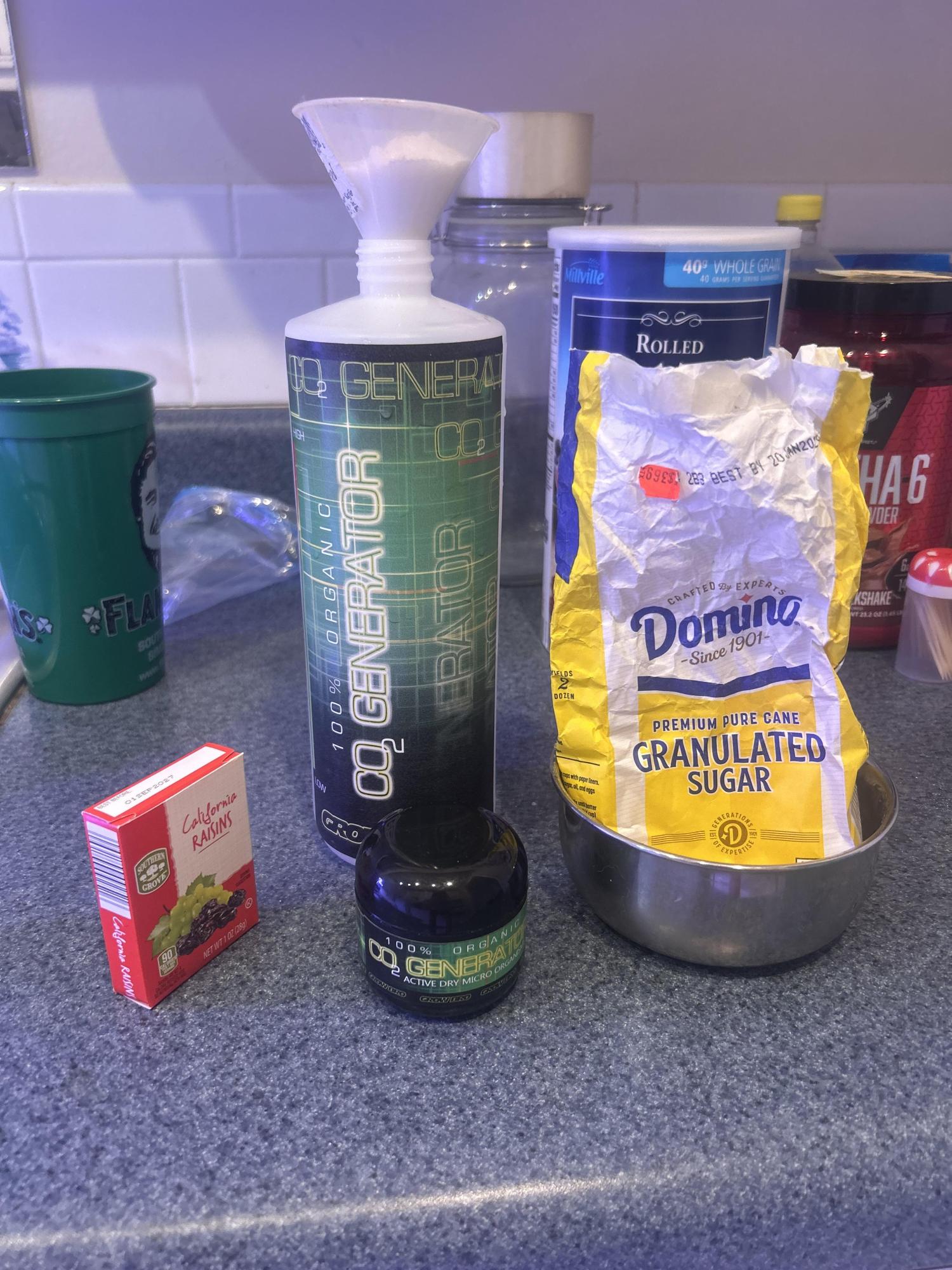
I’m using some homemade CO2, yeast, raisins, sugar, 5 gallon warm water with bubbler on top.
This worked well 32 years ago but I’m curious about the current use/opinion on CO2
Solved
Week 8 3 likes

farah4weedanswered grow question 2mo ago
Hi! That's a classic and inexpensive way to produce CO₂, and it's still being used today—even by many growers I know in my country.
That said, if cost isn't a concern, there are easier and more efficient alternatives available nowadays.
By the way, I recently completed a genetic cross project by reversing a female plant, and I'm currently testing the results. I'd be happy if you checked out my page. 🙏👽

00110001001001111Oanswered grow question 2mo ago
You need 30-40lbs of sugar or more for a 8-10 week flower phase in a small room (volume of air of whatever is a closed system... could be a tent if it does not exchange air, but more often is the sorrounding room). A co2 meter would verify that you are producing enough.. either it's reaching 1200-1300 ppm or it is not.
yeast won't be as consistent at maintaining those levels, but i've seen well set up experiements that show it can do a good job despite a ramp up and tailing off during light cycle.
So, DIY is fine as long as you verify you have it balancing out correctly. Something that can automatically take measurements for you throughout the day is very useful.
The other things is a tightly controlled climate. If trying to maximize co2 use, Temp, RH and VPD all need to be proper. Higher temps (~30C to maximize rate of photosynthesis) and higher RH is needed compare t o normal so you don't burn out the plant through excess transpiration. If you don't do that, probably don't have to shoot for 1200-1300 ppm CO2 in the air...
or a portion of that effort gets wasted. (assuming you also give more DLI ... the environment will dictate the amount of DLI that won't damage the plant, so how much you can amp up your light will help verify the effect, too...)
Is it worth all the effort? Up to you. Is it worth the cost? That;s a matter of comparing large enough samples and doing the math on it in an unbiased way. Even that isn't cut and dry... Sometimes adding yield to a limited space is the only way to increase yield... in that context someone might be willing to spend a bit more per gram since they can't expand their garden area, if the extra yield is necessary.
comparing yield is dangerous.. plant to plant it varies greatly.. but 32 years of doing things a similar way can give you a fairly good baseline to compare. It still needs to be a fairly significant difference to notice beyond any doubt just using the naked eye. Still need to see enough plants for a suitable sample size relative to genetic diversity.
but, under normal conditions giving 50-60 DLI usually has negative ramifications unless the plant adapted to the harsh conditions from an early age. So, the mere fact it stays healthy is a good sign that adding co2 and controlling climate is likely going to lead to increased yields.
2 likes
Complain

SkullRipperanswered grow question 2mo ago
Hey Schafe 1001,
I love it great to make your own as well, As you know its only beneficial to the plant at temps over 25 Deg,
so I like to monitor the PPM making sure they only get fried (over 25) with at least 850 ppm.
If your running under 25 I'm jealous as temps round my way currently 36deg.
Happy growing 😁
3 likes
Complain

LPintoanswered grow question 2mo ago
Good morning,
For me, the use of homemade/bottled CO2 is always controversial, as I don't notice that using CO2 brings that many benefits. It always helps, but to really notice differences, you would have to achieve elevated levels of CO2 inside the greenhouse, which is not easy to accomplish.
2 likes
Complain