


Flower senescence or a problem?

DomForesterstarted grow question 1mo ago
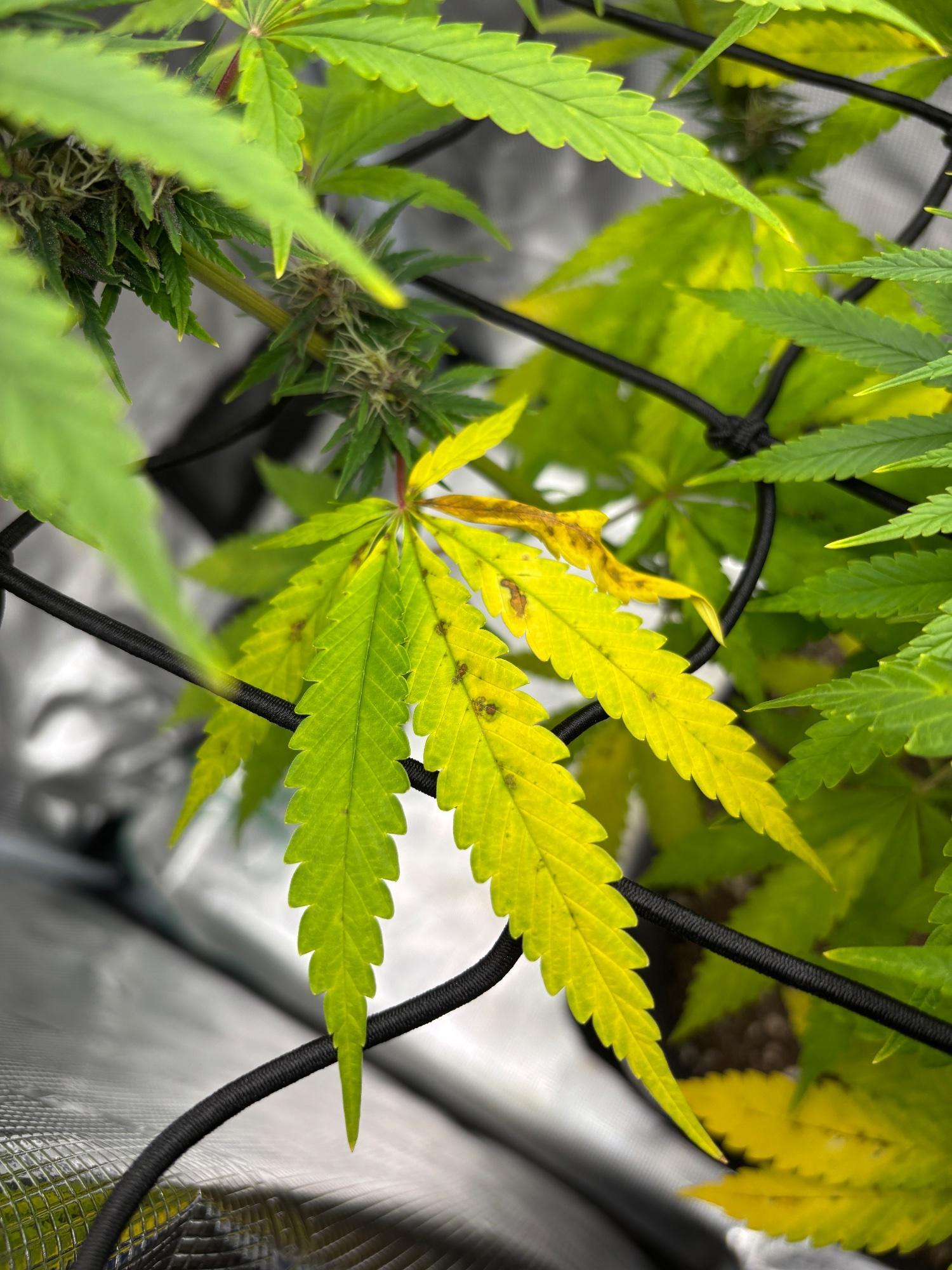
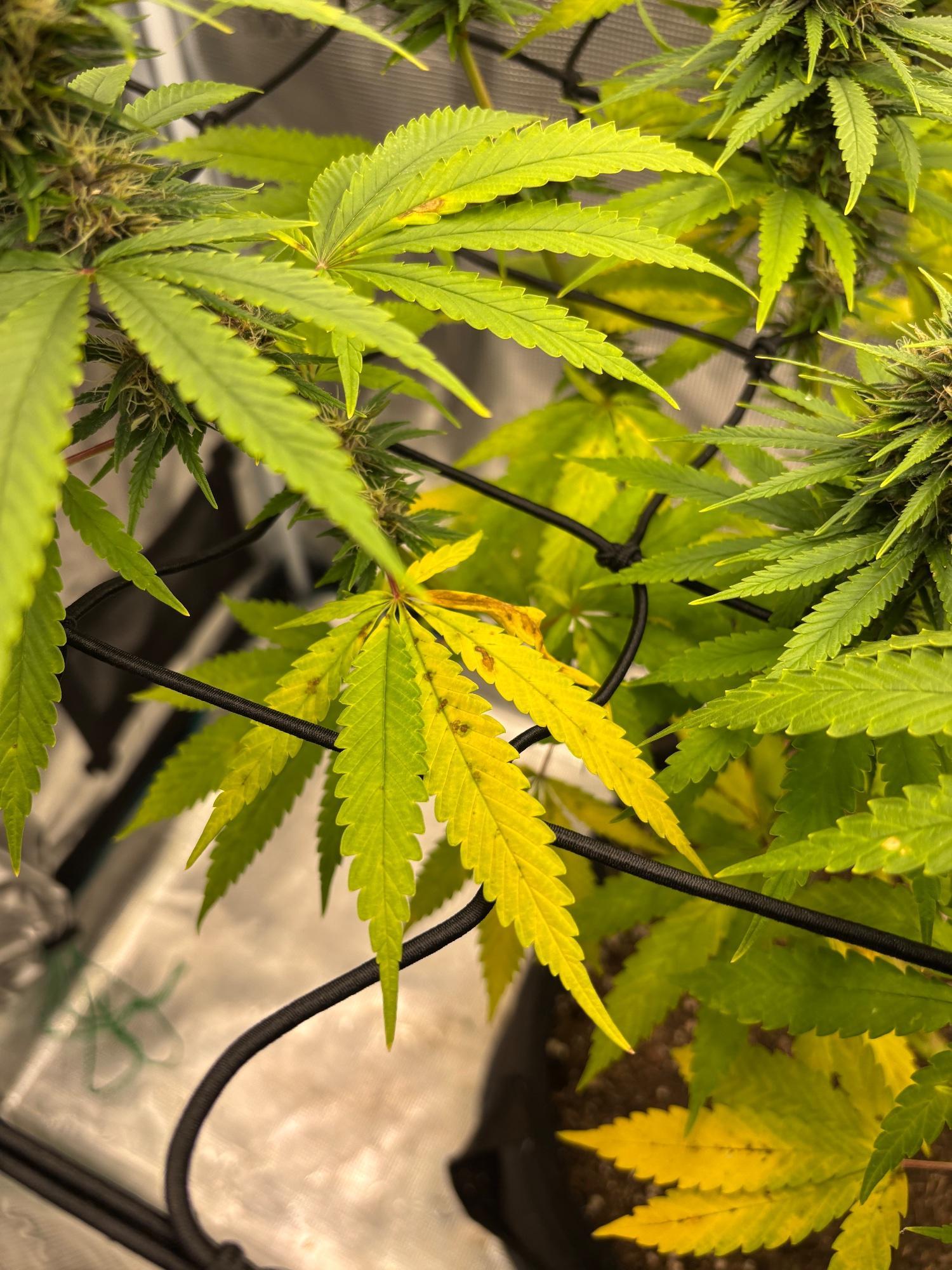
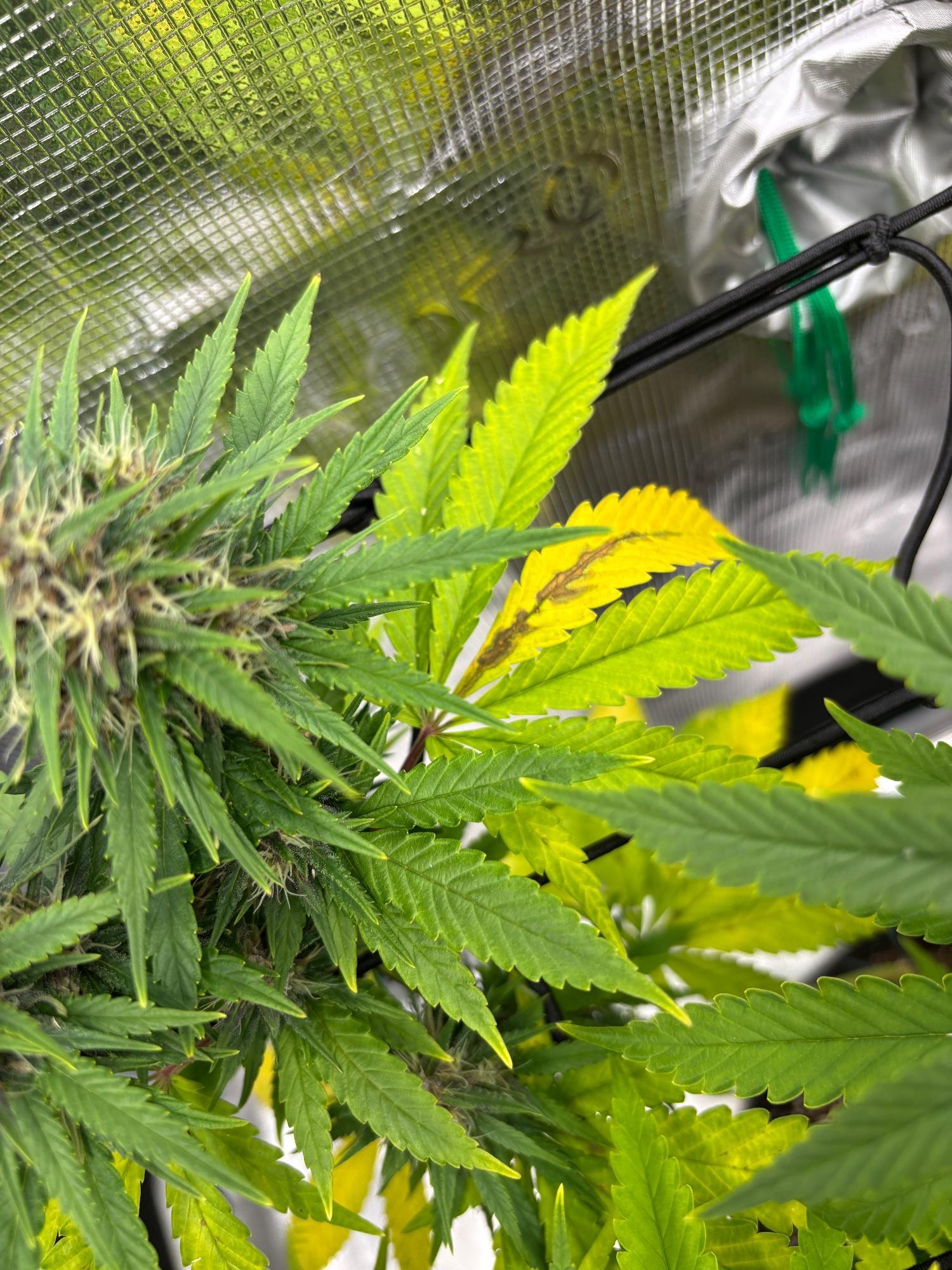
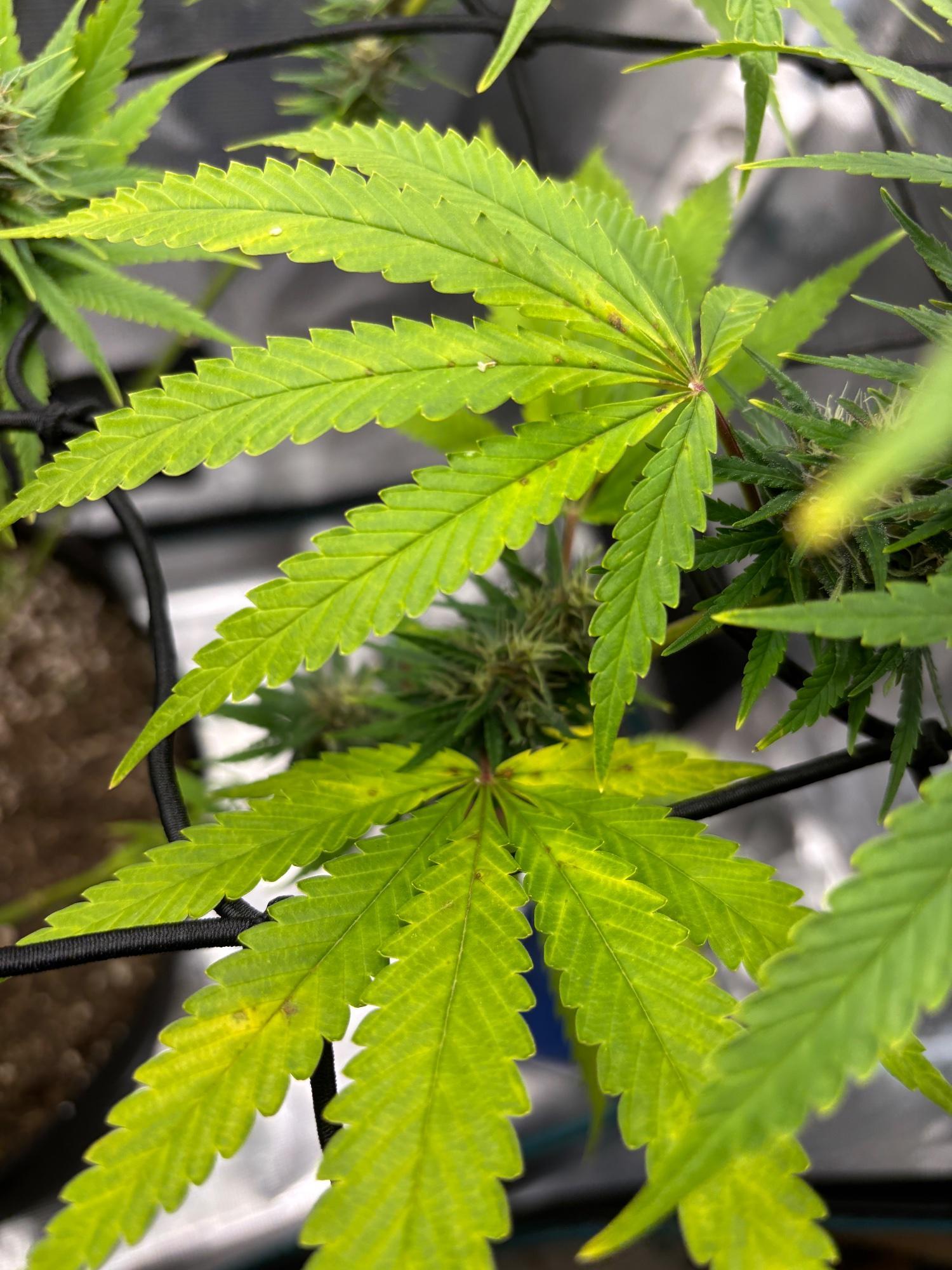
Im familiar with leafs wilting during mid/late flower. Bit concerned this time - are these brown rotten looking spots normal for mid flower? It’s been advancing over the last 10 days or so. Water is pH’d, feeding low amounts of BioBizz Bloom every other watering.
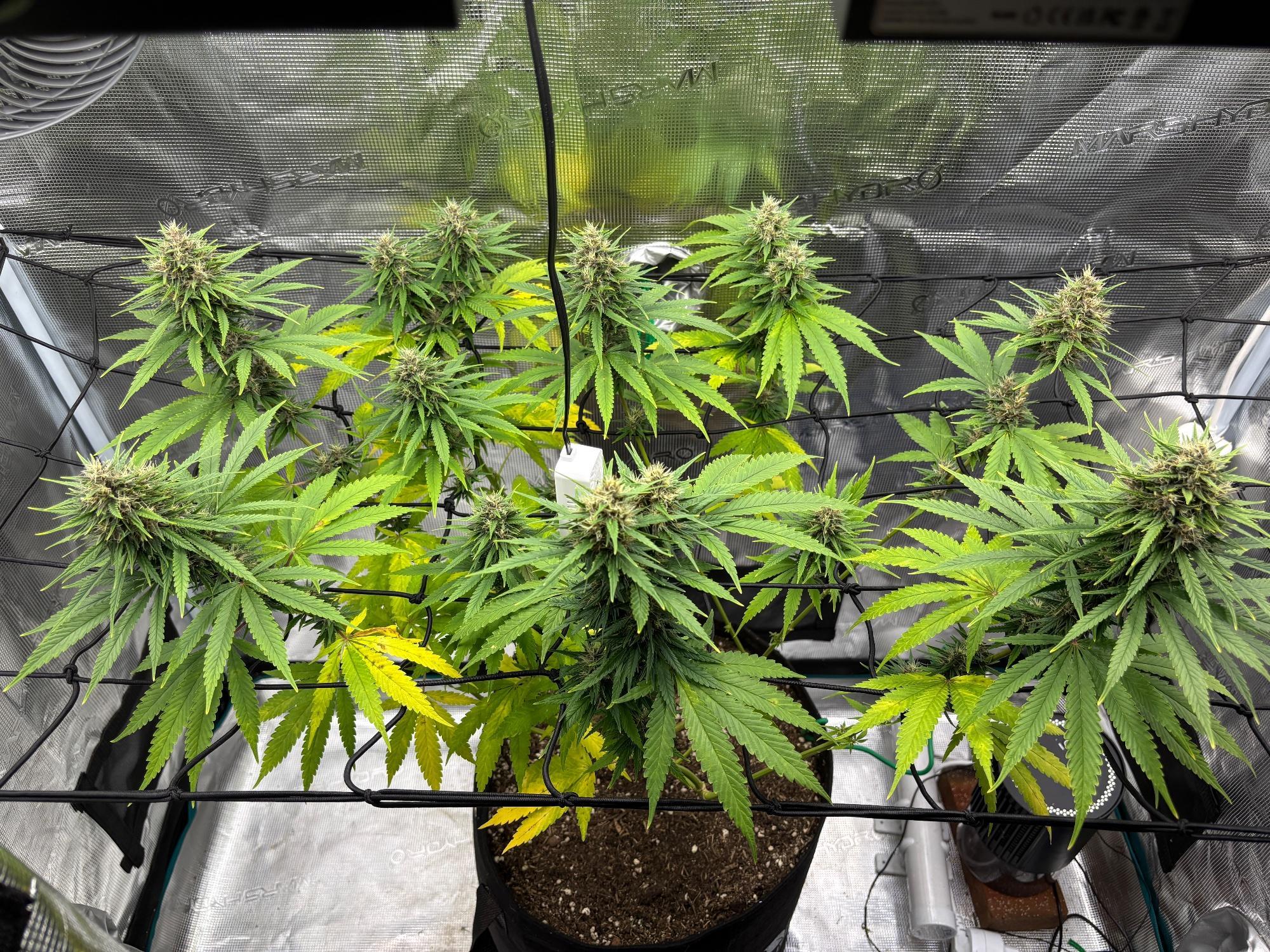
Open
likes
Answer

Yahtianswered grow question 1mo ago
Sorry to say but you're right this is not good and too early for this.
Looks to by Magnesium related to me.
It has the classic tiger stripping from the leaf margin.
Mg is the central component of chlorophyll.
No matter how much Nitrogen you feed, without Mg, you will see the N deficiency you can clearly see. (Pale/yellow from the base)
Two options
Either not enough Mg is present so feed some pH adjusted water with 2tsp of Epsom Salt.
Or
The soil is too acidic, and the Mg that is already there, is not available.
What have you been pH'ing to? Has it been the same everytime? say 6.0?
Mg needs more basic conditions, pH a couple feeds at 6.8.
likes
Complain

00110001001001111Oanswered grow question 1mo ago
sorry left out the obvious -- increase N in your feed... at least temporarily.
1 like
Complain
00110001001001111Oanswered grow question 1mo ago
It's a problem if the rate of deterioration is too fast ... you don't want the canopy mostly dead before you harvest... trending that direction is fine. Hard to see rate in pictures, but seems a bit advanced relative to ripening.
That looks like a typical nitrogen deficiency. When it is advanced you get the extra damage beyond just paling tip-in on leaf and bottom-up on plant.
Don't cut off so many leaves next time. Think of them as armor... it can withstand a draw down much longer and more room for error if you are deadset on having a strong fade at harvest. The key is just not to overfeed, but letting the canopy die will almost certainly be a net negative regardless of what anecdote tells us. A plant can't maintain itself or build the terps and thc you are trying tomaximize without building blocks.. not unless you can circumvent the law of conservation of mass. Plus, light is passing through the canopy completely unused... wasting electricity and losing yield.
There might be something else coinciding but it's to a much smaller degree. Might be too frequent with the watering. if soil, allow that top inch to dry... if coco let the top layer start to dry before re-irrigating.
1 like
Complain

Altitonans_Fulmenanswered grow question 1mo ago
Anoxia/hypoxia = anaerobic conditions within the soil matrix; more likely the soil peaked over 74F, no doubt from just pumping her full of organic nutrients when you have a hydro setup is not recommended; stick to synthetic delivery, far less oxygen-intensive. You don't have the rhizosphere or buffering capacity to do what you are asking of her. Chlorosis, Necrosis, interveinal chlorosis/necrosis.
Everything else is secondary to a breakdown in the electron transport chain; nutrients can't do shit without a stable electrical conductance to balance bulk flow.
1 like
Complain

AsNoriuanswered grow question 1mo ago
Phosphorus, calcium or ph issue is first 3 options that should be rethought .
Thats not fade, thats lack or imbalance.
2 likes
Complain

bkickstandanswered grow question 1mo ago
Those brown, necrotic spots combined with the bright yellowing leaves are not a standard, healthy late-flower fade. While a gentle fade usually starts from the bottom or inside out with a smooth, even yellowing (chlorosis), these specific lesions look like a classic mobile nutrient deficiency—most likely potassium (K) or phosphorus (P) deficiency, often triggered or worsened by lockout.
Here is a breakdown of what's happening and how to address it:
Diagnosis Breakdown
* The Symptoms: The leaves first turn chlorotic (yellow), followed by dark brown, rusty, or necrotic blotches that spread across the blades and cause the tips/edges to crisp up.
* The Cause: Since you are feeding low amounts of BioBizz Bloom every other watering in mid-flower, the plant's demand for phosphorus and potassium peaks significantly during this stage. If the feeding is too light or if the medium's pH has drifted out of the optimal range (typically 6.0–6.8 in soil or 5.5–6.5 in coco), the plant can't uptake those essential bloom nutrients, leading it to cannibalize itself aggressively.
Action Plan to Fix It
* Check and Adjust pH: Always double-check your runoff pH. Even if the water going in is properly pH'd, salt buildup or microbial shifts can cause root-zone pH lockouts.
* Bump Up the Feed: Since you've been running "low amounts" every other watering, your plant is likely simply hungry for bloom nutrients. Consider increasing the BioBizz Bloom dosage slightly or feeding on a more consistent schedule, keeping a close eye on how the newer growth responds.
* Pluck Dead Leaves: Safely remove the heavily damaged, dying fan leaves once they turn crispy. They no longer benefit the plant and can attract pests or moisture issues if they touch the soil or other foliage.
2 likes
Complain

Green_Clawsanswered grow question 1mo ago
It says in your diary that she has spider mite. The leaves that are turning yellow are centralised so between the lights being high and the chlorophyll disappearing early due to not enought nitrogen in veg..
2 likes
Complain