The Grow Awards 2026 🏆
Likes
Comments
Share
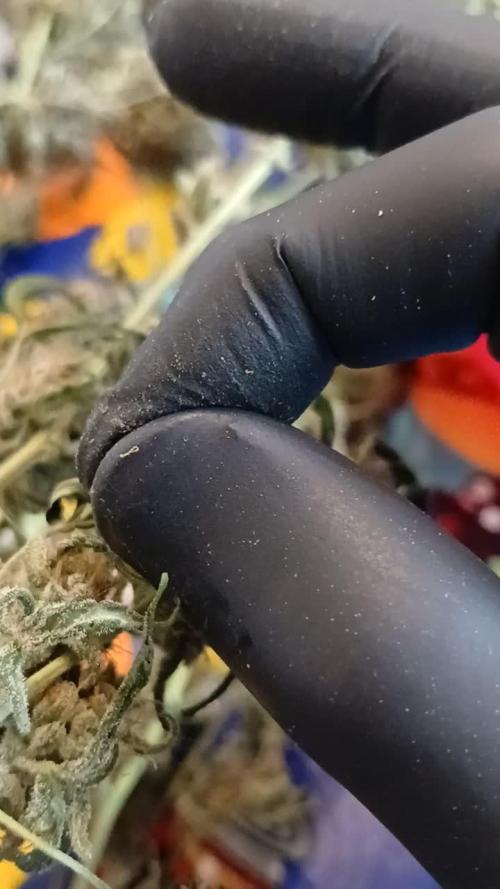
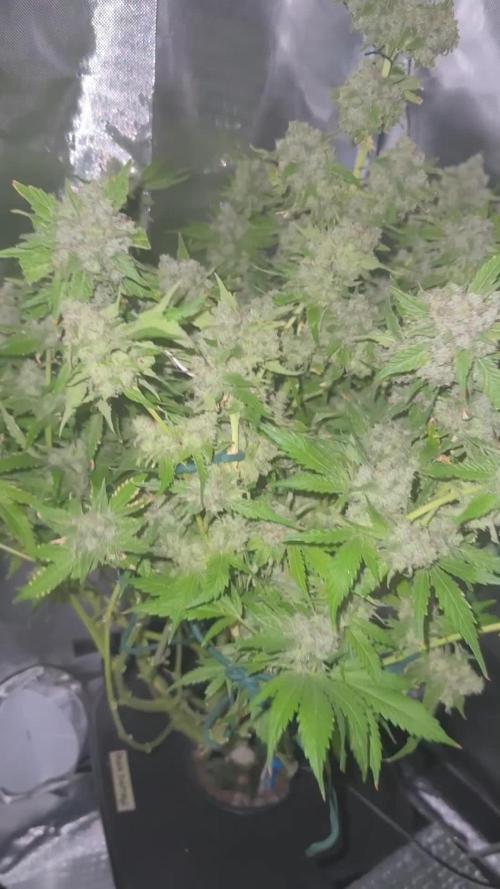
~Humboldt Seed Co. AMHERST SOUR DIESEL~ ???Secret origins??? The mystery of the unknown🧐 Amherst Sour Diesel is a cannabis seed whose origins are kept a secret. This wonderful vigorous marijuana plant will reward your work with large, elongated, compact buds complemented by a rich complex aroma. Indoors it performs best with a short growth and outdoors, in temperate, warm, dry and Mediterranean climates or in a greenhouse. A marijuana plant that boasts balanced properties. -Top-notch flavor and effect -Idyllic feelings to treat the senses -The aroma of this cannabis hybrid is a pleasant combination of ripe fruit and oil. The flavor is rich and complex, with hints of tropical fruit, oil and exotic wood. -The effect, typically Sativa, is euphoric, uplifting, powerful and long-lasting. A cannabis strain Sativa lovers will know how to appreciate. ____________________________________________________________________________________________________________________________________________________________________________________________________________________________________________________________________________________________________________________________________________________________________________________________________________________________________________________ Tech Specs: ~Amherst Sour Diesel~ Feminized Genotype: 20% Indica / 80% Sativa Cross: Chemdawg x Amherst Super Skunk Suitable for: Indoors and outdoors Indoor flowering: 65-70 days Indoor yield: 400-600 g/m2 Outdoor harvest time: Late October Outdoor yield: 2000-3000 g/plant Outdoor height: 2-3 m THC: 27% CBD: 0.1% ____________________________________________________________________________________________________________________________________________________________________________________________________________________________________________________________________________________________________________________________________________________________________________________________________________________________________________________ THE SETUP: ~Planted into Jiffy Peat Pellets that were hydrated with de-chlorinated water with SuperThrive added then ph'd to 6.0 @ 80℉ ~Grown 100% organic in 10g fabric pots with Mother Earth 70/30 Coco/Perlite medium amended with 2tbs/g of Down To Earth 4-4-4 / 2 cups/g of Earthworm Castings / 1tbs/g of Dr. Earth Flower Girl 3-9-4, 1tbs/g of Dr. Earth Bat Guano, 3/4 cup of Down To Earth Azomite and 1 tsp/g Down To Earth Fish Bone Meal. ~24hr light cycle during Germination / 19/5 light cycle for Vegetation and 12/12 for Flower ~Straight water ph'd @ 6.2-6.8 when needed and weekly Compost Tea's. ____________________________________________________________________________________________________________________________________________________________________________________________________________________________________________________________________________________________________________________________________________________________________________________________________________________________________________________ WEEKLY UPDATES: 10/11- Week Eight! Here we go on our way to sticking a fork in this run! Her fade is in full swing and she's putting out trichomes like crazy! Hopefully by the end of this week she'll be hanging after she spends a couple of nights in the dark. I watered today using straight water that's ph'd to 6.5-6.7 @ 72℉. I gave her a 1g to keep her flush going and then turned her pot. Trichome status: 70% milky / 30% clear 10/13- I watered today with 0.75g of straight water that was ph'd to 6.5-6.7 @ 72℉ and gave her pot a turn. She's progressing in her fade and is still bulking up. Her trichomes aren't quite where I like them yet, so more than likely she'll be going in the dark by next weekend! She is one beautiful cultivar! 🤩💚 10/15- My routine of watering every other day continues. Yesterday I watered her with her usual 1.5g of straight de-chlorinated water that was ph'd to 6.5-6.7 @ 72℉ and gave her pot a turn. Today was just spent checking her over, turning her pot and doing a quick check of her trichomes which are close, but not quite ripe enough yet! 10/17- Wow!... Eight weeks of flower DONE! 😎👍 Now my sights are set on getting this girl finished up and on her way to 48 hours in the dark before she's hung to begin drying. I went ahead and watered her with her usual 0.75g of straight de-chlorinated water that was ph'd to 6.7 @ 72℉ and checked her trichomes, which are looking just about right! This journey is coming to a close in the next couple of weeks with her harvest, drying and trimming up. I so appreciate you following along with me , it's been a blast sharing with you all! 😎🙏 ~Thanks so much for checking out my diary! This epic run is in the home stretch with harvest fast approaching...Stay lifted and be Blessed! 😎🙏~ This week promises to be exciting so don't forget to check in! Harvest time will be here before you know it and I'm getting stoked to see the results! 😎🙏💚 ~Thanks for stopping in! This epic run is in the home stretch with harvest fast approaching...Stay lifted and be Blessed! 😎🙏~

Likes
50
Share
@Blabina
Follow
👻👻👻👻 x10 timelaps ! Sadly Quickgreen is the slowest to grow compare to the 2 others. It may be due to drops on leaves (good for cinematography but not healthy for the plant)... But she seems to start growing faster.👻👻👻👻 Everything is good, but it is a lot of work, I keep shooting while I try to find the fastest and easiest way to prepare nutrients and to water them... It takes me 1 hours about from start to the record button, per day... It should be the end of seedling stage (first true leaves are here but not well mature)... 21th of october 2021 / DAY 15 👉 13:00 : took dailies back and added in editing timeline. Export x10 and uploaded 👉 changed the fan direction who was too direct to Quickgreen (indeed air pression was high, this is why she starts checking in the moovie...)😵 19h00 : 👽Calmag 2 ml/3L + 👽 Acti-Vera 3 ml/3L 👽Bio-Grow 1.8-1.9 ml/3L 👽Bio-Heaven 3 ml/3L 👽Terra Aquatica Root booster (GHE) 9 ml/3L /// 😇3 L. p.h. 5.9 EC : 0.9 degree 21.3° 👉 Run-off for Quickpink is : EC 0.9, ph 6.9 // 19.3° 👉 Ph seems to high for the run-off, I changed system for under pot, will have to change all of them. 22th of october 2021 / DAY 16 👉 19h00 : 👽Calmag 2 ml/3L + 👽 Acti-Vera 3 ml/3L 👽Bio-Grow 1.8 ml/3L 👽Bio-Heaven 3 ml/3L 👽Terra Aquatica Root booster (GHE) 9 ml/3L /// 😇3 L. p.h. 6.0 EC : 0.9 degree 22.6° 👉 Run-off for Quickpink is : EC 1.1, ph 7.0 20.0° 23th of october 2021 / DAY 17 👉 Bought an upgrade for my pots that will ALLOW ME TO MESURE AGAIN CORRECTLY THE RUN-OFF WATER ♥️☺️♥️ 👉19h00 : 👽Calmag 2 ml/3L + 👽 Acti-Vera 3 ml/3L 👽Bio-Grow 2.0 ml/3L 👽Bio-Heaven 3 ml/3L 👽Terra Aquatica Root booster (GHE) 9 ml/3L /// 😇3 L. p.h. 5.8 EC : 1.0 degree 20.5° 👉 Run-off for QuickGreen is : EC 1.1, ph 7.3 19.50° QuickBlue is : EC 1.1, ph 7.3 19.40° QuickPink is : EC 0.9 ph 6.7 18.8° 24th of october 2021 / DAY 18 👉 👽Calmag 3 ml/3L + 👽 Acti-Vera 3 ml/3L 👽Bio-Grow 2.0 ml/3L 👽Bio-Heaven 3 ml/3L 👽Terra Aquatica Root booster (GHE) 9 ml/3L /// 😇3 L. p.h. 6.0 EC : 1.0 degree 24.3° 👉 Run-off for QuickGreen is : EC 1.3, ph 7.2 17.4° QuickBlue is : EC 1.3, ph 7.1 17.4° QuickPink is : EC 1.0 ph 6.8 18.8° 25th of october 2021 / DAY 19 👉 13h00 👽 Acti-Vera 1 ml/1L 👽Alg-A-Mic 1 ml/1L : 😤😤😤Foliar spray !!!😤😤😤/// 😇1 L. p.h. 7.3 EC : / degree 24.3° 😰😨 PANICK MODE ON : ISSUE LEAVES FOR QUICKBLUE AND ph ec is too high on quickblue and quickgreen.😰😨 👉👉👉 Flush with water and citrus (p.h5-5 to 5.9 3L per plant (= 9-10 L.) 👉 Run-off for QuickGreen is : EC 0.6, ph 6.8 19.4° QuickBlue is : EC 0.7, ph 6.9.1 19.4° QuickPink is : EC 0.6 ph 6.8 19.8° 😻😻😻 Quickgreen is restarting again, I keep taking dailies everyday and watching them 10x speed (even faster on my timeline) I see that Quickgreen recover. Thank you all ♥️♥️♥️ for your replies about the fan issue in my <Grow Question>. It really blocked her for days. Never point a fan directly !!! Or !!! This is what I changed today : I've put the fan really far away them, and with my hand try to feel where the pressions is and how strong, I've aimed middle of the tent pointed down, air pressure is on border of the pots and they moove slithly like : a breeze... I like this technical aspect about fans. ♥️♥️♥️ 26th of october 2021 / DAY 20 👉 👽Calmag 1 ml/2L + 👽Bio-Grow 1.2 ml/2L 👽Bio-Heaven 2 ml/2L/// 😇2 L. p.h. 5.2 EC : 0.9/ degree 24.3° 😰😨 PANICK MODE ON : ISSUE LEAVES FOR QUICKBLUE AND ph ec is too high on quickblue and quickgreen.😰😨 👉 Run-off for QuickGreen is : EC 1.0, ph 7.0 19.4° QuickBlue is : EC 1.0, ph 7.1.1 19.4° QuickPink is : EC 1.0 ph 7.1 19.8° 😪I am praying Bobina, the godness of desperate growers right now😪 27th of october 2021 / DAY 21 👉 ☼ 29 inch 74cm, maybe lights are too far away, recommanded for seedling : 24 inch (60 cm about), mooving lights. ☼62 cm 👉 👽Calmag 1 ml/2L + 👽Bio-Grow 1.6 ml/2L 👽Bio-Heaven 2 ml/2L/ 👽 Acti-Vera 1 ml/2L 😇2 L. p.h. 5.6 EC : 1.1/ degree 28.3° 👉 2 liters prepared but when I was slowly feedig them I noticed an early run-off water. Since fans are off coco dry more slowly. Added only 1L for the 3 plants. 👉 Run-off for QuickGreen is : EC 1.0, ph 6.9 20.4° QuickBlue is : EC 1.1, ph 7.0 20.4° QuickPink is : EC 1.2 ph 6.9 2.0° 👻👻👻Preparing x15 moovie, amazing, I won't spoile but yeah, quickgreen got the desease too...👻👻👻 Waiting tomorrow dailies to start a new week. A lot of things happen, the grow seems slow now for the stage they are in (21 days from germ). I definitly had issues. Really curious about what will happen, I will add pictures tomorrow but the second true leaves start to grow. I will see what happen with less water, more e.c. no fan and ligts at the correct place. ♥️☺️♥️ End of week 2 ♥️☺️♥️
Likes
11
Share
@4F1M6
Follow
I started germination of 2 Moon Walker kush beans on 29/12/2020. I pre moistened my rockwool cubes with ph balanced water to 6.4. Made sure the plugs were just damp and not soaked. Using a small wooden dowel I increased the size of the plugs pre made holes. Than I sowed my beans into the holes. Ripped off a small piece of rockwool and mulched it up.h Lightly filled the holes in with the mulched rockwool. Than stuck the plugs into a misted humidity dome, to complete germination. Shouldn't take anymore than 4-5 days to see some sprouts. Once I see some cotlydon leaves bursting to the surface. I will get the plugs planted into some 1 gallon pots. Plus get these ladies situated into their home. Cant wait! Some background information on my first run with MWK. She gets very branchy fast and absolutely loves lst. Responded everytime with a vigorous growth spurt after training sessions. Very easy going on nutrients and didnt have any different needs outside my normal feeding schedule. Super tight compact colas in definite need of increased air flow and movement. Ended up having the fans turned up much higher in the room she was in because of the shear mass and density. Super trichome production outta these genetics. One of the frostiest strains I've grown to date. Just diamonds!!! Amped for this second run.
Likes
13
Share
Week 2 of flower, RO water change with an EC of 1.3. Will adjust from here and observe the next day or two. Although you watched as I did a major defoliation, as you can see, they have bounced back pretty quickly. As of now, I will be defoliating every few days just to keep the light penetrating the canopy so we have some nice buds come harvest time. Will be back to update in a few days to update where they are at and if they need more nutrients. pH is set and stable. Stay tuned until the next update and follow my YouTube and Instagram (Link on growdiaries profile)
Likes
27
Share
6/13/2023 Week 10- Day 1 of Flower (Day 131 overall) (Day 70 of Flower) Auto Pilot Day 6.. Checked the Trichomes and the bud density and both are looking good.. Definitely needs a little more time for the Trichomes to be where I like, so based on my check I think we are still looking right around the end of the competition 22June to be done and ready for harvest. I do like that the fade is coming in the leaves nicely, so my chart I think is dropping off the Nitrogen exactly like it is supposed to. 6/14/2023 Week 10- Day 2 of Flower (Day 132 overall) Auto Pilot Day 7.. Decided I would take some contrasting pics today with my light up to 100 and my light all the way on Dim. I hope you enjoy the pics. 6/15/2023 Week 10- Day 3 of Flower (Day 133 overall) Auto Pilot Day 8.. Decided to take a look at the Trichome's today and Check to see where they are at and honestly if I might ho ahead and start my flush tomorrow and harvest on Sunday. 6/16/2023 Week 10- Day 4 of Flower (Day 134 overall) (Day 74 of Flower) Today I pulled an Armageddon however instead of darkness they are going to get 48 hours of light. The reason why they are going to get light instead of dark is when I was taking out the netting a lot of the buds were so heavy they fell over and exposed some areas I really want to get some light to... so 48 hours of light at 40% while I watch what should be a beautiful final fade as the plant eats up the last Nutes. If anything goes wrong I can abort take the photos and cut so will pay really close attention to how it is looking over the next 48 hours. Added 30 Gallons of PH only Water. Reduced Lighting to 40% removed program time off. 48 hours of light. 6/17/2023 Week 10- Day 5 of Flower (Day 135 overall) (Day 75 of Flower) I had someone tell me that a few growers had done as I did and Gone Armageddon on the plants. Filling it with PH only and said the plants did not respond well and they were taken out of the comp at the very end because they felt like the pictures just wouldn't come out right. Even though I did go Armageddon, The PPM is at 353PPM with the residue of what was left in the buckets after draining as well as what I am getting from the TAP so I think they are doing good but I am checking them every few hours to see how they seem to be doing and I think they are doing good still and are on track. I also started prepping the area for the pics tomorrow T-24 Hours until Chop 6/18/2023 Week 10- Day 6 of Flower (Day 136 overall) (Day 76 of Flower) (Harvest Day) What a day.. what a day.. what a day.. as I was setting up and trying to figure out how I was going to get my pics #3 stems started breaking, it fell over and other stems broke.. So no really stunning competition photo for her, she had such a nice purple fade.. #2 stayed up in the Tent so that is the one I had to go with to submit for the contest. I wet trimmed them as they went into the tent and they took up three rows hanging in tent. I also decided I wanted to try some so I put a little in the freeze dryer for a 48 hour smoke test.. I will weigh it and add that to my total weight for the plants when it is all done.
Likes
11
Share
Eccoci di nuovo qui!!! Super eccitato per questa nuova collab con Seedsman, team davvero al top, che mi ha dato l’opportunità di testare questa nuova genetica e di condividere i progressi con tutti voi!!! Genetica che non ha bisogno di presentazione fantastica di sapore e di odore.. SUPER CONSIGLIATA Grazie a tutti per il supporto ❤️🍀🔥
Likes
16
Share
@SAC87
Follow
Update: All 3 seeds broke ground on May 20. Ready to see these babies grow big and beautiful. Germ Day 1: Today I decided to plant 3 Fast Buds Afghan Kush Auto. I mixed the Gaia Green All Purpose 4-4-4 with a couple tbsp of mychorrizae and crushed egg shells into 5 gal of sunshine #4 which is predominantly a peat based media. I watered around the seed thoroughly. I am using the sponsored Vipar Spectra XS2000 and think it will be awesome for these auto flowers. It’s a super strong light with an awesome spectrum. I have it set at 30% at 34”. I’m excited to see how this combo works. I’ve seen great things from each part and looking forward to a great result together. Happy Growing 🌱
Likes
40
Share
@BLAZED
Follow
Week 16 (Harvest) 1-2 Drying day 1 Temperature: 24.5 to 19.5 degrees Humidity: 65% to 50% The girls are ready to be harvested! Before chopping them down, i took a lot of pictures. I was able to remove most of the soil from the Biscotti #2 to see the rootball. I hang the plants as a whole to have a slow dry. The exhaust fan is on setting 4. 2-2 Drying day 2 Temperature: 19.1 to 17.5 degrees Humidity: 62% to 57% I changed the exhaust fan to setting 2 because setting 4 was a bit high in my opinion. 3-2 Drying day 3 Temperature: 19.9 to 18 degrees Humidity: 62% to 59% Today i checked up on the drying plants, and i see there are some buds touching other buds, so i chopped the plants in half. The buds are still to the main stem for a slow dry, but are hanging more spreaded out to prevent any budrot issues. I changed the exhaust fan to setting 1, as someone told me that it was enough air movement for drying. 4-2 Drying day 4 Temperature: 19.8 to 18.5 degrees Humidity: 62% to 59% 5-2 Drying day 5 Temperature: 19.9 to 18.8 degrees Humidity: 62% to 59% Today i checked on the drying plants and the buds are shrinking a bit, they are getting a little bit crispy on the outside aswell, I hope they wont dry as fast, and i aim for a 12/14 day dry. For the next grow i already germinated 2x Chemdog (GreenHouseSeeds) 2x Gorilla Kush (GanjaFarmerSeeds) and 1x Deep Candy CBD (GreenHouseSeeds) And I have some upgrades planned aswell! I bought a autopot kit with 4 15L pots, this way the plants will have water and air 24/7 whenever they need it. I have seen alot of great results using autopots so i am very exited to try it out! And I bought a small camera so i can shoot some weekly timelapses! Feel free to Follow me if you like to get notified for the upcoming diaries! Thanks for checking out this diary, peace! (More harvest updates coming in the next couple of days!) Huge thank you to Zamnesia for the seeds, and Plagron for the collection of nutrients, and the opportunity to participate in the POWERBUDS contest! It was a fun and learningful adventure!
Likes
76
Share
@Canna96
Follow
Hey now, this week went pretty good, the buds are about done bulking up, and just waiting on the trichomes, I was really hoping she would be about ready, but I think she needs another week to week and a half total. The buds are rock hard, and super sticky. I have no clue what she will yield because the colas are not that thick, but there are definitely alot of them. I plan to squeeze her into rosin, and hopefully I can break the 25% mark for the first time with her, but we will see. Thanks for stopping by, I hope you enjoy the videos, Happy Memorial Day Family, Stay Safe and Blaze On!!!
Likes
52
Share
Lacewings seemed to have mostly killed themselves by flying into hot light fixtures. I may have left the UV on which was smart of me :) Done very little to combat if anything but make a sea of carcasses, on the bright side its good nutrition for the soil. Made a concoction of ethanol 70%, equal parts water, and cayenne pepper with a couple of squirts of dish soap. Took around an hour of good scrubbing the entire canopy. Worked a lot more effectively and way cheaper. Scorched earth right now, but it seems to have wiped them out almost entirely very pleased. Attempted a "Fudge I Missed" for the topping. So just time to wait and see how it goes. Question? If I attached a plant to two separate pots but it was connected by rootzone, one has a pH of 7.5 ish the other has 4.5. Would the Intelligence of the plant able to dictate each pot separately to uptake the nutrients best suited to pH or would it still try to draw nitrogen from a pot with a pH where nitrogen struggles to uptake? Food for stoner thought experiments! Another was on my mind. What happens when a plant gets too much light? Well, it burns and curls up leaves. That's the heat radiation, let's remove excess heat, now what? I've always read it's just bad, or not good, but when I look for an explanation on a deeper level it's just bad and you shouldn't do it. So I did. How much can a cannabis plant absorb, 40 moles in a day, ok I'll give it 60 moles. 80 nothing bad ever happened. The answer, finally. Oh great........more questions........ Reactive oxygen species (ROS) are molecules capable of independent existence, containing at least one oxygen atom and one or more unpaired electrons. "Sunlight is the essential source of energy for most photosynthetic organisms, yet sunlight in excess of the organism’s photosynthetic capacity can generate reactive oxygen species (ROS) that lead to cellular damage. To avoid damage, plants respond to high light (HL) by activating photophysical pathways that safely convert excess energy to heat, which is known as nonphotochemical quenching (NPQ) (Rochaix, 2014). While NPQ allows for healthy growth, it also limits the overall photosynthetic efficiency under many conditions. If NPQ were optimized for biomass, yields would improve dramatically, potentially by up to 30% (Kromdijk et al., 2016; Zhu et al., 2010). However, critical information to guide optimization is still lacking, including the molecular origin of NPQ and the mechanism of regulation." What I found most interesting was research pointing out that pH is linked to this defense mechanism. The organism can better facilitate "quenching" when oversaturated with light in a low pH. Now I Know during photosynthesis plants naturally produce exudates (chemicals that are secreted through their roots). Do they have the ability to alter pH themselves using these excretions? Or is that done by the beneficial bacteria? If I can prevent reactive oxygen species from causing damage by "too much light". The extra water needed to keep this level of burn cooled though, I must learn to crawl before I can run. Reactive oxygen species (ROS) are key signaling molecules that enable cells to rapidly respond to different stimuli. In plants, ROS plays a crucial role in abiotic and biotic stress sensing, integration of different environmental signals, and activation of stress-response networks, thus contributing to the establishment of defense mechanisms and plant resilience. Recent advances in the study of ROS signaling in plants include the identification of ROS receptors and key regulatory hubs that connect ROS signaling with other important stress-response signal transduction pathways and hormones, as well as new roles for ROS in organelle-to-organelle and cell-to-cell signaling. Our understanding of how ROS are regulated in cells by balancing production, scavenging, and transport has also increased. In this Review, we discuss these promising developments and how they might be used to increase plant resilience to environmental stress. Temperature stress is one of the major abiotic stresses that adversely affect agricultural productivity worldwide. Temperatures beyond a plant's physiological optimum can trigger significant physiological and biochemical perturbations, reducing plant growth and tolerance to stress. Improving a plant's tolerance to these temperature fluctuations requires a deep understanding of its responses to environmental change. To adapt to temperature fluctuations, plants tailor their acclimatory signal transduction events, specifically, cellular redox state, that are governed by plant hormones, reactive oxygen species (ROS) regulatory systems, and other molecular components. The role of ROS in plants as important signaling molecules during stress acclimation has recently been established. Here, hormone-triggered ROS produced by NADPH oxidases, feedback regulation, and integrated signaling events during temperature stress activate stress-response pathways and induce acclimation or defense mechanisms. At the other extreme, excess ROS accumulation, following temperature-induced oxidative stress, can have negative consequences on plant growth and stress acclimation. The excessive ROS is regulated by the ROS scavenging system, which subsequently promotes plant tolerance. All these signaling events, including crosstalk between hormones and ROS, modify the plant's transcriptomic, metabolomic, and biochemical states and promote plant acclimation, tolerance, and survival. Here, we provide a comprehensive review of the ROS, hormones, and their joint role in shaping a plant's responses to high and low temperatures, and we conclude by outlining hormone/ROS-regulated plant-responsive strategies for developing stress-tolerant crops to combat temperature changes. Onward upward for now. Next! Adenosine triphosphate (ATP) is an energy-carrying molecule known as "the energy currency of life" or "the fuel of life," because it's the universal energy source for all living cells.1 Every living organism consists of cells that rely on ATP for their energy needs. ATP is made by converting the food we eat into energy. It's an essential building block for all life forms. Without ATP, cells wouldn't have the fuel or power to perform functions necessary to stay alive, and they would eventually die. All forms of life rely on ATP to do the things they must do to survive.2 ATP is made of a nitrogen base (adenine) and a sugar molecule (ribose), which create adenosine, plus three phosphate molecules. If adenosine only has one phosphate molecule, it’s called adenosine monophosphate (AMP). If it has two phosphates, it’s called adenosine diphosphate (ADP). Although adenosine is a fundamental part of ATP, when it comes to providing energy to a cell and fueling cellular processes, the phosphate molecules are what really matter. The most energy-loaded composition for adenosine is ATP, which has three phosphates.3 ATP was first discovered in the 1920s. In 1929, Karl Lohmann—a German chemist studying muscle contractions—isolated what we now call adenosine triphosphate in a laboratory. At the time, Lohmann called ATP by a different name. It wasn't until a decade later, in 1939, that Nobel Prize–-winner Fritz Lipmann established that ATP is the universal carrier of energy in all living cells and coined the term "energy-rich phosphate bonds."45 Lipmann focused on phosphate bonds as the key to ATP being the universal energy source for all living cells, because adenosine triphosphate releases energy when one of its three phosphate bonds breaks off to form ADP. ATP is a high-energy molecule with three phosphate bonds; ADP is low-energy with only two phosphate bonds. The Twos and Threes of ATP and ADP Adenosine triphosphate (ATP) becomes adenosine diphosphate (ADP) when one of its three phosphate molecules breaks free and releases energy (“tri” means “three,” while “di” means “two”). Conversely, ADP becomes ATP when a phosphate molecule is added. As part of an ongoing energy cycle, ADP is constantly recycled back into ATP.3 Much like a rechargeable battery with a fluctuating state of charge, ATP represents a fully charged battery, and ADP represents a "low-power mode." Every time a fully charged ATP molecule loses a phosphate bond, it becomes ADP; energy is released via the process of ATP becoming ADP. On the flip side, when a phosphate bond is added, ADP becomes ATP. When ADP becomes ATP, what was previously a low-charged energy adenosine molecule (ADP) becomes fully charged ATP. This energy-creation and energy-depletion cycle happens time and time again, much like your smartphone battery can be recharged countless times during its lifespan. The human body uses molecules held in the fats, proteins, and carbohydrates we eat or drink as sources of energy to make ATP. This happens through a process called hydrolysis . After food is digested, it's synthesized into glucose, which is a form of sugar. Glucose is the main source of fuel that our cells' mitochondria use to convert caloric energy from food into ATP, which is an energy form that can be used by cells. ATP is made via a process called cellular respiration that occurs in the mitochondria of a cell. Mitochondria are tiny subunits within a cell that specialize in extracting energy from the foods we eat and converting it into ATP. Mitochondria can convert glucose into ATP via two different types of cellular respiration: Aerobic (with oxygen) Anaerobic (without oxygen) Aerobic cellular respiration transforms glucose into ATP in a three-step process, as follows: Step 1: Glycolysis Step 2: The Krebs cycle (also called the citric acid cycle) Step 3: Electron transport chain During glycolysis, glucose (i.e., sugar) from food sources is broken down into pyruvate molecules. This is followed by the Krebs cycle, which is an aerobic process that uses oxygen to finish breaking down sugar and harnesses energy into electron carriers that fuel the synthesis of ATP. Lastly, the electron transport chain (ETC) pumps positively charged protons that drive ATP production throughout the mitochondria’s inner membrane.2 ATP can also be produced without oxygen (i.e., anaerobic), which is something plants, algae, and some bacteria do by converting the energy held in sunlight into energy that can be used by a cell via photosynthesis. Anaerobic exercise means that your body is working out "without oxygen." Anaerobic glycolysis occurs in human cells when there isn't enough oxygen available during an anaerobic workout. If no oxygen is present during cellular respiration, pyruvate can't enter the Krebs cycle and is oxidized into lactic acid. In the absence of oxygen, lactic acid fermentation makes ATP anaerobically. The burning sensation you feel in your muscles when you're huffing and puffing during anaerobic high-intensity interval training (HIIT) that maxes out your aerobic capacity or during a strenuous weight-lifting workout is lactic acid, which is used to make ATP via anaerobic glycolysis. During aerobic exercise, mitochondria have enough oxygen to make ATP aerobically. However, when you're out of breath and your cells don’t have enough oxygen to perform cellular respiration aerobically, the process can still happen anaerobically, but it creates a temporary burning sensation in your skeletal muscles. Why ATP Is So Important? ATP is essential for life and makes it possible for us to do the things we do. Without ATP, cells wouldn't be able to use the energy held in food to fuel cellular processes, and an organism couldn't stay alive. As a real-world example, when a car runs out of gas and is parked on the side of the road, the only thing that will make the car drivable again is putting some gasoline back in the tank. For all living cells, ATP is like the gas in a car's fuel tank. Without ATP, cells wouldn't have a source of usable energy, and the organism would die. Eating a well-balanced diet and staying hydrated should give your body all the resources it needs to produce plenty of ATP. Although some athletes may slightly improve their performance by taking supplements or ergonomic aids designed to increase ATP production, it's debatable that oral adenosine triphosphate supplementation actually increases energy. An average cell in the human body uses about 10 million ATP molecules per second and can recycle all of its ATP in less than a minute. Over 24 hours, the human body turns over its weight in ATP. You can last weeks without food. You can last days without water. You can last minutes without oxygen. You can last 16 seconds at most without ATP. Food amounts to one-third of ATP production within the human body.
Likes
2
Share
Girls are doing well....seed looking like she earning her name..have some cutting off her n am please with the first week of flower....one got super stress n she dont even look like it jus watchin to see how things look later
Likes
23
Share
@HanzGrowz
Follow
Just waiting it out now. No added nutrients, just water. Bubba and Black Dog have exceeded their expected flowering time, and both are at 95% cloudy with 5% or so still clear. Chemdawg and The New can take up to 70 days or more so we’ll see if they’re late too. Bubba is a foxtailing machine. It was one weekend in early Flower when heat/humidity got out of hand while I was away for 3 days. She hermied a bit and I’ve had my eye out for bananas ever since (find a few every so often). Taking a risk to keep her in the tent with the others but if I catch them early enough the others should be ok. Interestingly I found a YouTube video of a guy that ran bubba and had the same foxtail development (also the same scent description and look overall). Nothing like the gorgeous fat purple budded girl I had last year but the citrus smell on this lime green bud pheno/version is impressive. Curious to see how the smoke compares. Scent combo from all four plants is amazing!
Likes
57
Share
@GreenISR
Follow
31.1.20 day 1 Every thing is good . 1.2.20 day 2 Did a refill from a rain water 0.1 ec . Found a spider in my tent the secend time like wtf how they get in ? 2.2.20 day 3 Ec out 3 . 5.2.20 day 6 I think the small sprinkel are no go so I have back for my old ones . Watering is ok I think so the ec not jumping above 3 .
Likes
9
Share
@Krissci
Follow
Day 1 reported to 3gal pots....same soil so it's repotting not transplanting Day 3-4 topped once - 2*nodes Day 6 topped twice - 4*nodes
Likes
8
Share
@Monkeyboy
Follow
Wer now at 48 day, from seed in a green house, only water from tap every day and once a week where I have saved my old coffee grounds I water them down and give a bit of that. So nice and big and green. Hopefully all ends well. These were meant to be 75 days seeds, if so not long now. Angain thank you everyone for you tips and support.
Likes
13
Share
@Dunk_Junk
Follow
She is really charging through flowering!! I cut a couple of pieces off to look at trichomes. She's not ready yet, but soon. She's been getting just plain water this week. Anyway, apologies for poor pics this week, they're all getting too big to get in and out the tent without damage. Last week I snapped the main cola on the CBD 😭
Likes
2
Share
This week both Special Queens showed clear flowering signs. The larger, light-green pheno stretched faster, while the smaller, dark-green plant remained bushier and drank less water due to its recent transplant into the 35 L AutoPot. Both were top-fed with Biobizz nutrients (about 75 % schedule, EC ~1.0, pH 6.3) and continued to receive RO water via the AutoPot reservoir. The plants consumed around 3–5 cm daily from the 47 L tank, which was refilled and stabilized with CalMag. Several defoliation sessions were done to remove shaded fan leaves and open the canopy. The larger plant was slightly trained under the net, while the smaller one was carefully thinned out. After these steps, humidity improved noticeably inside the tent. A new AI climate controller was installed this week, which now keeps VPD stable around 1.0–1.2 kPa, even during the night phase. Overall, both plants look healthy and vigorous, with many bud sites forming. The setup feels stable, and the time-lapse footage shows daily leaf movement and recovery. The differences between phenos are striking, but both appear to be on track for strong flowering.
Likes
17
Share
In woche 5 in flow is mir ein kleines missgeschick passiert. Habe leider einen spritzer pk 5-8 zu meinem gießwasser dazu gegeben. Ec werte und ph waren perfekt. Nur habe ich einen eisen oder magnesium überschuss verursacht. Pflanzen wurden ectrem dunkel und die neuen kleinen blätter in den buds haben sich nach unten gegreuselt. Aber gefahr erkannt gefahr geband. Habe heute das aller erstemal pk13-14 zum bio gießwasser dazu gegeben. Ec usw.. perfekt. Bin aber gespannt was ich diesesmal weedr falsch gemacht habe.👌😋😁😅😅🙈 Die saubersten und vitalsten stecklinge findet ihr wie immer bei ROOTS-FARMS. The best in austria and maybe europe