


Likes
Comments
Share


@Bakeryguy420
Follow
Sorry guys havent updated in awile
Gg4 harvested
Tangiematic harvested
Ogesus #1,2 harvested
Gluebeerry just main cola harvested
White rrussian harvested
Sweet creme harvested
In.the run.left is rhino rryder, royal haze, amnesia gold , amensia haze , forgotten cookies and gluebeery and the new girls
Update on 3rd grow going Start a new diary for them today . My cat knocked down the seedlings 3 times zero stunt life which is shocking crazy crackhead ..
Quality is amazing for them all yield wasnt aa, much as I wanted believe emerald harvest is as garbage as foxfarm.

Glueberry Auto · Expert Seeds
Gorrila Glue #4 Auto (Expert Gorilla Auto) · Expert Seeds

Tangie Auto · Fast Buds
Sweet Cream Auto · Expert Seeds

Amnesia Haze Auto · Vision Seeds

Amnesia Gold · Pyramid Seeds
OGesus Auto · Expert Seeds

Royal Haze Auto · Royal Queen Seeds

Caramella Auto · Custom Breeder & Strain
Rhino Ryder Auto · Fast Buds

Fugue State Auto · Mephisto Genetics
Likes
6
Share


@AlbasDiary
Follow
Jardineros una semana más dándole al lío!
Ya queda poco para cortar
Todas las plantas tienen su limpieza de raíz y están listas para que las pongamos a secar


Likes
64
Share


@SmokingTiki
Follow
Buds are growing😁 I think I might have nutrient burned my plants a bit, especially the Wedding Cheesecake. I've decided to listen the advices from @nonick123 and remove the BioGrow. I'm still searching a good way to water them, they seems to drink more some days, so I try to adapt. The smell is super strong in the room now, it smells really good 😎
Likes
16
Share


@Bigbombbudz
Follow
Another week closer.
It's almost time, with a week or two left, the girls leaves are starting to yellow up and the buds are turning rock hard.. Going to be a nice harvest.
One thing that did happen is one of the Banana Puddings ...the big girl...we had some Bananas pop out, along with massive swelling of pistils..I'm not to worried its late in budding with only a couple of weeks left it shouldn't be a problem...Also Her buds are massive and what looked like some bananas was just swelled pistols that exploded with hairs...I don't know the reason why it happened i was not really pushing them and everything is in check...we did get a couple of hot days but not crazy hot..so hard to tell if it was some kind of stress or just a genetic mess up. All the other girls are just fine and finishing up with no problem.
Until next week, smoke a fatty, help out your fellow grower.

Likes
17
Share


@Brickie74
Follow
So far so good. The girls look strong, have been going well. Depending on how fast the keep growing I may have to switch to a 1 gal pot sooner than I thought.


Likes
7
Share

@Marijuanaut
Follow
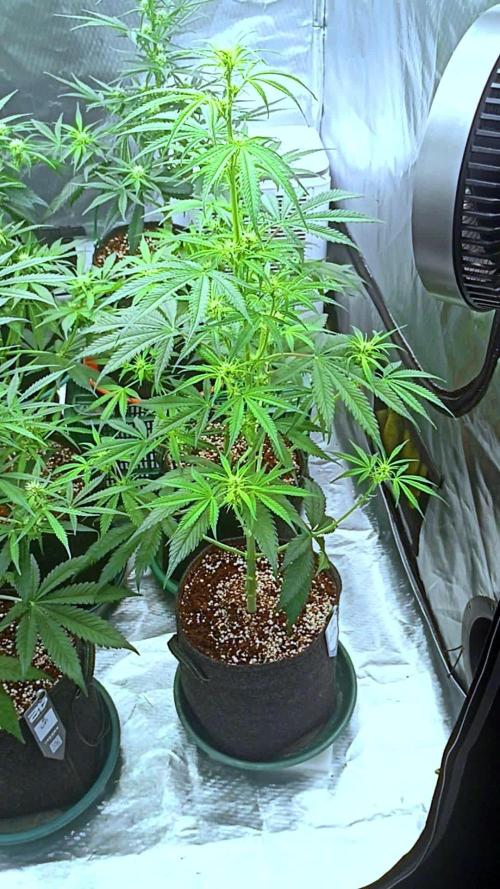
One managed to developed good the other one not so much 😔
I´m running out of the Aptus products and will be switching gradually to Plagron. 💪
💚💛❤️

Likes
141
Share


@Anonymous_2022
Follow
Thanks for stopping by.. Please hit the like button if you like what you see and ill be sure to check you out too Growmies 🌱
Week 5 of flower things are starting to get frosty and stinky … exciting times,
Temps 24-29 ✅
Humidity 60 % 🤔
Added a Dehumidifier and slowly bringing that humidity down ⬇️
Stretching seems to have slowed down so overall all good, Moving nicely, Roll on next week 👍👍👍
Likes
201
Share


@JamMAKEcan
Follow
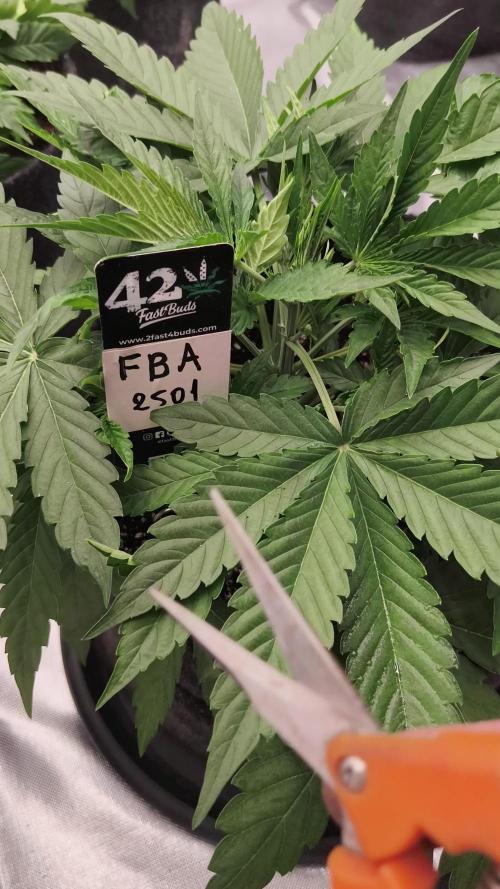
They are doing great including the 1 that got ate she is now the baby of the bunch... The other 1 that had burnt leafs also seem to be growing showing new growth.. And the other 1 is 16 inches she is outgrow everything in tent lol... I love growing cannabis


Likes
27
Share


@420
Follow
Das kleine 150 Watt Licht macht sich bemerkbar.
An Tag 40 sind sie schon etwas zu sehr ausgetrocknet. Dann mit 2L pro Pflanze gegossen.




Likes
62
Share


@Hou_Stone
Follow
Thanks to Creepy_Steeve for the legendary tips, in this diary he guided me to remove a shell that was stuck on a seedling, now it has become one of the biggest plants in the crop 💪🙏
Flowering begins.I did defoliation on the lower tiers on day 4 of flowering
------------------------------------------------
Water: tap water at 300 PPM, I add 0.7G of Hybrid powder per liter to reach 800PPM and I adjust the PH to 5.8. Currently I water my pots with about 1.5L of water every 4 days
-Daytime temperature: 27°C
-Night temperature: 23°C
-Humidity: 45-65%
-Lamp: Mars Hydro FC3000. intensity 80% at 40cm from the top leaves
-Room: Mars Hydro 100x100x180cm
-Extractor: Mars hydro 402 CFM Max. power 2/10
-Substrate : 70% coco, 25% perlite, 5% vermiculite.
My instagram : https://www.instagram.com/p/CuMhQ_BsjRP/?utm_source=ig_web_copy_link&igshid=MzRlODBiNWFlZA==
Looking for MarsHydro equipment for your crop? 🔥
You can use my promo codes! 🙏😻
3% off with "houstone3" for: TS LED Grow Light, Tent, Ventilation
5% off with "houstone5" for: FC&FC-E&SP LED Grow Lights; Grow Tent Kits
https://www.mars-hydro.com/?acc=hou-stone

Processing
Likes
6
Share


@Flydope21
Follow
Seeing a lot of changes since I’ve started the LST. Most of the plants are doing good exept for one that seems to be having a hard time. I will also be adding an xl exhale co2 bag.

Likes
3
Share


@Ieiogrow94
Follow
Eccoci di nuovo qui!!!
Super eccitato per questa nuova collab con Kannabia Seed Company, team davvero al top, che mi ha dato l’opportunità di testare questa nuova genetica e di condividere i progressi con tutti voi!!!
Come sempre partiamo nei bicchieri per poi travasare.. Questa volta verrà svolto tutto sotto la Lumatek Zeus 465 ProC, mi aspetto molto da questo ciclo!!
WOOOOOW!!
Grazie a tutti per il supporto ❤️🍀🔥

Likes
Comments
Share
@mariocave
Follow
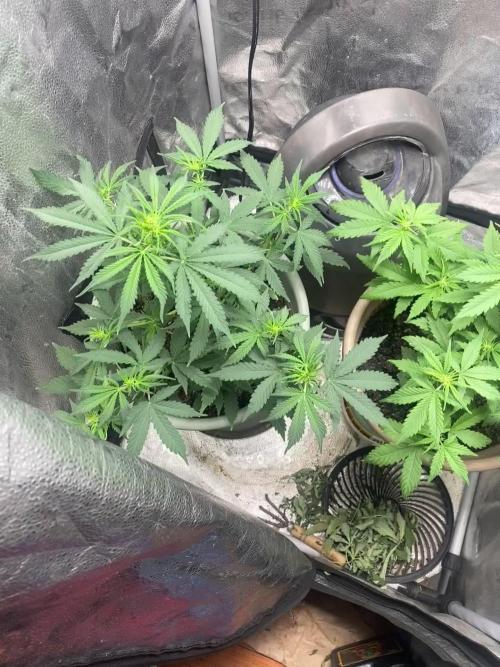
First week of flower and the plants seem to be doing alright still … remember this is my first time planting indoor
Likes
4
Share


@Ryno1990
Follow
Week 6 is flush week for this amazing girl Snow Panda she is very frosty an dense and super sticky smelling amazing an looking just as good this is one of my favorite girls so far

Likes
5
Share


@Iceloc60
Follow
Top feed soil happy frog all purpose and out recharging water half gallon anpiece
Likes
11
Share


@SpaceGorilla_01
Follow
here we go a lil update here
So grow diary's gave our diary back after the slight hicup so here's us upload up to date will be few posts coming up so llz bear in mind were not flooding the scene merely jus catching up
↘️THE NUTRIENTS AMOUNTS GIVEN ARE FOR 15 LITRES OF WATER ↙️
1stly I would like to apologise to all my followers and to all the community and my sponsers for nor getting them nice long informative vids out recently we all know my back had been pretty bad and keeps popping our again along with my legs so im not able to get in the pit easily as it corse tremendously amounts of pain.
anyway here we are day 71 and week 3 of flower and there doing epic feed is on point love indica line so do they as you an see there thriving now there is some heat and wind stress but its minor terms are above 30c so its been difficult to keep optimal we have our 2 big plants cindyy 99 our 3rd big plant our 🍊 cream 🍦 and we have our smaller plant another cindy 99 all kn @indica.nutrients part 2 line we started to use part 1 but I had to cull a load as too many less is more right.
I hope you like this lil update im doing all I can to keep posting im hoping next week will be feeling less pain although jts been 2 weeks now my fault I suffer with legs and back anyway but I been over doing it it was better at start of week then went again .
anyway big shout out to
@indica.nutrients @danindicanutrients for showing some real support through my tuff times its been a blessing to have such an amazing team behind me and ill always do my best to show the support back. 🙏🙏