




Likes
45
Share


@masterofsmeagol
Follow
5/28 It poured yesterday so i dodnt bring the girls outside. Seedlings are transplanted into gallon pots. Once the fill that they'll go in final homes. I brought the plants out on this overcast day to harden them off. They're under the cover of the barn though placed by the open door. I've been putting in some work. Once this rain stops I have a couple things to do on the cage then I'll put the bags in the spots I have mapped out and mix my soil and fill the bags. The next day I typically transplant and add the first layer of supports. I have more pictures but not enough time to download them.
5/29 wow this site sucks. I have already done and saved this shit but its not here. Good thing I copy and pasted from grow with Jane. Only thing that sucks is I can't upload videos. It's not working here anyway so.... Watered and used about 3 gaterade bottles total. I may have messed up and watered the event horizon to much. They seem to be getting rootbound. Plants are doing well though with the transition. They are still hardening off. Tomorrow I plan to position and fill the bags with soil and if able I'll transplant them in the next few days. I want to make sure they're hardened off. Low tonight is 49 but it's 50s after that so I should be good. I'm hoping this video will load. Very stressful to do this shit over and over.
5/30 Plants have spent all day in tje Cafe and are coming in for the night. I finished mixing soil and filling the grow bags. They are ready for transplant. Weather is looking good so if plants respond well to this mild weather they will be transplanted with first set of supports added either tomm or the next day. Depends on plants response today (so far they're doing great) on whether I transplant tomorrow or the day after. I am sore as hell. Pictures are having trouble uploading and I'm not even gonna try to upload the video I took.
5/31 Plants have been taking a few days of full sun and they're doing fine. I'm planning on transplanting this afternoon. I had to water today. I weighed the pots and some were in tje 1200's grams which is dry. I'll update as I work. I have some errands to run then I'm putting the girls in their final homes.
EDIT: WIND WAS RIDICULOUS! I TRANSPLANTED 3 OF THE HEALTJY GMO'S. WHEN I GOT BACK PLANTS WERE RIGHT SIDEWAYS FROM THE WIND. I WENT WITH INTUITION AND TRANSPLANTED 3 GMO'S. OTHER BAGS ARE READY. THE REST OF THE PLANTS WILL GO OUT TOMORROW MORNING. THE SMALL SUPPORTS I HAD DIDNT DO SHIT. I HAD TO ADD TOMATO CAGES AND TOE THE STALK TO THE TOMATO CAGE. SUCKS I COULDNT GET THEM ALL IN BUT BETTER SAFE THAN SORRY. TRANSPLANTS WENT REAL SMOOTH. KNOCK ON WOOD. I TJ8NK THE OTHERS WILL TOO. THEY'RE READY FOR A NEW
6/1 Finished transplanting everything. Easiest transplant I've had so far. 4 gmo 1 toasted toffy 1 sherb pie and 2 event horizon. Everything is in 20 gal smart pots. One gmo is in a 30 gal smart pot. The medium is 1/3 of each roots organic 707, fox farm happy frog and fox farm ocean forest. Used mykos when transplanting. Wind gusts were coming from everywhere direction so I couldn't put a tarp up to block it. I bought "grow cages" which are kind of like tomato cages. The wind is so strong it blows the plants right against the cage. Oh well. I hope it works out. I'll check on them a little later and see how they're doing.
6/2 It was 45 degrees this morning. Nice out now. Plants are doing good. A couple gmos are drooping but it was cold. One gmo looked as good as ever! Sherb pie and toasted toffy are totally unaffected. In this new area plants get a lot of direct sun. Slight tacking on the gmos in the front. The event horizons really needed that transplant. Grow cages seem to be working out well.
6/3 I Watered the garden this morning as its been 75-80 out. I only used a gallon of water for the 8 clones. I'm not sure if I watered enough when I transplanted or not. Some plants have some burns from the intense direct sunlight. Plants could've used a bit more hardening but they'll be fine. A few of them seem great and have no real signs of stress dispute 25mph wind gusts and 15 mph constant wind and this hot sun. I should go check on my plants again this evening but I figure they'll be alright until morning. I've had an incredibly busy day and they were fine at noontime. I'm going to consult my other diaries and see what I did watering volume wise. I've for some videos but they take FOREVER to upload.
EDIT: Looked at last year's diary and it was rainy as fuck and I took way more time hardening the plants. I've had more going on in life which has effected that. Went over at 3pm and gave the plants 3 more gallons of water. Bags were light and soil was dry af. Granted I added soil after it settled but still. I watered one gallon this morning so I figured 3 more gallons would make it a half gallon a plant. Planning to increase to a gallon each if they do OK. Its supposed to thunder storm tomorrow so hipfully we will get some rain. I removed one leaf that was bleached but there are a few others. The weather is beautiful but we've gotten zero rain. In hindsight perhaps I should've given the plants an extra gallon at least.

Likes
3
Share


@fabialien
Follow
Semana del 2 al 8 de septiembre 2024, fotos del día jueves 5 de septiembre.
Riego el dia lunes por la noche, se rego con Floralicius Plus e Hidrol-pez.


Likes
4
Share

@Pompeyblue
Follow
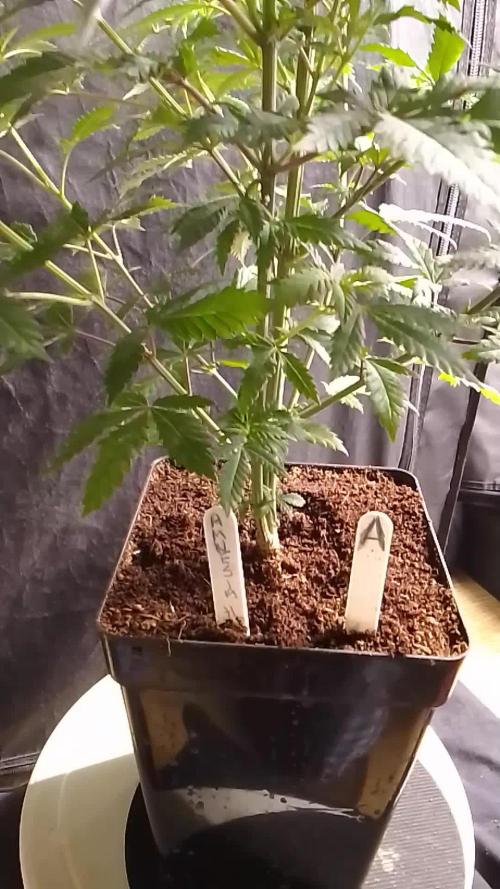
All at the ending week 1 and now at the start of week 2 and all now showing pre-flower pistol's and all looking great day 8 into flower
Likes
21
Share


@Dapper_Buds
Follow
What’s going on lady’s an gentleman. we got the Moab strains going on W/1 in living soil. They where planted into the root riot cube an treated with neem oil to kill off the fungus gnats, they are thriving now. An getting bigger as the day goes. They will be trans planted into the auto pot system at end of this week. Into the 2x4. Under the double UFL3000 mounted on custom frame. Pumping 402w from the wall. Currently both the girls are in the veg/solo cup cabinet under the UF2000 100w light. Currently 60% rh and temps running 79 lights on. Thanks for viewing an happy growing!

Likes
23
Share


@PapasGrow
Follow
Used 300 watts, produced over 400 grams of dry, extremely dank cookies.
Thanks to top quality genetics, lights and nutrients.
Likes
34
Share


@Short_N_stockY
Follow
Welcome to week 6 of the FastBuds LSD-25. I'm a little concerned that she's not turning purple. Other LSD-25 journals the color comes in a little later. Another concern is brown spots on the leaves which seems to be a calcium deficiency 😰.
I've already tried to correct the issue by bumping up the CalMag to 4mL/gal and getting the ph down to 6.2. Some defoliation by removing leaves that are covering bud sites. The training on her is pretty good, kinda level canopy, and good light penetration. A longer time-lapse will be setup 👍 stay tuned for the next update. Happy holidays and happy growing!!!
Note: add Dolomite lime to soil to provide Calcium and Magnesium 😉

Likes
76
Share


@Roberts
Follow
Purple Ryder is growing great under the Medic Grow Mini Sun-2. She loves the Agrogardens nutrition as well. She has been eating and drinking a lot. She is due for a solution change very soon. Everything is looking really good at the moment. Just waiting on the bulking to begin. Thank you Doctors Choice, Medic Grow, and Agrogardens. 🤜🏻🤛🏻🌱💪🏼🌱
Thank you grow diaries community for the 👇likes👇, follows, comments, and subscriptions on my YouTube channel👇. ❄️🌱🍻
Happy Growing 🌱🌱🌱
https://youtube.com/channel/UCAhN7yRzWLpcaRHhMIQ7X4g

Likes
Comments
Share


@Gardens_of_Of
Follow
She is in the cruise mode. Growing beautiful but small frosty flowers.

Likes
16
Share


@ChewiesGrow420
Follow
It is day 30 and we are finally seeing some growth starting after a few days of being locked out due to what I believe is from nutrient burn. Won’t go as heavy next top dress. I have ordered a soil ph pen which will be arriving tomorrow so that I can’t test my soil ph and the run off. Until then I have ph'd the water to 6.0 to hopefully stimulate more growth before flower. These plants are very short but stacked! I can’t wait to see how big they are at pre flower. After it’s 3rd week stretch. Reach for the skies bitches! Watering less aswell. I believe iam overwatering because I go days without seeing these girls. Exhale c02 bag doing well. Resembles mould at the moment. I want to take a moment to thank everyone who’s visited my diary. I hope to bring you great content! Always open to helpful suggestions. Stay tuned!
Day 34 and we are at pre flower. See those hairs comin. Now they all gonna streeeeeetch. Drop a comment, like, or just offer me some advice. We’re all family here ✌️. Doin a little LST now that the space between the nodes are far enough for me to feel comfortable doing so. There was no where to put them no matter how slow I tried haha. Also have each girl in something that resembles the cross face chicken wing from the WWE. Little fan on fan action. It’s like the leaves were meant to stuck together. The knotches in the leaves interlock I mean. I stretch the upper fan leaf to the one directly below it. Opening up both shoots. Hope they made sense lmao.
Likes
7
Share


@Bills1995
Follow
Everything going as planned. Will take more pictures soon.day 85(getting phatter)


Likes
5
Share


@Samsemilla
Follow
Das ist die letzte Woche bevor das Licht auf 12/12 umgeschaltet wird.
Ich habe auch endlich untenrum etwas ausgedünnt, sollte ich in Zukunft früher machen.
Die Fläche ist doch etwas sehr voll geworden - vielleicht habe ich doch zu viele Triebe stehen lassen.

Likes
3
Share


@Canadian_Bud
Follow
This one is now finally in it's new home. Homemade Aeroponic System after 11 weeks of low T5 bulb action This is an interesting strain as the last harvest was small and not what i had expected. Hoping this new system might bring up the numbers mind you the weed is a very nice smoke with very hard buds.😎
Likes
9
Share

@Susquihanna
Follow
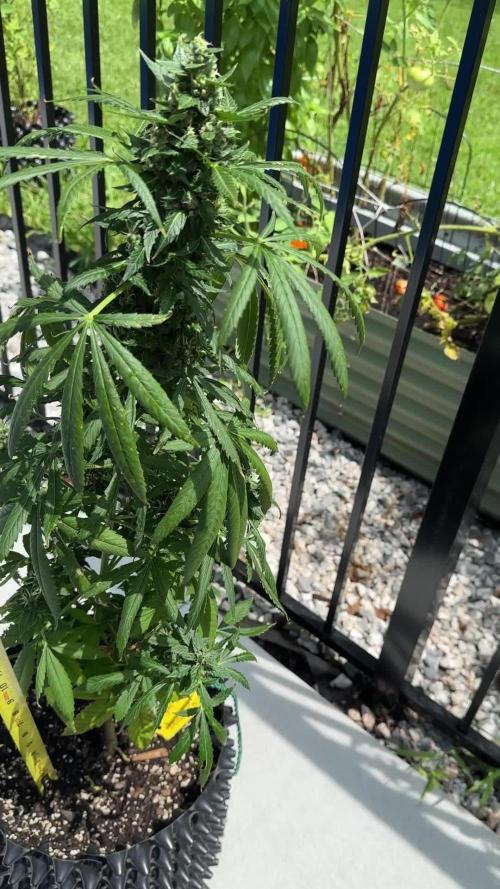
This was another hot, hot week with a big rainstorm. Take a look at the measuring cup, it is full of rainwater. Dosidos continues to smell and is very sticky. It is a tall with stacked buds. I am interested to see how big the buds will be.
Half way through this grow, I had to stop using Miracle Grow and change my grow plan. I decide to use Advance Nutrients Jungle Juice for the rest of the grow. Jungle Juice’s selling point is that it is the only nutrient that I should need during the entire grow. One just need to make the solution stronger as the plant matures.
The directions say to “stir vigorously” and that is true. It is very clumpy and I had to stir and shake the bottle a lot. As your plant is in veg and growing larger, directions say to up your Jungle Juice to 4 ml per liter. If my calculations are correct, I am using approx. 5 tablespoons per 5 gallon bucket.
1 gal is 3.78 liters
5 gallons=18.92 liters
4ml jungle juice per liter x 18.92 liters= 75.7 ml which is = to 5.119 tablespoons per 5 gallon bucket of water
As the end of the summer is quickly approaching, I have spent some time reflecting this week on all of the contests that I have entered and not won this summer. It can be a little frustrating because of all the time I have spent taking pictures and writing commentary. But, instead of it getting me down, I have to think about all of the positive take aways and I want to share them on this platform.
I have read a lot of diaries and now know why I am just an apprentice. I have a lot to learn from all of you. There are some really good growers with a lot of experience and crazy grow techniques. So much knowledge is on this platform-it’s mind boggling.
To be a great grower, you must be willing to be vulnerable and put yourself out there and try different suggestions and new techniques. I have made a few friend that I enjoy chatting with. I enjoy reading comments versus just seeing likes.
My best friend on grow diaries is @Natrona and my neighbor as well. She has been growing longer than I have been so I routinely learn from her. This summer I learned to mix 1 cup of Perlite into my soil. I can see where my plants need the air flow. And, I now I only defoliate fan leaves that absolutely need to be gone. I let the fan leaves stay on until they fall off. I want my buds to pull all the nutrients they can out of the fan leaves. I also bought 2 new tools that @natrona suggested. The first was a water PH tester and the second was my Max-ee Magnifier which is informative and fun to use.
As always, Let’s Chat it up AND Likes and comments are appreciated

Likes
10
Share


@Elpicor
Follow
😴😴😴 smoking last harvest😇 next week I will post a video of insane trichomes

Likes
16
Share


@GrowCaCola
Follow
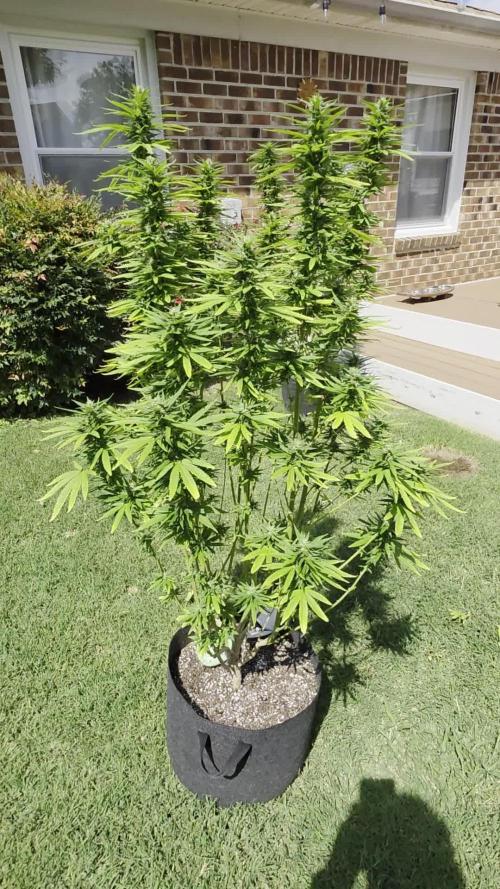
Dont underestimate the potency of the smoke on this girl. It can be unreal if you dont respect it. I smoked a whole blunt of it and expected not to get my head taken off. Lets say I wont make that mistake again. Good Job Fast Buds - another potent fast beast!

Likes
27
Share


@adam_pawloski87
Follow
Over all was an amazing grow, super sticky dense nugs with smell of berries, highly recommended for everyone!!
Likes
1
Share


@kauilmayel1996
Follow
So nice
Pero me faltó la maya
Looking good
No sé ni que crecí pero es bastante hermosa


Likes
13
Share
@ThatsmyGrow
Follow
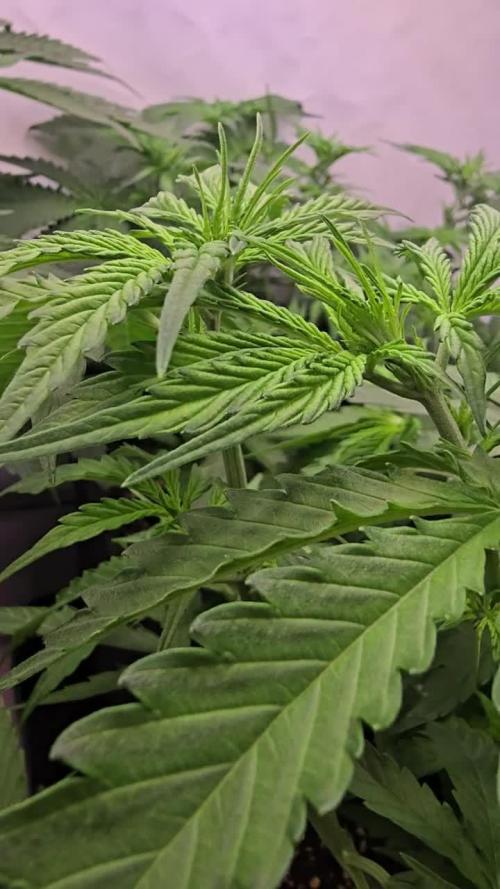
🌸 Week 4 – Gorilla Cookies Auto Pheno Hunt
Week 4 has officially started and all 6 phenos have entered flowering 🔥🌸
Really happy to see every plant transitioning into bloom now. From this point on, things should get much more interesting because the differences between the phenos are becoming impossible to ignore.
📈 Current observations:
Several phenos are stretching hard since flowering started
Some plants are already reaching heights of around 40 cm
Growth patterns are becoming much clearer between each phenotype
On the taller phenos you can already see that the first side branches are developing almost like additional main colas 👀
💧 Feeding & training:
This week the plants received their first bloom nutrients following the Master Recipe.
I also continued removing selected large fan leaves that were shading potential flower sites to improve light penetration and help lower branches develop more evenly.
📊 Current environment:
Temperature stable around 26°C
Humidity remaining between 63–65%
VPD holding around 1.3 kPa
Light intensity unchanged
Now the exciting phase begins — the next few weeks will probably be the most important ones to identify the strongest and most beautiful phenos in the hunt 👀🔥
💬 Which pheno do you think will dominate once flower production really kicks in?