The Grow Awards 2026 🏆
Likes
29
Share
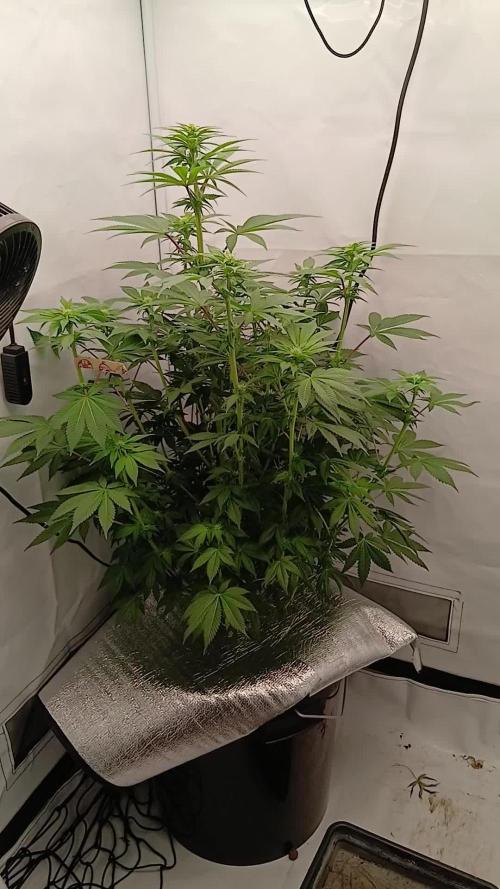
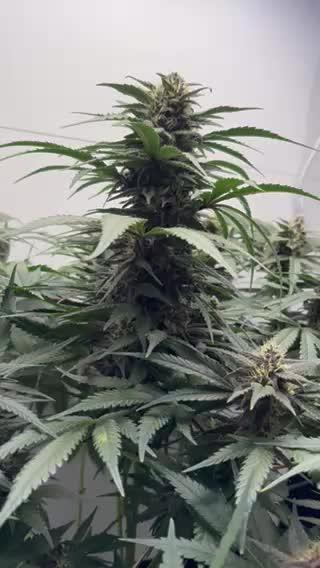
Info: Unfortunately, I had to find out that my account is used for fake pages in social media. I am only active here on growdiaries. I am not on facebook instagram twitter etc All accounts except this one are fake. Flowering day 58 since time change to 12/12 h. Hey guys :-) . The lady is getting closer and closer to her end :-). The next 7-14 days will be harvested :-). The trichomes are now checked every day 👍. This week she got a watering with GBL Clean Fruits (see nutrient table above) so much was poured that about 10% drain came out again. Now she is allowed to use up her last available nutrients until the harvest. Catching your leaves are very nice in autumn :-). Have fun with the update 👍. Stay healthy 🙏🏻 You can buy this Nutrients at : https://greenbuzzliquids.com/en/shop/ With the discount code: Made_in_Germany you get a discount of 15% on all products from an order value of 100 euros. You can buy this Strain at : www.Zamnesia.com Type: Runtz ☝️🏼 Genetics: Zkittlez x Gelato 👍 Vega lamp: 2 x Todogrow Led Quantum Board 100 W 💡 Bloom Lamp : 2 x Todogrow Led Cxb 3590 COB 3500 K 205 W Soil : Canna Coco Professional + ☝️🏼 Nutrients : Green Buzz Liquids : Organic Grow Liquid Organic Bloom Liquid Organic more PK More Roots Fast Buds Humic Acid Plus Growzyme Big Fruits Clean Fruits Cal / Mag Organic Ph - Pulver ☝️🏼🌱 Water: Osmosis water mixed with normal water (24 hours stale that the chlorine evaporates) to 0.2 EC. Add Cal / Mag to 0.4 Ec Ph with Organic Ph - to 5.8 - 6.4
Likes
34
Share
Our Rainbow Sherbet of course from Zamnesia like all my plants has been the territory of realization for an exceptional mainfolding. After a topping that would seem very premature at the second internode (But that in autoflowering is also appropriate to delay flowering) I managed very well to make the lateral branches grow parallel to the ground. They form a T with the main stem that comes out of the ground a little. It seemed like it should be low, some joker even joked about it and instead it is becoming a nice little monster. It made the lateral branches start and all that then worked with a successful main lining on which I made the only mistake of leaving a little too much stuff at the bottom that I am cleaning up little by little as I understand that it will not see much light or will not produce satisfactory flowers. The main stem that runs parallel to the ground is very beautiful to look at and is from the main lining manual. The structure created with mainfoldindg, mainlining, topping and lst vari is very pleasant, the plant is at medium internodal distance and flowers quickly so it is a plant on which I would feel like recommending these techniques that it is true that they can slow down the harvests but they give a satisfaction to the sight and an unparalleled fun in making them. We are still using soil, fertilizers and all the additives recommended by Plagron 100% organic. We are still in the early flowering program that maintains the same additives Power Roots, Sugar Royal, Pure Zym and adds the flowering stimulant Power Buds. Obviously the basic fertilizer is now Alga Bloom. The Green Sensation hero of the late flowering will arrive and at the same time it will be time to remove power roots and a week later the enzymes. (The plant left to grow straight and straight ahead of time has been taking it for a while) ---- Decide on the right soil and calculate your fertilization schedule according to your soil on the official website. -- www.plagron.com Try a seed of this variety that drives us crazy.. ---- https://www.zamnesia.io/en/11230-zamnesia-seeds-rainbow-sherbet-automatic.html Zamnesia Description //A cross between Pink Guava, Sunset Sherbet and a hint of ruderalis, Rainbow Sherbet Auto offers a wide range of flavors, effects and more. This 70% indica-dominant strain reaches considerable THC levels (24%) and is suitable for both experienced growers and those taking their first steps in the world of cannabis cultivation. All the best that mother nature has to offer is on ---- www.zamnesia.com
Likes
19
Share
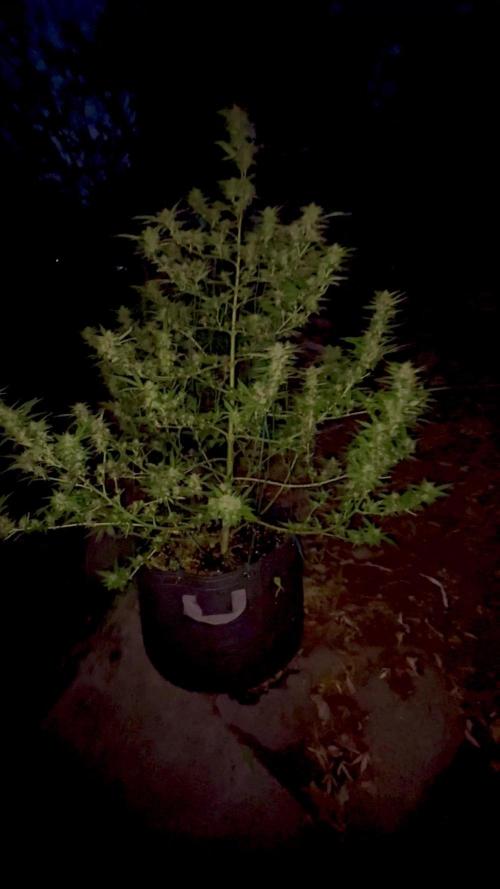
Great week inside the tent, somewhat uneventful out of it. UKBS 2 and Carl 2 have been growing (mainly carl 2, rip the homie UKBS2) and the plants inside the tent have been flourishing and really sugaring up despite how early they are into flower. Timelapse is here, ta-da! My nute syringe broke, so nutrient measurements are 100% inaccurate and I have no clue what I'm feeding my plants. Fun situation. Updates as the week goes. -5/28/2021 - Outdoor plants are staked out as they're quite tall and my area has a wind issue. Carl 2 is approximately 5 feet tall now, quite the monster. UKBS 2 is still suffering from degeneration, but the rest of the plant looks happy as usual. Broke out the nice camera yet again for some bud shots, gotta be one of my favorite parts of the grow process. -5/30/2021 - Indoor plants are getting quite fat in the bud department. Had to tie many of Carl 1's mains to the roof of the tent with some twine😂 - Should be some real fat goodness once she's ready to come down. Can't wait. -5/31/2021 - Last night fell asleep before closing the tent, lights on in the room. Hopefully nothing too bad as it was only one night.
Likes
9
Share
@Scoota710
Follow
It’s growing pretty good. I’ve been debating on topping it or doing some LST on it 🤔
Processing
Likes
11
Share
@kcartel
Follow
there is a significant increase in growth after bending the upper cola, as compared with the sativa, the WB grows and blooms much faster, very grateful to your advice, everything is clearly illuminated, on the next allotment I think to add some ice and shed everything with cold water, the flavor is very strong, for three days I made leaf clippings on the lower part of the plant, fertilized 2-3 times a week, I try to add less than the specified norm, I don’t feel like leaves, I feel as you can see it’s not very bad, I feel this variety will be closer to the harvest than the neighboring sativa, it pleases, and I feel the harvest will not be bad) Well, we are waiting for 7 weeks, wish me luck)
Likes
2
Share
@Oldwied
Follow
First week of flowering. The big stretch has started. The SCrOG screen is in place. Every two days, the shoots are pushed under the net. I added 60mL LAB (lacto acid bacteria, diy with rice water and milk) üer liter of irrigation water Light Power: 70% Day 56 Flower day 6 Photoshooting
Likes
Comments
Share
Hi liebe Community and Welcome back! 💚 Der zweite Strain von Good Times Genetics. Entwickelt sich wunderprächtig und es sind sehr schöne große und Breitgefächerte Blätter zu erkennen. Ein schönes Wuchsbild verreint mit einer starken Indica Dominanz. Nach der ersten Blütenwoche entwickeln sich allmählich die Blütentriebe und die ersten Stigmen sind sichtbar. Also Düngerkomponenten kam das Greenhouse Feeding BioBloom und der entsprechende Enhancer zum Einsatz. Der Stängelabrieb duftet schon stark nach säuerlichen, dieselartigen Nuancen, mit einen etwas GMO typischen Aroma. Bei diesem Pheno tritt der Diesel Geruch jedoch besonders hervor. Die Wachstumsbedingungen im Growzelt sind aufgrund der trockenen Heizungsluft zwar gut aber schon sehr trocken: ——————— 🌞 Temp: 22°C 🌚 Temp: 20 °C 💨 RH: 38% VPD: 1,33 kPa 😎PPFD: 830 mqm ——————— Stay Tuned! 💚
Likes
7
Share
@RBG
Follow
LA is doing lovely, she's was originally the tallest but after folding her like a lawn chair after a big day on the beers her upward growth has slowed right down and she's starting to push outwards like I was anticipating. LA punch is an unreleased genetic from Cali connection. I suggest if you top her to top her once. Relax on the defoilation and let her grow out. She is quiet compact and wants to stay together so you need to try and be forceful to get your way but do be careful. Doesn't like stress in the sense of defoilation and topping early on but handles high PH, high EC and high temperatures so far but obviously not for long otherwise you can seriously stunt your ladies. Light went from 60% to 90% over Week 5 to Week 6, next 2 days she'll be at 100% ready for flowering. 2 set AC infinity bar lights will go in over this week as well as my scrogg net. Nutrients this round Floramax veg1 Floramax organabud Floramax flowering enhancer ( 1/4 ) dose Flairforms roots Sleepz with the fishes ( pythoff ) Cyco platinum series silica Floramax calmag E.c 2.2 Ph 5.9-6 Let's gooo
Likes
17
Share
Welcome back growfessors to another episode of growfessor theatre! 👽🌳💚 Week 8F begins for the ladies of the 4x8, last round of feeding before the flush. LSD has gone crazy over the last week, insane bulk-up in her buds, from top to bottom, in by the stock and out to the tips, she's just bulky, dense, sticky, frosty and incredible! By far, the best looking results from any of my LSD grows. Green Crack also looks incredible and the rest of the ladies, while doing awesome, will be their final grow in my garden. Thanks for stopping by growfessors, tune in next week for another episode! 👽🌳💚
Likes
4
Share
@ChrisFunk
Follow
The ladies are absolutely loving the Autopots I added some plagron Cal mag to the plain PH water in the tank and they are looking phenomenal!! I topped the Bg fx3 #1 and the lucky 13 and letting the 2 smaller ones catch up!! Onwards and upwards Happy New Year Eve
Likes
2
Share
Likes
9
Share
** COST ** TO RUN - Used previous ⛺️ setup : $0.00 - Monthly electricity : $36.73 <-- other ladies sharing ⛺️ - 3 Gallon Fabric pot : $0.15 - Bonsai wire : Apx. $0.03 - Reused soil from last run : $0.00 FOR NUTRIENTS - Jadam Microbial Solution : $0.00 - Fermented Plant Juice : $0.00 APPLYING - JMS : 30ml / 1 Litter - FPJ : 30ml / 1 litter TOTAL COST : $36.91 Throughout the week, I give compost tea, and fermented plant juice once each ^^ Hope you guys have a wonderful day today ^^v *** Please Like, comment & share *** Highly appreciated -----/-----<@
Likes
55
Share
2nd net is up. Early bud formations are promising. holding up to the extremes pretty well, some leaves taking minor damage, but overall, she is holding up, gave her 1 night at 50F see how she would react, stressful. Not advised as it messes with her metabolism, but I want to see if it triggers any anthocyanin response. Love to see her purp up but no signs yet. Remember, For every molecule of glucose produced during photosynthesis, a plant needs to split six molecules of water. This process provides the hydrogen needed for synthesizing glucose and other organic compounds, while oxygen is released as a byproduct. Homework. If Rubisco activity is impaired and it cannot properly function or regenerate its substrate, the plant's leaves are likely to turn a pale green or lime green, a condition known as chlorosis. Essentially, Rubisco activity is highly regulated and susceptible to various environmental and metabolic factors that can cause it to become inhibited, leading to an apparent failure in RuBP regeneration due to a lack of consumption. Rubisco regeneration is intrinsically linked to nitrogen supply because Rubisco is a major sink for nitrogen in plants, typically accounting for 15% to over 25% of total leaf nitrogen. The regeneration phase itself consumes nitrogen through the synthesis of the Rubisco enzyme and associated proteins (like Rubisco activase), and overall nitrogen status heavily influences the efficiency of RuBP regeneration. RuBisCO is a very large enzyme that constitutes a significant proportion (up to 50%) of leaf soluble protein and requires large investments in nitrogen. Insufficient nitrogen supply limits the plant's ability to produce adequate amounts of RuBisCO, thereby limiting the overall capacity for photosynthesis and carbon fixation. Maintaining the optimal, slightly alkaline pH is crucial for the proper function and regeneration of Rubisco. Deviations in either direction (too high or too low) disrupt the enzyme's structure, activation state, and interaction with its substrates, leading to decreased activity and impaired RuBP regeneration. (Lime/yellowing) Structural Component: Nitrogen is an essential building block for all proteins, and the sheer abundance of the Rubisco protein makes it the single largest storage of nitrogen in the leaf. Synthesis and Activity: Adequate nitrogen supply is crucial for the synthesis and maintenance of sufficient Rubisco enzyme and Rubisco activase (Rca), the regulatory protein responsible for maintaining Rubisco's active state. Nitrogen deficiency leads to a decrease in the content and activity of both Rubisco and Rca, which in turn limits the maximum carboxylation rate, Vmax, and the rate of RuBP regeneration Jmax, thus reducing overall photosynthetic capacity. Nitrogen Storage and Remobilization: Rubisco can act as a temporary nitrogen storage protein, which is degraded to remobilize nitrogen to other growing parts of the plant, especially under conditions of nitrogen deficiency or senescence. Nitrogen Use Efficiency (NUE): The allocation of nitrogen to Rubisco is a key determinant of a plant's photosynthetic nitrogen use efficiency (PNUE). In high-nitrogen conditions, plants may accumulate a surplus of Rubisco, which may not be fully activated, leading to a lower PNUE. Optimizing the amount and activity of Rubisco relative to nitrogen availability is a target for improving crop NUE. Photorespiration and Nitrogen Metabolism: Nitrogen metabolism is also linked to the photorespiration pathway (which competes with carboxylation at the Rubisco active site), particularly in the reassimilation of ammonia released during the process. To increase RuBisCO regeneration, which refers to the process of forming the CO2 acceptor molecule Ribulose-1,5-bisphosphate (RuBP) during photosynthesis, the primary methods involve optimizing the levels and activity of Rubisco activase (Rca) and enhancing the performance of other Calvin-Benson-Bassham (CBB) cycle enzymes. Biochemical and Environmental Approaches: Optimize Rubisco Activase (Rca) activity: Rca is a crucial chaperone protein that removes inhibitory sugar phosphates, such as CA1P (2-carboxy-D-arabinitol 1-phosphate), from the Rubisco active site, thus maintaining its catalytic competence. •Ensure optimal light conditions: Rca is light-activated via the chloroplast's redox status. Adequate light intensity ensures Rca can effectively maintain Rubisco in its active, carbamylated state. •Maintain optimal temperature: Rca is highly temperature-sensitive and can become unstable at moderately high temperatures (e.g., above 35°C/95F° in many C3 plants), which decreases its ability to activate Rubisco. Maintaining temperatures within the optimal range for a specific plant species is important. •Optimize Mg2+ concentration: Mg2+ is a key cofactor for both Rubisco carbamylation and Rca activity. In the light, Mg2+ concentration in the chloroplast stroma increases, promoting activation. •Manage ATP/ADP ratio: Rca activity depends on ATP hydrolysis and is inhibited by ADP. Conditions that maintain a high ATP/ADP ratio in the chloroplast stroma favor Rca activity. Enhance Calvin-Benson-Bassham (CBB) cycle enzyme activity: The overall rate of RuBP regeneration can be limited by other enzymes in the cycle. •Increase SBPase activity: Sedoheptulose-1,7-bisphosphatase (SBPase) is a key regulatory enzyme in the regeneration pathway, and increasing its activity can enhance RuBP regeneration and overall photosynthesis. •Optimize other enzymes: Overexpression of other CBB cycle enzymes such as fructose-1,6-bisphosphate aldolase (FBA) and triose phosphate isomerase (TPI) can also help to balance the metabolic flux and improve RuBP regeneration capacity. Magnesium ions, Mg2+, are specifically required for Rubisco activation because the cation plays a critical structural and chemical role in forming the active site: A specific lysine residue in the active site must be carbamylated by a CO2 molecule to activate the enzyme. The resulting negatively charged carbamyl group then facilitates the binding of the positively charged Mg2+ion. While other divalent metal ions like Mn2+ can bind to Rubisco, they alter the enzyme's substrate specificity and lead to dramatically lower activity or a higher rate of the non-productive oxygenation reaction compared to Mg2+, making them biologically unfavorable in the context of efficient carbon fixation. The concentration of Mg2+ in the chloroplast stroma naturally increases in the light due to ion potential balancing during ATP synthesis, providing a physiological mechanism to ensure the enzyme is activated when photosynthesis is possible. At the center of the porphyrin ring, nestled within its nitrogen atoms, is a Magnesium ion (Mg2+). This magnesium ion is crucial for the function of chlorophyll, and without it, the pigment cannot effectively capture and transfer light energy. Mg acts as a cofactor: Mg2+ binds to Rubisco after an activator CO2 molecule, forming a catalytically competent complex (Enzyme-CO2-Mg2+). High light + CO2) increases demand: Under high light (60 DLI is a very high intensity, potentially saturating) and high CO2, the plant's capacity for photosynthesis is high, and thus the demand for activated Rubisco and the necessary Mg2+ cofactor increases. Mg deficiency becomes limiting: If Mg2+ is deficient under these conditions, the higher levels of Rubisco and Rubisco activase produced cannot be fully activated, leading to lower photosynthetic rates and potential photo-oxidative damage. Optimal range: Studies show that adequate Mg2+ application can enhance Rubisco activation and stabilize net photosynthetic rates under stress conditions, but the required concentration is specific to the experimental setup. Monitoring is key: The most effective approach in a controlled environment is to monitor the plant's physiological responses e.g., leaf Mg2+ concentration, photosynthetic rate, Rubisco activation state, and adjust the nutrient solution/fertilizer to maintain adequate levels, rather than supplementing a fixed "extra" amount. In practice, this means ensuring that Mg2+ is not a limiting factor in the plant's standard nutrient solution when pushing the limits with high light and CO2. Applying Mg2+ through foliar spray is beneficial to Rubisco regeneration, particularly in alleviating the negative effects of magnesium (Mg) deficiency and high-temperature stress (HTS). While Mg can be leached from soil, within the plant it is considered a mobile nutrient, particularly in the phloem. Foliar-applied Mg is quickly absorbed by the leaves and can be translocate to other plant parts, including new growth and sink organs. Foliar application of: NATURES VERY OWN MgSO4 @ 15.0g L-1 in a spray bottle. For those high-intensity workouts when 1 meal a day is just not enough! Foliar sprays are often recommended as a rapid rescue measure for existing deficiencies or as a supplement during critical growth stages, when demand for Mg is high. Application in the early morning or late evening can improve absorption and prevent leaf burn. The plant was getting a little limey yellow in the centre. Shortly thereafter, she was back in business, green mostly regenerated. The starting point [of creativity] is curiosity: pondering why the default exists in the first place. We’re driven to question defaults when we experience vuja de, the opposite of déjà vu. Déjà vu occurs when we encounter something new, but it feels as if we’ve seen it before. Vuja de is the reverse—we face something familiar, but we see it with a fresh perspective that enables us to gain new insights into old problems. Confidence is evidence... nothing more. You are confident because you have driven 10,000 times, you are confident because you have spoken 10,000 times. People think confidence is a feeling, but it's not. If you want more confidence, then you need to create evidence, take more shots, collect more data, build more experiences, take more risks; fail, confidence doesn't come first; it is the reward you get for doing the work. no one else wants to do.
Likes
22
Share
@Kirsten
Follow
Northern Lights is very close to being finished. I had phosphorus excess in this grow before, and I think that's what's happened again. I think the excess of phosphorus has prevented the plant from being able to uptake Calcium, Magnesium and others. 8.5.25: The plant was watered with 2ltrs of dechlorinated water PH'd to 6.2. I added per litre; ♡ 1/2 TSP Mega Crop Part A ♡ 1/4 TSP Sea K(elp) PPM: 890 PH: 6.2 I decided to feed each plant separately and mix it up in the 2l jug. I gave an additional 2l of dechlorinated water PH'd to 6.4 with the following nutrients; ♡ 4ml Ecothrive Trace ♡ 1/4 TSP Ecothrive Biosys PPM: 636 PH: 6.4. ☆ Xpert Nutrients PH down, up to 1ml. ☆ Ecothrive Neutralise 1 drop per litre from the 1ml pipette, which is attached. This is my dechlorinator. She will be taken down once I'm satisfied with the ratio of trichomes. I'm leaving this one a bit longer than I usually would, just to see the difference in effects of a later harvest. I do need the space in the tent, so I'm hoping it won't take too much longer. Thanks for following along 😊🍃✌️💚🤞
Likes
4
Share
29/09/2025 18:50 Finally here after 10 full cloudy and rainy days,found out that the two Coco needs more water,the pots were dry like never even with rain almost every day 18.6 °C and 53%RH means only one thing,autumn is here and officially summer ended Video #1 apricot auto 68 days from seed Harvest Is near for this little auto,smell is the best by far Just like an apricot juice Checked all the plant and didn't found any mold sign so i cut a little sample to have a better look at the trichomes Video #2 Coco fresh 60 days from seed This one is really focusing on the buds you can see the difference from the last time Noticed that the buds below the apical are pretty dense i don't know if it's normal or if it's because of underwatering Video #3 Coco Milk 72 days from seed I think last time defoliation was a bit hard as i see not much difference on the buds as i think should be in 10 days Smell of this Is like buttery really strange if you think It comes from a plant At the end there are the first four branches of the gorilla z, these flowers are 94 days old and keeps going wtf 2nd of october now and Is raining again after a full day of heavy rain,maybe i will be back after a full week
Likes
4
Share
Keep on moving. 420 forever and Jah God always with us protecting us. Hug. Tommy
Likes
2
Share