


Likes
Comments
Share


@CanadianFillmore
Follow
Week 7 begins. Removed a bunch of dying leaves. This lady has struggled with what looks like light stress. Buds have not developed as much as I would like. Hopefully she finishes strong, two more weeks of feeding to go.

Likes
14
Share


@CHILLING_RACOONS
Follow
Dear Friends, 👨🌾 👩🌾
White russian by Seeds Mafia is growing sooooo strong
27/11 transplanted into 15L smart pot
✅ VEGETATIVE week #5
📅this week goes from 12/12 to 18/12.📅
💡💡💡Viparspectra XS2000 is working at 50% power.
💉🔍Fertilization schedule:🔍💉
14/12 eposom salts 2g/l foliar and 1g/l irrigation
WE ARE BACK!!!
We are back after a little pause.
We take a break because we were too busy to post high quality diaries. In the last diaries we tried to post as good as possible and we have to publish about 6 or 8 diaries (in addition to these that we will publish shortly). We opened also an educational Instagram page, we growed a lot in a short amount of time BUT, Instagram suspended our account and we lost all our posts, I was so sad and disappointed... a lot of work lost in a night....
Now we started a new grow with six awesome strains!!!!!
In this diary you will see our journey with White Russian by our friends Seeds Mafia, sit down and enjoy the show!
We are growing in a 15L Smart Pot with Light Mix soil by BioBizz
White Russian Feminized was obtained by crossing the AK-47 and White Widow varieties, it has a very short flowering period of 55-65 days. It is especially recommended for outdoor cultivation, such as France and Spain, although it may also adapt to indoors and greenhouses. The harvest flavor is relatively intense during the growth and flowering period.
These seeds give excellent plants, both as appearance and effect. The plant has a medium height, it is robust, thick and dense, with flowers full of resin (the crystals occur about 5 weeks after flowering). Having a 22% THC content, White Russian is one of the most popular and potent marijuana varieties.
As a result, this strain has a very strong, intense, lasting and rather mind effect
💸💸💸💸💸 Here you can buy seeds of this top shelf strain: https://seedsmafia.com/en/feminized-cannabis-seeds/white-russian-feminized-.html
_____________________________________________________________________
🔧💡OUR SET UP💡🔧
✔️ 💲💲💲VIPARSPECTRA 🚀🚀🚀🌕🌕
ViparSpectra®️ XS2000 240W Infrared Full Spectrum LED Grow Light:
Excellent ratio between wattage and ppfd, excellent light penetraton, perfect light spectrum (it also has IR 🤩) and it has the best build quality on the market. Until now, built quality is really awesome. You can touch that quality. Materials are really strong, excellent driver and the best leds on the market. Heat dissipation is perfect, the lamp is never too hot and it has a passive dissipator so you will have zero noise. It also has IP65 certification. I like that this lamp is bigger than others, so the 240w of power are well distribuited on the space. Viparspectra has an awesome customer service, and shipping was creazy fast!
This awesome brand also offers 3 years warranty.
This lamp has no rivals.
A special thanks to Emily of Viparspectra ❤️❤️❤️❤️
HERE YOU CAN BUY THIS PROFESSIONAL LIGHT: https://www.viparspectra.com/products/xs-series-xs2000 or https://amzn.to/3dyUoJl
and here you can buy other awesome stuff: https://www.viparspectra.com
✔️ 💲💲💲MARSHYDRO 🚀🚀🚀🌕🌕
📦120X120 GROW TENT: an awesome box, easy and fast to assembly. Made by strong materials, solid zips and it is totally lightproof. The position of holes is optimal and the two lateral windows will make easier the work inside the box. There is also a double end, so you are 100% sure that dirt or liquids will not spill out. You can find it here: https://www.mars-hydro.com/grow-tent/buy-mars-hydro-grow-tent-48x48x80-1680d-4-x-4-size-keeps-all-light-in-top-quality-1680d-canvas-is-tear-proof-and-double-stitched-light-blocking-fast-installation-for-sale
💡TS 600 FULL SPECTRUM 100W LED GROW LIGHT : with this light you will achieve excellent buds, you will not need anything more. This lamp replace a 150w HPS lamp, but, with this Led Light you will smoke bigger, harder and tastier buds because Led have a complete spectrum and a powerful light penetration, so your plants will work as much as possible to make you happy. Psssssss it it extremely cheap and it is only 100w, your bills will never be too high, YOU HAVE NO EXCUSES!! Here if you want this little beast: https://www.mars-hydro.com/led-grow-light/mars-ts-series-led-grow-light/mars-tsw-600-led-full-spectrum-hydroponic-led-grow-light
Thank you Eleen of Marshydro❤️❤️❤️❤️
💣Quantum board - 480w - 4x120w Boards by Zhoangshan Koray Opto-Electronic Ltd.
Samsung LM301B 288 led/board 3000K 0dB noise
+24led/board led Osram 660nm
Efficiency 2.6 umol/J 220 lm/w
Driver: Meanwell HLG-480H-36B
💣Quantum board - 240w - 2x120w Boards by Shenzen Yuanhui Led Ltd.
Samsung LM301H 504 led 3500K 0dB noise
+24led/board led Osram 660nm
Efficiency 2.7 umol/J 220 lm/w
Driver: Meanwell HLG-240H-48B
-ESTRACTION FAN:
Blauberg 125 Turbo Pro Series
Maximum air flow: 430-560 m³ / h 50W 32-44 dBA
-FANS:
A)OSCILLATING FAN D.15cm 2 speeds 20w
B) COMPUTER FAN Sunon DP200A – 230V 20w (Strong, reliable and quiet)
C)Cornawall Electronics Multifan Turbo, three speeds, can be used both on support surfaces and mounted on the wall. High capacity, about 740 m3 / h. High silence and reliability.
💊💉💊FEEDINGS:
We used BioBizz light Mix
TOP CROP:
-DEEPER UNDERGROUND: to stimulate roots system
-TOP VEG: for a excellent growth in the vegetative phase
-GREEN EXPLOSION: to promote creation of bud sites and to allow a faster growth
-MICRO VITA: bacterias for equilibrate the soil and to make the plant healty
-BIG ONE: to stimulate bud sites and to stimulate resin production
-TOP BLOOM: to achieve excellent big and hard buds
-TOP CANDY: to feed the buds with molasses for a tastier smoke and to gain weight
-TOP BUD: to enlarge buds and to gain weight
PLAGRON: PK 13-14 to have big and hard buds and to feed plants with lower effort
ADVANCED NUTRIENTS: Sensi Cal-Mag Extra-> for cal mag deficiency
GROTEK: CAL MAG for cal mag deficiency
HESI: PowerZyme to clean and balance the soil. It feeds the plant cleaning the soil.
GHE: - Final Part (ex Ripen) accelerate the final flowering phase, dissolves minerals in excess
- Flash Clean to flush the plant and to be sure that all excesses are out from plant and pot
These two products improve A LOT the smoke of our babies
-PURPINATOR to stimulate flavonoids and to have a better taste and smell.
____________________________________________________________________________________________
🙏❤️ THANK YOU FOR BEING HERE ❤️🙏
Please leave a comment with your opinions, it is very important to us to have a comparison.
If you like our job, tap the weed button and follow us. It will be really appreciated.🙏
We want to thank again everyone that help us in our project. You support us to support our dream. ❤️
SPREAD THE LOVE OF THIS PLANT ALL AROUND THE WORLD
🌿Thank you again🌿
❤️Sweet hugs❤️
👨🌾CHILLING_RACOONS👩🌾
Likes
31
Share


@Endriu
Follow
Hello Bros&Sis! Ciao!😊
this time I've decided to made a video update, from the start of the week to the finish, we're gonna see some BIG differences! (The longest is from the end)
About the ladies:
Girls in coco
Royal AK- she's drinking every single drop op solution and has literally exploded! I'm really happy about her training (top/lst/hst). A very strong strain.
OG Kush- I don't get this girl, she's definitely not an heavy drinker.
Speedy Chile FF- when I re-potted her into 6lt pot, some of my Bros hoped for a Baobab, what do you think?😂 (has some mutations, has a growth of 3 leaves and then 2 branches have joined together and the other has grown normally)
Ladies in Soil:
UK Cheese auto- I've broke a branch due to heavy crop. Lesson learned.
Pink Doc CBD auto- she's growing good, finally! The only thing I'm worried about is that she will not grow so much, because switch is near.
Candy Kush Express- A really nice lady, not too tall, good side branches and she take everything with no care less (one of the most "broken" in the tent)
Special Kush#1- She likes her new pot, but there's something wrong (see leaves) maybe related to VPD or RU?
I've used different techniques on this ladies, but the one I like the most is cropping the branches and the main stems and also broke the branches where meets the stems, to give'em more power, and more "space" for nutrients transports in sight of bloom!
That's all mate, we will see soon for the next update! Ciao!😙
(hey @Growdiaries if you want to use my video, feel free to do it, but please, don't change the music, it's already on YT and for CC use)


Likes
10
Share

@FPVGROWCZ
Follow
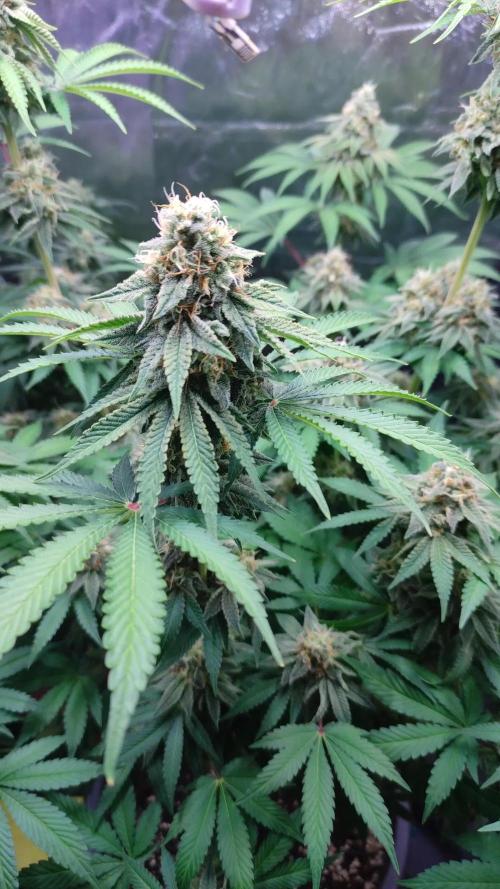
Ahoj. Vypadá holka fakt hezky. Buclatí všude kde může a nestačím se divit :)) taky začala extrémně krásně vonět. Jsem zvědavý na výsledek. Mějte se Growerz

Processing
Likes
5
Share


@Ka_rY
Follow
So Here we go,guys 🙂 3rd week is here and Im totally glad I hit these genetics. The girls are eating AF and I water them everytime I have the time 😀 They love it! so much! I bend them like real girls (you know waht I mean,vrrrrrrr) 😀 I had a little bit of mistakes : crash some new stems,but the others will have their power now,so..... Well : beast incoming!
Likes
27
Share


@julian100614
Follow
En su 12° Semana llegamos a su fin. Hemos realizado un lavado de raices para dejar reposar la planta, eliminar todos los nutrientes que ya no aportarán mucho y con ello mejoraremos mucho el sabor de la hierba final.
Por esta semana no creo que actualice nada a no ser que haya algún problema pero en principio solo repasará para la semana que viene cortarla.

Likes
77
Share


@Ukfarmer420
Follow
Hi guys,
So week 4 now and all 5 should be in flower/preflower stage by next week, the gelatocake are doing brilliant im not so sure about the sherbert mimosa.
2 lights running now so bloomplus bp2500 for gelatocakes and marshydro tsl2000 for the mimosa
550watt actual in ghe room now
I Will update the the week and add pics.
I have popped 2 x dark phoenix inhouse genetics and 2 x blue cheese from big buddha all 4 photo fems and will be vegging them in the back of this little room lol.
Wish me luck and happy growing people. 💚💪

Likes
8
Share


@Alkaline_Water
Follow
Nute burn on older growth. Slight yellowing of new growths’ tips;
Larry OG originally started in a rock wool cube and was then transplanted into soil. The Larry og is very small and yellow with major bleaching;
Raised light height by 3in. (15in. -> 18in.)


Likes
5
Share

@Ninjabuds
Follow
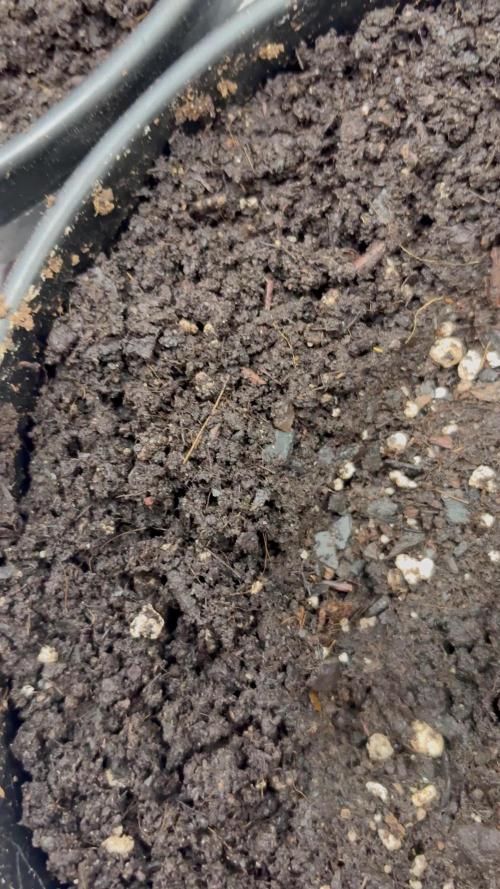
Trasplant day! Nothing special going on. Im excited to see how these turn out. Not to much visul difference between the LCR and the Papa at this point.


Likes
4
Share

@DrewbieDoobieNoobie
Follow
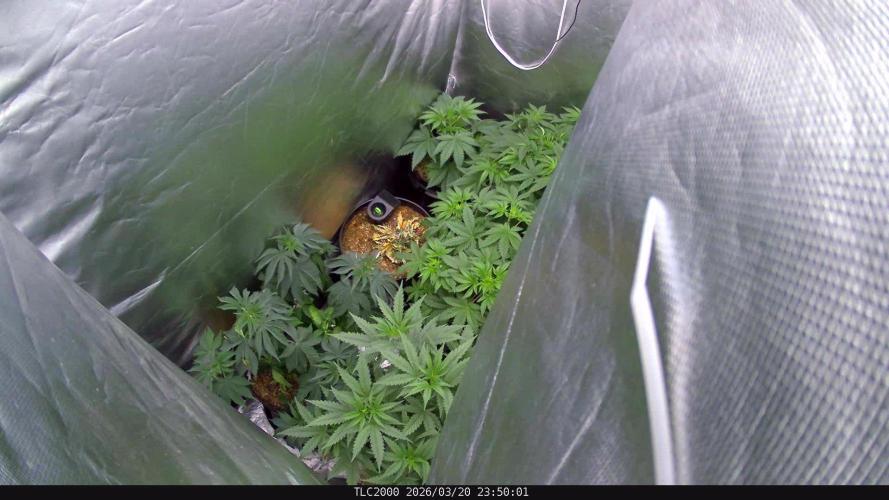
Week 1 of flower and we are trying to fill the canopy as best we can. added a little PK boost with some liquid Cool bloom I have laying around.
gave them a lower trim for airflow and let's see if they stretch anymore. see the time-lapse. they are drinking a lot mor often now so I will water every 2-3 days depending on the weight of the buckets. they were super light today when i feed them. 1 NSB is the darker of the 5 the other 4 are my feminized seeds for the BBFC's and they are starting to smell whoof!
Likes
35
Share

@shwable
Follow
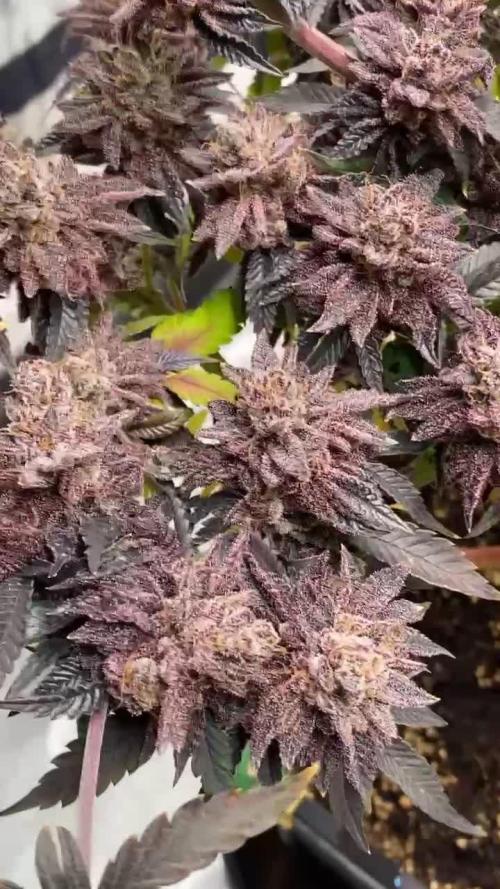
Last week for the ladies.
I am so stoked to try this. Fruity gas bomb with marker hints and creamy earthyness. No more words needed.
Processing
Likes
7
Share


@CityFarmer
Follow
Hello everyone,
The girls are finally outside in 20 gallon fabric pots. This season I have a greenhouse for them and I hope it goes good. Still have to build the first cages around them and start stretching them. 🎊🎉 finally, summer is here 🎉🎊
See you guys next week 🤞🤞🤘🤘👊👊👊

Likes
57
Share


@DogDoctorOfficial
Follow
Welcome back, fellow growers, to the next chapter of my Medusa F1 adventure! We're now in week 9 from seed and week 5 of flowering, and boy, oh boy, things have taken a colorful turn in my garden. The buds on my Medusa are showing off a mesmerizing range of hues, with shades ranging from pink to purple, adorned with hints of red and green. It's a botanical masterpiece that feels like walking through a vibrant artist's palette!
Now, let's dive into a fascinating aspect of the final weeks: stopping the feedings. As we approach the grand finale, I've decided to halt all nutrient supplements. Why, you ask? Well, it's like preparing for a fancy dinner party. Just like we ease up on appetizers before the main course, withholding additional nutrients allows the plant to focus its energy on ripening those gorgeous buds to perfection. It's like providing a VIP treatment, pampering the flowers as they reach their peak potency.
Speaking of peak, I must admit, I've become quite the trichome enthusiast. Every day, I examine those tiny resinous structures, observing their development with a level of dedication that might make my Medusa think I'm an extraterrestrial trichome investigator. But hey, it's all worth it when you witness those trichomes shimmering like a galaxy of sparkling diamonds!
A big shoutout to Royal Queen Seeds for providing us with these incredible genetics. The Medusa F1 has truly been a joy to cultivate, showcasing its genetic prowess in every stage. Thank you, Royal Queen Seeds, for making our growing journeys magical!
Stay tuned for the thrilling conclusion of my Medusa F1 adventure. Until then, keep nurturing your green beauties, embrace the kaleidoscope of cannabis colors, and enjoy the wonders of nature's botanical artistry. May your harvests be abundant and your experiences with Royal Queen Seeds continue to exceed expectations. Happy growing, my fellow green-thumb comrades!
As always thank you all for stopping by and for supporting me on this journey, i am super passion about growing and fell blessed to have you all with me on this new journey <3 <3 <3
Genetics - RQS MEDUSA F1
Ligth - LUMATEK ZEUS 465 COMPACT PRO
Food - APTUS HOLLAND
All info and full product details can be find in can find @
https://www.royalqueenseeds.com
https://aptus-holland.com/
https://autopot.co.uk/
https://lumatek-lighting.com/
With true love comes happiness <3<3<3 Always believe in your self and always do things expecting nothing and with an open heart , be a giver and the universe will give back to you in ways you could not even imagine so <3<3<3
<3 <3 <3 Growers love to you all <3 <3 <3
Medusa F1
Medusa is a true F1 hybrid created from pure, inbred cannabis lines. She boasts uniform grow traits, mouthwatering aromas and flavours, and plenty of potency. If you're looking to bring stable, elongated plants into your room, tent, or garden, look no further. Mouthwatering Aromas, High Potency, and Mid-Size Plants
Though she won't turn you to stone like the mythical goddess after which she's named, Medusa F1 is bound to get you plenty stoned in her own special way. Combining genetics from inbred lines deriving from Sugar Magnolia, a thick and sweet indica, and American Beauty, a fast, fruity hybrid loved for its well-balanced, positive high, the result is an autoflowering F1 variety that produces fresh flavours, a unique cannabinoid profile, and large yields.
A very aromatic cultivar with a vibrant concentration of terpenes bearing notes of fresh mint alongside an upfront peppery kick, backed up by hints of fresh fruit, berries, and tangy fuel. Her thick, frosty flowers consistently produce high levels of THC and CBG, as well as high concentrations of myrcene, ocimene, farnesene, and caryophyllene. As a result, Medusa F1 has strong effects that relax and stone the body from head to toe (brought on by particularly high concentrations of myrcene and farnesene) while motivating the mind with an uplifting, creative, and motivating kick (thanks to high concentrations of ocimene).
Medusa F1 seeds produce elongated autoflowering plants with long, strong branches and well-spaced internodes. Plants regularly grow up to 80–85cm tall and boast a fast flowering time of just 42–45 days (72 days from germination to harvest). Thanks to her genetics, Medusa F1 produces plenty of thick flowers with big, swollen calyxes that make for very easy trimming. Medusa F1 is very stable, handling stress and unfavourable growing conditions with ease, though she is somewhat susceptible to Botrytis, so make sure to keep tabs on the humidity in your grow room/garden
Likes
17
Share


@NoProbation4Weed
Follow
day 70
Light hits with around 850 - 1000 PPFD
had nothing to do this week. I just let her finish out.
Terps are already there.


Likes
18
Share
@SpunkyTerps4200
Follow
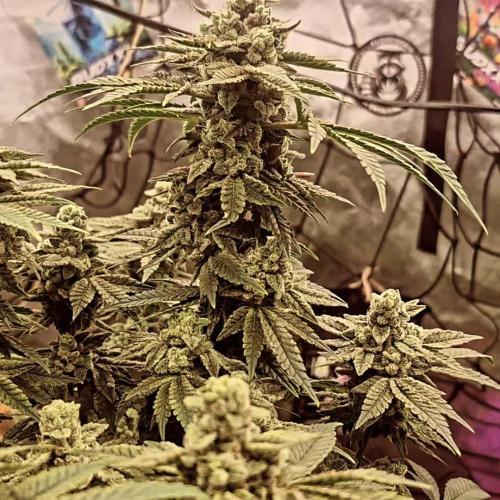
Another week maaabbeeyy 2 for them gorillas!!! Check out my tube and insta for regular updates only_dankzz4200
youtube.com/@thedankzz420?si=brMw2mSIw-nOJkpb


Likes
1
Share


@FoxyLoxy
Follow
ok so this plant, im not sure when im going to need to harvest this. just like my gorilla glue, this started flowering early, and before i noticed since this is my now second plant ever to harvest. and really i still feel like its my first i didnt take anything away from my gorilla glue and i was really unhappy with the product i didnt know when to harvest it so it smells like nutes not bud. so if anyone has some suggestions on what i should do for harvest and when id appreciate it. im going to start flushing it the next couple of feeds so i can prevent the nute smell i got.
Likes
59
Share


@AsNoriu
Follow
Day 77. Girl is down, she needed few more weeks, but I guess proved that in any conditions weed can be grown ;)
No food, just 1.5-2 grams max of Ecothrive Biosys was used, rest only water.
Root system small, but stayed healthy.
Happy Growing !!!
Likes
24
Share


@Hawkbo
Follow
Autos are just starting to flower the photos are dying for some bigger pots. I've been trying to bring up the overall plant health in general since moving everything to a basement the temps are a little lower than ideal. I had a space heater delivered today and monitored the temps but they only went up to around 78°f I want it to be atleast 82°f ideally 85. The heater uses 1500 watt and only increased it about 2 or 3°. I dont think it's worth the extra cost for such little boost. I'm thinking about returning the heater and throwing a 1000w hps in one of the other tents and see if that will raise it anymore. Especially with LED and co2 higher temps would be very beneficial in veg and early flower but the room is so big its gunna be tough to pull off without killing me on electric costs. Any suggestions are welcome. I know this room does decent in flower but I havnt done much veg work down here and I'll have some autos growing this round so it's important I get it up.
Processing
Likes
33
Share


@Titoff
Follow
Coucou la team Growdiaries , désolé du retard pour l’ajout de la semaine 10 mais là voilà, c'est la semaine du rinçage, que de la flotte pour les petites gourmandes afin que celle-ci soient savoureuses à la dégustation. Plus on avance, plus elles deviennent blanches et collantes, impossible de passer la main pour retirer une feuille ou l’autre sans plaqué de partout, c’est magique, certaine branche se plie ou penche tellement certaines sont lourdes, j’adore, hâte de pouvoir goûter tout ça, enfin reste encore le séchage et le curing, c’est long mais c’est comme pour une femme, avant de consomme faut un peu de patience….