


Likes
Comments
Share


@Plihan
Follow
Hi.вторую неделю поливаю водой.передоз был.много листвы сгорело.главное шишки целые.не много осталось по времени🙏


Likes
5
Share


@Lifesgarden420
Follow
Great genetics with the best nutrients always produces awesome results
Every harvest continues to get better
These ladies are healthy and happy

Likes
20
Share


@Boomdrawfyah
Follow
Dia 95 de vida , hay dos fotos que son del dia 91 de vida antes de amarrar las plantas, las demás fotos son actuales.
Hay una ola de calor esta haciendo mas de 35 grados celcius y hace mal tiempo de un momento a otro puede hacer alguna tormenta así que decidimos coger las plantas para ayudarlas a resistir en caso de temporal.
Siguen creciendo y estan monstruosas aunque las indicas ya van marcando pistilo yo creo que aún tardarán en florecer por el momento todo va genial esperemos que no nos arruine el cultivo ninguna tempesta.

Likes
2
Share


@MyHightimesMunchie
Follow
When I did the hard flip turning lights off for 72 hours she is stretching 3 “ a day loving every minute of it
Likes
5
Share


@StoneyMelony
Follow
Overview of my grow:
Tent: Secret Jardin DS120 4 x 4 (120 cm by 120 cm)
Lights: 2 x 120 Watt CTlite c4 clusterled
Climat: Trotec Dehumidifyer 240 watt- 10L/24h
Filter: Prima Klima carbon filter PK2600
fan: 2 x Secret Jardin 20watt osc. fan
Pots: Gronest 4 x 11 liter airpots
Water : automated water system
PH: bluelab
Nutrients: Plagron cocos A + B
Plagron PK 13/14
ATA cal/mag
Epsom salt
Week 9 She is doing great the buds are really becomming big. The smell is really amazing this is the real deal, this plant smells like candy for real. i cannot stop smelling it when i come in the room. i almost don't believe it so good it smells. I'm really looking forward to this one 😀


Processing
Likes
13
Share


@Trailblazers_Farm
Follow
Week Two:
The seedlings received their first and second feedings of Innovating Plant Products. Along with one just a plain watering. (Feed / Feed / Water).
The first feeding was on 5/21 of 900 ppm of the veg nutrient line. The pH was 6.3
The second feeding was on 5/24 of 700 ppm of the veg nutrient line. The was 6.4 After assessing the first feeding it was felt the PPM was a bit high for their first feeding. We could have easily done this in reverse order.
On 5/26 the plants were given just plain water to finish out their week.
One of the seedlings appeared to be a bit deformed and has since been tossed. This one seed didn't germinate well, but we thought we would give it go. Assessing the seedling we simply opted to pull it.

Likes
10
Share


@DarbGrowDiaries
Follow
Very golden in colour, has a beautiful structure and a spicy smell.
I really liked how even the bottom buds became chunky (:
Def happy I tried this one


Likes
59
Share


@GrimbolTheDruid
Follow
So, sad day friends. I got spider mites and had to throw all my plants out. This is what I think happened:
About 2-3 weeks ago I noticed some freckling on the lower leaves. I looked at it and thought it might be a cal/mag issue so I added cal/mag that week and went about my business. I saw it about a week later and it wasn''t getting any better so I added more cal/mag. This continued for about 2-3 weeks until I finally took off a leaf and examined it under my microscope. I saw little bugs crawling everywhere and my stomach just dropped. My fiance did some quick research while I was panic ripping leaves off (see pictures) and she correctly diagnosed it as spider mites.
I debated with myself and my close friend and ultimately I decided to throw all the plants in my tent away. I know that there are a lot of people who will say that there are things I could have done to make it to harvest but what it came down to is the people I take care of and personal pride. I consider myself a caregiver and I give away product for free that I am not going to use to my family and close friends. I thought to myself "Would you smoke this?" and when my answer was "ehhh, I don''t know", I thought about how it would feel giving it away and immediately made the decision to destroy them. I take an immense amount of pride in my product and this hobby and if I am not going to stand behind it I would rather just start over. I grow from my heart (shout out to the Grow From Your Heart Podcast!) to help people and make sure my family is not getting unsafe product from sketchy people. To spray pesticides in flower that may hurt people and have little bug carcasses in there just goes against that in every way and is just wrong in my opinion if you are giving it away to others. If you are the only one smoking it then it is one thing to take that risk but not with your patients. I want my medicine to help people, not create or exacerbate health issues.
It is also important to note that the mites had moved from my flower tent into my veg space and took over my auto berry as well. Damn things are crafty and fast.
So that is why I made the decision to destroy them all after 3 months of res changes, pruning, and manifolding on a slow vegging strain. Feel free to chime in with your opinion but I do not and will not regret my decision. I threw out my new clones, mother plant, and auto berry I had on my veg side as well. Shout out to all the other growers out there that do the right thing by their patients. Caregivers > Cash croppers.
For anyone curious, I removed everything from my tent and scrubbed it all with a 20% bleach/water solution. All equipment has been wiped down and stored in the garage away from any organic materials. I will give them until tomorrow (2 days) to air out and dry and then I will wipe it down again with bleach and wait another 2 days. Hopefully that will make sure everything is dead and will not come back next grow. That next grow should start in about a week.
It sucks but sometimes it happens and you gotta be ready for it. Lesson learned. Never bring outdoor plants into your indoor garden even if it is after just a day or two. A bunch of people on here and Reddit warned me and I did not listen. Now I have learned the hard way and it feels like when your parents "told you so" haha.
Thanks to everyone who stopped by along the way. Stay tuned for a new grow coming soon. It is going to be some cool new limited edition Mephisto Illuminautos. I am pretty excited.
Good luck out there and always grow from your heart folks.
-Grim

Processing
Likes
13
Share


@GrowGuy97
Follow
Flower day 10 - Everything is going great so far, currently trying to find a bigger dehumidifier cause RH is staying a little higher than I would like! Thanks for following & happy growing friends!🌱✌️🏼
Flower day 11 - Finally got the last 2 plants from the first run cut down & now these ladies have much more room! Watering tonight with just PH water. Happy growing friends!✌️🏼🌱
Flower day 12- Buds are starting to show, can’t wait to see how different they all look😍😍
Flower day 16 - End of Week 8, all the plants are coming along beautifully! Definitely will not have 10 In my next flower run though the tent is way to packed lol! Thanks for following & happy growing friends!✌️🏼🌱


Likes
10
Share


@Autoflowergirls06
Follow
Think I put a tad bit too much mega crop was feeding every watering.
Likes
18
Share


@MinorMonster
Follow
Die dümmsten Bauern haben die dicksten Kartoffeln. Die dicksten Buds hab ich nicht, aber dafür viele 😄
129gr Buds und 22gr Popcorn. Bin auf das curing gespannt, der Geruch ist jetzt schon verlockend. Die Wirkung brauch nen Moment, ist dann erst kopflastig und kommt so nach 30 Minuten entspannt body-lastig.
Likes
96
Share


@Swollen
Follow
Week 13 for Gigi!
Fifth week of flower: Buds are fattening up and trichomes are becoming milky...Guys if you try to grow this genetic, keep in mind this thing: use a good filter! This plant smells a lot and amazingly good 👍
Day 86: Watered properly with all the nutrients. Rh is about 50/55% and temperature 25°C.
Day 90: Watered again with half the nutrients. She drinks a lot.
Guys, now it's time to talk about the disaster happened with the lamp 3 weeks ago. The lamp crashed on the main branches snapping them...but Gigi simply doesn't give a s*** about it and flowered.
See ya next week and don't forget to love your plant!
Likes
15
Share

@DogDoctorOfficial
Follow
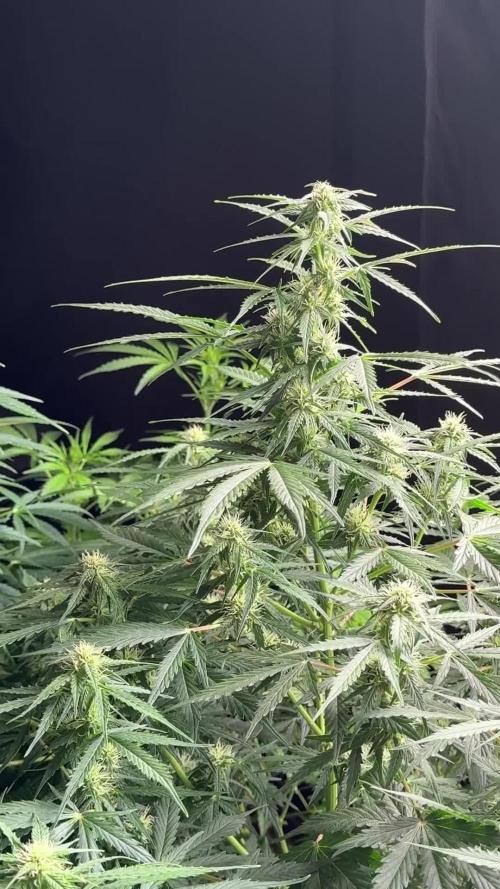
🌱 Grow Report — Week 9 (Week 5 Flower)
Photoperiods | 12/12 from Seed vs 2 Weeks Veg
After weeks of growth, adjustments, patience, and a few ups and downs…
we’ve arrived at one of the most exciting stages of the cycle.
This is where everything starts to come together.
⸻
🔬 Quick Recap (for anyone joining now)
We’re running the same genetics in two different approaches:
• 🌱 Plant A — 12/12 from seed (no veg)
• 🌱 Plant B — 2 weeks veg before 12/12
Current environment:
• 🌡️ 28°C
• 💧 60–65% RH
• ⚡ EC 2.4
• pH 6.5
• 🌬️ CO₂ ~1000 ppm
• 💧 Water intake: ~1.5–2L/day
Both plants are healthy, vigorous, and pushing hard — but expressing themselves very differently.
⸻
🌿 What’s Happening This Week
This is true flower acceleration.
You can see it clearly:
• Bud sites stacking
• Internodal spacing defining structure
• Pistils exploding
• Trichomes beginning to coat everything
The plant is now shifting energy from:
👉 vertical growth → flower production + resin output
⸻
✨ Trichomes — The Frost Begins
Those macro shots… beautiful.
What you’re seeing:
• Early capitate-stalked trichomes forming
• Resin heads still mostly clear
• Rapid increase in density on sugar leaves and calyxes
Why do trichomes exist?
They’re not just “frost”:
• 🛡️ Protection against UV
• 🐛 Defense against pests
• 💧 Moisture regulation
• Chemical factory (terpenes + cannabinoids)
What does this level of production mean?
👉 Strong genetic expression
👉 Good environmental balance
👉 High potential for quality resin later on
Right now = foundation stage
Later = bulking + ripening
⸻
🌸 Pistils (White Hairs) — What They Tell Us
Those white hairs everywhere = pistils.
They are:
• The female reproductive organs
• Designed to catch pollen (which we don’t want here)
What they indicate:
• Plant is in active flower development
• Bud sites are still building structure
• No maturity yet — still early/mid stage
When they:
• Turn orange/brown → maturity approaching
• Recede → calyx swelling begins
Right now?
👉 Peak formation phase
⸻
🌱 Bud Formation & Structure
You said it perfectly:
👉 “Golf balls forming”
That’s exactly it.
What we’re seeing:
• Tight clusters starting
• Defined spacing between bud sites
• Structure that will determine final yield
Key observation:
• The spacing is clean and organized
• Light penetration is doing its job
• No overcrowding → better airflow + resin potential
⸻
🌿 Color & Health
That lush green?
👉 Perfect.
It means:
• Nitrogen still available but not excessive
• No major deficiencies
• Photosynthesis running strong
At EC 2.4:
👉 They’re feeding heavy and accepting it well
⸻
🌱 The Big Comparison — Two Different Timelines
🌱 Plant A — 12/12 From Seed
• Shorter (~90 cm)
• More compact
• Earlier flower maturity
• Faster transition
👉 This one is ahead in flower development
⸻
🌱 Plant B — 2 Weeks Veg (Studio Plant)
• Taller (~120 cm)
• More branching
• More sites
• Slight delay in flower maturity
👉 Still building structure + stretching slightly longer
⸻
⚖️ Why This Difference Happens
It’s simple but powerful:
👉 Time in vegetative state = structural foundation
• Plant B had more time to:
• Build roots
• Create branches
• Store energy
So:
• More size
• More sites
• But slightly delayed flowering
Meanwhile:
• Plant A went straight into reproduction mode
👉 Faster flowering, less structure
⸻
🔮 What to Expect Next
🌱 12/12 From Seed Plant
• Faster ripening
• Smaller but denser buds
• Likely earlier harvest
• More uniform structure
⸻
🌱 2 Weeks Veg Plant
• Bigger colas
• More yield potential
• Slightly longer flowering time
• Possibly more variation between buds
⸻
⚠️ What NOT to Expect (yet)
• No cloudy/amber trichomes yet
• No final swelling
• No terpene peak yet
👉 That comes later (weeks 6–8+)
⸻
🙏 Closing — From Grower to Growers
To everyone following this journey:
• The OGs
• The new ones
• The silent watchers
• The ones asking questions
• Even the critics
This is for all of you.
To the sponsors, the genetics, the tools, the platform…
To the environment, to the process…
To the ups, the downs, and everything in between.
And to the plants themselves 🌱
— because at the end of the day, they do the real work.
⸻
This week is special.
You can feel it:
👉 The shift
👉 The momentum
👉 The promise of what’s coming
And we’re just getting started.
📡 DELETED @ 1K Please stay tuned.we never quit https://www.youtube.com/@TheDogDoctorOfficial
NEW
🙏 Thank you for your patience and continued support.
FOR DISCOUNT CODES AND MORE JUST FOLLOW THE LINK https://website.beacons.ai/dogdoctorofficial
📲 Don’t forget to Subscribe and follow me on Instagram and YouTube @DogDoctorOfficial for exclusive content, real-time updates, and behind-the-scenes magic. We’ve got so much more coming, including transplanting and all the amazing techniques that go along with it. You won’t want to miss it.
GrowDiaries Journal: https://growdiaries.com/grower/dogdoctorofficial
Instagram: https://www.instagram.com/dogdoctorofficial/
YouTube: https://www.youtube.com/@dogdoctorofficial Deleted by Youtube
Vimeo : https://vimeo.com/dogdoctorofficial Under construction stay tuned ⸻
Explore the Gear that Powers My Grow
If you’re curious about the tech I’m using, check out these links:
🔆 Lighting & Environmental Control
• Future of Grow — Advanced LED lighting technology
https://www.futureofgrow.com/
DISCOUNT CODE: DOG20
• Lumiflora — Under-canopy LED lighting
https://lumiflorade.com/
• TrollMaster — Environmental controllers and automation gear (past collaboration)
⸻
Genetics
• Zamnesia Seeds — Genetics used in this project
https://www.zamnesia.com/
⸻
🌱 Soil, Substrates, Boosters & Root Support
• Plagron — Substrates, bio mixes, and supportive products
https://plagron.com/en/
⸻
🎒 Storage, Curing & Preservation
• Grove Bags — Curing and storage solutions
https://grovebags.com/
⸻
📸 Photography Equipment & Tools
(Not sponsors, but part of my creative toolkit)
• Sony A6700
• Sony full-frame macro lens + few more
• Stacking photography workflow - learning
• iPhone (for behind-the-scenes shots)
We’ve got much more coming as we move through the grow cycles. Trust me, you won’t want to miss the next steps, let’s push the boundaries of indoor horticulture together!
As always, this is shared for educational purposes, aiming to spread understanding and appreciation for this plant. Let’s celebrate it responsibly and continue to learn and grow together.
With true love comes happiness. Always believe in yourself, and always do things expecting nothing and with an open heart. Be a giver, and the universe will give back in ways you could never imagine.
💚 Growers love to all 💚
📸 P.S. – The Eye Behind the Lens
All photos in this diary (for now — except for the ones showing the camera, which I took with an iPhone) are taken with a Sony A6700 paired with a Sony full-frame macro lens and a few more.
Photography is part of the story — it’s how we share the fine textures, the glow, and the quiet details that words can’t always capture.
I’ve also started experimenting with photo stacking — a technique where multiple images, each taken at a slightly different focus point, are layered together to create one perfectly sharp image from front to back.
It’s not digital enhancement or AI; it’s pure photography — a way to reveal the plant’s beauty in microscopic depth, from trichome to petal.
You’ll even see a few shots of "ghost me" capturing the shots — camera, lens, setup — because every grow deserves not just to be cultivated, but documented like art.
FOR DISCOUNT CODES AND MORE JUST FOLLOW THE LINK https://website.beacons.ai/dogdoctorofficial
NEW DISCORD - Official Server Invite Link : https://discord.gg/ksjAkA5T74

Likes
Comments
Share

@HOMEGROWBOOK
Follow
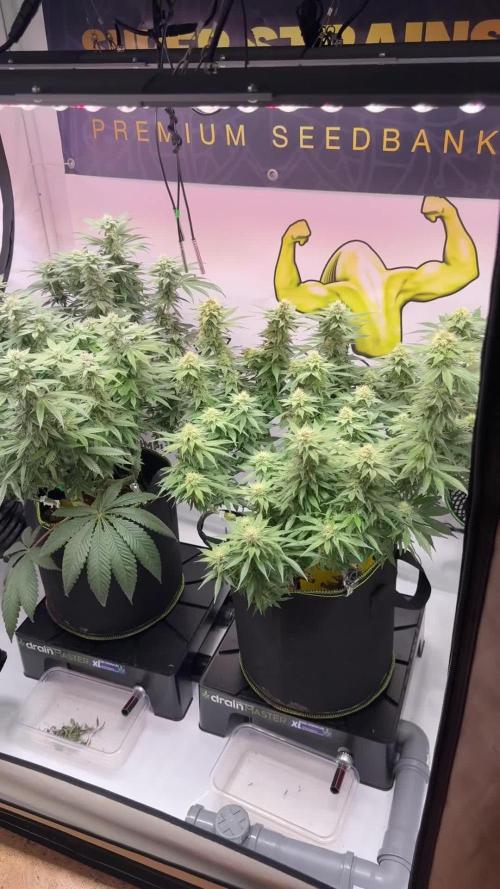
Flower Week 6 – Ripening Phase Begins
The girls are now in week 6 of flowering, and the ripening phase has officially begun!
The buds are noticeably denser, and resin production has kicked into overdrive — the trichomes are mostly cloudy, with a few early amber heads starting to appear.
This week’s macro shots show the frost levels going insane, with every surface covered in sticky crystals.
24K Gold is showing classic ripening behavior:
Her pistils are beginning to darken and curl inwards, while the calyxes start to swell.
The aroma is becoming very pronounced — a sweet citrus funk mixed with a deep earthy undertone.
Gelato 33 continues to build resin like crazy.
The buds are slightly smaller but completely coated in trichomes.
She’s developing that creamy-sweet scent typical of the strain, filling the tent with a dessert-like smell.
Both plants still look perfectly healthy — the feeding routine and semi-hydro setup are keeping everything stable.
Light intensity and airflow remain ideal, ensuring no mold or stress signs during this dense phase.
Nutrients & Conditions:
• 💧 Canna Coco A + B → 8 ml/L
• 📈 EC 1.8 | pH 5.8
• 🌡️ Temperature: 25 °C day / 20 °C night
• 💧 Humidity: 40–45 %
• 💨 Airflow: High circulation to support trichome development
The buds are swelling, trichomes are maturing fast, and the smell is becoming seriously intense.
We’re now entering the final stretch — the next two weeks will focus on trichome color and terpene expression before the flush begins.


Likes
10
Share

@Sators
Follow
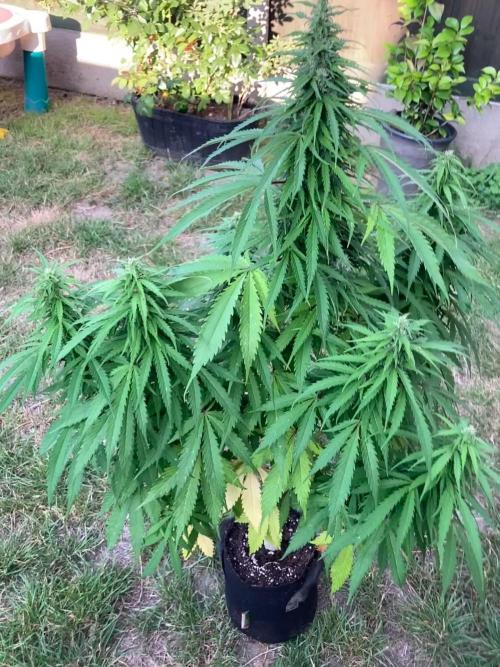
Day 92 – Standing strong and swelling up!
After a week of mixed conditions here in Ramsgate — cool mornings, occasional coastal winds, and sudden heat bursts above 24°C — this plant is showing what true resilience looks like. Despite last month’s stormy surprises and some early stem stress, the FastBuds genetics continue to shine. Buds are stacking beautifully, calyxes are swelling up, and there’s a confident push toward the final phase.
You’ll notice a bit of natural fade on the lower leaves — a classic sign of energy being redirected toward flower production. No intervention needed. This is outdoor minimalism at its best: nature-led, no bottles, just strong soil, sunlight, and observation.
Each cola is now forming a clear crown, and internodal spacing has tightened. The smell is still subtle outdoors, but richer day by day. I’m continuing with a hands-off approach — just water, light breeze, and the occasional nod of respect to Mother Nature.
To anyone growing outdoors: never underestimate what the sun and time can do with the right soil and genetics. 💚
Likes
11
Share


@Sticky_bandit84
Follow
The strain is a easily maintained but yet very durable plant to grow from nutrient deficiency, climate to even pests. A recommended strain if you are looking for a nice smooth smoke that's a hard hitter and a lasting effect
Likes
2
Share

@LittleBigTrees
Follow
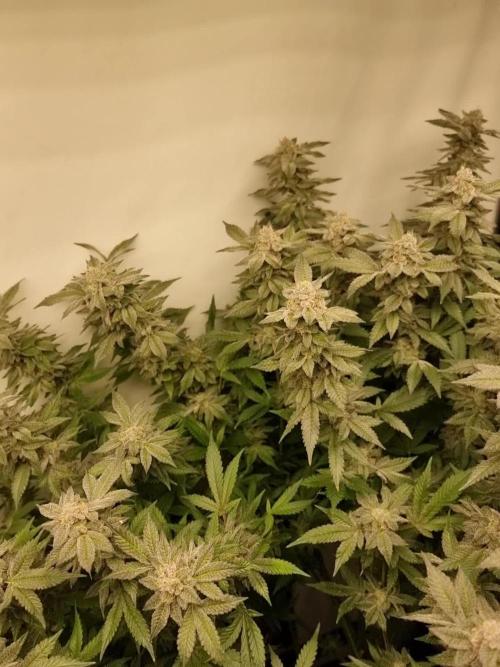
Still feeding full strength, the trichomes closer to the top of the plant are turning cloudy so I will probably hatchet at least one pheno at the end of week 8, maybe both.
The smell is really nice and reminds me of bubblegum, I'm glad I took cuttings but wish I'd taken them earlier on. Still they are starting to reveg now.

Likes
13
Share


@EasyGoing420
Follow
Plants have been scroged and are almost covering the hole net , knowing that they are going to strech for the first three weeks of flower, I'll be switching lights to a 12/12 cycle on the upcoming days . Happy growing y'all !