


Likes
Comments
Share


@GrowinHome
Follow
The ladies had some nice stretching the last few days, I wonder how much more stretch we will get.
This coming weekend we're going to do some defolating to expose more budsights and to improve aircirculation. It also helps in lowering the humidity.

Likes
6
Share


@luxgrower
Follow
02.02.2025
Going full power with the nutes by following the exact schema from Hesi.
👉I've resolved my PH-drift issue, was kinda obvious but due to lack of experience didn't think it's my ph-down solution. Basically I was correcting my mineral soup with organic PH- (citric acid), and it only worked for few hours, that is not good when using Autopot.
Got the bottle of phosphoric acid and it's rock solid now, what a relief! 😇
25th day. Nothing to say much, will only update when smth happens.
26th day. Noticed a pre-flower condition on the main stem.
27th day. Continue with more LST and light defoliation
28th-29th-30th days. LST, some more leaves went down.
31st day. Leaving for a holiday for 3 days.

Likes
4
Share

@Antarctic
Follow
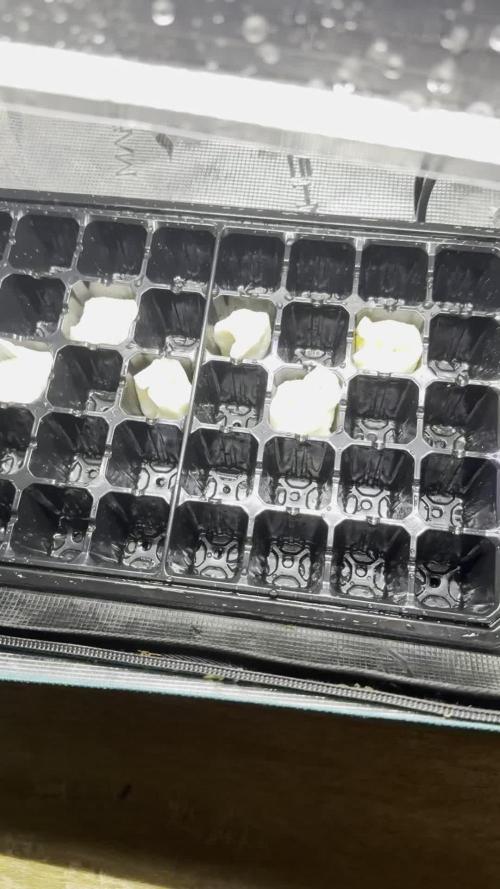
🇺🇦 Укр: Пророщував у серветках, але надто перезволожив. Деякі насінини буквально втопилися. Це був перший урок — не заливати вату/папір занадто сильно.
🇬🇧 Eng: Germinated in paper towels but overwatered them significantly. Some seeds drowned. First lesson learned: avoid excess water during the popping stage.

Likes
18
Share


@Grower_Of_Persia
Follow
my dry and cure style is this:
4 days of hanging upside down to get water activity lower to around 0.6 in 50% humidity and 26 C temp (i know its a little high but we are in a hot summer right now and i cant get it lower even with air conditioner) and then after 4 days of drying i remove leaves and stalks, trim buds and move them to jar for the rest of their life :D . and in the first 4 days of curing i open the jar door and let hem get some fresh air in the jar for about 5 minutes and close the jar door again, after 4 days of curing like that buds are smokable but they will get better as they getting cured about 1 month.
buds are one of the hardest as fucking rocks type of buds! very dense , compact , sticky , smelly , amazing at every aspect
growing stage was 56 days and flowering stage was 75 days total (harvested tops at day 64th)
the total weight of dry buds was : (plant #1 & #3 top buds 56 G + lower buds 22 G ) 78 G + (plant #2 top buds 47 G + lower buds 18 G ) 55 G + (plant #4 top buds 120 G + lower buds 67 G ) 187 G = 367 G

Likes
24
Share


@Mrs_Larimar
Follow
2023-03-15
Please add one more Week in Flowering!- i was in Holidays here
This one is kinda perfect strain for me
growing vigor and sweet, getting great Strucutr, no Training needed
Just love , water and nutes
and good Conditions in Light and VPD, made her outstanding
I LOOOOVE her Colors in the End, and she smells fbulous, quite Zkittley with alovely Piny undertone, and some
Kush Notes. Iam very courious to her taste and effects

Likes
6
Share


@mRJ519
Follow
Definitely wasn't taking enough pictures to start.. I'll do better now that I'm invested....... update... Autos are growing alot this week indoors

Likes
5
Share


@High_And_Hydro
Follow
- Ich hab die erste Woche des Biobizz Allmix Düngeschemas gestartet und gebe wie immer erstmal vorsichtige 100%, da meine Erde an sich durch den Kompost recht potent sein sollte.
- Außerdem hab ich mit meinem Calmag-Rechner mein Leitungswasser angepasst. Die Werte könnt ihr auf den Bildern sehen.
- Den PH-Wert passe ich ebenfalls auf 6,5 an.#
- Die Lampe bringt zur Zeit etwa einen PPFD-Wert von 350 - 360 µmol/s/m² bei 18 Stunden Beleuchtungszeit (DLI von 22 - 23 mol/d/m²). Sie wird aber nur eingesetzt bis es warm genug draußen bleibt. Tagsüber stehen sie jetzt schon draußen, sofern es nicht regnet oder stürmt.
Die Purple Haze macht sich hervorragend und sie ist ganz vorne mit dabei. Das freut mich wirklich, da ich die immer mal sehen wollte. Ist vermutlich nachvollziehbar. 💪😁👍


Likes
2
Share


@Mr_nugs_lover_David
Follow
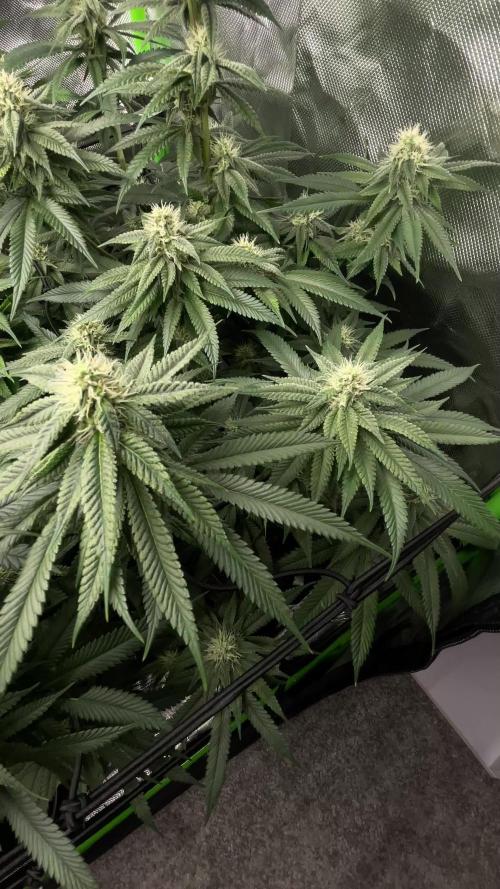
She looks as healthy as can be,super beautiful strain to grow,she's ina super soil full of life in a 15l pot,let's see how she keeps developing.


Likes
19
Share


@Ferenc
Follow
Day 79: 7th week of flowering. Things remain the same 600W lamp, 12/12, humidity like 50 percent, fertilization with Biobizz family on Monday, Wednesday and Friday, Bat Guano on Tuesday, Thursday, Saturday. Water intake 400 ml per plant per day
I start flushing the Zkittlez she is almost ready. Rest of them need more weeks to be done.
Day 81: I removed unwanted fan leaves. I will not water them for 2 days on Saturday and Sunday to shock them a bit.
Day 84: So today (Saturday) and tomorrow (Sunday) No water for 24K Gold, Blue Sherbet S1, and Fruit Tree. Zkittlez in flush so she will be harvested soon I won't give her water the last 3 days.


Likes
20
Share


@eldruida_lamota
Follow
Que pasa familia, ya estamos de vuelta, y traemos la 3 semana de crecimiento, la verdad que pronto toca ya trasplantar, me sorprende los espacios entre nudos, el led no solo hace si función si no que mejora bastante el crecimiento de los ejemplares.
Ph regulado, echamos poca cantidad de nutrientes pero en nada cuando trasplantemos cambiaremos la alimentación.
Temperatura ideal, humedad algo baja pero sin problema alguno, ya va quedando menos para el cambio a floración también.
Www.mars-hydro.com
web: http://bit.ly/2uJAjgy
ts600: http://bit.ly/3cnv0Ev
code: an420
un saludo fumetillas y buenos humos.


Likes
22
Share


@RDWCGrowing
Follow
12/25/2023-Germination Day 1
Merry X-mas 2023 I decided to start a run of SolFIre Gardens Hoodz Candyz S1. I am going to do a cup filled with RO water a touch of Hydrogen peroxide and let it sit for 24-48 hours until I see tap root then I am going to put it into a rapid rooter.. Tap root Down and put it about 1/4 of the say down the Rapid rooter.
I made some modifications to my basket on this run.. I have taken a few Pods that I use for my cloning machine and decided that I am going to try and use them as sure plants, so that I can take my water right up to the bottom of the basket this time and see if these can make my planting more consistent.
12/26/2023-Germination Day 2
Tap root achieved Planting Commencing
12/27/2023-Germination Day 3
Misted the dome lightly misted the rapid rooter and added a little water to the bottom of the pan to encourage root growth to the pan.
12/28/2023-Germination Day 4
Ground Hogs day
12/29/2023- Germination Day 5
She is up, she has broken surface, I misted the root riot, and around the bottom of the tray to try and entice root growth down rapidly.
12/31/2023- Germination Day 6
Ground Hogs Day
1/1/2024-Germination Day 7
HAPPY NEW YEARS!!.. I did it I planned it out so my planting day would fall on New Years and it worked.. Yay!!!
1/2/2024- Germination Day 8
Since the roots are not to the water yet, I am pouring one cup of water lightly on the hydroton around the lady to try and encourage root growth down to the water..
1/3/2024- Germination Day 9
Ground Hogs day, will continue until roots hit the water.
1/4/2024- Germination Day 10
Ground Hogs day, will continue until roots hit the water. I will just continue to top feed until roots are in the water.. Shouldn't be more than a few more days.
1/5/2024- Germination Day 11
Ground Hogs day, will continue until roots hit the water. I am going to change the water Sunday and kick off Week 1, I will just continue to top feed until roots are in the water.. Shouldn't be more than a few more days.
1/6/2024- Germination Day 12
Ground Hogs day, will continue until roots hit the water. I will just continue to top feed until roots are in the water.. Shouldn't be more than a few more days.
1/6/2024- Germination Day 13
Ground Hogs day, will continue until roots hit the water.
1/7/2024- Germination Day 14
Ground Hogs day, will continue until roots hit the water.

Likes
12
Share

@majklsoft
Follow
Greetings, growmies! 🤓
Another week is behind us, and she’s ripening and fattening up like a queen. This was probably the last week with nutrients; next week will be the final one with water only. She’s in great shape and still drinking a lot (she is mature after all, haha).
Good day to you all!

Likes
6
Share


@TheOtherSide
Follow
Gorilla Girl XL Auto - A 6th Generation autoflowering strain. A tall, “Super Strong” marijuana strain produced by crossing two of most powerful varieties in the Cookies family: Gorilla Girl®️ x Sweet Gelato Auto®️ (SWS74 x SWS76).
10.7 - 10.13
-----------------------------------
10.6 - 2 CM+, 2 M, 4 B, .25 Flp, .25 EW 1 & 2
10.9 - 2 M, 4 B, .25 Flp, .25 EW, .5 Molasses 1 & 2
10.12 - 2 M, 4 B, .25 Flp, 1 FS, .5 Molasses #1
10.13 - 2 M, 4 B, .25 Flp, 1 FS #2
-----------------------------------
3 Gallon Fabric Pot
67% Cana-Coco
33% Perlite - Sta-Green
Green Clips
-------------------------
Tent:
2’x4’x5’ GA Tent 600D
1 Gal Humidifier
1x 6” Clip Fan
1x 28” Oscillating Fan
1x 4” Carbon Filter with 2x 200 CFM
-------------------------------------------
3 Gallon Tall Fabric Pots
Spider Farmer SF1000 LED - Spider-Farmer
Optic 1 54W 3500k - opticledgrowlights
Optic 1 XL 100W 3500k – opticledgrowlights
Optic 1 XL 100W 3500k (Dimming) – opticledgrowlights
Cana COCO - Coco Brick
Perlite - Sta-Green
Filtered Water – Everest Machine
Botanicare Cal-MAG Plus
General Hydroponic – Flora Series
General Hydroponic – pH Up, pH Down
Blue Planet Nutrients - Root Magic Mycorrhizae+
Real Growers – Recharge
Fish Head Farms – Fish Shit
Brer Rabbit – Blackstrap Molasses
Zelda – Terpenez Essential Oil Intensifier
--------------------------------------------
Variety: SWS82
Indica: 42,1%
Sativa: 57,5%
Ruderalis: 0,4%
THC: 18-25%
CBD: 0,1%
Indoor Yield: 450-550 g/m²
Outdoor Yield: 50-160 g/plant
Indoor/Outdoor Harvest: 9 weeks from germination
Height: 60-120 cm
Effects: Stimulating, Psychoactive
Taste: Cypress, Fruity, Citrus, Earthy, Woody, Sweet

Likes
Comments
Share

@hassehujasse
Follow
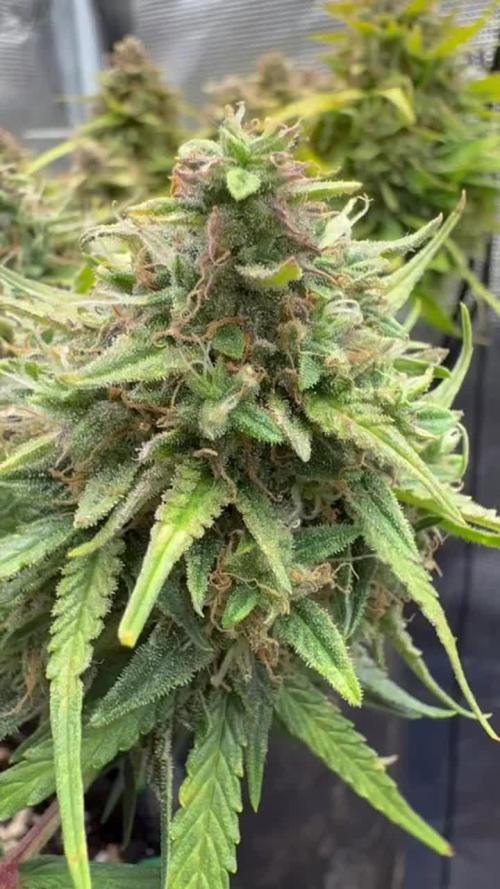
Driving to harvest through German AutoBahn
Aceleramos al cosecha
Likes
33
Share


@Oyziphar
Follow
FLOWERING
First flowering phenomena are visible in the tops of the plants.😜
--------------------------------
GROWTH
The plants are still growing rapidly. To keep the size of the plants somewhat at the same height, I use the following techniques: 😷
1. Removal of the side branches (Defoliation)
-Small plants: I remove almost all side branches. In this way the small plants do not have to spend energy in the growth of side branches.
-Large Plants: I don't remove anything. The plants will put energy into the growth of side branches, so the plants will not grow too fast in height.
-Other plants: I remove the side branches in proportion to the size of the plants.
In the course of the following days, I gradually remove all low side branches!
2. Tying the branches (Low Stress Training)
-The smallest plants grow straight upwards.
-The largest plants are tempered in their growth, afterI have tied them to the plant sticks with the help of plastic plant binders.
On DAY 5 the plants vary in length between 23 and 41 cm
AIR HUMIDITY 😨
When the lights are on, it gets nice and warm in the growing room. To keep the humidity at the desired level, I have two 7.5 liter humidifiers working almost continuously. In less than 24 hours I have to refill them.
As long as the plants do not have real buds, I like high humidity so the plants to keep a low VPD.
--------------------------------
WATER and NUTRITION 😱
Due to the high humidity, I don't have to give that much water. Every 3 days I give 1.25 liters of water per pot. I add 3 tablets of Easy Grow Booster to 10 liters of water. I divide this mixture between the 8 pots. This week I gave 2 x water.
Likes
3
Share


@Altitonans_Fulmen
Follow
Lights are 58 inches from the main source to the top of the pot and the soil surface. If you added up all the lights in the tent, it would be 1100w-1200w total across 14 lights. Using them all at once is far too much for a plant and incredibly difficult to deal with environmentally. The lights are fixed in position; side lights have dimmers, allowing for pinpoint precision of PPF. Fixed at 58 inches, cannot move them closer to increase intensity. Instead, achieve optimal PPF by distributing smaller wattages across a massive, multi-fixture matrix. Triggering specific plant defenses without melting the canopy.
What's the point/blah blah wattage?
Never really go above 600W at any one time. Lights come on in the east of the tent and set in the west. At sunrise and sunset, the red-to-far-red R:FR light ratio drops because the sun's low angle scatters red light more than far-red light. This shift reduces active Pfr and increases inactive Pr, mimicking Mother Nature herself.
Deployed a lighting system featuring extra 660 nm deep-red and extending the spectrum up to 780 nm achieves the full Emerson Enhancement Effect by simultaneously balancing Photosystem II (PSII) and Photosystem I (PSI) to maximize quantum yield. By pairing deep-red photons with far-red photons, you trigger a synergistic biological response where the resulting photosynthetic rate is higher than the sum of both wavelengths used individually. This practice directly leverages the updated extended Photosynthetically Active Radiation (ePAR) framework. The Emerson effect accelerates plant metabolism and heat capture; you must proactively scale up your ambient room temperature, nutrient delivery, and CO₂ supplementation to prevent the light from stalling out your cannabis plant.
UVA stays high all day from morning to night, but UVB peaks at solar noon (middle of 18-hour days) when the sun is peak. Morning color starts at 2k-3k; by noon it goes to 5k- 6k and back to 2-3k for sunset, with differing P:FR at light off.
The extra-blue light is to assist with photoreactivation of UVB damage. No more yield loss for me. Using extra blue light for photoreactivation is what I do. Blue/UVA light activates photolyase enzymes, which directly repair DNA damage caused by UVB radiation.
But what's the point if it's not for yield?
Ultraviolet (UV) radiation—specifically UVA (315–400 nm) and UVB (280–315 nm)—acts as a critical environmental signal that programs a plant's photoprotective genes to unlock its true photosynthetic potential. When growers push crops to their absolute photosynthetic maximum via high-intensity light and elevated carbon dioxide, the photosynthetic machinery easily becomes overwhelmed. Emerging photobiology research demonstrates that UV radiation prevents this limiting bottleneck; it triggers specific transcription factors and signalling networks that fortify the plant's cellular defenses, allowing it to process extreme light levels without sustaining structural damage.
There are 8 limiting factors of plant growth; when carbon dioxide becomes the 9th limiting factor of plant growth, it shifts the growth curve from exponential to linear. The restriction after that is "photoprotection" against reactive oxygen species (ROS), managed via non-photochemical quenching (NPQ) and the xanthophyll cycle, which bridges into precise hydrogen and redox dosing.
UV radiation, particularly UVA, and the synthesis of zeaxanthin are critical for the xanthophyll cycle to function.
It's not chasing purple strains... One likes to call it chasing the limits of growth, trying to make the linear exponential, just like father mathematics prefers.
In order to do that, must control every environmental variable and compound the plant’s metabolic rate. True exponential growth means the rate of increase matches the current mass at every stage, requiring a closed-loop system where light, CO2, and nutrition lock into a synchronized upward curve. First, you must attempt to understand what restricts it. Precise hydrogen and redox dosing.
Nature mathematically optimizes quantum energy transfer and light absorption efficiency within the photosynthetic machinery, as it naturally dictates energy scaling hierarchies and resonance dynamics. Most won't even understand that; once you do, it changes everything.
Constructive interference occurs when two or more overlapping waves meet in phase, meaning their crests and troughs perfectly align. Their amplitudes add together, creating a new, amplified wave with greater intensity than the individual components.
Constructive interference is the foundational mechanism that establishes a resonance hierarchy across physical, structural, and acoustic systems.
Chromophore spacing is tuned to sub-nanometer precision to match the wavelengths of absorbed light, forcing constructive interference.
Light-harvesting proteins form geometric rings and lattices. These shapes act as physical resonators, trapping and focusing the wave energy.
This same principle dictates how opera singers shatter glass, how musical instruments resonate, and how bridges withstand structural vibrations. Nature uses the exact same math to harvest a photon as an engineer uses to design a concert hall.
When you push high PPFD and elevated CO₂, you create a metabolic bottleneck. The plant cannot process the energy fast enough, leading to electron backup, light-induced damage, and a collapse from exponential growth into a flat, linear rate. UV light acts as the regulatory valve that prevents this collapse.
In standard agronomy, Liebig's Law of the Minimum dictates that growth is limited by the scarcest resource. When you maximize water, nutrients, light, temperature, and CO₂, the bottleneck shifts to metabolic processing speed and photoprotection. By controlling the Redox state of the plant using UV, the xanthophyll cycle, and managing ROS, you can prevent the plant from hitting a hard photosynthetic ceiling. Instead of the growth curve flattening out (linear or plateauing due to photoinhibition), the plant continues to compound its metabolic rate efficiently. You are forcing the plant to operate at peak thermodynamic efficiency.
By matching the UVB peak with sustained UVA and shifting Kelvin temperatures (2K to 6K), you are damaging the plant just enough to trigger defensive genes, while simultaneously providing the exact light energy needed to repair that damage instantly.
UVA radiation and specific blue wavelengths accelerate this enzymatic conversion. Zeaxanthin acts as a structural sponge that absorbs excess excitation energy from chlorophyll and dissipates it safely, preventing ROS formation. Without UV signaling, the xanthophyll cycle cannot keep pace with extreme light, leading to dynamic photoinhibition (yield loss).
The addition of Spirulina is primarily for zeaxanthin, as it contains a lot. But on top of that, the active Hawaiian Spirulina in the matrix was cultivated in open ponds using a combination of 100% fresh potable water from Hawaiian aquifers and ultra-pure, deep ocean water containing all 94 trace minerals & elements. Then gently dried using patented Ocean Chill Drying technology and cold-pressed to ensure maximum nutrient levels. Spirulina, a blue-green alga, is rich in nitrogen, phosphorus, and potassium (NPK), making it an excellent source of nutrients for plant growth. Studies have shown that Spirulina can be used as a biofertilizer, effectively replacing chemical fertilizers, especially for nitrogen, with a whopping NPK of 10% (N), 20% (P), and 20% (K). Rich in proteins, amino acids, trace minerals, and plant growth-promoting compounds.
Zeaxanthin is a vital plant pigment that accumulates under intense light to drive non-photochemical quenching (NPQ), acting via thermal energy dissipation, direct singlet oxygen scavenging, and thylakoid membrane stabilization.
The violaxanthin cycle (or xanthophyll cycle) reversibly converts violaxanthin to zeaxanthin via antheraxanthin to protect plants from photooxidation.
Understanding this interconversion is vital for optimizing non-photochemical quenching (NPQ) and pushing photosynthetic limits under high-light stress.
Ascorbic acid (vitamin C) is a natural antioxidant that plants produce internally to neutralize harmful reactive oxygen species caused by photosynthesis and high light stress. Acts as a co-factor for enzymes like violaxanthin de-epoxidase in the xanthophyll cycle, which safely dissipates excess light energy.
1g ascorbic acid will neutralize 100% of chlorine in upwards of 30 gallons of tap water. If your local tap water uses chloramines (chlorine bonded with ammonia) instead of free chlorine, you will need roughly 20% to 30% more ascorbic acid to completely break the tougher chemical bond.
Molecular hydrogen and hydrogen-rich water act as selective antioxidants that help lower oxidative stress. They neutralize toxic reactive oxygen species like hydroxyl radicals and boost natural antioxidant defense systems in biological and plant systems exposed to high-intensity light or abiotic stress.
UVA and UVB act as stress signals that upregulate the plant's secondary metabolism. It forces the plant to build an internal "sunscreen" (flavonoids and anthocyanins) and fortify its cellular defenses before the peak solar noon crisis. This keeps the metabolic highway open.
In nature, the ambient ratio of UVA to UVB at solar noon sits roughly between 10:1 and 20:1 (depending on latitude and elevation). In a high-PPFD indoor matrix, maintaining a strict ratio—often aiming for around 12:1 to 15:1 UVA to UVB—provides the optimal signaling threshold.
Balancing Far-Red (FR) light at "light-off" to manage the phytochrome photo-equilibrium (Pfr to Pr conversion) in tandem with the UV schedule. Omg, the logic.
Hydrogen concentration and redox signaling as secondary messengers in this high-intensity loop.
Under the intense solar noon matrix, the pH of the thylakoid lumen drops. This acidic environment activates the enzyme Violaxanthin De-Epoxidase (VDE), which converts violaxanthin into the photoprotective zeaxanthin. VDE cannot function in a vacuum; it strictly requires ascorbic acid (Vitamin C) as an electron donor to run this conversion. If a plant undergoes heavy light stress and runs out of internal ascorbic acid, the xanthophyll cycle stalls. The plant can no longer engage in Non-Photochemical Quenching (NPQ), leading to immediate singlet oxygen O2 formation and destruction of the thylakoid membrane. This is "The Ascorbic Acid / Xanthophyll Engine"
Using ascorbic acid to neutralize chloramines in your water isn't just protecting your rhizosphere biology it actively prevents the degradation of your nutrient solution's redox potential before it ever touches the roots.
When pushing plants to the absolute edge, traditional antioxidants can be a double-edged sword because they blindly neutralize all free radicals. This is a problem because some Reactive Oxygen Species (ROS) act as critical signaling molecules telling the plant to grow. Molecular Hydrogen H2 is the Selective Kill-Switch.
Molecular hydrogen H2 is a revolutionary tool because it is a selective antioxidant. It ignores beneficial signaling ROS (like mild hydrogen peroxide) and targets only the most destructive, cell-shattering radicals—specifically hydroxyl radicals OH) and peroxynitrite.
By dosing hydrogen-rich water or managing hydrogen redox signaling, providing an emergency pressure-release valve for the plant's electron transport chain. It keeps the cellular environment stable enough that the plant never has to downregulate photosynthesis to protect itself. This maintains cellular voltage.
To trigger this defensive matrix without stunting the plant, you cannot simply blast UV indiscriminately. You must use UVA as the "scout" and UVB as the "enforcer. High UVA acts via the cryptochrome and phototropin photoreceptors to upregulate the expression of the HY5 transcription factor and prime the VDE enzyme. When the sharp spike of UVB hits at solar noon via the UVR8 receptor, the plant's biochemical "sunscreen" (flavonoids and anthocyanins) and its zeaxanthin pools are already pre-staged and waiting. This prevents the temporary stunting or "lag phase" usually associated with sudden UVB exposure."
Closing the Loop: Far-Red End-of-Day (EOD) Synergy
The final masterstroke is aligning this UV defense with a Far-Red (FR) lights-off routine. The Red-to-Far-Red Drop: At the end of the photoperiod, knocking out the blue/UVA spectrum and leaving a targeted burst of pure Far-Red (730nm) instantly flips the plant’s master switch. It converts active Pfr to inactive Pr in minutes rather than hours. Why this matters for the UV loop: UV radiation and high-intensity lighting keep the plant in a highly alert, photoprotective state that requires massive ATP expenditure to maintain. By forcing an immediate Pfr/Pr) conversion at lights-out, instantly commanding the plant to cease defensive expenditure, lower its metabolic respiration rate, and transition directly into nighttime cellular repair and carbohydrate translocation. You are maximizing the efficiency of its "sleep." every ounce, every last piece.
Highly synchronized biological dance, balancing the exact input of electrons with the exact mechanism to dissipate them safely when they overflow.
Peace.
Likes
11
Share


@BigDripFelgo
Follow
Finishing up from the looks of the trichomes and the breeders recommended time (+/- 56 days) they will be coming down soon! Still supplementing 2 hrs of UVB mid day, stopped nutrients and began flushing with flawless finish. They are looking so delicious and smelling very sweet and tropical, its scent radiates everywhere in the house from the basement to the second floor!! Also I recently remembered I never put on the carbon filter back since last grow smfh which is why it smells so strong outside.

Likes
8
Share


@smoothbutter07
Follow
Started flush on the taller plant, smaller one is about a week behind from pistil/trichomes Appearance
