






Likes
48
Share


@Papablob
Follow
03/04 Belle grande dame. H - 3s. théoriquement avant effeuillage 🤪.
04/04 je l'ai nourrie Tous les jour la semaine dernière. Plus 2 arrosage a l'eau le soir tellement elle réclame. 😀
09/04 Dernier dosage de nute. Elle commence à ambrer. Tous vas bien.😍👍


Likes
16
Share


@MountainFlowers
Follow
Final Report:
Grow:
The plants has grown very beautiful and healty without pests and diseases. They grown bushy and with medium height during all the life cycle.
I had try to use LST in third veg week but i did't made correctly and after that i dicided to return to grown normally without any particolar tecnique.
I used a littel more fertilizer then mine usual and that made the plants grown fast with only a littel bit of leaf margin burn which I solved by decreasing the quantity.
In the first two weeks of flowering stage the plants started grow not to very tall (except for one) and the number of the branches increase, in this phase i only defoliated when the fan leaves turn yellow in late stage.
During all flowering stage the flowers grown but they remained very soft, they turned dense and bigger in the last weeks and this time i waited until almost all of them were mature before harvest the plants(I waited a littel more respect OG Kush CBD).
I changed the taller plant from one grow room to another(in the sixth week) when she became too high and she couldn't stay more in the smaller grow box(nothing changed in the enviroment between the two boxes).
Equipment and grow box:
The enviorment of grow box has been optimized every stage with the right temperature, umidity and air flow.
Vegetative temp/umidity --> 23-29 °C/45-55%
Flowering temp/umidity --> 20-26 °C/40-50%
The air flow was created by two pc fans and one big fan.
Harvest:
This time the plants were full of dense buds but the lower branches had many fluffy flowers(i used them to make some hash) but the result not change too much .
The result of this grow is amezing compared to my old expiriences.
I harvested the flower and i made a fast curing process after i washed the crop and i let them to dry with a fan on it.
After five days a take the branches which were to dry and i did the final trimmig before put all the harvest in a open jar for finishing to dry.
I collected all the leaves, fluffy buds and trimming scraps in a bag and i let them dry.
I harvested the taller plant before the other two because she had matured earlier(with the OG Kush ladies).
Later i put the bag in the freezer and when i collect and dried all the scraps from OG Kush and Dandoverde Haze i did some Ice-O-Lator hash.
I used 250g of trimming stuff and i made 11.50 g of hash, I had use a set of 5 bag and i take the resin from the 160µ - 120µ - 73µ- 25µ bags.
I pressed all the resin in a great block of tasty strong hash.
Always better every time 😊💪
Total harvest ---> 126g only of dense buds and 11.50g of hash.

Likes
18
Share


@Naujas
Follow
The girl looks pretty good:) I'm coming back from vacation this Saturday and I'll finally see her, I miss her :) good luck to everyone:).
Processing
Likes
10
Share


@Mongo28
Follow
Week 7 and shes looking like she will be ready any day to come down. Has so many different fragrances, from piney and earthy to sweet and watermelony to an almost rotten pungent smell. Hoping these all transfer over to the taste aspect. Some of her leaves also have the most beautiful purple edging to them. I've really enjoyed growing this strain. Shes super easy. Doesn't beg for nutes, but will take what you give her. Looks pretty, smells awesome, solid nugs from top to bottom. Shes probably gonna earn a spot in my tent for always and be one of the few that I will keep around as long as i can.
Side lights-
Mint led is the macro replacement from the old Kind led line. They have upgraded to newer versions of these lights, but those newer versions don't suit my purpose of side lighting like these older models do. They(newer) also aren't as waterproof as these older models are.
I still run my old Micros from the kind lineup cause I can't seem to find the all thise same color spectrums and ultraviolet lights anywhere else. I'm a firm believer that this setup is 110 percent the reason for all the amazing smells and flavors I get from these ladies. Along with the soil and organic nutrient regiment I keep them on of course. If you are just not getting the yields you thought you would or should be getting, try adding a little side lighting, I bet you'll be surprised by how much it can help!

Likes
7
Share


@StonedandSteady
Follow
Happy Growing and Hope Everyone is Well! These Ladies are Growing into thier 10th Week of Veg and Looking Magnificently Made like Mini Jungles and Phenomenally *Femed* from the Right!
#Pre-Sexed 4/9/21 #Opium/#PabloEscobar *Fems* breed by Team #DivineSeeds #DivineSeedsSquad #DivineSeedsBreedingCompany and #SuperCropping continued! I'm Very Excited and Extremely Gracious!!!
Heck Yeah Growmies and Growmets!!! Check Out these Confirmed Females with thier Wild Pistol Hairs popping and I'm still Training and Widening them Out with #SuperCropping Everything looks Expanded and Growing Great!
After #SuperCropping the plant will Grow Bushier, Produce More Buds, and possibly even Produce More THC! This is how the plant naturally responses to danger and protects itself! Growers take advantage of this technique to get Bigger Yields and More Potent Buds than would be produced otherwise!
#Opium *Fem* breed by #DivineSeeds #DivineSeedsSquad #DivineSeedsBreedingCompany
Origin:Afghanistan
Type:Indica/Sativa
Flowering:63 Days
THC:29%
Harvest:1000 g/m2
Height:150-205 cm
#PabloEscobar *Fem* breed by #DivineSeeds #DivineSeedsSquad #DivineSeedsBreedingCompany Topped, Trained, Super Cropped and Looks Spectacularly Gorgeous!!!
Origin:Canada/Columbia
Type:Indica/Sativa
Flowering:71 Days
THC:>25%
Harvest:700 g/m2
Height:180-200 cm
She's Awesomely Trained, Topped and Strengthening out while spreading her Wings to fill her 10 gallon Grow Bag from Broski #www.as420.ca in 9 Weeks of Veg!
Getting Trained out into thier 9th Week of Veg and Looking Mighty Fine!!! Thier getting Humongous and Hearty in thier 10 gallon Grow Bag from Broski #www.as420.ca These Cannabis plants are Camping out in the Closet for a week or so! Lol
This is my 2nd run using the Osree.Light QB1000w and Everything is Mesmerizing!!!
My #Opium and #PabloEscobar *Fems* from #DivineSeeds Regs: SalamiLegF3's×2 and FireAlienRomulan look$ Outstandingly Awesome and Growing Up Phenomenally Fine into thier 8th week of Veg in our 2- 10 gallon The Grow Bags from Broski #www.as420.ca and also 2- 5 gallons as Well! Our others are Super and Breed by #thehumancannabiniod #AlienBloodGenetix #TNBNaturals #Foop
Yo!!! Thanks Again for All the Love and Support my fellow Growmies and Growmets!!! These Magnificent and Magical Ladies are Growing in our 48×24×60 ViparSpectra Official Club 🌿 ®️ Grow Tent and under our #Osree QB1000w and #GrowStarStore Kokokala QB1000w and our Mater×2, Lavender×3, Sunflowers×5 and The 6 Brand New and Fresh Starts are Wonderful with a Huge Hint of Fantastical Fire is my #SalamiLegF3×2 by Broski #thehumancannabiniod #DankFlowGenetics #EastCoastSeedBank #FireAlienRomulan by Broski #AlienBloodGenetix my #PabloEscobar and #Opium by Team #DivineSeeds #DivineSeedsBreedingCompany We Grow with #Growatt 600w with #FoopOrangicBioSciences and #TNBNaturals The Enhancer Co2 Despersal canister and ph'd them w/ Declorinated watering w/ TNB ph Up and Down! Totally Top Quality Topz all Around! Thanks Again #GallowGlas420 #HarleyGrower #thehumancannabiniod #AlienBloodGenetix #TNBNATURALS #FoopOrangicBioSciences #www.as420.ca #divineseeds #divineseedssquad #divineseedsbreedingcompany #BioFlux Family's and Teams!!! Your Genetics are Merry Magnificent, Mega Marvelous and Mighty Medical! Love um!!! I really Can't stress enough how Thankful and Grateful I am of All of you and what you've Shared with Us! Means the World!!! It's definitely a Pleasure being able to Grow with these Phenomenal Grow Lights! Please Enjoy! BudBrothers4-Life! Cheers Famz!!! Much Props and Much Topz!💯🔥 #Osree #GrowStarStore #Growatt #TNBNaturals #TNBTeam #FoopOrangics #GrowYourOwn #Bliss
https://instagram.com/divine.seeds?igshid=1r90iwe9xiwz8
https://instagram.com/thehumancannabinoid?igshid=17k159pumklkq
https://www.instagram.com/alienblood_genetix_official/
https://instagram.com/as420.ca?igshid=1f116alw054wp
The Grow Bags: https://www.as420

Processing
Likes
4
Share


@NPKgrow
Follow
Last defoliation before serious bloom phase. Started adding Bloom nutes. Trichomes forming heavily on sugar leaves.
As a note, the day/night temps are incorrect throughout the entire journal. Regardless of the temp that's input into the journal template, the journal displays "50 F".
Has anyone else experienced this issue? (Temps have been mid 70 to low 80's throughout most of Veg and Flower so far.)
Likes
1
Share

@LokalGrenz
Follow
7/22
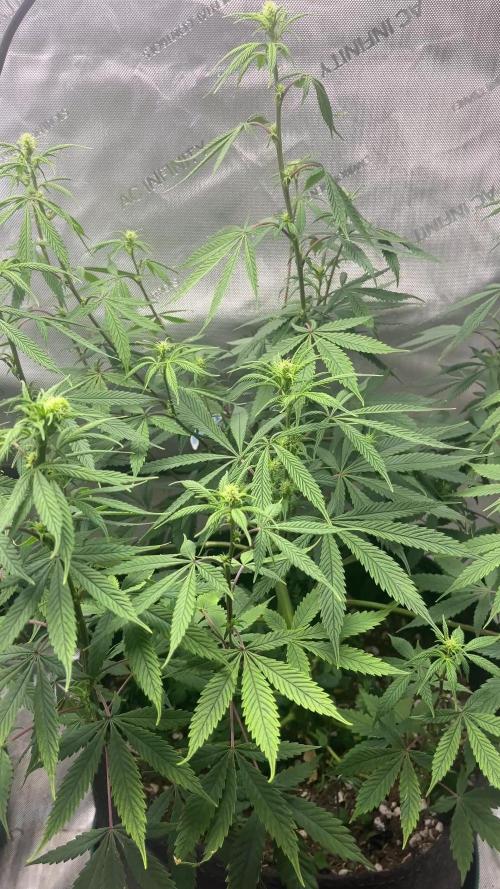
Did some light deflation nothing crazy
Had turn on the dehumidifier humidity been getting to high besides that everything seems cool
Likes
28
Share


@MrGrowthSpurt
Follow
What's good in the hood growmies🤟🏽 Week 7 in the books Hello week 8🙌🏾🙌🏾. They are in their 3 week of flower and the colas are starting to really fatten. It's a jungle in the tent right now so very difficult to take good quality pictures or each plant individually.
I waited to water them 1 day to long this week, which caused White LSD #2 to start drooping over, I had to tie her up in order to keep the colas somewhat up right.
Other than that it is business as usual, I am still keeping a close eye on Caramelicious making sure she doesn't Hermie, I think she will be alright however she worries me because I had her pollinate an entire tent of 4 plants that were in 10 gallons ruining my whole run before. However I think it was due to my grow room flooding causing the temps and humidity to be out of wack. Since I was late watering I fed them a little extra this week about 1.5 liters (instead of 1)of plain water p.h.'d to 6.6 in the 2 gallon pot it takes about that amount to see run-of.
All in all everything is going smoothly I can notice a visible difference in White LSD #1 and 2. Number 2 has some red undertones while #1 is white.
That is all for this week so until next time my friends Happy growing and I hope the grow goddesses bless you all with a bountiful harvest 💪🏾

Likes
Comments
Share

@Mr_Puff_N_Stuff
Follow
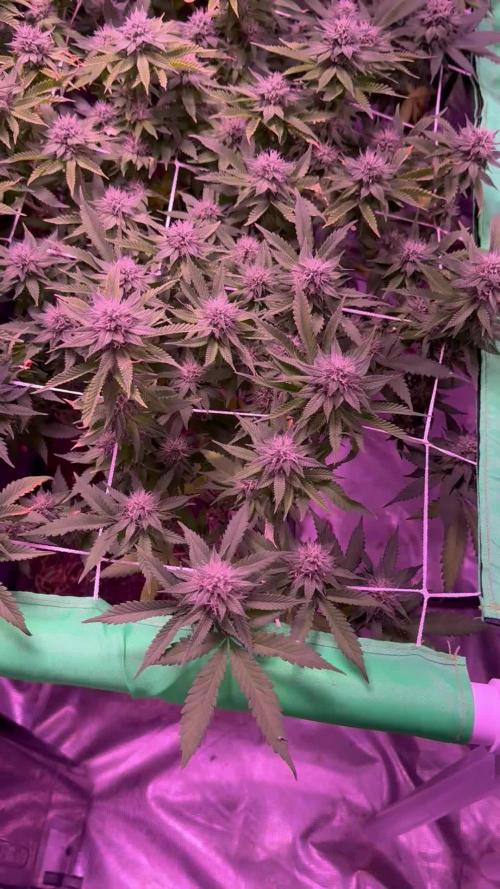
Plants are picking up weight. It’s a heavy eater but she is finicky. This was my first run to get a great growing plant and I found one. Cloned it and I’ve potted it already. I will start a new blog to capture how the plant really grows.

Likes
10
Share


@EVERYTHINGFRIEDISGOOD
Follow
Day22 both early flowering with healthy with big eater (1000ml per day) . accident broke big branch on strain#2 . Now I push nutrients to 600ppm on same nutrient ratio

Likes
78
Share


@Roberts
Follow
Pure Ice cream great really well under the Spider Farmer lights in the Athena nutrition. She did get too close to the light. I should of hst her. My mistake, they will still smoke. Smells great, and is loaded in trichromes. Has a sweet creamy. Pine smell. Everything looks great. I only had minor ph issues during grow. She was thriving for a lot of it. Thank you Spider Farmer, Athena, and Pure Instinto Seeds. 🤜🏻🤛🏻🌱🌱🌱
Happy new year.
Thank you grow diaries community for the 👇likes👇, follows, comments, and subscriptions on my YouTube channel👇. ❄️🌱🍻
Happy Growing 🌱🌱🌱
https://youtube.com/channel/UCAhN7yRzWLpcaRHhMIQ7X4g
Spider Farmer Official Website Links:
US&Worldwide: https://www.spider-farmer.com
CA: https://spiderfarmer.ca
UK: https://spiderfarmer.co.uk
EU: https://spiderfarmer.eu
AU: https://spiderfarmer.com.au
G5000 Light Amazon Link:
amzn.to/4643esa
UVR 40:
https://www.amazon.com/dp/B0BR7SGTHS
Discount code: saveurcash (Stackable)

Likes
15
Share


@Dico29
Follow
It’s now showing pistils pretty well, and I got some critical peyote from Barney farms In a napkin right now
There is a little burnt tip on fan leaves I think too much nitrogen since it’s in the big pot and the leaves are dark green. But looks good happy I picked the internodes during preflower too

Likes
Comments
Share

@LokalGrenz
Follow
Having cal mag issues going to hit the grow store tomorrow am and see can I get some organic cal mag and see if that helps other than that no real issues
2/24
I’m going sit my dumb ass down and chill I did a defoliation and man I over did it I think it’s pretty aggressive and i don’t know what I was thinking I was just clipping away 🤦🏾♂️…… anyway got some calmag for the color issues only going 1/2 tsp see how that goes hopefully when the new growth and more stretch happens it’ll look a lot better I’m also bottom feeding the calmag hope that works too
Likes
5
Share


@Samsemilla
Follow
Gute letze Woche.
Ich bin mit dem Ergebnis im großen und ganzen sehr zufrieden.
Ich habe einiges für zukünftige grows gelernt.
In Zukunft werde ich mich auf weniger Triebe und einen sauberen unteren Bereich konzentrieren.
Dann könnte ich sie eventuell auch noch ein paar Tage länger stehen lassen.

Likes
20
Share


@Ieiogrow94
Follow
Eccoci qui...
Non ho più parole per giudicare questa meraviglia!!!
Strain 1 è la migliore varietà che io abbia mai coltivato, nel processo di maturazione delle cime ho visto qualcosa di assurdo in quanto questa piccola ha una maturazione totalmente diversa rispetto a tutte le altre erbe!!!
Sono davvero soddisfatto, peccato che Strain 2 sia cresciuta storta, ma poco importa anche essa ha cime che sono dure come sassi, e sono solo 4 settimane di’ fioritura, NE VEDREMO DELLE BELLE!!!
Grazie a @KhalifaGenetics e @xpertnutrients per la collab e a tutti per il supporto🔥🌲❤️

Likes
18
Share


@BudMunchies
Follow
09/10: I did some topping over the last couple of days and will be doing some more over the next week or so.
I’ve done 8 and 16 main top mainlining in the past. And for this one I have decided to take a similar but less aggressive approach. Essentially training at the 2nd and 3rd nodes with a goal to bush out 8 mains, maybe 16 - but that might be a bit to bushing for 4 plants in this tent.
They are growing fine and healthy, but i am stressing them out like crazy at the moment, and so they are not as happy as they could be, but they will bounce back trained up within a couple weeks.
Likes
46
Share


@StoneyMelony
Follow
Overview of my grow:
Tent: Secret Jardin DS120 4 x 4 (120 cm by 120 cm)
Lights: 2 x 120 Watt CTlite c4 clusterled
Climat: Trotec Dehumidifyer 240 watt- 10L/24h
Filter: Prima Klima carbon filter PK2600
fan: 2 x Secret Jardin 20watt osc. fan
Pots: Gronest 4 x 11 liter airpots
Water : automated water system
PH: bluelab
Nutrients: Plagron cocos A + B
Plagron PK 13/14
ATA cal/mag
Epsom salt
no rights to music in the videos
Week 6 She is doing great. I did some defoliation and some HST. She grew another 24 cm in height. She has a nice indica structure She is on the same watersource as my brooklyn sunrise and i had to raise the nutes a bit up. I hope it isn't to much for her. 😋 Stay safe all 😉

Likes
31
Share


@Wicked_Stix
Follow
I'm in love with the structure on this sugar cane. She takes training easily and has developed a beautiful canopy of tops without much effort. It's almost like she just knows what I want her to do.
Day 35 is here. We are a week into flower and most the plants are just starting to hit that flowering stretch. I have been bending them down a little every couple days, but I need to focus on cleaning up some of the bottom branches so we can keep good air flow through the plants. Will work on that through this next week. I haven't done a water change, just been topping off the reservoir with fresh nutrients as they drink it up. Feeding half and half maxigro and maxibloom. Will cut out the maxigro in a couple weeks when I notice their stretch slowing down. I had a plant overflow this week because the drain line is getting full of roots. I noticed a couple roots have made their way into the reservoir already. I set a pump timer to 1 minute on and 20 minutes off so they can drain properly. I would like to make it through the grow without having to mess with the drains, but we will see what happens. I will make some modifications if needed. Other than that everything is running smooth and I hope we have some little pistils to show by next week. Thanks for stopping by ✌️

Likes
2
Share

@PapaTerps
Follow
Wizard Fuel - Wizard Trees
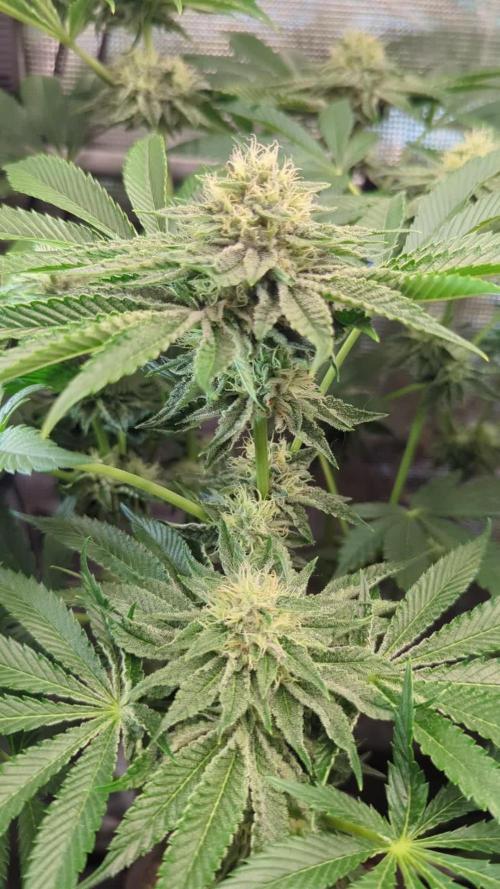
Day 77 - Watered with 3L of RO tap water with nutrients mixed individually, in order and then pH'd to 6.3 💪🏻 Great week, she is bulking like crazy and requires feeding every second day, her buds are getting so big🤘🏻 I removed a couple of the lower hanging fan leaves and that's pretty much it, she has been a super easy grow so far!!
