




Likes
4
Share


@Elpatron152
Follow
Hello everyone I made mistake I put nutriment to early 😅 she still can chill 1 week only watering but I give her directly when she come out
Thanks everyone ☺️

Likes
6
Share


@Silverback_Guerilla
Follow
12/1:
She's scheduled for execution on Tuesday (maybe Wednesday) Hooray!😋
The bottom part of the closet seems empty with only 9 plants in there.. 😟
I cut the harvested plants up and put them into drying baskets in the top of my closet with a small oscillating fan on. I've got the temperature fluctuating between 68f and 75f and the RH is staying between 48% and 52%.
To do that, I had to take down the small light in the top of the closet to fit the drying baskets up there. So, I moved the 3 shorter plants still up there, including the Stardawg, down to the bottom and put them on top of buckets. Now the bottom of the closet looks full again!😃
I'm anxious to finish up this grow so I can get busy growing the Fastbuds Fast Flowering Photo Testers!!! When I harvest the next 5, I'll flush the remaining plants really well and that will be all the flushing they'll get..I'll let them dry back out for a few days and harvest them. I've got to make some minor improvements to the garden (adding UV, blue and red/far red booster panels and intake fans) That should put me on track to start germinating them by mid-December if all goes well.

Likes
73
Share


@Herbz_Unkraut
Follow
Reduced nutes this week
Next week no more nutes
just because i want to re-use the earth and want most nutes to leave the earth, not for 'flushing'
Pabout flushing see: https://m.youtube.com/watch?v=qtXa_dAWKXc
only cleanfruits next week to get rid of all excess nutes
2 weeks till harvest


Likes
81
Share


@NugLife420
Follow
I was finally able to sex them all. 1 Male/Hermie, and the rest have beautiful white pistles forming. They are starting to go through a stretch now as well. I also ordered some more grow lights 3 Mars Hydo TS1000's. I can't wait for those to arrive.)

Likes
1
Share


@Huckleberry39
Follow
Loving these ILGM OG KUSH!!! This is my 3rd grow of them and they just keep getting better and better!! The middle one should finish up by the end of this month if not sooner. About 80 percent of the pistols have turned. I am going to start checking trichomes very soon. The will definitely plump up in the next few weeks!!

Likes
1
Share
@Trinidad
Follow
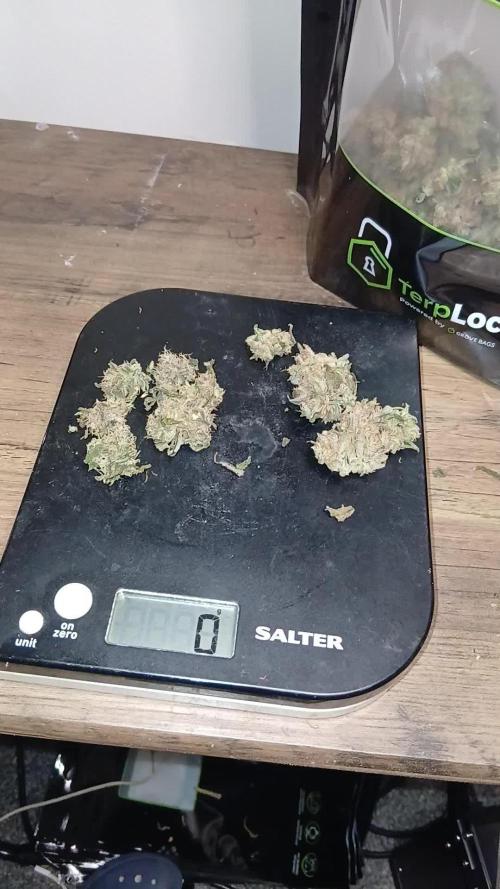
2 different Frostbangers plants. Same grow. 1 came in at 52g and the other at 6. Easy grow and easy trim
Likes
18
Share


@JO_GROW
Follow
Another nice, trouble free week.
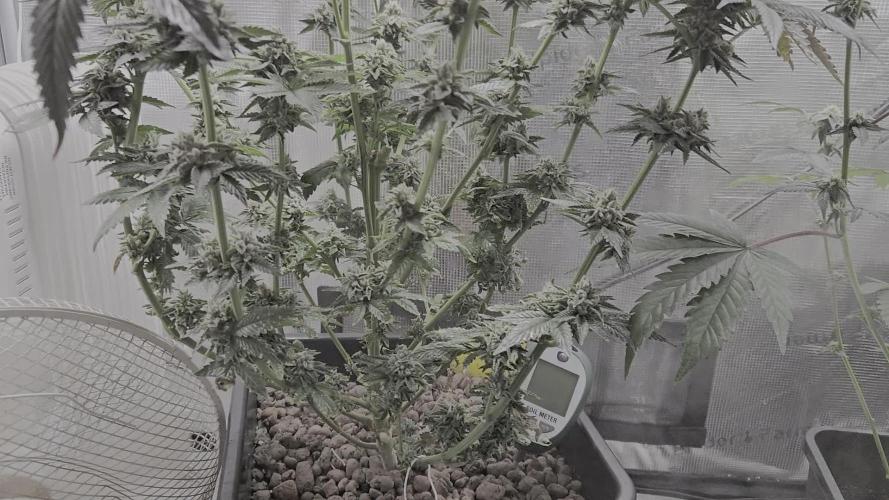
She has responded well to the ramp up in nutes and is looking good now she's been defoliated (again!). Seriously girl would turn into a hedge if left to her own devices.
Having to really keep an eye on the humidity and empty the dehumidifier twice a day but it's doing it's job so...... can't complain!
Have a merry Christmas all!



Processing
Likes
10
Share


@CityFarmer
Follow
Hello everyone,
Now that I can tell the difference I split these apart, this is my Pineapple Kush, grown outdoors this time, shes smelling really fruty and I even seen some lilac hairs, lets see how she goes...
See you guys next week🤘🤘🤙🤙✌️✌️✌️
Likes
17
Share


@The_Projexx
Follow
I yielded just over half pound dry 10oz and abit to be exact not to bad off 2 plants that I could of let go a little longer. The absolutely reak of Gas terpenes very different for me but very enjoyable


Likes
2
Share


@YOREEL
Follow
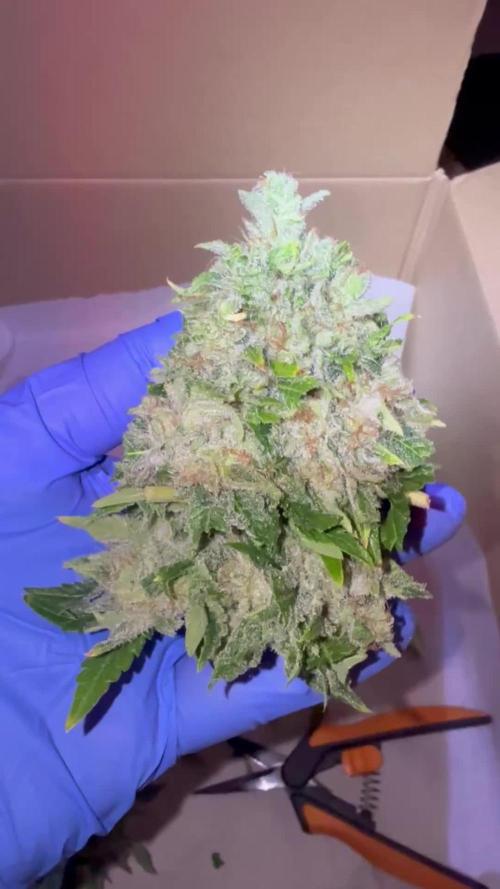
Time lapse 23rd June > Aug 21st 2020. Plenty of screwups - over/under watering+ feeding + pollenated the tent with one hermie, two plants throwing nannas (due to UV) out in the last two weeks and the major heatwave all did not help, This was totally my screw up and for that I still give this strain a solid 8/10. The tastes are nice although my first try of Runtz was in Cali and it is certainly another level over there. Unfortunately I did not get a pheno similar to that I smoked in the US but out of the 5 I did get I really enjoyed one of them which is hard hitting! Apologies for the time-lapse as its not always spot on and often other things took over. Stuff never goes the way you plan it in your head.
Upon drying the temps were good and they dried okay. The reason why this is a write off is because one of the plants hermied and caused most of the plants to be pollenated. When I harvested I noticed a few nannas poking out so I'm not sure if I let them run too long, too much stress, underwatering, light intensity, the UV bar or heat stress. Anyways I didn't catch it and I have some well developed seeds. I think it's down to the UV bar causing the nannas but the seeds were ripe (tiger stipe brown) so didn't have enough time to grow and ripen. Seeing as I had deficiencies early on in flower - WK4 - I think it happened then. The PP and runtz all have seeds bar one plant (the nice gassy pheno) and the tent was cleaned with bleach, vacuumed and temps increased to over 100f with a heater after disinfecting. Nevertheless I will grow this again! it's all a learning curve! More bud shots to come when cured. Just over an 1oz per plant is pretty poor imo but again you live and learn from your screw up! Got to be on point with my watering next time! That's why I love hydro!




Likes
43
Share


@TheCannaProphet
Follow
~ FastBuds PAPAYA SHERBET Photoperiod~
Well here we go on another journey together through 'Canna-land' and this one's kinda special... forget that, it's VERY special because this is FastBuds newest surprise for the community, a FEMINIZED PHOTOPERIOD STRAIN!🤯
I was fortunate enough to score these seeds, of which only 1000 were available and can't wait to see what this strain can do! This Papaya Sherbet, according to FastBuds, is a hybrid with a 9-10 weeks flowering period. For a more detailed and accurate description of this strain the following from FastBuds says it best:
"Combining the massive stature of Papaya (Oni Selection) with the strength and resilience of one of our best keeper cuts (Sunset Sherbet), this strain develops into a big, expansive bush adorned with numerous bud sites that later transform into a generous harvest of medium-sized buds. Papaya Sherbet flowers deliver a signature flavor of premium cannabis with subtle citrus undertones that emerge upon inhaling. During growth, her aroma makes for a sweet yet pleasantly bitter fragrance, giving you an idea of what the smoke will taste like. Notably stress-resistant, Papaya Sherbet is a great choice for growers working in challenging environments. She is very forgiving and rebounds quickly from any adversity, allowing growers the freedom to experiment with confidence that she will take everything like a champion she is. This strain embodies resilience, flavor, and abundant yields in every grow cycle."
Sounds like an epic strain and I personally cannot wait for this lady to strut her stuff!😍
________________________________________________________________________________________________________________________________________________________________________________________________________________________________________________________________________________________________________________________
The Setup:
This is going to be an outdoor grow, but I have started the Papaya Sherbet photoperiod indoors as our weather is still a bit too chilly to put a newly sprouted seedling outside (nighttime temp's dipping regularly into the 40's℉).
The plan is simple... let her grow inside under a 19/5 light schedule until the nighttime temperatures are in the mid 50's℉, which shouldn't be long. After which, she'll be moved outside and transplanted into the soil which I have already setup and inoculated with beneficial microbes from BioTabs and slow release dry amendments from Gaia Green. Once she's established herself outside she'll be given periodic top dressings of Gaia Green 4-4-4 and 2-8-4 along with worm castings and Compost Tea's. Her grow area is approx. 5'x5' and I have posts and a trellis net set up already for when she gets bigger to aid in training her. Let the fun begin!🤪💚
________________________________________________________________________________________________________________________________________________________________________________________________________________________________________________________________________________________________________________________
Weekly Updates:
6/8- Here we go into Week Five and all is looking great with the Papaya Sherbet photoperiod from FastBuds!
Our weather is beautiful now with daytime high temp's in the 80's F without a lot of rain so I am watering her daily at sundown with approximately 4-5g of well water.
6/10- I watered the Papaya Sherbet today and also did a little canopy maintenance, removing some leaves and some small shoots that would have taken energy better used elsewhere on the plant.
6/12- I gave the Papaya Sherbet photo a good watering today at sundown via the garden hose with straight well water.
I am also planning on top dressing her in roughly 7-10 days from now with a blend of Gaia Green 4-4-4 and a little of their 2-8-4 along with some Wiggle Worm castings and a little Down to Earth Bio-Fish.
6/14- Another week gone and this little lady has really come along considering her late start and getting chewed on when she was young. All in all the FastBuds Papaya Sherbet photoperiod is shaping up to be one fine looking plant!
Thank you for checking out my diary, your positive comments and support make it all worthwhile! 💚Growers Love!💚😎🙏
Likes
8
Share

@Mati_86
Follow
FROHES NEUES 🎉🎊🎈🎆
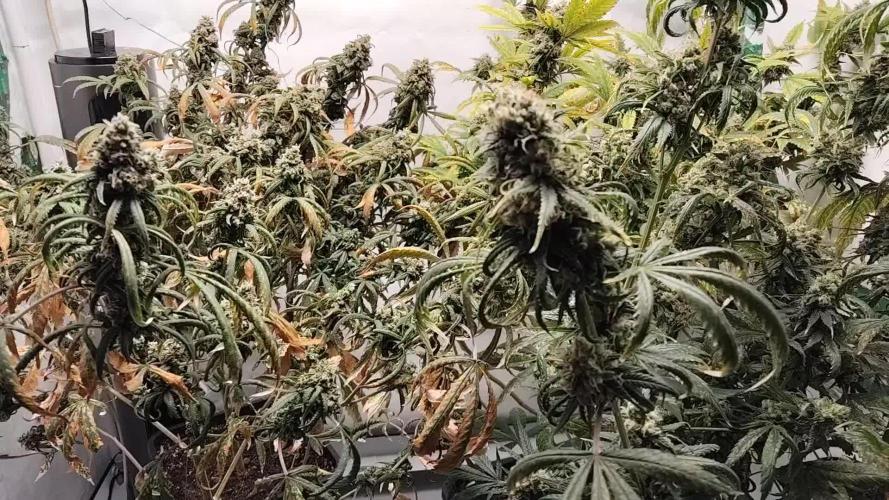
8.te Blütewoche und die critical werden langsam reif. Denke noch 5 bis 7 tage dann wird critical geerntet. Acapulco und zkittlez brauchen noch etwas länger, denke bis ende woche 9 mindestens. Gieße nur mit Leitungswasser das ich mit osmosewasser mische bis auf 0.3 bis 0.4 ec. Hatte die Aca. umd Zk vor ein paar tagen gespült mit wasser. Beim nächsten wässern noch mal spülen bis ec 1.2 erreicht ist. Und dann nur noch wasser wie oben beschrieben.
War bisher kein guter grow aber dafür trotzdem noch ein paar schöne buds produziert 😅✌️


Likes
8
Share


@jayizrollin
Follow
Ended up pulling about 65 grams from Top Gun2, another 55 from the Top Gun1 I harvested earlier, fun grow, I was lazy with this diary as I was more excited for gorilla cookies, I’ll try to keep to one diary from now.

Likes
37
Share


@DaddyPrime2
Follow
5/27 curious to see where this week ends up at
5/29 the one plant indoors is packing on weight. The one I put outside to finish (possibly stupid) seems to be maturing faster but bulking slower. She's seemed healthy this whole time. Not even a burnt leaf tip
5/31 attempting to take pictures in different lighting to get a better idea for yall viewers
Likes
12
Share


@TgOgFaRms
Follow
I recently had the opportunity to grow the Toof Decay x Walter White strain from Mephisto Genetics, and it was my first experience with this particular strain. While I'm still in the process of forming a solid opinion, I can share my initial observations.
The bud structure of this hybrid strain didn't feel as dense as I had hoped during the trimming process. 😕 However, I was impressed by the beautiful purple hues displayed by the buds. The colors were certainly visually appealing. 💜
Although I haven't had the chance to test it yet, I'm eagerly looking forward to experiencing the effects of Toof Decay x Walter White. 🌬️💨 At this point, I would rate it a 7.5 out of 10.
As my journey with this strain continues, I'm excited to see how it develops and how its effects unfold. Stay tuned for more updates! 🌱🔜
Happy growing and exploring new strains! 🌿✨

Likes
10
Share


@cezario
Follow
So from this point I had lost hope. the plants weren't looking to good. But with some help we went to town on the plants and did some LST'ing and hoped this would help the plants.