The Grow Awards 2026 🏆
Likes
Comments
Share
Likes
27
Share
@Hydronaut
Follow
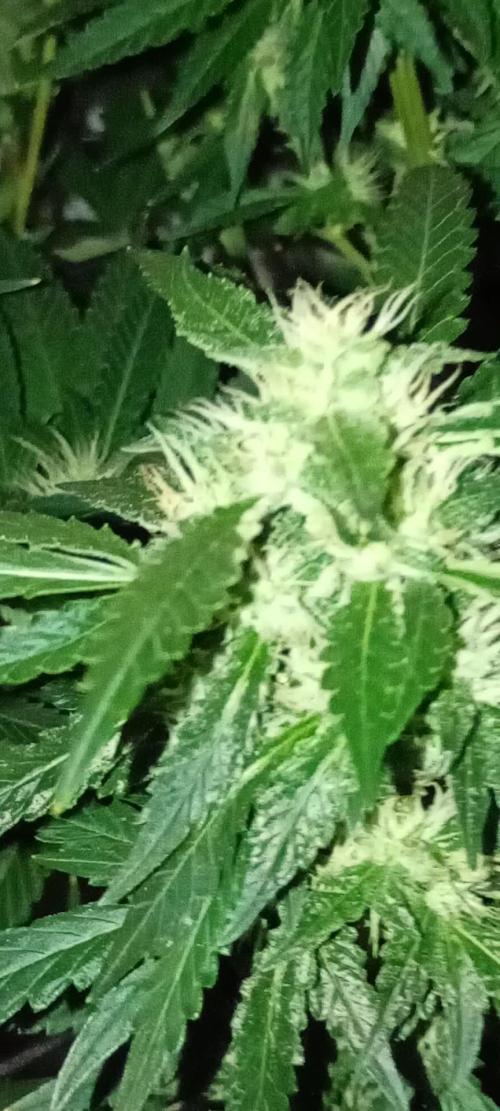
Coming to a finish soon. Brown effected leaf spots have burned to a paper-bag brown color/look. Issue was resolved at first sight, so it remained at the canopy. A bit ugly looking, but nice frosty flowers still. Flowers are VERY dense on the top half of the canopy. I took a small top to test trichs and it was like slicing into a cucumber. No air whatsoever. Overall the plant is extremely healthy despite some ugly looking leaves at the top caused by low ph and possibly lack of calmag a few weeks ago.
Likes
11
Share
Likes
56
Share
What's in the soil? What's not in the soil would be an easier question to answer. 16-18 DLI @ the minute. +++ as she grows. Probably not recommended, but to get to where it needs to be, I need to start now. Vegetative @1400ppm 0.8–1.2 kPa 80–86°F (26.7–30°C) 65–75%, LST Day 10, Fim'd Day 11 CEC (Cation Exchange Capacity): This is a measure of a soil's ability to hold and exchange positively charged nutrients, like calcium, magnesium, and potassium. Soils with high CEC (more clay and organic matter) have more negative charges that attract and hold these essential nutrients, preventing them from leaching away. Biochar is highly efficient at increasing cation exchange capacity (CEC) compared to many other amendments. Biochar's high CEC potential stems from its negatively charged functional groups, and studies show it can increase CEC by over 90%. Amendments like compost also increase CEC but are often more prone to rapid biodegradation, which can make biochar's effect more long-lasting. biochar acts as a long-lasting Cation Exchange Capacity (CEC) enhancer because its porous, carbon-rich structure provides sites for nutrients to bind to, effectively improving nutrient retention in soil without relying on the short-term benefits of fresh organic matter like compost or manure. Biochar's stability means these benefits last much longer than those from traditional organic amendments, making it a sustainable way to improve soil fertility, water retention, and structure over time. Needs to be charged first, similar to Coco, or it will immobilize cations, but at a much higher ratio. a high cation exchange capacity (CEC) results in a high buffer protection, meaning the soil can better resist changes in pH and nutrient availability. This is because a high CEC soil has more negatively charged sites to hold onto essential positively charged nutrients, like calcium and magnesium, and to buffer against acid ions, such as hydrogen. EC (Electrical Conductivity): This measures the amount of soluble salts in the soil. High EC levels indicate a high concentration of dissolved salts and can be a sign of potential salinity issues that can harm plants. The stored cations associated with a medium's cation exchange capacity (CEC) do not directly contribute to a real-time electrical conductivity (EC) reading. A real-time EC measurement reflects only the concentration of free, dissolved salt ions in the water solution within the medium. 98% of a plants nutrients comes directly from the water solution. 2% come directly from soil particles. CEC is a mediums storage capacity for cations. These stored cations do not contribute to a mediums EC directly. Electrical Conductivity (EC) does not measure salt ions adsorbed (stored) onto a Cation Exchange Capacity (CEC) site, as EC measures the conductivity of ions in solution within a soil or water sample, not those held on soil particles. A medium releases stored cations to water by ion exchange, where a new, more desirable ion from the water solution temporarily displaces the stored cation from the medium's surface, a process also seen in plants absorbing nutrients via mass flow. For example, in water softeners, sodium ions are released from resin beads to bond with the medium's surface, displacing calcium and magnesium ions which then enter the water. This same principle applies when plants take up nutrients from the soil solution: the cations are released from the soil particles into the water in response to a concentration equilibrium, and then moved to the root surface via mass flow. An example of ion exchange within the context of Cation Exchange Capacity (CEC) is a soil particle with a negative charge attracting and holding positively charged nutrient ions, like potassium (K+) or calcium (Ca2+), and then exchanging them for other positive ions present in the soil solution. For instance, a negatively charged clay particle in soil can hold a K+ ion and later release it to a plant's roots when a different cation, such as calcium (Ca2+), is abundant and replaces the potassium. This process of holding and swapping positively charged ions is fundamental to soil fertility, as it provides plants with essential nutrients. Negative charges on soil particles: Soil particles, particularly clay and organic matter, have negatively charged surfaces due to their chemical structure. Attraction of cations: These negative charges attract and hold positively charged ions, or cations, such as: Potassium (K+) Calcium (Ca2+) Magnesium (Mg2+) Sodium (Na+) Ammonium (NH4+) Plant roots excrete hydrogen ions (H+) through the action of proton pumps embedded in the root cell membranes, which use ATP (energy) to actively transport H+ ions from inside the root cell into the surrounding soil. This process lowers the pH of the soil, which helps to make certain mineral nutrients, such as iron, more available for uptake by the plant. Mechanism of H+ Excretion Proton Pumps: Root cells contain specialized proteins called proton pumps (H+-ATPases) in their cell membranes. Active Transport: These proton pumps use energy from ATP to actively move H+ ions from the cytoplasm of the root cell into the soil, against their concentration gradient. Role in pH Regulation: This active excretion of H+ is a major way plants regulate their internal cytoplasmic pH. Nutrient Availability: The resulting decrease in soil pH makes certain essential mineral nutrients, like iron, more soluble and available for the root cells to absorb. Ion Exchange: The H+ ions also displace positively charged mineral cations from the soil particles, making them available for uptake. Iron Uptake: In response to iron deficiency stress, plants enhance H+ excretion and reductant release to lower the pH and convert Fe3+ to the more available form Fe2+. The altered pH can influence the activity and composition of beneficial microbes in the soil. The H+ gradient created by the proton pumps can also be used for other vital cell functions, such as ATP synthesis and the transport of other solutes. The hydrogen ions (H+) excreted during photosynthesis come from the splitting of water molecules. This splitting, called photolysis, occurs in Photosystem II to replace the electrons used in the light-dependent reactions. The released hydrogen ions are then pumped into the thylakoid lumen, creating a proton gradient that drives ATP synthesis. Plants release hydrogen ions (H+) from their roots into the soil, a process that occurs in conjunction with nutrient uptake and photosynthesis. These H+ ions compete with mineral cations for the negatively charged sites on soil particles, a phenomenon known as cation exchange. By displacing beneficial mineral cations, the excreted H+ ions make these nutrients available for the plant to absorb, which can also lower the soil pH and indirectly affect its Cation Exchange Capacity (CEC) by altering the pool of exchangeable cations in the soil solution. Plants use proton (H+) exudation, driven by the H+-ATPase enzyme, to release H+ ions into the soil, creating a more acidic rhizosphere, which enhances nutrient availability and influences nutrient cycling processes. This acidification mobilizes insoluble nutrients like iron (Fe) by breaking them down, while also facilitating the activity of beneficial microbes involved in the nutrient cycle. Therefore, H+ exudation is a critical plant strategy for nutrient acquisition and management, allowing plants to improve their access to essential elements from the soil. A lack of water splitting during photosynthesis can affect iron uptake because the resulting energy imbalance disrupts the plant's ability to produce ATP and NADPH, which are crucial for overall photosynthetic energy conversion and can trigger a deficiency in iron homeostasis pathways. While photosynthesis uses hydrogen ions produced from water splitting for the Calvin cycle, not to create a hydrogen gas deficiency, the overall process is sensitive to nutrient availability, and iron is essential for chloroplast function. In photosynthesis, water is split to provide electrons to replace those lost in Photosystem II, which is triggered by light absorption. These electrons then travel along a transport chain to generate ATP (energy currency) and NADPH (reducing power). Carbon Fixation: The generated ATP and NADPH are then used to convert carbon dioxide into carbohydrates in the Calvin cycle. Impaired water splitting (via water in or out) breaks the chain reaction of photosynthesis. This leads to an imbalance in ATP and NADPH levels, which disrupts the Calvin cycle and overall energy production in the plant. Plants require a sufficient supply of essential mineral elements like iron for photosynthesis. Iron is vital for chlorophyll formation and plays a crucial role in electron transport within the chloroplasts. The complex relationship between nutrient status and photosynthesis is evident when iron deficiency can be reverted by depleting other micronutrients like manganese. This highlights how nutrient homeostasis influences photosynthetic function. A lack of adequate energy and reducing power from photosynthesis, which is directly linked to water splitting, can trigger complex adaptive responses in the plant's iron uptake and distribution systems. Plants possess receptors called transceptors that can directly detect specific nutrient concentrations in the soil or within the plant's tissues. These receptors trigger signaling pathways, sometimes involving calcium influx or changes in protein complex activity, that then influence nutrient uptake by the roots. Plants use this information to make long-term adjustments, such as Increasing root biomass to explore more soil for nutrients. Modifying metabolic pathways to make better use of available resources. Adjusting the rate of nutrient transport into the roots. That's why I keep a high EC. Abundance resonates Abundance.
Processing
Likes
33
Share
Still at 1/4 strength..I'm gonna flush before I up the nutrients cause I think ph may be fluctuating. I saw slight yellowing in veins yesterday. Other than that pretty happy, she still hasn't developed that signature diesel smelll but I'm sure its coming soon 😎
Likes
19
Share
Some trichomes are clear others are turning cloudy , still no Amber. I'll lower the feed from now with a view to harvesting in the next week to ten days .
Likes
7
Share
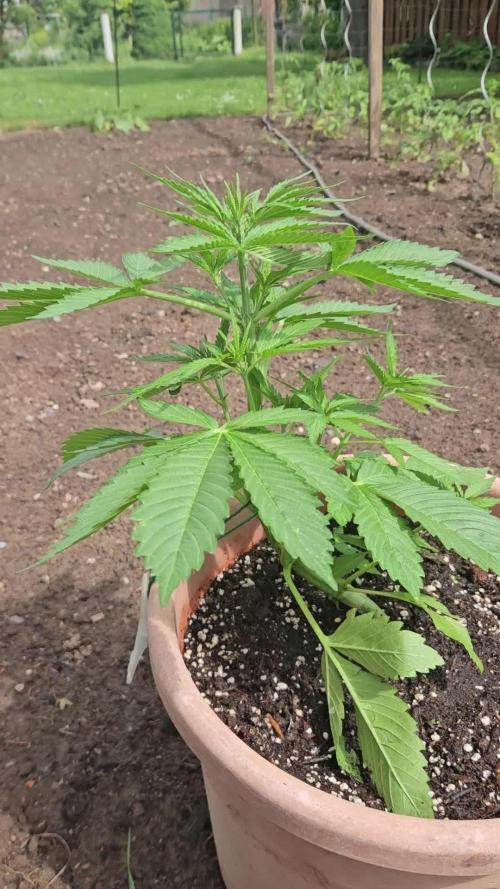
Defoliated both plants today for the second time and also cut off some lower branches in preparation for flipping to flower .The Northern lights have responded well to all training methods, topping LST, ScrOG, and defoliation.
Likes
7
Share
The Cinderella ladies are growing beautifully Remember, it’s 420 somewhere™️
Likes
22
Share
@liliarose
Follow
She is growing great ! Started flowering this week, I did a flush after the pre flower and increased the nutrient intake for flowering now. Got a lil light burn so put the light a bit further away, dim is on 80% now. Tie down and partial defoliation did well in evening the canopy and not letting it grow too high, but more in the sides.
Likes
66
Share
She’s getting closer to chop! I would say about another 1.5weeks max on this girl.. buds are getting fat and frosty and she is full of blueberry terps! I’ve been giving her a diastatic malted barley tea with molasses and bokashi bran to help boost nutrient cycling and she’s been responding very well to that! Was hoping for more anthocyanins but maybe they will appear closer to harvest.
Likes
Comments
Share
Day 15 Update : Decided to grab a tape measure to check canopy heights on a whim and discovered that my light was hanging 35 inches from “Cellie” Cereal and Milk . Wowzers 👀! So I raised the plant to be 26 inches from the light that I also dimmed down to about 40% . It works out that I can try to get the most out of the end of flower stretch for the older gal who shall no more than be mentioned for reference to accentuate the great glorious glamorous “Cellie”. The humidity plummeted after I did a major defoliation of the older gals so I adjusted the airflow rate of the lower in-line fan and the upper inline exhaust fan with the carbon filter . I lowered them both to the lowest setting & the humidity returned to “normal” Let me explain my reasonings/thinking behind my adjustments which are experimental at BEST. It’s worth also mentioning without having to preset a single thing on my 70pint Dehumidifier located inside this tent it is legitimately only plugged into my PRESET humidistat controller which is set to 50%-46% RH WITH an alarm on highs of 55% and lows of 43% . In real life what this translates to is when this humidity controller triggers the dehumidifier ON @50%RH immediately the fan of the Dehumidifier begins running. However this does not help the rising humidity that is occurring (it will reach 55%-60.2%RH ). Given a fixed amount of time , the condenser(atleast what it sounds like . .again, it could be anything) turns on . It is when this “condenser” “sounding” component begins working that the humidity IMMEDIATELY plummets down to my low point of 46% So to make a long story short the humidity gets vacuumed to 46%RH & the dehumidifier turns off, bc of the PURPOSEFUL EXPERIMENTAL TWEAKING making all air exchange fans low leveled the humidity slowly but steadily rises to 50%RH then the dehumidifier is triggered on but only the fans initially and the humidity eventually reaches 55%RH-60.2%RH & then the humidity gets all its hair snatched out by the dehumidifier and drops back down to 46%RH. 😮‍💨😮‍💨😮‍💨😮‍💨 with all that said of anybody was even interested per my tents leaf canopy height temperature average good to great OR LITE GREEN TO DARK GREEN VPD for my temperature begins @ 60 & ends @ 52 which is kind of a perfect storm for OUR GIRL “CELLIE” oooooooorrrrrrrrrrr sssssssoooooo I think/hope . She still hasn’t needed watering since being transplanted, she should now ready and willing to stretch those toes and we need the opportunities to top water that soil a few times to make those dry amendments available to her . More pics of later the week coming as we go . . Hopefully . Diligence is a practice Day #17: giving her some water today, no specific amount just until she feels the right amount of “heavy”. She was given 3 different batches of water once ph’d to 6.3 once ph’d to 6.7 one ph’d to 6.5. She’s grown an inch in 2 days. Also swapped out the smart hygrometer system to a different brand . So far it has all the capability I was looking for but I need to run 2 more experiments to know for certain it lives up to my needs and its price tag 😁 Day 18 Update: she grew an inch taller nice 👍 The smart hygrometer system has reported/experience Bluetooth failures twice already(although I don’t know exactly what that means considering I purchased this for it’s Wifi capabilities ) I didn’t think to check it whilst I was away so I cannot yet say If it meets my final expectation/need I bought a soil ph meter & it indicates “my mix” is at 3.1 ph 👀 hmm 🤔 I’m wondering if this is a must fix or can I get by .eventually she will be transplanted and at that time I can use my new digital soil ph probe to construct her new blend moving forward but I am curious is I mixed another batch at 3 something ph would it matter ? In the beginning I wasn’t ph’ing any of my watering just because I assumed my soil mixture was highly acidic because of the 70ish pecernr peat moss base . I also assumed that it would be acid fixing for the water I put in it and therefore wouldn’t need to ph it and I did just fine just giving plain old tap water when thirsty until I experience VPD issues & in an effort to pinpoint what my exact issue was and how to fix it I of course eliminated all the variables and dialed in on my ph of my feed water and now my soil so it leaves me wondering does the soil need to be relatively 6.1 ph or is the 3.1 I’m flying at alright also . I checked the other 3 currently in here getting through flower & two of them are in the 3’s for ph & one of them is 6.2(the largest of them all) how ever she was the largest of them all always and oddly enough I mixed one big batch for them and transplanted them at the same time so I get two of them having the same ph as “Cellie” but the other that is in ph heaven is an oddball Should I top her here or supercrop later hmm I need to decide my vision for this thing Day 19 Update: ponytailed her youngest internode for about 16hrs she aggressively popped out of it twice ! It didn’t even work for 24hrs when I try it again it’ll be before the internode is so strong . Also rigged up a 16in oscillating wall-fan that currently being held with 2 zip ties , 2 rubber bands , & a smidget of duct tape and MAJORITY OF FAITH keeping it in place . The biggest plus to my added circulation is that I got the 16in fan for ! A win is a win . Pics uploads will be held for the next 3 days until the end of week 3 upload . Drop a thumbs up Day 20 Update : THE FAN FELL! But no one was damaged or injured . I re-rigged it . This time with duct tape , 3 popsicle sticks , 2 heavy duty zip ties & 1 regular strength zip tie . SHES SOLID NOW 😂 I did some solid rigging this time & have videoed my handy work . Also I forgot to turn my A/C back on before leaving the house so temps and humidity skyrocketed and swung for 9 hours until I got home . The temp in the tent was 84.4 and the humidity went from 42.4 to 57.5 to 42 every three mins. Day 21 Update : SHES A PRETTY GIRL. RQS says Cereal Milk is a slightly sativa dominant hybrid but the pheno of this particular seed seems to lean more towards indica I’m not mad at it ! I’m getting more stoked to see what she can do. She still hasn’t received any additional water since day #18.
Likes
82
Share
Hello growmies! Welcome to week five of An Epsilon Adventure! Massive thanks to both Shogun and Royal Queen Seeds for sponsoring this grow! The girls are all at different early flowering stages, but they are only days apart from each other. I have a bit of a quandary now though, as I am no longer following the nutrient schedule as these plants are too fast for it. So I am unsure whether to start PK warrior or not yet. I have also realised I have probably underfed them in the last week or so, which to be honest isn't a big deal for me right now as they are already waaaaaaaaaaay bigger than expected. Let's talk about that a moment. This strain has an average height of 50-70cm. I wonder if those numbers were for soil grows? It seems for coco you will get even bigger plants. Case in point these six girls measured at 3pm 24/7 day 30 as follows: Plant 1: 111cm Plant 2: 99cm Plant 3: 90cm Plant 4: 89cm Plant 5: 85cm Plant 6: 84cm Plant 3 appears to have stopped stretching and is the most advanced into flower. Plant 4 is right behind it and has slowed down but not yet stopped stretching. Plant 2 is next in terms of flowering development her stretch is slowing. Plant 5 is still stretching rapidly and is coming to the end of preflower. No concern really at 85cm she has some room yet. Plant 6 is still stretching rapidly and is still in preflower. Slightly concerned despite her 84cm stature as she has been the most beefy looking plant all along, so I am expecting her to grow a good bit more. Plant 1 is still stretching rapidly and is still in preflower. Extremely very concerned about this one. The light is about as high as it can go. 111cm!! I have scoured the internet and the tallest Epsilon F1 I have found was 95cm. It's great that she is so happy this plant, but if she gets much taller I'm going to have to super crop her main cola. Whatever happens I am starting to dream of smashing my yield target out of the park, these girls are all impressive. Hard to believe they are just 30 days old. Daily Updates: ### Week 5 Day 2 15:00 24/7 Photographed. ### Week 5 Day 2 23:30 24/7 fertigated 1.6l and updated nutrient schedule for the week ### Week 5 Day 3 20:00 25/7 took a short video ### Week 5 Day 4 05:00 26/7 photographed ### Week 5 Day 4 18:00 26/7 Measured (brace yourself). Plant 1: 126cm Plant 2: 107cm Plant 3: 93cm Plant 4: 94cm Plant 5: 97cm Plant 6: 96cm Plants 3 and 4 have stopped stretching now and are fully into flower. At 93cm and 94cm respectively, by the end of flower these girls may hit 1m but they wont go much more than that. Plant 2 looks to have just about stopped as well. It might go another 10cm overall. Plant 5 is still stretching but I think not much more. Plant 6 is still stretching and I am still expecting quite a bit of growth from her. Then there is plant 1. 126cm and still stretching. It has now grown beyond the height of the light. I hope it can somehow finish itself before it hits the top of the tent. I mean the secondary colas are over 1m already. It is a great shame this giant plant doesn't have more horizontal space to itself, either way it is absolutely shocking to see. I really do not want to super crop her, but am out of options. This grow, incidentally, constitutes the first and last time that I let any indoor cannabis plant go untrained. With basically 4 x 4 x 4 of usable space, training my plants is not really optional - and now you can all see why. This "50-70cm" strain has rapidly outgrown my space. RQS it may be time to revisit the height claims on this strain. Just saying. ### Week 5 Day 6 01:00 28/7 Rearranged the tent and photographed. I have been regularly rotating the plants and periodically moving them around. My problem is now plant one has already hit the top of the tent and there is no easy way to give it anymore space... still not sure what I am supposed to do but it's fine for now... tried to capture the problem with the photos. As well as plant 1, plant 6 looks like it's going to keep going for a good bit yet, and plant 2 is still putting a bit of height on. I took plenty of photos today to try and capture the essence of the jungle. It is quite unbelievable what these plants have done. I just cannot stop looking at them, they are magnificent. I have not fed for 4 days, will probably feed later I am just trying to slow them down a bit by not feeding them. It doesn't seem to be working. ### Week 5 Day 6 23:00 28/7 Defoliated heavily all plants. Fertigated 2l each. Removed some more lower side growth off the smallest plant (plant 3) to make space. Might leave it a few days before I photograph again. Plants 2, 3, and 4 are all well into flowering now, plant 5 is not far behind them, but plants 1 and 6 are still in preflower. :( What is really remarkable right now is the difference in colour between the plants further into flower vs the plants still in preflower. The plants in flowering have much darker leaves. --- Thanks for reading growmies! 👊 ========== Tent: 120cm x 120cm x 180cm Light: 600w HID Elite Dual Spectrum HPS + Angel Wing Reflector Air: 5" duct fan system with carbon filter ~300 m3/hour + RAM 9" floor fan + 4" intake fan Pots: Air Pruner Fabric Pots 30l - UGro XL Coco + horticultural grade perlite (~20%) Seeds supplied by Royal Queen Seeds https://www.royalqueenseeds.com Nutrients supplied by Shogun Fertilisers https://www.shogunfertilisers.com/en ==========
Likes
24
Share
SWISS DREAM ROSE CBD 🌹 AUTO ORGANIC GROW WEEK #12 Overall Week #9 Flower This CBD plant is 👏 amazing first she's just a beautiful plant with her dense purple buds that just pop with the orange hairs and trichomes she even has a nice aroma about her. She's got a few weeks left. Stay Growing!! Kannabia.com SWISS DREAM ROSE CBD AUTO
Likes
2
Share
@Borberad
Follow
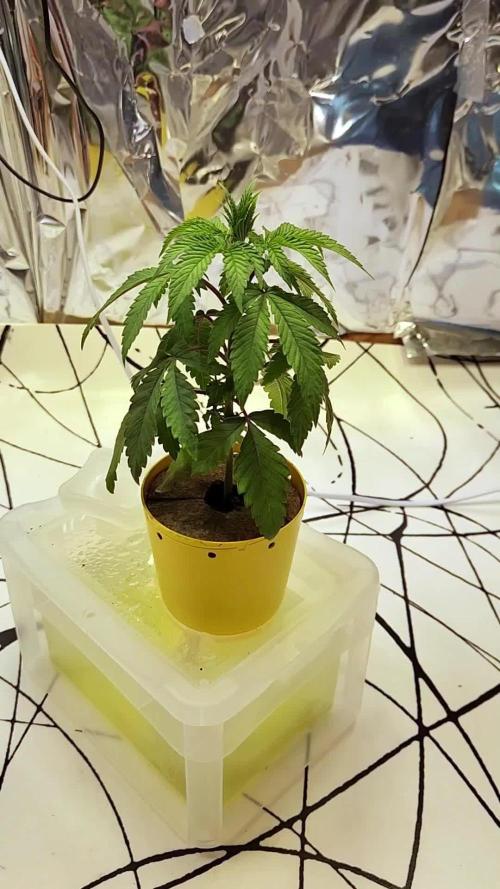
Woche 3 Das Fundament wird gelegt und Umtopfen steht an. Der Regenbogen ist in der dritten Woche seines Lebens. Die ersten Seitentriebie bilden sich und die Pflanze ist gesund gewachsen mitlerweile hat sie 3 Nodien. Und ist über ihren Cube hinausgewachsen und hat diesen kräftig durchwurzelt. Somit wird jetzt in den 3l Stofftopf umgepflanzt. Danach gibt es zum ersten Mal die standart Düngedosis, angepasst an das Pflanzenbild 2,5 -5ml Hesi TNT für ordentlich Nährstoffe im Wachstum, 5 ml/l Hesi Root für eine kräftige Wurzelentwicklung und 2 ml/l Calmag, um unser Osmosewasser aufzuhärten. Der DLI wurde auf im Laufe der Woche auf 40 erhöht. * Zustand der Pflanze: Die ersten "echten" Blätter sind vollständig entwickelt und wie durch die EasyCubes zeigt sich wie eine kräftige Wurzelbildung. * Wichtige Ereignisse: Beginn der Nährstoffgabe. Anhebung des DLI. Umtopfen in 3L Stofftopf * Düngung & Messwerte: * Gießwasser: pH ca. 6,0. Leitwert ca.1,4 - 2 S. * Drain: Wir messen sporadisch, um die Abweichung von +/- 500 S einzuhalten. * Anpassungen: Wir sind überrascht wie gut sich die Pflannze im Easys Plug System entwickelt hat.
Likes
18
Share
@Borberad
Follow
Die Überdüngung hat den Blümchen ganz schön zugesetzt, zum Glück sind es nur noch ca. 2 Wochen. Das Spülen der Erde hat etwas verzögert Wirkung gezeigt und die Mangelerscheinungen nehmen nicht weiter zu und die Blumen s weiterhin top im Saft und sehen gut aus. Leider Schimmel an Tag 47 und 48 der Blüte in zwei Buds (trotz niedriger Luftfeuchte 50%-55%) entdeckt. Evt. den Entfeuchter einmal zuviel vergessen zu entleeren. 27g Nassgewicht Verlust. Die drei anderen auf Verdacht geernteten Buds waren jedoch o.k. Also ab damit in den Cannatroll. Der Duft der Blumen begeistert bisher alle die mal riechen durften. Die Meinungen reichen von Zitrone bis hin zu Kirschlollies. :) Da die Headbuds zu Ende dieser Woche schon überraschend reif sind werde ich sie Morgen (beginn von Blütewoche 8) schon ernten. Die Unteren Buds können somit im vollen Licht noch etwas nachreifen und es kann nichts mehr so schnell etwas dem Schimmel zum Opfer fallen. Angegeben wird Frozen Black Cherry von Anesia mit 8 bis 9 Wochen. Daher werden die unteren Buds wohl auch noch ca. 1 bis 2 Woche benötigen.
Processing
Likes
17
Share
End of week 4 of flower and plants are looking good except for the one plant #2 which still has the copper coloured spots on quite a few leaves and purple stems as well, going to bump up the cal mag on next watering, was worried about fungus nats, only seeing a few now on yellow stickies, but thought maybe the larvae got to plant 2 so I added nematodes to all plants 2 days ago, can’t hurt right ? I WOuld really like to hear your thoughts and recommendations.
Likes
15
Share
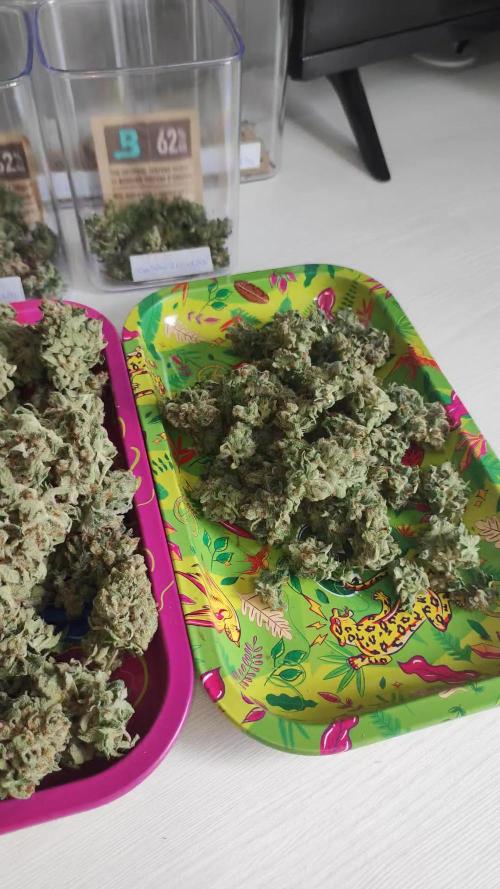
Easy strain to grow, didn't stretch much and yielded good for a cookie. Frosty REALLY dense buds fragrant buds. Really good. 🙏: 1: