





Likes
3
Share


@Renatissima
Follow
For sure i will keep this plant in stock. Very different and potent head high with great looking buds and strong flavor.

Likes
Comments
Share


@Another_One
Follow
Ok so it was 12 week One day a strong wind arose.And she was practically pinned to the ground

Likes
17
Share


@PCGrows
Follow
About 1 week away I think...mix of clear, cloudy trichs and a couple amber showing up...as soon as no more clear she comes down!

Likes
10
Share


@savvage61
Follow
Well to day I declare as Day 1 still in the solo cup But I can already tell these seeds from Super Sativa Seed Club are not your usual run of the mill seeds they were the heartest seeds I have seen since cleaning out the seeds on a album cover of old school Columbian but what is in side is what matters. going from seed to sprout in under a week and now produce a think strong sprout that is growing so fast you can watch it. I made a few changes on my medium and transplanting I add Frass Bokashi and Dynomyco into the actual medium and when I transplant I will prep the hole with it. What it does is produce Microbes which are very small critters we cant see except thru a microscope. what they do is keep the root zone healthy also referred to as living soil. the nutrients I am using a top dress fertilizer Geo flora it is designed to work with microbes, I cant rave enough about the Geo flora and the Black Lebanon seeds from SSSC quality genetics with this new food I anticipate a quality harvest. (If I dont treat it with Neem and leave the lights on or some other stupid move. I filled the pots this evening and will actually water the soil with warm water to activate the ingredients and bring the soil alive I am still a week away from transplanting But they will hit the dirt runnin😎
WELL THE GIRLS ARE IN THIER NEW HOME *I transplantewd the SSSC 2 Black lebanon and my 2 Blackberry moon rocks they were germinating seeds aug 13th to day is the 28th I have never seen plants this big in 15 days My heavens shore mix of Bokashi , frass and Dynomyco along with the top qualiity seeds from SSSC tell me this organic living soil grow is going to be my best yet Temps 70in dark 80 max in light every thing that goes in will be phed to 6.3 starting out at a 18/6 light schedule and I cant stress enough tyhe Geo Flora top dressing Nutes the stuff really stinks and my tent is in my famil;y room /mans den thank God for my 6" carbon filteryouy cant smell it out side the tent now remember they only recive nutes once every 2 weeks I have what they call 5 gal buts but in truth they only hold 4 gal og medium so I move my feed amoun t down to 1/3 a cup Now everytime I water the plants I am actully feeding them too in a few week i will add 5ml of purpinator every other watering and n othing else other than before I do the flip I will feed then the Geo Flora Bloom if you are interrested in checking them out here is a link 😲 https://www.geofloranutrients.com/
ok FELLOW FARMERS, TILL NEXT TIME STAY STONED STAY SAFE
I would be honored if you would watch my new videos at https://www.youtube.com/channel/UCu5G2v2kr1kH6BOsgUveWgg ouyr new release is Transplant 101 watch asnd enjoy besure to hit like on the way out


Likes
20
Share


@dataTwiiix
Follow
tout le cycle de croissance allant jusqu'à la récolte c'est super bien passé! juste un petit apex pourri, je suis certain que c'est le dernier :D

Likes
36
Share


@Dr_Boom
Follow
This was a fun first week. All 12 plants showed good growth. I had to support to three of the plants to ensure they didn't bend over. It was nothing serious, but I thought it was a prudent move.
I'm not seeing any deformed leaves. All 12 are showing a nice uniform growth. Some are further along than others, but I attribute that to different germination dates; some are just a day or two older than their siblings.
I'm being careful not to overwater them. When I did water them, I added a little Bloom Roots and Dyna Gro KLN. That should promote good root development.
It was fun watching these plants griw strong during their first week of life! I didn't have any problems, and I can't wait to see how they progress.


Likes
10
Share


@nijuana
Follow
They are ready to harvest
the Afghani have 15% amber trichomes
Black muffin have 20-30%
And the papaya zoap ~15-20%


Likes
3
Share


@NYGROW
Follow
Week 8 and the blue dream keeps getting taller and buds are growing slowly, but she seems to be growing very good I also added the led full spectrum lights on the sides for my seedlings since my other two died because i didnt have enough Light and they been helping a lot .. purple lemonade is growing slower but looking good hopefully this next week she does better
Likes
12
Share


@Lonelygrass
Follow
first strain runtz start 11/03 indoor, now outdoor guerrilla... hope for a good season
second strain watermelon zkittlez, hope for better wheater (actually indoor).
sicilianguerilla
Likes
13
Share

@GREENPHOENIX6262
Follow
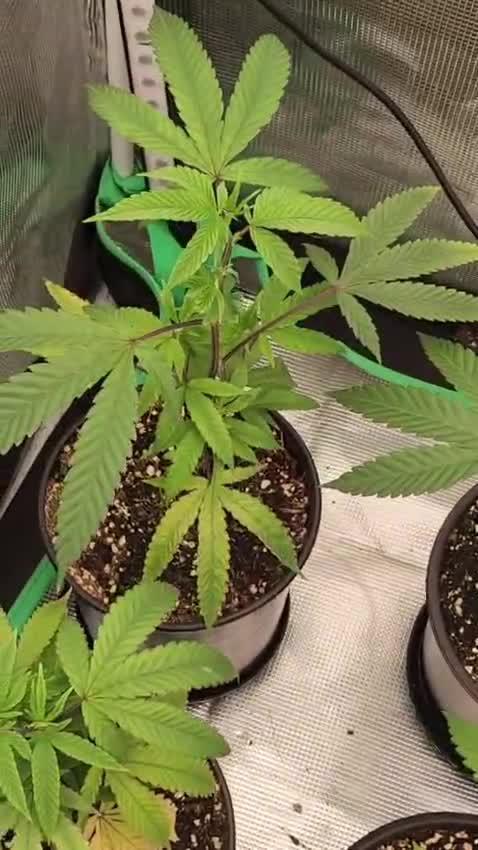
03/15 - (M) - Mom is doing great - pre-flowered without any issues and now is in week 1 flower - still running the 8 line drip emitters with offsetting feeds - did some defoliation underneath the canopy - dropped the light down to 75%
03/15 (C) - Clones are rocking amazingly - side shoots are coming in nicely - temps are high and humidity as well - adding Raw npk silica to the feed mix this week to assist with cell wall structure.
03/18 (C) - They are on recovery mode at the moment, got a little reckless with their PH/PPM/EC😑😑😑 - Gave them a hard flush and will only feed clean water for the next week or so - they are bouncing back😎😎😎😎😎

Likes
38
Share


@Aurora_Borealis
Follow
F51- Two days into week 7 of flower, things are looking great. Smell is very potent, but the carbon scrubber is doing an awesome job. New ph meter worked like a charm, auto calibrate definitely helped. Some slight differences in the current stages of the plants, especially the strawberry's buds in the back which have only just showed orange pistils a few days ago, still planning on harvesting in 3 weeks time, so i'm not too worried if some of the trichs are still a little clear on a few buds. My bottle of medi-one is feeling pretty light, but I'd reckon that I've got just enough for one more feeding, next week. Really excited for the next 21 days to be over
F54- Not much to say except that the smell of the plants is unreal, especially the strawberry. Super stoked for the feeding in a couple days, then its just plain water from here on out!

Likes
13
Share


@NanoLeaf
Follow
Week 8 and week 3 of flower!
The terpenes are making my mouth water and the ladies are fluffier than ever and stacking up nicely.
Due to weather changes recently I was able to keep lower over all temperatures and the humidity has increased slightly but it’s right where I want it (50% RH).
Purple Lemonade is fading nicely and her colours are becoming more and more vibrant - she has about 2 weeks left. Terps are insane!
All the other strains are happy as can be and also showing slight fade on leaves here and there. Very impressed with my Divine Seeds pheno’s and definitely recommend giving their strains a try very strong and easy to grow. Ethos Zweets literally smelling like candy canes. Dutch Passion Colorado cookies definitely giving off hues of a bakery.
Overall it was a smooth week and I can’t wait for the smooth smoke!
Organics is the easiest way to grow with minimal effort and great results. Shoutout to Green House Feeding Bio Line 😎


Likes
30
Share

@Condocannibus
Follow
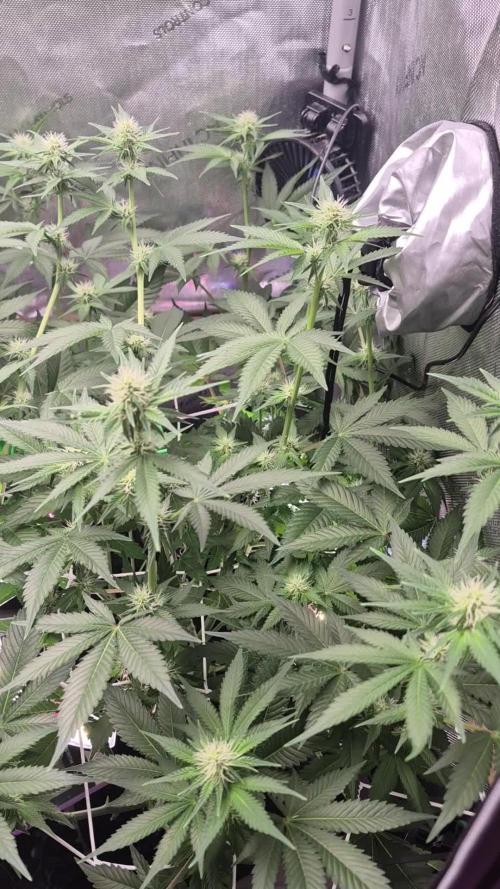
2nd week of stretch behind us.
No defiencies to report stretch over 18 inches in 2 weeks.

Likes
92
Share


@DogDoctorOfficial
Follow
🌱 Week 2 Report: The Journey Evolves 🌱
Grow Fam, the adventure is in full swing! 🌟 The Gorilla Melon from Fast Buds is out and shining its light, and the Papaya Zoap has made its debut in the Cannakan, bringing with it a story that adds even more depth to this incredible run.
When the universe speaks, we listen. 🍈✨ I didn’t plan on popping Papaya Zoap from Sweet Seeds just yet, but sometimes things just have a way of aligning. After a few other seeds didn’t germinate, I felt an inner pull toward this special strain. As it turns out, the universe had something beautiful in mind! Just days later, my brother @daggadna also began germinating the same genetics—gifted to us during Spannabis. Was it a coincidence? I don’t think so. 🌱 This is more than just a grow now—it’s a journey with purpose, guided by synchronicity and connection. I can already feel the magic building up with this one, and I can’t wait to see where this road takes us!
Now, onto the Papaya Zoap… something tells me this plant is going to take us on a ride we didn’t expect but absolutely needed. 💚 Let’s make something incredible, Brother Dagga—this one’s going to be legendary.
Gear Updates: All Systems Go 🚀
This week, everything’s dialed in perfectly with the TrolMaster system. Shout out to the incredible DSH-2U Humidity Station! 🌬️ This tool is giving me precision control over the RH (relative humidity) ranges in the room, keeping the environment just right for my babies. Having that accurate readout and control allows me to maintain optimal levels for each stage of growth. It’s like magic—you plug it in, set the desired ranges, and let it do its thing! 🌡️
By monitoring and adjusting humidity levels on-the-fly through the TrolMaster app, I can ensure the environment remains stable, and that means happier plants and healthier growth! No more guessing games. From anywhere—whether I’m working in the garden or chilling out—I can track and tweak it all. Heck, I could be on the toilet and still have complete control over my room! 😂
The AMP-3 Precision Meter has been running 24/7 in my water solution, giving me real-time updates so I can make any corrections when needed, right from my phone. This tech has taken my grow to another level. ✨
Nutrition Update: Keeping It Balanced 🍃
As for feeding, we’re sticking with the basics to give the plants what they need, without overloading. Right now, I’m running:
• Regulator: 0.15ml/l
• Startbooster: 0.25ml/l
For now, I feel like this is the sweet spot—just enough to encourage root development and early growth without overloading them. I’ll be adjusting the feed as we go deeper into the grow, keeping an eye on how they respond. You know me, always tweaking and improving along the way!
Shoutouts & Gratitude 🙌💚
Huge love to everyone following along—whether you’re here on Grow Diaries, over on YouTube, or on IG. Your support keeps this journey alive, and I am so grateful for every comment, like, and message! Special shoutout to my sponsors for fueling this project:
• Nutrition: @aptusholland @aptus_world @aptus_es @aptusbrasil @aptus_thailand @aptus_portugal @aptususa_official @aptusplanttechnz @aptusplanttechaus
• Controls: @trolmaster.eu @trolmaster.eu.support @trolmaster.support @trolmaster.agro
• Soil: @promix_growers_eur @promix_cannabis @promixmitch
More to come soon, and you won’t want to miss it! 📺 I’m also documenting everything on my YouTube channel, and I’ll be sharing behind-the-scenes content on IG, so hit that subscribe button and follow along. Let’s grow together, fam!
Growers Love to All 💚
The love and support from the grow community is something I never take for granted. This journey wouldn’t be the same without all of you! I’m so honored to be part of this amazing community, and I can’t wait to share more updates and insights along the way. Remember, this isn’t just about growing plants—it’s about growing together. 🌱
Until next time, stay positive, stay inspired, and keep pushing forward!
This week’s shoutout is dedicated to the synchronicity of life, my growing community, and of course, Papaya Zoap and Gorilla Melon. Let’s see what magic we can create together!
#HighFrequency #PositiveVibesOnly #PapayaZoap #GorillaMelon #TrolMaster #InBalanceWithNature #GrowLife #AptusTruePlantScience #GrowersLove


Likes
119
Share

@DogDoctorOfficial
Follow
Salutations, my fellow cultivators and botanical enthusiasts! Welcome to the much-anticipated Week 3 Flower Report for our radiant queen, Jealousy, in the Power Buds competition. The journey through the flowering phase is akin to watching a mesmerizing performance, and Jealousy, true to her name, has us all captivated.
As we transition into the third week of flowering, the grow room has transformed into a sanctuary of delicate buds, and Jealousy, adorned in green jewels, is perpetually in prayer. It's like witnessing a botanical congregation, where each bud is a devout follower, reaching for the heavens in pursuit of the ultimate floral nirvana.
Now, let's talk about the delay. The ticking clock of the contest deadline has kept us on our toes, and yet, Jealousy stands resilient. Despite the time constraints, she continues to unfurl her petals with grace, and I can't help but marvel at her determination. It's like a race against time where our green queen is sprinting toward the finish line with unwavering resolve.
In the midst of this floral ballet, the clones, those green offshoots of our regal Jealousy, have rooted with astounding success. It's like witnessing the next generation of botanical royalty sprouting from the roots of their majestic ancestor. These rooted clones are not just a testament to Jealousy's genetic prowess but also a green insurance policy for the future.
And let's not forget the continuous prayer pose that Jealousy maintains. This phenomenon, known as "praying leaves," where the foliage points upward toward the light source, is a visual testament to the plant's happiness and optimal conditions. It's like Jealousy is sending leafy blessings to the botanical gods, asking for a plentiful harvest.
As we navigate the third week of flowering, let's extend our gratitude to Zamnesia and Plagron, the silent architects of our green utopia. Their contributions continue to shape the landscape of our horticultural adventure.
A hearty applause to the Grow Diaries community – your shared experiences and collective wisdom are the threads that weave the fabric of our green journey.
To my fellow contestants and growers, may your buds swell with abundance, and may the contest deadline bow down to the prowess of your green kingdom. Here's to a week of perpetual prayer, botanical grace, and the anticipation of a harvest that will leave us all in awe. Stay green, stay inspired, and keep cultivating those dreams!
As always, thank you all for stopping by, for the love and for it all. This journey of mine would just not be the same without you guys. The love and support are very much appreciated, and I feel honored and blessed with you all in my life !!!
With true love comes happiness. Always believe in yourself and always do things expecting nothing in return, with an open heart. Be a giver, and the universe will respond in ways you can’t even dream of .
Friendly reminder: all you see here is pure research and for educational purposes only.
Genetics - Jelousy @Zamnesia
Nutrients @Plagron
Light - @viparspectra P2000
Room size - 3x3 - 0,9x0,9

Likes
9
Share


@Herbz_Unkraut
Follow
another resin monster from seedstockers, with a very special scent, full of flavors! grinded it smelled like peppermint, and vaped it has a great sweet creamy taste!
Likes
8
Share


@Joint_Ventures
Follow
7/24 Leaves beginning to yellow off. Girls making final push. Still waiting on stigma's to brown completely and turn in.
No nutrients. Just water @ 6.5 pH

Likes
48
Share


@AsNoriu
Follow
Day 117. Trim jail and heavy upload session for 24 hours at least. Don't like to keep photos, so ill upload each plant separately and will delete them. Phone camera is still cracked and off-focus, but they are all nice !
Day 128. I knew that those plants will be smallest, but Mini was in centre and her buds were still not nuggy nuggy ... sadf .....
#1 67, #2 68 , #3 75 , #4 56. 266 total .
836 from 720W is good, not my best, but good, just that airy quality ....
Happy Growing !!!