


Likes
Comments
Share


@love_2_grow
Follow
D42 - Today is the first day in the sixth week of veg for #2 and the fifth for #1. It has been six days since the first topping for the first girl, so I went ahead and topped her for the second time. I kept a couple of clones from her this time since she is so vigorous.
I also had planned to do the third and final topping on the second girl but knew that I had to buy some more soil staples first. However, this morning a red warning showed up in my Corona warn app. It's the first warning I have ever gotten, but I'm triple vaccinated, of course, and I was wearing my N95 mask for this five-minute exposure, but I want to act responsibly and quarantine for a few days, just in case.
So I improvised with BBQ skewers and some electrical tape. The skewers won't hold that well, but the branches are still small, so it shouldn't be a problem until I can venture out again.
The cover crop was getting a bit unruly again, so I cut it back again.
Finally, I gave both girls around 1.2-liters of water @ pH 6.3 and added a couple of qtips with peppermint oil to deter pests.
D43 - I gave each girl about two liters of compost tea that I started brewing yesterday. A bit soon, possibly since I watered them only yesterday, but I needed to feed the girls in the other tent, so these girls got some as well.
D45 - Aaaaaaaaaarrrrrgggghhhh!
Thrips have found their way into the tent. Lately, I've noticed some discoloration on the older leaves but haven't thought much about it.
Today though, it was much more pronounced. I took out my loupe and microscope, and sure enough, I could see thrips larvae. Ugh.
I ordered some predatory mites immediately to help with the problem, but they won't get here until a few days, and I want to start fighting the infestation as soon as possible. So, I went out shopping and picked up some pure alcohol, chili flakes, and a spray bottle. After soaking the flakes for a couple of hours, I strained the mixture and prepared a 1:10 solution with distilled water in the spray bottle.
I removed all older leaves that were affected most and then sprayed all the remaining leaves, taking care to get them soaked on both sides.
This chili tincture is nasty stuff, though, and I was coughing like mad, and the snot was flowing like a spring-river. Next time I'll wear a mask!
I also sprayed the clones outside the tent and the Chocodope girl in my other tent, just in case. The Colorado Cookies girl is in flower, though, so I couldn't spray her. She has no sign of infestation, but I'll treat her as well with the mites when they get here.
D47 - I resprayed the girls yesterday with the chili tincture to ensure I got to all the little critters, and today, the predatory mites arrived. I hung one sachet on each plant, and I hope that's the end of the little buggers.
D48 - The end of another week of veg. The second girl thrives after her third topping, and I will do the third and final topping on the first girl in a couple of days. Once that is done, I can install the scrog net.
As for the thrips, I can still see larvae, but they are far and few in between. Hopefully, the predatory mites will soon make short work of them.
I haven't even flipped yet, but there are already flowers in the tent!!! Alfalfa flowers that is :D

Processing
Likes
27
Share


@Silverback_Guerilla
Follow
2/10:
I watered today with about 3/4 gallon each, plus cal-mag, signal, bembe, armor si, a little open sesame, and their final dose of endoboost.
The short one never did stop making the hook leaves on all her new growth, but she seems happy..budding faster than anybody else..
2/11:
Wife home sick today....postponing construction project to raise the lights.
2/12:
Today, I tackled the project to raise my ceiling another foot. In addition to that project, I installed and hooked up my new AC Infinity 6" intake fan. It's pulling in fresh air from the soffit vent on the eave of the attic, and currently feeding the garden with 46f fresh air. I'm able to easily maintain daytime temps in the lower 70f's now. I am able to drive the nighttime temps as low as I want. The only issue is that the outdoor RH varies quite a bit, so I ordered a 30-pint dehumidifier to put in the top of the closet.
I sprayed everybody with boomboom spray to try and mitigate the light burn damage that is likely to ensue.
2/13:
The taller one is still stretching a little bit, but the 2-footer is just budding up.
2/14:
I fed them today with about 3/4 gallon each including grow big, big bloom, tiger bloom, cal-mag, signal, bembe, humic acid, and I switched over from Open Sesame to Beastie Bloomz. Raised the lights another couple of inches. I did some training on them and defo'd a little bit.
2/15:
Installed the new dehumidifier and rigged the continuous drain on it...works great.
2/16:
I rotated the edge plants and removed some old leaves. I added another 22w 3000k 4' bar light under the canopy.
2/17:
I rearranged the garden and defoliated a little bit. That's it for week 8-

Likes
5
Share


@CanarianGrow92
Follow
First week for our strawberry gorilla from fastbuds 420
We are using the whole feeding schedule from Xpert Nutrients!! Lets see the results from this amazing nutrients!!!
We are using 7 liter pots and doing some defoliation and lollipop the next weeks


Likes
1
Share

@Organic_G
Follow
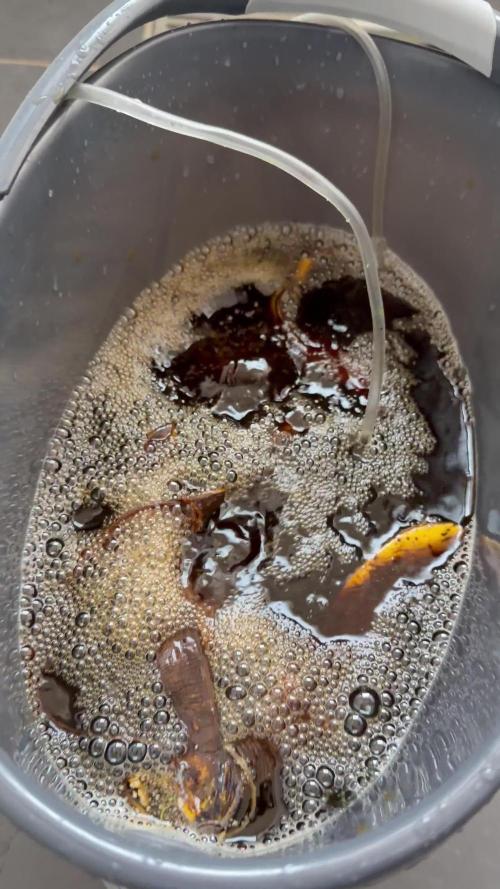
Kleines Süppchen gekocht um das Bodenleben nochmal anzuregen,
Bat Guano Flüssig
Fermakor
Zuckerrohrmelasse
2x Bannanenschalen
24h Sauerstoff zugeführt und eben die Hälfte gegossen, hoffe das es die jungen Wurzeln nicht verbrennt


Likes
11
Share


@GrowWithFlow
Follow
Flower week 3 successful. Feeding every watering with nutrients and once a week calmag. Next week I start with Aptus K Boost in a lower dose and then let's see how they react. Till now I am super super happy with Aptus 🌱.
Big big thanks that I can use the good Stuff💚💛❤️.
But we know all the good Stuff comes from Holland 🇳🇱

Likes
8
Share


@Prof_Weed
Follow
Extrem happy ,my first Cannabonsai!
Thanks to Terra Aquatica, Bionova, AC Infinity and FastBuds!
Your products work very well together!
I think in 20 daze .....
Likes
8
Share


@zombikush81
Follow
hello to all I share with pleasure this fantastic variety, excellent structure, grows very vigorous. as regards lengthening in the first weeks not more than 50% of its size. this week I will make the last thinning. thanks to all the friends who follow me. make it grow

Likes
105
Share


@RockoCalenberg
Follow
Blütetag 71 | Tag 115
🎬 Rocko's Terp Test – featuring: Apokalypse Grow, Volume 2.
Meine Güte, was für eine Woche... Kaum zurück aus einer Reha, begrüßen mich die Klimakurven mit einem Verlauf wie das EKG eines Herzinfarktpatienten. Dauerhafte Hitze, extrem hohe Luftfeuchtigkeit und Bedingungen, die Pflanzen und Grower gleichermaßen an ihre Grenzen bringen. Von einem entspannten Endspurt kann jedenfalls keine Rede sein.
Nach den ersten gründlichen Kontrollen zu Hause fiel mir außerdem auf, dass sich der Thripsbefall deutlich stärker entwickelt hat, als es vor meiner Abreise noch den Anschein hatte. In der späten Blüte bleibt der Handlungsspielraum allerdings überschaubar. Befallene Blätter absaugen, frische Gelbtafeln aufhängen und täglich kontrollieren – viel mehr möchte ich den Blüten in diesem Stadium auch nicht mehr zumuten. Die kleinen Mistviecher feiern bei diesem Wetter leider ihre ganz eigene Gartenparty.
Natürlich stand direkt auch eine ausführliche Trichomkontrolle auf dem Programm. Endlich konnte ich alle drei Sorten wieder in Ruhe unter die Lupe nehmen. Das Ergebnis: Sie liegen inzwischen erstaunlich dicht beieinander. Die Trichome werden zwar immer milchiger, von echter Erntereife sind wir aber noch ein Stück entfernt. Ehrlich gesagt würde man bei diesem Wetter die Schere am liebsten sofort in die Hand nehmen – aber geerntet wird nach Reife und nicht nach Wetterbericht. Also heißt es weiter durchhalten und den Ladies die Zeit geben, die sie für ihr volles Potenzial brauchen.
Leider blieb es bei den Wetterextremen nicht. Ausgerechnet die Fruit Bomb Punch zeigte bereits die ersten Schimmelstellen an der Hauptcola. Zum Glück fiel mir das nach meiner Rückkehr bei der gründlichen Kontrolle noch rechtzeitig auf. Ich habe den betroffenen Bereich konsequent entfernt – nicht nur ein paar Blätter, sondern mehrere komplette Blütentrauben eines Seitenabgangs der Hauptcola. Insgesamt mussten drei Blütenansätze komplett und ein vierter teilweise weichen.
Entsprechend sieht die Spitze jetzt etwas angefressen aus. Das tat zwar richtig weh, aber lieber opfere ich einen Teil der Ernte, als dem Schimmel die Chance zu geben, sich weiter bis in den Hauptstängel auszubreiten. Ich bin überzeugt, dass ich keinen halben Tag später hätte reagieren dürfen. Die betroffene Stelle ist jetzt bewusst weit geöffnet, damit Luft und Licht herankommen und alles sauber abtrocknen kann.
Umso erfreulicher ist, dass Chicken & Waffles und Strawberry AK sich zu diesem Zeitpunkt weiterhin schimmelfrei präsentieren. Hoffen wir, dass das auch so bleibt.
Optisch machen die drei Damen trotzdem richtig Lust auf die Ernte. Chicken & Waffles ist für mich diese Woche der absolute Hingucker. Die dunkle Färbung zusammen mit der dicken Harzschicht sieht inzwischen einfach filmreif aus – komplett eingezuckert und ein echter Blickfang.
Die Fruit Bomb Punch bleibt trotz der ersten Schimmel-OP ein echtes Biest. Die riesigen Blüten schieben weiter nach vorne, das intensive Fruchtaroma macht ihrem Namen alle Ehre und sie wirkt, als würde eine saftige Frucht langsam ihre volle Reife erreichen. Jetzt muss sie nur noch gesund über die letzten Meter kommen.
Die Strawberry AK spielt weiterhin ihre Stärken aus: kompakt, wunderschön aufgebaut und mit diesem herrlich würzigen Erdbeerduft, der sofort Lust auf die Ernte macht. Ein echter Klassiker im Zelt.
Das Verrückte ist: Auf den ersten Blick könnten alle drei fast erntereif wirken. Unter der Lupe zeigt sich aber schnell, dass noch etwas Geduld gefragt ist. Genau jetzt wäre es schade, auf den letzten Metern ungeduldig zu werden.
Die letzten Meter werden definitiv kein Spaziergang mehr. Jetzt heißt es, täglich kontrollieren, ruhig bleiben und die drei Ladies möglichst gesund über die Ziellinie bringen. Drückt die Daumen, dass die Wetterhexe endlich ein Einsehen hat.
Am Ende entscheidet das Glas.🌱💚✌️




Processing
Likes
96
Share


@The_Projexx
Follow
So this marks the beginning of week 4! At then end of week 3 I noticed a bit of over watering as well as possible nute burn (early early stages) so this week I'm decreasing the dosages on EVERYTHING and I'm going to let my baby's dry out ! This will be their final week in the 5" square pot as I'm going to move them into their new and final homes. I want to thank everyone who comes and stops by my diaries you guys are wonderful people and I've learned so much already ! So keep on keeping on and remember to check my diaries daily for updates !!
Anyone checking out the pictures it isn't mites or any of that I been having a battle to get them to my standard of clean since the transplant. Slow and gentle is the way so no damages are done ! :)
-Happy Growing !


Likes
17
Share


@Hambone
Follow
10/16
So the girls are doing well. They have been watered twice now and #1 just had what looked like a tiny bit of nute burn but took much better to the second watering. They are absolutely exploding veg wise and raising the light was necessary as #1 was much to short, will be updating with transplant soon!
10/18
Ok so transplant happened today. They were growing so quick we needed to move them as soon as they were water ready! They got transplanted into 5g fabric style pots. Did 2/3 Fox Farms "ocean forest" and 1/3 perlite mix. Used same nute mix for watering on the transplant, will change that up soon. See pics and video for more info!
10/22
There seems to be a nitrogen lockout. I'm guessing it was the unneeded cal mag add. Learned our lesson! Upped our grow big and giving the first water in big pots. Other than that they are growing amazing!


Likes
67
Share


@Clutch
Follow
Hello everyone
A fun week again. Plant is showing nice development.
I really try to focus on exposing the future budsites.
Last year I didn't tuck away the fanleaves enough.
This grow I'm tying them all down as much as possible.
I find it hard to place them right so every 2 days I do some adjustments.
The evolution I have right now is exactly the same as last year so I gotta have faith in the next 2 weeks that she will grow big. Previous grow I had about 60% of the possible canopy.
With the right techniques I'm sure I can reach about 80% canopy coverage.
I know I'm not the best LST student but I'm trying 😄
Any advice is welcome
I'm still giving water with a bit of nutrients but I'm gonna add plain 6,5 PH water from now on. Every second watering during the week plain water. A good rain now would also be very welcome 😄
So far so good
Hope everyone is okay
See u next week
Happy growing 🙏
Likes
12
Share


@most_dope
Follow
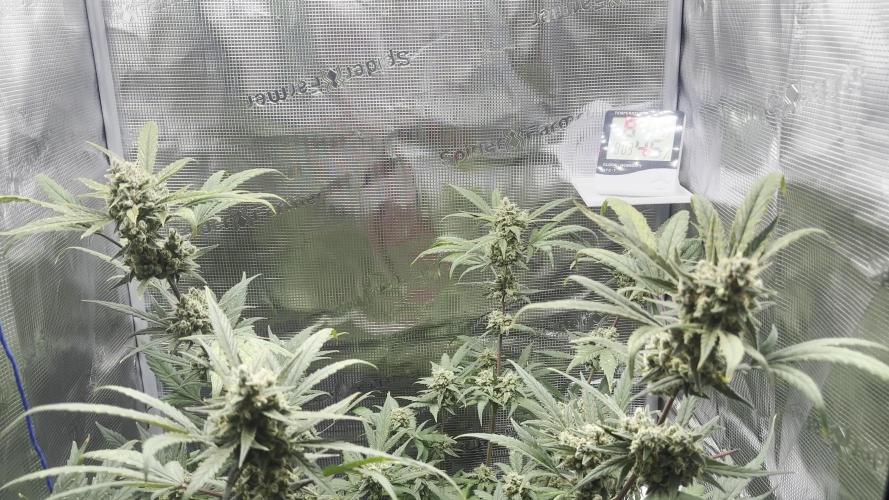
the week has been smooth the leaves are fading / dying and i fed 1ml in a liter of water twice in the last 10 days but thinking about starting a flush now its been about 62 days and fastbuds site says 9 weeks. the hairs are mostly white still besides on a few buds its 25% and like 80% orange on 1 bud. trichomes are starting to look amber on sugar leaves about 10-15% amber trichs i need a better loupe to see close up tho. the buds just keep fattening up slowly but surely. im trying to be patient and let them get juicy even if its taking longer than the website advertised, (probably due to me dropping her in veg and overwatering in seedling stages) either way, super happy with the results so far and im thinking about getting another light. im going to try growing 2 plants under the 1 light until then but i think i could fit 3 or maybe 4 if i had a 2nd light. hopefully getting a 2nd tent soon too.

Likes
15
Share


@Rambogrow
Follow
Growing without issues. Feeding every 2nd day now. Shes requiring much more nutrients. Switched her to 20/4 light cycle as well. Trying to speed up her growth as she's moving slowly.
Likes
11
Share


@ButterfliesLittleFarm
Follow
Hello Diary,
The harvest is approaching on my small farm.
Actually, one plant is already ripe for harvest and that is Titan F1, So Apollo F1 and Milky Way F1 will be left alone for another week.
As seen in the photos, the Apollo F1 is truly a sight for the eyes.
The flowers are very densely packed, I have never seen anything like that before.
But the plant is low, the branches are strong and there is no bending under the weight of the flowers.
The flowers are full of trichomes that emit a strong fragrance. Here and there a yellowish leaf appears, which I immediately remove.
Watering is a little more frequent due to the high temperatures, but I stopped adding any nutrients.
Here's a quick recap of the week.
26/06/2023 - Day 58.
Watering. Only two days later, the plants drank all the water, so I watered them with two liters for each individual plant.
29/06/2023 - Day 61.
Watering. I repeated the procedure as I did three days earlier.
01/07/2023. - Day 63.
Photographing plants.
That's all for this week, see you soon.