


Likes
Comments
Share


@LAShugars
Follow
Bent a stem doing LST a couple days ago. Lightly taped her, she seems to be recovering. Nervous about continuing LST.

Likes
3
Share


@Mimbra
Follow
Ya van por la 3 semana de flora y empiezan a salirle pelos ,la poison es hembra menos mal que no le salían pelos ,ahora tengo otro problema se me están poniendo las hojas grandes amarillas ,imagino que nitrógeno hoy las he regado con celta nueve y con alga grow por si acaso era defi de nitrógeno como las veis ????antes de este riego estaba hechando crecimiento Bloom de Bloom notrients y tuvieron una sobrealimentación por nitrógeno ,le hice lavado de raízes y parece que me pide nitrógeno


Likes
3
Share


Likes
1
Share


@CheeRz
Follow
It's week three of Vegi, and all three Lemon Ladies are developing very nicely. They should be ready to flower in about 14 days. ☀️☀️☀️💚💚💚

Likes
52
Share


@Santica_Garden
Follow
So we've reached the end of Week 4 from Seed, day 28 and things are looking much better than they did before..... Apart from one of the plants which I explain in the video I have uploaded. Happy Growing guys, any questions just ask away! 👍🏾🌱💚😎

Likes
42
Share


@Ukfarmer420
Follow
Hi guys entering week 7 veg on the scrog grow of strawberry chemdawg og and blackberry moonrocks under the marshydro sp3000.
There very small considering there on week 7 🤔 but now i realised that my light has been on 25% 🤣🤣🤣 now its on 50% until nov 1st when I flip it.


Likes
10
Share


@UrbanFog
Follow
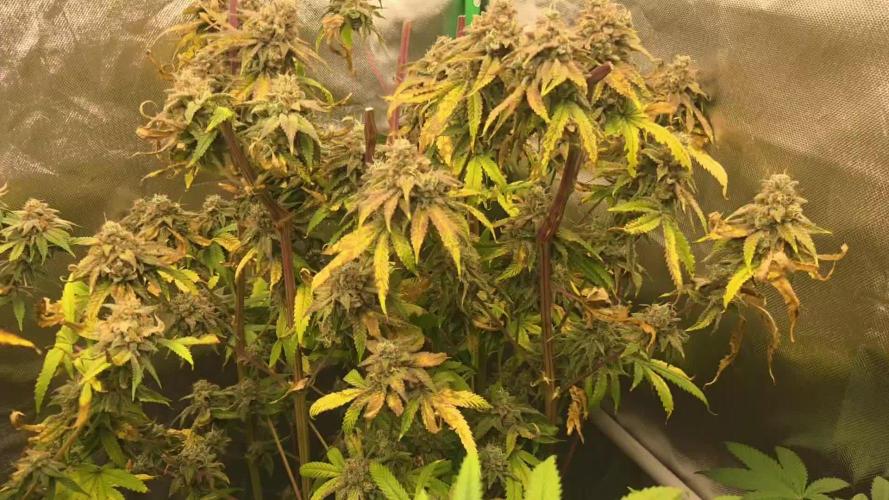
Plants continued to mature this week and all the buds are getting fat they will have there last nutrient feed this week in prep for flushing and harvest next week.
The Lemon Zkittles looks and smells amazing looks amazing. Nearly all the plants look and smell the small, good genetics and breading.
The Cxx is again a very stable genetics and flowered and smells exactly as the last grow did. Good genetics.
The Peyote Cookies and Shishkaberry also grew well and similar, good genetics.
Afghan Kush amazing buds and very earthy smell.classic
The gorilla cookies had a rather large variation in pheno types but all look amazing and each will be a pleasure to smoke.


Likes
Comments
Share



Likes
8
Share

@NoProbation4Weed
Follow
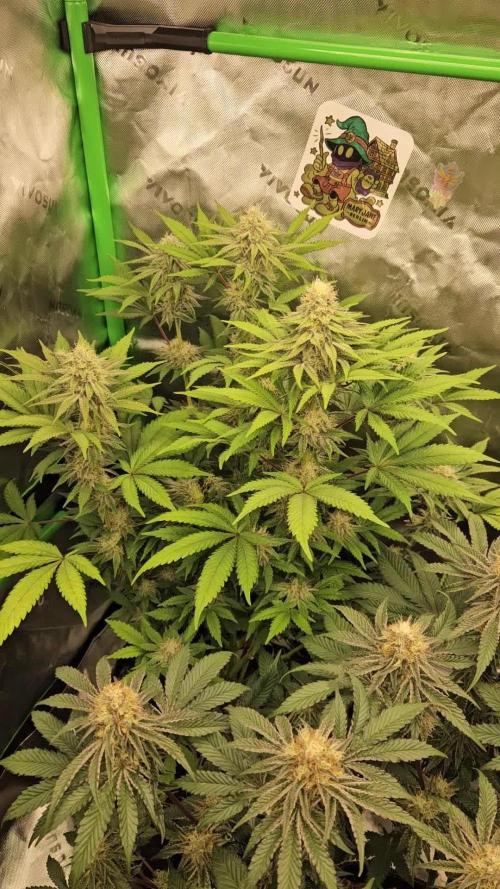
strong tangie terps already. smell is very intense.
VPD around 1.4–1.6
The light hits the plants with around 900 PPFD.
Likes
Comments
Share

@DogDoctorOfficial
Follow
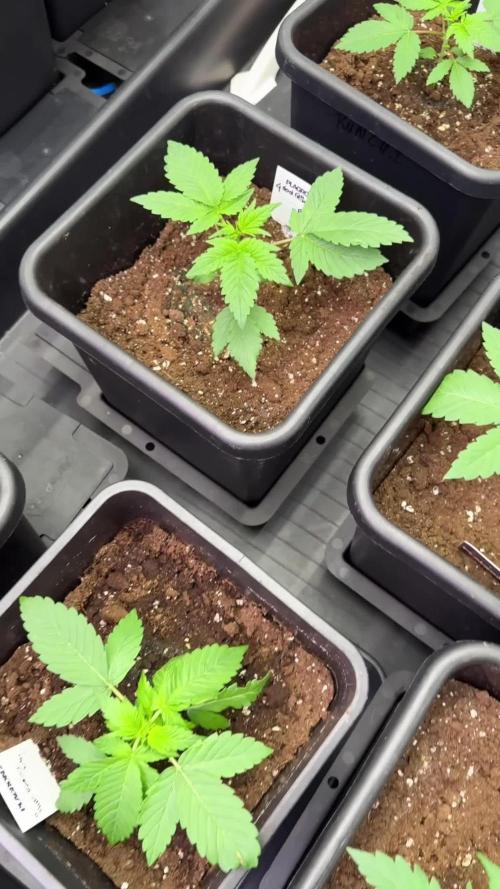
🌱 Week 3 | Purple Haze Photo | Folder 6B | A Different Personality Emerges
Although Purple Haze 6B shares the same genetics, environment, nutrition, and cultivation method as her sister, she is already beginning to express her own unique growth pattern. This is precisely why each phenotype in Project Blue receives its own individual diary. Every plant has a story worth documenting, and comparing them side by side allows us to appreciate the subtle differences that make growing from seed such an exciting experience.
Like every plant in this project, Purple Haze 6B is being cultivated using the 12/12 From Seed technique. From germination onward, the plants receive a flowering photoperiod, encouraging compact growth while allowing each phenotype to naturally develop its own architecture before flowering fully takes over. It’s an unconventional approach, but one that consistently produces healthy, manageable plants while showcasing each phenotype’s individuality.
During this third week the plant settled comfortably into her new container and responded with a noticeable burst of vegetative growth. Looking back at the first photographs and comparing them to the final images of the week, the improvement is impressive. The canopy has expanded considerably, secondary branches are becoming increasingly active, and the plant is building the framework that will eventually support her flowers.
Growing Environment
As with every diary in this project, environmental stability remains one of the highest priorities.
Throughout the week the conditions remained consistent:
* Temperature: 27°C (lights on)
* Night Temperature: 25°C
* Relative Humidity: 55%
* Root Zone Temperature: 21°C
* Nutrient Solution Temperature: 20°C
* pH: 6.0
* EC: 1.3
* CO₂: approximately 666 ppm
* Photoperiod: 12 Hours On / 12 Hours Off
* Average PPFD: 600–700
Keeping these parameters stable allows the plants to focus their energy on producing healthy roots, vigorous stems, and continuous vegetative growth rather than constantly adapting to environmental changes.
Feeding Program
Purple Haze 6B continues receiving the complete Plagron Terra feeding schedule:
* Terra Grow — 1.8 ml/L
* Power Roots — 1 ml/L
* Pure Zym — 1 ml/L
* Sugar Royal — 1 ml/L
At this stage I’m not chasing explosive growth. My objective is to establish an exceptionally healthy root system, maintain balanced nutrition, and encourage strong structural development before flowering begins in earnest.
Healthy foundations almost always produce healthier harvests.
A Bushier Growth Pattern
One characteristic that immediately stands out in this phenotype is her naturally bushy structure.
Rather than stretching vertically, she appears determined to produce numerous secondary shoots from every node. The lateral branches are developing rapidly and are already beginning to compete with the main stem for dominance, creating what should become a beautifully even canopy in the weeks ahead.
The fan leaves remain broad and healthy, showing excellent turgor with a rich green colour that suggests the feeding program is well balanced. New growth emerges bright green before gradually darkening as each leaf matures—a normal sign of vigorous development.
The stem is thickening steadily and every new internode is adding more potential flowering sites.
Gentle Canopy Management
As with the rest of the Project Blue plants, no aggressive training has been necessary.
Instead, I’ve continued using simple leaf tucking throughout the week.
Rather than removing healthy foliage, I gently reposition the larger fan leaves beneath neighboring branches, allowing more light to reach the developing side shoots hidden below.
This simple technique offers several advantages:
* Improves light penetration.
* Encourages stronger lateral branch development.
* Maintains maximum photosynthetic capacity.
* Eliminates unnecessary recovery time associated with defoliation.
At this stage every healthy fan leaf is an energy factory. My philosophy is to preserve as many of them as possible while simply helping the plant organize its own canopy.
Sometimes the simplest techniques deliver the best long-term results.
Looking Forward
Purple Haze 6B is developing into a wonderfully compact, vigorous phenotype with excellent branching and impressive canopy density. Every day she seems to produce another layer of healthy growth, and the structure she’s building now should provide an outstanding foundation for flowering.
It will be fascinating to compare her with Purple Haze 6A over the coming weeks. Although they started from the same seed line and have received identical treatment, they’re already beginning to reveal their individual personalities—one slightly more symmetrical, the other naturally bushier and eager to fill every available space.
Those subtle differences are one of the greatest joys of phenotype hunting, and documenting each one separately ensures that none of those unique traits are lost along the journey.
A huge thank you to Plagron, Zamnesia, GrowDiaries, and everyone following along with Project Blue. Mr. Baggy wandered through for another inspection this week and confidently declared that this young lady has absolutely no intention of growing quietly in the corner. Judging by her vigorous branching, I have a feeling he’s right.
Growers Love 🌱🛍️

Likes
3
Share


@Jointjourney
Follow
This week, the plant continued to develop with no major issues. However, signs of a magnesium and calcium deficiency have started to appear, which may require adjustments in the nutrient schedule with Calmag. The plant was watered once with clear, pH-adjusted water to maintain a stable environment. A mild yet distinct aroma has also begun to emerge, hinting at the plant’s unique character as it matures. Overall, growth is progressing well despite the minor nutrient deficiencies.

Likes
3
Share


@factoryofweed
Follow
¡ÚLTIMA SEMANA!
Esta semana fue la última para estas preciosas 🍇PURPLE PUNCH🍇
todas han estado aumentando el peso de las flores estas dos semanas atrás, engordando hasta tal punto de doblarse enteras, tuve que agarrar dos fenotipos bastante pesados al armario.
en total estuvieron 9 semanas en floración.
De los 6 fenotipos x3 han cogido tonalidades muy bonitas como podéis ver en las fotos.
⬆️90cm
☀️Interior
⏳64 días
🏺11L
😶 Indica: 90% / Sativa: 10%
🚀THC: 25%


Likes
248
Share


@OrganicNature420
Follow
Germination date 🌱 12/07/2021
Day 8 22/07/2021
Strain 🍁 Humboldt Purple Matcha (2nd time
(Sherbinski x HSO)
THC% • Unknown
💡 Mars Hydro FC4800
• Power draw 480W + 5%
• Max coverage 5 x 5
• LED 2070pcsSamsungLM30B1&Osram660nm
• Max Yield 2.5g / watt
• Noise level 0 DB
• Removable Driver +2m cable
• Daisy chain (multiple lights)
https://marshydroled.co.uk/products/mars-hydro-fc-4800-led-grow-light-samsunglm301b-commercial-greenhouse-medical-indoor-kit 🇬🇧
https://www.mars-hydro.com/buy-fc-4800-480w-4x4-energy-saving-full-spectrum-commercial-led-grow-light-mars-hydro-for-sale 🇺🇸
PROMO CODE • (ORG420) DISCOUNT 👍🏻 marshydroled.com
⛺ Mars Hydro 120 x 120 x 200cm
📤📥 AC infinity 6inch
💧 10lt dehumidifier
❄️ 3.1kw air con system
💉 Nutrients GreenBuzzLiquids
Organic Grow Liquid • 1-4ml until 2wk flower
Organic Bloom Liquid • 2-4ml flower stage
Organic More PK • 2-4ml +wk3 of flower
Organic Calmag • 1-2ml/lt whole grow
Fast Plants Spray • first 3days at night lights off
More Roots • 2-5ml veg +2wks flower
Fast Buds • 5ml +wk2 of veg until 1wk flower
Humic Acid Plus • 2-5ml whole grow
Growzyme • 2-5ml whole grow
Big Fruits • 2-5ml flower stage
Clean Fruits • 5ml flush 1wk
Ph powder
Root Gel
Living Organics
PROMO CODE • organicnature420 15% off ✌️🏼
https://greenbuzzliquids.com/
🥥 Growing Media • Coco Coir
Notes 📝
Easy first week Plants look good and so does the mrs 😆 .. even better now the ac is in so one complete grow room. Lights doing it's job and Mars have kindly given me a promo code so if you want a cheeky discount use code (ORG420) 👍🏻Lowered it down to 70cm and will keep it there to get some stretch. New Nutrients I haven't had a problem with, the fast plant Spray is decent and I'm loving the pH powder. Gives you extra gains aswell being Organic. Thanks for all the love likes and comments and will update in a couple of days
Happy growing fam ❤️🌱🍁👍🏻

Likes
25
Share


@Creme_De_La_Creme
Follow
Week 4 was awesome 😮💨 🌱 Growth phase is great and on schedule for an upcoming nice and big plant.
Started the LST on day 25, gave her a big and nice stretch and she is loving it, filling up the whole space in the 8 gallon fabric pot already =)
Roots are almost coming out from the bottom, she is loving the feeding recipe.
My guess is that this lady will become a monster, what do you guys think?
Any comments will be highly appreciatted
😜

Likes
18
Share


@eldruida_lamota
Follow
Esa familia, actualizamos las northern light xL, hay una de las 3 que destaca del resto por tamaño y flores, pintan muy bien, se ve buen color y bastante vigorosas, tutelamos 1.
Bajamos humedad y temperatura, a estas alturas estamos pensando en el siguiente proyecto con varias geneticas de zambezaseeds.

Likes
13
Share


@Red_Rockst4r
Follow
Week 9 marks a turning point for the grow. The main plants are deep into flower now, with dense buds that glisten under the HPS light. Their smell is intoxicating, filling the room with the rich, sweet aroma that hints at the potency to come.
Even the late bloomer has stepped up its game. While it’s still behind the others, it’s finally entering full flower, its smaller buds beginning to form. It’s got a unique charm, and I can’t help but root for it—sometimes the underdog ends up stealing the show.
The grow room feels like it’s nearing its peak. The plants are massive now, with thick branches bending under the weight of their buds. Every day brings new changes, and I can see the finish line getting closer. The hard work is paying off, and I can’t wait to see how these beauties turn out in the final weeks.
Likes
15
Share


@Lazuli
Follow
I defoliated them again last week now they go finish in 3-4 weeks max.
The smell is insane at this point
Likes
8
Share

@DrewbieDoobieNoobie
Follow
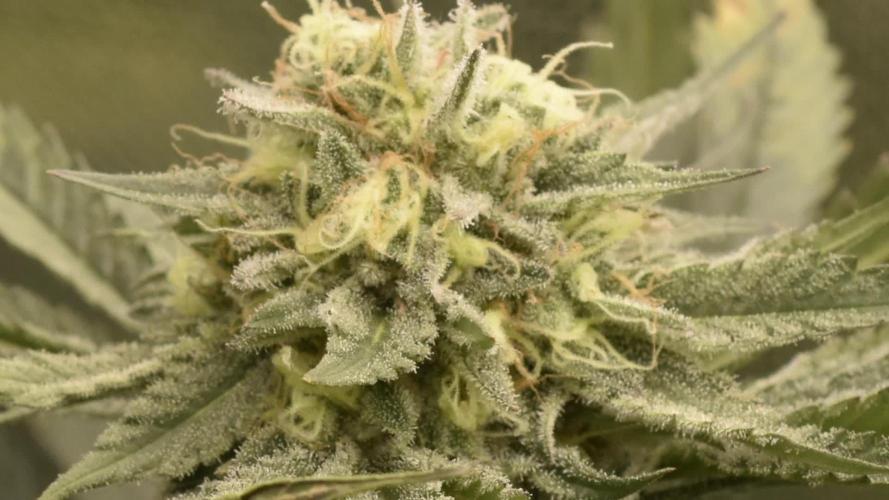
I will just water from here on out. The fade is starting and I am just watering when dry for the last 2 weeks before harvest. 2 of the girls are a week or 2 behind. I might make hash rosin from them and the trim. the 2 good ones are going to the jars for curing and then we will have to wait for winter for the next grow to avoid the heat in the Garage/grow room. keep growing strong.