The Grow Awards 2026 🏆 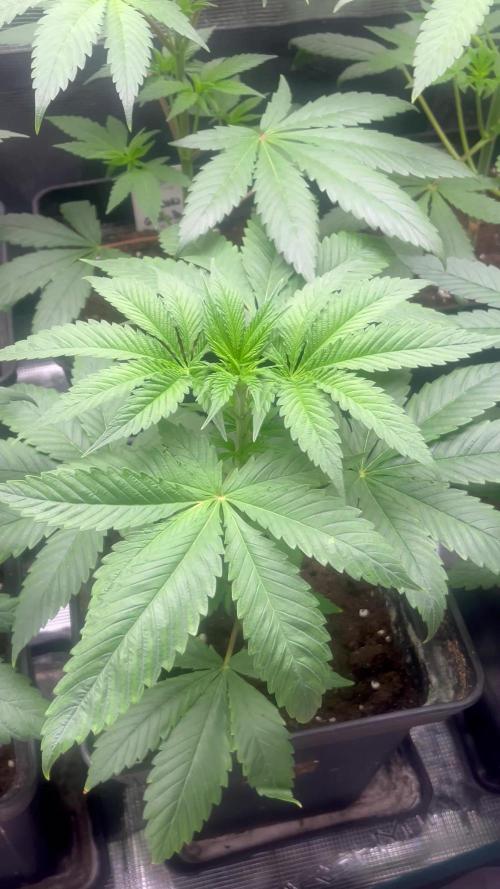







Likes
7
Share
@eldruida_lamota
Follow
Que pasa familia, vamos con la quinta y última semana de crecimiento de estas Green Gelato feminizadas de RoyalQueenSeeds.
Vamos al lío ,se trasplantaron en macetas de 7 litros definitivamente.
El ph se controla en 6.0 , la temperatura la tenemos entre 24/20 grados y la humedad ronda el 50%.
El ciclo de crecimiento puse 16h de luz, el foco está al 50% de potencia.
De momento van creciendo a buen ritmo y tienen un buen color, estaban muy bien enraizadas al realizarle el trasplante se notaba la abundancia radicular, también aplique tetra 9 de manera foliar.
Agradecer Agrobeta por el envío del kit gold series en cuestión, unos maestros 🙏
- os dejo por aquí un CÓDIGO: Eldruida
Descuento para la tienda de MARS HYDRO.
https://www.mars-hydro.com
Hasta aquí todo, Buenos humos 💨💨💨
Likes
7
Share
@GrownyStark
Follow
I made a concoction of living soil using ingredients I could find of subcools formula. Theoretically all i need to add is ph balanced water. And a tea once I decide to flower. I'm waiting for some gadgets[ph and moisture meters]to come in before doing any extensive watering.

Likes
6
Share
@Gamfin
Follow
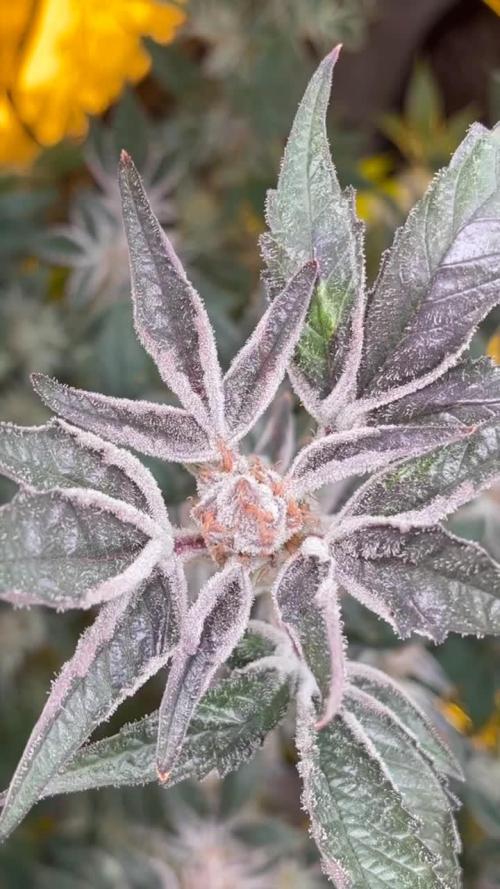
// Day 65
Was inside today to avoid a thunderstorm. She is starting to bulk :) Nothing to share, simple cruising. She is healthy and beautiful, that's it.




Likes
234
Share
@BigDaddyK
Follow
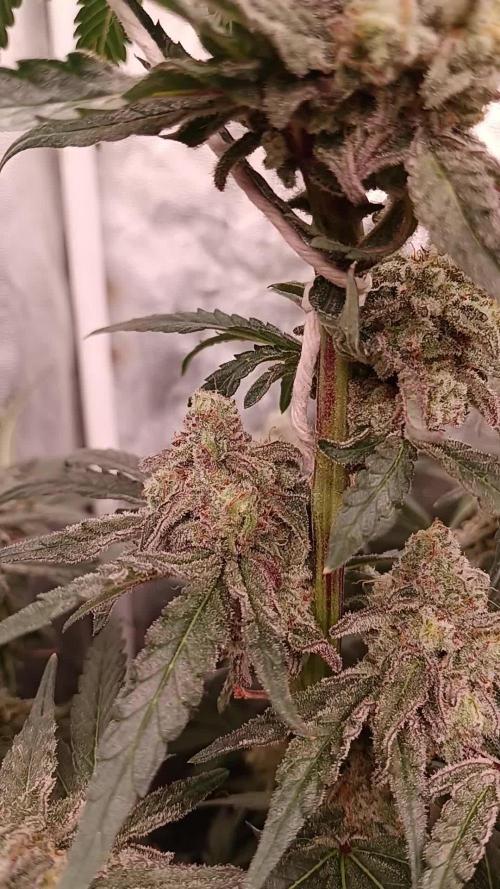
ABout 900 grams of wet lovely buds, LED s take longer ,and the buds are not as big as HPS,but there does seem a uniform quality about the flowers,there was very little waste,you know the shitty popcorn bits, but i cant help but think had i used an HPS i would have cleared over 10 ounces dry, i havent weighed it yet, but i reckon its 6 Ounces.
I have put as many pictures as possible,just for reference, A very nice smoke.
Dry Pictures at the end.

Likes
2
Share
@goatpharms
Follow
Apologies for the lack of updates — she’s looking super healthy! Buds are really packing on weight now, rock solid, colpurfuk and the smell is absolutely out of this world.
She’s honestly one of a kind.
Will update again soon — looks like she’ll go another two weeks or so.

Likes
2
Share
@I_Identify_As_A_Dan
Follow
Look at those roots!
I also believe I under fed mycorrhiza... because the roots on some of my other plants went insane... go check 😉
Flowers came out super nice too! Very lemony
Will definetely grow again.

Likes
28
Share
@TheHighentist
Follow
First week of flower👏
They got 2 hours extra darkness before flip. Not because of scientific evidence, but simply practical.
Still looking back to the first weeks of veg. WHAT A MESS and WHAT A MIRACLE 🙏
Coming into flower, they had two defoliation and the latest one was 7/10.
Last feed 8/10 Introducing Biobizz CalMag(0.5ml/l) + BioBloom(0.25ml/l)+Topmax(0.25ml/l)+Rootjuice(0.25ml/l)
Still 2ml/L Fishmix+BioHeaven(Fishmix will be switched out with BioGrow)
👽👉10/10 VPD is 1.2,-1.3. good airflow above and below canopy.
👽👉11/10 Mild signs of light stress. They will get used to the VPD. Can't wait to feed in a couple of days and see the reaction. Im sure they are really hungry!
👽👉12/10 Waterday** Introducing higher doses of bloom nutes. The Run off PH and EC are all within the limits
👽👉13/10 They lit up after some nutes. They look happy! Let the stretch begin
👽👉14/10 Already see fast growth. Just monitering factors, to make sure the climate is optimal and their are no symptoms.
👽👉15/10 Waterday* Thirsty ladies
👽👉16/10 Last day of week 1 of flower. Everything is going fine, Good airflow, None of the small symptoms has gotten worse, so overall happy ladies!
How ever one has a little stunned growth or maybe just a bit behind of going into stretch
Likes
7
Share
@ibbzy
Follow
Chug chug chug! I think I have about a week or two left for most of them and probably like 4 of these will need an extra week or so aha.
Frosting up beautifully; the camera does no justice!
But I believe I should start reducing my feed or either flush with molasses and kelp like I’ve grown fond of doing come close to harvest time.
Again the smells emanating from this tent is so beautiful, candy sweet orangey smells 🌬️🌬️🌬️


Likes
13
Share
@RussianGrower
Follow
Приветствую всех, кто следить за мной. Ваша поддержка очень важна для меня.
На следующий день после того как я обновил прошлую неделю дневника наступило время пересадить растения в более крупное ведро. Я покажу вам как использовать дешовые пивные стаканы для пересадки ваших растений. Вы можете посмотреть это на первом видео.
Когда я пересаживал растения я дополнительно добавил микоризу в большое ведро. Они укоренялись менее недели, порядка четерых дней. После чего они всё ещё показывают некоторое замедленный в росте и стресс, но в этот раз я забыл открыть окна, чтоб свежий воздух попадал и сбивал тепмературу в помещенье, так как мои лампы достаточно сильно греют несмотря на мощную вентиляцию. Поэтому сегодня я так же я дал корневые и вегетативные стимуляторы роста, а так же основное питание и поставил комнату на проветривание. Я так же удалил первую пару непродуктивных листьев и отростающих от них боковых ветвей, так как правило они бывают непродуктивными и замедляют рост растения отводя на себя часть гормонов роста и питательных веществ. До новых встречь, если вам интересно следить за Русской травкой, подписывайтесь на мои дневники
-----------------------------------------------------------------------------------------------------------------------------------------------------------------------------------
Greetings to all who follow me. Your support is very important to me.
The day after I updated the last week of the diary, it was time to transplant the plants into a larger bucket. I will show you how to use cheap beer glasses to transplant your plants. You can watch it on the first video.
When I transplanted plants, I additionally added mycorrhiza to a large bucket. They took root less than a week, on the order of four days. After which they still show some growth retardation and stress, but this time I forgot to open the windows so that fresh air enters and knocks down the temperature in the room, since my lamps warm quite strongly despite the powerful ventilation. Therefore, today I also gave root and vegetative growth stimulants, as well as basic nutrition and set the room to air. I also removed the first pair of unproductive leaves and lateral branches growing from them, since as a rule they are unproductive and slow down the growth of the plant, releasing some of the growth hormones and nutrients. Until we meet again, if you are interested in following Russian weed, subscribe to my diaries

Likes
17
Share
@CG420
Follow
Tras una última semana de gran crecimiento al fin vimos las primeras preflores en algunas de las plantas en el día 12 ya todas tienen su pequeña bolita .
Ahora empezamos a suministrar top Candy y Green sensation junto a la base de floración alga Bloom .
Seguimos en ello 💪💚.
Likes
9
Share
@Colo420
Follow
Atrasados con el seguimiento debido a las vacaciones pero aquí regresamos!!
Proximamente 6 comienzan su flora en exterior y 2 en interior


Likes
11
Share
@McShorty
Follow
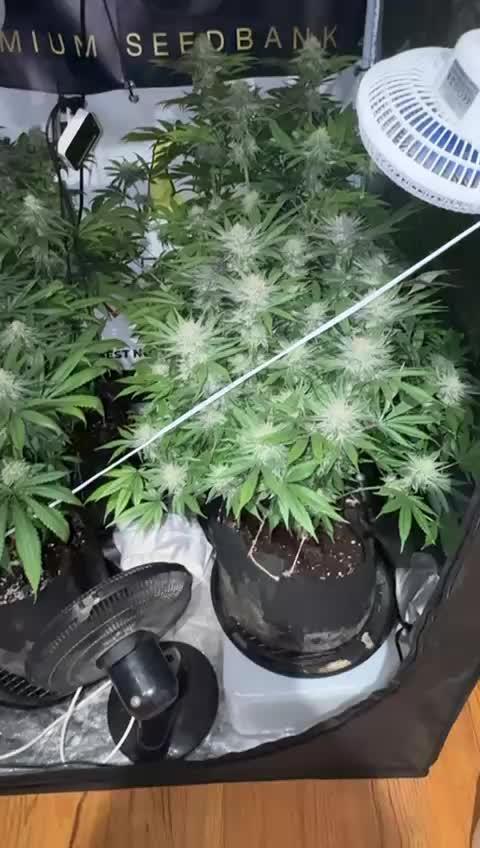
So far so good. Another week has passed and everything looks nice. At the beginning of this week i transplanted the blue cheese and special queen in bigger pots and they dont look so small in comparison to the others.
In generell all plants recovered good from the topping and in this week i think i will start with some LST and removing some of the lower leaves. I also raised the lighting higher, because i wanted to see if they stretch themselves a little bit, because they didnt grew so much in height but only developed more leaves, but i think i will lower it again and also increase intensity.
Also i added up the fertilizer since i had some yellow colering of the leaves at the bottom, and so far they show no signs of overfeeding. Since it wasn't raining like in the last 2 weeks i took them outside to make some pictures with natural light.
So lets go into the next week :)


Likes
26
Share
@darb35
Follow
Day 22 - 660 ml water (ph 6.5)(22 cm)
Day 23 - 660 ml water with Acti+Heaven+Grow+Calmag (ph 6.6)(24 cm)
Day 24 - no water(26 cm)
Day 25 - 660 ml water (ph 6.6)(28 cm)
Day 26 - 660 ml water with Acti+Heaven+Grow, also trimmed a bit of fan leafs, it's getting crowded inside (ph 6.5)(30 cm)
Day 27 - 660 ml water (ph 6.6)(33 cm)
Day 28 - 1L water (ph 6.5)(35 cm)
Likes
60
Share
@m0use
Follow
Mother Fucker, Had all this typed out and it fucking closed the tab and would not load last edit. Lets try this again.
This has been a big week, got a transplant in and ran into some issues with the feed.
Transplanted the plants from their 1L to 2Gal/7.5L pots and gave them some LST to keep em low, all went well in transplant process as seen in the video however the Gaia Green burned my plants and this is odd considering I did not use it full strength as per their directions. They recommend amending medium for pots and baskets at a rate of 3tbsp or 45ml per Gal and I used it at a rate of 60ml in 2Gal, not even close to their 90ml recommendation. Seems weird why I would be experiencing this. I reached out to them and have not heard anything back. kinda disappointed about that. I have two batches of Gaia Green 4-4-4 and when I ran a test side by side on them I found the old one I am currently useing has a higher EC value then the new one I got. I dissolved 1/4 teaspoon into 250ml of water and gave it a good stir, I then let it sit for 5 min and measured its PH and EC, I also tested out the Insect Frass from them as well and it was similar numbers to the new 4-4-4 batch. I got readings of 0.98 for new 4-4-4 and 1.43EC for the old batch of 4-4-4. Seems off. I also tested all the other things I added into the soil and they did not spike EC to any significance. I'm hoping they reach back out to let me know whats up. PH was on point and nothing crazy all aorund 7.1
I also tested the PH and EC of the watering solution to confirm it was the 4-4-4, added in some yucca in their as well as other beneficials that I normally do in soil grows. all within range, PH down with Phspohric Acid and EC under 300 A+
In other good news I finalized the PPFD maps for my tent and lights, I use 2x 240w Mini Sun 2's from Medic Grow, They don't normally use the lights in a twin setup in 2x4 tent so thus they had no light maps for me. The grow shop I go to lent me their Quantum Par light meter and I went to town, I demoed this unit last week in a little video and then went onto say how I messed up the readings and needed to redo it all. Well I had to have the meter returned and was working all week so only had time to get one height measurement in at 30" with all the intensities of the light 40-60-80-100% I had a feeling I was over blasting them with light but the amount I was thinking was not even close to how much more I was giving them. I was running my plants before at 80% and maybe 20" hang height. I was nuking them. It shows my ideals are going to be 40% in veg and 60% in flower with altered lighting schedules to accommodate a proper DLI.
As of right now I am giving my plants 42 DLI in veg at 18/6 and that's a bit much for me. I would like to see this number closer to 35. So if I edit my schedule down to 16/8 it will give me a DLI of 37, when I got into bloom if I go 11/13 I will also get a DLI of 37. If I kept it at 12/12 at 60% I would have a DLI of 41, and If i did it like last time 12/12 at 80% I would have a DLI of 55... 41 is not the worst but I think it might be to much. we will see based on how the plants are growing.
I used a free heatmap web page tool to make the PPFD maps, its not perfect but it works out well for me. I did all the intensities on their own image and also did one main image with all the intensities that shows the strength of 100% vs 40-60-80% in colour. The one light on the right side does not seem to be as strong as the one on the left, Or it could be some weird things with my tent, When I looked at the numbers with the door open they did not fluctuate as much. so who knows, I tested them with the door closed and extractor fan on as that's what the plants will be getting when in the tent, I centred the light as best I could and levelled it out with a bubble leveller. It was funny seeing how the PPF readout numbers changed as the tent sucked in around the sides, It is a good thing I have the mid support bar to prevent it from doing that to much. Once I mapped out all my readings in PPF I then calculated its average and PPFD using the grow space dimensions of 2x4, applied the convention and got my average PPFD :)
The pepper are also doing well. I don't think I noticed a difference between soaking the seeds with some peroxide 1% vs plan water. Won't do that again does not seem to help anything. All but one variety as popped, the naga morich, has not been germinated, I was reading online that dehydrated seeds can have as low as 5% germination rate, With this in mind I took a lot of seeds from my older naga morich peppers in the pantry and placed them in a damp paper towel. I have a feeling given their age and treatment previously they will not pop, but that's ok if they don't, I have a large assortment of pepper for this season and they are already well on their way to giving me a good crop.
Have not noticed any other fungus gnats in a bit. Happy about that, don't know where they went, unless it was just a few and they died before breeding. One can hope,
Big shoutout to Medic Grow for sponsoring the lighting in my tent, They have provided me with 2x Mini Sun 2's in the 240w configuration, They use the v1 growing spectrum that is a all purpose seed to harvest spectrum so their is no hassle of switching it mid grow. If you interested in learning more about Medic Grow products please visit the web link below.
https://medicgrow.com/
https://growdiaries.com/grower/MedicGrowLED
Likes
8
Share
@Campesino
Follow
Well, Surprised by the size at the second week. As my second time growing in indoor, the first time I try with 5.5lt smart (fabric) pots with BioBizz Tripack. At the harvest, only the Torpedo was the biggest (the other was Mamba Negra, Stress Killer) size of crops (2,5 cm diameter).
The smell is quite light, as fresh lemon or ment. The leaf are more light than the first Week. The torpedo is growing up more, same at the first time I grow it (Sorry for my english, I can't specific more details),


