




Likes
7
Share


@NoLimitQ
Follow
18/12/2020 По листьям стало заметно, что пришла осень) Скоро харвест. Т.к. на улице стало теплее, перевел таймер на 12/12 на последние 4-5 дней. На 5-6 сутки отключим свет совсем.
22/12/2020 Отрубил свет. Завтра будем рубить ёлку, но перед этим - фотосессия на конкурс =)


Likes
Comments
Share


@growmoregas
Follow
LIMETTA MARMALADE by JOLLY POND FARM
(Cotton Candy Kush / Mimosa) x (Koffee Cake / SkyCuddle Kush F3)
Bred by @landrace_bureau
Hunted/Selected/S1 by Jolly Pond Farm
@jollypondfarm
jollypondfarmacy.com
Sativa
Flowering Time: 68-73 Days
~~~~~
1/14/2025
res were all swapped yesterday except for #3 ,
roots barely reaching through, still top watering, as soon as i see its 5 finger leafset, i'll switch to veg nutes.
VPD @ 0.9kpa ish
DLI @ 30 ~
~~~~~
1/21/25
i have noticed that the limetta marmalade are a litttle more sensitive to light at this stage than most of what i am rocking, but that could be because i've gave them a little light to begin , so i can't say for certain.
however everything is looking good.
Follow me on Instagram @growmoregaas & Twitter @growmoregas
Likes
17
Share


@Tazard
Follow
Her tap root sprouted within 12 hours of wetting! I moved her from paper towels to the aerocloner after only one day.
Mokum’s Tulip was the 1st Prize Best Indica, in the Clouds in the City Cup 2019.
She is a Gelato-based feminized seed variety which has a sweet candy scent similar to a Dutch Tulip. She is very strong with mind-numbing effects achieved by crossing selected Gelato and Sherbet genetics. Terpene rich and THC rich, this XXL variety has rock hard buds, heavy yields and an exhilarating high.


Likes
21
Share

@Wilstang
Follow
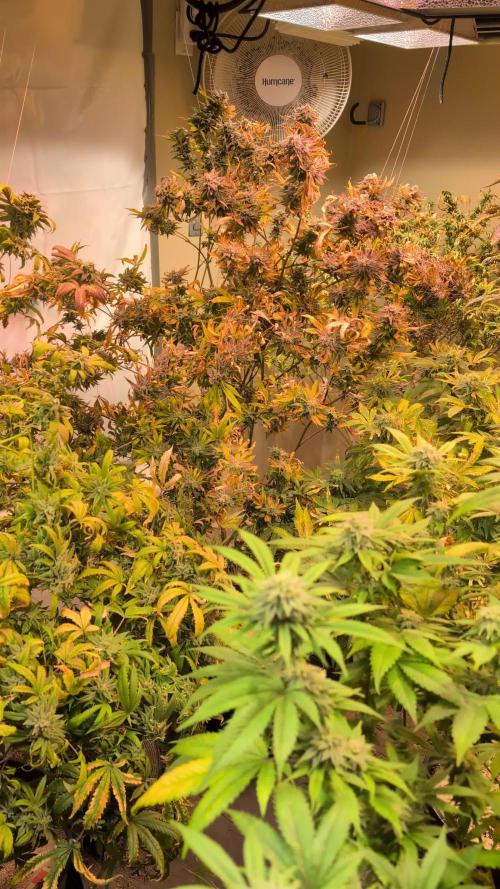
IPM
https://www.arbico-organics.com/product/mite-predator-phytoseiulus-persimilis-plus-sachets/mite-predators
https://www.arbico-organics.com/product/spidermite-destroyer-stethorus-punctillum-adults-larvae/pest-solver-guide-mites

Likes
Comments
Share


@DogDoctorOfficial
Follow
💙 Project Blue Tent – Week 3
Blue Waffle F1 – Pheno B (Folder 13B)
Hello everyone, and welcome back to another update from Project Blue Tent!
For those joining this journey for the first time, this project follows four individual Blue Waffle F1 plants from Zamnesia, each documented in its own diary from seed to harvest. Although they all share the exact same environment, nutrients, and growing conditions, every plant is allowed to tell its own story and reveal its own unique expression.
Everything in this tent is built around the Zamnesia ecosystem, while the ladies are growing inside Plagron Premium Coco Growbags and being fed exclusively with the Plagron Hydro nutrient line.
Today we’re taking a closer look at Blue Waffle F1 – Plant B.
⸻
🌱 Week Three – Building Momentum
Week three has been another very encouraging one.
Plant B has settled beautifully into her coco home and has noticeably increased her pace of growth throughout the week. She began this update as a compact young plant, but over the last several days she’s filled out nicely, producing larger fan leaves and noticeably stronger apical growth.
Her structure remains short and sturdy, with tight internodal spacing and excellent symmetry. The side branches are beginning to develop with confidence, giving an early indication that she’ll produce a well-balanced canopy in the weeks ahead.
One detail that immediately catches my attention is how vigorous the newest growth appears. Every day the center becomes denser, showing that the roots are now well established and supporting increasingly rapid development.
⸻
🌡️ Environmental Conditions
One of the goals with Project Blue Tent is consistency.
The entire ecosystem continues to perform exactly as intended, maintaining a stable environment throughout the week while the Phytonaut LED provides an even light distribution across the canopy.
Average conditions this week were:
* 🌡️ Day temperature: 27°C
* 🌙 Night temperature: 25°C
* 💧 Relative humidity: 67%
* ⚗️ pH: 5.8
* ⚡ EC: 1.61 mS/cm
* 💨 CO₂: approximately 450 ppm
* 💡 Light schedule: 18/6
* ☀️ PPFD: approximately 350
At this intensity the plants receive plenty of energy to encourage compact vegetative growth without unnecessary stretching, while the stable environment allows them to focus entirely on developing healthy roots and foliage.
⸻
🥥 Feeding Adjustments
Coming from years of growing almost exclusively in living soil, growing in coco has definitely become an enjoyable learning experience.
This week all four plants began showing a slightly lighter shade of green than I normally like to see. Nothing dramatic or concerning, but enough to tell me they were ready for a little more nutrition.
Instead of waiting for deficiencies to develop, I prefer making gradual adjustments before the plants begin struggling.
For that reason I increased the base feeding schedule.
Current nutrition now consists of:
* Plagron Hydro A — 1.6 ml/L
* Plagron Hydro B — 1.6 ml/L
* Plagron Hydro Roots — maintained at the previous dosage
This small increase raised the EC slightly and should provide enough additional nitrogen and overall nutrition for the foliage to regain a richer green over the coming week.
Every grow teaches something new, and coco rewards small, measured corrections rather than aggressive changes.
⸻
🚿 The Unexpected Flood
No grow is ever completely free of surprises.
This week mine arrived in the form of an irrigation mishap.
After switching on the irrigation system, one small mistake resulted in the tent flooding far more than planned.
Thankfully, it looked much worse than it actually was.
The first step was simply shutting everything down, grabbing a pile of towels, cleaning the tent thoroughly and checking that every component was still working correctly.
Fortunately, because these plants are growing in coco, the situation remained under control. Coco retains excellent oxygen levels even after heavy watering, making it much more forgiving than traditional soil in situations like this.
After allowing everything to dry back slightly, normal irrigation resumed without any visible stress to the plants.
Sometimes growing isn’t about avoiding mistakes.
It’s about solving them calmly when they happen.
We’re already working on a permanent improvement for the irrigation setup, and I’ll happily share that solution once everything is installed in the coming weeks.
⸻
🌿 Blue Waffle F1 – Plant B
This phenotype is developing into a very attractive little plant.
She has a sturdy central stem, broad leaves, and compact spacing between nodes, giving her a naturally bushy appearance even without any training.
The petioles are beginning to show subtle reddish-purple pigmentation, while the newest leaves emerge with beautiful vigor before gradually maturing into the larger fan leaves.
Although her colour is still a touch lighter than my personal preference, her posture tells the real story.
Leaves are reaching upward.
Growth is continuous.
The plant looks happy.
Sometimes plants communicate much more through their posture than through their colour alone, and Plant B certainly appears eager to keep growing.
⸻
🔍 Looking Ahead
Next week should be an exciting milestone.
With the feeding now adjusted and the roots continuing to colonize the entire growbag, I expect noticeably faster vegetative growth and stronger lateral branching.
I’ll continue monitoring leaf colour, growth rate and overall structure while preparing these ladies for the next stage of development.
Every week they seem to reveal a little more of their individual personalities, and I’m excited to see exactly where Plant B takes us from here.
⸻
💙 Thank You
A huge thank you goes to Zamnesia for making Project Blue Tent possible, from these fantastic Blue Waffle F1 genetics to the complete ecosystem surrounding this grow.
A sincere thank you as well to Plagron for providing the Premium Coco Growbags together with the Hydro nutrient line that is helping these plants thrive.
Thank you to GrowDiaries for giving growers around the world a place to document their journeys, exchange ideas, and learn from one another every single day.
And finally, thank you to every single person following along.
Whether you’ve been here since the very beginning, recently discovered these diaries, leave comments every week, quietly observe from the background, or simply enjoy watching these plants develop, your support is genuinely appreciated.
This project is about sharing the complete journey—the successes, the unexpected challenges, and everything in between.
I hope you’re all having an amazing week, and I look forward to seeing you again in the next update as these beautiful ladies continue their adventure.
Until next time…
Growers Love, happy growing, and take care everyone! 🌱💙
P.S. One final shout-out has to go to the Zamnesia ecosystem itself. As messy as the irrigation mishap looked, the Zamnesia tent tray proved exactly why it’s part of the setup. Every drop of water was safely contained inside the tent, with absolutely nothing leaking onto the floor. What could have become a much bigger problem ended up being nothing more than grabbing a few towels, drying everything up, and carrying on with the grow. Sometimes you only discover how valuable a piece of equipment is when something goes wrong—and this week, the tray passed that test with flying colours. Huge thanks to Zamnesia for designing an ecosystem that’s ready for real-world growing, not just the perfect days. 💙🌱
Likes
184
Share


@Still_Smoq
Follow
#seedsman420growoff and #SeedsmanSeeds
📆 Germination Week, 20-26 April 2024
20 April - Placed 3 seeds in a cup of RO water, put in seedling grow tent under 24hrs light at 25% power, temp 74 degrees F.
21 April - 2 seeds cracked, roots appeared. Placed into Root Riot starter cubes.
22 April - 3d seed cracked. Placed into wet paper towel.
24 April - 1st seed sprouted from starter cube. Main root exposed, moved to permanent DWC system (see pictures). Filled for first time with solution.
25-26 April - Let seedling grow.
Thank you Seedsman Seeds! I’m very excited to be a sponsored participant and given the opportunity to cultivate during SeedsmanSeeds Growoff this year!
The strain I received was Pineapple OG. This is a new 2024 release from Seedsman Seeds. Its genetics are a hybrid 3 way cross with Pineapple Kush, Pineapple Muffin, and Pineapple Express. This unique fusion results in tall plants boasting remarkable uniformity, and delightful sweet, tropical fruit flavors. It also has notably high THC levels (25-27%), 50% Sativa / 50% Indica, with harvest yielding up to 450g indoor - 750g outdoor /m2, and a flowering time between 56-70 days. I’m anticipating the upcoming weeks with great optimism.
📑 The Plan - use a Deep Water Culture, 3 gal system, as a permanent home. Apply a weekly feeding schedule using time tested blends of Terra Aquatica (formerly General Hydroponics), Botanicare, and Europonics nutrients throughout the cycle. Depending on the speed of the grow, veg the plant for 6-10 weeks using the scrog method of training. Then flip into flower where she will continue for another 8-10 weeks. So my forecast is this grow should be finished around 30 August.
🍶 24 April initial nutrient solution TDS 530, PH 6.1
🍽️ 24 April initial feeding schedule first 2 weeks
💧 Using reverse osmosis water with EC/TDS at 0
🐉 Nutrient Solution EC 1.0 at 63 degree F
🔆 Light power at 50%, DLI 13 canopy coverage at 18hrs
😤 Using General Hydroponics, HGC728040, Dual Diaphragm Air Pump, 320 GPH
That is it for this week. Thanks for the look, read and stopping by.

Likes
7
Share


@NCgrower252
Follow
Alcapulco Gold plants (3) are between 12”-14” and still receiving only pH balanced H2O. The other 2 strains are receiving nutrients listed above.


Likes
6
Share

@eldruida_lamota
Follow
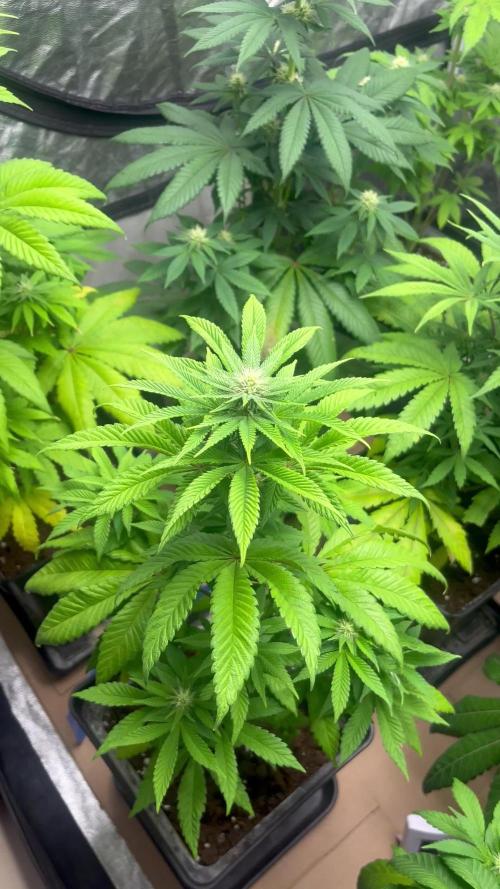
Que pasa familia, vamos con la tercera semana de floración de estas Fishy Zoap feminizadas de Seedstockers.
Vamos al lío ,se trasplantaron en macetas de 7 litros definitivamente.
El ph se controla en 6.0 , la temperatura la tenemos entre 24/20 grados y la humedad ronda el 50%.
El ciclo de floración puse 12h de luz, el foco está al 80% de potencia.
De momento van creciendo a buen ritmo y tienen un buen color, estaban muy bien enraizadas al realizarle el trasplante se notaba la abundancia radicular.
Comentar de nuevo que el estrés hídrico fue superado sin problemas, esperemos que no surja nada más.
Gracias Agrobeta por el envío de la Gold series para esta temporada, se vienen cositas 🙏
- os dejo por aquí un CÓDIGO: Eldruida
Descuento para la tienda de MARS HYDRO.
https://www.mars-hydro.com
Hasta aquí todo, Buenos humos 💨💨💨


Likes
128
Share


@MiyaguiOkPolilla
Follow
Bienvenido a la aventura compañero 🛸❄️✨💐
Una semana espectacular para nuestra Do-Si-Dos de @Zammi_official en combinación con la gama gloriosa de @Plagron
La ayuda en este diario ha sido de la mano del grower y amigo @noNick123 . Recomendando siempre cosas positivas, gran teoría ✨ Espero que Zamnesia tome en cuenta su participación a pesar del inconveniente ocurrido con el frío, hermano 💪🏽
Subimos la temperatura del agua antes de preparar la dosis, 23 C⁰ con 450 PPM aprox, inicial por riego.
Bajamos las dosis considerablemente y llegamos a un ppm de unos 800. Entiendo ahora que significaba cuando @noNick123 recomendó calentar el agua antes de la mezcla...
El día jueves 11/1/24 comenzamos a regar solo con agua.
Esta planta se ha vuelto una bestia creadora de resina, ahora la mantendremos en este estado y quizás necesite ser alimentada alguna vez más 🤔 tengo ganas de cortarla, pero la dejaremos a a que madure un poco 😌
Los tricomas están 70% lechosos 20% transparentes y 10% ámbar. La lámpara ahora está más alta para no dañar ninguna glándula ❄️👌
Por ahora esto es todo, estoy aprovechando todo esto para ir eligiendo la nueva tanda de semillas a cultivar 🤩
Quiero hacer una extracción con esta próxima cosecha, no guardar tanta materia vegetal en casa. Alguien conoce una manera casera sin mucha inversión?! Oil, dry, bubble hash... NO CHARAS 😁
Un abrazo fuerte para todos y muchos ánimos 💐 siempre hay tiempo para hacerlo mejor, para darle al siguiente paso pisando firme
Saludos!

Likes
33
Share


@Caukygrow
Follow
I harvested 226 grams of dried and trimmed bud plus a bunch of trim and popcorn buds that I didn’t weigh. Definitely had it's ups and downs with my pet rabbit eating one of my plants in the first few weeks :( One of my girls also didn't make it to the end, I must of overfed her at one point and the stress was too much. This amount of buds though will keep me and my friends happy for a long time though!
Thank you to all those that helped with making my first grow a success!
I certainly learned a lot & can't wait to do it all again - for now I've been enjoying smoking the buds and making edibles :D
It took me a few hours to trim all the buds. I didn't measure the wet weight of the plant as I hung the whole thing up to dry as soon as the lights came off. The roots were plentiful and healthy. Even my girlfriend tried smoking with me for the first time ever and she loved it!!!


Likes
19
Share


@TheCannaProphet
Follow
----------------------------------------------
~Sweet Seeds Sweet Zenzation (SWS84)~
----------------------------------------------
Zkittlez is one of the most famous and potent strains found on the west coast of the USA. Sweet Zenzation (SWS84) derives from a cross between an elite clone of Zkittlez combined with a specially selected Grape Ape clone, which is one of the strains used to develop the original Zkittlez.
The result is a predominantly Indica genetic hybrid. It produces a large amount of resin-soaked flowers. It is both relaxing and stress-relieving, yet it also stimulates the imagination and conversation, an effect that is normally associated with sativa strains.
The flowers have a high terpene content, an exquisite aroma and sweet taste, with hints of fruit-flavored candies, hardwood undertones, shades of lemon, cypress and subtle aromatic peppers.
Variety: Sweet Zenzation (SWS84)
Indica: 70%
Sativa: 30%
THC: 16-23%
CBD: 0.2%
Indoor Yield: 450-650 g/m²
Outdoor Yield: 400-700 g/plant
Effects: Creativity, Stimulating, Happiness, Relaxing
Taste: Spicy, Fruity, Citrus, Lemon, Candy, Cypress, Sweet
____________________________________________________________________________________________________________________________________________________________________________________________________________________________________________________________________________________________________________________________________________________________________________________________________________________________________________________
THE SETUP:
~Planted into Jiffy Peat Pellets that were hydrated with de-chlorinated water with SuperThrive added then ph'd to 6.0 @ 80℉
~Grown 100% organic in 10g fabric pots with Mother Earth 70/30 Coco/Perlite medium amended with 2tbs/g of Down To Earth 4-4-4 / 2 cups/g of Earthworm Castings / 1tbs/g of Dr. Earth Flower Girl 3-9-4, 1tbs/g of Dr. Earth Bat Guano, 3/4 cup of Down To Earth Azomite and 1 tsp/g Down To Earth Fish Bone Meal.
~24hr light cycle during Germination / 19/5 light cycle for Vegetation and 12/12 for Flower
~Straight water ph'd @ 6.2-6.8 when needed and weekly Compost Tea's.
__________________________________________________________________________________________________________________________________________________________________________________________________________________________________________________________________________________________________________________________________________________________________________________________________________________________________________________
Weekly Updates:
10/11- Week Nine! Here we go on our way to sticking a fork in this run!
Her fade is in full swing and she's putting out trichomes like crazy! By the end of this week she'll be hanging after she spends a couple of nights in the dark.
I watered today using straight water that's ph'd to 6.5-6.7 @ 72℉. I gave her a little over 1.5g to keep her flush going and then turned her pot.
Trichome status: 70% milky / 30% clear
10/13- I watered today with 1.5g of straight water that was ph'd to 6.5-6.7 @ 72℉ and gave her pot a turn.
Her trichomes are almost where I like them and more than likely she'll be going in the dark by the weekend! What a beautiful cultivar she is! 🤩💚
10/15- My routine of watering every other day continues. Yesterday I watered her with her usual 1.5g of straight de-chlorinated water that was ph'd to 6.5-6.7 @ 72℉ and gave her pot a turn. Today was just spent checking her over, turning her pot and doing a quick check of her trichomes which are close, but not quite ripe enough yet!
10/17- Wow!... Nine weeks of flower DONE! 😎👍
Now my sights are set on getting this girl finished up and on her way to 48 hours in the dark before she's hung to begin drying.
I went ahead and watered her with her usual 1.5g of straight de-chlorinated water that was ph'd to 6.7 @ 72℉ and checked her trichomes, which are looking just about right!
This journey is coming to a close in the next couple of weeks with her harvest, drying and trimming up. I so appreciate you following along with me , it's been a blast sharing with you all! 😎🙏
~Thanks so much for checking out my diary! This epic run is in the home stretch with harvest fast approaching...Stay lifted and be Blessed! 😎🙏~

Likes
306
Share


@Sparkles
Follow
Brought to u by Mars Hydro SP3000 x2. Grow on Earth. Grow with Mars.
All pics day 40.
Welcome back. Mid/late flower now. Winding down nutes and teas and will feed to get the buds to ripen.
Apex is frosting up nicely and her smell is popping, closest I can get to describing it is like cleaning products from a real fancy hotel…but lots of fan leaves are showing signs of deficiencies and/or lockout cuz she’s root bound really bad. Buds and sugar leaves aren’t affected, so far so good, I hope they stay that way 🤞
Gelato is fattening up real nice and has that distinct pungent aroma but not as strong as apex and not a lot of trichs. I hear this strain starts picking up in week 7+…although she’s root bound too but not as bad (I think).
Lights are at 80%…they’re fricken beasts and way too much power for such a short, tiny tent. Next grow will be same strains, bigger final pots and will be in a new tent that is 6” (15cm) taller, every little bit helps :)
That’s it for this week. Thanks for stopping by. Stay safe and happy gardening 🌱🌱


Likes
6
Share

@McChi
Follow
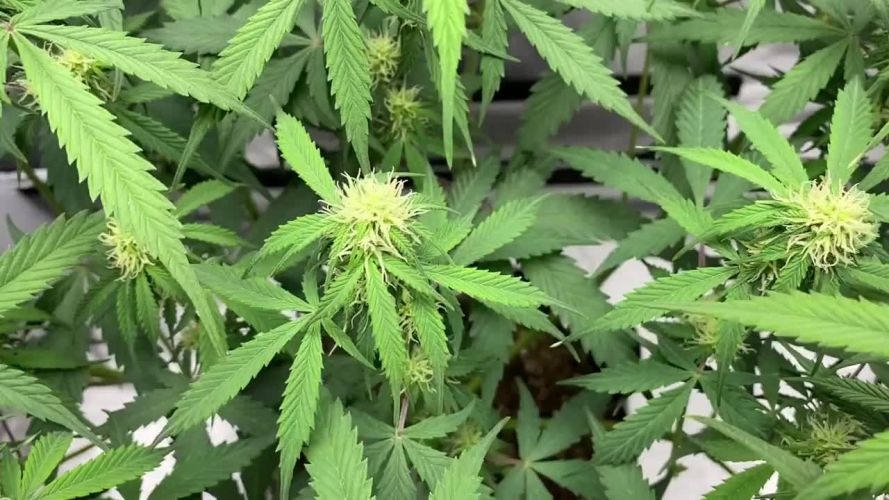
Solid week!! Fed her bloom nutrients on day 50. Responding nicely. I pulled down the main 8 to allow for better light and airflow throughout. Once I did that she really started to fill in again. This also seems to help stop the stretch, or maybe it was just timing and stretch was coming to an end anyways. Either way, glad it did as I am am running out of room to raise the lights and have no more options for setup. Bud sites are all starting to fill in good and fatten up a tiny bit. Looking forward to seeing how these shape up!!!
Likes
4
Share

@Borberad
Follow
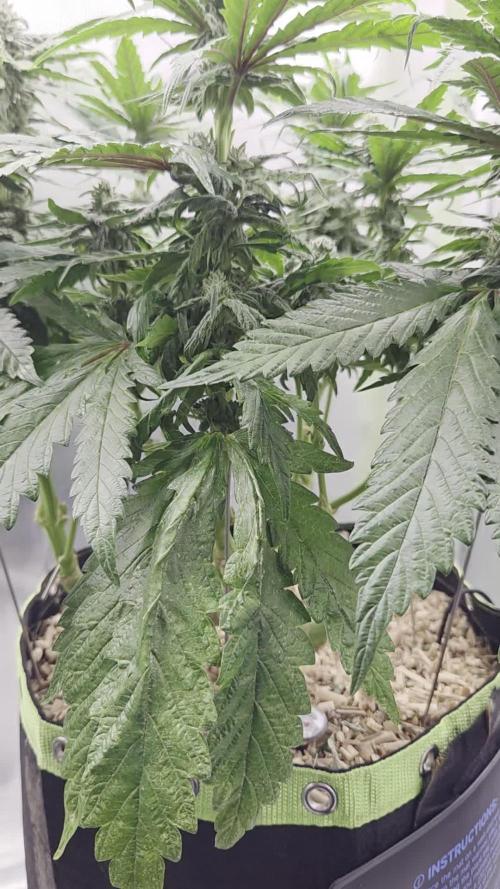
Woche 12
Spannede Mutation mit unglaublicher Trichomproduktion auf den Interessanten Blüten.