


Likes
Comments
Share


@Mrs_Larimar
Follow
2022-03-1
forgot to Take Pictures.
Bit plants will be transplanted soon
All looking very good

Likes
48
Share


@gottagrowsometime
Follow
Welcome to my Sour Strawberry scrog diary, sponsored by SPIDER-FARMER & Barneysfarm.
Days 22-35 weeks 3-4 off veg Veg Days 12&13 25&26(seedling stage was done in germination week)
Both plants had difficult with a bad PH imbalance that hit my plants across the board. All suffered from 2x Terpinator & Pure Zym PH 4.5 feeds. Lessons learnt you get no 2nd chances growing co2. A light def can be a serious looking one a few hrs later even though fix was applied. Growth can't keep up with uptake. So Foliar sprays I've been using a lot in these grows. It helps with the fixes much quicker. I've started training the plant and moving things to spread it out. I reckon if I flipped her after the stretch I'd fill 60-70% of the net. So, it needs a few more weeks in veg. I have done a lot of fresh toppings. So, they'll need a few weeks of growth and training and fixing to the net. All nodes are in the strip process so it'll help fatten up the stems as if there's too much growth below the main tops and if left late (stripping them late) you'll end up with weak stems, so the stripping needs to be done, and then you need to train your nodes/shoots you want to focus on growing your colas.
Any input is welcome this is my 1st scrog. I used 2 seeds 2 different phenos, 1 is a lot taller, big mistake. Itll take time, lots of training and she's gonna look awful for the next few weeks but, their will be a method to the madness. I'll flip when I see 60/70% of the net filled either by attached to the net or trained so that'll it sit under where the stretch will go when flipped. Giving me 85-95% of coverage. Again, this is my 1st scrog so any input is welcome..
SCROG / DEFOLIATION / LST / NODE STRIPPING
Only started in the 2 week of this update. Through a pro scrog frame over her. As this will be the easiest way to deal with it in my 1m2 tent. It will take up a lot of space for just 2 plants. But, I'm planning on doing a long one, or at least until I get it right so it'll be a proper scrog with an even canopy. I stripped the nodes to premote them to grow some mass i did semi removal of shoots that are deep into the canopy. Didn't wanna do to much stress that and she'll still need a lot of that growth to get her to grow out. Next wk I'll readjust and start pulling her in areas needed. 1 pheno is much shorter. So, I'm thinking I'll just train her so she at least gets right underneath the net, and then when i flip it'll help reach the net. But, them areas will need lots of growth, and I'll have to weave the bugger one abs pull her nodes down and maybe lollipop her a lil more so there'll be an even canopy.
Thanks to my sponsors Bella from Spider-Farmer for the 2023 upgraded SE5000 and to the rep from Barneysfarm for their 22/23 pick of 5 off their new Releases.
Much appreciation to all who stop by to view. And leave their thoughts feedback or whatever. Either way, thanks for stopping by. And look forward to seen your diaries.

Likes
2
Share


@DaddyPrime2
Follow
this plant got so stressed out. shes had a wonky light schedule alot of her life. i had just gotten her used to the indoor light schedule and i increased the light intensity. when doing so, it reset the timer on the app. i still prefer mechanical lol. anyways she them got blasted for like 20 hours and then i changed fhe light schedule so her lights on is at night, which then again stretched her schedule weird. i did happen to take a nice cutting though.
7/20 yesterday i noticed a few smaller bugs in fhe top soil. Then today, a damn wolf spider crawled out of the flower pot. I didnt end up killing them because theyre probs there for the other bugs 👍🤷🏽♂️


Likes
11
Share


@GrowBuv
Follow
These two plants were germinated and planted and then I caught Covid! So I haven’t seen these girls for 3 weeks. But they’re looking healthy. A feed of FishMix should help boost them. I did notice a bit of thrip damage on the leaves. Looks like these little bastards are back. So I have sprayed with canna cure and I will continue too every few days to try wipe them out before they do too much damage. But full steam ahead now the plants are the focus of my attention from now on!

Likes
15
Share

@Rangaku
Follow
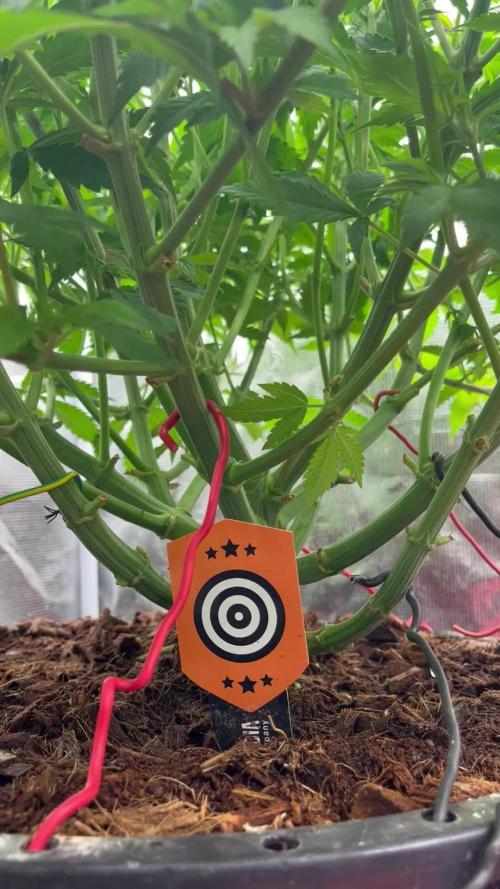
Switched to 12-12 4 days ago and she’s bushing up and taking off . Just gonna keep up the defol and tie down next week and watch her stretch .

Likes
12
Share


@Kakui
Follow
Por lejos este ha sido mi mejor cultivo hasta ahora, han sido los cogollos más grandes, densos y llenos de tricomas que he cultivado, comparado con el cultivo anterior en el que usé el mismo tipo de planta, está vez fue muy superior. Los motivos de la mejora pueden ser varios, incluidos más luz, ya que en el cultivo anterior solo tuve 480w, ahora fueron 720w, también usé tutores y palitos de madera para crear una estructura firme en algunas plantas, y fueron estás mismas las que tuvieron los cogollos más grandes, así que lo usaré en todas las plantas del siguiente cultivo. Además el tiempo de cultivo se redujo de 4 meses a 3 meses y medio, aprox. Ahora solo queda esperar unas 2 semanas para el secado y ver cuánto fue la cosecha total en gramos secos, la anterior fue de 635 gramos secos, está yo creo que por lo menos rondará los 700 gramos secos, incluso puede que me sorprenda y sea mucho más.

Likes
147
Share


@MrJones
Follow
MrJones Black Berry OG
🔹🔹🔹🔹🔹🔹GOALS🔹🔹🔹🔹🔹🔹
🌞Flowering Environment - 75/80℉ and 50% Humidity
💧 Feeding - Advanced Nutrients Bloom Regiment - Great APP!
🍃Training / Added the second trellis last week, it is doing a great job with support, SCROG process makes it hard to defoliate the plants.
🕷️ IPM - Will be using Green Cleaner" 1 OZ per Gallon, and CannControl from Mammoth alternating between product each month for Integrated Pest Management.
💡Mars Hydro LED / Veg TS-1000 / Flower 480W FC 4800, this light is just performing very well!
🔹🔹🔹🔹🔹🔹🔹🔹🔹🔹🔹🔹🔹🔹🔹🔹🔹🔹
📝 Rambling - With week 14 here, will be the last week of nutrients and will be starting with PH H20, the buds continue to get fat!
🔹🔹🔹🔹🔹🔹🔹🔹🔹🔹🔹🔹🔹🔹🔹🔹🔹🔹
▶️ Friday - 04.16.21 / Feeding 40 OZ of Advanced Nutrients
▶️ Saturday - 04.17.21/ Starting to Flush with H20 PH 6.2
▶️ Sunday - 04.18.21/Just feeding H20 PH 6.2
▶️ Monday - 04.19.21/Just feeding H20 PH 6.2
▶️ Tuesday - 04.20.21/Just feeding H20 PH 6.2, the buds are still getting fatter, they are looking amazing!
▶️ Wednesday - 04.21.21/ Just feeding H20 PH 6.2, the buds are still getting fatter, they are looking amazing!
▶️ Thursday - 04.22.21/Just feeding H20 PH 6.2, the buds are still getting fatter, they are looking amazing!🔹🔹🔹🔹🔹🔹🔹🔹🔹🔹🔹🔹🔹🔹🔹🔹🔹🔹
📜 Cultivar Information - We have created this strain by crossing the best Black Domina available with Very Berry and our own Lost Coast OG Kush, this plant produces large colas with a super intense sweet berry flavor with a sweet-smelling aroma that varies from fruit and berries to sweet candy. This lady offers tight internal stacking giving a perfect structure for those super heavy colas, which is perfect for growth both indoors and out, if grown outside she is fairly resistant to mold and powdery mildew which is a real bonus with such large colas.
🔹🔹🔹🔹🔹🔹🔹🔹🔹🔹🔹🔹🔹🔹🔹🔹🔹🔹

Likes
2
Share


@bbs42
Follow
Starting to get some real buds now. Color in leaves changed within 3days. Had me super nervous I screwed up the plant. Thought I was dealing with a ph issue because of how early the leaves changed colors. Green spots on leaves are from me not turing down the light fast enough.


Likes
17
Share


@HIAZ_urbanbudfarmer
Follow
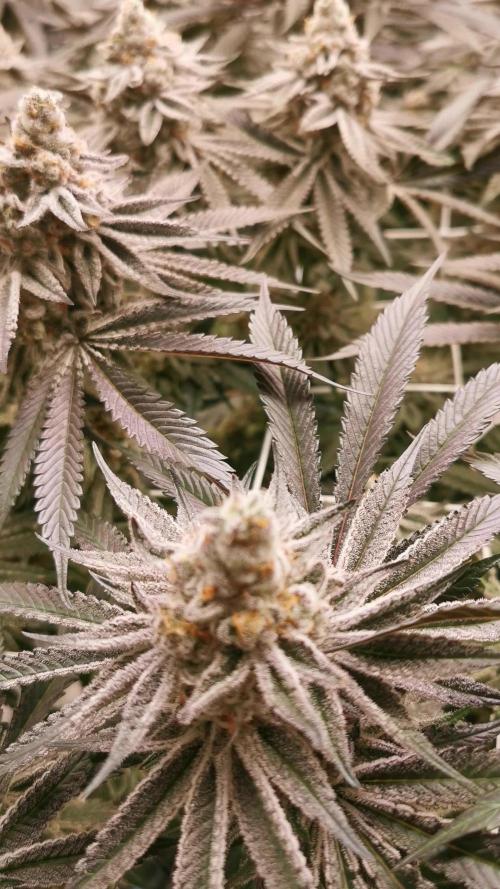
She is going well, topped main & secondary branches ( 2nd topping) & performed some l.s.t. training & mainline training. Thanks to Fast Buds for the cool apparel & FF seeds, my prize for being 1 of 10 winners for November diary of the month 👍

Likes
2
Share


@DrBud420
Follow
20.05.
I don't have anything special to write, today is the end of her third week, she hasn't made any special progress, the weather is constantly bad... today was a nice day and I took them outside to sunbathe after a long time, from tomorrow everything will be as usual, for the next week only rain, the temperatures won't be as low as before, but it won't be satisfactory either, during the day it will be okay, but again with a little sun...
Stay high!

Processing
Likes
9
Share


@KcKush
Follow
*Increased PPM from 550 to 650
*Will probably start flowering in a week once I get my tent set up.
*They were looking kinda droopy maybe cold weather and to much water.
*Need to transplant.

Likes
14
Share


@OrionSparkles
Follow
-I made them a slight defoliation; Just a couple of sheets. I'll make another one shortly.👌🏻🦈
-I also applied via irrigation, 1gr x 1L, of Bio Henhancer Bio Feeding.💪🏻
Likes
20
Share


@DeepRootsGrowTrees
Follow
KRITIC AUTO by KANNABIA
Week #13 Overall
Week #10 Flower
This week she's showing signs that she's just about done she's looking great buds are dense covered in trichomes and she smells amazing!! Stay Growing!!
Kannabia.com KRITIC AUTO
Likes
22
Share


@BruWeed
Follow
☘️08/11 - Empieza su primera semana en Etapa de Floración.
☘️Me sorprendió lo rápido que creció en altura en pocos días.
☘️Su desarrollo viene de forma correcta sin ningún tipo de inconvenientes.
☘️Estos días seguiré subiendo más imágenes de como viene su crecimiento.
Likes
5
Share

@TheDutchWizzards
Follow
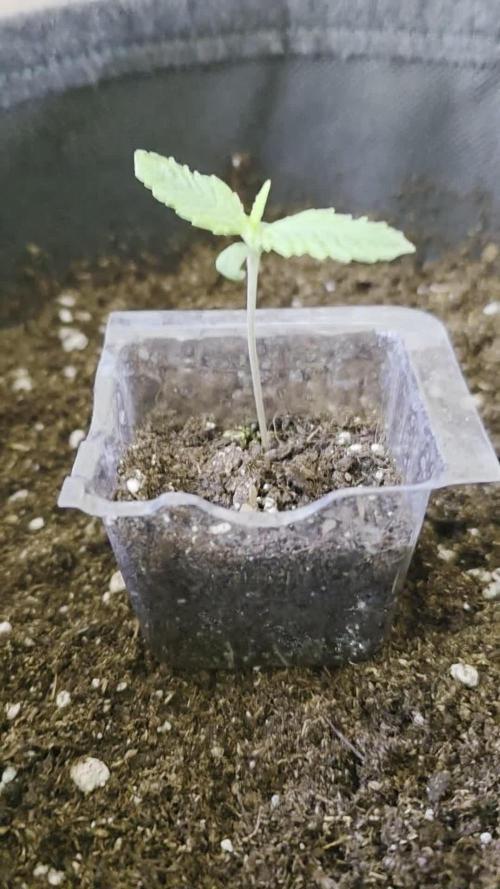
So i popped one of this beautifull strain and she germanted just great, steady and strong so really happy with this strain and bix tnx again to @fast_buds 🤙🏻🌱🙏🏻