Likes
Comments
Share
These girls are smelling amazing! I'm so excited about the purple Zkittlez phenotype! It's the dominant smell in the grow space. I flushed each plant with pure filtered water @ 6.25pH
Likes
34
Share
Yellow butterfly came to see me the other day; that was nice. Starting to show signs of stress on the odd leaf, localized isolated blips, blemishes, who said growing up was going to be easy! Smaller leaves have less surface area for stomata to occupy, so the stomata are packed more densely to maintain adequate gas exchange. Smaller leaves might have higher stomatal density to compensate for their smaller size, potentially maximizing carbon uptake and minimizing water loss. Environmental conditions like light intensity and water availability can influence stomatal density, and these factors can affect leaf size as well. Leaf development involves cell division and expansion, and stomatal differentiation is sensitive to these processes. In essence, the smaller leaf size can lead to a higher stomatal density due to the constraints of available space and the need to optimize gas exchange for photosynthesis and transpiration. In the long term, UV-B radiation can lead to more complex changes in stomatal morphology, including effects on both stomatal density and size, potentially impacting carbon sequestration and water use. In essence, UV-B can be a double-edged sword for stomata: It can induce stomatal closure and potentially reduce stomatal size, but it may also trigger an increase in stomatal density as a compensatory mechanism. It is generally more efficient for gas exchange to have smaller leaves with a higher stomatal density, rather than large leaves with lower stomatal density. This is because smaller stomata can facilitate faster gas exchange due to shorter diffusion pathways, even though they may have the same total pore area as fewer, larger stomata. Leaf size tends to decrease in colder climates to reduce heat loss, while larger leaves are more common in warmer, humid environments. Plants in arid regions often develop smaller leaves with a thicker cuticle and/or hairs to minimize water loss through transpiration. Conversely, plants in wet environments may have larger leaves and drip tips to facilitate water runoff. Leaf size and shape can vary based on light availability. For example, leaves in shaded areas may be larger and thinner to maximize light absorption. Leaf mass per area (LMA) can be higher in stressful environments with limited nutrients, indicating a greater investment in structural components for protection and critical resource conservation. Wind speed, humidity, and soil conditions can also influence leaf morphology, leading to variations in leaf shape, size, and surface characteristics. Small leaves: Reduce water loss in arid or cold climates. Environmental conditions significantly affect gene expression in plants. Plants are sessile organisms, meaning they cannot move to escape unfavorable conditions, so they rely on gene expression to adapt to their surroundings. Environmental factors like light, temperature, water, and nutrient availability can trigger changes in gene expression, allowing plants to respond to and survive in diverse environments. Depending on the environment a young seedling encounters, the developmental program following seed germination could be skotomorphogenesis in the dark or photomorphogenesis in the light. Light signals are interpreted by a repertoire of photoreceptors followed by sophisticated gene expression networks, eventually resulting in developmental changes. The expression and functions of photoreceptors and key signaling molecules are highly coordinated and regulated at multiple levels of the central dogma in molecular biology. Light activates gene expression through the actions of positive transcriptional regulators and the relaxation of chromatin by histone acetylation. Small regulatory RNAs help attenuate the expression of light-responsive genes. Alternative splicing, protein phosphorylation/dephosphorylation, the formation of diverse transcriptional complexes, and selective protein degradation all contribute to proteome diversity and change the functions of individual proteins. Photomorphogenesis, the light-driven developmental changes in plants, significantly impacts gene expression. It involves a cascade of events where light signals, perceived by photoreceptors, trigger changes in gene expression patterns, ultimately leading to the development of a plant in response to its light environment. Genes are expressed, not dictated! While having the potential to encode proteins, genes are not automatically and constantly active. Instead, their expression (the process of turning them into proteins) is carefully regulated by the cell, responding to internal and external signals. This means that genes can be "turned on" or "turned off," and the level of expression can be adjusted, depending on the cell's needs and the surrounding environment. In plants, genes are not simply "on" or "off" but rather their expression is carefully regulated based on various factors, including the cell type, developmental stage, and environmental conditions. This means that while all cells in a plant contain the same genetic information (the same genes), different cells will express different subsets of those genes at different times. This regulation is crucial for the proper functioning and development of the plant. When a green plant is exposed to red light, much of the red light is absorbed, but some is also reflected back. The reflected red light, along with any blue light reflected from other parts of the plant, can be perceived by our eyes as purple. Carotenoids absorb light in blue-green region of the visible spectrum, complementing chlorophyll's absorption in the red region. They safeguard the photosynthetic machinery from excessive light by activating singlet oxygen, an oxidant formed during photosynthesis. Carotenoids also quench triplet chlorophyll, which can negatively affect photosynthesis, and scavenge reactive oxygen species (ROS) that can damage cellular proteins. Additionally, carotenoid derivatives signal plant development and responses to environmental cues. They serve as precursors for the biosynthesis of phytohormones such as abscisic acid () and strigolactones (SLs). These pigments are responsible for the orange, red, and yellow hues of fruits and vegetables, while acting as free scavengers to protect plants during photosynthesis. Singlet oxygen (¹O₂) is an electronically excited state of molecular oxygen (O₂). Singlet oxygen is produced as a byproduct during photosynthesis, primarily within the photosystem II (PSII) reaction center and light-harvesting antenna complex. This occurs when excess energy from excited chlorophyll molecules is transferred to molecular oxygen. While singlet oxygen can cause oxidative damage, plants have mechanisms to manage its production and mitigate its harmful effects. Singlet oxygen (¹O₂) is considered a reactive oxygen species (ROS). It's a form of oxygen with higher energy and reactivity compared to the more common triplet oxygen found in its ground state. Singlet oxygen is generated both in biological systems, such as during photosynthesis in plants, and in cellular processes, and through chemical and photochemical reactions. While singlet oxygen is a ROS, it's important to note that it differs from other ROS like superoxide (O₂⁻), hydrogen peroxide (H₂O₂), and hydroxyl radicals (OH) in its formation, reactivity, and specific biological roles. Non-photochemical quenching (NPQ) protects plants from damage caused by reactive oxygen species (ROS) by dissipating excess light energy as heat. This process reduces the overexcitation of photosynthetic pigments, which can lead to the production of ROS, thus mitigating the potential for photodamage. Zeaxanthin, a carotenoid pigment, plays a crucial role in photoprotection in plants by both enhancing non-photochemical quenching (NPQ) and scavenging reactive oxygen species (ROS). In high-light conditions, zeaxanthin is synthesized from violaxanthin through the xanthophyll cycle, and this zeaxanthin then facilitates heat dissipation of excess light energy (NPQ) and quenches harmful ROS. The Issue of Singlet Oxygen!! ROS Formation: Blue light, with its higher energy photons, can promote the formation of reactive oxygen species (ROS), including singlet oxygen, within the plant. Potential Damage: High levels of ROS can damage cellular components, including proteins, lipids, and DNA, potentially impacting plant health and productivity. Balancing Act: A balanced spectrum of light, including both blue and red light, is crucial for mitigating the harmful effects of excessive blue light and promoting optimal plant growth and stress tolerance. The Importance of Red Light: Red light (especially far-red) can help to mitigate the negative effects of excessive blue light by: Balancing the Photoreceptor Response: Red light can influence the activity of photoreceptors like phytochrome, which are involved in regulating plant responses to different light wavelengths. Enhancing Antioxidant Production: Red and blue light can stimulate the production of antioxidants, which help to neutralize ROS and protect the plant from oxidative damage. Optimizing Photosynthesis: Red light is efficiently used in photosynthesis, and its combination with blue light can lead to increased photosynthetic efficiency and biomass production. In controlled environments like greenhouses and vertical farms, optimizing the ratio of blue and red light is a key strategy for promoting healthy plant growth and yield. Understanding the interplay between blue light signaling, ROS production, and antioxidant defense mechanisms can inform breeding programs and biotechnological interventions aimed at improving plant stress resistance. In summary, while blue light is essential for plant development and photosynthesis, it's crucial to balance it with other light wavelengths, particularly red light, to prevent excessive ROS formation and promote overall plant health. Oxidative damage in plants occurs when there's an imbalance between the production of reactive oxygen species (ROS) and the plant's ability to neutralize them, leading to cellular damage. This imbalance, known as oxidative stress, can result from various environmental stressors, affecting plant growth, development, and overall productivity. Causes of Oxidative Damage: Abiotic stresses: These include extreme temperatures (heat and cold), drought, salinity, heavy metal toxicity, and excessive light. Biotic stresses: Pathogen attacks and insect infestations can also trigger oxidative stress. Metabolic processes: Normal cellular activities, particularly in chloroplasts, mitochondria, and peroxisomes, can generate ROS as byproducts. Certain chlorophyll biosynthesis intermediates can produce singlet oxygen (1O2), a potent ROS, leading to oxidative damage. ROS can damage lipids (lipid peroxidation), proteins, carbohydrates, and nucleic acids (DNA). Oxidative stress can compromise the integrity of cell membranes, affecting their function and permeability. Oxidative damage can interfere with essential cellular functions, including photosynthesis, respiration, and signal transduction. In severe cases, oxidative stress can trigger programmed cell death (apoptosis). Oxidative damage can lead to stunted growth, reduced biomass, and lower crop yields. Plants have evolved intricate antioxidant defense systems to counteract oxidative stress. These include: Enzymes like superoxide dismutase (SOD), catalase (CAT), and various peroxidases scavenge ROS and neutralize their damaging effects. Antioxidant molecules like glutathione, ascorbic acid (vitamin C), C60 fullerene, and carotenoids directly neutralize ROS. Developing plant varieties with gene expression focused on enhanced antioxidant capacity and stress tolerance is crucial. Optimizing irrigation, fertilization, and other management practices can help minimize stress and oxidative damage. Applying antioxidant compounds or elicitors can help plants cope with oxidative stress. Introducing genes for enhanced antioxidant enzymes or stress-related proteins over generations. Phytohormones, also known as plant hormones, are a group of naturally occurring organic compounds that regulate plant growth, development, and various physiological processes. The five major classes of phytohormones are: auxins, gibberellins, cytokinins, ethylene, and abscisic acid. In addition to these, other phytohormones like brassinosteroids, jasmonates, and salicylates also play significant roles. Here's a breakdown of the key phytohormones: Auxins: Primarily involved in cell elongation, root initiation, and apical dominance. Gibberellins: Promote stem elongation, seed germination, and flowering. Cytokinins: Stimulate cell division and differentiation, and delay leaf senescence. Ethylene: Regulates fruit ripening, leaf abscission, and senescence. Abscisic acid (ABA): Plays a role in seed dormancy, stomatal closure, and stress responses. Brassinosteroids: Involved in cell elongation, division, and stress responses. Jasmonates: Regulate plant defense against pathogens and herbivores, as well as other processes. Salicylic acid: Plays a role in plant defense against pathogens. 1. Red and Far-Red Light (Phytochromes): Red light: Primarily activates the phytochrome system, converting it to its active form (Pfr), which promotes processes like stem elongation and flowering. Far-red light: Inhibits the phytochrome system by converting the active Pfr form back to the inactive Pr form. This can trigger shade avoidance responses and inhibit germination. Phytohormones: Red and far-red light regulate phytohormones like auxin and gibberellins, which are involved in stem elongation and other growth processes. 2. Blue Light (Cryptochromes and Phototropins): Blue light: Activates cryptochromes and phototropins, which are involved in various processes like stomatal opening, seedling de-etiolation, and phototropism (growth towards light). Phytohormones: Blue light affects auxin levels, influencing stem growth, and also impacts other phytohormones involved in these processes. Example: Blue light can promote vegetative growth and can interact with red light to promote flowering. 3. UV-B Light (UV-B Receptors): UV-B light: Perceived by UVR8 receptors, it can affect plant growth and development and has roles in stress responses, like UV protection. Phytohormones: UV-B light can influence phytohormones involved in stress responses, potentially affecting growth and development. 4. Other Colors: Green light: Plants are generally less sensitive to green light, as chlorophyll reflects it. Other wavelengths: While less studied, other wavelengths can also influence plant growth and development through interactions with different photoreceptors and phytohormones. Key Points: Cross-Signaling: Plants often experience a mix of light wavelengths, leading to complex interactions between different photoreceptors and phytohormones. Species Variability: The precise effects of light color on phytohormones can vary between different plant species. Hormonal Interactions: Phytohormones don't act in isolation; their interactions and interplay with other phytohormones and environmental signals are critical for plant responses. The spectral ratio of light (the composition of different colors of light) significantly influences a plant's hormonal balance. Different wavelengths of light are perceived by specific photoreceptors in plants, which in turn regulate the production and activity of various plant hormones (phytohormones). These hormones then control a wide range of developmental processes.
Processing
Likes
18
Share
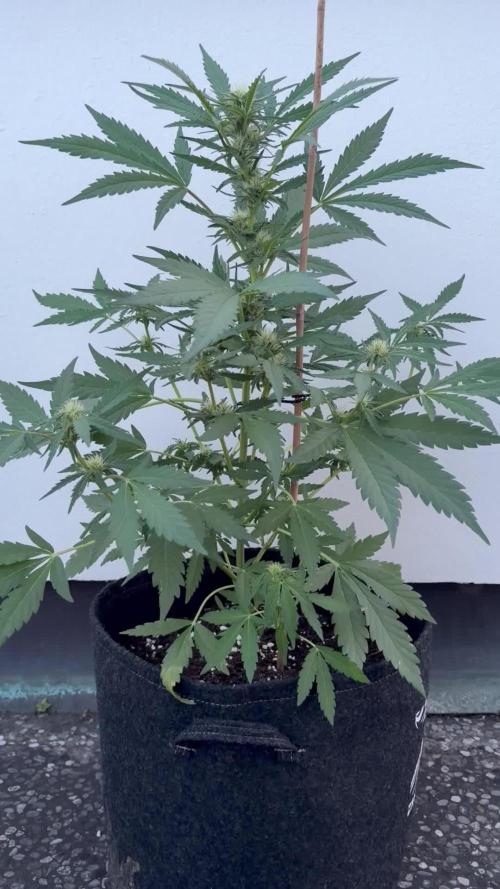
Grown under 2x 100w closet case LED in a 3 gallon smart pot with organic soil only. Top once and lst till week 9..easy grow. Huge plant and good yield. Smells very strong of sweet lemon pine.
Likes
2
Share
Likes
62
Share
@Reyden
Follow
🔸Davvero una grande notizia! Una nuova collaborazione con @Spiderfarmer è iniziata e sono felice di poter creare dei contenuti per una azienda seria come la loro!!! Questa mattina è stata montata questa bellissima #SF2000 nella tenda da coltivazione più grande dove dovrà lavorare per far fiorire tutte le signorine che passeranno di qui prossimamente 😁😎🔥 Voglio fare i complimenti perché siete riusciti a creare veramente una luce bellissima con materiali super leggeri ed esteticamente geniali ❤️‍🔥oltre che consumare veramente poco (2.7 Umol/J)per il raggio di copertura ( 4x3 in crescita )(4x2 in fioritura ) e intensità uniforme in PPFD Mi piace molto anche il fatto che monta anche diodi IR utili per accelerare la fase di fioritura e aumentare la resa 💡 Ci saranno diversi aggiornamenti rimanete connessi e grazie ancora per essere passati a trovarmi 😃 https://www.instagram.com/reel/Cl_EEAbu_vQ/?igshid=YmMyMTA2M2Y= Funzionalità principali 2022 NUOVA VERSIONE COSTI DI ESERCIZIO INFERIORI E RENDIMENTI DI QUALITÀ SUPERIORE: Le luci progressive a LED SPIDER FARMER SF2000 utilizzano la più recente tecnologia LED ad alto rendimento oggi: diodi Samsung LM301B, alta efficienza energetica con 2,7 umol/J, creano la migliore penetrazione della luce del baldacchino. Copertura vegetale 3 x 4 piedi, fiore 2 x 4 piedi. Potenza estremamente elevata ma consuma solo 200 W di elettricità, rendendola più efficiente delle tradizionali lampade HID e di altre lampade per piante sul mercato. NUOVO DISPOSIZIONE DEI DIODI E DESIGN DIMMERANTE: Luci crescenti SF2000 aggiornate. Più perline leggere ai bordi, meno al centro. Aiuta a ottenere una PPFD più uniforme. e la manopola di regolazione della luminosità regola liberamente l'intensità della luce. Connessione multi-luce con regolazione unificata particolarmente vantaggiosa per un'ampia area di coltivazione indoor e piantagione commerciale. IDEALE PER TUTTE LE FASI DI CRESCITA: Eccellente spettro completo: bianco, blu, rosso e IR (3000K, 5000K, 660nm e IR 760nm). Diodi 3000K che forniscono più luce rossastra e 5000K che forniscono più luce bluastra. La luce rossa e IR da 660 nm è particolarmente utile durante la fioritura, dove accelera i tempi di fioritura e aumenta i raccolti. Trasforma i tuoi semi nella tua scorta. E la luce sembra abbastanza naturale, quindi è utile per monitorare accuratamente la salute delle piante. COSTRUZIONE BEN FATTA E SOLIDA: nessuna ventola senza rumore. Il driver ad alta efficienza, affidabile e staccabile ha un'ottima dissipazione del calore. Il dissipatore di calore in alluminio è spesso e robusto, coperture protettive per i cavi; Imballaggio intuitivo. Componenti di qualità significano che la luce dura più a lungo, SF Light si prende cura di te con un design più attento, puoi facilmente risparmiare denaro senza acquistare frequentemente luci. In qualità di produttore professionale di luci di coltivazione a LED da oltre 10 anni. Spider Farmer ha sempre insistito per creare attrezzature per la semina domestica più efficienti, adatte e di alta qualità per la crescita delle piante e si impegna a diventare un partner fidato per ogni coltivatore! Riceverai una lampada da coltivazione Spider Farmer SF2000, un manuale di istruzioni, un paio di ganci d'argento, un paio di ganci neri.
Likes
17
Share
@Kirsten
Follow
16.2.25: I decided to check out the lower canopies of all plants to see if I need to get rid of any foliage. I did get rid of a few small branches and leaves. However, whilst I was doing this, I saw more garden pegs from my LST remaining. There were about 6 or more in Pink Mist alone. Additionally, on Watermelon, there were some left in, too. I'm so annoyed to see that because the plants are really stretching, and I could've potentially disrupted this by leaving the pegs in for all this time without realising it. 🤞 that I haven't compromised things too much. We'll see. I watered today with 2ltrs of dechlorinated water PH'd to 6.3 containing the following nutrients; ♡ .8g Green Leaf Nutrients PK booster ♡ .5g Ecothrive Biosys I ordered quite a few things for the garden. I got Greenleaf Nutrients Sea K(elp) and Mega Crop Parts A+B. To go with their PK Booster I got last month. I'm excited to try it all together. Next run, maybe just using these. We'll see how it goes. 18.2.25: The plants are going crazy for water! Everything is getting used right up so fast! Today, I decided to add some more Black Strap Molasses to add some carbs and other micronutrients. I'll add the jar with the label in the photos section above. I watered a very small amount to each plant. What I put in: ♡ Black strap molasses 150g ♡ 2g Sea K(elp) Greenleaf nutrients. I dissolved everything in 4ltrs of dechlorinated water PH'd to 6.4. 19.2.25: I received the majority of the garden purchases that I made. I'm still waiting for the Ecothrive Life Cycle. I wanted to top dress, but it's been delayed unfortunately. I am using my Greenleaf nutrients products which I bought on Amazon. I got the Mega Crop 2 part system Part A and Part B. I have the Sea K(elp), and the bud explosion PK booster. I really wanted to get some of their sweet candy asking read many positive reviews. Unfortunately, for me, this is unavailable to buy currently. So that's a little disappointing. I needed to do a good watering so when my nutes were delivered today, I got excited 🤗 I watered 2ltrs of dechlorinated water per plant, PH'd to 6.4, containing the following nutrients: ♡ 1g Mega Crop Part A ♡ 1g Mega Crop Part B ♡ .5g Sea K(elp). The plants drank this up within a few hours. I'm going to try and hold off on watering in hopes that my Ecothrive Life Cycle will arrive so I can top dress and water it in then. 20.2.25: My Ecothrive Life Cycle arrived yesterday, and the plants are ready for their top dress and a good watering in. I have some Biobizz Light Mix, Canna Coco,and perlite. I'm going to use this as a base to mix my amendments in. I'm going to fill my 5 gallon bucket with about 4.5 gallons of my top dress mix. I will distribute this across 6, 4-5 gallon pots. Then I will water in well with Greenleaf nutrients Mega Crop Parts A+B and Sea K(elp). I've made a crude attempt to video mixing my top dress. Don't listen to the audio. lol, my YouTube didn't stop playing whilst I recorded this 😂 So anyway, I added the following amendments to the above base mix of 4.5 gallons; ♡ 3 TBSP Ecothrive Life Cycle ♡ 3 TBSP Vitalink Bat Guano ♡ 3 TBSP Ecothrive Charge ♡ 1 TBSP RHS Mycorrhizal Fungi granules ♡ 6 TBSP Ground Cinnamon.
Likes
19
Share
This week went real well! All 5 of the Twenty20 Ogreberry Autos and the 1 Fastbuds Bruce Banner have successfully germinated and sprouted up from the soil!! This upcoming week we will start giving these girls a heavy feeding of nutrients PH d at 6.5 an see how they react , most likely will love it!! Temperature an humidity has been on point, through out the day we reach 70-75 degrees an a nice humidity of 65%which is always nice ! Hope you all enjoy an keep them eyes peeled for next week !! Peace, love, an positive vibes to all you Growmies out there! If any questions please feel free to ask , more then happy to help! Cheers everybody to another great grow!!!
Likes
30
Share
This week was another good week. Getting frosty frosty and a nice color comes out. Starting this week too, just giving water till the end. I keep my garden at 11 degree celsius and they go good. Need no icewater i think. Have a nice week✌️
Likes
1
Share
I was using a very cheap light at this stage which was averaging 80 ppfd which was crap. I was feeding tap water leaving it for 24 hours. At that time I was feeding them bottled water with 7.5 ph water 2 off them are bag seeds so I don’t know the gender
Likes
33
Share
@Lou_Grows
Follow
So today I started the flush, is the first time I used a product to flush, I have read and basically, the community is split in half about to flush or not to flush, I will see first hand if actually flushing creates a better quality.
Likes
12
Share
Into final week flush began last Sat no nutes since then only water not the biggest plant but plant full of bud so can't complain il be happy with oz of both about and half foot hopefully buds are compact and heavy tops look a bit fluffy maybe light stress cause buds under seem a lot more dense well see
Likes
6
Share
21 september What a week...nothing but rain. MAROC got chopped, she suffered from mould the worst. Grapefruit does a better job in this terrible weather. Few spot with mould were detected and those branches were removed. Every time keeping alcohol at hand to clean immediatly. Carefull not to spread the stuff. Curled/ twisted leaves, black spot are the first indications of rot. I have taken rotting flowers and leaves out and buried them. 2 weeks with little sleep and carefully checking every bud twice on each visit. Now we have 3 sunny days. She will get chopped before the next rain. Hopefully the sun to come is enough for her too bulk up a bit. I would love those calyxes to be fat and swollen. I have given up on reaching amber trichs. Weather wont allow it.
Likes
72
Share
@Sider79
Follow
It was a small auto but also it was grown in a 2 gallon, Smells delicious, always issues with heat end of summer but i think it still did its thang . Really lime green covered in trics smelling like berry's 👍 I Will grow again for sure & recommend 👌 thanks Seedsman 😊 !!
Likes
1
Share
Likes
9
Share
@Naujas
Follow
although the first week outside was not very good, there was little sun and cold nights, the temperature was +7 at night, but it seems the girls successfully endured it, now they promise better weather :).
Likes
21
Share
What’s going on lady’s an gentleman. we got the Moab strains going on W/1 in living soil. They where planted into the root riot cube an treated with neem oil to kill off the fungus gnats, they are thriving now. An getting bigger as the day goes. They will be trans planted into the auto pot system at end of this week. Into the 2x4. Under the double UFL3000 mounted on custom frame. Pumping 402w from the wall. Currently both the girls are in the veg/solo cup cabinet under the UF2000 100w light. Currently 60% rh and temps running 79 lights on. Thanks for viewing an happy growing!
Likes
49
Share
6/23 Due To The Two 8 Day weeks this week will only consist of five days to get me back on track. SEE LAST WEEK FOR DETAILS. I DID ANOTHER EIGHT DAY WEEK. I'LL DO THIS WEEK AS SIX DAYS. THAT WAY IM BACK ON SCHEDULE. WATERED 6/22. WENT BACK AT NIGHTCAND WATERED ANOTHER GALLON WITH 1/3 TSP Armor Si. I mixed the solution with kelp you kelp me but I dumped it out. I've mixed silica with other nutes before but I had read something earlier about bioavailability issues and I didn't want to risk it. My plants are the healthiest I've ever grown. I'm considering transplanting the large 10th planet that I'm light depping. I also need to develop my ipm and my nute schedule. Still gonna have to keep an eye onvthe water situation. Luckily I have a buddy in my corner that's co tinualkt Bern a great help. WENT BACK OVER AROUND NOON. BEAUTIFUL OUTSIDE AND THE PLANTS WERE LOVING THIS SUN. I DEFOLIATED SOME BURNED LEAVES AND MIXED A SOLUTION IF KELP ME KELP YOU THAT I PLAN TO FEED TO THE GARDEN TODAY. IM HAPPY WITH HOW THINGS ARE GOING. WE HAVE SOME RAIN AND THINDERSTORMS COMING. I NEED TO GET MY IPM UP AND RUNNING AND THE NUTES ONLINE. I ALSO NEED TO DECIDE IF IM GOING TO TRANSPLANT THE LIGHT DEP 10th PLANET. Went back over to put the girls to bed at six and if was still 90 degrees. The water from yesterday had dissipated. The tops were dust dry. I mixed two gallons of kelp you kelp me and fed it to the garden. Afterwards I pointed qbd found a couple plants that were more open to the wind were a little lighter. I know tomorrow will be very hot. Maybe quarter inch of rain. However after that it will rain (showers) off and on for days. I wanted to make sure the girls had what the needed to make it through tjis heat wave until they get that rain. I had another gallon mixed up and I'm thinking I should've given it to them. Oh well. I'd rather underwater than overwater any day. I did notice a burnt top on the plant furthest from the tarp that the sun JUST BARELY TOUCHES when the rest are in shade. I'll just raise the tarp a little. These are tiny problems. Can't upload video until tomorrow. 6/24 Good thing u gave the plants that water. I know it wasn't much but we didn't get any rain. Suppised to get a qtr in today and another qtr in tomorrow. Then rain a couple more days. It's working our really good for my watering schedule lol. Yesterday the girls got there first dose of a bottled nute. They got two gallons of kelp me kelp you (1/3 tsp per gallon) and another gallon of just phed water. I was going to do another gallon but held off due to the threat of syring rain. Didn't get it bur it looks like the plants loved the kelp. It had reached 90 yesterday. They look better today. It's 70 at 9 today. I LST the 10th planet in the 3 gallon. It's getting huge. I should start a separate diary for those three light dep plants. Its cool as hell watching this. One of the purple punches is flowering pretty good. I probably should start another diary for them. I'll be starting to feed my plants soon. Wondering if I should pinch plants again. TUCKED THE LITTLE GIRLS IN AT SIX AND SHOT A VIDEO AND TOOK SOME PUCTURES. PLANTS LOOKED PHENOMINAL! GOT HOME AND AROUND SEVEN IT JUST STARTED RORREBTIAL DOWNPOURS! THE TYPE OF RAIN THAT BREAKS STEMS. I SHOULDVE PUT MY OTHET TARP UP BUT I DIDNT. I WISH I HAD. IM A LITTLE NERVOUS. I KNOW THESE GIRLS ARE STRONG THOUGH! TOMORROW. ILL ROLL THE RARP UP AND SECURE THE BOTTOM FOR FAST ACCESS. IM ALSO GOING TO KOOK INTO FINDING A TOP FOR MY CAGE I CAN USE IN INCLIMENT WEATHER. 6/25 That little qtr in of rain we were supposed to get turned into torrential downpours and high winds. Luckily no REAL damage. If you watch the video you'll see what I mean. I'm going to havecto be cognizant moving forward. Noticed a few chunks from leaves butvplants are still healthy. I'm surprised how well these girls withstood this storm. They are certainly resilient. The 2 purple punch 1 10th planet that I'm light depping are flowering nicely now. They missed all the commotion from the storm as they were inside. It's smelling good. I'm happy. 6/26 It's what a friend would say is "maineing") out. That mistcthe plants love. I'm surprised the plants are doing as good as they have been considering the wind. Will be adding nutes soon. Need to add extra supports too. Light dep 6/27 Brief periods or torrential downpours. Light depped 3 gallon 0lants are under an overhanfcwhete the hatsxrain can't hurt them but they still get sun. They are really starting to flower now! I'm going to begin feeding with a base nute and a flower nute I think. I'm thinking about giving the light dep some open sesame or something similar. I need to set up a nute program soon but the plants ALL look so healthy! And it's been raining! I've only watered like once or twice since they've been in the big pots. I've seen zero pests aside from a chunk missing from a grasshopper. Usually by now I'd have battled half a dozen things and be battling another half dozen. However I was posing from clones. These are seeds and boy don't I see the difference!
Processing
Likes
31
Share
@NorCal311
Follow
11/3/19 - These bitches are sooo strong! Everything is going very good. Feeding is changing this week. I am so excited to see what they do! The stretch has slowed. I will lower the lights next week. Added a new light for the one I moved to the corner. We will see on how it affects the evromntals. 11/4/19 - Gave a feeding tonight 4 cups per plant. 2 cups are Coco Bloom A&B with Silica Blast. The other two cups are terp, candy, cal, big, sens. This combo of nutes and water volume every two days seams to be doing very good. I premix my nutes in gallon water bottles. I love the Crystal Geyser bottles. They only $1 and have nice handles. I refill each bottle with a Zero Water filter pitcher. That keeps the TDS down low. 11/5/19 - WOW, I just love after a good feeding. The girls just JUMP right up. When I took the environment pic, the temp was a little high while the RH was a little low. It has now laid down to 75/55 with the lights on. 11/6/19 - They are drinking a bunch. Gave them 1 cup each of the solutions to keep them good till Friday.