


@Roberts
Follow
Apple Fritter is doing well. I did some root pruning early in week. I slightly increased nutrition. Will be a few weeks till I change the lighting. She is growing in a New Level Hydro bucket, under the Spider Farmer SE5000 light at 60 percent. Thank you New Level Hydro, Spider Farmer, and Amsterdam Marijuana Seeds. 💪🌱🤜🤛🌱💪
Http://amsterdammarijuanaseeds.com
Thank you grow diaries community for the 👇likes👇, follows, comments, and subscriptions on my YouTube channel👇. ❄️🌱🍻 Happy Growing 🌱🌱🌱
https://youtube.com/channel/UCAhN7yRzWLpcaRHhMIQ7X4g
SE5000
https://amzn.to/3qFpAML
Spider Farmer Official Website Links:
US&Worldwide: https://www.spider-farmer.com
UK: https://spiderfarmer.co.uk
CA: https://spiderfarmer.ca
EU: https://spiderfarmer.eu
AU: https://spiderfarmer.com.au
Coupon Code: saveurcash
Www.newlevelhydro.com
Www.hygrozyme.com



@DrBud420
Follow
17.05.
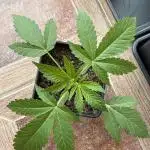
I don't have anything special to say, of course the weather is terrible... it's 6-7 at night, 15-16 during the day, so they're inside... the temperature inside is 20-21 during the day, at night from 15 to 17 when it's this cold...
the plants were exactly 3 weeks old yesterday, today they entered the fourth week and most likely they will wait inside for the fifth week as well because the weather is terrible and there is no point in transplanting yet.
Stay High!


@McKush420
Follow
These girls are packin! The most satisfying part of a grow for me is to see the fruits of my labour blossom into plump nuggets of dank joy! They are reacting to the flush in typical fashion. Phosphorus is running out of the fat indica fingers, creating a purple hue. The pheno on the left is a week ahead of the right side plant. At least. I could even see it going longer. Very excited for the range of effects in regards to sativa/indica ratio. A few amber trichromes here and there but the majority are developing a haze that will lead to the results seeking. Soon. We are almost there.


@PremiumBudsEU
Follow
Sie wachsen täglich mehrere centimeter und das ist wirklich schön zu sehen, ich habe bis jetzt noch nie so schöne gesunde starke Pflanzen gesehen 😍
Ende Woche 3 habe ich entlaubt und lollipopped und sie haben nicht mal ein bisschen was an Stress empfunden,
Ja ich behandle sie 2 mal am Tag Momentan und versuche ihnen alles zu geben was sie brauchen.
Das Ergebnis sieht man 😎👌👍🍀
Ich habe 2 verschiedene Phenotypen aber sie scheinen alle mit der gleiche Behandlung zufrieden zu sein.
Ab Woche 5 erhöhe ich den EC auf 1.8
Und so bleibt es bis Woche 7.
Run off liegt bei 20 %, temp auf 28-29, täglich Gießen 1-2 mal
Raucht einen guten bis zu nächste Woche Gute Menschen👌👍


@Organic473
Follow
Slow growth this week in my opinion. The dosage of fertilizer was increased to 2 tablespoons. Let's see how that goes during the week.


@MadeInGermany
Follow
Info:
Unfortunately, I had to find out that my account is used for fake pages in social media.
I am only active here on growdiaries.
I am not on facebook instagram twitter etc All accounts except this one are fake.
Harvest day 69
since time change
to 12/12 hrs.
Hey everyone Finally it was time for the lady to be harvested :-).
The buds smell very tasty and look very good so I'm really excited.
The trichomes are 70% milky and 30% amber.
As always, it came to the darkroom 48 hours before harvest :-).
There it will now remain after harvesting at 62% humidity for 8-12 days before it is put into the jars for fermentation with 62% boveda packs :-).
As usual, the last update will come after the fermentation.
Until then, I wish you all the best and stay healthy 🙏🏻
You can buy this Strain at :
https://sweetseeds.es/de/cream-caramel/
Type:
Cream Caramel
☝️🏼
Genetics:
Blue Black
x
Maple Leaf Indica
x
White Rhino
👍
Vega lamp:
2 x Todogrow Led
Quantum Board 100 W
💡
Bloom Lamp :
2 x Todogrow Led
Cxb 3590 COB 3500 K 205W
💡💡☝️🏼
Soil :
Bio Bizz Coco
☝️🏼
Fertilizer:
Green House Powder Feeding
☝️🏼🌱
Water:
Osmosis water mixed with normal water (24 hours stale that the chlorine evaporates) to 0.2 EC. Add Cal / Mag to 0.4 Ec Ph with Organic Ph - to 5.8 .


@gabigarcia
Follow
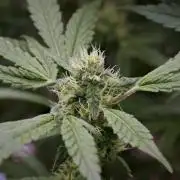
Third week of vegetation and the plants, especially the autoflowering ones, have grown a lot approximately 7 cm in 7 days, they have grown both long and wide, I think this harvest is worth it!!


@9LittleGrow
Follow
It’s time for re-grow systematically!!
So proud to be a grower
Trying to learn new things
Welcome every advices and share me about growing techniques
#workharder#growharder




@DogDoctorOfficial
Follow
💙 Project Blue Tent – Week 11
🥒 Pickle Lemon Haze F1 – Pheno A
🌸 When The Best Intervention Is No Intervention
Hello everyone, and welcome back to another chapter of Project Blue Tent! 💙🌱
And honestly...
I think this might be one of my favourite stages of the whole project.
Not because we're doing more.
Quite the opposite.
Because we're finally at the point where we don't need to.
😂
Pickle Lemon Haze F1 Pheno A is looking absolutely beautiful.
The structure is established.
The canopy is open.
The second SCROG is doing its job.
The irrigation is running beautifully.
The drainage system is working flawlessly.
The nutrition is consistent.
The under-canopy lighting is now part of the equation.
And the flowers?
Oh my God...
The frost levels across this tent are something else. 🌸❄️
So this week isn't about another big intervention.
It's about observation.
It's about appreciating what we've built.
And most importantly...
it's about letting this beautiful girl do what she knows how to do.
Grow.
Flower.
And shine.
💙🥒🌸
🌸 WEEK 11 – THE GIRL IS JUST DOING HER THING
Pickle Lemon Haze F1 Pheno A is still sitting at approximately 145 cm.
The stretch has settled.
The structure is established.
And now we're watching the flowers develop across the entire plant.
One of the things that continues to impress me is just how even everything looks.
The flowering sites are developing remarkably consistently.
The canopy is extremely even.
The bud formation is happening at very similar stages throughout the plant.
And the frost...
well...
the frost is absolutely beautiful.
😂❄️🌸
This is one of those moments where you walk into the tent and think:
"Okay...
I really like what I'm seeing."
And honestly, that's exactly where I want to be at this stage.
The major work has already been done.
Now the plant is showing us the result.
💡 THE UNDER-CANOPY LIGHTING GETS SERIOUS
Last week we introduced the first LumiFlora under-canopy light into the project.
This week, we decided to bring a second one into the game.
And looking at the size and density of this room...
it just made sense.
The main LEDs continue providing the primary light from above.
But these plants have developed a very substantial structure.
There are flowering sites throughout the middle and lower portions of the canopy that naturally receive less direct light from the fixtures above.
So instead of continuing to remove more foliage just to chase light penetration...
we're bringing supplemental light to the lower canopy.
And I really like what we've created.
But we didn't simply place the two bars side by side.
That would have been too easy.
😂
Instead, we decided to play a little.
The LumiFlora bars are approximately 1.20 metres long, with the central section around one metre, and because of that length we were able to arrange them in an X-cross configuration underneath the canopy.
From corner to corner.
And honestly?
It looks fantastic.
😂💡🌱
It's functional...
but it also looks really cool.
The two bars cross through the lower portion of the tent, creating a much more interesting distribution of supplemental light underneath the plants.
The idea remains simple:
Don't replace the overhead lighting.
Complement it.
Give the lower canopy another source of usable light.
And then...
watch what happens.
🌿 TWO LIGHTS. ONE EXPERIMENT.
This is one of the parts of Project Blue Tent that I really enjoy.
We're not simply installing equipment because it looks impressive.
We're introducing something because we have a reason for it.
The plants have become tall.
The canopy has become substantial.
The lower portions naturally receive less direct light.
So instead of fighting the structure...
we adapt the environment around it.
That's cultivation.
Observe.
Adapt.
Measure.
And then observe again.
And now that the second under-canopy light is installed...
I'm extremely curious to see what the lower flowering sites do with that additional light over the coming weeks.
That's the experiment.
And Pheno A gets to be part of it.
🕸️ THE SCROG IS DOING EXACTLY WHAT WE WANT
The SCROG structure is also looking fantastic.
The first net helped us build and distribute the canopy.
The second SCROG is now providing additional support as the flowering branches continue developing.
And at this point?
We're not really touching it.
That's intentional.
The structure has been created.
The branches are where we want them.
The flowering sites are developing.
And the support is there.
Now we let the plant use it.
This is another one of those moments where doing less can actually be doing more.
We don't need to constantly move branches.
We don't need to keep pulling everything around.
We don't need to keep opening something we've already opened.
The architecture is there.
Let her work.
✂️ DEFOlIATION – NOW WE WATCH THE RECOVERY
The major defoliation from the previous weeks has also become part of the story now.
When we performed that work, the difference was dramatic.
The plants went from extremely dense to much more open.
And now we're seeing the result.
The flowering sites are much easier to see.
Air movement through the plant is much better.
The branches are easier to follow.
And the plant has had time to recover and redirect her energy toward continued flowering.
This is exactly why I don't believe in constantly interfering with a plant.
There is a time to train.
There is a time to defoliate.
There is a time to support.
And there is a time to stop touching things.
We're at that last one now.
😂
The plant doesn't need us to keep proving that we have scissors.
She needs stability.
So stability is what she gets.
🌬️ AIRFLOW – TWO LEVELS, ONE HEALTHY CANOPY
The airflow setup is also continuing exactly as planned.
We have movement through the upper portion of the canopy and additional circulation underneath.
With the under-canopy lighting now running through the lower structure, maintaining good air movement down there becomes even more important.
The goal isn't to create a hurricane.
😂
It's about avoiding stagnant pockets and keeping air moving through the entire plant structure.
The canopy has opened beautifully.
The flowers are developing.
The lower lighting is now active.
And the air is moving.
That's exactly what I want to see.
💧 IRRIGATION & DRAINAGE – ZERO COMPLAINTS
And I have to give some love to the irrigation and drainage system this week.
Because honestly...
there is nothing to complain about.
😂
The irrigation is working beautifully.
The plants are drinking well.
The water distribution is consistent.
The drainage system is working absolutely spotless.
No drama.
No complaints.
Just doing its job.
And that's exactly what good equipment should do.
It should quietly do its job while we concentrate on the plants.
The girls are drinking.
They're developing.
And the system is keeping up with them perfectly.
I'm extremely happy with how this part of the project is performing.
⚗️ NUTRITION – SAME RECIPE, DIFFERENT EC
Interestingly, despite not changing the reservoir recipe, this week's EC came out slightly lower.
And honestly...
I don't have a definitive explanation for it.
😂
The recipe itself hasn't changed.
We're still running:
PLAGRON Hydro A — 2.2 ml/L
PLAGRON Hydro B — 2.2 ml/L
PLAGRON Hydro Roots — 1 ml/L
PLAGRON Power Buds — 1 ml/L
pH Plus — 0.03 ml/L
pH Min — 0.03 ml/L
pH adjusted as required
Yet the measured EC came out around 2.24 mS/cm instead of the approximately 2.49 mS/cm we saw previously.
My guess?
Possibly the rainwater source was simply a little softer this time.
But I'm not going to pretend I know exactly why.
Sometimes the numbers simply move.
😂
And that's another reason I like documenting everything.
We don't have to invent an explanation every time something changes.
We record it.
We observe the plants.
And we continue watching.
The important thing is that Pheno A looks happy.
She's drinking.
She's flowering.
She's building.
And visually...
she's absolutely loving life.
❄️ THE FROST LEVELS ARE INSANE
Now let's talk about the obvious.
The frost.
😂❄️
Seriously...
look at these flowers.
The amount of visible trichome development across the tent is absolutely beautiful.
And Pheno A is certainly not being shy about showing hers.
The flowers are developing with a heavy, frosty appearance, and the sugar leaves are absolutely covered.
This is one of those stages where photography becomes dangerous.
Because every time I take a close-up...
I end up staring at it for five minutes.
😂📸
The flower formation is progressing beautifully.
The structure is becoming more defined.
And the frost levels are getting better and better.
We're still not at the finish line.
But we're getting into that really exciting part of the journey where the flowers begin looking less like early flowering sites...
and more like proper flowers.
And I absolutely love it.
🌿 SAME TENT. SAME CONDITIONS. REMARKABLY SIMILAR PLANTS.
This is probably one of the most fascinating parts of the entire experiment.
All four girls are sharing the same tent.
Same reservoir.
Same irrigation.
Same lighting.
Same environmental conditions.
Same nutrition.
Same cultivation approach.
And when you look at them...
it's honestly incredible how similar they are becoming.
Very similar canopy development.
Very similar flowering stages.
Very similar bud formation.
Very similar frost levels.
And yet...
each plant still has her own personality.
That is what makes this project so interesting.
We're not comparing four completely isolated grows.
We're watching different cultivars experience essentially the same environment.
And the response is fascinating.
A LITTLE CULTIVAR LESSON
And since we're documenting this properly, I want to take a little moment to explain something I often mention in these diaries.
I like using the word:
"Cultivar."
You'll sometimes hear people call every plant a "genetic" or simply say "the genetics."
And I understand what they mean.
But technically, they're not quite the same thing.
Genetics refers to the genetic makeup and inherited characteristics of an organism.
A cultivar is a plant variety that has been selected and maintained through cultivation for particular characteristics.
So when we're talking about these F1 plants in this project, I prefer referring to them as cultivars rather than simply calling them "genetics."
And honestly...
if you already knew that?
Fantastic.
If you didn't?
Now you do.
😂🌱
There's never too much information when we're talking about cultivation.
I love learning.
And if something we mention here teaches somebody something new, even better.
That's another reason I enjoy documenting these projects.
We're growing plants...
but we're also learning from them.
🌸 PHENO A – HER OWN PERSONALITY
And although the four plants are looking remarkably similar right now, Pickle Lemon Haze Pheno A still has her own story.
She's been through the stretch.
She's been through the major canopy management.
She's been through the defoliation.
She's been through the SCROG.
She's been through the structural adjustments.
And now she's simply showing us what all of that work has created.
Her canopy is beautifully organized.
The flowering sites are developing evenly.
The frost is impressive.
And the plant is drinking beautifully.
She's not asking for another intervention.
She's asking for time.
So that's what we're giving her.
🌸 THE TOPPING AND CANOPY STRUCTURE
Looking closely at Pheno A, one of the things I really enjoy is seeing how well the topping and training have opened the plant.
The structure is no longer fighting itself.
The branches have space.
The flowering sites are exposed.
And the canopy has developed into a very even structure.
The work we did earlier in the project is now becoming visible in the flowering architecture.
This is the part of cultivation that makes all the earlier work worthwhile.
You train a plant weeks ago...
and then later you stand there looking at the flowering structure and realize:
"That's why we did it."
😂🌱
And Pheno A is showing that beautifully.
💙 NO UNNECESSARY INTERVENTION
So what are we actually doing this week?
Honestly?
Not much.
😂
And that's a good thing.
We're monitoring.
We're checking the environment.
We're watching irrigation.
We're checking drainage.
We're watching the flowers.
We're watching the frost.
We're observing the response to the under-canopy lighting.
We're maintaining the reservoir.
And we're letting the plant do the rest.
There's a temptation in cultivation to always do something.
Change something.
Adjust something.
Move something.
Cut something.
Add something.
But sometimes the best decision is:
Don't.
If everything is working...
don't fix it.
If the plant is healthy...
let her be healthy.
If the flowers are developing...
let them develop.
If the irrigation is working...
let it work.
If the drainage is spotless...
leave it alone.
😂💙
Observation is also part of cultivation.
🌡️ CURRENT BLUE TENT CONDITIONS
🌸 Flowering: Week 11
📏 Height: approximately 145 cm
💡 Light schedule: 12/12
☀️ Day temperature: 28°C
🌙 Night temperature: 27°C
💧 Relative humidity: 63%
⚗️ pH: 6.01
⚡ EC: approximately 2.24 mS/cm
🌡️ Solution temperature: 24.9°C
🌱 Substrate temperature: 24°C
💨 CO₂: approximately 666 ppm
? Pot size: 8 L
💦 Watering: approximately 1.6 L per plant / 24h
💡 Under-canopy lighting: LumiFlora 150W full-spectrum fixtures
💡 Under-canopy arrangement: X-cross configuration
🔬 SAME VARIABLES. DIFFERENT EXPRESSIONS.
One of the things I'm really looking forward to over the coming weeks is seeing whether these similarities continue.
Because right now...
it's impressive.
The plants are developing at remarkably similar stages.
The canopy is extremely even.
The flowers are forming beautifully.
The frost levels are high.
And yet, if you look closely enough, each cultivar still gives you little details that make her recognizable.
That's exactly what we wanted from Project Blue Tent.
A shared environment.
A consistent approach.
And individual plants telling their own stories.
🔭 LOOKING AHEAD – LET'S SEE WHAT THE FUTURE HAS FOR US
At this point, I'm genuinely excited to see where these girls take us.
We've built the structure.
We've managed the canopy.
We've supported the branches.
We've established the airflow.
We've got the irrigation and drainage working beautifully.
The under-canopy lighting is now in place.
The nutrition is consistent.
And the flowers are developing incredibly well.
Now...
we wait.
How much more will these flowers swell?
How much further will the frost develop?
How will the lower canopy respond to the supplemental lighting?
How much weight will those supported branches eventually carry?
And most importantly...
what will Pickle Lemon Haze Pheno A ultimately become?
Those are questions I don't need to answer today.
The plants will answer them for us.
And that's the beautiful part.
💙 FINAL THOUGHTS – LET THE PLANT SPEAK
Week 11.
And what a beautiful week.
There were no dramatic interventions.
No major restructuring.
No big defoliation.
No desperate attempts to control the plants.
Instead...
we watched.
We introduced a second LumiFlora under-canopy light.
We arranged the two long bars in an X-cross configuration underneath the canopy.
We kept the irrigation running.
We kept the drainage running.
We maintained the same reservoir recipe.
We observed the slightly lower EC.
We kept the airflow moving.
And we admired the flowers.
😂💙
And those flowers deserve some attention.
The bud formation is beautiful.
The canopy is incredibly even.
The frost levels are absolutely insane.
And Pheno A is looking healthier and happier by the week.
What's perhaps most impressive is how similar these plants are becoming under the same conditions.
Different cultivars...
same room...
same environment...
same reservoir...
and remarkably similar results.
That makes me even more curious about what we're going to see later in flowering.
Because if this level of consistency continues...
we could be looking at something very special.
But we're not going to rush it.
We're not going to force it.
We're not going to keep changing things simply because we can.
We've reached the stage where patience becomes the most important tool in the room.
So for now...
we watch.
We listen.
We measure.
We maintain.
And we let Pickle Lemon Haze F1 Pheno A do what she does best.
Grow.
Flower.
Frost up.
And shine.
💙🥒❄️🌸
The future is looking very, very interesting.
Let's see what this beautiful girl has waiting for us.
🙏 A HUGE THANK YOU
A huge thank you once again to Zamnesia for making Project Blue Tent possible and for giving us the opportunity to explore these beautiful Pickle Lemon Haze F1 cultivars individually.
Thank you to PLAGRON for the Hydro nutrient line supporting these vigorous girls throughout their flowering journey.
A massive thank you to Zamnesia for the Phytonaut LED lighting, curved scissors and clip fans that continue playing such important roles inside this project.
Thank you to Mars Hydro for the irrigation and drainage system that continues working flawlessly and keeping these girls consistently supplied.
And a special thank you to LumiFlora for the under-canopy lighting we're now using as another part of this experiment.
We're very curious to see how these supplemental lights influence the lower portions of the canopy as flowering progresses.
And of course...
thank you to GrowDiaries for giving us this platform to document everything.
The successes.
The mistakes.
The experiments.
The surprises.
And all the little lessons along the way.
And finally...
thank you to everyone following Project Blue Tent. 💙
Four plants.
One tent.
Shared conditions.
Shared reservoir.
Shared environment.
And somehow...
four individual personalities developing right in front of us.
Pickle Lemon Haze F1 Pheno A is looking absolutely beautiful.
The frost is there.
The flowers are forming.
The canopy is even.
The irrigation is working.
The drainage is spotless.
The lighting is in place.
And now...
we let her shine.
Until next week...
Keep growing.
Keep learning.
Keep observing.
And most importantly...
keep shining, beautiful girl. 💙🥒🌸❄️
Growers Love, happy growing, and take care everyone! 🌱💙


@soloczek
Follow
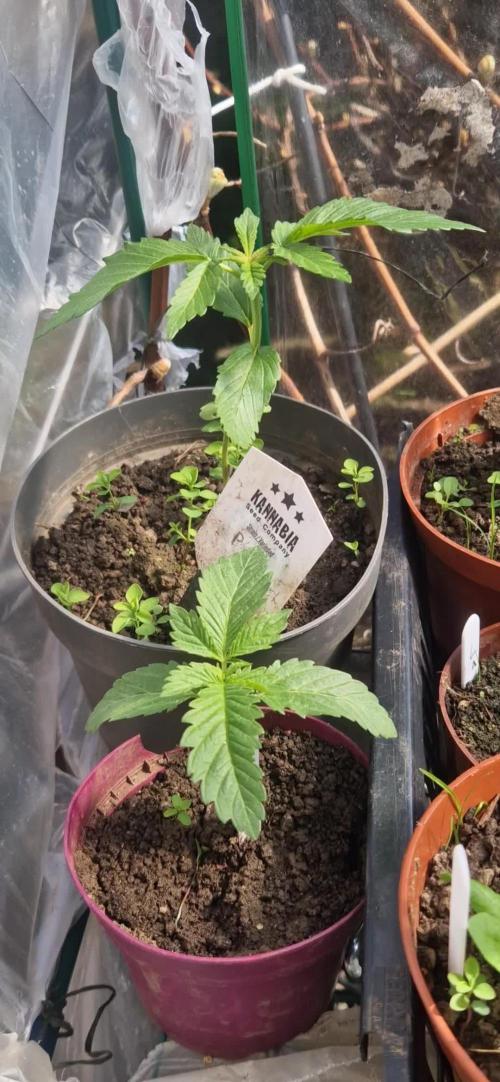
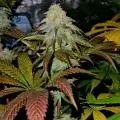
They look and smell amazing, think the RS11 will also become more purple like the cherry.
Cherry MAC muffin gets pure water (ph6,1) since week 7 of flower




@TheMightyHermit
Follow
Unfortunate Week...
Honey cream had a couple of "budrot" spots forming due to droplets of water dripping into the flower and not drying (99%humidity nights)...
Thankfully those buds were cut down and she doesn't seem to be producing any more "budrot"..
Apart from that, the smell is amazing on her.
Power Flower is going nicely too, but seems to not have too much smell...


@Backwood_scientist
Follow
Trichomes getting cloudy and it’s almost time to harvest. Started some flushing this week and their lookin good .


@BarrieGrower
Follow
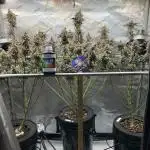
Flushed one for a week and now into darkness. The last two that started flower under the cheap LEDs need a bit longer. They will need another three weeks.
The one plant looks really pretty and smells great. The upside is I don't have to trim them all up at the same time. Looking forward the the cure.
Cheers



@ATLien415
Follow
🙏 Big thanks to Plagron and Zamnesia for putting on the Eternity Grow Cup 2025. This kind of platform means a lot to the community. The chance to push our grows, test out new techniques, and connect with other cultivators from all over has been inspiring. Appreciate the love and effort that went into making this event happen! Hope everyone enjoyed looking over my shoulder on this grow and best of luck to all participants!
REVIEW - Runtz (fem., photo.) from Zamnesia: ⬛⬛⬛⬛⬛⬛⬛⬛⬜⬜
The seeds from Zamnesia germinated rapidly, rooted strongly, went wild in veg, and produced an ample amount of high-quality medicinal flower. The diary speaks for itself on that front so this space will be more of a phenotype review. The plants were labelled A, B, and C from left to right respectively in photos. A and B were the 'clasicaly-appearing' sativa-esque leaves while C was the more 'indica-appearing' phenotype. Although A and B appear the same qualitatively, they did produce substantially different amounts of flower (despite their DLI being near max out for the entire tent footprint without supplementing CO2, so I do not think just being in the middle attributed to this). Past their different yields, A and B also have vastly different profiles. A is a classic gelato/ice cream cooler/Z terps, and my personal favorite of the plants (wish I had taken a clone of this one instead). B is the most on point for what I think of with Runtz, classic Z terps but with a slight tropical/rotten/sweetness to it. C had the misfortune of being ready to chop a little earlier than the other girls so her profile is mostly just spicey kush now. I did observe intersex flower sites but given the entire context of the diary and how the plants performed, I have to assume it was user error. No pollination observed in any of the flowers, as zero additional intersex sites occurred. The distinction between A, B and C is what I would expect from a typical F1 cannabis seed. I do not enjoy growing from seed much but these girls were manageable. Add to that the relative stability of the genetics for a Runtz recreation, and well, these are good quality beans for a great price. Not only is Zamnesia responsive and available, their confidence speaks volumes. How many vendors would have an in-house Runtz, knowing how much of a genetic-gravity-well it is in, and be confident enough to let ~200 randos grow it and show it?
REVIEW - Green Sensation from Plagron: ⬛⬛⬛⬛⬛⬛⬛⬛⬜⬜
I enjoyed using the green sensation, the NPK values on it make it versatile in application and a power-house in flower. I can't say I noticed anything better or dramatically improved, although comparing to Heavy 16 and asking for a marked improvement is big ask in my opinion. What I was able to do was seamlessly integrate the Green Sensation into my current routine. The additive stayed homogenous, was easily introduced into solutions with no adverse impact to the water contents or pH. Most importantly, the plants enjoyed the additive and it did accomplish the main goal of being able to wane off your primary line. In this respect, by using Green Sensation I was able to save resources by lowering my Heavy 16 inputs across the board approximately 50% and supplementing with Plagron's Green Sensation.