Likes
Comments
Share
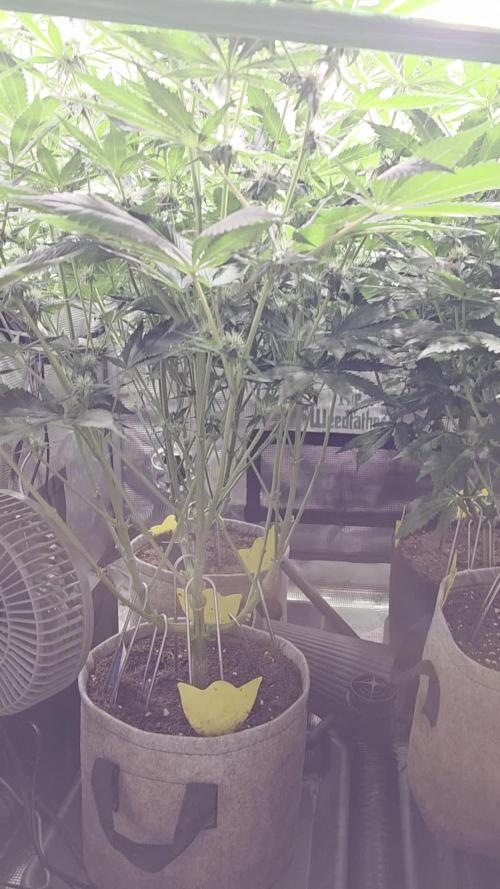
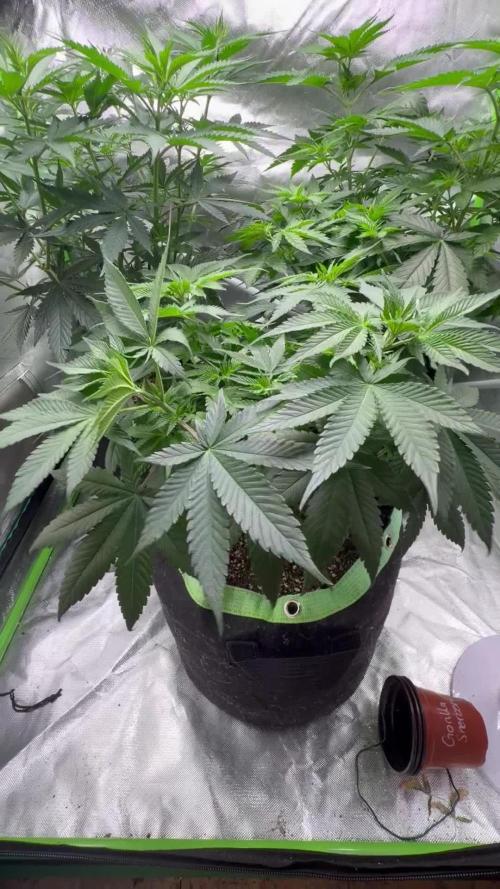
Day 38, Mexican Haze (x1) is 7” tall Morning Glory is 8” tall The remaining closely average 6” in height. Amazing dark green leaves 🌳💕🌳 Day 42, Second feed, sometimes they dry out fast and I just give them plain water before a feed on the next watering.
Processing
Likes
4
Share
Dropped the seeds in water in the afternoon, the day before yesterday. I just put them in the pots about an hour ago. I am growing 4 in a 4X4. All the seeds were split and showing just a bit of the root. I mixed about a teaspoon of Azos with the soil just where the seeds are, in the center of the pots. I mixed it into a depth of about 3 inches. I am misting with PH (6.4) adjusted water. Will grab some pics when the girls come up. It should just be a couple of days. Update for the week. It's early morning on the 9th, 5 days since planting. All 4 of these Fastberrys were up within 48 hours of going into the ground. They popped within 12 hours of each other. They have now been up for 2 days and are looking good. Still misting with just PH (6.4) adjusted water. I will mist for a couple more days and then start real watering. The first watering will include Mykos WP to help with root growth. So far off to a good start!
Likes
25
Share
HAPPY 420 GUYS !! GG day 46 y 47 and LH day 38 23/4/2020 : Lemon haze y la GG con LST estan muy resinosas, la que tiene corte apical no tanto, se nota el estrés y un poco el exceso de nutrientes porque come menos que su hermana. Solo he regado con agua de lluvia y PH regulado a 6. Ultima semana iluminacion muy inestable (unos dias 10 horas otros 12h otros 20h.... Creo que podre mantenerlo estable en 20 horas hasta el fin, pero controlar la temperatura debajo del HPS las horas que no hay sol se me ha hecho muy complicado... Sigue atento y recuerda que tengo una duda sobre la nutrición de mis niñas en mi pagina !
Likes
101
Share
Plants are loving their new pots and new space they are growing like crazy, definitely in their stretch period. They will be woven into a trellis this weekend. Thanks everyone for stopping by to check out my diary. Keep on growing! 👍
Likes
19
Share
Привет садоводы Началась новая неделя и я решил перевести ее на цветение хотел подержать еще неделю на вегетации , но надоело сегодня я заправил ее по полной удобрениями и стимуляторами так что остается ей пожелать доброго пути и следить как пойдут у нее дела всем удачи и красивых цветов !
Likes
3
Share
My plant's leaves turning a little bit yellow but I think we are fine
Likes
5
Share
* Watering 2l every 3 days * Always tuck in the leaves to expose lower tops The plant its handling the cold very well. Even the trichomes seem bigger than previous plants
Processing
Likes
1
Share
@Ferenc
Follow
Day 72: 600W LED, 18 hours on 6 hours off the same with ventilation. Water intake also remains the same 200ml per day. Humidity approx 35 percent. Day 74: I have to start flushing next week is harvest time :*
Likes
4
Share
@t0m420
Follow
Since now the plants are ok...zero deficiencies or problems Hopefully next week the plants will start flowering stage.
Likes
5
Share
dec 12. megacrop 1.06gr/litre ph'ed at 6.35. about 500 ml dec 14. megacrop 1.06gr/litre ph'ed at 6.35. about 500 ml dec 16. megacrop 1.19gr/litre ph'ed at 6.38. about 500 ml (increased nutrients to 1.19) dec 18. megacrop 1.19gr/litre ph'ed at 6.38. about 500 ml
Likes
18
Share
Green light is radiation with wavelengths between 520 and 560 nm and it affects photosynthesis, plant height, and flowering. Plants reflect green light and this is why they appear green to our eyes. As a result, some growers think that plants don’t use green wavelengths, but they actually do! In fact, only around 5 – 10% of green light is reflected from leaves and the rest (90 – 95 %) is absorbed or transmitted to lower leaves [1]. Green wavelengths get used in photosynthesis. Chlorophyll pigments absorb small amounts of green wavelengths. Light that doesn’t get absorbed is transmitted to leaves that are shaded out from direct light. This means that leaves at the bottom of the canopy get more green light than leaves at the top. A high proportion of green wavelengths compared to other colors tells lower leaves that they are being shaded out, so they are able to react accordingly. Lower leaves may react by opening or closing their stomata or growing longer stems that help the leaves reach brighter light [1, 2, 3]. When it comes to growing cannabis, many cultivators are interested in the quality of light used for the flowering stage. In many plants, flowering is regulated by two main photoreceptors: cryptochrome and phytochrome. Both photoreceptors primarily respond to blue light but can also respond to green, although to a lesser extent. Green can accelerate the start of flowering in several species (although cannabis has yet to be tested) [1, 4, 5]. However, once flowering has begun, it’s important to provide plants with a “full spectrum” light that has high amounts of blue and red light, and moderate amounts of green, in order for photosynthesis to be optimized. Green light mediates seed germination in some species. Seeds use green wavelengths to decide whether the environment is good for germination. Shade environments are enriched in green relative to red and blue light, so a plant can tell if it is shady or sunny. A seed that senses a shaded environment may stay dormant to avoid poor growing conditions [1]. Some examples of plant species where researchers have documented this response are: ryegrass (a grass that grows in tufts) and Chondrilla (a plant related to dandelion) [1, 6]. Although green wavelengths generally tell plants NOT to germinate, there are some exceptions! Surprisingly, green wavelengths can stimulate seed germination in some species like Aeschynomene, Tephrosia, Solidago, Cyrtopodium, and Atriplex [1, 6, 7]. Of course, light is not the only factor affecting seed germination – it’s a combination of many factors, such as soil moisture, soil type, temperature, photoperiod, and light quality. When combined with red and blue light, green can really enhance plant growth [1, 8]. However, too much green light (more than 50% of the total light) can actually reduce plant growth [8]. Based on the most current research, the ideal ratio of green, red, and blue light is thought to be around 1:2:1 for green:blue:red [9]. When choosing a horticultural light, choose one that has high amounts of blue and red light and moderate amounts of green and other colors of light. Not many studies can be found about the effect of green light on cannabis growth or metabolism. However, if one reads carefully, there are clues and data available even from the very early papers. Mahlberg and Hemphill (1983) used colored filters in their study to alter the sunlight spectrum and study green light among others. They concluded that the green filter, which makes the environment green by cutting other wavelengths out, reduced the THC concentration significantly compared to the daylight control treatment. It has been demonstrated that green color can reduce secondary metabolite activity with other species as well. For example, the addition of green to a light spectrum decreases anthocyanin concentration in lettuce (Zhang and Folta 2012). If green light only reverses the biosynthesis of some secondary metabolites, then why put green light into a growth spectrum at all? Well, there are a couple of good reasons. One is that green penetrates leaf layers effectively. Conversely red and blue light is almost completely absorbed by the first leaf layer. Green travels through the first, second, and even third layers effectively (Figure 2). Lower leaf layers can utilize green light in photosynthesis and therefore produce yields as well. Even though a green light-specific photoreceptor has not yet been found, it is known that green light has effects independent from the cryptochrome but then again, also cryptochrome-dependent ones, just like blue light. It is known that green light in low light intensity conditions can enhance far red stimulating secondary metabolite production in microgreens and then again, counteracts the production of these compounds in high-intensity light conditions (Kim et al. 2004). In many cases, green light promoted physiological changes in plants that are opposite to the actions of blue light. In the study by Kim et al. blue light-induced anthocyanin accumulation was inhibited by green light. In another study it has been found that blue light promotes stomatal opening whereas green light promotes stomatal closure (Frechilla et al. 2000). Blue light inhibits the early stem elongation in the seedling stage whereas green light promotes it (Folta 2004). Also, blue light results in flowering induction, and green light inhibits it (Banerjee et al., 2007). As you can see, green light works very closely with blue light, and therefore not only the amount of these two wavelengths separately is important but also the ratio (Blue: Green) between these two in the designed spectrum. Furthermore, green light has been found to affect the elongation of petioles and upward leaf reorientation with the model plant Arabidopsis thaliana both of which are a sign of shade avoidance symptoms (Zhang et al. 2011) and also gene expression in the same plant (Dhingra et al. 2006). As mentioned before, green light produces shade avoidance symptoms which are quite intuitive if you consider the natural conditions where the plants grow. Not all the green light is reflected from the highest canopy leaves in nature but a lot of it (50-90%) has been estimated to penetrate the upper leaves at the plant level ((Terashima et al., 2009; Nishio, 2000). For the plant growing in the understory of the forest green light is a signal for the plant of being in the shade of a bigger plant. Then again, the plants growing under unobstructed sunlight can take advantage of the green photons that can more easily penetrate the upper leaves than the red and blue photons. From the photosynthetic pigments in higher plants, chlorophyll is crucial for plant growth. Dissolved chlorophyll and absorb maximally in the red (λ600–700 nm) and blue (λ400–500 nm) regions of the spectrum and not as easily in the green (λ500–600 nm) regions. Up to 80% of all green light is thought to be transmitted through the chloroplast (Terashima et al., 2009) and this allows more green photons to pass deeper into the leaf mesophyll layer than red and blue photons. When the green light is scattered in the vertical leaf profile its journey is lengthened and therefore photons have a higher chance of hitting and being absorbed by chloroplasts on their passage through the leaf to the lower leaves of the plant. Photons of PPFD (photosynthetic photon flux density) are captured by chlorophyll causing an excitation of an electron to enter a higher energy state in which the energy is immediately passed on to the neighboring chlorophyll molecule by resonance transfer or released to the electron transport chain (PSII and PSI). Despite the low extinction coefficient of chlorophyll in the green 500–600 nm region it needs to be noted that the absorbance can be significant if the pigment (chlorophyll) concentration in the leaf is high enough. The research available clearly shows that plants use green wavelengths to promote higher biomass and yield (photosynthetic activity), and that it is a crucial signal for long-term developmental and short-term dynamic acclimation (Blue:Green ratio) to the environment. It should not be dismissed but studied more because it brings more opportunities to control plant gene expression and physiology in plant production. REFERENCES Banerjee R., Schleicher E., Meier S. Viana R. M., Pokorny R., Ahmad M., Bittl R., Batschauer. 2007. The signaling state of Arabidopsis cryptochrome 2 contains flavin semiquinone. The Journal of Biological Chemistry 282, 14916–14922. Dhingra, A., Bies, D. H., Lehner, K. R., and Folta, K. M. 2006. Green light adjusts the plastic transcriptome during early photomorphogenic development. Plant Physiol. 142, 1256-1266. Folta, K. M. 2004. Green light stimulates early stem elongation, antagonizing light-mediated growth inhibition. Plant Physiol. 135, 1407-1416. Frechilla, S., Talbott, L. D., Bogomolmi, R. A., and Zeiger, E. 2000. Reversal of blue light -stimulated stomatal opening by green light. Plant Cell Physiol. 41, 171-176. Kim, H.H., Goins, G. D., Wheeler, R. M., and Sager, J. C. 2004.Green-light supplementation for enhanced lettuce growth under red- and blue-light emitting diodes. HortScience 39, 1617-1622. Nishio, J.N. 2000. Why are higher plants green? Evolution of the higher plant photosynthetic pigment complement. Plant Cell and Environment 23, 539–548. Terashima I., Fujita T., Inoue T., Chow W.S., Oguchi R. 2009. Green light drives leaf photosynthesis more efficiently than red light in strong white light: revisiting the enigmatic question of why leaves are green. Plant & Cell Physiology 50, 684–697. Zhang, T., Maruhnich, S. A., and Folta, K. M. 2011. Green light induces shade avoidance symptoms. Plant Physiol. 157, 1528-156. Wang, Y. & Folta, K. M. Contributions of green light to plant growth and development. Am. J. Bot. 100, 70–78 (2013). Zhang, T. & Folta, K. M. Green light signaling and adaptive response. Plant Signal. Behav. 7, 75–78 (2012). Johkan, M. et al. Blue light-emitting diode light irradiation of seedlings improves seedling quality and growth after transplanting in red leaf lettuce. HortScience 45, 1809–1814 (2010). Kasajima, S., et al. Effect of Light Quality on Developmental Rate of Wheat under Continuous Light at a Constant Temperature. Plant Prod. Sci. 10, 286–291 (2007). Banerjee, R. et al. The signaling state of Arabidopsis cryptochrome 2 contains flavin semiquinone. J. Biol. Chem. 282, 14916–14922 (2007). Goggin, D. E. & Steadman, K. J. Blue and green are frequently seen: responses of seeds to short- and mid-wavelength light. Seed Sci. Res. 22, 27–35 (2012). Mandák, B. & Pyšek, P. The effects of light quality, nitrate concentration and presence of bracteoles on germination of different fruit types in the heterocarpous Atriplex sagittata. J. Ecol. 89, 149–158 (2001). Darko, E. et al. Photosynthesis under artificial light: the shift in primary and secondary metabolism. Philos. Trans. R. Soc. B Biol. Sci. 369 (2014). Lu, N. et al. Effects of Supplemental Lighting with Light-Emitting Diodes (LEDs) on Tomato Yield and Quality of Single-Truss Tomato Plants Grown at High Planting Density. Environ. Control Biol. 50, 63–74 (2012).
Processing
Likes
4
Share
she is still going strong another 3 weeks and she might be ready Having some issue fugus bugs trying to dry them out, Ill keep you all posted
Likes
13
Share
@gadjoo
Follow
🔵⚪️🔴 Passer de 25cm à 80cm en deux semaines c'est fou, je suis un peu surpris ^^'. Changement de tout l'eau, passage aux engrais de floraison. J'ai construis le bio-filtre, j'attends que le silicone sèche et je le mettrais entre les deux cuves, connecté à la pompe de circulation. 🦅​🇺🇸​/🇬🇧​🦁​ Going from 25cm to 80cm in two weeks is crazy, I'm a little surprised ^^'. Changed all water, switched to flowering fertilizers. I built the bio-filter, I'm waiting for the silicone to dry and I'll put it between the two tanks, connected to the circulation pump.
Likes
19
Share
@Budha420
Follow
Day 45: just a quick vid. Been busy soz for posting so little. Day 46: Buds are densing up and mutant is doing mutant things. Lightburn is an issue Day 47: today i tried to fix the mutant problem. Its growing wayy to big for my small 180cm tall tent. Broke one of my light hangers when i tried to tighten it😑 also did some lst but i think the battle might be Lost on this one. Any advice is taken! Other than that, #1 n #2 are doing pretty well. Buds are densing but not at the rate i would want. Might be Bcos my light only draws 200w from wall. Day 48: these ladies are getting frosty swear to god if my light doesnt pull enough watts to dense the nugs, im callbombing spiderfarm till i get new light🌚
Likes
12
Share
@Tazard
Follow
She’s looking much much happier in flowering! I’m not sure how but I’ve grown her bigger than she is rated for maximum height. The end of this week she was 60” or 152cm tall, her rated maximum height was 39” or 100cm so I’m a good 50% taller than rated!!
Likes
6
Share
Everything seems to be going well. Sticky, stinky, and frosty. No longer feeding veg nutes. Pics/vid taken 78/34F days after breaking the soil.
Likes
4
Share
@Cannabot
Follow
Definetly the tallest of my current plants,but that's what u expect from a 100% sativa.Long ass flowering times but well worth the wait.She likes the nutes ,one of my favourite strains of all time
Likes
16
Share
@Rangaku
Follow
Frosting up and looking great . Not doing much to her aside from a little defol here and there . Few more weeeks to go
Processing
Likes
7
Share
@anillus
Follow
un crecimiento grande espero opiniones de estos resultados :)