




Likes
15
Share


@Ctsbestsmoke
Follow
They are really starting to show off there growth the runt has flew past what I thought she would be by this post. The one I topped is the one that’s the furthest in she’s stretching already and the others are still in veg . They are coming out beautifully though. The grow ace system is doing what it’s suppose to with no problems. Can’t wait to see what these ladies produce for me.


Likes
1
Share


@UDUDUDUDU
Follow
lost one, i think ants ate it. de rest r solid, and one is a miniature ?
Likes
6
Share


@NewbieLearner
Follow
Amazing Colours! As you can see the colours on this plant at the end of its run are absolutely amazing. The buds didnt out as dense as I had hoped but I think thats just this pheno and we are busy hunting a denser pheno atm. what a great strain to grow though. no problems during the cycle of the plant and the colours make it so rewarding to grow! I would definitely recommend this strain to people who like fruity and colourful plants.
Barneys never disappoints really;)

Likes
34
Share


@HomeGrowHeaven
Follow
The smell gets louder and louder👃🏻
The buds are getting frostier and frostier❄️
I love Pheno #4 shes so frosty, sticky and smells delicious💚🌺😍

Likes
1
Share

@Nickeluring
Follow
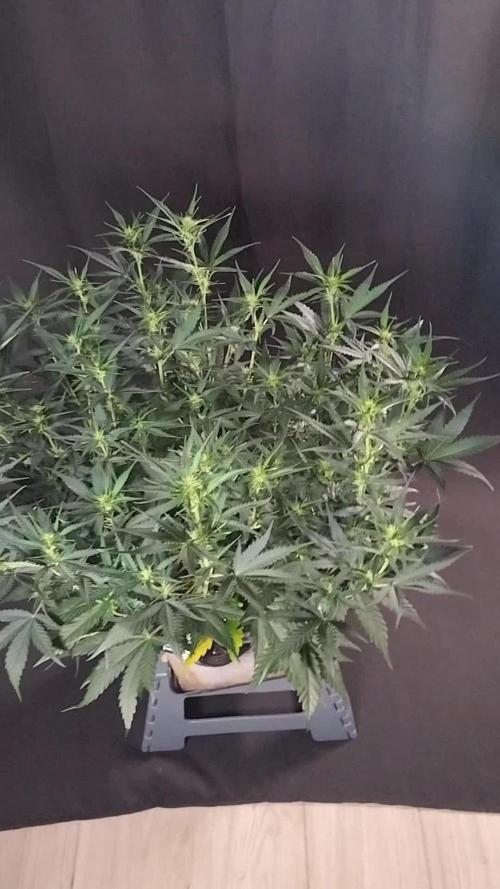
They are growing well. Lemon Cherry Cookies flowers fast. Guava and Apricot have done some good stretching.Their lengths are now:
Lemon Cherry Cookies: 53 cm
Apricot: 54 cm
Guava: 40 cm
I have defoliated all a fair bit. LCC is starting to spread a lovely smell. She is also turning purple.
I have some problems with heat. Some days it's 34 degrees in the tent.
Processing
Likes
29
Share


@Reaper
Follow
if u wanna skip details just read the CAP LETTERS
day 29 - januari 2
waterleaves from under the stems got cut off, also trimmed the lowest branches because the leaves were getting too big
the soil plant has gotten no trim or cuts at all
day 31
the ph of the res was 5.3 i changed water , roots look brown, not rotten or slimy just brown.
day 32
the hydro plant gets healthy growth after the water change. ph is still too low (5.5) im waiting for my *PH up*
i ordered online. never tought i would need it lol. she goes well on 5.5 but not enough calmag is absorbed like it does on 6.2
The pictures of day 32 display the difference is very big in the stems, the soil plant only got topped while the hydro plant had already a litle trim on the lowest branches and the branches above (in the midle of the bush where i topped them) so she got more stress and still is bigger then the soil.
day 33
i got no ph up (for now yikes)
sooooo i took 8 liters out of the res and replaced it with pure rainwater and 170 ppm calmag in it without nutrients to keep the acid level a bit higher.
it worked as u can see in the final pictures the plant gets new growth a bit faster.
ph up should be here by end of the week.
day 35:
plant start to stretch finnally, while i was doing LST later in the evening one of the top stems just snapped off completely OOOPS 😆.
theres still a lot of branching going on and a nice bush she will recover very fast from this loss as i summoned the Cannabis Gods into my room as the planets lined up and perfected my PH up to 6 by adding the purest rainwater from the universe the roots cleaned themselves back to pearlwhite and started absorbing the nutes faster then ever. in all silence i knew this was my destiny and the stems grew so fast i could hear them grow. the whole experience was too much as i collapsed to the ground and stood up left the room and knew... i would never see these ph and calmag problems ever again and went down the stairs with my new powers
THE PLANTS BOTH GOT GERMINATED ON SAME DATE. BOTH GOT TOPPED ON SAME NODE. I WAS FORCED TO TRIM 4 BRANCHES OF THE HYDROPLANT BECAUS IS WAS BLOCKING TOO MUCH LIGHT I ALSO CUT OFF THE 4 BIGGEST WATERLEAVES ON THE MAIN STEM.
THE SOILPLANT DID NOT NEED ANY TRIMS AS SHE IS NOT GROWING AT AN INSANE SPEED, HOWEVER THE SOIL PLANT LOOKS HEALTHIER AND BIGGER BECAUSE THE FANLEAVES ARE STILL THERE. IF U WATCH THE STEMS IN THE PICTURES OF DAY 32 U CAN CLEARLY SEE THE HYDRO IS WAY BIGGER. I NEED TO CORRECT MY PH SO SHE ABSORBS MORE CALCIUM MAGNESIUM FOR EXPLOSIVE GROWTH.
Likes
199
Share


@Teamdirtbag2
Follow
Chopped the slurricane.
Got 2 males from Banners Dream. I will keep them growing.... for now... really nice structure.
The army is growing and doing great.
Added pics of Fire OG Trimmed and Trained. Better late than never. She has already stretched.... but should grow more.. a lot more. She already has a little frost and a lot of stink. I also Trimmed and Trained Foul Mouth. And by the way she was FIM 'ed weeks ago. I don't think I mentioned it. (For any of you that might be paying attention)... 😂😂😂😂
Added video of Foul Mouth Trimmed and Trained.

Blue Gelato 41 · Barney's Farm
Gorilla Zkittlez · Barney's Farm
ShiskaBerry · Barney's Farm
CBD Lemon Potion Auto · Barney's Farm
Pineapple Express Auto · Barney's Farm

Cream Mandarine Auto® · Sweet Seeds

Foul Mouth · Dungeons Vault Genetics

Fire OG · Custom Breeder & Strain

Slurricane · In House Genetics

Moon Walker Kush · Spliff Seeds
Strawberry Lemonade · Barney's Farm
Purple Berry Kush · Spliff Seeds

Diesel Fire OG · Relentless Genetics
Spliffs Strawberry · Spliff Seeds
CBD Spliff Berry · Spliff Seeds
Citrus Farmer · Dungeons Vault Genetics
Tahoe Kush · In House Genetics
Likes
10
Share


Likes
56
Share


@Wicked_Stix
Follow
Another smooth week for everyone but the twisted helix. This plant gets the award for the most unhappy plant I have ever grown. The leaves are dying off fast and she isn't looking good. Just trying to keep her alive long enough to make hash out of her. Sugar Cane buds are pretty small compared to the others but she's full of trichomes and still has some time to put on weight. Jack Herer has a super strong lemony aroma. Everyone is still stacking up. Not seeing any swelling yet so we still have some time before they think about finishing up. I put the dehumidifier in the room this week. Hoping to start getting these girls chopped and trimmed in the next few weeks, but have to let them do what they do.

Likes
325
Share


@Metatronix
Follow
Hallo to You all my familly and usual visitors. Thank you for stopping by and all the likes and comments....You make my day!
According to the trichomes the Blue cheese is already overdue for harvest but i wanted her to grow as big as i could ;) You can see the trichomes photos i know its a bad quality but im actually happy i maneged to take them pictures
It was a pain in the arse to make them photos as bad as they are xD On Black Friday i ordered a better quality microscope with options of taking photos so in future harvests it will improve.
I started the flush just yesterday and plan to dark her on the 5th of december (or so)
As you can clearly see thanks to my great skill and experience in growing i managed to match the plants leaves with the colours of the actual golden grater ;P
What a great achievement and view to beholde :D
It was a joy to work with Mars Hydro and their equipment in this grow. A big thanks to the Mars Hydro team for this opportunity, you truly provide first class grow kits and lamps.
That's it for this week folks, have a wonderful week and please come beck visit in a week for the chopping of this work of gardening art :)

Likes
27
Share


@GreenFingeredLT
Follow
Day 56: Merry Christmas everyone.
Today It seems the K deficency symptoms aren't getting any worse and a few of the smaller and less effected leaves are returning to green already! I guess the other leaves will take time IF they go green at all by the end of the grow. The flowers have swollen again so even though there was a deficiency she doesn't seem to have slowed down too much. Score one for having loads of leaf mass I guess! I'm going to monitor her closely today and tomorrow, he pot is still very wet and humic acid helps soil hold onto water so it may be another 24 hours before she needs watering at least! But I think a water with no nutes will be fine this time. The overall plant has taken on a healthy shade of green, it's just the parts that had gone pale from the k def that are still the wrong colour, hopefully these will gain a healthier green over the day / tomorrow, I think 1 more week and she'll be ready to defoliate and head into the flush stage.
Looks like it might be a satisfying first harvest!
Day 57: It doesn't look it so much from the pictures, but today the plant is looking a much healthier shade of green, in the leaves in the central mass we still have some leaves that aren't fully green because they were hidden in the depths of the plant. Today I did some very light LST just to pull the flowers out slightly further, I noticed there's a lot of buds on some of the stems and I've tried to expose the light as deep into the light as possible, in about 1/2 weeks I'll defoliate again and try and expose more of the lower down flowers to the light, today I simply tidied up the base of the plant and exposed the main stem base to more airflow, I think the stalk is looking healthy, I've never seen a healthy stalk before but there's a white film that I recognise from being the skin earlier on, raised the grow question to be sure
I also trimmed off some tiny flowers near the base of the plant, they were never going to reach anything significant and I understand taking these smaller flowers can stress the plant in the right way to grow the rest bigger, So today I took 3 flowers that weren't even going to be larf by the end. As well as exposing more of each tops stem to more light I hope to stimulate growth along some of the stems that look like they'll produce a good amount of popcorn buds
Likes
2
Share


@HighOhioAn
Follow
What can I say mimosa cake auto still frosty and thick as ever which I could’ve had her dialed in sooner truly think this could be an amazing Grow cannot wait to grow her again nice dense buds frosty cola smells of mimosa cake. 🔥💯
Likes
61
Share


@Natrona
Follow
***DIVINE SEEDS ** AUTO OPIUM *****
Auto Opium week 7 & 8 7/28 - 8/4-10
I am late for my outside ladies diaries updates. Life has been getting the best of me lately. I’ve been packing my daughter’s room and moving her things to her new home. For those that have followed my since my beginning here, Cancer left me with neuropathy and arthritis in my hands. I can no longer do my glass fusing or flame work. To close this chapter of my life, I’ve been inventorying glass, tools, equipment, molds and supplies to sell. The most stressful has been appealing Medicare claims and receiving the second denials on the same claims. They are the last payer of record so good luck getting any reimbursement you are entitled to.
My apologies to all of you for being so brief on your diaries and not providing many comments.
Photos are from 7/28- 8/9 for both weeks.
For my outside ladies, Opium, Auto Opium, Fractal, and Lemon Cake not much changed. They continue to live in sweltering conditions. Temps are in the upper 80-90s with humidity over 105. In addition to the heat, Hurricane Debby started up the coast but was downgraded to a tropical storm by the time it got to us. Expecting our normal thunderstorms, I waited til morning to bring yhe ladies inside.
Overnight, we had wind gusts of 25mph. Yeah, then I brought all gals into the house. The photo gals are strong and with thick stalks were able to withstand the winds. Both Opium’s got blown over Auto Opium is thin and spindly and before I could save her from the winds and rain, she got whipped side to side. The top 2 feet bent hard one way and the top 6 inches bent the other direction. The pics show my attempt to bandage the damage 😟 to her top cola with chopsticks and electrical tape.
I top dressed all ladies with Bloom Soil for organic fertilizer. Buds are fattening up, trichomes are minimal at this time but some fragrance is starting to be noticed.
Thank you @DivineSeeds
Thanks for the visits, likes and comments, I appreciate all the plant love💚.
Have fun & love what you grow 💚
Sending you good vibes of love, light, and healing 💫
💫Natrona 💫

Likes
119
Share


@Tropicannibis_Todd
Follow
💩Holy Crap Growmies We Are Back💩
Well growmies we are at 21 days in and everything is going great 👌
👉 Shes a stout little plant , chunky too , im gonna do a little bit of some low stress training 💪 Preflowers now showing 👍
Lights being readjusted and chart updated .........👍rain water to be used entire growth👈
👉I used NutriNPK for nutrients for my grows and welcome anyone to give them a try .👈
👉 www.nutrinpk.com 👈
NutriNPK Cal MAG 14-0-14
NutriNPK Grow 28-14-14
NutriNPK Bloom 8-20-30
NutriNPK Bloom Booster 0-52-34
I GOT MULTIPLE DIARIES ON THE GO 😱 please check them out 😎
👉THANKS FOR TAKING THE TIME TO GO OVER MY DIARIES 👈
Likes
16
Share


@IncognitoGreenThumb
Follow
Week 19 and it happens to be a rainy week with on and off cloud coverage which was actually beneficial to my plant but the humidity has been up due to the fact I also use a swamp cooler and if it's gonna be this humid for another couple days then I'm worried about mold developing on the buds so i think I'll break out the AC to get rid of some of that moisture in the air and maybe alternate between the two.
The AC hasn't been used once the whole grow cycle so far but living in AZ we get random storms from the monsoon season not to mention tons of dust, high winds, flash flooding which could be used to flush my plant because it needs it now if rain builds up around and gets under the green house, j/k lol. I've been thinking about buying lady bugs to get rid of all the white flies, any experience anybody, would that work?
After writing the above, I could hear the wind picking up outside and remembered that a storm was coming so I ran outside to prepare and it punched it's way through Phoenix with extremely high velocity hurricane type wind, gusting up to whatever it takes to bring large trees down or make a wooden shed door fly off with a wall of dust to the sky and then finally finishing with heavy rain. I was outside the entire storm from beginning to end, well at least until the wind died down and it was just light showers by then. Even with having my greenhouse tied down I had to hold onto it for dear life or it would have taken off like in the wizard of OZ.
Honest to god I was almost pulled off the ground or several times more onto my greenhouse when the tsunami type wind would hit, pounding me and the greenhouse from behind having to pull down while leaning back with all my weight and strength.The whole time I'm screaming for my brother who was inside to come out and hold the greenhouse so I could tie it down better because it was just coming apart trying trying to fly away or be ripped apart as storm hit us I was holding on for Amy's Green Drop's dear life. It was pretty insane and wish I had video of me doing it but just have a video a friend sent of his backyard getting hit so you can imagine that wind hitting my greenhouse.
The after math was bad 😭 the wall of the greenhouse was getting hit so hard by the wind making it press inward towards plant it snapped off in the middle one of the lower branches making the two buds on the end half hanging there from a 90 degree angle from branch so I knew there was no way to support it back in place enough to heal itself so I clipped it off and started drying it. One other next to it got bent up pretty bad so I'm trying to LST it back to place. The storm also killed my swamp cooler somehow, I guess it's because it has a lot of electronic components on top that was soaked from the wind the rain came from the side, I know, you'd think a swamp cooler could get wet.
Now I'm stuck using only my A/C and a humidifier to control moisture and temp and I'm worried it's gonna be pretty hard only using AC in such a small greenhouse as it takes time to find the right ratio of intake and outtake air but can only open greenhouse to mix in so much hot dry air, so starting it was getting down into the high 60's, and I have to figure something out because I can't let it get that cold in there for the last few weeks. I'm almost ready to call it quits If I can't find an equilibrium with AC and humidifier, and if there are anymore storms on the way.
Next time I'm getting a bigger sturdier greenhouse that goes into the ground and has hard clear walls and roof, other than the recent storm and excessive sunlight finding the right shading it's been very beneficial doing the indoor/outdoor combo grow and would recommend it as you can live in any weathered extreme hot/cold climate and still grow outside,


Processing
Likes
4
Share


Likes
8
Share

@El-Ecko
Follow
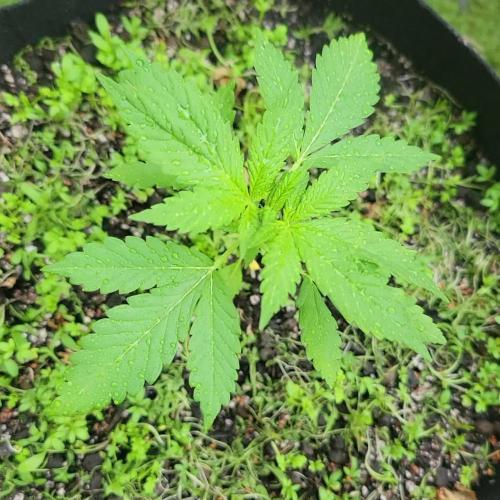
Week 4 of Vegetation
It was a wonderful, sunny week.☀️
And the Frostbanger really enjoyed it to the fullest. I didn’t add any extra nutrients. I don’t have any experience with this, but I think the Sonnenerde hemp soil works very well in terms of its composition. It also retains moisture extremely well.
Unfortunately, the coming week will be a bit cold and wet, and temperatures will drop below 10 degrees again at night.
I’m still looking forward to seeing how it develops.🔝?