


Likes
Comments
Share


Likes
6
Share


@Elguacho420
Follow
Buenas a tod@s... Sexta semana de estás tropicanna poison de sweet Seeds.. de momento va todo en orden, la planta ya se hace notar con distintos tonos de verdes, olores y sobre todo resina... Van creciendo muy bien, está semana fue todo tranquilo... Con ganas de ver la etapa final y desgustarlas aún que todas las etapas se disfrutan, la final es la más power y ahí realmente ves si necesitas cambiar algo o no, de momento todo más q bien 🏻. Buenos humos para tod@s.. ⚡⚡⚡🤘🏻🤘🏻🤘🏻⚕️😎
🇦🇷🤝🏻🇪🇦


Likes
3
Share

@KovasGrows
Follow
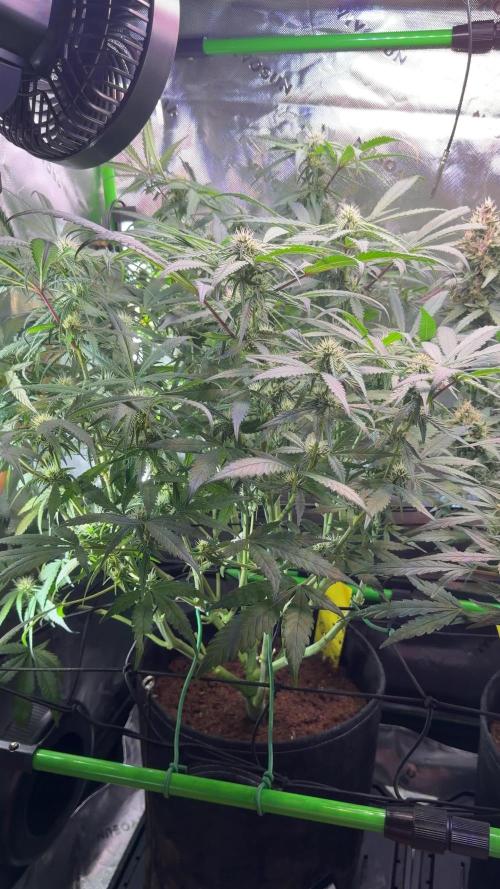
Heyho Growmies! The Mango Frost is in the end of stretch and now fully starts to develop her Buds. The Mango Cherry Runtz is getting purple and fatter and fatter.
I still removing a few fan leaves here and there,to optimize airflow & light. While trying to remove as less as possible plant material for now. Maybe next week they get a little bit more defoliation.

Likes
7
Share

@SouTHboy
Follow
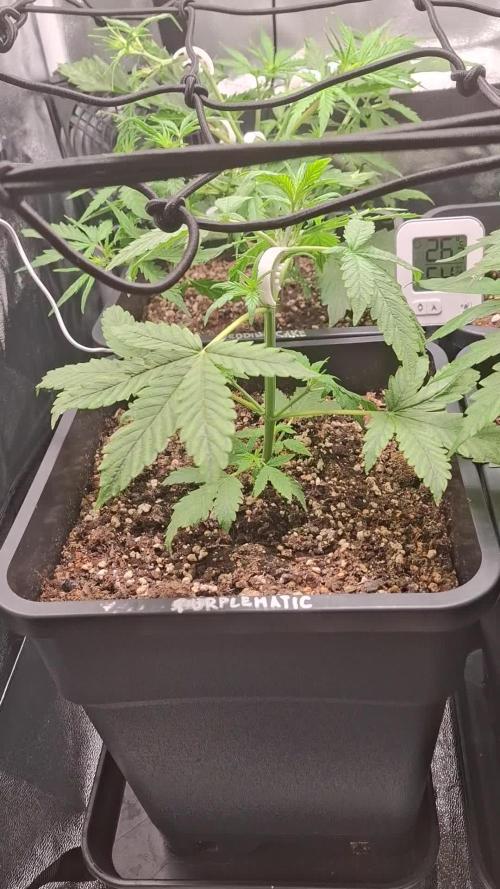
When attempting to bend the main cola on the Gorilla with plastic clips (never again), it snapped and hung on just the tiniest thread, so I involuntarily had to remove it completely, thus topping it, which I never intended. The plant does not seem to mind at all and the side branches started lifting up as if trying to take over and compensate. So far, Northern Light is the biggest mystery for me - the leaves look strange and it has the slowest growth of all. Even the Purolematic, which started last and was the smallest turned out to grow bigger. I also added 2 fans to help circulate the air inside.

Likes
84
Share


@Mrs_Larimar
Follow
March 11th.
So its fact, one of Three Survivied
Thats a Pity... but iam thinking about cloning
The Survivor is a strong Little one... In 7 Weeks she will be a "Big Mama"
Atm Iam setting up another "Babytent" with another Light... stay Courious...
Iam finishing and actualising Tomorrow
March 13th.
Iam done with setting up
Now i have another Babytent. and Inside the New Viparspectra XS-1000
and the other Stuff to run the Envoirement
I already ca see a difference between both Tents. If you stand outside and just look with Eyesight
the Viparspectra seems to be brighter// has another color of Light.
I made a Unboxing Video for more informations.
Amazon: http://url-9.cn/0y9i
Amazon US: https://amzn.to/3e0P2bk
Amazon CA: https://amzn.to/3bTnEJC
Amazon discount Code:
it10mlarimar XS1000 10%
it15mlarimar XS1500 5%
it20mlarimar XS2000 5%
it40mlarimar XS4000 5%

Likes
7
Share


@Mr_nugs_lover_David
Follow
This plant is looking soo gorgeous guys I can't wait to have her in full flower under the Mediterranean sun, what a beautiful strain to grow I enjoyed a lot last year and this year I'm gonna enjoy even more if possible, follow me on this journey guys, it'll be fun!! 💚💛❤️👨🌾

Likes
126
Share


@nonick123
Follow
Día 62 (18/03) Riego 1,25 Litro H20 + Wholly Base 3 ml/l + Solid Green 1,75 ml/l + Early Flower 1 ml/l + Big Bloom 1,25 ml/l de Gen1:11
TDS 1043 PPMs - pH 6,2
Día 63 (19/03) Las plantas muestran una ligera quema de nutrientes. Voy a hacer un riego "solo agua" en el próximo riego
Día 64 (20/03) Las plantas empiezan a poner emitir un olor muy intenso! 😍
Purple Lemonade emite un intenso aroma a limón y frutas cítricas
Día 65 (21/03) Riego 1,25 Litro H20 sin nutrientes. TDS 175 PPMs - pH 6,6
Las plantas muestran ligera quema de nutrientes en las puntas, por ese motivo este riego
Día 66 (22/03) Ha llegado el día de poner el filtro de carbono en el armario
El delicioso aroma de las tres plantas del armario empieza a inundar la casa 😁
Día 67 (23/03) El olor al abrir el armario es impresionante y delicioso 🤤
Día 68 (24/03) Riego 1,25 Litro H20 + Wholly Base 3 ml/l + Solid Green 1,75 ml/l + Early Flower 1 ml/l + Big Bloom 1,25 ml/l de Gen1:11
TDS 1100 PPMs - pH 6,2
Purple Lemonade FF no está tan sedienta, pero está cerca del limite recomendable de humedad.
Voy a incrementar la frecuencia de riego a cada 2 días y ver la respuesta
💦Nutrients by Gen1:11 - www.genoneeleven.com
🌱Substrate PRO-MIX HP BACILLUS + MYCORRHIZAE - www.pthorticulture.com/en/products/pro-mix-hp-biostimulant-plus-mycorrhizae
Processing
Likes
16
Share


@Matahierbas
Follow
This week: air bubbles, air bubbles, and AIR BUBBLES, that's why my growth has been weak lol. AAAAAND I wasn't giving them space between the net pots from the water!
VERY IMPORTANT NEW DWC-ers lol
Sooo this week I was just letting them be. Until I realize I was messing up, everything in the book EXCEPT those 2 things I state above. I just received my new air pump today as am writing this (everything is installed) very pleased with the new pump. But I gotta replace those airstones they seem clogged up (yes I did wash em, warm water and a firm toothbrush)
But I've been checking everything down to my pH that's it's constant at 5.8
My PPM is the same when they drink so let's see the difference a week from now.
I do start to see lil pistols coming out on the 1st plants I think shes done veggin let's see next week.
Appreciate everybody u guys freakin rock🤘 a toke from me to u guys much love and happy growin'/keif'n

Likes
2
Share

@CadillacGreen_420
Follow
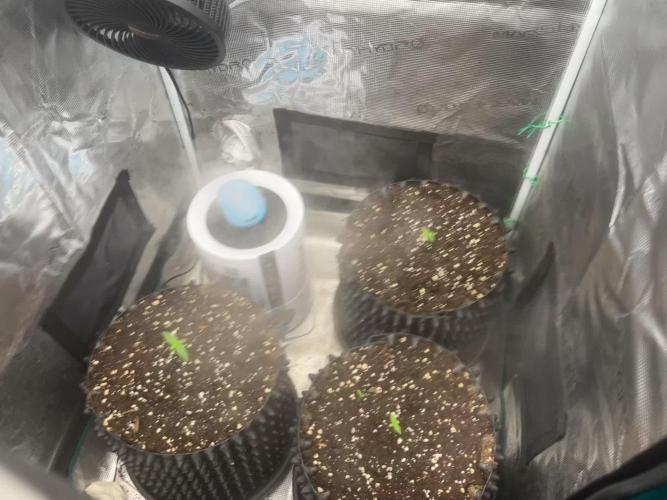
An excellent start with these RQS F1 is the first experience with this type of automatic seeds. One of the 3 Apollo has demonstrated that strong vigor typical of those seeds that have an extra gear, faster than all to develop with the same germination. Good start also for milkyway
Likes
14
Share


@BOMbolenath
Follow
Very easy plant to harvest, didn't have too much leaves, so very easy to take out fan leaves and prepare to dry.

Likes
98
Share


@OrganicNature420
Follow
Germination date 🌱 28/11/2021
Day 84 23/02/2022
Strain 🍁 Solfire Gardens Bahama Bussdown
(Runtz x Bahama Mama)
THC% • Unknown
💡 Mars Hydro FC-E6500
• Power draw 650W + 5%
• Max coverage 5 x 5
• LED 3978 pcs high quality chips
• Max Yield 2.5g / watt
• Noise level 0 DB
• Removable Driver & Light bars
• Daisy chain
• Fast cool system
https://marshydroled.co.uk/ 🇬🇧
PROMO CODE • (organicnature420) DISCOUNT
https://www.mars-hydro.com/ 🇺🇲
PROMO CODE • (ORG420) DISCOUNT 👍🏻
⛺ Mars Hydro 150 x 150 x 200cm
📤📥 AC infinity 6inch
💧 10lt dehumidifier
❄️ 3.1kw air con system
💉 Nutrients GreenBuzzLiquids 🇩🇪
⭐⭐⭐⭐⭐
Organic Grow Liquid • 1-4ml until 2wk flower
Organic Bloom Liquid • 2-4ml flower stage
Organic More PK • 2-4ml +wk3 of flower
Organic Calmag • 1-2ml/lt whole grow
Fast Plants Spray • first 2wks at night lights off
More Roots • 2-5ml veg +2wks flower
Fast Buds • 5ml 12days before flower until wk1
Humic Acid Plus • 2-5ml whole grow
Growzyme • 2-5ml whole grow
Big Fruits • 2-5ml flower stage
Clean Fruits • 5ml flush 1wk
Ph powder
Root Gel
Living Organics
https://greenbuzzliquids.com/
PROMO CODE • organicnature420 15% off ✌️🏼
🥥 Growing Media • Coco Coir
💡 80%
Notes 📝
Loving the look of this girl. Pure 🔥❄️
Dropped temps and its seemed to of paid off. These were super frosty already but can tell by some of the others that were behind. Couple more weeks left in her 🌱💚
✌️🏼 if your thinking of changing nutrient company's please think of GreenBuzzLiquids. They honestly are a game changer and you can thank me later 😉
Discount codes in bio for Mars and GreenBuzzLiquids 👍🏻

Likes
73
Share


@MiyaguiOkPolilla
Follow
Una semana final épica para el pequeño pastel de bodas.
Ahora solo queda esperar a que una vez curado nos dé sus notas 😍
💐💐💐 Saludos! 💐💐💐

Likes
Comments
Share


@Tony2jewerlyseeds
Follow
Hace un año exactamente estábamos cruzando uno de estos blíster de dosi- gelato del cual germinaron 3 de 5 semillas regalando nos dos hembras y un macho muy resinoso y oloroso y varias genéticas campeonas y de ediciones limitadas como amerth souer diesel x somango,souer diesel, como le pondría. A ese cruce o a dosi gelato x dosi gelato de hecho esa siempre fue nuestra intención sacar el máximo de semillas posibles de nuestro primer cultivo con semillas importadas primero necesita vamos unas semillas regulares pero de buena calidad y que supiéramos un poco de su genética investigamos acerca de doci-gelato y decidimos que sería la primera base de nuestros cruces sus efectos y aromas nos llamaron la atención aparte de que el nombre estaba de moda abrimos varios blister más como blackberry gum thunder banana moví d y varias que ya no quiero nombrar porque quiero que esos sabores sean invento mío jajajja leeimos un poco de como podíamos hacer semillas y lo hicimos polinizamos 11 hembras originales o estabilizadas que no se escuche feo y 3 hembras regulares una de ellas nos la vendieron con el nombre de Hulk otra como Cherry y la última una buble gum que comparamos su olor y sabor con el de la blackberry gum de seedstockers fue muy parecido a nuestra buble gum pero con notas a moras muy buenas de hecho es un cruce que tenemos contemplado para ver si con una planta macho de buble gum regular y una blackberry gum de seedstockers podemos mejorar aun mas el sabor y el olor en nuestro país de hecho hay buenas cepas regulares hemos probado genéticas con sabor mango,pastel de arándanos,limón ,sandía ,uva y gas,chicle clásico rosa,plátano,zorrillas todas esas genéticas y variedades nos han hecho llegar a pensar que en realidad hay gente que lleva incluso mas tiempo conociendo las semillas importadas o aun mejor importando las para realizar investigar o mejorar las genéticas y sus distintos efectos en el 2012 llegué a acceder a bancos de semillas quedé deslumbrado de la cantidad de nombres que había pero no era 100% seguro entonces no quise seguir insistiendo pero ya se escuchaban nombres como mango kush, Golden Acapulco,cronic el precio era mas elevado que los demas prensados que podiamos conseguir pero eran mejores efectos y aromas ya para 2018,2021
Se empezaron a escuchar nombres como blueberry,amnecia,skunk,pineaple,og,kalifas,jirafa ,puma,gorila,Hulk, chocolopez,candy, arcoiris,cristal,poison,f1,sueño azul , Tutankamón,shark, snow,Jack jerer, y mas llevamos 13 años recolectando semillas de diferentes genéticas de cannabis siempre hemos cultivado esas semillas regulares pero nunca habíamos intentado un cruce para empezar no sabíamos como hacerlo solo sabíamos que no teníamos que dejar crecer el macho.
Para 2022 después de un obsequio que tuvimos de un conocido volvimos a intentar una vez más conseguir semillas importadas nos regaló un tubo con 10 semillas del banco sweet seeds con fecha de empaquetado en 2017 llevándonos ala misma pregunta desde cuándo estaban llegando las semillas importadas y entonces algunas veces fumamos de genéticas originales al contrario de sentirme mal por no ser el primero en decir que traje genéticas originales o importadas a mi país me sentí feliz por que sabía que lo que estaba guardando todo el tiempo desde 2012 puede ser una gran colección de diferentes breeders tal vez tengamos varias ediciones especiales como la cepa froot loops, jirafe pussy,cronic,ak47 , y así fue como logramos contactar con un banco que parecía de confianza y obtuvimos dos blíster de doci-gelato , blackberry gum,thunder banana ,banana blaze y varias más hemos crecido varios de nuestros cruces pero necesitamos seguir investigando más aún para lograr estabilisar nuestras propias genéticas les dejo una foto de nuestro cruce María Sabina.


Likes
11
Share


@MELs_Garden
Follow
Semana 6 (7-13 de mayo)(días 36 - 42)
Contentos con como va la cosa, retiramos alguna hoja tocada y poco mas. 😊😊
11/5/2020
El ultimo riego fue bastante heavy y podemos ver como las puntas muestran signos de sobrefertilicacion ,por tanto este riego va a ser más suave. Teniendo en cuenta que sufrimos el problema de quedarnos sin fertilizantes y que nuestro proovedor debido a la situación actual del covid tiene el asunto complicado tocaremos con lo que tenemos.
Hoy toca riego en el que usamos 40l ñara 22 plantas. Los riegos se realizan en garrafas de 10l por lo que los valores varían en función de las plantas.
(Valores • l)
• 1gr de biogreen flower boost + 1ml calcio max + 1ml Mg
PH: 5 94
EC: 1.21
T h2O: 18,5°C
• 1gr de biogreen flower boost + 1ml calcio max + 1ml Mg + 0.2ml Final solution
PH: 5 84
EC: 1.00
T h2O: 18°C
• 1gr de biogreen flower boost + 1ml calcio max + 1ml Mg + 0.2 Final Solution
PH: 5 81
EC: 1.18
T h2O: 17,3°C
• 1gr de biogreen flower boost + 1ml calcio max + 1ml Mg
PH: 6
EC: 1.44
T h2O: 17,2°C
Para algunas variedades como la Bubba y la Barney Kid será su último riego con fertilizantes, a partir de ahora haremos riegos com flush hasta el momento de corte para que no queden restos en nuestras flores en el momento final. Al resto sin embargo les quedará alrededor de 3/4 semanas por lo menos. Esto sigue avanzando y se siguen formando nuevas flores pero esperemos que esto no tarde mucho en engordar, porque a pesar de que se que son de floración larga me da la sensación de que podrían estar mejor, no se si debido al cambio de nutrientes y de que no estoy cubriendo todas las necesidades que tienen. A pesar de todos tenemos unas Orange sherbert que pintan increíbles, una berry mint potente, dos chocolate mint OG que dan ganas de comérsela...
Por comentar que ayer dejo de funcionarios uno de los focos 😔 tras echarle un ojo y hacer unas pruebas comprobamos que el fallo era del cable y ya esta solucionando 😁😁
Estoy disfrutando mucho con este cultivo y aprendiendo de los fallos, sólo viendo como van y con las cosas que he aprendido no veo el momento de comenzar con el siguiente cultivo, pero paso a paso 🤗
Por cierto estos últimos días la temperatura a bajado bastante por el mal tiempo lo que nos ha venido genial para estabilizar la temperatura en unos 25/26°C en ON y 22/23°C en OFF. Estos días atrás rondaba más los 28/29°C llegando en algún momento a 30. Un poco de frescura para el huerto.
Y por último, pero no menos importante. Mi pareja, a la que tanto quiero, me va a dejar su móvil para sacar fotos. La diferencia es abismal por lo que intentaremos mejorar la cantidad de nuestro contenido para el bien de todos 😁😁

Likes
141
Share


@bioaccessory
Follow
Что-то мои девчули не спешат со мной расставаться, несмотря на все сроки я не вижу даже признаков наступающей "осени". Но главное что шишки продолжают потихоньку набирать, ну и я не буду спешить. Как я уже говорил, в этот раз буду тщательно промывать субстрат, вкус готового продукта для меня очень важен.
Последнюю неделю влажность не падает ниже 60%, поэтому основной обдув теперь включен на максимум, мне не хочется испортить этот цикл плесенью.
Спасибо, что заглянули, и будьте здоровы! 🙏
Продолжение следует ...😶

Likes
15
Share

@Sadhus
Follow
# Journal de Culture Cannabis - Eternity Grow Cup 2 (Zamnesia x Plagron) 2026
**Grower :** @Sadhusfrgrow
**Localisation :** Luxembourg
**Strain :** Sticky Broccoli (Zamnesia Seeds) - Féminisée
**Description de la variété :** Sticky Broccoli est une variété indica dominante (90 %), avec un THC à 23 %. Elle se distingue par ses arômes sucrés, épicés et floraux persistants, des plantes compactes et résineuses, offrant des rendements élevés en culture optimisée.
**Setup général :**
- Substrat : 100 % coco Plagron, pour un drainage excellent et une oxygénation racinaire.
- Pots : Définitifs de 5 litres.
- Irrigation : Netafim Drip automatique, cycles de 2 min/h × 14 (ajusté pour steering génératif : runoff réduit à 10-15 %, VWC bas ~30-40 %, dry back 20-25 % pour focus floraison).
- Contrôle : TrolMaster full setup (climatisation, humidificateur/déshumidificateur, chauffage, extracteur/intractor, ventilateur, pompe à eau avec chauffe/bulleur/agitateur, pompe eau usée, table drain DIY, barre UV/IR).
- Nutrition : Plagron Coco (A&B, Power Roots, Pure Zym, Green Sensation) ; ajout CalMag (début carence repéré sur autres plantes) et silice pour renforcement cellulaire. EC tank 2,0-2,5 mS/cm, pH 5,8.
- Éclairage : 12/12 (20:00-08:00), auto-dimming à 820 PPFD cible, UV/IR intégré.
- Objectif : Optimiser floraison pour rendement max ; clones pour préservation.
- Mises à jour : Intégration de l'app GrowOps (assistée par IA) pour optimisation : Analyse données TrolMaster, suggestions climatiques/nutritives (ex. ajustements VPD, DLI basés sur algos IA), tracking visuel (photos IA-annotées pour déficiences). Photos jointes montrent GrowOps (paramètres flo week 1/2 : leaf temp 25-27°C, temp 27-28°C, VPD 0.8-1.2, hum 68-78 %, PPFD 820, DLI 35), TrolMaster week 6 (PPFD 751.6 avg, VPD 1/0.88), temp/hum (day 25.0/68.75 %, night 20.8/64.31 %), graphs (pH/EC/temp/hum stable avec cycles dry back ; full params incl. CO2/VPD/light).
## Semaine 6 : Deuxième Semaine de Floraison (22-28 février 2026)
### Contexte et Objectifs de la Semaine
Deuxième semaine de flo avec steering génératif maintenu : Runoff réduit, VWC bas pour stress hydrique contrôlé, dry back accru favorisant buds denses. Nutrition stable avec ajout CalMag (0,5-1 ml/L) pour corriger début carence (jaunissement bas sur autres plantes ; préventif ici) et silice (0,5 ml/L) pour robustesse tiges/cellules. Pulvérisation foliaire Boom Boom Spray (Biotabs) au jour 36 pour booster bio-stimulants (acides aminés, hormones naturelles) et améliorer absorption foliaire. Pas d'intervention physique sur plantes (repos post-lollipop). Intégration GrowOps IA : App analyse données TrolMaster en temps réel, propose optimisations (ex. baisse RH nocturne pour VPD idéal, alertes carences via photos). Objectifs : Gérer stretch final (~+20 cm/semaine), observer formation buds, maintenir santé sans pests.
**Tips Éducatifs sur Réglage Hauteur Lampe, PPFD et DLI :**
- **Hauteur Lampe :** Ajustez pour uniformité PPFD (mesurez au canopy avec capteur PAR) ; trop bas = brûlures (feuilles curlées), trop haut = étirement (tiges faibles). Règle : Augmentez de 10-20 cm pendant stretch flo pour DLI constant.
- **PPFD :** Flux photosynthétique (µmol/m²/s) ; cible flo 700-900 pour Sticky Broccoli (évitez 1000 sans CO2). Mesurez multiple points canopy.
- **DLI :** Intégral lumineux quotidien (mol/m²/jour) = PPFD avg × heures lumière × 0.0036 ; cible flo 30-40. Optimisez via dimming/auto (comme TrolMaster) pour efficacité énergétique/santé plante.
### Observations des Plantes
- **Jour 36-38 (22-24 février) :** Stretch vigoureux ; plante strong atteint 80 cm haut × 55 cm large (l'autre ~75×50 cm). Buds sites gonflés, pistils abondants. Pulvérisation Boom Boom Spray : Réponse positive (feuilles plus vertes, vigueur accrue). Ajout CalMag/silice : Pas de carence visible (préventif réussi). Plantes saines, sans nuisibles (IPM efficace). GrowOps IA suggère baisse RH pour VPD optimal ; implémenté.
- **Jour 39-40 (25-26 février) :** Croissance forte (+5-7 cm/jour) ; canopée dense post-lollipop. Clones enracinés ~50 % (vigoureux, prêts repiquage). Pas d'intervention ; monitoring via GrowOps (alertes IA sur VWC bas pour génératif).
- **Jour 41-42 (27-28 février) :** Hauteur max 80 cm ; buds formés, résine précoce. Santé excellente, vert profond ; steering génératif booste densité.
### Paramètres Environnementaux (Analyse des Données TrolMaster)
Basé sur captures week 5/6 (jours 31-35, mais étendu à week 6 via graphs 23/02-01/03). Graphs montrent stabilité : pH jaune ~5.8-6.0, EC violet ~2.0-2.4, temp rouge 19-28°C (drop nuit), hum verte 60-77 % avec dry backs prononcés (drops 20-25 % post-shot). Full graph (temp/hum/CO2/VPD/light/pH/EC) : Cycles jour/nuit clairs, VPD stable, light cyclique. GrowOps intègre ces données pour IA-optim (ex. leaf temp 25-27°C, VPD 0.8-1.2, DLI 35). CO2 non mesuré (ambiant).
- **Température (°C) :**
- Moyenne Jour : 25.0 °C (graphs stable, leaf temp 25-27).
- Moyenne Nuit : 20.8 °C.
- Max Jour : 27.9 °C ; Max Nuit : 22.1 °C.
- Min Jour : 19.2 °C ; Min Nuit : 19.0 °C.
Stabilité : Graphs rouge lisse, adapté flo.
- **Humidité (%) :**
- Moyenne Jour : 68.75 % (GrowOps 68-78).
- Moyenne Nuit : 64.31 %.
- Max Jour : 77 % ; Max Nuit : 72.9 %.
- Min Jour : 63 % ; Min Nuit : 60.6 %.
Observations : Graphs vert cycles irrigation ; baisse progressive pour flo.
- **Intensité Lumineuse (PPFD) :**
- Moyenne Jour : 751.6 PPFD (GrowOps 820 cible).
- Moyenne Nuit : 0 PPFD.
- Max Jour : 835 PPFD ; Max Nuit : 0.
- Min Jour : 9 PPFD ; Min Nuit : 0.
Notes : Graphs light jaune cyclique ; auto-dimming actif.
- **DLI (mol/m²/jour) :**
Calcul : PPFD avg 751.6 × 12 h × 0.0036 ≈ 32.5 (GrowOps 35 ; optimal flo mid).
- **VPD (kPa) :**
- Moyenne Jour : 1 kPa (GrowOps 0.8-1.2, live 0.89).
- Moyenne Nuit : 0.88 kPa.
- Max Jour : 1.34 kPa ; Max Nuit : 1.05 kPa.
- Min Jour : 0.51 kPa ; Min Nuit : 0.6 kPa.
Analyse : Graphs cyan stable ~0.9-1.0, idéal pour flo sans stress.
- **CO2 (ppm) :**
- Moyenne : Non mesurée (---).
- **Nutrition et Irrigation :**
- EC : 2,0-2,5 tank (graphs violet stable). pH : 5.8 (jaune constant). Runoff : EC/pH inférieurs (~1.8-2.2 / 5.7). Ajout CalMag/silice.
- Irrigation : 2 min/h ×14, dry back 20-25 % ; VWC bas (graphs vert drops prononcés). Temp sol ~21 °C.
### Problèmes et Ajustements
- Aucun problème : Plantes saines, pas nuisibles ; CalMag/silice préventif efficace. GrowOps IA optimise sans intervention.
- Ajustements : Pulvérisation Boom Boom Spray réussie ; monitoring stretch.
### Plans pour la Semaine 7
- Légère défoliation ; retrait petites branches inutiles.
- Maintenir steering ; possible PK boost.
- Évaluer clones ; photos buds.
Ce journal sera mis à jour hebdomadairement. #GrowLegendary #Zamnesia #Plagron #EternityGrowCup2
Bonne continuation en flo !

Likes
13
Share


@valiotoro
Follow
Hello everyone 😎
Week 5 of flower for the Amnesia HazZzzze🤯
For the nutrient 2ml/L terra bloom + 1ml/L power buds🔥
Beautiful colors are coming 😈
Next week Green Sensation🦖
Likes
16
Share


@eldruida_lamota
Follow
Vamos familia, aquí os traigo la 4 semana de crecimiento de estas Royal Gorilla de RoyalQueenSeeds.
Vaya color, y van con buen ritmo.
Añadimos flash root, tucan ,gold Joker y la base de crecimiento de Agrobeta , (Blue line).
En este armario si me da miedo la temperatura cara a verano a ver qué puedo apañar.
Agrobeta:
https://www.agrobeta.com/agrobetatiendaonline/36-abonos-canamo
Mars hydro:
Code discount: EL420
https://www.mars-hydro.com/
Hasta aquí es todo , espero que lo disfrutéis, buenos humos 💨💨
Likes
3
Share


@Passx
Follow
Plant ready to be harvested in 1,5 - 2 weeks so I stopped feeding it with nutrients. The flowers got bigger and much more sticky. The smell became very strong.