


Likes
Comments
Share


@LaGrassaFarm
Follow
Muy buenas, otra semana más por aquí, (bueno no hace tanto que subí la anterior semana😅) pero sí, su ultima semana; 😢😋
Tuvimos un problema a última hora, una Super OG Kush fue infectada por la araña roja, como se conoce comúnmente, pero que en realidad es un ácaro que se alimentan de plantas que se suelen encontrar en ambientes secos, en la zona que hábito (hemisferio norte), hubo muchos días de verano en plena primavera😓, debido a eso, llegó la plaga. Para el próximos cultivo de indoor, que será en septiembre, ya que en verano, si sistema de climatización, no se puede cultivar en óptimas condiciones.
Esta Super Og Kush fue sacada del armario, y revisamos todas las plantas, por suerte la plaga, sólo atacó a esa planta.
Y fue cosechada dos días antes que las demás,
Dicho esto, muy contento con el resultado, agradecer a la familia de Kannabia y a Mills Nutrients, por haber colaborado conmigo.
Pronto subiremos la review de cada una de las genéticas. Escribid en los comentarios que les pareció el resultado de este cultivo😀
Pues nada más, espero que paséis una feliz semana y un feliz verano.🙌

Likes
13
Share


@Medmandan420
Follow
Incredible growth
def gonna be wide lady
incredible the first week always the slowest lol ( week one was germination)

Likes
12
Share


@Guerilla_Jack
Follow
Start adding green sensation from Plagron and astro flower from Remo N..every third watering only water

Likes
16
Share

@MrWeeedWorld
Follow
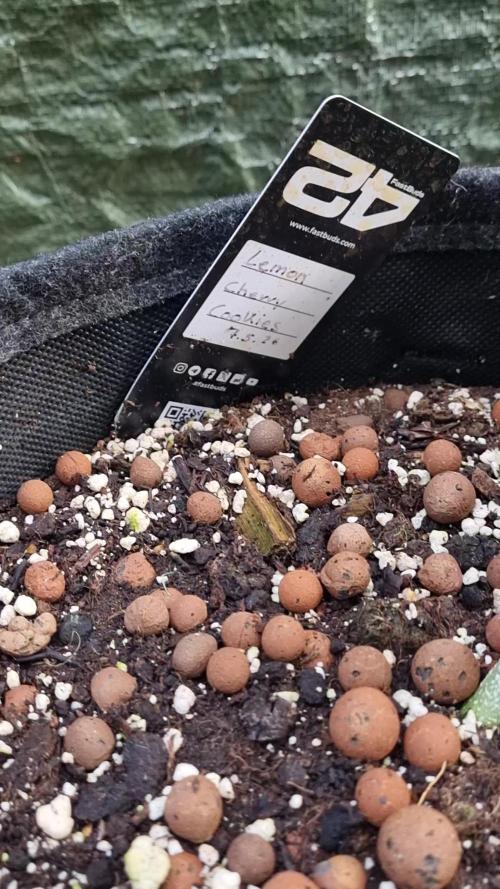
🍋🍒 Lemon Cherry Cookies Auto – Woche 14 | Der letzte Tag 🌿✂️
Und damit schließt sich heute auch bei meiner Lemon Cherry Cookies Outdoor der Kreis.
Woche 14 – und gleichzeitig ihr letzter Tag unter freiem Himmel. 🍋🍒🌿
Heute wird geerntet. ✂️
Wenn ich mir die Pflanzen jetzt noch einmal in Ruhe ansehe, bin ich vor allem davon begeistert, wie unterschiedlich sich die einzelnen Blüten entwickelt haben.
Von kräftig grünen und frostigen Buds bis hin zu wunderschönen dunkelvioletten Blüten ist wirklich alles dabei. Gerade diese Purple-Töne zusammen mit der sichtbaren Trichombedeckung machen einige der Buds für mich zu den absoluten Hinguckern dieses Outdoor-Grows. 💜❄️
Auch der gesamte Aufbau der Pflanzen gefällt mir unglaublich gut.
Die langen Haupttriebe mit ihren vielen einzelnen Blütenständen geben ihnen diesen unverwechselbaren, natürlichen Outdoor-Look. Keine perfekt kontrollierte Indoor-Umgebung, keine künstlich perfekte Form – sondern Pflanzen, die sich ihren Weg unter Sonne, Wind und Wetter selbst gesucht haben.
Und genau das erzählt man ihnen heute auch ein bisschen an. 🌞🌧️🌿
Die Lemon Cherry Cookies mussten während ihrer Reise mit den Bedingungen klarkommen, die ihnen die Natur gegeben hat. Trotzdem stehen sie heute hier mit einer ganzen Menge wunderschöner, harziger Blüten.
Auf den Nahaufnahmen wird erst richtig sichtbar, wie viel sich in den letzten Wochen getan hat.
Die Sugar Leaves sind teilweise deutlich mit Trichomen überzogen, viele Pistillen haben sich bereits orange bis braun verfärbt und zwischen den grünen Buds tauchen immer wieder diese wunderschönen dunklen Farbtöne auf.
Genau für solche Details liebe ich Outdoor-Growing.
Jede Blüte sieht ein kleines bisschen anders aus und jede Pflanze erzählt am Ende ihre eigene Geschichte.
Besonders schön finde ich, dass einige Blüten trotz der fortgeschrittenen Reife noch richtig kräftig grün wirken, während andere bereits diesen dunklen, fast beerigen Look angenommen haben. 🍒💜
Damit endet heute nach 14 Wochen auch dieses Kapitel.
Es wird nichts mehr gepusht und nichts mehr verändert.
Heute dürfen die Lemon Cherry Cookies einfach noch einmal für ihre letzten Bilder vor der Kamera stehen…
…und danach kommt die Schere. ✂️😄
Was am Ende trocken auf der Waage landet, werden wir später sehen. Aber wie schon bei der Apricot ist der Ertrag für mich nur ein Teil dieser ganzen Reise.
Vom kleinen Sämling über die ersten Outdoor-Wochen bis zu diesen harzigen, teilweise violetten Blüten durfte ich ihre komplette Entwicklung dokumentieren.
Und genau das macht so einen Grow für mich besonders. ❤️
Lemon Cherry Cookies Outdoor – Woche 14
🍋🍒 Letzter Tag
🌿 14 Wochen Outdoor
❄️ Schöne Harz- und Trichombedeckung
💜 Wunderschöne violette Phänotypen
🌱 Unterschiedliche Blütenstrukturen
🌞 Unter echtem Sonnenlicht gewachsen
🌧️ Wind und Wetter überstanden
✂️ Heute ist Erntetag
Noch ein letztes Fotoshooting.
Noch einmal die Buds im Sonnenlicht betrachten.
Und dann heißt es:
Danke, Lemon Cherry Cookies. 🍋🍒❤️
Du hast deine Geschichte erzählt.
✂️ HEUTE FÄLLT DER VORHANG – HARVEST DAY! 🏁🌿
Das nächste Update gehört nicht mehr der Pflanze…
sondern ihren Buds. 😁🍋🍒
--------------------------------------------------------------------------------------------------------------------------------------------------------------------
🍋🍒 Lemon Cherry Cookies Auto – Week 14 | The Final Day 🌿✂️
And today, another outdoor journey comes to an end.
Week 14 – and the final day outside for my Lemon Cherry Cookies. 🍋🍒🌿
Today is harvest day. ✂️
Taking one last look at these plants, one thing I really love is how differently the individual flowers have developed.
There is everything from vibrant green, frosty buds to absolutely beautiful dark purple flowers. Especially combined with the visible trichome coverage, those purple expressions have become some of my favorite flowers of this entire outdoor grow. 💜❄️
I also really enjoy the overall structure of these plants.
The long main branches covered with individual flower sites give them that unmistakable natural outdoor appearance. No perfectly controlled indoor environment and no artificially perfect structure – just plants finding their own way under real sunlight, wind and changing weather.
And today they proudly show the story of that journey. 🌞🌧️🌿
The Lemon Cherry Cookies had to deal with whatever nature decided to throw at them throughout the season.
Yet here they are after 14 weeks, carrying a beautiful collection of resin-covered flowers.
The close-up shots really show how much has happened during these final weeks.
Many of the sugar leaves are covered in visible trichomes, a large number of pistils have turned orange and brown, and between all those green flowers there are these gorgeous dark purple expressions appearing again and again.
These little differences are exactly why I love outdoor growing.
Every flower looks slightly different and every plant finishes the season with its own character.
I especially love the contrast between the flowers that have remained bright and green and those that have developed that deep, almost berry-like purple appearance. 🍒💜
And with that, after 14 weeks, this chapter comes to an end.
There is nothing left to push and nothing left to change.
Today the Lemon Cherry Cookies get one final photoshoot…
…and then the scissors come out. ✂️😄
We'll find out later what eventually ends up on the scale after drying, but just like with my Apricot grow, the final weight is only one part of this journey for me.
From tiny seedlings through their first outdoor weeks and all the way to these resin-covered, partially purple flowers, I was able to document their entire development.
And that's what makes a grow like this special to me. ❤️
Lemon Cherry Cookies Outdoor – Week 14
🍋🍒 Final day
🌿 14 weeks outdoors
❄️ Beautiful resin & trichome coverage
💜 Gorgeous purple expressions
🌱 Different flower structures
🌞 Grown under real sunlight
🌧️ Survived wind and weather
✂️ Harvest day is TODAY
One final photoshoot.
One final look at the flowers under natural light.
And then it's time to say:
Thank you, Lemon Cherry Cookies. 🍋🍒❤️
Your story has been told.
✂️ THE CURTAIN FALLS TODAY – HARVEST DAY! 🏁🌿
The next update won't belong to the plants anymore…
it will belong to their buds. 😁🍋🍒
Likes
19
Share


@adam_pawloski87
Follow
What a fun run this was ! These Ogreberrys finished up from 81 days to 102 days with nice hints of gassy , sour purple , sweetness and glistening with frost! These ladies will cure up for a month an will be ready to test out ! So much fun , I highly recommend this strain if your looking for some oooy gooohy resiny grape smelling nugs !

Likes
25
Share


@TegridyCal
Follow
The purple Lemonade despite a very beautiful structure is a little worrying us because the flowers are swelling very slowly. We are afraid that they will remain small but it seems they are getting bigger so we wait a little longer to express ourselves even if the painta seems in excellent health. Bloom is slow.


Likes
9
Share


@FrostyCloudzz
Follow
Added bud factor X and bud ignitor, hammerhead , 2.5 liters each 3 days , budding ist nice and getting thicker
Likes
13
Share


@CURATI_DA_SOLO
Follow
Questa è veramente una bestia! E una delle poche genetica che mentre ingrossano i buds ne mette fuori ancora altri! È una cosa pazzesca! I profumi sono molto forti è ricordano molto il carburante,limone,fresco! I buds sono ricoperti di uno spesso strato di tricomi che ogni giorno diventano sempre di più! Anche le foglie più grandi ne hanno parecchi! Nen vedo'ora di mettere le mani su queste cime secce! Ma la strada è ancora lunga! Tra una settimana inizio a fare flush per 7-10 giorni (si spera) questa è una varietà che da veramente molte soddisfazioni in growbox!
Green House Seed non sbaglia Mai un colpo! Che bello ! Spero tanto di fare tante altre piante del genere per loro (se rimanete sintonizzati il prossimo progetto è veramente da paura ,con genetiche micidiali) quindi miraccomando alla prossima settimana!💪🏼💪🏼💪🏼💪🏼grazie a tutti voi

Likes
67
Share


@AsNoriu
Follow
Day 63. She is going down, my fastest ever big healthy plant. Looking at first waves 3 numbers, I think it's not even 2 ounces plant, it's f@cking THREE !!! ;))))))))))))
Day 71. One to jars another for trim jail. Busy day ...
Day 72. After small delay, she went down ;)
Day 82. Straight to vacuum sacs, but she was really great !
Happy Growing !!!
Likes
4
Share


@Phatlad187
Follow
Week 9 now all growing perfect so thisnis last week of veg then they are going to 12/12.
@growerchoice
@SHOGUN COCO A 4ml/L
160ml
@SHOGUN COCO B 4ml/L.
160ml
@SHOGUN ACTIVE BOOST 2ml/L.
40ml
@SHOGUN CAL MAG 1ml/L
20ml
@SHOGUN ZENZYM 2.5ml/L.
100ml

Likes
16
Share


@Dreamz_In_Green
Follow
Sorry, was doing some more expansion and re-arranging day 12 and 13 so no pics.
We got some rain so all plants have been given a treat.
I believe of the 5, I already see (2) I do not like the traits of and will go with the 3 that are most obviously bushier and stronger looking.
Mom shot up fast and you can see the length and weaker, smaller looking leaf structure on the day 8 profile picture.
Dad was stocky and bushy... so we are on our way.
I have included a glimpse of the Aquaponic garden that the Indo plants get periodic feedings from. Once they are being fed... But for now just Neutral or rain water.
Now these should be Photo plants as the dad was Photo and therefore the Auto gene from mom is Recessive and the Dominant Photo gene should kick out the Auto correct?
If I understand that correctly I have to say I am amazed how these plants are coming up.
They are acting more like an Auto (as far as speed of development) in my very Limited Opinion.
It's very exciting.
The pots they will be going into have BuildASoil cover crop that is coming along amazing and it should be an easy transition once they are ready.
Thanks for looking and have fun growing all.
Likes
2
Share


@EtnoGrow
Follow
everything is going very well, the girls have developed, we have found a hermaphrodite, what a surprise my colleague got when he found one with eggs, what a scare! I saw a video of a Mexican whose technique consists of breaking the male balls and letting the flower clean and do it every day as soon as new shoots come out, there comes a time when they no longer grow and only the female hairs follow, I will see that That's how it goes, if I can, when I visit the indoor, a photo of the hermaphrodite will be taken, only one of the girls, I don't know if she got stressed or what happened, the others continue to flower normally, big beautiful females, I'm amazed, how many showed my first crop, I see it great what do you think friends
Likes
8
Share


@LoudLemon
Follow
No problems with growth, buds rapidly putting on weight and smell is getting stronger each day! Had to cut down on nutrients slightly as I think was feeding a little more than she could consume. Looks like she will be fully ripened around or on the 8th week. I liked the fact she started with the Durban poison, sweet smell and then as she progressed into flower, the loud, dank Kush slowly creeps up before finally taking over the the sweet smell of the Durban poison. Right now as I wright this, the Kush smell has started to mellow down and mix into a nice sweet nutty scent.

Likes
21
Share


@Staffedition
Follow
Привет друзья. Моей растихе сегодня 96 дней.
Заметил паутинного клеща.
Сегодня обработал раствором.
Растение почти пришло в себя.
20.10 перевёл свет в режим 12/12
Начал применять LST технику на 19 дне и продалжаю применять её через день, а 18 августа добавил ДЕФОЛИЗАЦИЮ
С 20.08 ДЕФОЛИЗАЦИЮ делаю каждые 3,4 дня
С 20.08 LST технику делаю каждые 4.6 дней
На сегодняшний день влажность 54%
5.09.2023 заметил высокий Ph 7.9
С 48 дня Ph не ниже 5.8
На сегодняшний день Ph 6.0
Начал кормить с 60 дня Canna Terra Vega
PPM 770
Всем мира и добра!
Не забудь поставить лайк❤️, если понравилась как прошла неделя
И читайте наш TELEGRAM: https://t.me/smail_seeds
#Smail_Seeds 😀
Likes
14
Share


@Fat_Olsh_Farms
Follow
Day 35. Minor defoliation and supercropped a few branches.
Day 37. Starting to flower nicely, some frost Starting to appear on buds.
Day 41. Strong smell of strawberry bubblegum when manipulating plant.
Likes
7
Share


@Bmy88
Follow
Las pequeñas tienes bastante fuerza a excepción de una purple punch que está algo estancada pero sus hojas se ven sanas, esta semana apliqué enraizante y luego solo agua hasta 3 semana volveré a aplicar, las blue mammoth vienen hermosas al parecer son más resistentes.
Likes
5
Share


@Chris42081
Follow
She is tall and stacking flowers nicely. . I've never not trained a plant so this one. Is new to me.
Likes
14
Share

@GoodTimesOrganics
Follow
Hi liebe Community and Welcome Back! 💚
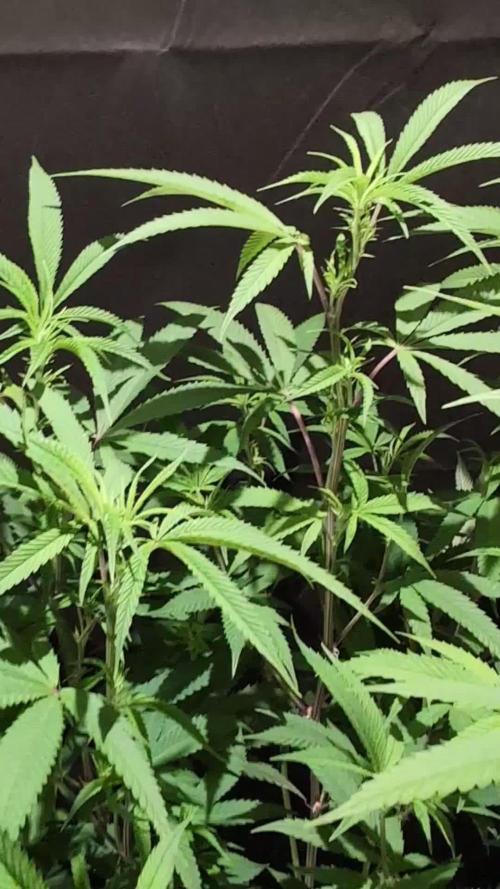
Slush Mint Cake von Dutch Passion!
Die erste Blütewoche ist vorbei und die Pflanze hat im Stretch bisher 14 cm zugelegt, was noch sehr moderat erscheint..
Die Pflanze hat nun eine Höhe von 104cm erreicht.
Sie hat eine wunderschöne und homogene Wuchsform.
Dass untere Drittel der Pflanze habe ich ausgedünnt und die Triebe rausgeschnitten.
Die Wuchsform ist kräftig und Energie geladen.
Die Bedingungen im Growschrank sind für die Blütephase aktuell Top!
—————
🌞 Temp: 26
🌚 Temp: 18°C bis 19°C
💨 RH: 54%
VPD: 1,17 kPa
💡ppfd: 530 mpm
—————

Likes
10
Share

@BlaKX
Follow
Hallo Growmies,
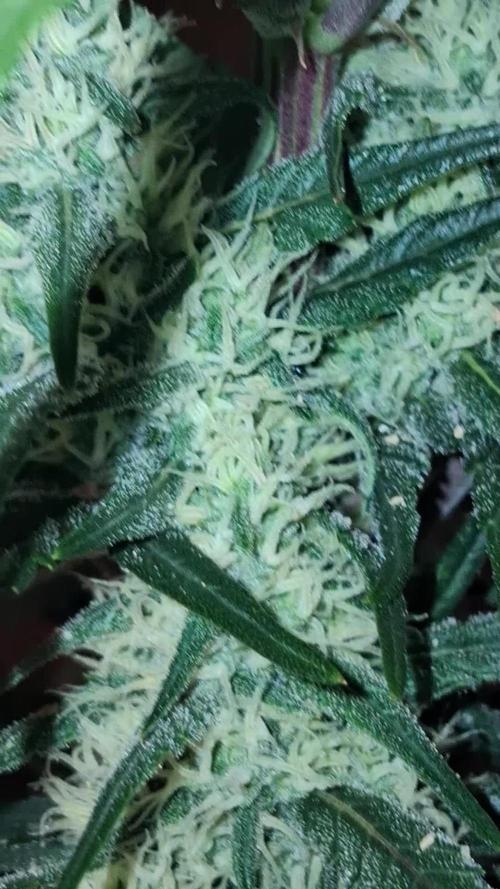
Die Krümmel auf der Pflanze sind sägemehl wo Raubmilben verteilt haben.
Die rosa pistillen ziehen einen magisch in ihrem Bann, abends wird es 18-17C° kalt was eigentlich reichen müsste um zu purpeln.
Die Harz Produktion hat auch sichtbar zugelegt genau wie der Zitronen und würzig Cookies Geruch.
Bis her eine der schönsten Pflanzen vom Wachstum und aussehen her
Likes
23
Share


@Bossy_Marmalade
Follow
Big Lemon needs a stronger dose of calcium in her next feeding. I normally dont have nutrient probs but ive never had to feed a plant this big and hungry 😯
