Likes
Comments
Share
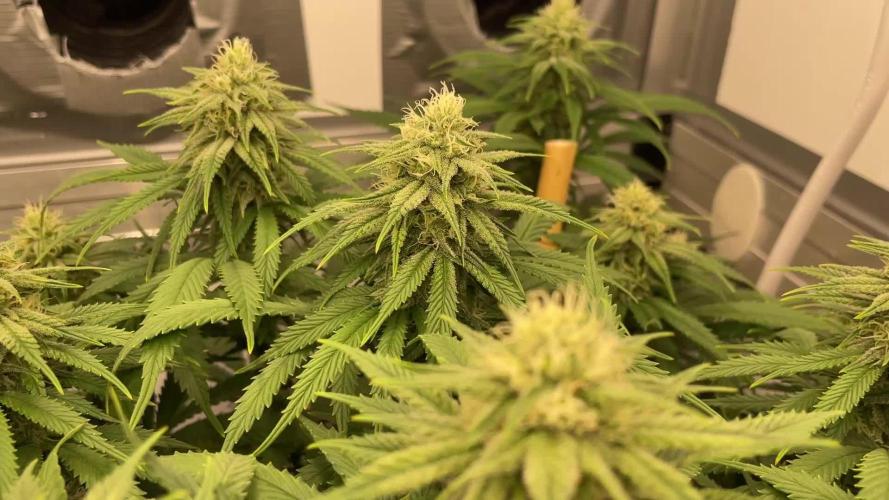
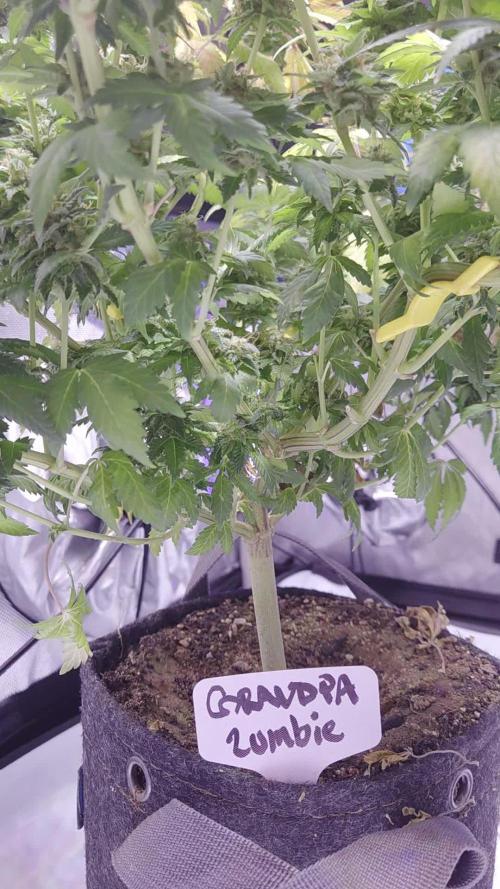
She is a great strain thus far. My tent has been getting a bit hotter in the summer. Just a bit of issue though. Can't wait to try this one. Such a sweet candy smell.
Likes
7
Share
Quarantesimo giorno tt procede benissimo
Likes
16
Share
A friend gave me a clone of his Black Domina. First week i added the recommended dose for a clone of the nectar line. I got a little nute burn so i flushed it a little with ph to 6,3 water. Looking a little better. We will see what happens in the next few days. Pictures are about a day and a half after i gave it the recommended nute dose for clones.
Likes
24
Share
COLOMBIAN JACK BY KANNABIA Week #8 Overall Week #8 Veg This week she recovered from being topped and being pruned she's going great it's also crazy hot right now and she's dealing with the heat she's got some great genetics!! Stay Growing!!
Likes
2
Share
Right now the plant is doing good. She seems like she had slight deficiency on some of the fan leaves. I gave her good water of nutrients and recharge so she will be fine. Little budlets are everywhere. No purple yet. Was hoping I got a solid purple pheno. Well well see if she purps in the end. Stay tuned.
Likes
11
Share
So... I may have got baked and had one of those.... "I know what will be a good idea.!" I give you Frankenstoned early Lst lol I know I am a novice and have no right to be messing with things that already exist, and the weighted lst has probably been done many times already but I was having fun, I had a silly stoned idea, and just for shits n giggles, I made it happen, and for me this growing thing has to be fun right? Humour aside, it actually seems to work lol. I find I am a little heavy handed and a bit clumsy trying to tie things down. I recently accidentally snapped one of my criticals branches off so my little system allows me to just lift the wires up and tuck it under at strategic points.. It is quite early to be training I guess but the wire gently pushes down on the stem.. It looks heavy handed but it is actually quite gentle... So let's see if it works or not.. I am only trying it on this 1 subject.. I am expecting for the Mazar to pull up on the weights as it fattens up but I have allowed space on the bolts to add more weight.. Other than this revelation (or massive cock up) lol. The Mazar has been struggling in the heat a bit but surviving.. Let me know your thoughts, happy growing lovely people
Likes
17
Share
Vamos familia actualizamos la cosecha de las Purple OG KUSH de Dutchfem . La verdad que el secado muy bien 7 días en Malla y a los botes, 40% humedad y 24 grados es la temperatura ambiental que han tenido en el secado. Por lo demás de miedo os la recomiendo. Gracias a DutchFem, Agrobeta y Mars hydro , sin ellos este proyecto no sería igual 🙏. Agrobeta: https://www.agrobeta.com/agrobetatiendaonline/36-abonos-canamo Mars hydro: Code discount: EL420 https://www.mars-hydro.com/ Buenos humos.
Likes
34
Share
D40 (31/12/2020): Second week of flower and everything is good! They are still stretching a lot. I'm not continuing LST with ties but just by tucking and banding stems and leaves. I will continue to slowly remove leaves and small bud site under canopy that will never receive enough light. The higher buds receive around 520 and 600 PPFD (40 000 to 46 000 lux) for a DLI (for 20 hours of continuous light) around 37,44 and 43,2 moles of photons which is perfect. This Glue Gelato phenotype is weird as it grows weird leaf structure since a couple of weeks. Probably since I discovers a nutrient lock in the soil with too much nutrients. Banana Kush is super healthy and look amazing! 😎 - temp: 25C - no water - RH: 56% D41 (01/01/2021): They are stretching like crazy so it's a sign of good health! I fed with nutrients 3/4 of the recommended dose for transition week. I gave more then a gallon approx. 4L per plant. I did remove leaves today but no bending. I want to let them grow in height. - temp: 25 C - water: PH6.3, 820 PPM approx. 4L each plant - run off: PH6.7, 1150PPM for BK ; PH6.8, 1120 PPM for GG - RH: 54% D42 (02/01/2021): Nothing special today. I try to turn the plant 180 degree each day to make sure fan is blowing air on every side of the pot and plant and to make sure light is distributed evenly. I also swap the two plants every 2-3 days to make sure again that the plants receive light equally. I continue removing leaves and small buds site under canopy. - temp: 25 C - no water - RH: 54% D43 (03/01/2021): The lights are now at 16 inch from the top buds and just 12h later I saw a big difference. They are now ready to receive intense light 😎. They receive approx. 650 to 780 PPFD and even 900 PPFD for the top buds (50 000 to 60 000 lux, and even 70 000 lux). I will check closely in the next days to make sure the buds and leaves are not burning. I fed only Max Minerals full recommended dose for transition week. I gave more then a gallon approx. 4L per plant. I placed a round stake in each pot for when the buds will be heavy. - temp: 25 C - water: PH6.3, 460 PPM approx. 4L each plant - run off: PH6.8, 1550PPM for BK ; PH6.9, 1480 PPM for GG - RH: 55% D44 (04/01/2021): Nothing new today. *** UPDATE ON BUGS: I did not see any more larvae since last week. It's the 3rd week since adding nematodes and after adding 2 pouch per plant, doing 2 insecticidal soap treatment and removing 1 inch of soil, I feel like I did control the infestation. I still see some mature fungus gnats on sticky traps but nothing alarming. Increasing air flow and reducing RH also helped a lot for those bugs. - temp: 25 C - no water - RH: 55% D45 (05/01/2021): Nothing special today. I let them grow without new LST. I did not removed leaves since a couple of days. They are growing in height and that's what I want. I might do a defoliation in beginning of week 7 (or week 3 of flowering). I want to reduce RH in the tent under 50%. When the lamps are off, I have a lot of difficulties to maintain a proper RH for flowering stage. During night, it is around 57% with the 4 inch AC Infinity inline fan blowing full speed. RH in the room where the tent is is around 35%-40%. With 5 plants in the tent (2 cannabis, 2 tomatoes and 1 mint) it will be more difficult to control RH in the next week with flower and fruit growing bigger. I ordered a small dehumidifier on Amazon to help me reduce the RH. - temp: 25 C - no water - RH: 53% D46 (06/01/2021): I fed today half of the recommended dose for transition week. The PPM of the run off from last fed was high so I want to cut a bit on nutrients. The run off of both plant is down under 900PPM which is what I wanted 👍 -temp: 25 C - water: PH6.3, 480 PPM, approx. 3.5L each plant - run off: PH6.9, 860PPM for BK ; PH6.9, 766PPM for GG -RH: 52%
Likes
12
Share
June 17: The garden area had just under 3 inches (75mm) of rain in the past week which was really needed. Temps have been mid teens to low 20s deg C. The wind has been relentless and the plants continue to take a beating. Overall pleased with the growth but some concern, because preflowers are showing, they may be stunted and flowering early (due to environmental stress).
Likes
1
Share
[2026-Feb-27 | Day 63] - She's really developing fast now, and drinking a ton. The estimated 60 day flowering time might just be accurate after all. she seems happy for the most part, and not showing any signs of overfeeding yet. I've increased lighting to 38 DLI at present, and aside from a small amount of bleaching/burning on a couple of fan leaves, the rest are putting out lots of trichomes to compensate. I will try to increase lighting a little more in the coming week to help maximize energy production and bud development, then start to taper off after that as buds start to ripen. If she continues to develop this fast, she might just end up getting harvested around the same time as the blueberry bastard nearby.
Processing
Likes
28
Share
Slowly starting out, dialed in temp and humidity. Was jumping from 68-82 degrees Fahrenheit And humidity from 38%-52% Only watering with cal mag and occasional misting.
Likes
5
Share
@123Grow
Follow
Filling out the trellis net. Looks like another 2-3 weeks until I flip the ladies. Using SST’s, LABS and natural inputs for this grow. I have made some mistakes in the past using Organics, but have figured out HOW to use them for an entire grow. The vegetative state, I have never had a problem with. The transition into the first 3 weeks is when I have had the most issues. After a little research and testing, I finally have a basic blue print of how to feed plants in flower for 10-12 weeks now or shorter. Mark Bowell from Perfect Gardens on YouTube and Mr Canucks Grow from Canada are my largest information inputs. Final Thank you to Mr McGooz for keeping me in the know. 10-11: yes, some of the stalks are turning purple. This is not due to phosphorus, magnesium, or any deficiency. It is due to the light being too intense for the plants. I am at the max distance and running the light at 30% ( it’s a 600 watt 🤣🤣). Soooo yeah, that purple is going to stay for a bit. Purple with other leaf discoloration or senescence IS a problem, purple stems with NO leaf issues isn’t serious issue. Cant it be fixed? We are going to find out….Photosynthesis Plus will be on hand in the next 5-6 days. This permits the plant to USE more of the photons ( yes, I have carbon in my media). This should minimize the purple and allow me to UP THE WATTS 🗣️🗣️ 10-14: spoke to my “guide” and we made the decision to go ahead and flower these ladies. We saw how much stretch there is to be had and realized we are currently filling the trellis by 75%. We are estimating the entire 4x4 area to be completely filled. I defoliated and pruned the smaller sites off the lower areas of the plant. Not quite lollipopping, just selectivity choosing sites to keep and bones that will get in the way. For transition I am using a ratio of 1:1:1 on NPK’s to ease the flip. The ppm’s will be between 750-800. Once we reach early flower, we switch the NPK’s to 1:3:2 ( flower girl by Dr Earth OR Fish bone meal and langbenite). I switch each feeding between the two for 5-6 weeks. At week 7 we switch to 0:3:3 ( seabird guano and Langbeinite) at 500 ppm’s. Week 8 the same feed. Week 9 kelpseaweed/water Only ( these are 10 week cultivars). Thank you for taking the time to read. 10-16 😍😍😍 Plants are starting to show deficiencies!!! Yes, normally one freaks out 😂😂😂 The slight deficiency is a sign that I can go ahead and start: The Flowering Cycle. When using Organics, you have to use your eyes because nothing is specific. Meaning: you have to see when the amendments are running out to A: Top Dress B. Make compost teas. We are going the compost tea route for flower. I made a video showing exactly what I use. The ratio is 5-5-5 ( yes earlier we were going to use 2-2-2, but we found out there is no calcium or magnesium in the all purpose mix by Dr Earth…another reason to learn to read your plants).
Likes
2
Share
Hi all, This week we have had a big defoliation and already the canopy is tightening up nicely. I have been running c02 intermittently on days when I can maintain a temp of 83 F . This run I'm dropping the EC Slightly and also adding a water only feed each week to prevent build up of nuits which seemed to happen on my last run about wk 4 into flowering . The Vivosuns Humidify also played its role this week but will be turned down each week to prevent any issues. Have a nice day.. Skully💀
Likes
2
Share
Topped once, turned off IR @ nights, slowed vertical growth back down, and took off both of the very lowest internodes on each plant. Eisenia fetida Stratiolaelaps scimitus Armadillidium vulgare Red wigglers (Eisenia fetida) are highly beneficial. They are considered an ideal choice for "no-till" or container-based organic growing because they live in the upper layers of soil, feeding on organic mulch rather than the plant's root system. Red wigglers accelerate the breakdown of organic amendments and produce high-quality, nutrient-dense worm castings directly in the root zone. Clover is another exceptional component of an organic rhizosphere, offering a sustainable, self-sustaining alternative to synthetic nitrogen fertilizers produced via the energy-intensive Haber-Bosch process. By forming a symbiotic relationship with Rhizobia bacteria, clover converts atmospheric nitrogen N2 into ammonium NH4, providing a steady, slow-release nutrient source that enhances soil health and reduces environmental impacts. Red clover offers superior nitrogen fixation and biomass production compared to white or yellow clover, making it the premier choice for maximum soil vitality, particularly for improving soil structure and providing a high-volume nitrogen credit for subsequent crops. If it is fully functional and efficient soil, the rhizophagy cycle is superior long-term than any synthetic delivery when it comes to preventing deficiencies, not because it's "better," per se. The medium will require a very high CEC to make it to harvest without re-fertilization. The rhizosphere acts as a dynamic, interactive exchange where plants and soil microbes trade resources based on immediate needs. When a plant lacks a specific nutrient, it changes its physiology and releases specialized chemical cocktails—root exudates—into the surrounding soil. These exudates, which include sugars, amino acids, and organic acids, serve as a "shopping list" to attract specific microorganisms, which in turn return higher levels of desired nutrients. There is nothing in comparison when using synthetic delivery, which can cause plants to stop producing exudates, effectively "starving" the beneficial soil life, over time turning the soil barren and void of microbial life. Responsible use, applying the right amount at the right time, can minimize these negative effects. Relying solely on synthetic fertilizers without replenishing organic matter is what typically leads to exhausted soil. The use of synthetic fertilizers can utilize the Cation Exchange Capacity (CEC) of the soil, but without a robust rhizosphere and active microorganisms, the efficiency of this process is significantly reduced. This makes synthetic growing more difficult to prevent deficiencies overall compared to an efficient organic living soil with a robust rhizophagy cycle, as there is no "one size, fits all" when it comes to different nutrient profiles of strains/genetics, making it trickier to "guess" and prevent creeping deficiencies. CEC does not contribute towards EC. Add more CEC using biochar, problem solved. If you keep pH between 6.3 and 6.7, hydrogen is exudated to cycle the medium's CEC for its needs. Keeping the pH between 6.3 and 6.7 creates an environment where plants release H+ to displace positively charged nutrients (like Ca2+, Mg2+, K+ held on soil particles or within artificial media this cycle through nutrients via the medium's Cation Exchange Capacity (CEC) Microorganisms generate a stable potential of approximately 0.5 V EC. The rhizosphere creates its own food, similarly to chelation, using 1000's of varying combinations to create its own food. Start to finish, just add water. Eventually, more materials will need to be added at the beginning of each new grow, but very attainable to go from seed to harvest without ever fertilizing. ATP is important when it comes to biomass accumulation. Cellular root respiration and cellular respiration are essentially the same biological process, the breakdown of glucose to create usable energy (ATP) in the presence of oxygen, just taking place in different parts of the plant. Synthetic (salt-based) grows have significantly lower levels of total rhizosphere respiration, often referred to as root-zone activity, compared to organic living soil grows. While the plant roots themselves may respire in both systems, the surrounding soil ecosystem in a living soil setup is vastly more active, teeming with bacteria, fungi, and beneficial microorganisms. 2 pools of ATP, it won't double in growth buuuut, but improving root respiration by ensuring high oxygen in the soil is crucial. Good aeration ensures roots can fully utilize glucose to generate the ATP necessary for nutrient uptake, leading to healthier and more productive plants, even if growth isn't exactly doubled. The ATP created using root respiration is dedicated to rootzone growth; the ATP created using regular cellular respiration in a synthetic system would have to dedicate a lot of ATP to the roots when there is little or no root respiration. It's true that there is less of an initial ATP cost in breakdown when nutrients are already in their final form (synthetic), but you lose a solid chunk of ATP when the entire plant is reliant on cellular respiration alone; a large portion of ATP is dedicated to root zones for "forced" nutrient uptake rather than traded. Making it overall less efficient, even if the initial cost of breakdown is higher. Not sure if I butchered that but one can hope It makes sense. Oxygen is of critical importance when growing in living soil compared to synthetic soil because it supports the metabolic needs of the microbial, fungal, and insect ecosystem, rather than just the root respiration required by the plant itself. While synthetic grows can survive in lower-oxygen environments with precise mineral feeding, living soil systems rely on aerobic microbes to decompose organic matter (microbial mineralization) to create plant-available nutrients, which is an oxygen-intensive process. While a specific fair percentage is difficult to guess, my experience points to a massive, compound difference between the two methods and the amount of oxygen required. All the ATP spared is used on more biomass, not only that, but the extra root respiration can achieve a much higher CO2 compensation point naturally than you could with synthetic and atmospheric CO2 alone. As a plant grows faster and increases in size, its demand for nutrients to support that growth increases, requiring a higher rate of nutrient uptake. As plants enter phases of rapid vegetative/floral growth, their metabolic demand for nutrients increases exponentially. Without a robust buffer zone—whether in the soil (cation exchange capacity) or in a hydroponic reservoir—deficiencies will occur rapidly because the instantaneous demand for specific nutrients can quickly exceed the rate of supply. A growing body of evidence suggests that organic living soil provides superior long-term soil health and environmental benefits compared to synthetic fertilizers, which are often criticized for promoting a cycle of dependency and degradation. While synthetic fertilizers offer short-term convenience and high yields, they often come at the expense of long-term soil health, sustainability, and increased corporate control over growers/ farmers. Organic living soil, while slower and requiring more care to establish, creates a sustainable, resilient, and, ultimately, more fertile environment. We don't really grow; we facilitate energy conversions, and energy is just numbers. Because the universe works the same way today as it did yesterday, there is a single, fundamental mathematical quantity that remains constant. We call this quantity energy. You cannot put "energy" under a microscope. You observe matter and forces (like heat, motion, or light), but energy is just a scalar number calculated to help predict how these things will change and interact. When an object falls, or when a battery powers your phone, matter shifts and changes form. Through it all, the universe ensures the "total score" of the numbers remains exactly the same. Once all water is removed, approximately 95% to 97% of a plant’s dry matter consists of carbon, oxygen, and hydrogen. These three elements form the structural backbone of all plants. NPK & all the rest 3-5%. Indigenous Amazonians created, or at least significantly enhanced, the fertile, dark soil known as Terra Preta de Índio (Portuguese for "Indian Black Earth") by incorporating biochar and other organic materials into the soil. This anthropogenic (human-made) soil technique, which dates back roughly 2,500 to 8,000 years, allowed ancient civilizations to flourish in regions with naturally poor, acidic, and nutrient-poor tropical soils.
Likes
Comments
Share
Likes
5
Share
Week two had some challenges, weather started getting cold, night temperature reaching 17- not good- decided to stress them out with one day of 24 hours of light to adjust the 4 hours night time to be during the day to maintain good temperature thru out the day.. Transplant done into 11 L pot, fed them with plagron grow 2 ml and 1ml power roots and 2 ml vita Race spay on leafs. I will do the same every 5 days from now on. Will top one and Lst the other one without topping just for comparison.
Likes
31
Share
@Reaper
Follow
start of week 4 i added epsonsalt last week to stop the magnesium problem
Likes
11
Share
@Crwfz1
Follow
Lots of training on all the girls this week all original sensible two gorilla glue one is the biggest under scrog already ghost is right behind then going to lay the last babby gorrilla across light range stay tuned
Likes
62
Share
7/12 Soil was a little damp so I watered lightly only what looked like it needed it. Dr. Zymes seems to have no negative effects. Plants just look super clean. I still saw some patches of PM and I only had the free samples so I'm going to have to use another product in conjunction to treat this. Overall I'm pretty impressed with the Dr. Zymes. HAD MY VIDEO AND TONS OF PICS UPLOADED BUT THIS SITE WOULDN'T ALLOW ME TO SAVE. I'LL UPLOAD THE REST LATER "IF" THIS EVEN ALLOWS ME TO SAVE. Went back over at three and watered the girls. Everything looks amazing. Trying to upload video now. 7/13 Didn't water this morning. Plants look fantastic. Went over at 4:30pm. Things looked great. Definitely stretching. I took some good pictures. Didn't water as plants seemed VERY happy and soil still had a little moisture. I gave them a touch of kindness which means I gave them a tiny bit of water to hold them over until morning. I know this is not a good practice to get into but I didn't want to come back to wilting plants. The little seedlings are turning more lime green (which isn't good) and have some yellow leaves. They have recycled soil from last grow. May need to feed more. I went through them and moths flew everywhere. We have a major brown tail moth problem here. I know I just sprayed Dr. Zymes but I'm going to have to spray BT. I must've seen at least half a dozen moths. On just those three tiny plants. Still struggling with PM. 7/14 Went to the garden briefly this morning. It rained last night and was drizzling while I was there so I obviously didn't water. Its still sprinkling and I'll be over there later to check. Plants are really stretching into "the asparagus" stage as I like to call it lol. What will eventually be a bunch of colas stretch into what I think looks like asparagus spears. That may be part of the reason why some of the leaves turn yellow and die in the lower middle canopy during this time. Everything looks great though and I certainly have plenty of leaves. I looked at last year's diary at this date and got some relief noticing the same things happening last year at the same time of year. UPDATE: Went back to the grow as the "rain" and "thunder showers" weren't producing much water. I checked the soil and it seemed to have dried out some (more on smaller bags) and hadn't FULLY watered the plants. I watered lightly. I listened and I could hear the water work it's way down the medium. Even if it pours tonight plants will be ready for a feed tomorrow. The 3 little ones in buckets outside especially. I have work to do tomorrow. 7/15 It's overcast today and looks like rain. Forecast called for a nice sunny day. Anyway I fed two gallons to nutes to the garden and did some slight defoliation. I had to hurry as I had a doctor's appointment. I have branches that need to be tied down and plants need to be cleaned up a bit. If it's not raining I may do a preventative BT spray. We have a HORRENDOUS outbreak of brown tail moths. I don't think the bother cannabis but they are poisonous and the rash that develops is hell. 90 degrees at 6:30 plants weren't totally dry but the top inch or so was so I gave them a good drink. Took some pictures and a video I'll upload when I have a better connection. Cop was watching me. Good thing I'm in a legal state and my grow is totally on point. 7/16 No water this morning. Soil was still wet. Plants are looking good. Will update more later on. Defoliation, pruning and spraying are on the agenda. Made a video and took more pictures but internet is spotty and doesn't want to upload. Went back and watered lightly before a massive thunder storm dropped sheet rain for like an hour. Internet is still slow so I'll have to wait till tomm to upload. 7/17 No water. Brown tail moth rash is driving me crazy. Plants still stretching and look overall healthy. Defoliated some this morning. Will update more later. Went back over and gave a little water before it began to downpour. 7/18 Raining with what looks like more rain in the forecast. Good. Hopefully will help me lower the pH a little. I didn't take pictures or even go in the cage this morning. This brown tail moth rash has me scared lol. It really sucks. Makes poison ivy seem pleasant. When rain stops BT will be sprayed.
Likes
1
Share