


Likes
Comments
Share


@lucy_greenchef
Follow
Auto Ultimate by dutch passion. for this strain i think 13weeks will be enough to finish buds, lets wait and see whats gonna happen^_^



Likes
5
Share


@AustinRon
Follow
TH 1Q2025 - Week 7 - Flower 4
(ON Haze X Original Haze) X Northern Lights #2
“Todd’s Haze”
Objective
- 8 Female Plants, Topped ONCE @ Flip, 12” when topped
- Modified Sea of Green
Seeds Wet: 1139PM, 28.2.2025
Germinated: 2.3.2025
Flip: 21.3.2025
Harvest: 77 Days, DATE: 6.6.2025
_________________________________________
Initiate Auto-Fertigation
LightDistance: [ 19.5, in] # We’re in STRETCH, ~1.5”/day!
11” Top Canopy
- [ ] TM-7: [ 0.125, g] # Prep
- [ ] Fertigation: [12, 12, 6] # [Primer A, Primer B, Silica Skin], Dilute to EC
- [ ] Photosynthesis Plus: [ 6, ml]
__
Fri Apr 18, 2025
TH 1Q25 29:F:4:1
__
Sat Apr 19, 2025
TH 1Q25 30:F:4:2
2000 Watering w/ PCAL 1660
Fertigation: [ 1, gal]
RLA: [ 8.5, 4.2, 3.4]
PCAL 1660: [ 2.5, ml] # Micronized Powder
__
Sun Apr 20, 2025
TH 1Q25 31:F:4:3
Light Distance[TOP]: [ 11, in] # Still Stretching
LightIntensity[TOP]: [ 925, µ], [ 40, mol/day]
LightIntensity[Main]: [ 801, µ], [ 34.6, mol/day]
We’ll Raise EC by 0.1 mS/cm/day till we’re comfortably ~ 2.4 (IFF They’re happy) …
Would like to see overall GREEN both darkening & evening out . . .
Defoliation
- [x] Remove Fan Leaves below Node 7 # Preparation for Understory Lighting
- [x] Remove Branches with TOPS bottom 25% of canopy
Auto-Fertigation Today
- [x] CLEAN Chiller
- [x] Vinegar
- [x] H202
- [x] High Throughput (Blast the interior AFTER Vinegar & H202)
Initial Reservoir Fill: EC: [ 2.0, mS/cm]
- [x] 4 Gallons (Dehu, RO, or Distilled)
- [x] Primer A & B: [ 54, ml]
- [x] Silica Skin GEN 3: [ 27, ml]
- [x] Photosynthesis Plus: [ 24, ml]
While configuring - Ran 2 Gallons of Feed Before UNPLUGGING. ;-}
__
Mon Apr 21, 2025
TH 1Q25 32:F:4:4
- [x] Light Distance[TOP]: [ 9, in] # Still Stretching 1.5 - 2”/Day
Reservoir Fill: EC: [ 2.1, mS/cm]
- [x] 4 Gallons (Dehu, RO, or Distilled)
- [x] Primer A & B: [ 54, ml]
- [x] Silica Skin GEN 3: [ 27, ml]
- [x] Photosynthesis Plus: [ 24, ml]
- [x] SLF-100: [ 20, ml]
We’ll take EC to 2.4 mS/cm (Relatively Heavy) IFF They’re all happy with the ‘upgrade’. ;-}
Picked up 8 gallons of Distilled from HEB. Used for to refresh tank after last nights flush.
Going for NO MORE than 2 Gal/Day.
We’ll feed MORE than necessary to get DOWN TO Optimal delivery.
Irrigation Timer is set to Every 3 Hours, 1 min flow, four times a light period.
__
Tue Apr 22, 2025
TH 1Q25 33:F:4:5
Observation
Vibrant, Uplifted, Rockin’ - 1250 runoff, Grew TWO MORE INCHES, Light Distance 6”
1900: Measure Runoff
- Amount: [ 1250 , ml]
- EC: [ 2.1, mS/cm]
- [x] Harvest Dehu
- [x] Refresh Reservoir - 2 Gallons
- [x] EC: 2.1
- [x] Primer A & B: [ 27, ml]
- [x] Silica Skin GEN 3: [ 14, ml]
- [x] Photosynthesis Plus: [ 12, ml]
- [x] SLF-100: [ 10, ml]
__
Wed Apr 23, 2025
TH 1Q25 34:F:4:6

Plants Look GREAT!
Plants stretched 2 - 3” last night. If we don’t stop, we’ll need to supercrop the Exceptions.
Cleaned MANIFOLD FILTER - Had GRANULAR feel, on top of a little slime. Will check Thursday.
Doubled IRRIGATION TIME from one to two minutes x 5 Irrigations. We had negligible runoff last night.
1900: Measure Runoff
- Amount: [ negligible, ml]
- EC: [ ? , mS/cm]
- [x] Harvest Dehu
__
Thu Apr 24, 2025
TH 1Q25 35:F:4:7
- [x] Harvest Dehu
- [x] Refresh Reservoir - 2 Gallons
- [x] EC: 2.3
- [x] Primer A & B: [ 31, ml]
- [x] Silica Skin GEN 3: [ 16, ml]
- [x] Photosynthesis Plus: [ 12, ml]
- [x] SLF-100: [ 10, ml]

Likes
68
Share


@Fatnastyz
Follow
Week 2
11-14
Day 8
Roots showing and water day
Slight water, xplant to final tomorrow!
11-15
Transplant day! Went like a champ!
ok so I thought I was gonna water feed, but opted out of it.
If I over feed, with 7tbs. so this time I only added 4. I'll just read em as I go.
I was about to make stuff tuff.
so 4 tbs Craft blend, 1/2 cupish worm poo, hp connect in hole.
just barely wet the hole, enough to hold the sides. watered in with around 8oz or so. yucca, humic. 6.2
11-16
Looks happy when I woke up.
11-17
She grew a little more than yesterday.
11-18
Water, recharge, cal/mag, yucca and drops of balance.

Likes
39
Share


@King_Geedorah
Follow
Holy COW some serious growth this week especially out of the Mimosa she is easily 30 inches right now 12 over the Jaeger I'm going to have to figure out a way to even them out I'm thinking BUCKETS
Likes
11
Share


@DixTheReal
Follow
É stato il mio primo ciclo di coltivazione e purtroppo ho fatto molti errori che mi serviranno da esperienza. Ho sbagliato inizialmente la distanza della lampada e le piccole si sono allungate troppo, poi ho iniziato LST forse troppo presto e non sono riuscito a orientare bene i rami per farle crescere tutte alla stessa altezza infatti alcuni fiori sono proprio piccolo rispetto ad altri, altro errore quello di non misurare il PH e questo mi ha portato ad avere inizialmente carenze di fosforo e potassio per poi continuare con calcio. Ho sbagliato le dosi di fertilizzanti che dal prossimo ciclo alzerò per provare ad avere risultati maggiori in termini di quantità e infine come ultimo errore riconosco di aver iniziato il flush troppo presto (17 giorni di flush) quando avrei potuto dargli almeno ancora un’altra irrigata di fertilizzanti per far gonfiare i fiori. Nonostante tutto sono contento ed é stato molto divertente e istruttivo, ora le piante stanno seccando e poi le passerò in concia per provare finalmente il sapore. Ho fatto una pesata a umido solo di una pianta perché tutte e due insieme non ci stavano ma credo sia sballata come misurazione quindi peserò direttamente a secco.
A secco sono risultati puliti 68g, ho fatto una concia di 3 settimane e il sapore é davvero buono. Sballo da divano, molto potente come effetto. Sono molto soddisfatto

Likes
14
Share


@KannaKullektiv
Follow
Aloha Freunde der Sonne 😊
Meine schönen Pflänzchen zeigen stolz Ihre Härrchen.
Langsam fangen Sie auch an einen schönen Duft zu verteilen.
Viel Spaß🙏

Processing
Likes
31
Share


@NorCal311
Follow
10/29/19 - All is going good. The stretch always amazes me on how fast they grow! Watering 4 cups of water each plant every three days. I did not switch to 13/11 yet. I will do that the last few weeks. I moved the lights up to compensate for the stretch so lets see what that does.
10/31/19 - Moved the one that is not flourishing from the net to the side. The other are rocking the house!!! Did a bunch or rearranging and LST in the net. Should be set this week to leave it all alone. I also did a bunch of defoliation. Too bad I was not going to clone this strain anymore, cause there was some great cuttings. 👌
Likes
16
Share


@Mrg7667
Follow
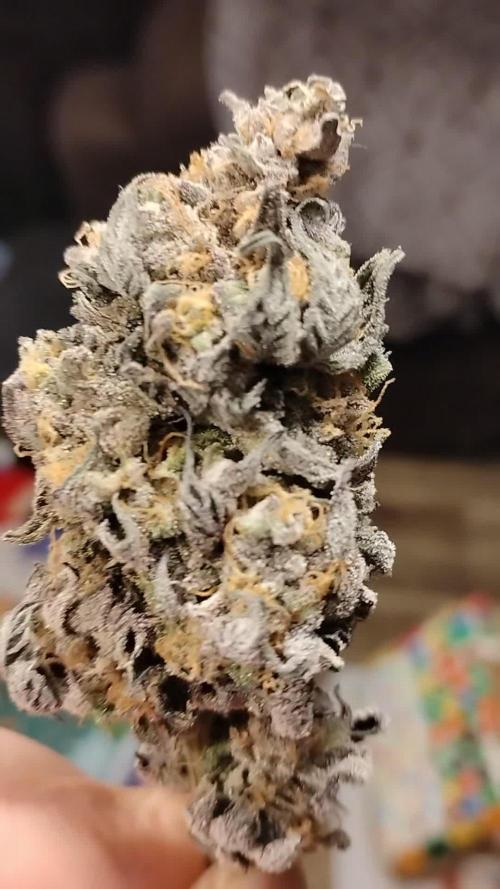
Still see nitrogen toxicity so im going cut biogrow down to half dose and see how it goes! Besides that all looks well
Smells are stepping it up in a couple pheno!
On the Chocolate Marshmallow side we have a intense sour fruity pebbles on a pheno that is just unreal
And on the double d side we have some rotten tooth chem smells coming through!



Likes
9
Share


@Oldwied
Follow
Holy Sunday
She is two weeks in flower and grows so vigours. Every Day I keep on tucking the branches under the strings.
The Screen is slowly filling up.
In 4 or 5 days I will stopp tucking.
Light Power: 80%
Day 53
Flower #8
Watered with 2,5L freshly brewed compost tea
Sprayed with freshly brewed compost tea
Day 56
Flower #11
Watered 2 L tap water

Likes
6
Share


Likes
83
Share


@Teamdirtbag2
Follow
Looking great.
Sour Crinkle is alot further along.
Sour Livers doing really nice
Auto Blues is getting large very leafy this one might take a while


Likes
Comments
Share

@GoodTimesOrganics
Follow
Hi liebe Community and Welcome back! 💚
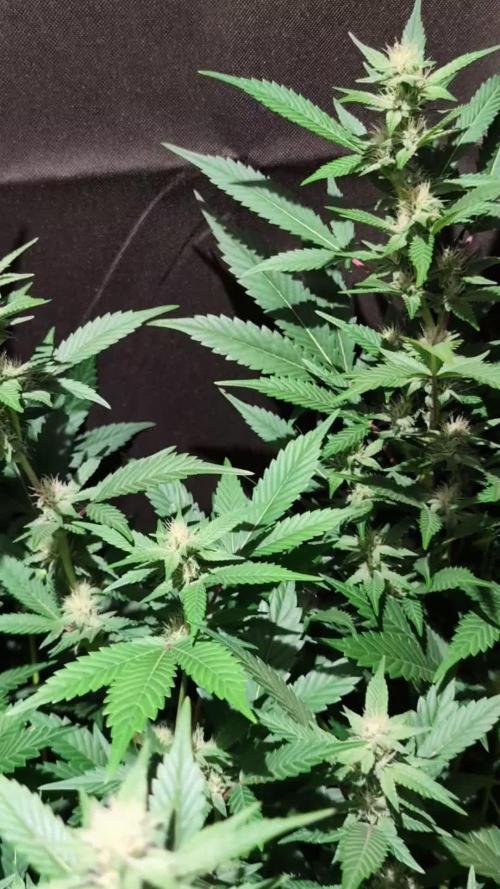
Ein schönes Wuchsbild verreint mit einem doch unterschätzen Stretch! Die Pflanze hat innerhalb der letzten 3 Wochen einen starken Stretch von knappen 23 cm hingelegt.
Das bedeutet, das die Diesel Sativa Gene jetzt voll durchgeschlagen haben.
Nach dieser Woche kommt der Stretch jedoch zur Ruhe und Mann sieht der Pflanze an, das sie sich jetzt auf die Blütenbildung konzentriert.
Die Trichome fangen an zu sprießen und ein säuerlicher Geruch sticht langsam hervor, so wie es gewünscht ist.
Auch die Blattform wird an den oberen Trieben immer schlanker.
Die Blütentriebe bilden sich immer stärker aus und die Stigmen fangen richtig an zu sprießen.
Bei diesem Genotypen, ist das Wuchsverhalten weitgehend ähnlich, nur die Hauptwuchsphase war mit etwas kürzeren Internioden abständen geprägt.
Der Stängelabrieb duftet schon stark nach säuerlichen, dieselartigen Nuancen, mit einen etwas GMO typischen Aroma.
Die Wachstumsbedingungen im Growzelt sind aktuell wieder super!
———————
🌞 Temp: 22°C
🌚 Temp: 20 °C
💨 RH: 53%
VPD: 0,91 kPa
😎PPFD: 830 mqm
———————
Stay Tuned! 💚
Likes
11
Share


@masterofsmeagol
Follow
6/30 I messed up and put 8 days last week so I'll have tp do a six day week to get back on schedule. Pounded rain last night I guess. Very intense but very brief. As you can see in the video the plants are found great. A few have revegged so I'll need to defoliate the middle. I could make a TON of clones but it's pretty late for that. I might clone a couple outstanding plants to keep the genetics. Still seeing some pillar damage. Might do bt tonight. I'll keep this updated.
7/1 Super hot yesterday. Reached 90°. We are getting SOME rain today and thunder showers day after tomorrow. Bags still had some heft and everything looked good. I went back aroundcand found about half were at the point of needing water. He'll, they probably all did. My watering can is 2 gallons not 1.5 as advertised. So that means I used 5 gallons on the garden (not watering the 50) focusing the more water on the lightest bags. That tenth planet I'm seeing more septoria like leaves. This makes enough for me to be fairly positive ill need to treat it. I have plant doctor but I think copper works better. I also see more pillar damage so I've gotta apply something. I also need to lst more and I keep to clean put the interior of the plants so they don't get pm.


Likes
15
Share


@Skinnytalls420
Follow
So this was a simple going grow!!! It’s strange how the hot so big under the light! I had one blue cheese under the same light and tent and it was way smaller!! Anyway 1 of these has come out perfect very happy the other two I’m not to sure the hairs were still pointing up but I really don’t have the time to have them going another week there already over the time they was supposed to be done but yeah I’d say out of 10 I’d rate this blue cheese growing experience a 6 out of 10 hopefully this improves when it’s dry!!!
Likes
42
Share


@noodle
Follow
Can you believe this is just one plant!? She may only be 12 inches tall but she be over 20 inches wide. Looks like we're done with the webcam because this week the plant has grown to fill in all the space and swamp the camera. Did a few more LST bends as new shoots would start bursting through the canopy. It really seems to stunt their growth once they get pulled away from being the solo star in the limelight. My light is just two COBs so once things get off to the side you can really see the effects of the light dropoff. Plant still looks healthy A.F., I saw one leaf that had a couple brown spots on it but it disappeared beneath new growth so fast I don't really care to do anything about it-- I think my pH might be a little low.
The little sucker is growing almost an inch a day, so I've been having to raise the lights every morning. I've decided to switch to flowering light schedule to 12/12, even though I've heard that a mature plant will have nodes with leaves that alternate and this plant seems to have them still coming out at the same place. To this end I've added 10x CREE XP-E HE Photo Red diodes to supplement my 4000K COBs. COME ON BLOOMS
Likes
10
Share


@DrDuhboto
Follow
Very Happy plants, soaking up the rays.
When you place your face near the buds you get an amazing sweet fruity aroma, the leaves smell like skunk and cheese.
Each plant is getting 10 liters every 4 days. I water with 6.3ph tap water twice for every time I add nutrients.
I use Alaska fish fertilizer when its been a few times since a nutrient feed but the plants are showing no deficiency's.
They are Fed by a drip system which takes 16 hours to deliver the 10 liters to each plant, this works really well in the Fabric smart pots.
I use metal racks to keep the plants off the ground then place a drip tray underneath each plant. When using the drip system very little run off occurs.
I added a spider farmer sf-1000 to the room, it is full spectrum and ir, and is great for getting the corners of the room or the less dense areas of the canopy.

Likes
6
Share


@Farmerbry71
Follow
Good strech from both but there is about a 6 inch difference in the two strawberry not huge plants but will have some very decent bud good bud development

Likes
49
Share


@Roberts
Follow
FBT2401 is starting to flower. She was stunned early on. So I think that has really messed her up for overall size. She is growing well now. Thank you Medic Grow, and Fast Buds. 🤜🏻🤛🏻🌱🌱🌱 so grow diaries crashed on me mid update. I am redoing the update a day later.
Thank you grow diaries community for the 👇likes👇, follows, comments, and subscriptions on my YouTube channel👇. ❄️🌱🍻
Happy Growing 🌱🌱🌱
https://youtube.com/channel/UCAhN7yRzWLpcaRHhMIQ7X4g
If anyone needs to purchase fastbuds here is a link for my affiliate program
https://myfastbuds.com/?a_aid=60910eaff2419

