


Likes
Comments
Share


@Sparkles
Follow
Boom Day 28 after flip.
She’s showing off big time.
Cleaned her up real good on day 21 before lights out and will defol a lil bit here and there. Feeding really hard cuz it’s hammer time, some stuff like calcium and Bloom Khaos is almost double what is recommended on the feeding chart. And giving strong teas in between with Flower Finisher (1-5-7) and CytoPlus (0-0-7.5) for that extra kick of K.
Bti for the win! I’ve been brewing AquaBac (in a tea ball) for 24hrs in ph’d water before adding stuff for ‘instant tea’ …I’m seeing one or two fungus gnats flying around and maybe like 3-4 new lil fuckheads on the sticky traps compared to 10-15 before. Was gonna get some nematodes and/or spray the top soil/cover crop with neem oil but I don’t think I have to (for now).
Lights are blasting at 95% and about 13” away and she smells so good.
That’s all for now. Thanks for stopping by and happy gardening 🌱🌱
Likes
4
Share

@Kominest
Follow
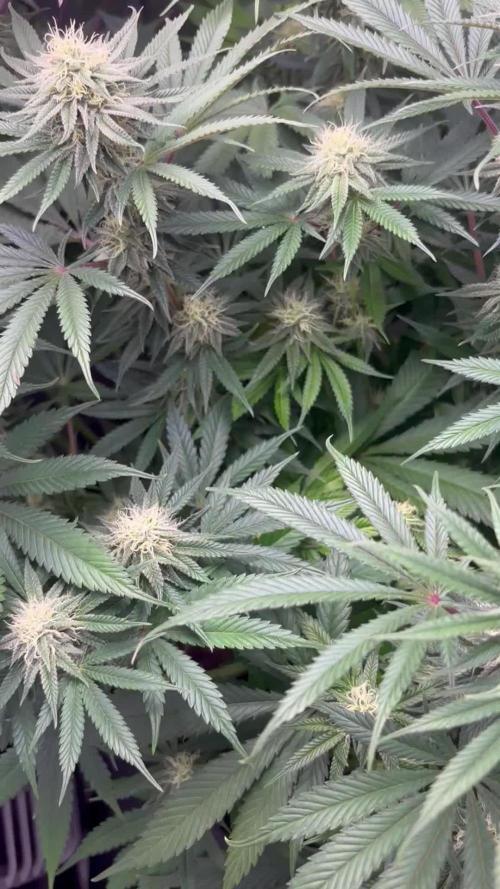
First day of this week I did some big lollipopping and defoliation and also some watering with tap water only . They’re both looking good for me so far and the smell is like normal classic weed on the ssh and a light citrus smell on the orange bud .i won’t do much more this week but watering .
Next watering on day 5.


Likes
6
Share


@BrgOriginals
Follow
The Girlscout cookie is soon finish. its in week 7 in flower, I over feeded her alittle but its all good now, i think it was to much calsium or maybe a mix of everything..😂

Likes
1
Share


@DmbTexasRanger
Follow
Trying to limit the stretch. Not worried about height as much as width. I might remove plant clips once stretch slows.
Full AN run. Adding big bud (removing ignitor). Running candy and tasty next week. Bud factor X week 3


Likes
18
Share


@Ultraviolet
Follow
*Pre-flowers have micro trichomes upon formation, LOL. Based on my early observation, I predict that these will be frosty frosty on the trichomes.
Added 20lbs of black lava rock as mulch, raising soil temp around 1 and a half degrees to 72.8F.
Some nice little bud formations are creeping up already. Nice little foliar spray of some aminos to the underside of the leaf. Hard to guage or know how much the aminos help, but after reading how energy intensive it is for the plant to make them from scratch its something I feel I need to do as a habit.
An EC (Electrical Conductivity) meter, one that's made for the soil, it's so useful, as it indirectly indicates soil moisture as well as salt mineral nutrient levels. Just pop your metre stick in the soil and if ec is low, then it's time to water. Once there is water to assist in the conduction of electricity, the EC" will kick back up. 0.3-1.8, if it stays low, then you know it's time to add more mineral salt ferts! While Electrical Conductivity primarily indicates the overall salt content in soil, pH provides information about the relative proportion of cations (positively charged ions) in the soil's salt capacity. High EC signifies a higher salt concentration, while pH reflects the balance of cations like calcium, magnesium, potassium, ammoniacal nitrogen, sodium, and hydrogen.
Smaller leaves have less surface area for stomata to occupy, so the stomata are packed more densely to maintain adequate gas exchange. Smaller leaves might have higher stomatal density to compensate for their smaller size, potentially maximizing carbon uptake and minimizing water loss. Environmental conditions like light intensity and water availability can influence stomatal density, and these factors can affect leaf size as well. Leaf development involves cell division and expansion, and stomatal differentiation is sensitive to these processes. In essence, the smaller leaf size can lead to a higher stomatal density due to the constraints of available space and the need to optimize gas exchange for photosynthesis and transpiration. In the long term, UV-B radiation can lead to more complex changes in stomatal morphology, including effects on both stomatal density and size, potentially impacting carbon sequestration and water use. In essence, UV-B can be a double-edged sword for stomata: It can induce stomatal closure and potentially reduce stomatal size, but it may also trigger an increase in stomatal density as a compensatory mechanism. It is generally more efficient for gas exchange to have smaller leaves with a higher stomatal density, rather than large leaves with lower stomatal density. This is because smaller stomata can facilitate faster gas exchange due to shorter diffusion pathways, even though they may have the same total pore area as fewer, larger stomata
Sugars, classified as carbohydrates, are composed of the elements carbon (C), hydrogen (H), and oxygen (O). They are characterized by the general formula (CH2O)n, where 'n' represents the number of carbon atoms. The most basic units of sugars, called monosaccharides, have this ratio of carbon, hydrogen, and oxygen. For example, glucose and fructose, both monosaccharides, have the formula C6H12O6.
The reality of your typical plant. After harvest, with all water remove,d you are left with. (Ballpark)
Mother-nutrients: Carbon 47%, Oxygen 43%, Hydrogen 4%.
Macro-nutrients: Nitrogen 3%, Phosphorus1%, Potassium1%, Calcium1%, Magnesium0.5%, Sulfur0.5%.
Micro-nutrients: All the rest combined 1%
Nothing good can happen in a soil that can't breathe. The aerobic zone in soil is crucial.
Microorganisms can break down sugars into their constituent atoms, though they don't typically do so completely to the individual elemental level (carbon, hydrogen, oxygen) in one step. Microorganisms utilize sugars through metabolic pathways like glycolysis and fermentation, converting them into simpler molecules like pyruvate and then potentially to other compounds like lactic acid, ethanol, or carbon dioxide, releasing energy in the process.
Glycolysis:
This is a central pathway where a glucose molecule (a common sugar) is broken down into two molecules of pyruvate. This process generates some ATP (energy) for the cell.
Fermentation:
If oxygen is limited, some microorganisms can ferment pyruvate, producing various end products like lactic acid (in lactic acid fermentation), ethanol and carbon dioxide (in alcoholic fermentation), or other organic acids.
Further Breakdown:
The products of glycolysis and fermentation can be further broken down through other metabolic pathways, potentially leading to the release of carbon dioxide and water, and the extraction of more energy.
Not Always to Atoms:
While some microorganisms can completely oxidize sugars to carbon dioxide and water, releasing all their energy, others may stop at intermediate stages, producing various organic compounds.
Role of Enzymes:
Microorganisms use specific enzymes to catalyze each step in these breakdown pathways.
In summary, while microorganisms don't typically reduce sugars to individual atoms in one go, they break them down into simpler molecules, releasing energy and potentially forming new compounds as part of their metabolism.
In conditions of high CO2 concentration, the pH of a solution or system will decrease, becoming more acidic. Conversely, low CO2 concentrations lead to an increase in pH, making the solution more alkaline or basic. This relationship is due to the chemical reactions involving CO2 and water, which produce carbonic acid and influence the concentration of hydrogen ions, ultimately determining the pH


Likes
23
Share


@MistaOC
Follow
*******************************************
**************
27.02 Day 32
**************
the fertilizer takes full effect. greenhouse feeding with 4g/liter makes the difference.
I'm excited to see what the interaction with plagron greensansation will be like.
*******************************************
**************
01.03. Day 34
**************
Lookings good so far. All 5 plants together receives 3L Water
// RO Water // TEMP 20C // PH 6,4 // CalMag 1,5 // 0,1ml Regulator //
*******************************************

Likes
23
Share


@Horseluisweed
Follow
Bueno, le salió la radícula en las primeras 24h, pero quise esperar a que se desarrollara más antes de transpartarla al sustrato, tras pasar más de 48h me quedé sorprendido que siguiera (aparentemente) igual, la pase a la tierra(💦mojada en el centro con 100ml del agua que utilicé para germinarla), se me hizo eterno esperar a que sacara la cabeza, tremenda alegría al 4 día ❤️🙌🌱, al ver el sustrato relativamente seco volví a mojar💦(esta vez con la mitad, 50ml aprox.). Decidí comer hummus (como ella jijiji) y ponerle el plástico de invernadero con la idea de manter la humedad alta💦💦💦

Likes
15
Share

@ILikeCheezzz
Follow
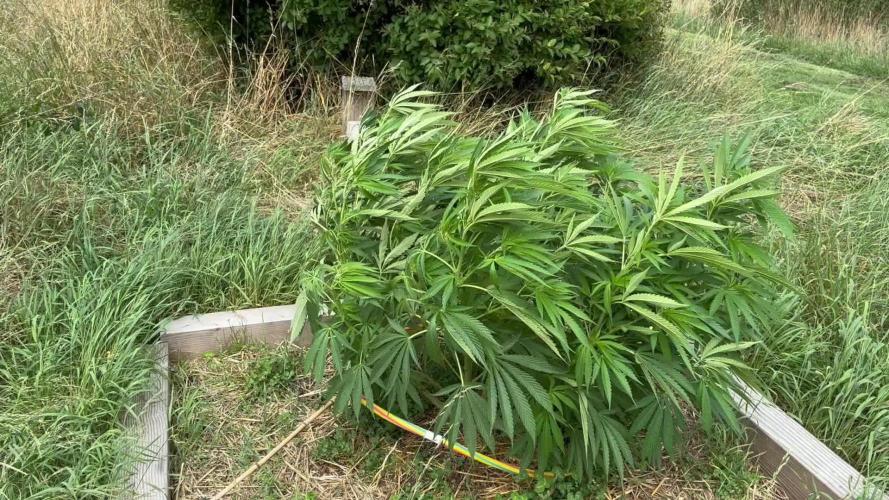
Lot if work done this week! set up the trellising for #1, defoliated and trained her up nicely. She’ll grow into the trellising in the coming 2-3 weeks. I’m expecting stretch too start soon enough, in a week or 2. Defoliating #2&3 tomorrow.
Cheers!
Likes
283
Share


@love_2_grow
Follow
D63 - The start of another week. I completely forgot to take any pics in time so grabbed a quick one right after the lights were out. I'll post better pics tomorrow.
D64 - I watered each girl with 2.5-liters of water @ pH 6.5, and snapped some better pics. ;)
D68 - All is well in the tent. I gave each girl 2.5-liters of compost tea @ pH 6.5. I also did some additional defoliation.
D69 - The end of the final week of veg. The girls are healthy and vibrant. #1 is starting to get bigger than #2, even though she is one week younger. She is also more thirsty so I gave her around 1.2-liters of water @ pH 6.5 while #2 didn't need any.

Likes
16
Share


@Rinna
Follow
Both are doing amazing, we’re cruising right now as I’ve slowly started dosing down the nutrients. The plants are looking well fed, all leaves are beautiful dark green, more towards a burn than any deficiencies! A nice fade is starting to kick in as well on both. I’ll be leaving on holiday upcoming week, and all the plants should be more than ready to harvest once I return! both pheno’s are incredibly icy, and smell super sweet and fruity. The buds truly look insane and I can’t stop looking at them 😍

Likes
21
Share


@BB_UK
Follow
Brand new amnesia punch Zamnesia and ripper seeds collaboration have made a never to forget strain! There was only 500 so I got me one and germinated a seed to add to my photo tent so I could be one of the first to test and try it!
Started in a glass of water for 48hrs then onto paper towel for 24hrs then potted! I am running them in 12L of soil, I have also put Co2 bags into the tent too
Likes
4
Share


@Scandinavia
Follow
Always good seeds from RoyalQueen Seeds.. The pineapple kush was clones. Unfortunately something happened and it didnt got finished.
Other than that, some different strains i have beeen growing over the years :)0


Likes
1
Share

@zenderman
Follow
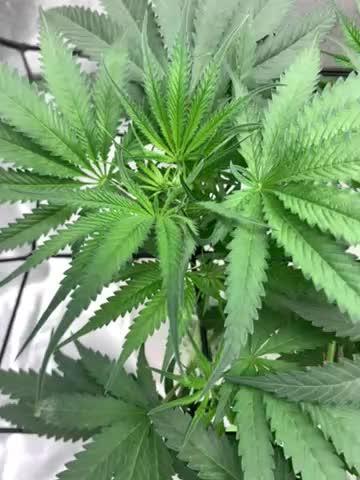
2/6/26. switched light on 12/12.
watered with canna terra flores.
4/6-watered with CAL-MAG XTRA.
6/6-watered with B52.
The familiar aroma of baking that the previous plants had began to appear.



Likes
56
Share


@GERGrowDesigns
Follow
A Special Project from Germany and Welcome to Flower Week 7 of GoodTimesGenetix Blue Cream Haze
I'm excited to share my grow journey with you from my
GoodTimeGenetix Seeds .Im the First Person outside my Friends Company who got hands on this Strain .
He Managed over a long time to Cross these Strains:
-Blue Dream (Blueberry x Super Silver Haze - Female)
-Ice Cream Haze (Gelato x Wedding Cake x Crockets Haze - Male)
They Done a lot of Tests for a Nearly Perfect Stabilisation of this Genetic and Feminized them aswell .
This one is Professionell Created In Germany , Growed in Germany and presented To the World on Grow Diaries.
Here’s what I’m working with:
• 🌱 Tent: 120x60x80
• 🧑🌾 Breeder Company: GoodTimesGenetix
• 💧 Humidity Range: 45
• ⏳ Flowering Time: 8-9 Weeks
• Strain Info: 23%THC
• 🌡️ Temperature: 26
• 🍵 Pot Size: 20
• Nutrient Brand: Hy-Pro
• ⚡ Lights : 600W x 2
I would truly appreciate every bit of feedback, help, questions, or discussions – and of course, your likes and interactions mean the world to me as I try to stand out in this exciting competition!
Let’s grow together – and don’t forget to stop by again to see the latest updates!
Happy growing!
Stay lifted and stay curious!
Peace & Buds!
Likes
1
Share


Likes
3
Share


@CannaBossBizz
Follow
The Moby Dick ist gettin bigger every day. Lovely plant.
Did top her and some LST so every branch's gettin enough light. Stay tuned for more 🤙🏽
Likes
13
Share


@SzkolaZiola
Follow
First day of week 7
Mimozz and Grandpa's Cookies are ready 😅 It's crazy how fast they developed. 😎
Two plants of Cherry Atomic Sledgehammer are getting there. Should be ready at end of week 8.
Strawberry Cough will probably need 12 weeks to fully mature - but she'll be monster! Can't wait to see her later. 😈


Likes
7
Share


@Mr_nugs_lover_David
Follow
The plants have grown a lot in the 2nd week after planted, they're growing at a very fast pace and I think they're about to start the stretching before flower starts! Let's see how this 3 Gelato auto perform