


Likes
Comments
Share


@Growedbypepper
Follow
Semana 6 y se ve en perfecto estado nuestra planta exceptuando por un pequeño brote de oidio debido a la alta humedad actual debido a las fuertes lluvias, muy bonita dejando unos cogollos muy bonitos y de un buen tamaño


Likes
8
Share

@Webacca
Follow
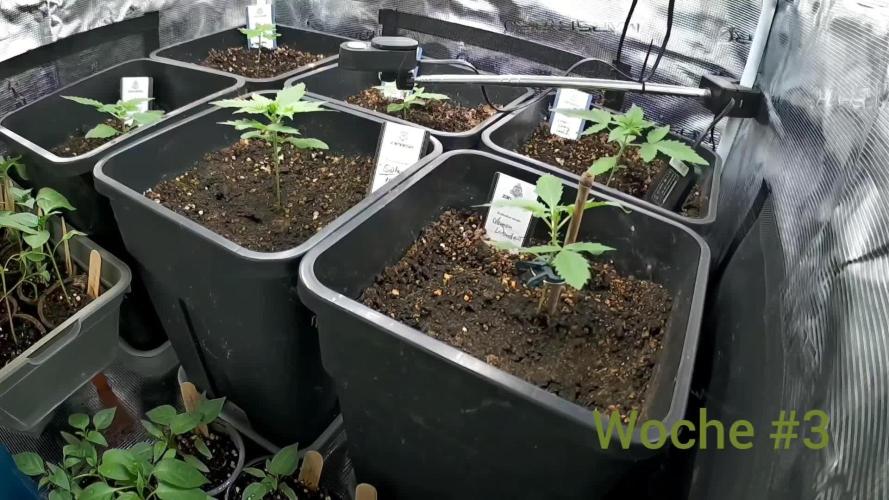
Start in Woche 4.
Hat sich einiges an Wuchs getan. Machen langsam den Eindruck wie richtige Pflanzen.
Bisher scheint alles ok zu sein. Muss sich auch nicht ändern.
Beleuchtung auf 30 DLI bei max 700 PPFD geändert.
Schaunmermal, ob sie das aushalten, begrüßen oder neg. reagieren.
Zeitraffer der vorhergehenden Woche am. Ende der Bilderreihe.
Update 1: Die LCC hat jetzt ne LT Spange. Bei den anderen beiden gings nicht, weil der Wuchs zu kompakt ist. Internodienlänge ist echt kurz.
Mal abwarten, wann es diese oder nächste Woche nochmal ne Chance gibt.


Likes
5
Share


@SgtDoofy
Follow
April 2
LST is really working well. Letting the plant fully sacrifice the yellow leaves before I pull them off. Fed a half gallon of RAW BLOOM yesterday and a full gallon 2 days prior.

Likes
29
Share


@Drgreenthumb627
Follow
seems to really want to turn into a bush so i’m just going to let it do its thing!

Likes
2
Share


@CannaIGrow
Follow
Topped this girl this week, she’s growing pretty good. Very nice looking plant to my eye.
Likes
28
Share


@J_diaz420
Follow
Muy contento con el resultado de esta hermosa genética llena de resina , un olor muy rico, agradable al fumar y muy potente, cumple con creces mis expectativas 👍👨🌾🏻🍀

Likes
3
Share

@zaperos
Follow
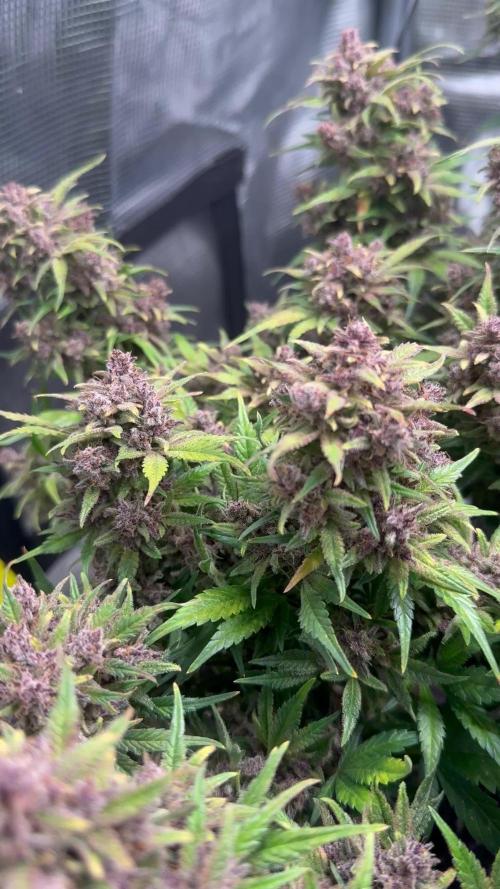
Hello growmies,
Today the ladies officially entered their last week of life and the countdown has begun!
Yesterday I switched to pure water only, no nutrients, to let them slowly use up what’s left inside before the chop. In a few days the lamp will go off and the girls will spend about 48 hours in complete darkness, then it’s time for the final cut and the start of drying.
Cheers and stay tuned!
Likes
5
Share


@littlefoot
Follow
Added the trills ned back, gets to bushy lol end up with a lot of defol, see if I can stretch her out. Getting pretty healthy, if I can get this grounding undercontrol should become a nice plant
Likes
5
Share


@cookingwithninja
Follow
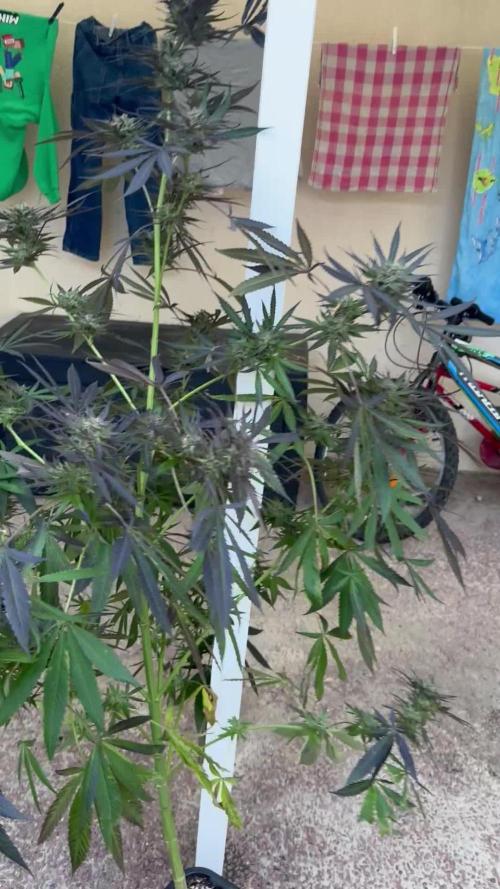
This is week 8 day 4 video. I have tried about 30g in testers rapid 1:05 dry. I’m waiting on seeds to finish. Plants are 7ft tall super cropped 3x on some branches and monsters just pop up. I highly don’t recommend super ripping or manipulating breaking stems. You will have jungles and delicious harvest. Some tops were touching doides so lights were raised to maximum tent ceiling. Every day is 2tbsp soluble pk into 5 gal water, 1/2-1tbsp folvic acid, sometimes humid acid, sometimes fishsh!t, sometimes microbial mass. 2 times only I added 1tbsp of magnesium phosphate into5gal. Every watering in 5gal has 2tbsp of carbs, I don’t use black molasses but it’s bluesky organic booster. Buds smell sweet, 2 and 3 are where the terps are but no1 is frosty af. 2 is og. As numbers left to right. Split between the middle bar. Running about 840w. 640is my reg along with 5x 20w blurples and my friends 100w “lm301h” but I beg to differ. My 640w is lm301h. I wish I had more light but I am not a facility. I just have a 4x8x7h. I’m very happy with this grow. Everything is to the max been flushing last week and it’s burning my plants lol. Just 1tbsp ph down. I have not been using ph down in my entire flower because the soluble pk 1-1.5 tbsp per 5gal water is enough to lower and make things happy. Every day is watering and every plant gets 1gal water daily. They could do a lot more but I don’t have the space as you can see ❤️



Likes
25
Share

@DE_BW
Follow
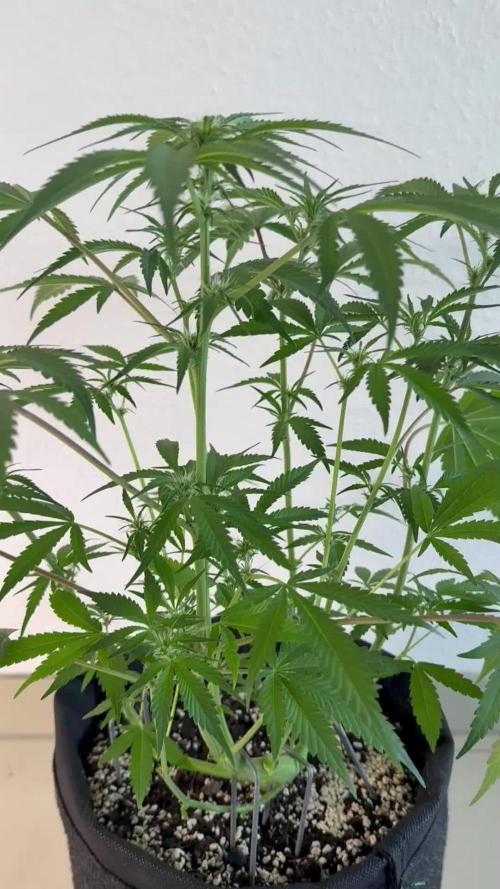
Mendo Frost is now fully in flower and currently going through the main stretch phase. LST is basically finished at this point and the overall structure stayed very stable over the last days. The canopy is surprisingly even right now, with the plant reaching around 40 cm in height. Bud sites are forming everywhere, although the side branching remains rather minimal and compact compared to my other plants.
Likes
20
Share
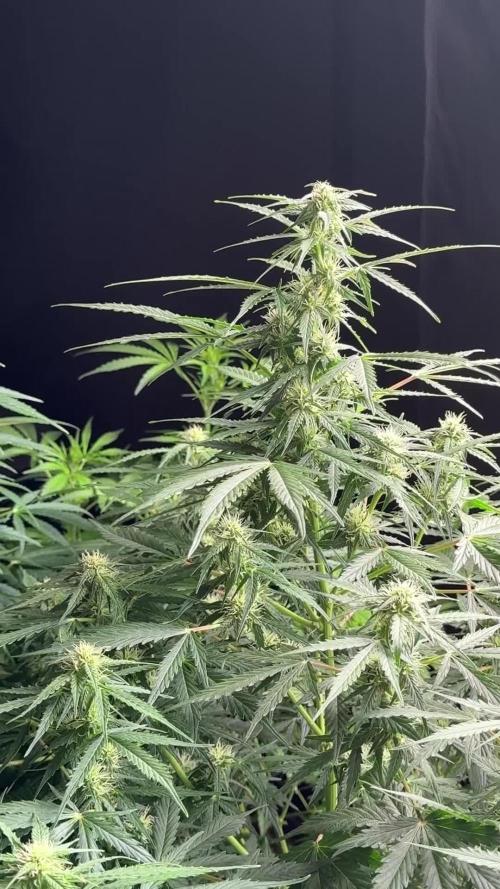

@DogDoctorOfficial
Follow
Grow Report — Nectar Drip
GrowDiaries Week 10 (Actual Week ~6–7 from Seed)
First things first, a small clarification for anyone following the diary closely.
On GrowDiaries this report appears as Week 10, but in reality the plants are around week 6–7 from seed. The reason is simple: the first entry in the diary was created during germination and no photos were uploaded at that moment, so the timeline shifted a little on the platform.
So for accuracy:
plants are currently around week 6–7 from seed and well into early flower.
Now let’s talk about what has been happening.
⸻
Quick Recap
For anyone just arriving to the diary, here’s the short version of the journey so far.
The goal of this run has always been simple:
grow healthy plants, observe them carefully, and share the process honestly.
The environment has been kept stable and relatively simple:
• 12/12 from seed
• balanced feeding schedule
• steady environmental control
• minimal intervention unless the plants ask for it
Up until now we mostly focused on guiding growth and observation, allowing the plants to express themselves naturally while keeping the canopy organized.
And they are doing exactly that.
⸻
This Week — The Garden Is Exploding
This week the girls are looking absolutely incredible.
Structure is strong.
Color is perfect.
Leaf health is excellent.
And the most exciting part:
trichomes are already everywhere.
Even at this stage the plants are starting to sparkle. Resin production is clearly ramping up and the flowers are stacking beautifully.
Height is now roughly around one meter to a little over one meter, creating a very healthy canopy without stretching out of control.
Honestly, these are beautiful specimens and a joy to watch develop.
⸻
Defoliation — Why We Did It Now
This week we performed a targeted defoliation.
This was not done because the plants were struggling or because something was wrong.
We did it by choice and by timing.
The reasoning is simple:
It is often easier and less stressful to remove certain leaves earlier in flower rather than waiting until the canopy becomes dense and airflow becomes restricted.
So we removed only what was necessary to:
• improve light penetration
• increase air movement inside the canopy
• reduce future humidity pockets
• allow the flowers to develop in a more open environment
Nothing aggressive.
Nothing excessive.
Just removing leaves that were clearly blocking key flower sites.
This kind of intervention is always a balance. Different growers prefer different approaches, but in this case it felt like the right moment to open the canopy a bit.
Now we observe how the plants respond.
⸻
First Structural Training
This week also marks the first time we applied some stronger structural training to these girls.
Until now the plants were mostly guided and allowed to develop naturally.
At this stage we introduced a bit more direction to the structure so the canopy develops evenly and future flower sites receive better light exposure.
Again, nothing extreme.
The idea is simply to help the plant organize itself for the next weeks of flowering.
The real feedback from this will come in the next report, where we will see how they react.
⸻
Environmental Conditions
The room is currently running around:
Temperature: ~28°C
Relative Humidity: ~68%
Outside conditions at the moment are:
~10°C with about 87% humidity
Considering the outside environment, we are actually very happy with how stable the room is staying.
But one thing worth mentioning:
We don’t chase room VPD numbers too aggressively.
What really matters is leaf VPD and plant response.
Plants tell the truth much better than charts do.
Right now the plants look extremely happy:
• strong leaves
• no stress signals
• steady growth
• excellent resin development
So the environment is clearly working for them.
⸻
Nutrients
Feeding remains exactly the same for now.
No changes this week.
The current nutrient schedule continues to support healthy growth and there is no reason to modify something that is clearly working.
Sometimes the best move in the garden is simply:
don’t change what isn’t broken.
⸻
Introducing a New Team Member
This week we also officially welcomed a new member to the team:
Mr. Baggy.
He has already been making appearances around the garden and many of you may have spotted him in some of the photos.
He’s now officially part of the crew and helping around the studio and garden.
Please give him a warm welcome when you see him around the diary.
He’s a cool guy and we’re happy to have him with us.
⸻
Gratitude
As always, huge appreciation to everyone who takes time to visit this diary.
To the:
• longtime followers
• new visitors
• curious growers
• supporters
• skeptics
• lovers
• haters
Everyone has a space here.
If energy crosses paths here, something is being exchanged and that always has value.
Special thanks as well to:
• the breeders behind these genetics
• the GrowDiaries platform
• the entire GD community
And of course to the sponsors supporting the project.
⸻
What To Expect Next
Over the next weeks we will mainly observe how the plants respond to the structural adjustments made this week.
Things we’ll be watching closely:
• flower stacking
• resin development
• canopy response after defoliation
• structural balance of the plants
If everything continues like this, the next weeks should be very exciting.
The girls are clearly entering the phase where the flowers start building real weight and character.
And we’ll be here documenting every step.
🙏 Thank you for your patience and continued support.
FOR DISCOUNT CODES AND MORE JUST FOLLOW THE LINK https://website.beacons.ai/dogdoctorofficial
📲 Don’t forget to Subscribe and follow me on Instagram and YouTube @DogDoctorOfficial for exclusive content, real-time updates, and behind-the-scenes magic. We’ve got so much more coming, including transplanting and all the amazing techniques that go along with it. You won’t want to miss it.
GrowDiaries Journal: https://growdiaries.com/grower/dogdoctorofficial
Instagram: https://www.instagram.com/dogdoctorofficial/
YouTube: https://www.youtube.com/@dogdoctorofficial Deleted by Youtube
Vimeo : https://vimeo.com/dogdoctorofficial Under construction stay tuned ⸻
Explore the Gear that Powers My Grow
If you’re curious about the tech I’m using, check out these links:
🔆 Lighting & Environmental Control
• Future of Grow — Advanced LED lighting technology
https://www.futureofgrow.com/
DISCOUNT CODE: DOG20
• Lumiflora — Under-canopy LED lighting
https://lumiflorade.com/
• TrollMaster — Environmental controllers and automation gear (past collaboration)
⸻
Genetics
• Zamnesia Seeds — Genetics used in this project
https://www.zamnesia.com/
⸻
🌱 Soil, Substrates, Boosters & Root Support
• Plagron — Substrates, bio mixes, and supportive products
https://plagron.com/en/
⸻
🎒 Storage, Curing & Preservation
• Grove Bags — Curing and storage solutions
https://grovebags.com/
⸻
Straw Baggy Links
🌍 Website
https://www.strawbaggy.com/?ref=339 10% discount code for our Community - Dogdoctor10
📸 Instagram
https://www.instagram.com/straw_baggy/
⸻
📸 Photography Equipment & Tools
(Not sponsors, but part of my creative toolkit)
• Sony A6700
• Sony full-frame macro lens + few more
• Stacking photography workflow - learning
• iPhone (for behind-the-scenes shots)
We’ve got much more coming as we move through the grow cycles. Trust me, you won’t want to miss the next steps, let’s push the boundaries of indoor horticulture together!
As always, this is shared for educational purposes, aiming to spread understanding and appreciation for this plant. Let’s celebrate it responsibly and continue to learn and grow together.
With true love comes happiness. Always believe in yourself, and always do things expecting nothing and with an open heart. Be a giver, and the universe will give back in ways you could never imagine.
💚 Growers love to all 💚
📸 P.S. – The Eye Behind the Lens
All photos in this diary (for now — except for the ones showing the camera, which I took with an iPhone) are taken with a Sony A6700 paired with a Sony full-frame macro lens and a few more.
Photography is part of the story — it’s how we share the fine textures, the glow, and the quiet details that words can’t always capture.
I’ve also started experimenting with photo stacking — a technique where multiple images, each taken at a slightly different focus point, are layered together to create one perfectly sharp image from front to back.
It’s not digital enhancement or AI; it’s pure photography — a way to reveal the plant’s beauty in microscopic depth, from trichome to petal.
You’ll even see a few shots of "ghost me" capturing the shots — camera, lens, setup — because every grow deserves not just to be cultivated, but documented like art.
FOR DISCOUNT CODES AND MORE JUST FOLLOW THE LINK https://website.beacons.ai/dogdoctorofficial
NEW DISCORD - Official Server Invite Link : https://discord.gg/ksjAkA5T74

Likes
8
Share


@HeartStrong_Garden
Follow
I'm really glad the second girl finally pulled through whatever was causing her to struggle to grow. Her leaves are coming in strong now. I've been letting the soil dry back a bit more in between watering. I just spray the bottle a total of 30 times now. 10 at a time to let the water soak instead of pooling and flowing away. No nutrients yet, her roots are probably still just in the Light Warrior soil. I do still put water in the self watering pots to add humidity to the tent and to "cook" the soil nutrients .
Likes
3
Share


@Chubbs
Follow
420Fastbuds: Germination Week
Kamala Og Auto
This grow, I decided to grow a strain I never have before. I started 14 seeds by soaking them in a glass of water for 48-72hrs then planting directly into the soil. Within 48 hours, all 14 sprouted and emerged into their journey of life. Super excited for these and to see how they'll grow into what they'll become. All in all, Happy Growing
Likes
10
Share


Likes
21
Share


@Ultraviolet
Follow
Heyókȟa
I desire to study nature, and to know better the mind of God, the creator, Holy art thou, O Father.
12x12=144, A dodecahedron is a polyhedron with 12 faces, and in coordination chemistry, it refers to a geometry where ligands surround a central metal atom (in this case, Magnesium) in a specific, 8-coordinate arrangement. Dodecahedrane is a hydrocarbon, meaning it's composed solely of carbon and hydrogen atoms. The carbon atoms are arranged at the corners of a dodecahedron, a 3D shape with 12 pentagonal faces. The water molecules in the dodecahedron form hydrogen bonds that are individually slightly weaker than in either the dimer or the tetramer. However, because three-quarters of the O -H groups in the dodecahedron form hydrogen bonds, it has a more negative energy per molecule than has either the dimer or the tetramer. Magnesium (Mg2+) is the essential, central metal ion in the chlorophyll molecule, crucial for photosynthesis by enabling light absorption and energy transfer. It is chelated by four nitrogen atoms within the porphyrin (or chlorin) ring structure. Chlorophyll appears green because it reflects light in the green region of the visible spectrum, specifically between 490 and 570 nm. The main resonance electronic frequency of a neutral Magnesium (Mg) atom corresponds to the transition from the ground state to the first excited state. Resonance Line Wavelength of Mg2+: 285.1nm (UVB light). The central atom of the chlorophyll molecule is Magnesium (Mg2+), which is coordinated within a porphyrin ring. The electronic "resonance frequency" of this central atom—meaning the frequency at which its electrons absorb energy—is primarily driven by the electronic transitions (ETR) of the surrounding conjugated chlorin ring structure, rather than a discrete atomic transition of the Magnesium atom itself. The resonant electronic frequencies of the chlorophyll porphyrin (technically, a chlorin) ring are determined by the energy required to promote π-electrons within its conjugated system, primarily appearing in the blue and red regions of the visible spectrum.
In standard physics, Chloryphyll b has peak absorption at 460nm (Blue). If we take the peak wavelength 460nm and a UV-B, UVR8 peak absorption wavelength 285nm Tryptophan-285 (W285) Sensing protein. 460/285=1.618 Φ, "natural harmony" and the "structure of light". The cryptochrome photoreceptor (CRY) is a UV-A/blue light receptor that shares this dual sensitivity with several other biological structures and functions, including significant sequence similarity and a common evolutionary ancestor with DNA photolyase enzymes. These are light-activated enzymes that use blue/UV-A light to repair DNA damage caused by UV-B radiation in plants.
Dodecahedrane (C20H20) is a hydrocarbon with a cage-like structure where carbon atoms form 12 pentagonal faces (a regular dodecahedron). It is highly symmetric (icosahedral), contains no delocalized electrons (no aromaticity), and has minimal angle strain, but significant torsional strain. Water Dodecahedron (H2O) forms hydrogen-bonded cages. While individual hydrogen bonds in this structure are weaker than in the linear dimer or tetramer, it has a more negative total energy per molecule. This is because three-quarters (75%) of the groups are involved in hydrogen bonding, creating a very stable, closed-shell configuration. a 3D carbon hydrocarbon (C20H20) to stable water clusters in hydrate, while the Magnesium ion acts as the central activator within a conjugated ring in biological systems, with its electronic absorption dominated by the ring, not the atom itself.
Effective quantum efficiency of photosystem II, often denoted as ΦPSII
In horticultural lighting, adding 730 nm (far-red) LEDs alongside standard red/blue lights has been shown to increase canopy photosynthesis by 20–30% in several crops by acting synergistically with shorter wavelengths. However, the limitation is that excessive, pure IR/Far-red light (without accompanying red light) can trigger the "shade avoidance response," causing plants to grow tall, weak, and spindly rather than robust. Knowing is half the battle however, engineering or utilizing infrared light (specifically the 700-750 nm far-red range) is a viable method to boost photosynthetic efficiency. It acts as a bridge to allow PSII to utilize a broader spectrum of light, breaking the traditional 700 nm barrier.
Extend, then multiply.
UVR8-mediated signaling (often in conjunction with CRY proteins) triggers protective mechanisms that maintain the stability of the photosynthetic apparatus (including LHCII and reaction center proteins), thus ensuring that the efficiency of Photosystem II remains higher in UV-B-exposed plants compared to plants lacking this receptor. ΦPSII indictates the rate of electron transfer from water to plastoquinone, which drives the production of ATP and NADPH. There is a close link between ΦPSII and the true rate of CO2 fixation (Φ*co2), particularly in C4 plants.
Effective quantum efficiency of photosystem II, often denoted as ΦPSII, represents the proportion of light absorbed by Photosystem II (ΦPSII) that is actually used in photosynthetic electron transport. It is a key indicator of how efficiently a plant is using light for photosynthesis, as opposed to losing it as heat or fluorescence. ΦPSII (effective quantum yield of photosystem II) functions primarily as a "multiplier" (a coefficient of efficiency) rather than an additive factor when estimating the overall photosynthetic electron transport rate (ETR). Multipliers are considered far more beneficial than additions because they generate exponential growth, leverage existing resources to their full potential, and create sustainable, self-multiplying capacity, rather than just incremental, linear increases.
Humans, and most other mammals, rely on other mechanisms, such as nucleotide excision repair, to manage and repair UV-induced DNA damage. As such, humans do not have the direct, light-driven repair mechanism that photolyase offers in plants.

Processing
Likes
5
Share


@Pureleelove
Follow
Another week and a half later I believe. The tentacles have started to take more of the baby nuggetito form. Slowly you can see the flowers starting to make little bud-nuggets.
Same 12/12 lights, 3 day water cycle, LST, and removing any extremely small looking buds on the lowest nodes branches. The fan leaf stems have gone a little purple in colour, and the trichomes are starting to show up (Wazzzaaaaa). I presume the purple because of the drop in general temperature because of winter.

Likes
6
Share


@Gamfin
Follow
// Day 72
She is getting there. Buds slowly start to bulk up. But she still has a least 3 weeks in her pockets. What a long, fudging grow this is, especially for an autoflower plant. She is vigorous and enormous tho!
She got her first feeding since 4 days ago because the weather was bad for 2 days straight. Which means that she didn't drink as much as she normally does. I also kept her inside to not take any risks in flowering. By that I realised how much she reeeeeeeeeks. Like really, sometimes when you grow on the balcony you don't really get the stankyness from the plants since you have so many different smells ouside. But shit, when she was in my room for 2 days, she perfumed the whole apartment.
Otherwise, nothing really to share. Her progress is steady, it's simple cruising in this stage of cultivation.
Likes
61
Share


@Cyrusdavirus
Follow
Chopping these little ladies was pretty simple because of their size but trimming was a sticky mess I had to clean my shears after every buds because of the amount of resin. I will be growing this strain again with an actual veg so I can see how great it really is and I definitely recommend you try it as well


