


Likes
Comments
Share


@DoctorCannas
Follow
Welcome back friends of growdiaries.
have you seen?
The beautiful Canadian ladies of the expertseedbank.com grew in less than a week from 12/15 cm up to 65/70 cm.
This is incredible and magnificent.
The quality of the seeds is indisputable.
The quality of nutrient fertilizers as well.
Unfortunately last week I was very busy, and with such rapid growth,
I could not mount the net for the scrog, now they are too big for this method.
So they will grow free, with LST and HST, when needed, and defoliation. Have fun and see you next week

Likes
27
Share


@Ferinky
Follow
En esta actualización se incluyen 2 semanas ya que por trabajo me fue imposible añadir la semana anterior.
El día 15 de Agosto recibió la segunda pulverización de Bacillus Thuringiensis para prevenir el ataque de las orugas.
Sigo alternando riego de agua un día con riego de Ascophillum Nodosum al día siguiente. He dejado de regar con Cannazym.

Likes
7
Share


@Minuteman_Organics
Follow
Big week of defoliation. Added another level of scrog as well to prevent the plants growing into the light.
The medipak are sativas and are stretching like crazy. Medipak #2 in the middle back is looking like an indica with much larger fan leaves and thicker stems. Less stretch compared to medi pak #1 and #3 which are growing like crazy. #3 is gonna be a real heavy yielder...stacked!
Smelling of spices and hash
The indigo child are stretching much less and are a little slower in flower development. Very similar to the putang I grew previously. Usually slow to start but will pick up steam and fatten up in the last few weeks.
Smells like orange soda mixed with grape candy. Has a little sour pine sol finish. Almost identical to the putang. Still one of my favs.
Edit day 17. Not great but my setup lost power most of the day. It probably got into the low 50's in my tent, maybe less. I'm sure I'm gonna see some temp shock from that.
Sure enough when I looked at the leaves they were a little curled. We shall see what happens. They're big plants so I'm sure they'll bounce back. Maybe lose a few days of stretch...
Update day 19: Plants are recovering nicely. Starting to see some frost. Temps are back in check now as well.
Update day 20: temps are good.

Likes
Comments
Share

@Gardens_of_Of
Follow
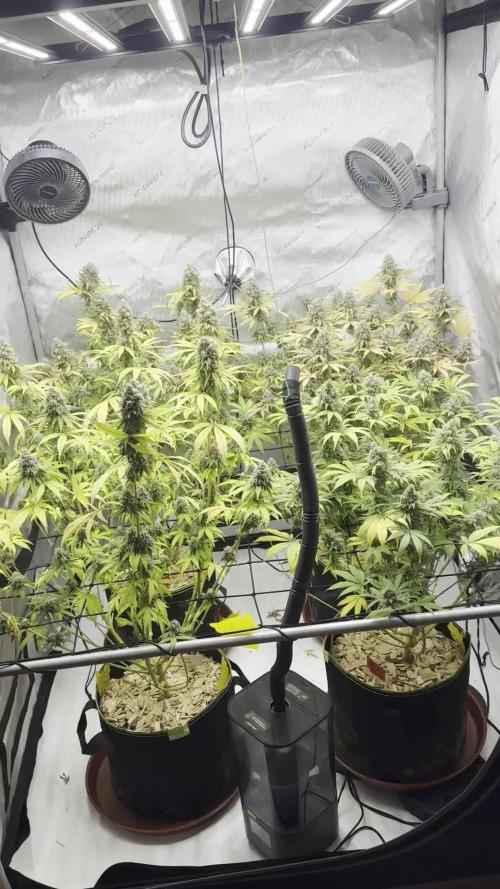
And just like that, the ninth and final week of flowering has come to an end. After months of training, adjusting, observing, and patiently waiting, the girls have finally reached the finish line.
Unfortunately, the last week wasn't entirely stress-free. Humidity became particularly challenging, reaching levels much higher than I would have liked this close to harvest. With the flowers now at their densest, this naturally made me more cautious about potential mold and bud rot.
One bud on Planet of the Grapes caught my attention, as it appears to be showing either some localized damage or the early signs of bud rot. I have been monitoring it very closely, and thankfully, the surrounding flowers still look healthy and unaffected. With harvest planned for tomorrow, I don't intend to take any unnecessary risks—if the affected area looks any worse, it will simply be removed during harvest.
Now for the good news: the girls have finished beautifully.
Trichome development is right around where I wanted it to be, with most plants showing approximately 15% amber trichomes, although naturally there is some variation between cultivars and even between individual flowers. Some are slightly further along, while others could probably continue for a little longer.
Nevertheless, I have decided to harvest the entire tent together at the end of Week 9. They have matured closely enough to one another that a synchronized harvest makes the most sense, especially since I would rather not set up a second tent purely for drying.
Looking back, it's satisfying to see how much the garden has changed. What started as four relatively small plants eventually became a completely filled canopy of heavy, frosty flowers. There were challenges along the way—yellowing leaves, summer heat, stubborn humidity, light adjustments, deficiencies, and branches eventually becoming too heavy to support themselves—but the plants kept pushing forward.
And now there is nothing left to adjust.
No more chasing the perfect light distance. No more canopy management. No more wondering how much they will stretch or how large the flowers will become.
Tomorrow, the scissors finally come out.
After nine weeks of flowering and a lot of patience, harvest day has arrived. 🌿✂️


Likes
19
Share


@sneakymexican712
Follow
This was an amazing firat grow and I’m not done yet love mainlining. Depending on how these dry and the yields come out I may just do lst and get about the same amount of yield out of the grow but I still have another week or so till I chop the others


Likes
Comments
Share


@BIYEI
Follow
Vegetativo 06-12-2024 al 12-12-2024
06-12-2024 Se muestra un crecimiento conciderable de la semana pasada a esta semana y se observa muy sana.
08-12-2024 Se realiza cambio de solucion nutritiva con parametros ajustados.
10-12-2024 Con el aumento de nutrientes se nota un crecimiento y mejora de las hojas cosiderable.
11-12-2024 Observo que unas hojas de reciente crecimiento muestran amarilles en los bordes, asi que opto por agregar mas agua al cubo ya que la planta esta chupando cada vez mas agua y nutrientes, Se nota en las hojas la transpiracion de la planta, y se coloca una red para empezar a entrenar las ramas de la planta y la exposicion a la luz entre hojas y ramas sea mayor, se aumenta la potencia de la lampara de 75% a 90%.
12-12-2024 Aplico una tecnica llamada lst aplaste los tallos un poco para que bajaran y la exposicion de la luz fuera mejor.
Parametros Utilizados
Temperatura del ambiente 23 C°
Extraccion de aire 4 pulgadas
Humedad 60%
Potencia de la lampara 90%
Ec Original 0.4
Ec Nutriente 2.4
Ph 6.0
Horas de Luz 18/6
VPD Range 1.2 kPa
Likes
27
Share


@Jungle_James_Grows
Follow
Chopped tonight so not weighed them yet will do tomorrow if I can.
Ended up with 290g for 5 plants
But 5 same seeds and 5 different pheno's.
Judging by the looks the heaviest weight is from the one I topped .
Already weighed one plant got 28g dry weight. Got 4 more babies chopped tonight
Likes
22
Share


@eldruida_lamota
Follow
De nuevo familia, vuelvo actualizar una semana más estas critical a granel que me regalaron en growbarato.
Las flores siguen echando pelos y formándose, mientras por otra parte va produciendo bien de resina.
Es una variedad que e cultivado ya muchas veces es algo que siempre tendrá un espacio en mi habitación.
.
La humedad esta al 45% la temperatura está entre 21/25 grados , y como siempre el ph , ya que es de lo más importante,está en 5,8/6,0.
.
AgroBeta:
1 ml x L Flowering black line , vía radicular.
0,2 ml x L Beta shark, vía radicular.
0.5 gr x L mega PK , vía radicular.
0,8 ml x L Terminator, vía radicular.
0,5 gr x L Engordacogollos, vía radicular.
0,3 ml x L Tucán , vía radicular.
0,1 ml x L Betazyme, vía radicular.
0,3 ml x L Tricoma, vía radicular.
0,05 ml x L Gold Joker, vía radicular.
0,2 ml x L Silver, vía radicular.
.
Hasta aquí todo familia 🕸️ , un saludo y buenos humos fumetillas💨💨💨.

Likes
7
Share


@Damonkey
Follow
It’s spreading out really nicely and quite slowly as hoped. Defoliation and bending continues until flowering hopefully I should manage with space 😱😱😱😂
Likes
8
Share


@MistaOC
Follow
23.02. Tag 62
So! Alle Probleme der letzten 2 Wochen sind erkannt und behoben. Ich hoffe die Ladies erholen sich in den nächsten Wochen wieder.
1.Problem:
Die beiden vorderen habe ich leider übergossen.
Lösung:
Erde ersetzt, Problem gelöst.
2.Problem:
Mein PH Messgerät ist defekt und ich habe die letzten 2 Wochen mit einem PH von 4.9 gegossen.
Lösung:
Neues PH Messgerät, aktuell bekommen sie seit zwei Tagen PH 6.8 damit der PH im Boden relativ schnell wieder steigt.
3. Problem:
Gestern erst aufgefallen! Zeitschaltuhr defekt. Licht geht normalerweise von 12:00-16:00 Uhr aus. Eine Zeit in der ich selten vorm Zelt stehe. Licht läuft 24 Stunden durch. Seit wann? Keine Ahnung …
Lösung:
Neue Zeitschaltuhr installiert.
*******************************************
Was sagt uns das? Super ärgerlich aber draus lernen und den nächsten grow meistern 💚💯💚
*******************************************

Likes
4
Share

@PotusArg
Follow
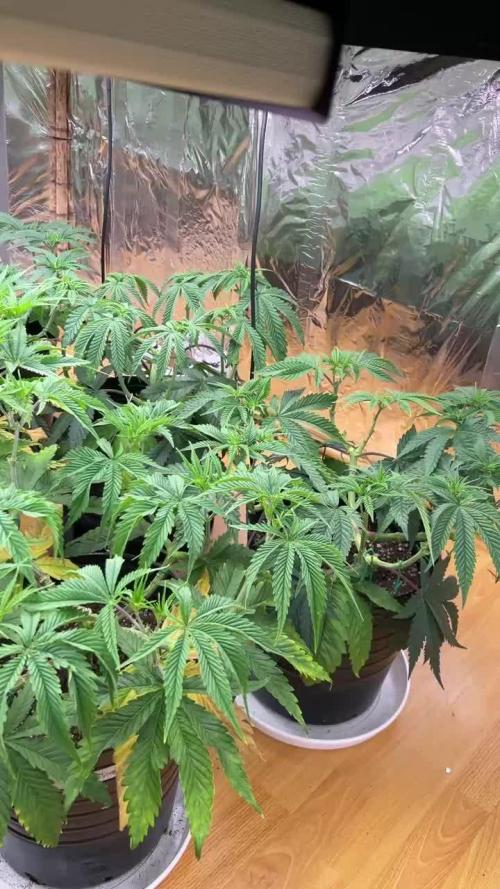
Durante la semana 6, las plantas continuaron con su desarrollo habitual, y la verdad es que no ha habido cambios significativos.
In week 6, the plants continued their usual development, and honestly, there haven’t been any significant changes.


Likes
2
Share

@eldruida_lamota
Follow
Que pasa familia, vamos con la cuarta semana de vida de estas Orange Sherbet Fast Flowering, de FastBuds.
Agradezco a Agrobeta todos los kits obtenidos de ellos 🙏.
Vamos al lío, El ph se controla en 6.2 , la temperatura la tenemos entre 22/24 grados y la humedad ronda el 50%, añadimos ya varios productos de la gama de Agrobeta.
Las próximas semanas veremos cómo avanzan, trasplanté a maceta definitiva.
Agrobeta:
https://www.agrobeta.com/agrobetatiendaonline/36-abonos-canamo
Hasta aquí todo, Buenos humos 💨💨💨
Processing
Likes
24
Share


@MadeInGermany
Follow
Hi everyone 🤗.
Since she started to flower last week, she got Canna Flores and Canna Boost for the first time :-).
It develops very nicely, gets an even level and has a nice extension 👍.
Otherwise there is nothing to report this week :-).
I wish you all a nice weekend, stay healthy 🙏🏻 and let it grow 🌱
You can buy this Strain at :
www.Zamnesia.com
Type:
Runtz
☝️🏼
Genetics:
Zkittlez x Gelato
👍
Vega lamp: 2 x Todogrow Led
Quantum Board 100 W
💡
Bloom Lamp : 2 x Todogrow Led
Cxb 3590 COB 3500 K 205 W
💡💡☝️🏼
Soil : Canna Bio
☝️🏼
Nutrients : Canna Bio
☝️🏼🌱
Water: Osmosis water mixed with normal water (24 hours stale that the chlorine evaporates) to 0.2 EC. Add Cal / Mag to 0.4 Ec Ph with Organic Ph - to 6.0 - 6.3
Likes
36
Share


@TerpTurtle
Follow
Major stretching this week!
starting to fro up with pre flowers & have been selectively defoliating as usual about every to every other day during the time spent with
bought 3 scorg nets like a noob. taking 1 down
Likes
10
Share


@FrostyBudZGenetics
Follow
The germination i forgot to take pictures so i just have a video of the first 3 strains i started before the other seeds arrived.
I used the same metod for all of them
24h in the glass of water after that 48h in the cotton pads in the zip lock bag with 3 sprays of water on the cotton pads and 1 spray when inside the zip lock bag is closed untill 80% leaving a small gap for them to breath.
I decided to plant them after that in the final resting pot for this strain in a 5 gallon fabric pot.
I used the following media on the bottom of the fabric pot i used 10% of Goldlabel HydroCorn after filled up with Ecothirve coco (70% coco 30% perelite) and i made a hole for my potting soil where i used Advanced Nutrients coco cultivator (50% coco 30% perelite 20% pebbles) and i mixed on the media some Azos , Mykos and Great white.
The light schedule for the first 5 days was 24/0 and after that i change for 18/06 schedule.
Just water the plants on the 15/06 i think all my seedlings are stuned because my light is too strong for them and the light is dimed to 25% waiting on my new seedling light the Spider Farmer SF1000EVO LED should arrive just on wednesday. And my light meter for lux is saying i have 8600Lux converted is 148 and my dli on meter from the phone is saying 150 so its 3x times more the recomended i just dont understand if this phone app is working correctly.
Update on the order from spider farmer from Ebay (Order the item on a thursday and the order was not updated on ebay on the following Monday so decided to contact them to understand when i am gonna receive my order i was told true ebay that my item as been shipped and i will receive an update within 1 hour to tell what time the item will be delivered. So never received any message giving my time slot delivery. Never received the item and at 21pm the tracking updeted on Ebay saying delivered so i contected them next day to be told that the courrier actually lost my order and that they will reshippe the order again but was told i need to wait 2 buiness days for the warehouse to processe my order beacuse they are busy what i replied that why should be me the costumer that needs to wait 5 or 6 more days for the order to arrive to me that they should send me the item on the same day and send me with one day delivery. The ansewer was they could not do it so i cancell the order asked for a refund and never more use their products appailing costumer service)

Likes
22
Share

@MyLittleGarden
Follow
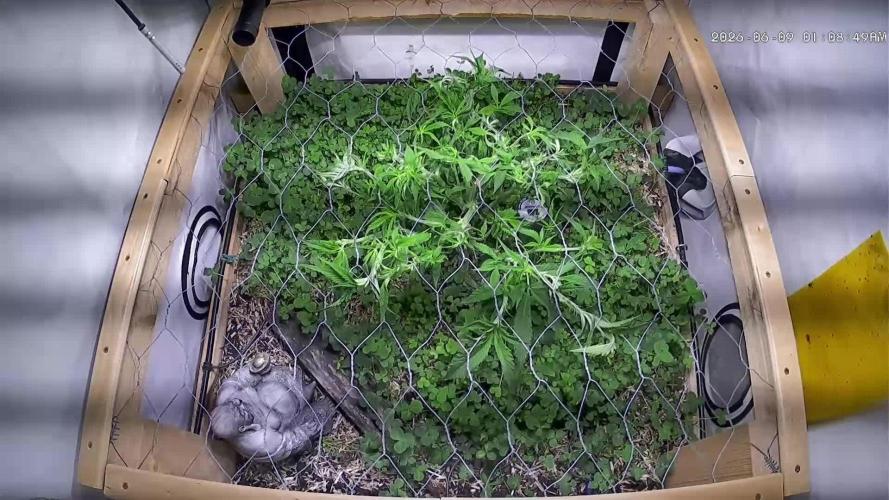
Vegetationswoche 9 - 05.06. – 12.06.2026
Diese Woche gab es eigentlich nur eine größere Aktion: Ich habe die Pflanze einmal recht stark entlaubt und die Triebe weiter unter dem Netz verteilt.
Im Nachhinein war die Entlaubung vielleicht etwas großzügig, aber die Utopia Haze hat sich davon gut erholt und mittlerweile wieder ordentlich Blattmasse aufgebaut. Sie sieht weiterhin sehr gesund und vital aus.
Auch das Klee-Cover-Crop wurde einmal gestutzt und ist inzwischen schon wieder kräftig nachgewachsen.
Ansonsten gab es nichts Besonderes. Das ist gerade die eher ruhige Phase des Grows: wachsen lassen, gelegentlich nachjustieren und beobachten.



Likes
8
Share

@all_about_420
Follow
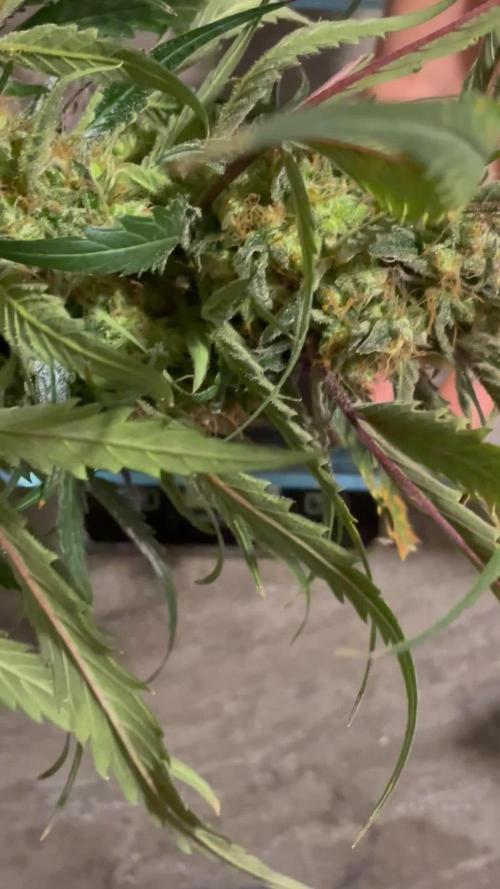
In der Übergangsphase zur Blüte zeigt die Blue Lobster eine deutliche Reaktion auf die eingeleiteten Korrekturmaßnahmen. Rückblickend auf die späte Vegetationsphase wurden knittrige Blätter und eine zunehmende Aufhellung des Blattgrüns analysiert, wobei Faktoren wie Lichtstress, VPD-Abweichungen oder pH-Schwankungen nach intensiver Prüfung ausgeschlossen werden konnten. Als eigentliche Ursache wurde ein Transpirationsstau in Kombination mit einem Nährstoffdefizit identifiziert, woraufhin die Umstellung auf Advanced Nutrients, eine Erhöhung auf 2 ml/l CalMag sowie eine gezielte Entlaubung zur Verbesserung des Mikroklimas erfolgten. Auch wenn das Problem zum Ende der ersten Blütewoche noch nicht vollständig verschwunden ist, zeigt der neue Austrieb bereits eine klare Besserung und eine Rückkehr zu satteren Grüntönen, was bestätigt, dass die Anpassungen gegriffen haben und die Lady sich nun nachhaltig stabilisiert. Mit diesem positiven Trend und einem regenerierten Stoffwechsel startet sie nun vielversprechend in den Stretch der generativen Phase.
Likes
Comments
Share


Likes
10
Share

@CK-OrgGrow
Follow
Woche 8
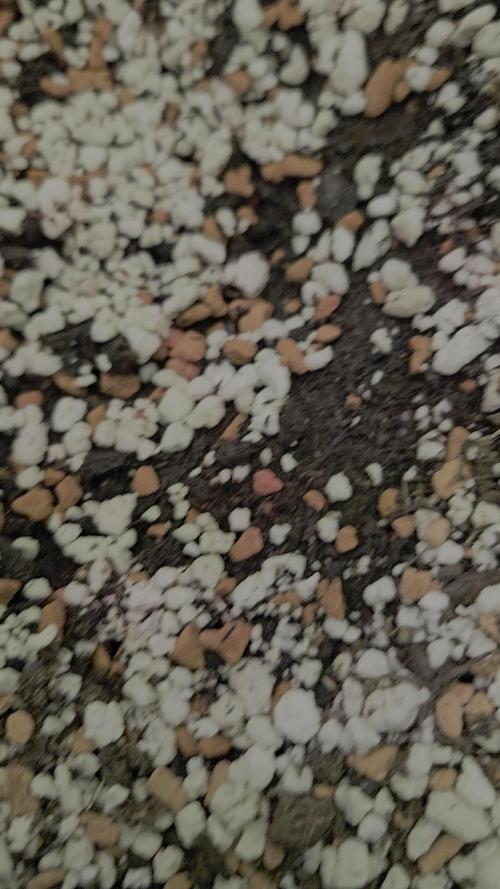
Die Mimosa Fast von 00 Seeds Bank ist in der reife Phase angekommen.
Da die Mimosa jetzt in der letzten Phase sind habe ich den Dünger noch mal angepasst. Ich habe CarboLoad abgesetzt und habe Overdrive hinzugefügt. und den Bloom um 0,5 ml/L erhöht und BigBud um 1 ml/L verringert. In der nächsten Woche kommen noch ein mal ein paar anpassung denke ich.