


Likes
Comments
Share


@Santica_Garden
Follow
So this is how things are looking for the ladies at the end of Week 5 of Veg, I have uploaded a video for you guys with all the information, any questions just ask away 👍🏾👊🏾😎

Likes
101
Share


@FrontRowAG_BrianG
Follow
I apologize upfront for all the photos. It was hard to pick which ones to upload, so I picked a good variety.
There is gonna be between 4-6 pounds once dried/cured. These were all super dense and very little larf.
This was a higher temp/higher humidity run with lots of co2 and they blew up big. It’s been a minute since I’ve grown a cola or 2 that were bigger than my arm…this time there was dozens of them.
Each plant was only topped one time. The temps were usually mid 80’s and humidity in the mid 60’s during flower. This might seem high to some, but learning to apply VPD to a grow should not be trial and error, in other words, this was intentional. It’s not risky either. During the first 6 to 7 weeks of flower it is very important to not let your night time temps to go below 75 degrees. POWDERY MILDEW=LOW TEMPS AND HIGH HUMIDITY. Take one of these away and there will not be any powdery mildew! Do not let your temps go below 75! The last 2 weeks I dropped the humidity to 40% and my night temps to mid 60’s for resin production.
A couple of thing one should have to create large buds is a temperature gun(for leaf temp), a par meter and co2. Keep the stomata open and feed lots of co2=huge buds. Learn about VPD and not just a quick google search!
When it’s dry and cured I’ll be back for an update on weight, taste and effects. Currently the plants are drying in the room at 60 degrees and 60% humidity until I can get in there to trim them. Might be 2-3 weeks.
Thanks again for all the likes and comments!

Processing
Likes
57
Share


@MadeInGermany
Follow
Hey everyone 😀.
A lot has happened again this week 👍.
Pheno 1 goes from the color more and more to red 😍, whereby Pheno 2 also slowly starts to color 😃.
Flowering day 21
Today both were poured with 1.2 L each and checked for their health.
The humidifier was also refilled.
Flowering day 22
Today the tent was cleaned and both phenotypes checked for pests and so on.
Flowering day 23
Today both were poured again, this time only 1.6 l for both together.
The tent was cleaned with disinfectant 👍.
Flowering day 24
Today the humidifier was refilled, the activated carbon filter changed after 9 months, and all the electronics checked :-).
Flowering day 25
Today 1.5 l was poured per plant so that some train comes out and rinses out excess nutrients 👍.
The box was also cleaned and the plants checked for health.
Flowering day 26
In both phenotypes, the bottom mini buds were removed for the last time so that the full energy goes into the top buds 👍.
The tent was cleaned and the whole room was cleaned.
Flowering day 27
Like every two days, the water was also poured today, but this time only 0.7 l per plant, because two days ago it was poured with Train 😄.
The lamps were adjusted to the size and placed about 5 cm high.
All in all, it was a perfect week, everything is going as it should and the plants are feeling very good 👍.
I wish you all a lot of fun with the update, stay healthy 🙏🏻 and let it grow 🍀
You can buy this Strain at :
https://sweetseeds.es/de/red-mandarine-f1-fast-version/
Type:
Red Mandarine F1 Fast Version
☝️🏼
Genetics:
Red Poison Auto®️ (SWS39)
X
Tangie (California Orange x Hybrid Skunk)
👍
Vega lamp:
2 x Todogrow Led
Quantum Board 100 W
💡
Bloom Lamp :
2 x Todogrow Led
Cxb 3590 COB 3500 K 205W
💡💡☝️🏼
Soil :
Canna Coco Professional +
☝️🏼
Fertilizer:
Green House Powder Feeding
☝️🏼🌱
Water:
Osmosis water mixed with normal water (24 hours stale that the chlorine evaporates) to 0.2 EC. Add Cal / Mag to 0.4 Ec Ph with Organic Ph - to 5.5 - 5.8 .

Likes
2
Share


@xTaps
Follow
Just checking the trichome heads daily to harvest them at the for me perfect moment.



Likes
3
Share


@agustinnnv
Follow
La verdad que increíble estas flores, un sabor a caramelo con crema y notas dulces. Cogollos que si bien se recubre de hojas llenas de resina, a mí particularmente no es muy de mí agrado. Pero que está nevada, no lo dudo. Hermosa cosecha en interior, a seguir creciendo!

Processing
Likes
58
Share


@Dahoola
Follow
---------------
Start week 3
--------------
We started week 3 as we ended week 2, which is great. She continues strongly at the beginning of this week and seems almost unstoppable. She clearly enjoys her surroundings and looks very healthy. She has started preflowering and seems to be gearing up for another explosion in growth. She is very good at leaftucking and has already developed a good number of shoots. On to more! A new update at the end of this week.
-----------------
Update Week 3:
-----------------
End of another fantastic week for MBAP. This week was all about pre-flowering and you can see that she is preparing for an explosive bloom. She has benefited enormously from the LST that I applied and has a good number of shoots ready to explode during flowering. In addition to leaftucking, have also removed the lower shoots so that she can concentrate her energy on the upper shoots. I also did the biotabs in the ground in the middle of the week. We have opted for 3 biotabs in 20-25l soil. Have waited several weeks before putting the tabs in the ground because we work here with aitoflowers. And they prefer a light feeding regiment for the first few weeks. We are going to gradually lower the humidity and get ready for flowering and week 4! Until next update

Likes
5
Share

@HoneyBlunt42
Follow
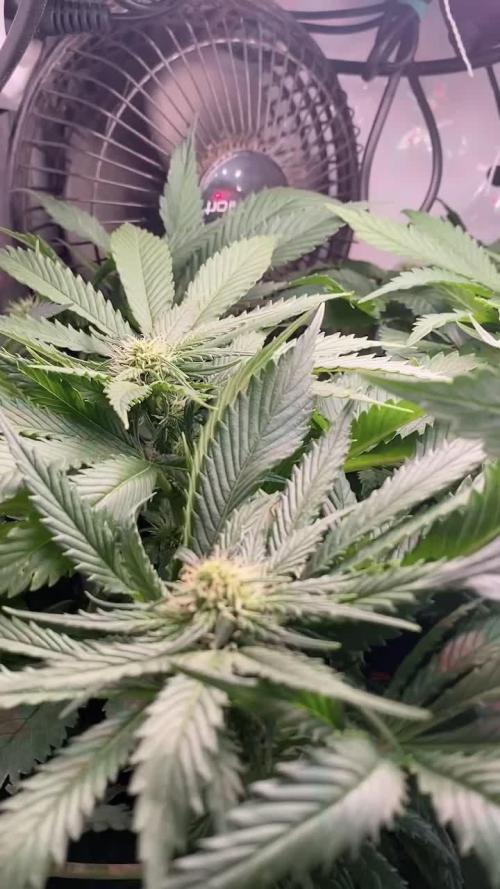
At the end of week 10, both plants look great. Hydro IZI has stopped growing vertically and is flowering. The inner shoots were turning pale, so I added another 40W of light—an identical LED fixture.
The plant in coco was moved to a 7L pot. Yesterday, I added PowderFeeding BioBloom; it needs to be reapplied during the 3rd or 5th week, depending on the strain. Today, I prepared 15L of water (pH 5) and mixed in 15g of BioEnhancer (humic acids and seaweed extract).
I’ll be using this solution for watering over the next 24 hours. I completely changed the nutrient solution in the Hydro IZI’s DWC bucket—this is only the second full change of the entire cycle. By this morning, the pH had dropped to 5.2.
After the change, I added the full Hesi lineup according to the schedule for the fifth week of flowering and adjusted the pH back to 6.3—the optimal level for the flowering stage. The DWC plant is currently twice the size of the other; it’s only limited by the grow box itself, and it has very dense branching.
The coco plant received less light and was only moved to the 7L pot with flowering nutrients yesterday, but I think it will catch up to the first one by harvest time.

Likes
18
Share


@DogDoctorOfficial
Follow
Week 5 Report: White OG – Thriving After Topping! 🌟
Another week, another chapter in the White OG’s journey—and what a resilient beauty she’s turning out to be! Following last week’s topping, she’s bounced back like a champ, showing us just how strong she is. While the temperatures dipped a little this week, she’s staying steady and pushing through like a true survivor. 🌱✨
Growth Update: Recovery in Full Swing
After being topped at node 7 last week, she’s been focusing all her energy on lateral growth, with new shoots emerging beautifully. Her structure is looking strong and balanced, with all signs pointing to a bushier, more productive plant in the weeks ahead.
While the room’s been a little chilly, with temperatures around 18°C and RH at 60%, she’s adapting well. These slightly cooler conditions are giving her an opportunity to build resilience while still maintaining steady progress.
Nutrients: All-in-One Pellets Taking Charge
This week marks a small but important change in her feeding routine: I’ve paused the use of All-in-One Liquid, as the Aptus Holland All-in-One Pellets are now fully kicking in.
Why Stop the Liquid Feed?
The slow-release pellets are designed to provide consistent nutrition over time, reducing the need for additional liquid feeds. They’re packed with everything she needs to thrive during this vegetative stage. Of course, if I notice she’s asking for a little extra love, I’ll bring the liquid feed back into the rotation.
Room Conditions: Staying Steady
Even with a slight dip in temperature, the room remains an ideal environment for her vegetative stage:
• Temperature: Around 18°C—on the cooler side, but manageable.
• Humidity: A stable 60% RH keeps her comfortable and prevents unnecessary stress.
• Lighting: The Future of Grow (FOG) LED continues at 200 PPFD, delivering steady, compact growth with no signs of stretching or stress.
These conditions ensure she’s getting the balance she needs to continue recovering and thriving.
Looking Ahead: Strength and Structure
As we move into Week 6, I’ll be keeping a close eye on her continued recovery and lateral growth. Her bushy structure is already forming beautifully, and I’m excited to see how she uses her energy to fill out and prepare for future training and flowering stages.
Shoutouts and Gratitude 💚
A huge thank you to the incredible sponsors and tools that make this journey possible:
• Seedsman Seeds for the fantastic genetics—don’t forget to use the DOGDOCTOR 10% off discount code!
• Aptus Holland for their unparalleled nutrient solutions.
• Pro-Mix Soil for the perfect foundation with their HP Mycorrhizae + Bacillus blend.
• TrolMaster for keeping the environment perfectly dialed.
• Future of Grow LED for lighting the way.
• Cannakan, where it all began.
And, of course, to all the followers, supporters, lovers, and even the haters—you’re all part of this journey! A special shoutout to Grow Diaries for being the space where we connect, learn, and grow together. 🌱✨
Stay tuned for Week 6, where we’ll keep building on this amazing progress. As always, feel free to drop by my IG or YouTube (links in my profile) for more updates, tips, and behind-the-scenes moments. Let’s keep growing stronger, together. 🌟
Growers Love! 💚
DISCOUNT CODE - SeedsmanSeeds - DOGDOCTOR 10% off
As always thank you all for stopping by, for the love and for it all , this journey of mine wold just not be the same without you guys, the love and support is very much appreciated and i fell honored and so joyful with you all in my life 🙏
With true love comes happiness 💚🙏 Always believe in your self and always do things expecting nothing and with an open heart , be a giver and the universe will give back to you in ways you could not even imagine so 💚
Friendly reminder all you see here is pure research and for educational purposes only
💚Growers Love To you All and remember to keep that smile big and alive 💚

Likes
189
Share


@Green_Man_420
Follow
Welcome welcome to another diary.
First of all a big shout to James at RQS for hooking a brother up again. You sir are a legend ✌️
Having to start a little early on this year as the supply has ran dry 🙄 let’s see what these little ladies can do.
I will update once we have got some life. Until then peace out
Update. All seeds are up and now in the tent. ✌️

Likes
34
Share


@Mr_Motalovah
Follow
Hello Growers and Tokers! 👋 👩🌾 🧑🌾.🔥💨
Sorry for the delay on the updates. ** THIS TEXT SERVES FOR WEEKS 14-18**
I had ALOT of problems with this lady these past 4 weeks.
Really bad weather, rain, wind, blazing heat, cloudy, temps going from 17-35C every other day for 2 WEEKS straight.. very sketchy! World's going to shit y'all!
Also had a Spider mites battle for 3 weeks and finally got rid of them.
And on top of that, all of the pictures I had weekly were deleted off my pc..
Only have a few for each week, luckly found those on my phone.
I've been watering 2L every other day for the past 4 weeks.
Some days less.. about 1.6L beacuase there just wasn't enough sun for her to drink up.
On week 16 there were some crazy-ass MFing winds. I'm talking gone with the wind style.
As I had the spider mite problem, I didn't want to bring her in the house and risk those little fuckers finding their way to my grow room.
(As I have that section perfectly isolated and pest free, wanted to keep it that way.)
The result of not bringing her inside?
The bottom branches that weren't tied down properly because I didn't think they would be damaged as the balcony has a little wind breaker on the bottom half.
But to my surpise.. all three branches snapped and broke, So i decided to go ahead and take them off.
I know it isn't much info for the past weeks, but It's what I've been battling with.
The buds are airy as a result of all the stress, don't look to appleaing to be honest.
My other two GSC came out GREAT, awesome lovely dense buds but those were different conditions.
I'm just finishing her to harvest because she made it through a big battle and deserves to be harvested as a champion she is.
Keeping in mind this was just a balcony experiment to see what I can and can't do with this balcony..
I'm not too worried about the final outcome. Luckily she pulled through so i'll make some hash with what I harvest.
I'll also be joining the FastBuds Halloweed contest with this lady before harvesting and I've got the perfect idea... 😏
Hope you all enjoyed the update and again sorry for the long delay on this one.
You can check out my other diaries of indoor ladies.
Take care out there!
One Love!

Likes
Comments
Share

@00000000000001c
Follow
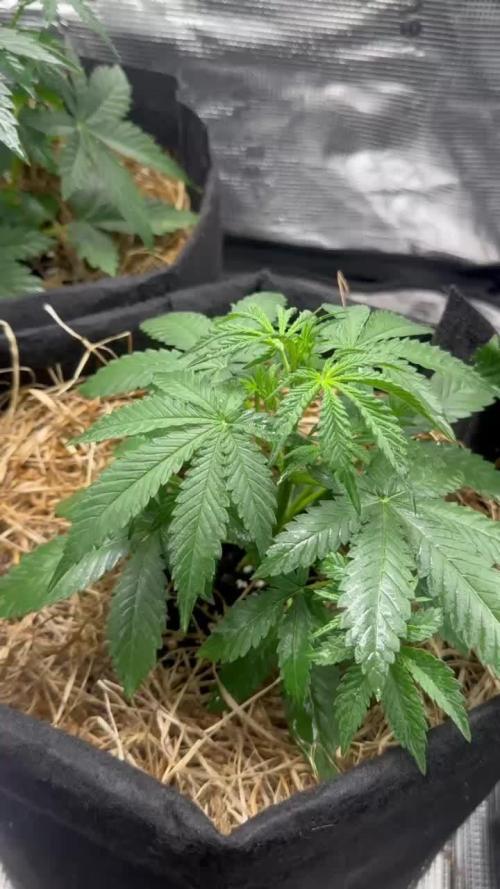
End of Week 3—you can see the progress in the video. I'm really happy with the results so far.😁
Northern Sun is a Sour Rot Candy cultivar with over 27% THC and a predominantly indica profile. Fast Buds is the Frostbanger Auto strain.
Northern Sun height: 26 cm.
Fast Buds height: 16 cm.
Likes
3
Share

@Oldwied
Follow
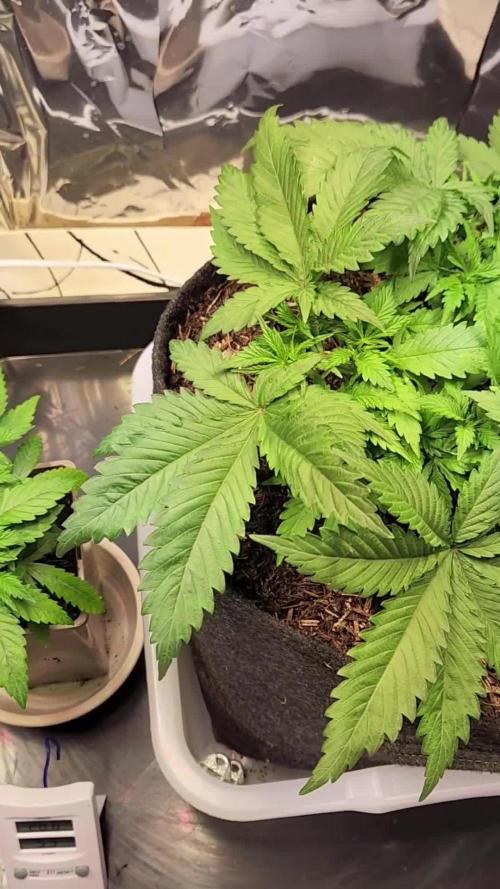
Last Topping.
Now I created 24 tops. No side shoots were so stunted that they needed to be removed. All are growing compactly and uniformly..
After this week I switch to flowering.
I once tried growing the same variety for five weeks in a 0.4 litre pot and a 25 litre pot. It's amazing how compact the plant grows in the small pot.
Light Power: 60%
Day 40
Topping
Day 44
Photoshooting
Defoliation
Likes
19
Share


@HisHope
Follow
6/28 Week 10 and she is looking fantastic
Flush continues, nothing special just one gallon of h20 twice a day.
Looking at at least 3 days as tricones still at less than 100% white (@80%)
Deficiencies not bad yet, still building some bud
6/29
Looking well, just a bit of CA/MG def showing. Still building
Some lights out pics to show off the buds and trics
****
We have determined that best practice on coco DTW is to add a low dose of Cal-Mag once a week when in final container.
This will satisfy the cation sites as the coco breaks down and avoid mystery CA deficiencies allowing the CocoTek to do its work.
6/30
Just some Bud Pics
7/2
HARVEST DAY TOMORROW!
Likes
78
Share


@Hou_Stone
Follow
👨🚀Salut les copains,👋
🌞 Nous sommes au 38ème jours de floraison,
Lors de ma visite j'ai été surpris par le changement de couleur de quelques feuilles sur les plantes. 🤔
Je n'ai pas beaucoup le temps de m'en occuper en ce moment, je passe juste les arroser et prendre quelques photos.
Intensité de la FC3000: 90%
Ventilation : Extracteur mars hydro 6 pouces avec filtre à charbon puissance : 4/10 (24h/24h) + 3 ventilateurs à l'intérieur ( ON 8/24h). ils s'activent à un horaire différent.
J'arrose environ tout les 4-6 jours avec 1.5L d'eau. (+ 1gr de bioenhancer/L eau un arrosage sur 2)
Venez me voir sur Instagram ✌️
https://www.instagram.com/hou_stone420/
🌺💃❤️️❤️️🌺❤️🌺❤️️❤️️💃🌺

Likes
13
Share


@TightNugs
Follow
Pretty good week with plenty of bud sites fattening up.Loads of defoilation needed to get light into lower areas.
All good 🤞🍁

Likes
16
Share


@KushManF
Follow
Started low stress training this week. Still doing every 2nd day nutrient feeding. Good growth so far. Let’s see how LST goes, only issue with LST is that plant keeps obviously growing towards sun. But I am monitoring it to check the angles it’s growing at.


Likes
8
Share


@Dapper_Buds
Follow
This week the GMO cookies started to bounce back fast an hard from the leaf strip. At the start of the week all 3 girls got 1tsp of grow an bloom from roots organic dry amendments along with a feed of elemental at every watering at 1/4tsp per gallon of RO water. Add half 1/4tsp of dynomyco to the water also for some of that extra root support. Other then that slight adjustment on the tie downs an just letting the one on the right side just do her thing. Thanks for viewing an happy growing mates!
Likes
4
Share


@Creme_De_La_Creme
Follow
day 70 was harvest day !!
really fast strain, 24h light ON really played a big role as well
frosty buds and amazing strawberry smell, now lets dry it !!
Likes
21
Share


@DeeDeeKushner
Follow
Day 19 of flower, I went ahead and lollipoped both girls. This will be my last time defoliating that heavy. As the days go by, I will defoliating here and there. They’re growing strong and healthy as well. 51 days until I harvest. I can’t wait!
Catch yall on the next update ✌️🏾