


Likes
Comments
Share


@CanarianGrow92
Follow
i like the structure of this plant, its a beautiful and stable genetics, really great to try, she's already getting more tricomes and starting to smell more, lets see how it goes the next weeks but i think that at the moment its looking good 😊

Likes
16
Share


@Andres
Follow
It was not what I expected from her ... shes in flowering and I am left of that stature .... in a 20 liter pot ... it will be a very poor production in buds ... compared to the others .. but we will follow its evolution over the course of the weeks... and try to eradicate the bug.
Processing
Likes
32
Share


Likes
15
Share


@GrimbolTheDruid
Follow
Grow Specs:
Breeder: Mephisto Genetics
Strain: Skywalker F5
Genetic heritage: Skywalker Kush Cut (selected from DNA seeds) x Triangle F3
Indica/Sativa: 35/65
Est. cycle time: 65-70 days from sprout
Medium: Soil, Mephisto Genetics Super Soil, Worm Castings
Light: 1/2 - 132W actual LED
Update schedule: I will try to send out the updates every Saturday or Sunday.
For more frequent updates, add me on Instagram @grimbolthedruid
Grow Schedule to Date:
Sprout: 3/1/17 (Full moon)
Age: Day 25 as of 3/25/18
Updates/Observations:
- Water only for last week and next because the soil is plenty hot. No need to cycle down lots of nutrients right now.
- I water about every 2-3 days.
- Trying to keep the soil always slightly moist and never let it dry completely to keep microbes (and by extension the soil) at optimum health.
- She has a very symmetrical structure and appears very healthy, though she is showing some leaf curl.
- Growing very vigorously.
Cheers!
-G

Likes
34
Share


@Hexus
Follow
Week 3 - Day 15 - She's still looking good, and starting to take off! PHing a little every day and watching her water carefully for signs of algae/cyanobacteria. Things are still looking good, so I think I may have this DWC thing under *some* sort control.
Likes
23
Share


@MrGrowDiarie
Follow
This week marks the 10th and likely final week of my autoflower grow. The buds have really filled out and are covered in a thick layer of trichomes. Most pistils have turned orange/brown, and the plant is giving off a strong, pungent aroma. Under close inspection, the trichomes are mostly cloudy with some beginning to turn amber – a clear sign she’s nearly ready for harvest.
The fan leaves have started fading and curling slightly, especially lower down, which is to be expected at this stage. I stopped feeding nutrients around a week ago and have been flushing with just water to clean out any remaining salts. She’s still drinking well and hasn’t shown any major stress signs.
Overall, I’m really happy with how this run turned out. She stayed compact, didn’t stretch too much, and produced some dense, frosty buds. I’ll probably gave her 2–3 more days before the chop – just to let a few more amber trichomes develop for that nice relaxing effect
So i cutet her 2 days later because of the to high humidity , because i dont want bud

Likes
82
Share


@MrHightimes
Follow
Flush Week!
Was hoping last week woulda been enough but i dont see near enough amber. Gave em a few more tomato stakes for support and we'll see how the week finishes!
I'm really hoping for that signature fruity pepple taste. the smells are pretty fruity and a bit of citrus like its name sake however the trichomes look less or smaller on it but the bud is so big and dense. Smells very different than the sour gummy bears i have going that's for sure. I need a bit more amber. I really hope a week is enough
________________________________
These monsters have inspired me to get a tray so much!!!
They are almost to heavy to move. Really wanna try and get a tray stand with legs with a way to drain out! Gonna be a game changer.
They can be pulled pretty much at any point, But I might as well finish the week! The fade out has gone perfect and they are a riot of yellow and purple! They look gorgeous and delicious and smell nice and Fruity! Soooooooooooo Close!!!!!!!!!!!!!!!!
Likes
67
Share


@HazeyBobby
Follow
The week starts Monday Jan-27, being day 27 of flowering.
Plants are looking very good and healthy, albeit some bigger buds at this stage is missing.
Carried out more defoliation of upper leaves on the CBD. Only trimming fan leaves on one side of a bud site in alternate fashion. Strategy is to expose more bud sites to light. Leaves are getting sticky and glistening brightly.
Feeding a high EC nutrient mix whilst monitoring run-off EC which remains below feed EC. The canopy is still thick with beautiful luscious green leaves typical of an Indica.
Light is maintained at 30cm above the canopy, with daily fertigation at lights on - watering just over 2L per day. Maintaining an average RH in the space at 50%.
---- updates for prior 4 weeks --------------------------------------------------------------------------------------------------------------------------------------------------------------------------------------
-----------------------------------------------------------------------------------------------------------------------------------------------------------------------------------------------------------------------
The week starts Monday, Jan-20 still flowering away.
Bud sites are beginning to take form and the ScrOG setup looks full, ready for the development of some large buds.
Removed a few more leaves from above the canopy which were blocking bud sites below. Also cut small stems (with bud sites) below the canopy from both plants which were unlikely to grow strong. It's now looking clearer below the canopy.
The canopy is still thick with beautiful luscious green leaves typical of an Indica. Run-off EC has been slowly rising over the weeks but still under the feed EC - will be keeping my eyes on this.
Light is maintained at 30cm distance from canopy, with daily fertigation at lights on - watering almost 2.5L per day. Maintaining an average RH in the space at 50%.
-----------------------------------------------------------------------------------------------------------------------------------------------------------------------------------------------------------------------
The week starts Monday, Jan-13 in flowering stage.
The plant is growing thick and fast, with very short node intervals creating a thick canopy.
Carried out substantial defoliation of almost all the big fan leaves and a few little stems that were not likely to make it above the canopy. Avoided defoliating the major cola branches. This encourages the plant not to waste resources on a node which is only going to produce “popcorn” buds.
The plants reacted well to the defoliation and were looking good by the end of the light cycle for the day. The net is completely full and this will be the last week of applying any LST as part of the ScrOG setup.
Light is maintained at 30cm distance from canopy, with daily fertigation at lights on - watering almost 2.5L per day. Lowered the average RH in the space to 50%.
-----------------------------------------------------------------------------------------------------------------------------------------------------------------------------------------------------------------------
The week starts Monday, Jan-06 in flowering stage.
The net is filling up nicely with the ScrOG process being enjoyable - just tucking branches nicely under squares once stretched enough. The Indica dominant strain is really shining with incredible dense growth and thick branches that don't bend as easily as it's Sativa neighbour.
Light is maintained at 30cm distance from canopy.
-----------------------------------------------------------------------------------------------------------------------------------------------------------------------------------------------------------------------
My grow setup includes;
- Secret Jardin DS120W tent (120cm x 60cm x 180cm) placed inside the bedroom. Passive intake of air is from a closed off section of the room where the central heating boiler sits - the intake is warm air (20 degC.) and fairly dry (40% RH) during the winter months.
- Mars Hydro SP250 LED light
- extraction fan - AC Infinity Cloudline T6
- ventilation fans
- aquarium heater
- small oil heater
- small dehumidifier
- 20L Airpots and 3.5L general pots for seedling stage
- Canna Coco substrate and nutrients
- pH and EC/TDS meters
- Thermo/Hygro meter

Likes
21
Share


@Trickybis82
Follow
Hello to you all,
I am ready to harvest!!!! My purple lemonade is coming down today she looks absolutely adorable and gorgeous sticky and purple and just shining under the light like 🔮 crystals...
We have a 14 day hang process and 14 day cure so I just hope I will be able to show you some real amazing pics 9f this beauty.
I will do a pic with final harvest weight (dry) and also a final chapter and harvest on PURPLE LEMONADE BY 420FASTBUDS

Likes
1
Share

@GoodTimesOrganics
Follow
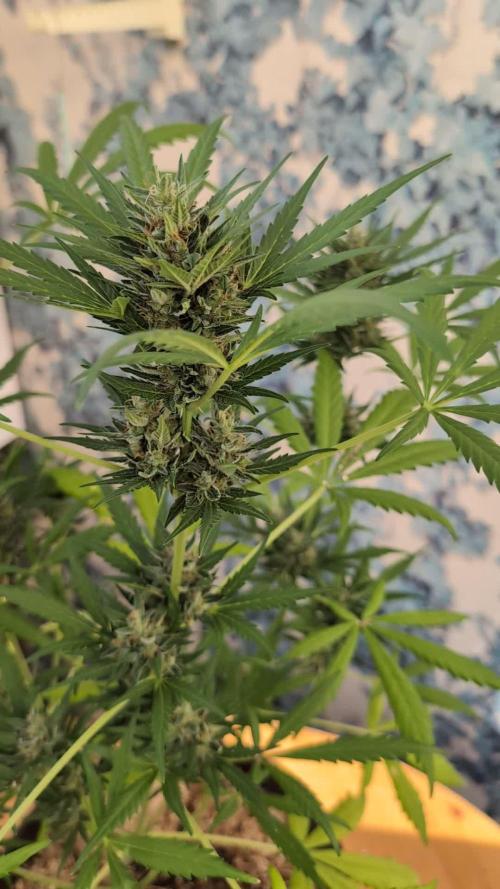
Die Skywalker OG Auto. kommt in die letzte Phase ihrer Blütezeit. Für einen Balkon/Gewächshaus Grow mit knapp 7 direkten Sonnenstunden, entwickelt sich die Pflanze doch moderat bis durchschnittlich.
Die Trichomenvielfalt ist in Anbetracht des Anbaus auch eher moderat und dennoch scheint Sie auf ihre letzten Tage nochmal einen kleinen Schub hinzulegen.
Ich denke nächste Woche ist es Zeit für die Ernte.

Likes
16
Share

@PPFDaddy
Follow
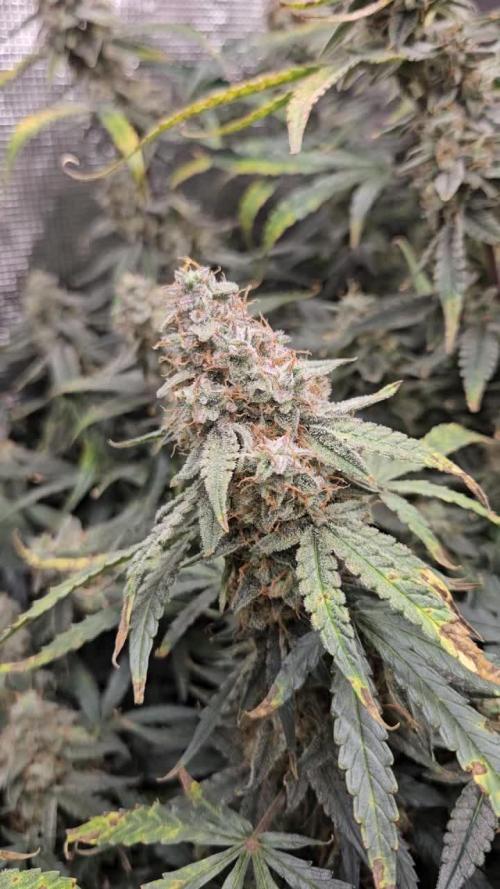
Alright, week 11: we’re almost there, F1.The girls are doing good and, thankfully, the buds put on that little extra bit of volume I needed to be happy. They’re still frosty as ever, and this last week the aroma shifted slightly sweeter… but damn, the smell is loud (in a good way) and it makes every check-up a challenge. Now, about the Runtz: I thought she’d be the most disadvantaged one, but at this stage of flower she’s honestly turning into the most rewarding in the group. She keeps throwing resin for days, and her terps are driving me crazy super sweet, like gummy candy, with a strong fruity vibe. She’s stacking bud on top of bud, and I can’t wait to remove the three Hyperions so I can put her center stage and let her fully shine; once she’s not crammed in with the other roommates, the environmental parameters should be way easier to manage. This week I dropped EC a bit since we’re close to the finish line. Environment is still the same though: RH over 65%. Honestly I’m surprised they’ve made it this far with zero mold signs, probably because the buds aren’t crazy huge and rock-dense. So yeah, I can’t say this was the best run management-wise, but quality-wise they’re looking promising. That’s the situation. Happy growing fam, that’s all for this update.

Likes
2
Share


@NocturnalGardner44
Follow
Adding this awhile after the fact... but me setup, bed is filled with small logs, sticks, leaves, hay, green grass, alfalfa, then redbud living soil on top 5lbs of worms added as well. Organic feeding, mainly lactic and baccilus, Kashi, knf inputs, fish shit, orca, king crab

Likes
27
Share


@Kloud9gardenz
Follow
Buds a still forming and looking good. I've cut the co2 going forward and will go wihout for the rest of the grow so the buds can rippen. Buds have a lot of frost so far so that's a great sign for the THC. Plants in the tents out of nowhere have spider mites but this plant didn't have much compared to others. Hopefully the last 3 weeks go by fast

Likes
10
Share

@OnlyBuds
Follow
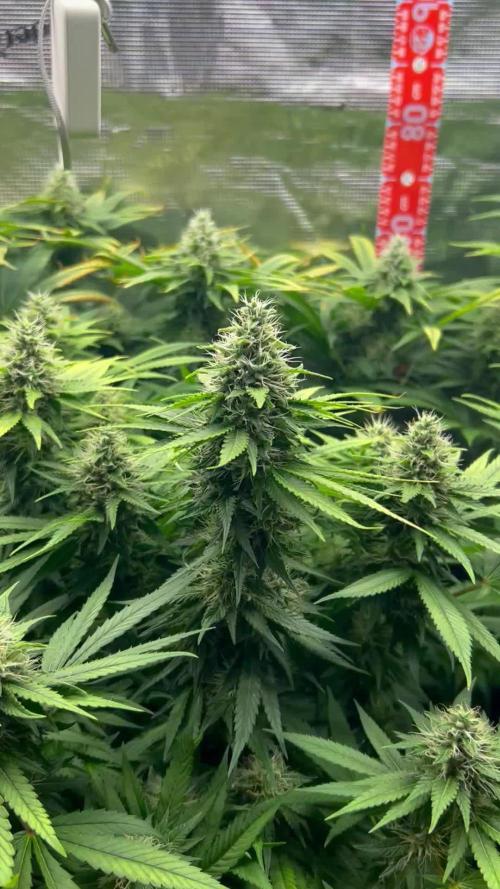
Week 7 – Lemon OG in full swing 🍋🔥
We’ve entered week 7 and things are moving strong!
Buds are stacking up nicely and getting chunkier by the day. Pistils are bright and reaching, trichomes are beginning to pop – this run smells like success already.
There’s one girl in the back-middle acting a bit dramatic – some light potassium-related signs showing up. Could be linked to CalMag interactions, but nothing alarming. Keeping an eye on her, but overall everyone looks green and thriving. I’m seeing a healthy nitrogen fade on some leaves – exactly what I want at this stage.
Lights are cranked to full power (480W total) and the girls are taking it like champs. Not a single sign of stress – just hungry green machines turning photons into fat nuggets. Climate’s locked in nicely too.
Feeding highlights this week:
• 💧 15 L water
• 🌸 70 ml Biobizz Bloom
• 🌼 20 ml Topmax
• 30 ml CalMag
• 2.5 g Epsom salt
• 💩 15 ml GuanoKalong Liquid
• ❌ No molasses this time
Can’t wait to see how they frost up in the next days.
The lemon is loud, the growth is proud, and the buds… oh man, they’re plumping hard. This is going to be a juicy harvest 🍋💪
Stay tuned, fam.
– OnlyBuds 🌿
Keep it green. Keep it growing.

Processing
Likes
5
Share


Likes
2
Share


@Greenthumby
Follow
First Day of Week 7 , here WE go...
Its my First Indoor Grow, Growbox 180x60x60 120W Growlights ...
3 Ladys , 85 cm Griselda, 75 cm JLO, 60 cm Kim K.
Think the Girls lookin good for this Time.
Still no Issues in the Plants. Only, I need a bigger Growbox, cause there are not enough Space for 3 Plants, think next Time I will Go for ONE Big Lady.
Likes
47
Share


@FreddyGrows
Follow
From this week on i stop with the vitarace.
Further i keep her on the same diet.
I try to keep everything as steady as possible the only thing im changing is the humidity.
From now on im gonna keep it as low as possible around 40%
The freaky plant is the only fuck factor in this growth she stays very small.
I think she got more of a kush phenotype very bushy.
We will see what kinda trick she's gonna pull.

Likes
19
Share


@Hempy_The_Kid
Follow
Week 13 took my second plant. 30 gram top wet. Will take 3rd plant in a day or 2. 4th plant still week behind but looks more like 2. Plants only drinking ph water @ 1 gallon every 3-4 days.

Likes
14
Share


@MrWigglyJiggly
Follow
Buds are densing up everyday and trichomes are coming along nicely. 3 more weeks to go. I feed her one last time after this there will be no nutrients given to her. Just water only.

Likes
6
Share

@MisterTree
Follow
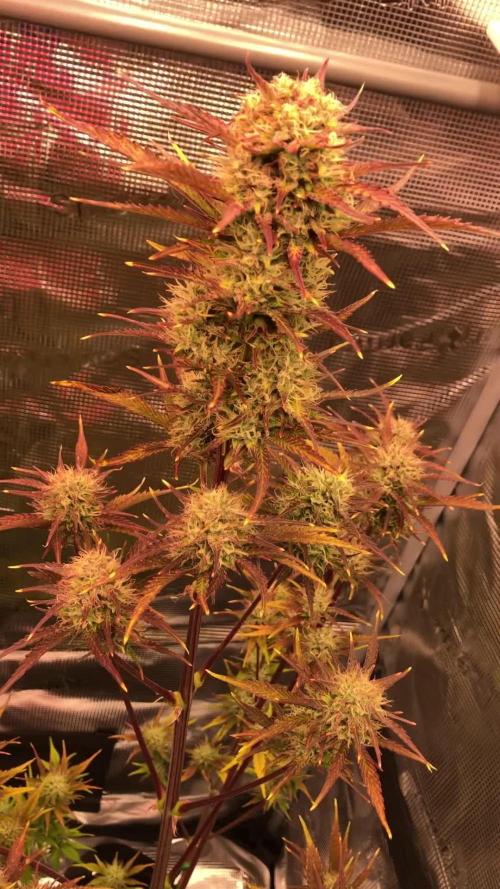
Tag 58 der Lady‘s, Sie wurden heute nochmal leicht nackig gemacht (entblättert) und leicht gegossen.
Denke die nächste Woche wird geerntet ich halt euch auf dem laufenden.
Danke an alle die mein Diary betrachten und mit verfolgen wünsche euch allen eine gute Zeit🙏🏽
Stay Strong & Healthy Growmies
Likes
107
Share


@DogDoctorOfficial
Follow
Greetings, dear plant companions! Can you believe it? Week 17 has unfolded, and our journey with Purple Lemonade Fast Flower reaches its climax—a splendid harvest at day 69. As I stand here, reflecting on the wait and the wonder, let's delve into this momentous update.
The Ultimate Waiting Game <3
Oh, the extra waiting time felt like a lifetime, didn't it? But you know what they say—the best things in life are worth waiting for. And let me tell you, this journey has been an ode to patience and a symphony of anticipation.
A Marvel to Behold <3
Behold our Purple Lemonade in all her glory! If beauty could be bottled, she'd fill an entire garden. Her buds are a testament to love, care, and the dedication poured into this journey. It's like witnessing a masterpiece in horticultural art.
The Trichome Revelation <3
As the days stretched, the trichomes prepared for their moment of glory. And what a sight it was! I took a sneak peek under the microscope, and oh my, the colors and trichome numbers are beyond imagination. It's like peeking into a secret universe of brilliance.
A Full Cycle: The Journey Revisited <3
From seed to this awe-inspiring harvest, our journey has been a symphony of growth, learning, and beauty. Every week, we embraced new lessons, nurtured each phase, and reveled in the miracles of cultivation. The cycle is a testament to our connection with the plant world and the wonders it bestows.
Time to Rest and Reflect <3
Now, our Purple Lemonade enters a period of rest on the drying rack. For about two weeks, she'll transform further, preparing for her final debut. It's a time of patience once again, as flavors deepen, aromas evolve, and magic intensifies.
The Upcoming Full Report <3
In the near future, get ready for a comprehensive report on the fruits of this labor. We'll explore the buds, savor the tastes, bask in the effects, and celebrate the cycle as a whole. It's a chapter that encapsulates the essence of this cultivation journey.
A Thank You to the Community <3
A heartfelt thank you to the @Fast_Buds team for crafting this botanical marvel. @aptus_holland, your support has been integral. And to @grow.diaries and the entire community, your camaraderie has fueled this journey.
Cultivation, Celebration, Connection 💚🌿
As this chapter concludes, let's celebrate the culmination of growth, the dance of patience, and the connection we share with the natural world. From seed to harvest, we've written a story of love and green magic.
Thank you for being part of this journey. Until we reconvene for the final chapter, let's continue to nurture, learn, and celebrate the beauty of plants.
Genetics - Fast Buds Purple Lemonade FF
Ligth - Lumatek ZEUS 465 COMPACT PRO
Food - Aptus Holland
#aptus #aptusplanttech #aptusgang #aptusfamily #aptustrueplantscience #inbalancewithnature #trueplantscience #fastbuds #dogdoctorofficial #growerslove
With true love comes happiness <3 <3 <3 Always believe in your self and always do things expecting nothing and with an open heart , be a giver and the universe will give back to you in ways you could not even imagine so <3 <3 <3
All info and full product details can be find in can find @
https://2fast4buds.com/
https://aptus-holland.com/
https://autopot.co.uk/
https://lumatek-lighting.com/
<3 <3 <3 Growers love to you all <3 <3 <3
" Arising from a cross between purple and citrus Cali genetics, Purple Lemonade FF (Fastflowering) offers a complex high made up of perfectly balanced cerebral and body effects that are ideal for daytime use. Expect an extremely enjoyable high that boosts your mood while deeply relaxing your whole body and getting rid of muscle pain. This meticulous cross produces up to 550 g/m2 of some of the most beautiful purple buds, with pinkish and reddish hues that will catch everyone’s attention. The beautiful purple buds are ready for harvest in 7-8 weeks and come hand-in-hand with unbelievably sugary citrus terps that are just as refreshing as a cold lemonade on a hot Summer day. It’s the ideal variety for the sweet-tooth stoner seeking strains that deliver both in quality and quantity of resin.
Bud Description
Purple Lemonade FF grows chunky, spade-shaped buds that boast a whole range of pinkish-purple hues with rich, dark orange pistils shooting out of every direction. This variety stands out for the, oftentimes, lilac trichomes that give them a gorgeous pink tint and make for outstanding purple concentrates. The buds give off a delicious tart lemon aroma that reveals a sweeter, more fruity scent as you break the buds open. Definitely a must for flavor chasers and those looking for pungent terpene profiles. Smoke Reports
Purple Lemonade FF offers an effect that’s just as unique as the flavor. Expect a potent uplifting high that gives you that energy boost you need to get things done while 100% happy and stress-free. The effect gradually transforms into a wave that works its way along the limbs and through the muscles, deeply relaxing your body and putting you in the right mindset to go through a busy day with a huge smile on your face. This is an excellent all-day smoke as it not only increases energy but can also help combat chronic pain, migraine and stress. Plant Appearance
This feminized photoperiod variety develops a thick and strong structure, growing a medium-sized main cola with multiple shorter side branches, typical of hybrid strains. Purple Lemonade FF develops fairly short internodal spacing with gorgeous purple buds growing stacked on top of each other, making it the perfect choice for growers of all levels looking to get lots and lots of top-shelf purple weed, as this variety can produce up to 550 g/m2 in a 7-8 week flower cycle.
Grow Tips
This is a super fast feminized photoperiod version that takes approximately 7-8 weeks to flower with a 5-week vegetation cycle,, this means you can have faster harvests by shortening the veg cycle or have a longer veg cycle for bigger yields. Purple Lemonade FF (Fastflowering) makes for a great candidate for growers of all levels as it’s a vigorous strain that will thrive with basic maintenance both indoors and outdoors. This is a resin powerhouse so make sure to have your trim bin close by as all the resinous sugar leaves will make for the most mouth-watering hash and extracts. Flavor
Expect a long-lasting citrus zest that taste just like it smells. Purple Lemonade FF reeks of a delicious blend of sweet fruits and tart citrus that’ll make your mouth water. On the inhale, expect sour flavors that taste just like lemon candy with hints of orange and a really subtle earthy background. And on the exhale, the citrus flavors open up, giving place to a more sugary berry fruitiness that leaves your whole mouth tasting like an extremely sweet weed-infused lemonade.