Likes
Comments
Share


@oregonian
Follow
Memory loss began to show female by july 4, so it's now 6 weeks since first hairs. I am using bamboo stakes (only on this girl) at about 3.5 feet above soil to create a canopy, similar to a SCROG. There are hundreds of budding sites. Star killer and Calif orange are just beginning to show female. Star killer 1 is being allowed to bud with minimal interference, star killer 2 has me reducing the number of buds to a dozen and cali will have only 2 colas. Daytime temps range between 80 and 100. But they are used to it and are thriving. nighttime 55-70. in containers. fed organic in flower twice. watering is whenever soil dries a bit and pulls away from edge. about 3 gallons does all 4 plants.
Plants are between 53 and 60 inches tall. Memory loss canopy is nearly 4 feet square. heavy watering 3.5 gal all 4 plants total.


Likes
8
Share


@FarmerT
Follow
Both Lsd25’s on the left side cherry cola on the back right and big bud auto on the front right. Cherry cola seems to have a mutation problem but ima grow her out. The rest are doing great and on the big bud I topped it day 24 and started lst on day 26.

Likes
73
Share


@Roberts
Follow
Cookies and Cream is growing great under the Medic Grow Mini Sun-2. I changed her solution today, I also defoliated her, and pruned the tips off the long roots. I then proceeded to lollipop the canopy. She has been growing strong, and fast. I hope it continues 🤞🏻. Thank you Medic Grow, and MSNL Seeds. 🤜🏻🤛🏻🌱🌱🌱
Thank you grow diaries community for the 👇likes👇, follows, comments, and subscriptions on my YouTube channel👇. ❄️🌱🍻
Happy Growing 🌱🌱🌱
https://youtube.com/channel/UCAhN7yRzWLpcaRHhMIQ7X4g

Likes
8
Share

@420DeepGrow
Follow
📆 Semana 6
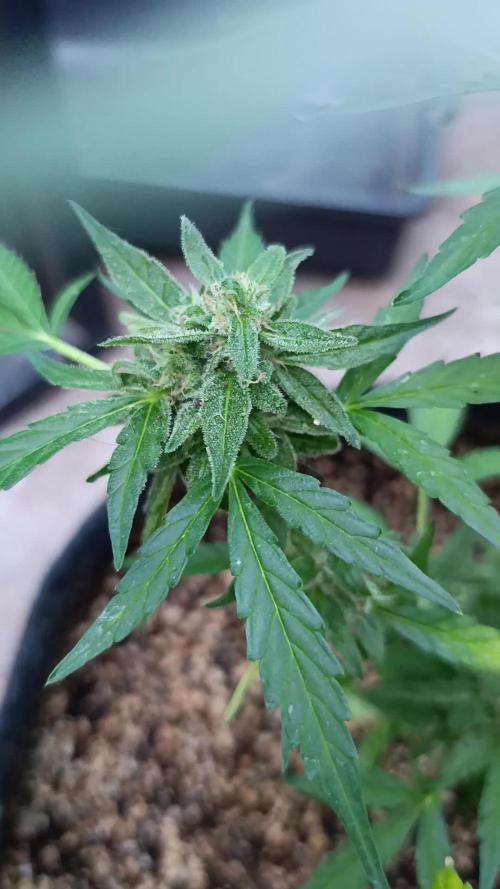
Durante esta sexta semana, la planta continúa desarrollando los cuatro cogollos que han quedado tras retirar la punta dañada. Aunque son pequeños, siguen ganando algo de volumen y se mantienen en buen estado.
⚡ EC: 0.3
💧 pH: 6.2
🌡️ Agua: 21°C
🌫️ Humedad: 45–55%
💡 Intensidad: Luz directa del sol
🔥 Nota de cultivo: Los cuatro cogollos restantes siguen cogiendo algo de tamaño. La idea es dejarlos avanzar durante estas próximas semanas y realizar la cosecha aproximadamente en dos semanas.
Seguimos creciendo fuerte 💪!

Likes
100
Share


@GreenAutoConsumo
Follow
Muy buenas gente, les muestro mi cultivo una semana mas. Como podeis ver ya faltan algunas cepas que he cosecha e ire mostrando por aquí y por mis cuenta de Instagram para que vean como quedaron. Espero que les guste, buenos humos


Likes
4
Share


@603grower
Follow
Start of week 9 and the girls are just about done. Think I over watered the last two weeks. For some reason I feel like they don’t smell as dank as they did a few weeks ago. Maybe I’m just getting used to them my wife says it still reaks!! Gonna be chopping the girls down in a week days. The gas cream could of been chopped last week but I wanted the Saturn to finish


Likes
12
Share


@Jays_Not_Here_Man
Follow
The girls have survived another week ❤️ I did a light defoliation and have been monitoring the RH closely. We have had a very damp week here, and the RH kept climbing and had my fan working hard.
They are starting to plump up and fill in 😋. They have also started to slow their drinking habits, instead of watering every three days, it has moved to every 4 now. Just a couple of weeks left, I think I will be harvesting these over Christmas 🎄, and will have some great bud ready for the new year! 🎉🎊🍾

Likes
86
Share


@Tropicannibis_Todd
Follow
ALRIGHTY THEN
REMINDER I DO 2 UPDATES PER WEEK 👉WEEKLYROUNDUP👈👉MIDWEEKLY UPDATE👈
At this very moment , hint of Grape Crush Soda smells 😛 Which is awsome
We just hit week 6 and all is well , for the most part , still having a little Cal/Mag issue but hopfully with some adjustments I got under control 😃 .......
Middle of last week I have decided to start with her little sister and started a little training by pulling her over to the side 👌 And will continue to LST this week👈 And she's also showing Cal/Mag problem but like her big sister I have made adjustments and hope that works she's already begun next faze by flowering 😲 They are so quick 👈 Baby Sister Plant #2 Is 4 weeks 28 days from seed
rain water to be used entire growth👍
Lights being readjusted and chart updated .........👍
I GOT MULTIPLE DIARIES ON THE GO 😱 please check them out 😎
👉IF ANYONE IS LOOKING FOR A PLACE TO HANGOUT VIA GROWDIARIES AND TALK GROWING AND JUST CHILL AND WHATEVER .....👈
👉I CREATED GROWDIARIES DISCORD SERVER !!!!!!!!!!!👈
LINK IS 👉
https://discord.gg/zQmTHkbejs
AND SEE HOW IT PLAYS OUT !!!!!!!
Likes
147
Share


@MrJones
Follow
MrJones Black Berry OG
🔹🔹🔹🔹🔹🔹GOALS🔹🔹🔹🔹🔹🔹
🌞Flowering Environment - 75/80℉ and 50% Humidity
💧 Feeding - Advanced Nutrients Bloom Regiment - Great APP!
🍃Training / 1 Trellis in place, looking to install a second, may have to do more defoliation..
🕷️ IPM - Will be using Green Cleaner" 1 OZ per Gallon, and CannControl from Mammoth alternating between product each month for Integrated Pest Management.
💡Mars Hydro LED / Veg TS-1000 / Flower 480W FC 4800, this light is just performing very well!
🔹🔹🔹🔹🔹🔹🔹🔹🔹🔹🔹🔹🔹🔹🔹🔹🔹🔹
📜 Rambling - With week 11 here, the ladies are about 3 of 8 weeks into flower, they continue to stretch nicely, and starting to stack on some buds!
🔹🔹🔹🔹🔹🔹🔹🔹🔹🔹🔹🔹🔹🔹🔹🔹🔹🔹
▶️ Friday - 03.26.21/Feeding 40 OZ of Advanced Nutrients
▶️ Saturday - 03.27.21/Feeding 40 OZ of Advanced Nutrients
▶️ Sunday - 03.28.21/ Feeding 40 OZ of Advanced Nutrients
▶️ Monday - 03.29.21/ Feeding 40 OZ of Advanced Nutrients
▶️ Tuesday - 03.30.21/Feeding 40 OZ of Advanced Nutrients
▶️ Wednesday - 03.31.21/Feeding 40 OZ of Advanced Nutrients
▶️ Thursday - 04.01.21/Feeding 40 OZ of Advanced Nutrients
🔹🔹🔹🔹🔹🔹🔹🔹🔹🔹🔹🔹🔹🔹🔹🔹🔹🔹
📜 Cultivar Information - We have created this strain by crossing the best Black Domina available with Very Berry and our own Lost Coast OG Kush, this plant produces large colas with a super intense sweet berry flavor with a sweet-smelling aroma that varies from fruit and berries to sweet candy. This lady offers tight internal stacking giving a perfect structure for those super heavy colas, which is perfect for growth both indoors and out, if grown outside she is fairly resistant to mold and powdery mildew which is a real bonus with such large colas.
🔹🔹🔹🔹🔹🔹🔹🔹🔹🔹🔹🔹🔹🔹🔹🔹🔹🔹

Likes
3
Share


@Herbman420
Follow
Amazing week for the gorilla cookies in Coco as I notice with the last ones they were hungry I decided to take a risk and start this one off in 400 parts per million this week. And it's working great. I will level them out for a couple feeds just to get them used to that. What I have come to realise is that the only thing about these plants now is that they've just got the auto flower in genetics. Everything else is photo . Amazing work fast buds have done over the years. Thank you for looking at my diary and we'll see you next week.and remember it's 420 somewhere 🌱👍

Likes
4
Share


@Staffedition
Follow
Привет друзья.
Наше знакомство продолжается с новым фотоцветущим растением от Smail_Seeds сорт TROPICANNA POISONZKITTLEZ XXL F1 reg.
Сегодня растению 99 дней.
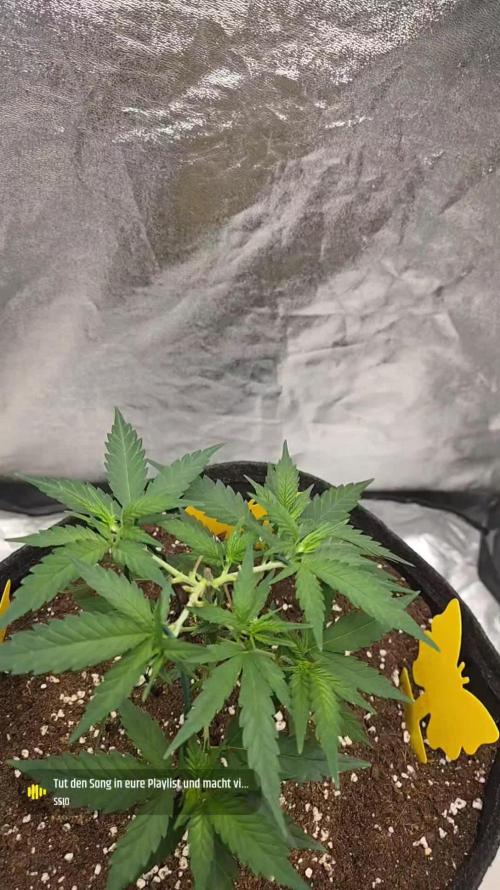
Шишки наливаются, уже прям тяжело ей стоять) очень плотные
Перевёл на 12/12 1.10.2023
Растение очень хорошо развивается, ни каких сбоев в генетике не наблюдается😀
Сорт выводим сами.
Смотри мой профиль, у нас всегда есть что то интересное.
Не забудь поставить лайк❤️, если понравилась как прошла неделя
И читайте наш TELEGRAM: https://t.me/smail_seeds
#Smail_Seeds 😀
Likes
18
Share


@YungSmoke
Follow
Buds starting to pop out of the lower nodes. Lots of new pistals have formed this week, feeling for room where the buds will eventually fill out. Will get her out for some photos in natural lighting next week when the buds are more mature.

Likes
92
Share

@Roberts
Follow
Started the flush on Master Kush 2 about 4 days ago. She has developed some nice frosty, and dense looking buds under the Unit Farm UF2000, and UF4000 lights. Adding a few drop of lemon essential oils during flush. To see difference in taste since I have grown this before. Will add till last few wash outs of substrate. Which i do a gallon of ph water every other day and keep it wet between. I raised the lights to avoid any fox tailing which I experienced in a few others or it started to. Not master kush. 💪🌱. Thank you Unit Farm, and Weed seed Express. 🤜🤛🌱🌱🌱
Thank you grow diaries community for the likes, follows, comments, and subscriptions on my YouTube channel. 🍻🌱👍 Happy Growing 🌱
https://youtube.com/channel/UCAhN7yRzWLpcaRHhMIQ7X4g

Likes
14
Share


@Aguyfromtt
Follow
Amazing growth, great genes! She's growing next to a Larry og and the difference is amazing! No veg nutes, just water and root boost.

Likes
6
Share

@therealgrowmie
Follow
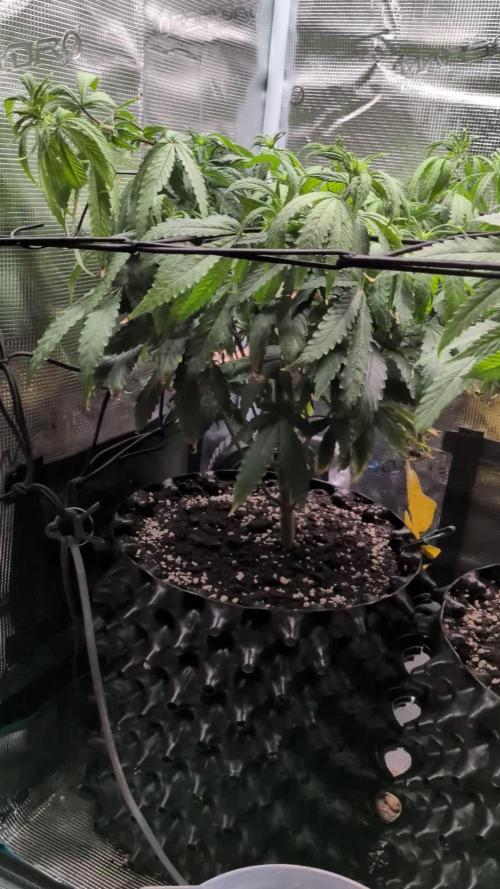
Another training session today! I spent some time folding, tucking, and weaving the tops back under the SCROG net to keep the canopy as even as possible. The plants are still stretching after the flip, so this is the perfect time to maintain an even canopy and maximize future bud sites.
The canopy is filling in nicely, and the plants responded well to the training. Most tops are already turning back toward the light, showing healthy vigor despite the manipulation. With the stretch still underway, I'll continue tucking over the next few days before letting the tops grow vertically.
The goal is a flat, evenly lit canopy that makes the most of the available PPFD while improving airflow throughout the tent.
📊 Current Stats:
💧 Watering: 2L per plant every third day
🌡️ Temperature: 28°C
💦 Humidity: 65% RH
📈 VPD: ~1.39 kPa
💡 Light: ~800 PPFD
🕛 Light Schedule: 12/12
Likes
17
Share


@Sergio_721
Follow
So far it seems to be fine even if the high humidity worries me even if the temperatures are still high then they have stopped growing and will finally focus on the flowers and slowly we recover these small deficiencies
Likes
35
Share


@eldruida_lamota
Follow
Bueno familia ya finalizamos, estas red hot cookies son una cepa bestial.
La verdad que el secado muy bien 7 días en Malla y a los botes, 45% humedad y 23 grados es la temperatura ambiental que han tenido en el secado.
4 plantas que se cultivaron en un armario de 1.20 pero estos ejemplares solo ocuparon 80x80.
Así que ya está cultivada esta gran variedad que es novedad este 2020, americana de la familia Cookies, la Tropicanna Cookies (Girl Scout Cookies x Tangie) con un porcentaje de thc entre los 17/25%, una bomba.
Que decir de Agrobeta, lo peta 💪 en cuanto a nutrientes. Un saludo y buenos humos.

Likes
6
Share


@SzkolaZiola
Follow
My discovery of 2024. Amazing plant! Huge, smelly, kush-y colas!
Super easy grow, zero grief and nugs the size of baseball bat - just WOW!
Magnificent!