


@steadfast_grower
Follow
#########################################
HARVEST (Day 93 / June 4)
#########################################
-----------------------------------------------------------
GROW SUMMARY
-----------------------------------------------------------
Grown in 4x4 tent - but I only used 2x2 space because of heater and dehumidification and other plants (Outlier Z). This plant used a dedicated CMH 315 light. The plant was grown in hydroponics using a custom single-site PA hydroponics clone RDWC system with Advanced Nutrients Sensi Coco line, Microbial Mass and Orca for beneficials. I also experimented with Rapid start in the RDWC system, but I didn't see explosive root growth relying on Rapid Start as an additive to the system verse using it when starting in rapid rooters which worked well.
All around a pretty easy grow and things went very well. Topped twice for a mainline structure and she really spread out. Sparkling golf ball size nugs down the branches and spaced out nicely. The scent off her was like burned rubber/tires or maybe fresh blacktop. A single water change which was only performed when switching to bloom nutrients around week 7.
-----------------------------------------------------------
HARVEST
-----------------------------------------------------------
No dark period and no flush. On day 93 she was chopped and hung to dry.
-----------------------------------------------------------
DRYING
-----------------------------------------------------------
Entire plant hung upside down for 15 days. The temps were dialed in at 60F by using the S6 intake fan pulling air from the AC through intake vent on side of the tent. Humidity was dialed in at 63%/60F for 24hr, 62%/60F for the next 48hr. Then 60%/60F for the third day and onward. AC Infinity T6/S6 exhaust and intake fans were on the setting of '2' during drying until day 7, then I could turn down to a setting of '1' once the plants were not transpiring excess moisture. Trimmed on day 18. Then the jars were left open in the tent for another 12 more days for a full 30 day dry at 60%/60F while rolling the jars frequently. Also ran dehumidifier in the tent but it only ran for 1-2 minutes every hour because the AC was doing most of the dehumidification on the intake.
-----------------------------------------------------------
TRIMMING
-----------------------------------------------------------
Trimming was an absolute breeze. All swelled nuggets, very little sugar leafs left to trim.
-----------------------------------------------------------
CURING
-----------------------------------------------------------
Flower product was transferred to 1L mason jars averaging 35g of product per jar. I added a mini hygrometer to each jar and chose not to use a boveda this time. The RH averaged 62-64% when trimmed flowers went in jars.
Jars were left open in the tent for a total dry time of 30 days from harvest keeping the tent at 60%/60F.
Once closed, the jars were burped once a day for the first seven days, once every other day for the next seven days, rolling jars often. The burp was only for 3-5 second for air exchange until a. 62% was maintained in the jar.
-----------------------------------------------------------
YIELD
-----------------------------------------------------------
* Weight calculated at 62% humidity after 30-day dry and 14-day cure.
==============================
FLOWER PRODUCT
==============================
180.41g (6.44oz)
==============================
TRIM PRODUCT
==============================
57g (2.03oz)
** All major fan leaves, stems, and branches removed from trim product.
==============================
TOTAL OVERALL YIELD
==============================
Total: 238.41g (8.51oz)
==============================
SPACE YIELD
==============================
238.41g / 4 sqft (2x2 canopy) = 59.60g per sqft
==============================
WATTAGE YIELD
==============================
315 Watts / 4 Square Foot (3x4 canopy) = 78.75 watts per sqft.
238.41g / 315 watts = 0.76 grams per watt
-----------------------------------------------------------
PRODUCT TEST
-----------------------------------------------------------
Bag appeal is top-notch. Trichome covered, with aromas of that unique 'kush' you can quickly identify based on experience.
Best OG Kush I've ever tried, hands down! The flavour is kushy, smoke is smooth and definitely my favorite strain in my tote of cured harvests at the moment. I can't keep my hands off of the jars. Definitely not a daytime strain, even for experienced users, although I'll use it in the afternoon when life is throwing curve balls. The effects rise you up, then sets you right down and will wash away all that anxiety after a long day. Put it this way....if I puff a few hours before bed, I still feel it the next morning when I peel my eyes open. No joke.
I'll definitely be growing this one again, maybe even next run because I'll be sad when I run out.
-----------------------------------------------------------
REGRETS
-----------------------------------------------------------
Not running more of this amazing plant.
-----------------------------------------------------------
NEXT RUN
-----------------------------------------------------------
This was the first run at my new residence so it will take some time to get it dialed in. I had some calibration issues which are now fixed. I'm going to be shooting for 1gram per watt on the next run.
-----------------------------------------------------------
FINAL THOUGHTS
-----------------------------------------------------------
DarkOwl is the best autoflower I've grown yet. I'm now eager to give the Bruce Banner #3 they released a run and will surely acquire future releases from DarkOwl.
-----------------------------------------------------------
THE END
-----------------------------------------------------------
Thanks for checking out my diary! I typically journal in my notebook but I put some time and effort into documenting my grows on this platform in hopes it will help a new or experienced grower with their DWC journey. Any questions or suggestions are welcomed.
Happy growing!


@CannbellFarms
Follow
Wednesday 20/03
- heavy defoliation, removed all large fan leaves 🍁
- last few days now, few trichomes turning amber, don’t want too many to go amber as I want the maximum THC available haha, pushing for that 30%!
- smells abso-fucking-lutely beautiful, sweet candy notes with strong diesel and pine coming through! ⛽️🍭🌲😫


@Cannerd
Follow
Week 6 Vegetation - "Sam" rate of growth started to increase near the beginning of the week. With the nodes now stretching, I've started to implement tucking of the larger fan leaves under new and smaller shoots. I find this "new growth priority" method paired with LST really maximizes and speeds up the growth in comparison to an untrained plant. Merely anecdotal though!
You'll notice that in the 3rd shot, the nodes stretched out in about 2 days and just ballooned! now that's what I'm talking about! nearing the middle of the week and the rate of growth is fast enough that I can't remember to take enough pictures between the new nodes. At this point I'm tucking new leaves almost daily, making paths for the light to reach new growth tips.
By the end of the week, I'll need to start tying the nodes to the side before they stretch too far up. If they stretch too far before tying them, they can be a PITA to tie down later with dense foliage and such. Tying them down before they get to this point also keeps the nutrients moving to the "new side-nodes" from these branches. Eventually these will be just as thick as the original main stalk.
UPDATE:
As you can see with the last photos added, the branches are almost even with the original top of the plant that was tied down. I gave them a thorough fertigation the night before, and only slight folding of the leaves so I must have choked the roots a bit, but nothing long term.


@TgOgFaRms
Follow
🌿🔍 Week 8: Aroma, Colors, and Amazingness! 🌿🔍
Hey there, fellow growers! It's time for another thrilling update on my cannabis journey:
🌸 Aromatic Delight: As we reach the end of week 8, the aroma in my grow space is absolutely enchanting. The scents have intensified and become truly captivating. 🌬️👃
🌈 Vibrant Colors: The plants are flaunting their vibrant hues as the flowers continue to mature. The leaves exhibit beautiful purple hues, and The Queen plant is adorned with striking orange and red hairs. It's an absolute spectacle! 🌺🎨
💧 pH and TDS Levels: Throughout the entire flowering stage, I've maintained a steady pH level of 6.33. That's fantastic news! In terms of TDS levels, they currently stand at 750ppm and 1150ppm, providing the much-needed nutrients for your beloved plants. ⚖️🌱
⏳ Progress Update: The Queen has proven to be a fast finisher, reaching the impressive milestone of 49/56 days. She's now completely ready to be harvested. It's time to celebrate! 🔥
🍪 Oreo Big Stuff: Although the Oreo Big Stuff was expected to finish around the same time as The Queen, it seems she needs a few more days to reach her peak. Hang tight for another 2/3 days, and she'll be ready to harvest as well. Patience is key! 🍪⚡
🌿 Zweet Og: Ah, the beloved Zweet Og! This beauty emits an incredible OG gas funk smell. I absolutely adore it! The estimated flowering time for this strain is 63-70 days, and she still needs a little over a week to reach her full potential. Keep an eye on her progress, as she's worth the wait! 🕒👀🌿
🧐 Drying Dilemma: Unfortunately, I've encountered a challenge with drying The Queen. She's currently positioned on the back left side of the grow tent with a scrog setup, making it difficult to remove her without disturbing the others. It's a tricky situation indeed! 😬🌿🏋️♂️
🌱 Future Plans: Despite this dilemma, I'm overall thrilled with the progress of my grow. No hermaphrodites or other issues have surfaced, which is fantastic news. I'm even planning to embark on another run with The Queen. I already have six clones ready to transition into flowering immediately after this run. Exciting times lie ahead, especially since it'll be my first time flowering clones! 🌼🌿🌿
That wraps up this week's update. Stay tuned for the final steps as we approach harvest time in just 3/5 more days for The Queen and Oreo. I have 5 days to come up with a solution for the Zweet Og's flowering space. Stay elevated and keep growing happily, my fellow growers! 🌿💪🌿✨


@Kakui
Follow
V8, supuestamente hoy haría transplante a los maceteros definitivos, pero, hace 3 días que las plantas están presentando hojas débiles y dobladas hacia abajo, en un principio pensé en que podría ser exceso de agua, pero creo que es exceso de nutrientes, básicamente exceso de nitrógeno, ya que las hojas están con un verde muy oscuro y algunas están presentando manchas color café.
Así que hoy les hice lavado de raíz, con agua EC 0, hasta que el drenaje fue de cercano a 4 EC. Esperaré unos días a ver si se recuperan, si no, simplemente las eliminaré y empezaré de nuevo, ojalá se recuperen.
V9, al final si era exceso de nutrientes/nitrógeno, menos mal que se recuperaron con el lavado de raíces, pensé que morirían, ahora veré como siguen para decidir si hago transplante hoy mismo.
V10, se realizó trasplante a macetas definitivas y un riego suave. Las plantas están todavía en recuperación, esperaré unos días más para empezar el LST.
V12, riego.
V13, se realizó una pequeña defoliación y LST.


@ciansta
Follow
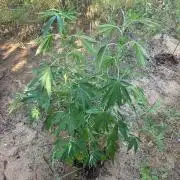
Germinated for 24 hours in a glass of water, 48 hours in a paper towel and then I planted them into biodegradable seedling pots. Northern Lights looking a bit ahead of the Dosidos seeds but that was expected I’ve grown Northern Lights before and they sprout real quick. One of the Dosidos’ first true leaves is looking a bit wonky but we’ll see how it goes I suppose.





@Exotic_Grower
Follow
Week 6 starts good so far
Two plants looks a little burn on the leaves
The hole thent smells strong of citrus and the terp profile is increadible. The hole side branches and the leave branches are full with terps
Edit on day 63: one plant (the one in the middle) startet to get a wired burn on the leaves. They getting Brown and Fall down on the edges. I dont know what she is Missing😬


@Naujas
Follow
the girl is growing very fast :) that's why I decided to remove her wedding leaves, but weak branches, after a week I will let her start blooming on 12/12 :) in some photos you can see such a smile 👨🌾, for me it means watering day :D:D.


@BluHaze007
Follow
I know it is only two weeks but compared to other auto flower plants during this stage I'm starting to think that all three of my girls are stunted. I did have an issue during week 1. My light wasn't 18 inches as Mars Hydro indicated. I still had my lights height at 24inches.


@Ultraviolet
Follow
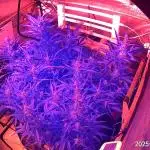
Yellow butterfly came to see me the other day; that was nice.
Starting to show signs of stress on the odd leaf, localized isolated blips, blemishes, who said growing up was going to be easy!
Smaller leaves have less surface area for stomata to occupy, so the stomata are packed more densely to maintain adequate gas exchange. Smaller leaves might have higher stomatal density to compensate for their smaller size, potentially maximizing carbon uptake and minimizing water loss. Environmental conditions like light intensity and water availability can influence stomatal density, and these factors can affect leaf size as well. Leaf development involves cell division and expansion, and stomatal differentiation is sensitive to these processes. In essence, the smaller leaf size can lead to a higher stomatal density due to the constraints of available space and the need to optimize gas exchange for photosynthesis and transpiration. In the long term, UV-B radiation can lead to more complex changes in stomatal morphology, including effects on both stomatal density and size, potentially impacting carbon sequestration and water use. In essence, UV-B can be a double-edged sword for stomata: It can induce stomatal closure and potentially reduce stomatal size, but it may also trigger an increase in stomatal density as a compensatory mechanism. It is generally more efficient for gas exchange to have smaller leaves with a higher stomatal density, rather than large leaves with lower stomatal density. This is because smaller stomata can facilitate faster gas exchange due to shorter diffusion pathways, even though they may have the same total pore area as fewer, larger stomata. Leaf size tends to decrease in colder climates to reduce heat loss, while larger leaves are more common in warmer, humid environments. Plants in arid regions often develop smaller leaves with a thicker cuticle and/or hairs to minimize water loss through transpiration. Conversely, plants in wet environments may have larger leaves and drip tips to facilitate water runoff. Leaf size and shape can vary based on light availability. For example, leaves in shaded areas may be larger and thinner to maximize light absorption. Leaf mass per area (LMA) can be higher in stressful environments with limited nutrients, indicating a greater investment in structural components for protection and critical resource conservation. Wind speed, humidity, and soil conditions can also influence leaf morphology, leading to variations in leaf shape, size, and surface characteristics. Small leaves: Reduce water loss in arid or cold climates.
Environmental conditions significantly affect gene expression in plants. Plants are sessile organisms, meaning they cannot move to escape unfavorable conditions, so they rely on gene expression to adapt to their surroundings. Environmental factors like light, temperature, water, and nutrient availability can trigger changes in gene expression, allowing plants to respond to and survive in diverse environments.
Depending on the environment a young seedling encounters, the developmental program following seed germination could be skotomorphogenesis in the dark or photomorphogenesis in the light. Light signals are interpreted by a repertoire of photoreceptors followed by sophisticated gene expression networks, eventually resulting in developmental changes. The expression and functions of photoreceptors and key signaling molecules are highly coordinated and regulated at multiple levels of the central dogma in molecular biology. Light activates gene expression through the actions of positive transcriptional regulators and the relaxation of chromatin by histone acetylation. Small regulatory RNAs help attenuate the expression of light-responsive genes. Alternative splicing, protein phosphorylation/dephosphorylation, the formation of diverse transcriptional complexes, and selective protein degradation all contribute to proteome diversity and change the functions of individual proteins.
Photomorphogenesis, the light-driven developmental changes in plants, significantly impacts gene expression. It involves a cascade of events where light signals, perceived by photoreceptors, trigger changes in gene expression patterns, ultimately leading to the development of a plant in response to its light environment.
Genes are expressed, not dictated! While having the potential to encode proteins, genes are not automatically and constantly active. Instead, their expression (the process of turning them into proteins) is carefully regulated by the cell, responding to internal and external signals. This means that genes can be "turned on" or "turned off," and the level of expression can be adjusted, depending on the cell's needs and the surrounding environment. In plants, genes are not simply "on" or "off" but rather their expression is carefully regulated based on various factors, including the cell type, developmental stage, and environmental conditions. This means that while all cells in a plant contain the same genetic information (the same genes), different cells will express different subsets of those genes at different times. This regulation is crucial for the proper functioning and development of the plant.
When a green plant is exposed to red light, much of the red light is absorbed, but some is also reflected back. The reflected red light, along with any blue light reflected from other parts of the plant, can be perceived by our eyes as purple.
Carotenoids absorb light in blue-green region of the visible spectrum, complementing chlorophyll's absorption in the red region. They safeguard the photosynthetic machinery from excessive light by activating singlet oxygen, an oxidant formed during photosynthesis. Carotenoids also quench triplet chlorophyll, which can negatively affect photosynthesis, and scavenge reactive oxygen species (ROS) that can damage cellular proteins. Additionally, carotenoid derivatives signal plant development and responses to environmental cues. They serve as precursors for the biosynthesis of phytohormones such as abscisic acid () and strigolactones (SLs). These pigments are responsible for the orange, red, and yellow hues of fruits and vegetables, while acting as free scavengers to protect plants during photosynthesis.
Singlet oxygen (¹O₂) is an electronically excited state of molecular oxygen (O₂). Singlet oxygen is produced as a byproduct during photosynthesis, primarily within the photosystem II (PSII) reaction center and light-harvesting antenna complex. This occurs when excess energy from excited chlorophyll molecules is transferred to molecular oxygen. While singlet oxygen can cause oxidative damage, plants have mechanisms to manage its production and mitigate its harmful effects.
Singlet oxygen (¹O₂) is considered a reactive oxygen species (ROS). It's a form of oxygen with higher energy and reactivity compared to the more common triplet oxygen found in its ground state. Singlet oxygen is generated both in biological systems, such as during photosynthesis in plants, and in cellular processes, and through chemical and photochemical reactions. While singlet oxygen is a ROS, it's important to note that it differs from other ROS like superoxide (O₂⁻), hydrogen peroxide (H₂O₂), and hydroxyl radicals (OH) in its formation, reactivity, and specific biological roles. Non-photochemical quenching (NPQ) protects plants from damage caused by reactive oxygen species (ROS) by dissipating excess light energy as heat. This process reduces the overexcitation of photosynthetic pigments, which can lead to the production of ROS, thus mitigating the potential for photodamage. Zeaxanthin, a carotenoid pigment, plays a crucial role in photoprotection in plants by both enhancing non-photochemical quenching (NPQ) and scavenging reactive oxygen species (ROS). In high-light conditions, zeaxanthin is synthesized from violaxanthin through the xanthophyll cycle, and this zeaxanthin then facilitates heat dissipation of excess light energy (NPQ) and quenches harmful ROS.
The Issue of Singlet Oxygen!!
ROS Formation: Blue light, with its higher energy photons, can promote the formation of reactive oxygen species (ROS), including singlet oxygen, within the plant.
Potential Damage: High levels of ROS can damage cellular components, including proteins, lipids, and DNA, potentially impacting plant health and productivity.
Balancing Act: A balanced spectrum of light, including both blue and red light, is crucial for mitigating the harmful effects of excessive blue light and promoting optimal plant growth and stress tolerance.
The Importance of Red Light:
Red light (especially far-red) can help to mitigate the negative effects of excessive blue light by:
Balancing the Photoreceptor Response: Red light can influence the activity of photoreceptors like phytochrome, which are involved in regulating plant responses to different light wavelengths.
Enhancing Antioxidant Production: Red and blue light can stimulate the production of antioxidants, which help to neutralize ROS and protect the plant from oxidative damage.
Optimizing Photosynthesis: Red light is efficiently used in photosynthesis, and its combination with blue light can lead to increased photosynthetic efficiency and biomass production.
In controlled environments like greenhouses and vertical farms, optimizing the ratio of blue and red light is a key strategy for promoting healthy plant growth and yield.
Understanding the interplay between blue light signaling, ROS production, and antioxidant defense mechanisms can inform breeding programs and biotechnological interventions aimed at improving plant stress resistance. In summary, while blue light is essential for plant development and photosynthesis, it's crucial to balance it with other light wavelengths, particularly red light, to prevent excessive ROS formation and promote overall plant health. Oxidative damage in plants occurs when there's an imbalance between the production of reactive oxygen species (ROS) and the plant's ability to neutralize them, leading to cellular damage. This imbalance, known as oxidative stress, can result from various environmental stressors, affecting plant growth, development, and overall productivity.
Causes of Oxidative Damage: Abiotic stresses: These include extreme temperatures (heat and cold), drought, salinity, heavy metal toxicity, and excessive light. Biotic stresses: Pathogen attacks and insect infestations can also trigger oxidative stress. Metabolic processes: Normal cellular activities, particularly in chloroplasts, mitochondria, and peroxisomes, can generate ROS as byproducts. Certain chlorophyll biosynthesis intermediates can produce singlet oxygen (1O2), a potent ROS, leading to oxidative damage. ROS can damage lipids (lipid peroxidation), proteins, carbohydrates, and nucleic acids (DNA). Oxidative stress can compromise the integrity of cell membranes, affecting their function and permeability. Oxidative damage can interfere with essential cellular functions, including photosynthesis, respiration, and signal transduction. In severe cases, oxidative stress can trigger programmed cell death (apoptosis). Oxidative damage can lead to stunted growth, reduced biomass, and lower crop yields.
Plants have evolved intricate antioxidant defense systems to counteract oxidative stress. These include: Enzymes like superoxide dismutase (SOD), catalase (CAT), and various peroxidases scavenge ROS and neutralize their damaging effects. Antioxidant molecules like glutathione, ascorbic acid (vitamin C), C60 fullerene, and carotenoids directly neutralize ROS. Developing plant varieties with gene expression focused on enhanced antioxidant capacity and stress tolerance is crucial. Optimizing irrigation, fertilization, and other management practices can help minimize stress and oxidative damage. Applying antioxidant compounds or elicitors can help plants cope with oxidative stress. Introducing genes for enhanced antioxidant enzymes or stress-related proteins over generations.
Phytohormones, also known as plant hormones, are a group of naturally occurring organic compounds that regulate plant growth, development, and various physiological processes. The five major classes of phytohormones are: auxins, gibberellins, cytokinins, ethylene, and abscisic acid. In addition to these, other phytohormones like brassinosteroids, jasmonates, and salicylates also play significant roles.
Here's a breakdown of the key phytohormones:
Auxins: Primarily involved in cell elongation, root initiation, and apical dominance.
Gibberellins: Promote stem elongation, seed germination, and flowering.
Cytokinins: Stimulate cell division and differentiation, and delay leaf senescence.
Ethylene: Regulates fruit ripening, leaf abscission, and senescence.
Abscisic acid (ABA): Plays a role in seed dormancy, stomatal closure, and stress responses.
Brassinosteroids: Involved in cell elongation, division, and stress responses.
Jasmonates: Regulate plant defense against pathogens and herbivores, as well as other processes.
Salicylic acid: Plays a role in plant defense against pathogens.
1. Red and Far-Red Light (Phytochromes):
Red light:
Primarily activates the phytochrome system, converting it to its active form (Pfr), which promotes processes like stem elongation and flowering.
Far-red light:
Inhibits the phytochrome system by converting the active Pfr form back to the inactive Pr form. This can trigger shade avoidance responses and inhibit germination.
Phytohormones:
Red and far-red light regulate phytohormones like auxin and gibberellins, which are involved in stem elongation and other growth processes.
2. Blue Light (Cryptochromes and Phototropins):
Blue light:
Activates cryptochromes and phototropins, which are involved in various processes like stomatal opening, seedling de-etiolation, and phototropism (growth towards light).
Phytohormones:
Blue light affects auxin levels, influencing stem growth, and also impacts other phytohormones involved in these processes.
Example:
Blue light can promote vegetative growth and can interact with red light to promote flowering.
3. UV-B Light (UV-B Receptors):
UV-B light:
Perceived by UVR8 receptors, it can affect plant growth and development and has roles in stress responses, like UV protection.
Phytohormones:
UV-B light can influence phytohormones involved in stress responses, potentially affecting growth and development.
4. Other Colors:
Green light:
Plants are generally less sensitive to green light, as chlorophyll reflects it.
Other wavelengths:
While less studied, other wavelengths can also influence plant growth and development through interactions with different photoreceptors and phytohormones.
Key Points:
Cross-Signaling:
Plants often experience a mix of light wavelengths, leading to complex interactions between different photoreceptors and phytohormones.
Species Variability:
The precise effects of light color on phytohormones can vary between different plant species.
Hormonal Interactions:
Phytohormones don't act in isolation; their interactions and interplay with other phytohormones and environmental signals are critical for plant responses.
The spectral ratio of light (the composition of different colors of light) significantly influences a plant's hormonal balance. Different wavelengths of light are perceived by specific photoreceptors in plants, which in turn regulate the production and activity of various plant hormones (phytohormones). These hormones then control a wide range of developmental processes.


@L1lium
Follow
Hier sieht man im Video leichte Schimmelbildung am Substrat.
Offensichtlich habe ich zu Beginn zu viel gewässert & die hohe luftfeuchtigkeit nicht einkalkuliert.





@High_Grade_Dadli
Follow
So after all is was those couple tree making all the noise harvested dem in the week now the place is back to normal.....didn't do any feeding this week but the wip is coming out so they can make up for lost time 🤣


@Shinobi
Follow
Nevidel som ich 2 týždne🤪🤪veľké búrky dažde vyzerali pripravené.trichomy mliečne90%hnedé blizny.pre mňa výborné.mier


@GrowInBavaria
Follow
09.11.2025 – BT8
Die Pflanzen wurden erneut bewässert. Das Düngerschema in Blütewoche 2 bleibt unverändert und entspricht weiterhin dem der ersten Woche. Mittlerweile konnten bereits einige Triebe der Clementine Slush in das SCROG-Netz eingefädelt werden.
11.11.2025 – BT10
Da mir das Bewässern mit meiner Akkulanze aufgrund des starken Wachstums in der Blütephase zunehmend auf die Nerven ging – und ich die Pflanzen derzeit nicht entlauben kann – habe ich mir eine kleine Bewässerungshilfe gebaut.
An jedem Topf wurden vier Bewässerungsdüsen angebracht. So muss ich nun nur noch den Knopf der Akkulanze betätigen, und das Wasser verteilt sich gleichmäßig im gesamten Topf.
Die Akkulanze konnte ich mit dem Bewässerungssystem koppeln – mehr dazu demnächst!



@Ferenc
Follow
So the 3rd week started. I did realize that the plants started growing faster and on Sunday I did transform them to a bigger hydroponic pot. They were entering the vegetative stage. I know I should have not done it to the autoflowering so I should have planted it to the finisher pot but I did not know because it is my first time so I kept reading and receiving information. I stopped spraying the plants because I saw one yellow dot and I checked it can be toxicity or fungee so better not to play but still use it for the soil. I constantly raised up the quantity of the water so started adding 140 ml a day for two plants, 70ml 2 times morning, evening. So one plant receives 35 ml in the morning and the same amount in the evening, approximately 12 hours difference. I use two lamps 60W each with a dual head so (30W 2 times each plant.) The Gelato Cookie D'ohpe started smelling not strong but the smell was weak, only if you go closer or in the grow tent. I started also adding bat guano-acacia honey and water mix. (1-liter water 1 tablespoon bat guano, plus very good quality acacia honey mix 1 tablespoon). The Gelato Cookie D'ohpe also started growing faster, at the beginning it was growing slower but now, it has changed. I also set the light schedule 20 hours on and 4 hours off with two-timer. Ventilation started I use a small USB fan which is able to go 17 hours with a 5000mpah power bank so I bought 2 when one is off the second is used and the other is charged. Pretty much it works almost 24/0. I do fertilize on Monday, Wednesday, Friday with that bat guano mix giving the same amount of water like if it was normal. 140 ml a day (70ml morning, 70ml evening). Other days the same quantity of clean water. I never used tap water I buy still water from the shop.


@valiotoro
Follow
Hello everyone, all good for this week 😎
They grow fast and with a beautiful green colour on the leaves!
In this grow i will be testing out Plagron Nutrients and Spider Farmer SE7000
Tropicana Cookies from Fast Buds 🏝️🍪


