




Likes
18
Share


@prebiancagrower
Follow
Hello people, how are you doing?
Week 9 is here and we are almost there to harvest those beauties.
Everything is OK, no bugs, no troubles, just happy to see how the plants are growing...
Thank you to follow this diary!
Peace and love!

Likes
16
Share

@Growbody
Follow
Herzlich Willkommen zu meinem Grow der Lemon Cherry Cookies Auto von FastBuds. Der Strain hat beim American Autoflower Cup in Los Angeles 2025 in der Kategorie Best Auto Hybrid den 2. Platz belegt. Wenn der Name hält was er verspricht, ist das genau das richtige für eine Naschkatze wie mich.
Für den Grow wird ein 20 Liter ROOTiES Stofftopf verwendet. Und die Bio Hanferde von Sonnenerde wird verwendet mit der Bio Faser zum Mulchen. Die Bio Hanferde habe ich noch mit Monster Bud Mix für Living Soil von BIONOVA und Zamnesia angereichert.
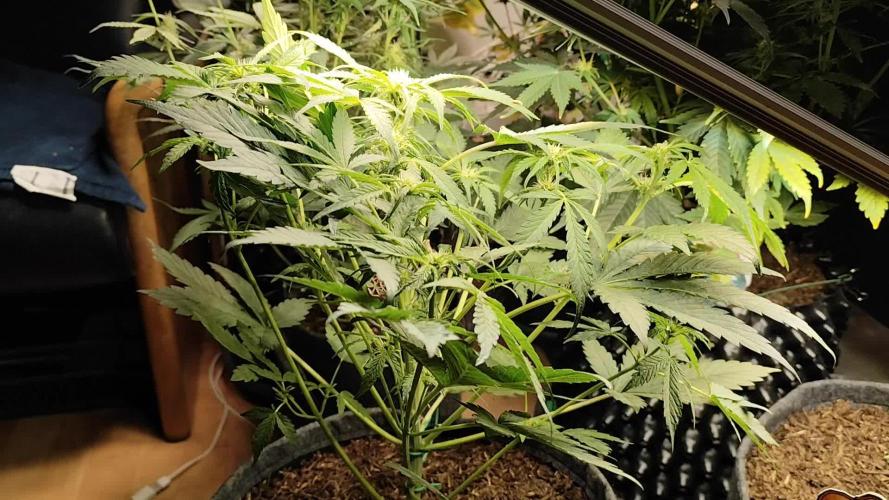
Tag 43: Die Lemon Cherry Cookies Auto von FastBuds hat weiße Blüten.
Tag 45: 2 Liter Brunnenwasser gegossen.
Tag 47: 2 Liter Brunnenwasser gegossen.
Tag 49: 2 Liter Brunnenwasser gaanz laangsam gegossen.
Schön, dass du meinen Grow angesehen hast. Schau mal wieder rein. 🌱😎


Likes
7
Share

@Mosquito_Haarlem
Follow
Ze krijgt deze laatste week alleen nog flawless finish mee van advanced nutrients.
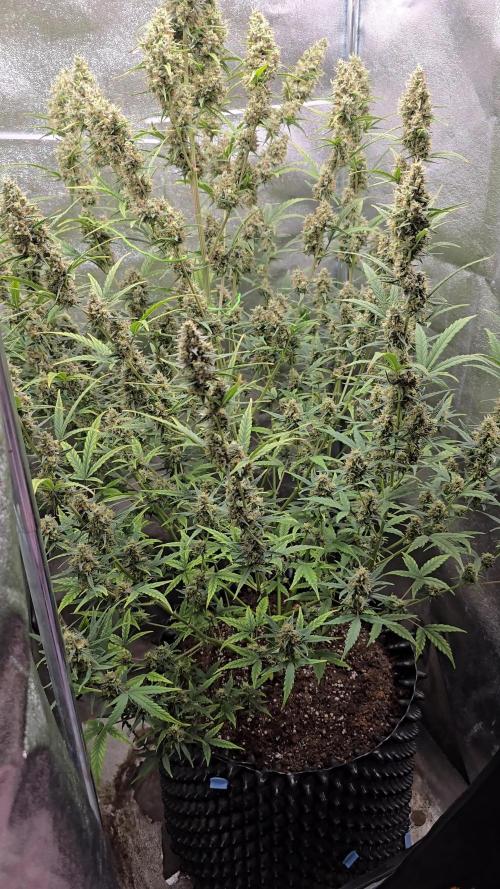
De koningin heeft haar vruchten flink opgepompt.
Ik sta versteld van de prachtige zware toppen die ik heb moeten ondersteunen omdat ze anders zouden omvallen door de zwaarte
Echt wauw.

Likes
8
Share

@Growtopus
Follow
261 g nass ist für die Umstände total in Ordnung. Der Schädlingsbefall hat sie in der Vegi ordentlich gestört und eigentlich sollten es ja zwei Pflanzen sein. Dazu war das Licht einfach viel zu stark eingestellt und hat sie zusätzlich gestresst.
Jetzt wird erstmal getrocknet in DryFerms die ich noch da hatte.
Trocken 80 g, jetzt fehlt noch das Curing.
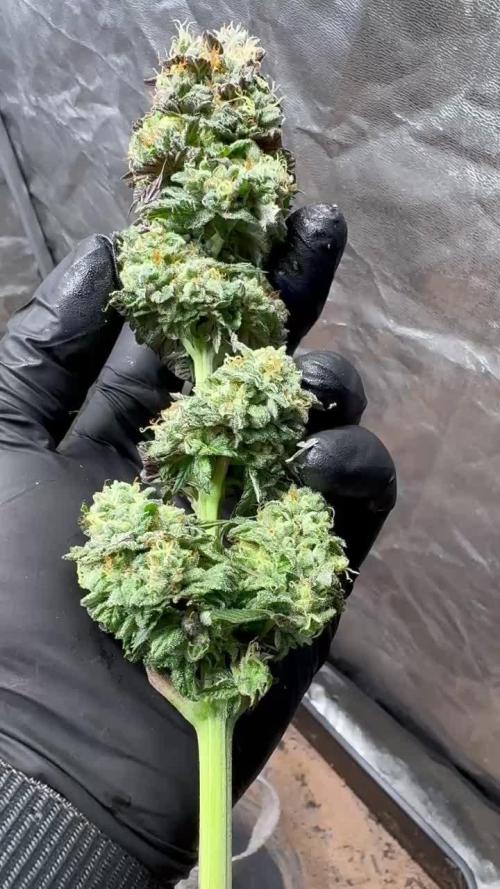
So, die Budshots sind nachgereicht. Eine Probe wurde ins Labor geschickt, ~ 20,7 % THC, ~ 24 % Cannabinoide insgesamt.

Processing
Likes
1
Share


@Ferenc
Follow
Light schedule 20 hours on 4 hours off and the same with ventilation. Humidity approx 50 percent, water intake raised up 125 ml per plant per day. Fertilization continues on Monday, Wednesday, and Friday with Biobizz family and Tuesday, Thursday, Saturday bat guano and Epsom salt. This week will change that shit lamp and replace with Marshydro 600W.
Day 46, 2 days no update all good they are flowering nicely waiting for the new lamp. Critical Orange Punch nicely developing and the rest of them is coming as well. Today I set the new 600W Marshydro. I also set the light schedule for 18/6.


Likes
2
Share


@Susquihanna
Follow
So, my "Skunk" puppies are always curious to see what I am doing when I am gardening. They are mischievous and would destroy my plants if I didn't have a fence around them.
Miss Skunk grew 4 inches this week! And my two new branches grew a lot, too. I took a picture of my hand behind one of the lateral growths. I think it is doing very well. They grew about 1 inch this week.
I started nutrients this week.
Likes
10
Share


@brunoazazel
Follow
4/11
Día 35 de vida, entramos en la sexta semana
primer trasplante de maceta de 500ml a otra de 7 litros.
las dejare a la sombra un par de dias para que se recuperen con facilidad.


Likes
22
Share


@chupacabra80
Follow
1
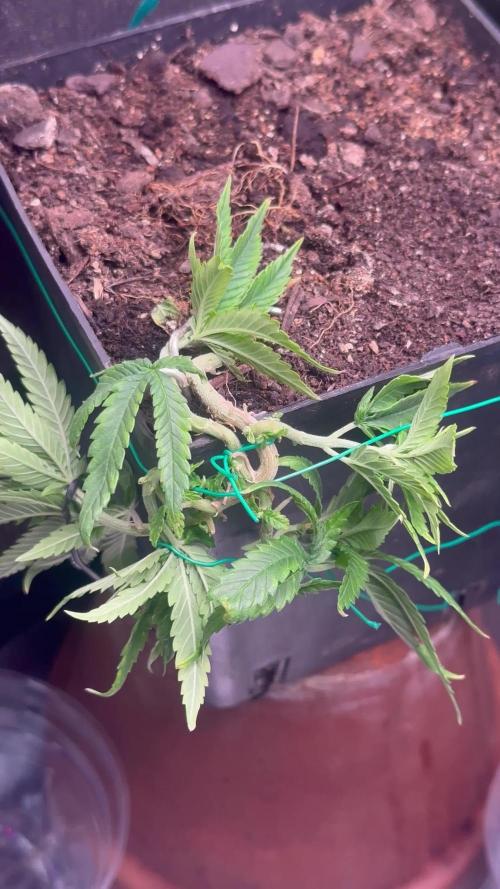
glue gelato
120 cm
начал цвести в
34- 35 дней
2
runtz
90 cm еще не начал цвести.
вот вот расцветет
3
weedding cake
120 cm
начал цвести
40-41 день
4
do si dos
130 cm
начал цвести
40-41 день
5
Gorilla glue
120 cm начал цвести
40-41 день
сегодня я промыл
2 мл/1 л
floraClean,
Gorilla glue , wedding, do si dos поели по 3 литра, glue gelato 2.5 литра,
runtz меньше 2 литров,
runtz
мало ест и пока тормозит)))), в основном все нормально,я максимально не трогаю растения хочу посмотреть полный потенциал,я срезал лишь пару листьев и все,думаю это не проблема,


Likes
25
Share
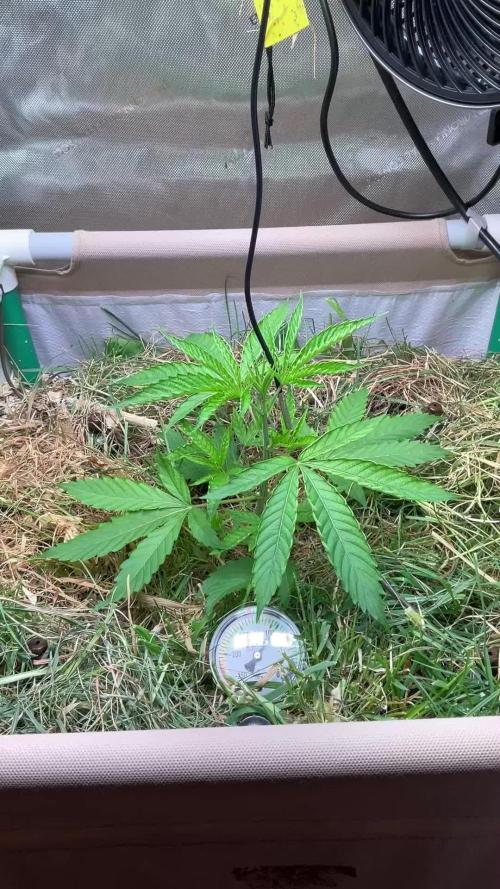

@Tower84
Follow
🇩🇪 Woche 4 Vegetation 🌱 | Cherry Limeade 🍒🍋
Diese Woche hat mich die Cherry Limeade endlich etwas aufatmen lassen. 🙌 Sie ist innerhalb einer Woche von 8 cm auf 21 cm gewachsen – ein deutliches Zeichen dafür, dass das Wurzelsystem langsam beginnt, sich im Living Soil zu etablieren. 💚
Trotzdem bin ich überzeugt, dass der schwierige Start auf die direkte Keimung im sehr nährstoffreichen Living Soil zurückzuführen ist. Rückblickend war das für einen empfindlichen Sämling vermutlich einfach etwas zu viel. Ich vermute, dass die Wurzeln zunächst mit dem aktiven Boden zu kämpfen hatten und deshalb das oberirdische Wachstum lange hinterherhinkte. Für den nächsten Durchgang werde ich deshalb definitiv wieder Bottomless Pots mit BioBizz Light Mix verwenden, damit die Pflanzen zunächst in einem milderen Substrat anwachsen können und erst später in das Living Soil einwurzeln. 🌱
Leider war ich diese Woche auch drei Tage beruflich unterwegs. Während dieser Zeit hat sich meine Blumat-Bewässerung bei etwa 50 mbar eingependelt. Zusammen mit der zuvor sehr hohen Bodenfeuchtigkeit war der Wurzelbereich vermutlich dauerhaft etwas zu nass. Das könnte erklären, warum der jüngste Wuchs zwischenzeitlich leichte Aufhellungen und Verformungen gezeigt hat. Mittlerweile habe ich das Klima angepasst und den VPD auf etwa 1 kPa angehoben. Jetzt heißt es beobachten, wie sich der neue Wuchs entwickelt. 🌿
Ein weiteres Thema sind die Trauermücken. Die Population hat in den letzten Tagen etwas zugenommen, weshalb ich heute zum ersten Mal BTI über das Gießwasser anwenden werde. Ich hoffe, damit die Larven im Boden in den Griff zu bekommen, ohne das Bodenleben negativ zu beeinflussen.
Mein Cover Crop entwickelt sich ebenfalls fast zu gut. 😅 Es nimmt inzwischen viel Platz ein und beeinflusst auch den Wasserverbrauch des Beets. Deshalb werde ich es in den kommenden Tagen Schritt für Schritt kräftig zurückschneiden und bis zur Blüte größtenteils entfernen. So sollte die Cherry Limeade wieder deutlich mehr Licht und Platz bekommen und das Blumat-System hoffentlich etwas konstanter arbeiten. 🌾✂️
Jetzt stehe ich noch vor der nächsten Entscheidung: Topping oder nur LST? 🤔 Eigentlich wollte ich morgen mit dem Topping beginnen, bin mir nach dem etwas holprigen Start aber noch nicht ganz sicher, ob ich der Pflanze lieber noch etwas Zeit geben sollte und zunächst nur LST anwende. Was würdet ihr an meiner Stelle machen?
Trotz der kleinen Rückschläge bin ich mit der Entwicklung inzwischen wieder deutlich optimistischer. Das Wachstum hat spürbar angezogen und ich bin gespannt, ob Cherry Limeade in den kommenden Wochen ihr volles Potenzial zeigt. 🍒🍋💚
📊 Aktuelle Parameter:
* 💡 Licht: 400 PPFD (18/6, Stufe 3, 40 cm Abstand)
* 🌡️ Temperatur: 30 °C
* 💧 Luftfeuchtigkeit: 75 %
* 📈 VPD: 1,1 kPa
* 🌿 CO₂: Ø 1000 ppm
* 💧 Bodenfeuchtigkeit: 50–150 mbar
⸻
🇬🇧 Week 4 Vegetative 🌱 | Cherry Limeade 🍒🍋
This week Cherry Limeade finally gave me a reason to smile. 🙌 She grew from 8 cm to 21 cm in just one week, which is a clear sign that the root system is finally starting to establish itself in the Living Soil. 💚
However, I’m still convinced that the slow start was caused by direct germination in a very nutrient-rich Living Soil. Looking back, it was probably a bit too much for such a young seedling. I believe the roots needed a long time to adapt to the highly active soil before the plant could really focus on above-ground growth. For my next run I’ll definitely use Almicanna Bottomless Pots filled with BioBizz Light Mix, allowing the seedlings to establish themselves in a gentler medium before growing down into the Living Soil bed. 🌱
Unfortunately, I was away on a business trip for three days this week. During that time, my Blumat irrigation system settled at around 50 mbar, leaving the root zone wetter than intended. This may explain the slight chlorosis and deformation that appeared on the newest growth. I’ve now adjusted the environment and increased the VPD to around 1 kPa. From here on, I’ll mainly watch how the new growth develops. 🌿
Another challenge has been fungus gnats. Their numbers have increased slightly, so today I’ll be applying BTI for the first time through the irrigation system. Hopefully this will control the larvae without disrupting the biology of the Living Soil.
My cover crop has also become a little too successful. 😅 It now occupies a lot of space and noticeably affects the bed’s water consumption. Over the next few days I’ll gradually cut it back heavily and remove most of it before flowering, giving Cherry Limeade more space, light and helping the Blumat system become more stable. 🌾✂️
Now I’m facing my next decision: Topping or just LST? 🤔 I originally planned to top her tomorrow, but after the slow start I’m wondering if it would be better to give her a little more time and only use low stress training for now. What would you do?
Despite the small setbacks, I’m feeling much more optimistic again. Growth has clearly accelerated, and I’m excited to see whether Cherry Limeade will continue to catch up over the next few weeks. 🍒🍋💚
📊 Current Parameters:
* 💡 Light: 400 PPFD (18/6, Level 3, 40 cm distance)
* 🌡️ Temperature: 30 °C
* 💧 Humidity: 75%
* 📈 VPD: 1.1 kPa
* 🌿 CO₂: Ø 1000 ppm
* 💧 Soil moisture: 50–150 mbar

Processing
Likes
70
Share


@CBD_Sweden
Follow
2017-09-11. Kl 12.00. Week 3 starts. I have cleaned the whole room for the new week and gave the girls water and nutes. Added videos and pics. Girl is 11 cm high.
---------------------------------------------------------------------------------------------------------
2017-09-12. Kl 10.00. New pics and video.
--------------------------------------------------------
2017-09-13. Kl 22.00. Added new video.
----------------------------------------------------
2017-09-15. KL 10.00. New pics and video. The girl is 14 cm high.
---------------------------------------------------------------------------
2017-09-16. Kl 10.00. The girl is starting to grow little better now and i hope she is picking up the pace. Added new videos.
Likes
Comments
Share


@PW216
Follow
Update in progress...
11/23/24 - Chopped and hung whole in closet.
11/29/24 - Trimmed and jarred. Early samples detect incredible taste and smell. The high is immediate and very energetic. Felt up front and in the face. Very pleased with the initial weights, although I will make certain they are accurate and final before posting numbers.
12/11/24 - No clue why it only gives me an option to log the wet bud weight but I put 3.55 oz for my final weight and that is dry.
Likes
12
Share


@Dankybongtoker69
Follow
Didn't have someone to come water the plants. 5 days away. Plants dried right out. Defoliated both and fed and watered. We will see what happens. Plant one has mostly orange hairs. Plant two is on the whiter side. Buds are still filling in. I have definitely learned that I need to move on to a more automated system for my lifestyle. Gonna try to make the best of the next few weeks and watch the trichomes turn. Day 66-67 flushed soil with pH water


Likes
2
Share


@Delta9tetrahidro
Follow
Nuevamente repito siempre el mismo proceso en el cuidado de la planta en cada etapa. Siempre cuido el ph que para mí es lo más importante en este trabajo. Despúes todo lo demas se puede mejorar.
Likes
10
Share


@BodyByVio
Follow
This week I Supercrop all the plants and spred them out over both lights. One more week of Veg and they are ready to explode
Check me out on Instagram @growmorestressless