


Likes
Comments
Share


@CentralCoastGenetic
Follow
Weather has been good to me hopefully it don’t change .. flowering coming along just fine keeping an eye out for bugs

Likes
2
Share

@All_about_420
Follow
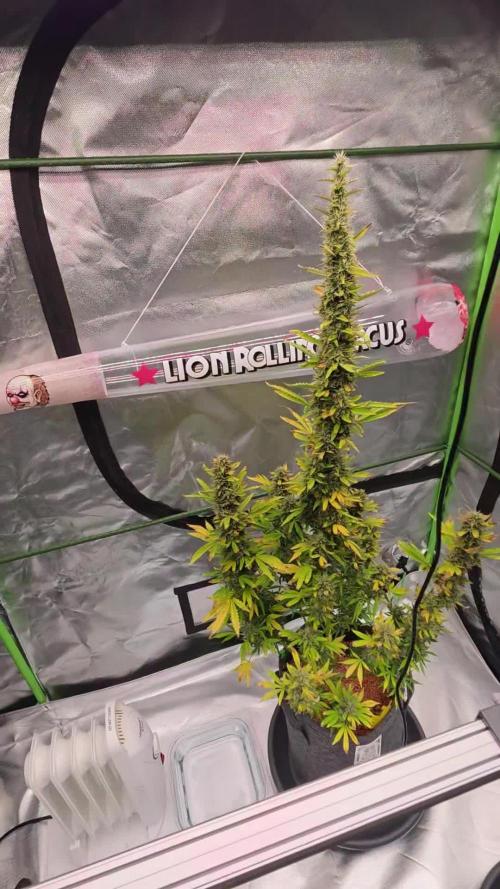
Und sie wächst und wächst und wächst...
Ich weiß gar nicht, wo sie noch hin will.
Macht aber nix, die Nähe zur Lampe scheint ihr nix auszumachen.
Seit dem 03. Jan darf sie jetzt auch das komplette Licht ganz alleine ausbeuten,
da die beiden fast buds, wie der Name schon sagt ;)
früher fertig waren.
Likes
19
Share


@eldruida_lamota
Follow
Vamos familia septima semana de floración de estás apollo black cherry de SeedStockers.
Que ganas tengo de ver el progreso de esta variedad, las plantas están sanas, se ven con buen color.
Ya estamos entrando en la recta final.
La cantidad de agua cada 48h entre riegos.
Esta semana añadimos nutrientes de la gama Agrobeta.
Las plantas están bastante bien subió algo la temperatura esta semana pero por el momento no les afectó, a ver si consigo bajar un poco la temperatura estas próximas semanas y acabamos todo bien..
Estas próximas semanas veremos como avanzan y como engordan las flores.
Mars hydro:
Code discount: EL420
https://www.mars-hydro.com/
Agrobeta:
https://www.agrobeta.com/agrobetatiendaonline/36-abonos-canamo
Hasta aquí todo, Buenos humos 💨💨

Likes
28
Share


@m0use
Follow
Left these ones out a bit to long and not nearly enough love, so they suffered a bit but that's ok. I am going to experiment and try water curing the buds. First time ever using this method and I think it will make a good little project. No idea how to it will turn out, been reading it will remove most of the smells and that sucks but the smoke is very clean and light. Only time will tell. take about 7 days to fully water cure. bud washing helped get rid of a lot of extra that stuck to them outside.

Likes
12
Share


@Chuckwaggon420
Follow
Ended up with 4 mooning panties seedlings!!!
Way excited to have these going these genetics will get any weed nerd Gitty. Still just doing declorinated water ph to 5.6-5.7.
Just keep swimming
Just keep swimming
🐠
Stay posted going to get turned up week 2 is always more growth!!
Much love as
Likes
6
Share


@Ryno1990
Follow
Purple Lemonade from fast buds comming in nice on week 1 of veg she is missing one of her first leaves so looks a little funny but growing more every day under this fold 6 from medic grow


Likes
15
Share


@DaddyPrime2
Follow
5/28/24 oh damn baby, this cultivar is gonna be colorful
6/2 plant is still throwing out pistils but also chunking up quite nicely. I tried to create just mainly top colas. In description she should have a 3-5 nodal colas with disconnected nugs underneath that. But I only ended up with 3 node colas give or take but with maybe 2 more weeks if veg would've given me larger branches and bigger cola structure and can always cut the larfy.

Likes
12
Share


@StratoCaster
Follow
Day 45 of Veg, middle of week 7. Today I made the Switch from LED Lights to 600W Dual Spectrum HPS.
I'm using S&P 800CFM inline duct for Carbon filter and the 6inch cooltube i added to cool down the heat that this light bulb it spreading (29.1 C and keep on climbing up). i also installed the SCROG net (as u can see in pics) , broke one of the strands of one plant and turned it into supercrop, put some bandage on it and hope for it to heal. I truly hope everything will go as planed!


Likes
6
Share

@CptnNugz
Follow
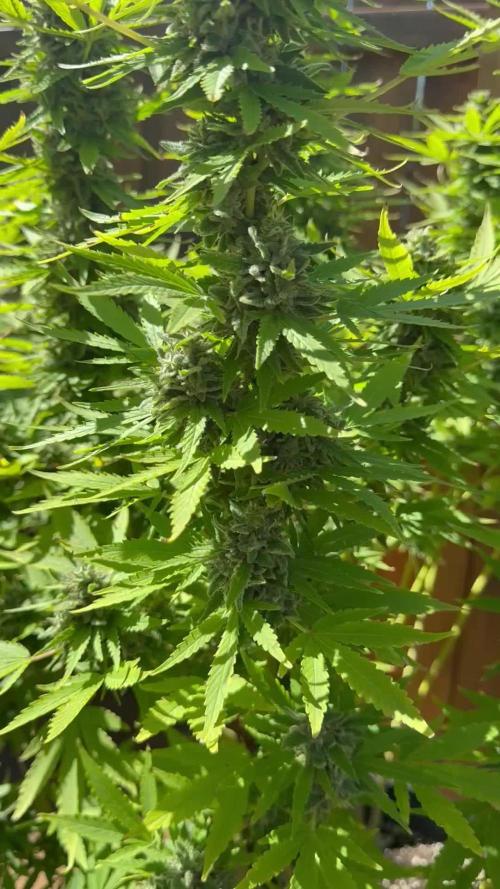
Went on vacation and came back to even bigger buds! Love that! There was some yellowing in the leaves which will happen but probably more from the rain that happened while I was gone also was having them watered too not knowing what was going on at home. Everytime I looked at the cameras the sun was shining lol. They are all very sticky! Arms and fingers covered with good smelling sticky goodness cleaning out dead leaves! The smell is loud! Super happy with what they are looking like! Huge buds!

Likes
4
Share


@Thomas12477
Follow
The plants are doing beautifully after two waves of bug attacks. The first wave was spider mites that I located in my greenhouse before they had a chance to spread to my canibus.I had to spray two days in a row to kill them all. Than 5 days layer I see thrips, so I gave it another spray. I foiler fead my nutrients.

Likes
16
Share


@MadeInGermany
Follow
Info:
Unfortunately, I had to find out that my account is used for fake pages in social media.
I am only active here on growdiaries.
I am not on facebook instagram twitter etc All accounts except this one are fake.
Flowering day 54
since time change
to 12/12 h.
Hi everyone :-) .
We are slowly getting closer to the end :-).
The lady puts her full energy into the flowers.
The leaves are beginning to fall.
I poured 3 times this week with 1.2 l each.
The trichomes were checked and the leaves were also checked for animals.
everything is great 👍.
The tent was cleaned and the electronics checked as well.
I wish you a lot of fun with this update.
Stay healthy 🙏🏻
You can buy this Strain at
https://www.barneysfarm.com/blue-cheese-34
Type:
Blue Cheese
☝️🏼
Genetics:
Blueberry
X
Original Cheese
👍
Vega lamp:
2 x Todogrow Led
Quantum Board 100 W
💡
Bloom Lamp :
2 x Todogrow Led
Cxb 3590 COB 3500 K 205W
💡💡☝️🏼
Soil :
Canna Coco
☝️🏼
Fertilizer:
Green House Powder Feeding
☝️🏼🌱
Water:
Osmosis water mixed with normal water (24 hours stale that the chlorine evaporates) to 0.2 EC. Add Cal / Mag to 0.4 Ec Ph with Organic Ph - to 5.5 - 5.8


Likes
5
Share


@GrowCaCola
Follow
The GSCs finally hit their flowering stretch and turned from little ninja stars to nice little bushes. I think my low Humidity may have stunted growth a bit - dry winters in so cal. Overall they are doing super nice, and should start stacking and stinking here any day now. I moved them under the big light in the big tent and all the plants are reaching for it like mad. This Mars 2 1600 is a beast of a light.
Likes
92
Share


@DogDoctorOfficial
Follow
Week 9 Flower Report: The Countdown to Harvest Begins! 🌼✨
As the ninth week of flower unfolds, the room is a symphony of colors and frosty brilliance—a true gardener’s dream! But as we approach the final stretch, it’s a delicate dance of vigilance and care to ensure a clean and bountiful harvest. Here’s a deep dive into this exciting and educational week:
The “Flush” in Full Swing
The flush continues as we prepare the ladies for their final days. While we’re a week or so away from harvest, the plants are responding beautifully, showcasing stunning fades that highlight their unique genetics. This fading process is a critical part of the journey, helping the plants naturally finish their cycle while preserving those complex terpene profiles we all love.
The Mold Incident: A Teachable Moment
This week brought a challenge—a few buds succumbed to bud rot (Botrytis), particularly on the Papaya Zoap and a single bud from the Gorilla Melon. While disheartening, it’s a reminder that mold can occur even in the most well-maintained gardens, especially with dense colas and a full canopy.
After a thorough inspection, all affected buds were removed and discarded to prevent the spread. A quick note to all growers: defoliation plays a massive role in airflow and prevention of such issues. This is why mid-flower defoliation is a game-changer, and I’m grateful it kept the rest of the garden healthy!
Papaya Zoap’s Unique Quirks
The Papaya Zoap continues to be a star of the show with its frosty buds and… albino tips! These tiny white tips are likely from being too close to the lights. While it’s a cosmetic detail that doesn’t affect quality, it’s a fascinating display of how genetics and environment interact.
A Frost-Filled Wonderland
The room is absolutely glistening with frost. Trichomes are piling up like snow, giving the entire garden a magical wintery appearance. I genuinely believe the ThinkGrow LEDs and TrolMaster spectrum control deserve a shoutout here. Running deep red, far red, and UV at 100%, combined with whites at 50%, is delivering incredible results. The ability to fine-tune the spectrum is a game-changer for resin production and terpene enhancement.
Environmental Mastery
Here’s a peek into the environmental stats keeping the ladies thriving:
• Room Temperature: 26°C
• Relative Humidity (RH): 53.2%
• VPD: 1.57 kPa
• CO2: 1067 ppm
• PPFD: 690 µmol/m²/s
This balance creates the perfect conditions for fattening buds and maximizing quality in the final weeks.
Nutrient & Soil Rundown
On the nutrient side, the solution measures:
• pH: 6.67
• TDS (Reservoir): 65 ppm
• Solution Temp: 18.3°C
Soil stats show a TDS of 695 ppm, indicating there’s still some nutrient reserve left in the medium—a perfect transition into the flush phase. It’s all about ensuring the plants have enough to finish strong without compromising flavor or smoothness.
A Garden of Many Colors
The fades across the room are a sight to behold. Each strain is showcasing its unique hues, with the Green Papaya leading the frost parade, and the Punch Pie taking the crown for bud size. Meanwhile, the Gorilla Melon is dazzling with red reflections, and the Papaya Zoap keeps turning heads with its white crystalline canopy.
Videos with TM+ Pro
This week, I’m also sharing videos straight from the TM+ Pro app. This tool has been a joy to use, offering precise control and insights into my grow environment. It’s simple for beginners and robust for advanced growers, proving once again that the TrolMaster ecosystem is a must-have in any grow room.
P.S. Ecosystem Excellence
I can’t emphasize enough how incredible the TrolMaster ecosystem is for growers of all levels. From intuitive configuration to seamless integration, it’s a system that simplifies growing while delivering professional results. Whether you’re just starting out or refining your craft, TrolMaster has your back.
Thank Yous & Shoutouts
As always, my heartfelt thanks to my sponsors: TrolMaster, ThinkGrow LEDs, Aptus Holland, Pro Mix Soil, Cannakan, and the amazing seed banks for their genetics. Huge love to the community—followers, haters, and everyone in between. And, of course, a special nod to Grow Diaries for being a platform where we can all share and learn together.
Let’s finish this grow strong, and here’s to an exciting harvest week ahead. 🌱✨ Stay tuned, stay positive, and as always, Growers Love! 💚
Discount Codes so you can save big on your next check out 💚💚💚
Kannabia - DOGDOCTOR 30% off
SeedsmanSeeds - DOGDOCTOR 10% off
CannaKan- DOGDOCTOR 15% off
terpyz.eu - DOCTOR 15% off
The Neutralizer - PORKIT5-DOG 15% off
Fast Buds - DOGDOCT 15% off
As always thank you all for stopping by, for the love and for it all , this journey of mine wold just not be the same without you guys, the love and support is very much appreciated and i fell honored and so joyful with you all in my life 🙏
With true love comes happiness 💚🙏 Always believe in your self and always do things expecting nothing and with an open heart , be a giver and the universe will give back to you in ways you could not even imagine so 💚
Friendly reminder all you see here is pure research and for educational purposes only
Growers Love to you all 💚💚💚


Likes
87
Share


@Mrs_Larimar
Follow
2021-12-26
We Prelonged to 12 Weeks vegetation again, so this Lady can get a "Monster"
i forgot the photoshoot for her, so you just see my lovely Smoochie
I update the next Days
2021-12-27
Today i transplanted the Puddin into ahuuge 75l Bucket,
and took her into a Tent, for two more Weeks of Vegetation
She got a Topdressing, because she was looking a little pale
I unleashed her too. now she can spread the Wings
here are some Codes
Lights:
https://viparspectra.eu/discount/M.Larimar
And for the Fertilisers:
https://greenbuzzliquids.com/en/shop/
Code: mrs_larimar
Likes
21
Share


@BLAZED
Follow
Week 14 (2-6 t/m 8-6)
2-6
Temperatuur: 27.1 graden (licht aan) 20.5 graden (licht uit)
Luchtvochtigheid: 55% (hoogste) 45% (laagste)
Het gaat aardig goed. En wat zijn de shots met de lamp uit en flitser op mobiel aan super mooi!
Ik ben ook verliefd geworden op haar geur, ze ruikt zo lekker zoet-zuur! 😍Ik kan niet wachten om haar te testen. Ookal ben ik bang dat ze net wat te veel THC heeft dan ik normaal rook haha, maar dat zien we nog wel.
Watergift: 1000 ml, met 0.2 ml Silica Power per liter, 0.3 ml CalMag per liter en 1 gr Calcium PowderFeeding per liter. EC: 0.6 PH: 6.3
3-6
Temperatuur: 28.8 graden (licht aan) 21.8 graden (licht uit)
Luchtvochtigheid: 56% (hoogste) 41% (laagste)
Watergift: 1000 ml, met 0.2 ml Silica Power per liter, 0.3 ml CalMag per liter en 1 gr Calcium PowderFeeding per liter. EC: 0.6 PH: 6.3
4-6
Temperatuur: 29.5 graden (licht aan) 22.7 graden (licht uit)
Luchtvochtigheid: 55% (hoogste) 42% (laagste)
Watergift: 1000 ml, met 0.2 ml Silica Power per liter, 0.3 ml CalMag per liter en 1 gr Calcium, 0.6 gr Hybrids en 0.4 gr PK+ PowderFeeding per liter. EC: 1.7 PH: 6.2
5-6
Temperatuur: 29.5 graden (licht aan) 22.4 graden (licht uit)
Luchtvochtigheid: 55% (hoogste) 44% (laagste)
Watergift: 1000 ml, met 0.2 ml Silica Power per liter, 0.3 ml CalMag per liter en 1 gr Calcium PowderFeeding per liter. EC: 0.6 PH: 6.2
6-6
Temperatuur: 29.4 graden (licht aan) 21.8 graden (licht uit)
Luchtvochtigheid: 55% (hoogste) 43% (laagste)
Ik ga vanaf nu om de dag wat PK+ meegeven aangezien ze dat nodig heeft in de bloei, 0.4gr per liter wordt er aangeraden op het schema maar ik doe voorzichtig en geef haar 0.2gr per liter.
Watergift: 1000 ml, met 0.2 ml Silica Power per liter, 0.3 ml CalMag per liter en 1 gr Calcium en 0.2 gr PK+ PowderFeeding per liter. EC: 0.7 PH: 6.3
7-6
Temperatuur: 30.1 graden (licht aan) 23.1 graden (licht uit)
Luchtvochtigheid: 56% (hoogste) 45% (laagste)
Watergift: 1000 ml, met 0.2 ml Silica Power per liter, 0.3 ml CalMag per liter en 1 gr Calcium PowderFeeding per liter. EC: 0.6 PH: 6.3
8-6
Temperatuur: 31 graden (licht aan) 23.5 graden (licht uit)
Luchtvochtigheid: 58% (hoogste) 45% (laagste)
De toppen beginnen voller te worden! Nu nog ongeveer 3 weekjes te gaan. 😁
Watergift: 1000 ml, met 0.2 ml Silica Power per liter, 0.3 ml CalMag per liter en 1 gr Calcium en 0.2 gr PK+ PowderFeeding per liter. EC: 0.7 PH: 6.2


Likes
6
Share


@StonedandSteady
Follow
#AutoMontreal *Fem* breed by Team #DivineSeeds #DivineSeedsSquad #DivineSeedsBreedingCompany Looking Ultimately Magnificent, Amazingly Great and Flavorful Frosted to Harvest at her 9th week of Flower! She Grew under the #Growatt600w and in my #TopoLite 24×24×48 Grow Tent! I'm also using #TNBNaturals #TheEnhancer Co2 Despersal Canister and using thier Ph⬆️⬇️ for my Decolinated Tap Water!
#AutoMontreal breed by Top of The Line Team #DivineSeeds #DivineSeedsSquad #DivineSeedsBreedingCompany
Yo!!! This Lil Beautiful Bean Popped under between 20 hours of Germination using this Wet Papertowel Method, this New Heat Mat, Baked potato ToGo Container and Regular Tap Water Helped Tremendously! Heck Yeah Growmies and Growmets!!! Let's Grow!!!
DivineSeeds:
#AutoMontreal
Origin:Canada
Type:50% Indica/ 40% Sativa/ 10% Ruderalis
Flowering:65 Days
THC:23%
Harvest:550-750 g/m2
Height:120-160 cm
https://divineseeds.net/
https://instagram.com/divine.seeds?igshid=osxe2v7en33v
HumboldtCounty'sOwn:
Email: [email protected]
Phone: (707) 725-4119
Toll free: (866) 872-9434
Humboldt Bottling
Po Box 429 · Fortuna, CA 95540
HumboldtCounty'sOwn Website Link: https://humboldtcountysown.com/
HumboldtCounty'sOwn Instagram Link: https://instagram.com/humboldtcountysown?igshid=1qj809qkkwych
I love and Appreciate Everyone!!! Thanks Again Teams! Cheers Famz!!! Much Props and Much Topz!💯

Likes
12
Share


@SuiXideGhXsT
Follow
Hey guys, today I gave her a good dose of Green Sensation from Plagron.
I used it last week to test how it reacts.
I was actually a little worried about the lady, as the climate is changing a lot now. At night we reach between 10-14 degrees depending on the night temperature And during the day, it also depends on the outside temperature. So, we're currently reaching between 10 and 26 degrees Celsius during the day. Since I had to rearrange it and it's now in the room, I've been worried, what am I losing? The short answer is: NOTHING
She's growing great, I even had to cut her hair again last week
Since it's in the DWC, I fertilize according to what the plant tells me, and so I was able to add 8 ml, since it dilutes again in the DWC. I'm still learning a lot, following the instructions, but also listening closely to the plants. I think she'll produce really great buds and continue to grow well. Even under bad conditions it grows Zamnesia you did a great job ❤️