


Likes
Comments
Share


@BuzzingHighAbove
Follow
#1 still not flowering it’s been almost 3 weeks since the flip to 13/11. #3 is loaded with buds!! #4 is also loaded. #3 and #4 aren’t stretching a ton, and I love that they seem to be putting all of their energy into making buds. I’ve defoliated some to keep the budsites in the light.
Likes
6
Share


@Kloud9gardenz
Follow
Don't have a lot of time these days to take pics so I'll sum things up. CO2 got outta control and the plants took tf off literally. The video is around middle of week 3, I had to flip at week 4 BC I literally ran out of room and I had to constantly defoliate.

Likes
10
Share


@steadfast_grower
Follow
#########################################
HARVEST (Day 93 / June 4)
#########################################
-----------------------------------------------------------
GROW SUMMARY
-----------------------------------------------------------
Grown in 4x4 tent - but I only used 2x2 space because of heater and dehumidification and other plants (Outlier Z). This plant used a dedicated CMH 315 light. The plant was grown in hydroponics using a custom single-site PA hydroponics clone RDWC system with Advanced Nutrients Sensi Coco line, Microbial Mass and Orca for beneficials. I also experimented with Rapid start in the RDWC system, but I didn't see explosive root growth relying on Rapid Start as an additive to the system verse using it when starting in rapid rooters which worked well.
All around a pretty easy grow and things went very well. Topped twice for a mainline structure and she really spread out. Sparkling golf ball size nugs down the branches and spaced out nicely. The scent off her was like burned rubber/tires or maybe fresh blacktop. A single water change which was only performed when switching to bloom nutrients around week 7.
-----------------------------------------------------------
HARVEST
-----------------------------------------------------------
No dark period and no flush. On day 93 she was chopped and hung to dry.
-----------------------------------------------------------
DRYING
-----------------------------------------------------------
Entire plant hung upside down for 15 days. The temps were dialed in at 60F by using the S6 intake fan pulling air from the AC through intake vent on side of the tent. Humidity was dialed in at 63%/60F for 24hr, 62%/60F for the next 48hr. Then 60%/60F for the third day and onward. AC Infinity T6/S6 exhaust and intake fans were on the setting of '2' during drying until day 7, then I could turn down to a setting of '1' once the plants were not transpiring excess moisture. Trimmed on day 18. Then the jars were left open in the tent for another 12 more days for a full 30 day dry at 60%/60F while rolling the jars frequently. Also ran dehumidifier in the tent but it only ran for 1-2 minutes every hour because the AC was doing most of the dehumidification on the intake.
-----------------------------------------------------------
TRIMMING
-----------------------------------------------------------
Trimming was an absolute breeze. All swelled nuggets, very little sugar leafs left to trim.
-----------------------------------------------------------
CURING
-----------------------------------------------------------
Flower product was transferred to 1L mason jars averaging 35g of product per jar. I added a mini hygrometer to each jar and chose not to use a boveda this time. The RH averaged 62-64% when trimmed flowers went in jars.
Jars were left open in the tent for a total dry time of 30 days from harvest keeping the tent at 60%/60F.
Once closed, the jars were burped once a day for the first seven days, once every other day for the next seven days, rolling jars often. The burp was only for 3-5 second for air exchange until a. 62% was maintained in the jar.
-----------------------------------------------------------
YIELD
-----------------------------------------------------------
* Weight calculated at 62% humidity after 30-day dry and 14-day cure.
==============================
FLOWER PRODUCT
==============================
180.41g (6.44oz)
==============================
TRIM PRODUCT
==============================
57g (2.03oz)
** All major fan leaves, stems, and branches removed from trim product.
==============================
TOTAL OVERALL YIELD
==============================
Total: 238.41g (8.51oz)
==============================
SPACE YIELD
==============================
238.41g / 4 sqft (2x2 canopy) = 59.60g per sqft
==============================
WATTAGE YIELD
==============================
315 Watts / 4 Square Foot (3x4 canopy) = 78.75 watts per sqft.
238.41g / 315 watts = 0.76 grams per watt
-----------------------------------------------------------
PRODUCT TEST
-----------------------------------------------------------
Bag appeal is top-notch. Trichome covered, with aromas of that unique 'kush' you can quickly identify based on experience.
Best OG Kush I've ever tried, hands down! The flavour is kushy, smoke is smooth and definitely my favorite strain in my tote of cured harvests at the moment. I can't keep my hands off of the jars. Definitely not a daytime strain, even for experienced users, although I'll use it in the afternoon when life is throwing curve balls. The effects rise you up, then sets you right down and will wash away all that anxiety after a long day. Put it this way....if I puff a few hours before bed, I still feel it the next morning when I peel my eyes open. No joke.
I'll definitely be growing this one again, maybe even next run because I'll be sad when I run out.
-----------------------------------------------------------
REGRETS
-----------------------------------------------------------
Not running more of this amazing plant.
-----------------------------------------------------------
NEXT RUN
-----------------------------------------------------------
This was the first run at my new residence so it will take some time to get it dialed in. I had some calibration issues which are now fixed. I'm going to be shooting for 1gram per watt on the next run.
-----------------------------------------------------------
FINAL THOUGHTS
-----------------------------------------------------------
DarkOwl is the best autoflower I've grown yet. I'm now eager to give the Bruce Banner #3 they released a run and will surely acquire future releases from DarkOwl.
-----------------------------------------------------------
THE END
-----------------------------------------------------------
Thanks for checking out my diary! I typically journal in my notebook but I put some time and effort into documenting my grows on this platform in hopes it will help a new or experienced grower with their DWC journey. Any questions or suggestions are welcomed.
Happy growing!

Likes
21
Share


@Hazeberg
Follow
Day 43: I pulled the LED to the most possible height and she keeps stretching, thus I had to bend the main branch with LST clips to keep some distance to the LED to avoid light stress.
Day 44: Today was cleaning day of the reservoir and a new set of nutrients are applied. I'm quite curious how they support her. I also removed some foliage.
Day 45: I noticed some tip burn at the leafs of the main bud. So I checked the PH in the reservoir and noticed, that it is off and adjusted it. I hope this supports her. Also, it might be a bit of light stress, as she is pretty close to the light (~ 25 cm). Nothing else to do today.
Day 46: I refilled the reservoir today. As I noticed, that the PH was off the last time, I lower now the PH from 6.4 to 5.6. This should also support her to consume the nutrients, as I use 50% coco.
Day 47: Nothing to do, today.
Day 48: I removed some fan leafs.
Day 49: Last day of the week. She is really thirsty now. I decided to lower the humidity to 65% to get a VPD of around 1 kPa. Let's see, how this will work out in the next week.
--------------------------------------------------------------
You also like to get some seeds from Fast Buds?
You like a 15% discount?
Just use the following code on your next order: CSYIJC
Happy growing
--------------------------------------------------------------
🙏 Thanks for visiting and follow for daily updates 🌱

Likes
16
Share


@Elogrower
Follow
Starting to flush both Royal Jacks. The first day pouring 20L each plant and now wait for at least 3 days to soil get a little bit dry. Using tap water in the process.
The Royal Dwarf still getting bigger and ticker, I'll give her one or two more weeks before flushing her. On the other hand, the Northern Light looks 3 or 4 weeks behind whats makes me believe that seed was a photoperiod. I was a little concerned about her but now I can bet that she'll be given the biggest harvest between all them.... let's wait to see.

Likes
17
Share


@soloczek
Follow
RS11 will need more time, longer flower time (9weeks) than cherry mac muffin (7-8 weeks)
Cherry Mac Muffin very sweet und for MAC typical terpenes like a creamy vanilla butter or something similar 😮💨😋
RS11 very fresh, flowery fruity terpenes I think next week they will be much stronger

Likes
18
Share


@BobtheBUDbuilder
Follow
-Notes
Green crack is over 34 inches while the La chems around 24. Next time i do a diary i will do each plant differently.
Light height is 12 inches from highest colla which belongs to GC1. And let me say wow. Not only did she bounce back but she has went back to outgrowing all the other plants with stride. If a pro grower had this seed she would have got her own 3x3 cause that is a 1 pound plant.
So.. I flushed TD2, GC2 and TD1. Nothing major just about 3 gallons fush each. Most of the ppm readings where already low. Its a good idea to flush out the soil. Already the lime green color is gone from gc2. Td2 is starting to frost golden brown. So far all the plants are on the road to good health.
My ppm is around 600 but going to bump up to 900. We will see. We did the final defoliate. Mainly cleaned up the bottom of the plants and a few of them got pruned. Also cleaned out the tent and wiped down and moved fans around.
-GC1 has grown almost 20 inches this week. Insane. I am about out of room in my tent. My light is near max and the colas are 10 inches away. Just going to have to deal with the fox tail later on those sadly. Any advice message me. Td2 has grown a few inches only in 2 weeks but the buds are fattening up. The La Chems finally started stretching. I am guessing 3 or 4 weeks on td1 and 2 weeks after gc and la chems. We will see.


Likes
5
Share


@Mrg7667
Follow
Day 26 of veg went to pheonix for a couple days and i forgot to set my timer, so my lights where off for 4 days 🤦♂️ got a little streching going on and yellowing, im confident its because the light was off

Likes
20
Share


@Dunk_Junk
Follow
Had to bend the top cola over this week as she was way too tall.
She's nicely entered flowering this week. Buds look nice and compact.

Likes
14
Share


@LokalGrenz
Follow
Got a dehumidifier it’s reading different from what mine controller 69 is saying but I have it set at 40% it’s the lowest so it’s going pull humidity regardless right now it’s about 53% which is okay would like it to get down to the 40’s I also changed the light schedule today to 20/4 the humidity raises at in my tent when lights are out so I figured change it to 20/4 instead of the 18/6 I’ve been running so if humidity does go over it won’t be for as long as before hopefully this works just trying to avoid any mold situation
So far the Amneisa Haze 2 is at stretching she’s going be big I can but the haze 2 is done seems to just be flowering the sour diesel is looking good as well so far I’m happy with its looking like left town for two days and the auto watering pots worked!
Likes
21
Share


@ArtisticGrown
Follow
This weeks been great besides the heat 😬 had some good cooler days that allowed me to really cool down the tent and get a good vpd reading at night. I’ve been trying to hold the humidity roughly round 35, 40% but it’s hard in this dry heat. Been learning to balance temperature and humidity for the best vpd reading. The og kush is showing some yellowing of the tips of the leafs. I’m thinking it’s from the heat. I am like the signs of purple in the one og kush plant. Crazy how they are 2 same og kush seeds and they are both growing similar and different at the same time haha! I love seeing the recovery of the tops and the reward for all the work put into veg! Gonna keep going strong the next 4 weeks! Been doing about 6.20 6.10 for ph. Also keeping the water cooler to keep them roots cool! Great week headed into week 4 after week 4 no more big bud on nutrients. Super excited 🔥 also wanna talk about how well all these strains are growing! Super proud the pineapple chunk is doing great the 2nd plant in the back is a bit shorter but she’s growing strong many tops! And doing well in flowering a little burnt tips on the fan leaves but nothing major! Happy growing yallll!!
Likes
10
Share


@Servietsky
Follow
Certainly last week of growth, NL is short and made of large and beautiful intense green leaves well formed. This week I stop the Start Booster. Light fragrance of greenery.
Likes
16
Share


@Tezza2
Follow
I had to move my girls outside into the garage they had to go into a smaller tent aswell i didnt bother to put the scrog netting again but things are looking good
Likes
9
Share


@Wenz004
Follow
Experiment explanation see week1
this week got this:
Plagron sugar royal 1ml/l
Plagron power buds 1ml/l
Plagron alga bloom 4ml/l
Plagron green sensation 1 ml/l
Aptus CalMg 0.6 ml/l
smell is the best I have smelled ever...incredible
Likes
55
Share


@nonick123
Follow
Día 71 (24/03) La planta lo ha pasado mal tras 2 días sin riego (casi 3 ciclos completos de 12 horas de luz sin riego...)
A lo que se suma altas temperaturas en mi zona, han tenido 28 ºC durante las horas de luz...
Las hojas inferiores se encuentran caidas y alguna quebradiza...
Le hago un riego con 750 ml H2O EC 0,45 a ver si se recuperan....
Día 72 (25/03) Riego con 250 ml H2O EC 0,45
Elimino las hojas quebradizas que no se van a recuperar después de la "sequia" que han pasado
Se encuentra en buen estado general y formando nuevos pistilos! 😍💥
Día 73 (26/03) Riego con 250 ml H2O EC 0,45
Día 74 (27/03) Riego con 500 ml H2O EC 0,45 con BIO PK 5-8 a 10 ml / L
Día 75 (28/03) Riego con 400 ml H2O EC 0,45
Día 76 (29/03) Riego con 500 ml H2O EC 0,45
Día 77 (30/03) Riego con 400 ml H2O EC 0,45
🚀 Khalifa Genetics - https://khalifagenetics.com/product/lemon-blanco-v3/ @khalifa.genetics
💦 BioTabs 15% DISCOUNT code "GDBT420" biotabs.nl/en/shop/ @biotabs_official
🌱Substrate PRO-MIX HP BACILLUS + MYCORRHIZAE @promixmitch @promixgrowers_unfiltered
💡2 x Mars Hydro FC1500 EVO Led Grow Light (2024 NEW FC 1500-EVO Samsung LM301H 150W LED) - https://marshydro.eu/products/fc1500-evo-led-grow-lights/ - https://www.amazon.de/dp/B0CSSGN5D8?ref=myi_title_dp

Likes
3
Share


@jahredi
Follow
Added some straw to keep the top layer from drying out. Feeding it .25 gal of water every 3-4 days.

Likes
57
Share


@Roberts
Follow
Pablo Escobar is growing great. She just had a solution change today. The colas are starting to bulk and get some good frost on them. She is starting to give off a sweet pine smell. Everything is going well. Thank you Divine Seeds, and Spider Farmer. 🤜🏻🤛🏻🌱🌱🌱
Thank you grow diaries community for the 👇likes👇, follows, comments, and subscriptions on my YouTube channel👇.
Thank you Happy Growing 🌱🌱🌱
https://youtube.com/channel/UCAhN7yRzWLpcaRHhMIQ7X4g

Processing
Likes
13
Share


@DrewbieDoobieNoobie
Follow
Well after a miscalculation on the feeding weeks I am back on track. I gave them a drink of PH 6.2 water on the 15th I will feed them this week with another Bloom, Humic Acid and Big Fruits I will increase them by 2 ml per gallon. I am out of the PK booster and should have enough of the other Green Buzz Nutrients to last the grow. They seem to be responding well to the feedings. I might have a little nutrient burn on some of the sugar leaves. Over all autos that don't get very big, the PPM level I have been giving them might be a little high. so one more week of feeding after this 1/25 last food before the 2week flush with Clean Fruits from Green Buzz Nutrients. something similar to a flawless finish I am guessing. till next week Roll Bigger Joints.😺


Processing
Likes
8
Share


@eldruida_lamota
Follow
Que pasa familia, esta semana hemos lavado las raíces de un ejemplar, el otro ejemplar se le sigue echando nutrientes.
Ph controlado, intentaremos aguantar esa planta alguna semana más, las otra por lo menos aún le quedan un par de semanas.
Ph controlado bajamos humedad a 35% y la temperatura la mantenemos por debajo de 27.
Estas flores están cogiendo unas tonalidades increíbles, y empieza a desprender unos aromas brutales como a ácido.

Likes
8
Share

@JeyGanesha
Follow
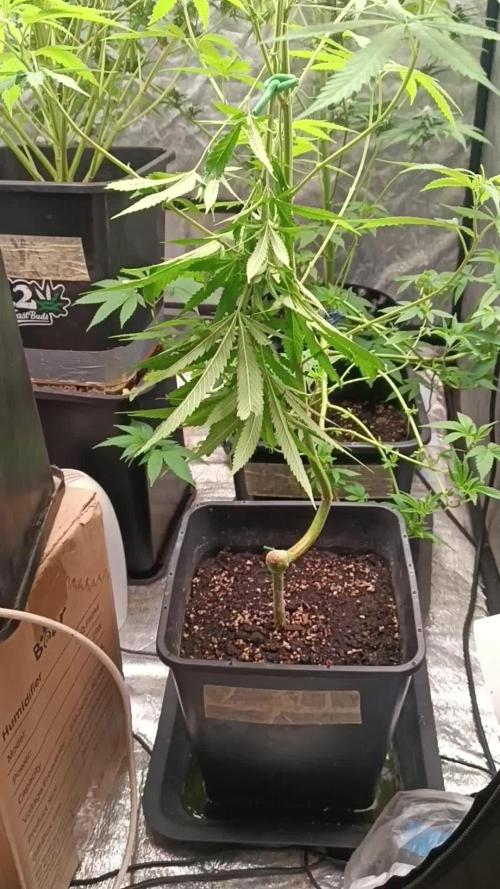
Spostamento dal balcone AD indoor.... l'ho piegata di brutto perché nel box non può crescere troppo in alto....cmq vedo che si stanno riprendendosi bene le 3 piante che avevo in balcone... Effettivamente la differenza si vede per le ore di luce diretta che prende.....

Likes
19
Share


@Coopmc
Follow
This Pheno from seeds from Supper Lemon Haze high CBD crossed with my FruitWalker!!
Decided to call this pheno SubLIMEinaL since she taste like key lime is supper chill, relaxing., and a bit psychedelic!!