Likes
3
Share
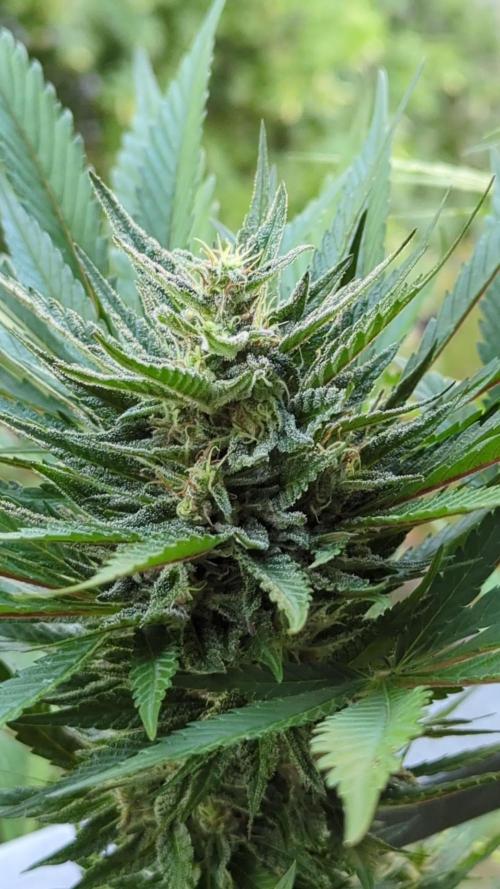
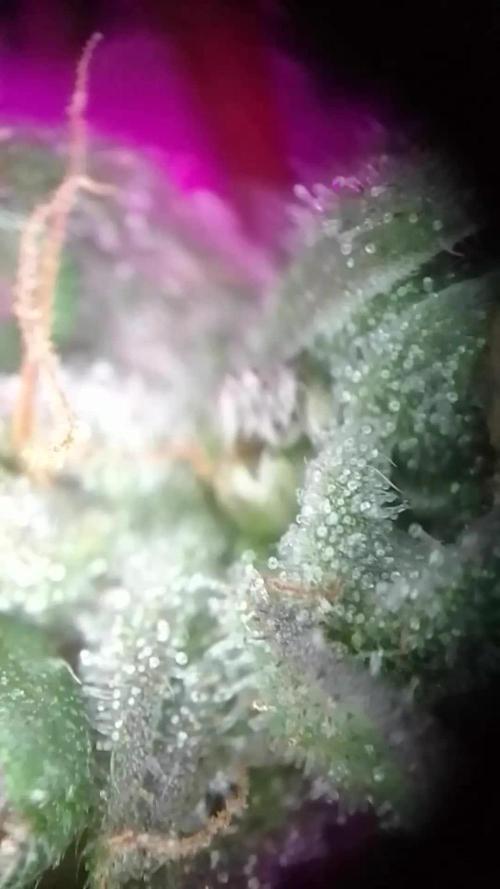
Orange Sherbet is flying. An will finish way before the other two. All happy. I was adding PK juice from first week of flower just forgot to add it on my list
Likes
12
Share
Omg how fat the get is crazy, thats a realy great strain.
Likes
3
Share
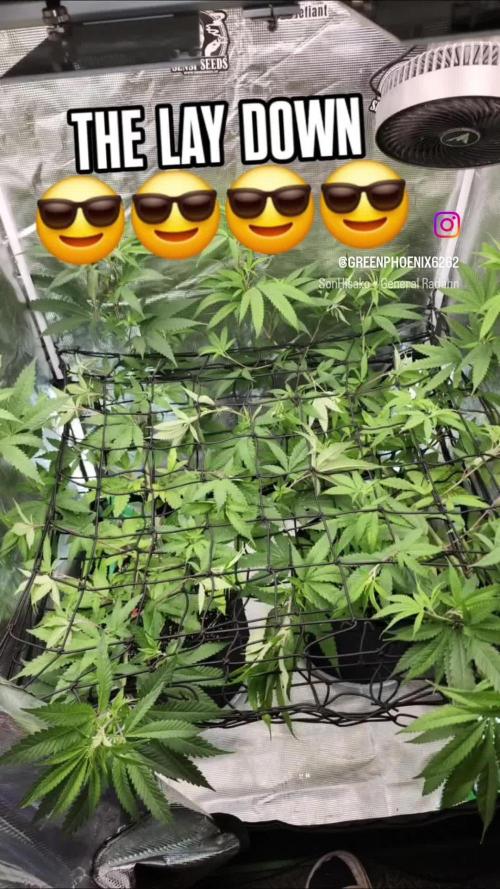
Hello fellow growers and welcome to Week 5 Not much to say besides enjoying the view while they grow 😍 Defoliated one of the oldest leafs at the bottom and flushed her with 5.5L of ph water at 6.2 - 6.4. The buds are fattening up each day and the trichomes are starting to show up 😍 Stay tuned for more 👋
Likes
52
Share
You don't become confident by shouting affirmations in the mirror, but by having a stack of undeniable proof that you are who you say you are, outwork your self-doubt. Nitrogen fixation is a chemical process by which molecular nitrogen (N2), which has a strong triple covalent bond, is converted into ammonia (NH3) or related nitrogenous compounds, typically in soil or aquatic systems but also in industry. The nitrogen in air is molecular dinitrogen, a relatively nonreactive molecule that is metabolically useless to all but a few microorganisms. Biological nitrogen fixation or diazotrophy is an important microbe-mediated process that converts dinitrogen (N2) gas to ammonia (NH3) using the nitrogenase protein complex (Nif).[2][3] Nitrogen fixation is essential to life because fixed inorganic nitrogen compounds are required for the biosynthesis of all nitrogen-containing organic compounds, such as amino acids and proteins, nucleoside triphosphates and nucleic acids. As part of the nitrogen cycle, it is essential for agriculture and the manufacture of fertilizer. It is also, indirectly, relevant to the manufacture of all nitrogen chemical compounds, which include some explosives, pharmaceuticals, and dyes. Nitrogen fixation is carried out naturally in soil by microorganisms termed diazotrophs that include bacteria, such as Azotobacter, and archaea. Some nitrogen-fixing bacteria have symbiotic relationships with plant groups, especially legumes.[4] Looser non-symbiotic relationships between diazotrophs and plants are often referred to as associative, as seen in nitrogen fixation on rice roots. Nitrogen fixation occurs between some termites and fungi.[5] It occurs naturally in the air by means of NOx production by lightning.[6][7] All biological reactions involving the process of nitrogen fixation are catalyzed by enzymes called nitrogenases.[8] These enzymes contain iron, often with a second metal, usually molybdenum but sometimes vanadium. Green clover (Fixation) White clover (Fixation) Red Clover. (Fixation) Yellow Clover. (Fixation, deeper roots) Sweet Thai Basil. (Terpenes) Italian Basil. (Terpenes) Chamomile.(Oil production) Borage.(Pest attraction taste) Lavender.(Pest attraction smell) Marigold(Pest attraction visual) Mycorrhizae are beneficial associations between mycorrhizal fungi and a plant’s root system. Mycorrhizal fungi spores germinate in the soil, creating filaments (hyphae) that penetrate the root cells, thus establishing a symbiotic relationship. This collaboration leads to the development of both intra-radical and extra-radical networks of filaments, enabling efficient exploration of the soil for enhanced access to nutrients and water. Consequently, these vital resources are transferred to the plant, resulting in numerous benefits for crop cultivation. Various mycorrhizal products are available in diverse formulations (powder, granular, and liquid), concentrations, and qualities. Ongoing advancements in products, technologies, and research are reshaping our understanding of mycorrhizae. Despite these positive developments, certain misconceptions persist. In the following discussion, we aim to clarify the truths and dispel the myths surrounding mycorrhizae products. MYTH #1 A HIGHER NUMBER OF MYCORRHIZAE SPECIES MEANS BETTER RESULTS. Contrary to common belief, having a higher number of mycorrhizae species in a product does not translate to better results; in fact, it often yields the opposite outcome. A plant can sustain only one association with a particular mycorrhizal fungi species. Introducing multiple species creates competition among them, which is not advantageous for the plant. The initial colonizer does not ensure the highest success; instead, it gains precedence. It is recommended to select a product with a concentrated presence of a single mycorrhizae species known for its effective performance, rather than opting for a product with multiple species at lower concentrations. MYTH #2 ECTOMYCORRHIZAE ARE EFFECTIVE FOR CANNABIS PLANTS. Although ectomycorrhizae can colonize five to ten percent of plant species, cannabis is not among them. Ectomycorrhizae do not penetrate the root cells; instead, they develop around the roots and on the exterior. For cannabis plants, it is essential to seek out endomycorrhizae. Endomycorrhizae are capable of colonizing 70% to 90% of plant species, including cannabis. Unlike ectomycorrhizae, endomycorrhizae penetrate the root cells, forming structures like arbuscules for the exchange of nutrients and water with the plant. MYTH #3 WHOLE INOCULANT (PROPAGULES) PERFORM BETTER THAN ONLY VIABLE SPORES. The propagule count specified on most mycorrhizae products indicates the presence of spores (viable and unviable), hyphae, and root fragments. However, it is crucial to note that only viable spores, those with the capacity to germinate, can successfully colonize a plant’s root system. Spores are to mycorrhizal fungi what seeds are to cannabis plants—a fundamental component enabling fungi reproduction. Consequently, even if a mycorrhizal product boasts millions of propagules, its effectiveness hinges on the presence of viable spores. Without viable spores, the product will not contribute to plant development. Therefore, the genuine value of a mycorrhizal inoculant lies in the quantity of viable spores it contains, as only viable spores can efficiently initiate symbiosis. MYTH #4 ALL METHODS OF APPLICATION YIELD IDENTICAL RESULTS. To establish the symbiosis, mycorrhizal fungi spores must be close to the plant roots. The optimal recommendation is to directly apply mycorrhizal inoculant to the roots, either in powder, granular or slurry form. This method ensures maximum proximity between the spores and the roots, facilitating a rapid establishment of symbiosis. Particularly with crops like cannabis, which have a short growing cycle, employing this technique is the most effective way to obtain optimal benefits. Alternatively, techniques such as blending the inoculant with the soil are effective, but there may be a delay in the establishment of symbiosis. This is because the roots need to grow and come into contact with the dispersed spores throughout the growing media. MYTH #5 MYCORRHIZAE CAN ONLY BE GROWN ON LIVING PLANTS. While the predominant method for commercially producing mycorrhizae involves growing them on the root systems of living plants (in vivo production), it is not the exclusive nor the optimal technique. In fact, this production approach has notable drawbacks that the “root organ culture” method just does not have (in vitro production). In vitro production occurs in meticulously controlled, aseptic laboratory conditions, allowing for the consistent generation of products that are viable, highly concentrated, species-specific, and free from pathogens. Achieving such precision and quality is impossible when relying on the cultivation of mycorrhizal fungi on plants exposed to external conditions. In conclusion, it is crucial to take all these factors into consideration when choosing the appropriate product for your crop to fully harness the wide array of benefits provided by a high-quality mycorrhizal product. STRONGER PLANT – Stress resistance. FASTER GROWTH – Improve plant structure and shorter veg time. INCREASE YIELD – Overall more biomass. IMPROVED QUALITY – Increase cannabinoids and terpenes content.
Likes
24
Share
Growing nice and strong. She's trowing flowers like crazy. No issues to date thankfully. From here on out it's just light defoliation. Other than that I'm going to let her grow from now on with no more LST being that my training was a success imo. Now it's just a waiting game.
Likes
4
Share
Gros Bud pleins de trich, encor 4 semaine de fleurs avant cut.
Likes
4
Share
@KhaVigga
Follow
now im start to using many kind of sugar till harvest, beer-fpj-molasses-coconut water...
Likes
17
Share
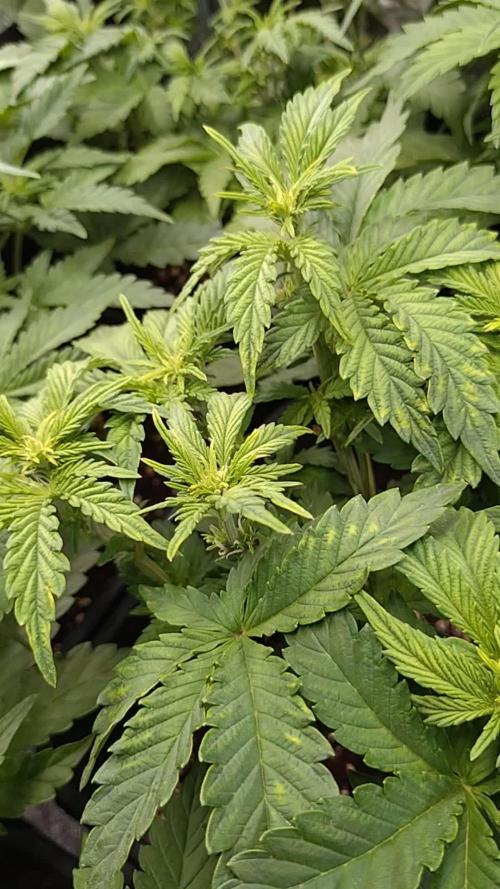
Hello my 2 followers. And hello to the new one haha. Sorry for the late update! The last weeks were quite busy. But yes the 2 beauties keep doing there thing. Growing everyday, its always a pleasure to look at them. But now they grow more in body not in height, cause i topped them 4 weeks ago another time. They get 15 liters of water every day. But I maybe have to tone it down the next weeks, cause our 10meter deep well is barely recharging cause it is dry as fucking fuck in Germany. It takes 2 days so that 30cm fill up at the bottom. This summer is really the driest that i can remember of. All the gras in our garden is already dead. Its crazy! Maybe i have to use tap-water for my plants at some point. Anyway the plants got treated with the best organic fertilizer, that one that you cant buy anywhere, cause it is so limited edition, that fertilizer that would ruin the fertilizer companies if more ppl would know about it, cause its free: compost and "brennessel-jauche". 😂 The plants just love it! But now I think I have to add some more for #2 cause it shows some nitrogen defficiency in the old big leaves, you can see it in the videos. Tmr they will get some long awaited compost-tea treatment, and maybe some spraying with lactic-acid-bacteria to clean them from anything unwanted🙏 The calendula are doing a good job in keeping unwanted bugs away. And the plants are doing a good job in looking pretty🙃 See you in the next week! I m able to update now more regularly 💪 Thank you guys for sticking around 😊
Likes
Comments
Share
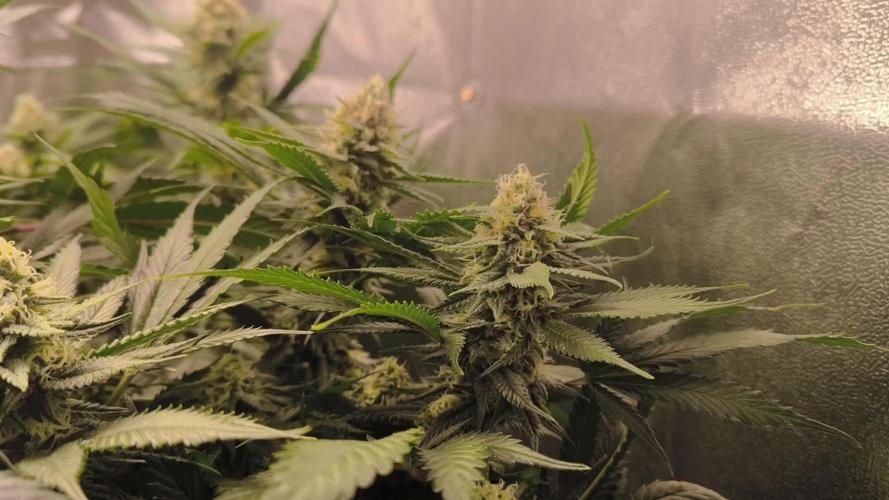
Flower Week 6 – Ripening Phase Begins The girls are now in week 6 of flowering, and the ripening phase has officially begun! The buds are noticeably denser, and resin production has kicked into overdrive — the trichomes are mostly cloudy, with a few early amber heads starting to appear. This week’s macro shots show the frost levels going insane, with every surface covered in sticky crystals. 24K Gold is showing classic ripening behavior: Her pistils are beginning to darken and curl inwards, while the calyxes start to swell. The aroma is becoming very pronounced — a sweet citrus funk mixed with a deep earthy undertone. Gelato 33 continues to build resin like crazy. The buds are slightly smaller but completely coated in trichomes. She’s developing that creamy-sweet scent typical of the strain, filling the tent with a dessert-like smell. Both plants still look perfectly healthy — the feeding routine and semi-hydro setup are keeping everything stable. Light intensity and airflow remain ideal, ensuring no mold or stress signs during this dense phase. Nutrients & Conditions: • 💧 Canna Coco A + B → 8 ml/L • 📈 EC 1.8 | pH 5.8 • 🌡️ Temperature: 25 °C day / 20 °C night • 💧 Humidity: 40–45 % • 💨 Airflow: High circulation to support trichome development The buds are swelling, trichomes are maturing fast, and the smell is becoming seriously intense. We’re now entering the final stretch — the next two weeks will focus on trichome color and terpene expression before the flush begins.
Likes
25
Share
@Grey_Wolf
Follow
Who Am I ??? MSNL seeds Amnesia Fast 4th July 2021 Hi there everybody , I hope you are all staying safe and well where ever you are in this World we live in 😃 The Amnesia Fast is still handling the Winter weather really well with no signs of damage or undue stress 👊 I gave her some Guano pellets and Worm castings Liquid ( see above video ) I've also introduced a reversed sex cutting of the Australian deadhead which I hope will eventuate into some Amnesia x ADH fem seeds to play with later on. 😎 I still am not keen on re erecting my grow tent and lights etc for atleast another 2 weeks just incase I get an unwanted visit from the Five0 😕 That is all I have for this weeks update , check out MSNL seeds great range and Thanks for stopping by 👍
Likes
21
Share
@Brujha77
Follow
Beginn Woche 6 Die 3 bekamen heute ihr Topdress mit je 4g/l Greenhouse Feeding BioBloom. Ich werde sie Ende der Woche dann auf 12/12 Umstellen. Tag39 Es wurde nochmal etwas Entlaubt. Sonntag geht's dann auf 12/12.
Likes
422
Share
Hi all 🧑‍🌾 Welcome to my 🍌💜👊 week update. Hope everyone keeping well and having a great week😁 Thank you so much for so much support on this bananas ride 🙏💜💚💜💚 Everything still going pretty well. Girls are developing and stretching like crazy. Athena currently Dec 14 90cm and main stem of Xena is not far of this height either. Unfortunately noticed first signs of calcium deficiency(my opinion) on Athena. Thankfully started feeding both girls with calmag weeks back but the dosage wasn't not enough for Athena. Started small treatment very next day on Dec 11 (see description below) I belive got my baby back on right track. Week 9 Dec 11-17 Dec 11 Watering was planned for Tuesday but due to calcium deficiency decided for a little treatment. Watered both girls with mixture of reduced content of growth nutes by 50% calmag at 1.2 ml per ltr. Reduced solution PH to 6.2 as apperently it's ideal for calcium consumption. Over period 4h I have watered Athena with 5ltr with couple runoffs. Xena 3ltr. Total of 7-10 leaves affected mainly at top colas close to the light. Dec 12-13 Purely observation and all looking well. Of course all affected leaves will progres of showing signs but good news is that growth and development booming and don't see any new leaves with symptoms. Very nice trichomes development in recent days and more and more colours. Dec 14 Second watering for this week 6.5l Increased calmag to 1.4ml per ltr and if still things will be looking well reduce to 1 or 1.2 on next feeding. Dec 15 Very nice respond on yesterday feeding. They definitely fatten over night and getting more and more frosty. Will need to remove some foliage soon as getting extremely bushy again. Dec 17 Xenas main stem top cola almost touched the light today. Tied her to left side of the cabinet, applied selective defoliation on both girls, tied few branches to netting and on the end of this busy day a third watering for this week. 7 ltrs beetwen both. Runoffs Xena PH6.4 Athena 6.3. Very nice week have to say. I belive that calcium deficiency on Athena is no longer a case here and both girls developing very nicely. Both are still stretching, buds are gaining in size and both girls started exploding with trichomes, Thank you all again for such amazing support 🙏peace and love brothers and sisters ✌️💚💜💚💜💚 Stay tuned for new week update 😉🧑‍🌾✌️💚
Likes
16
Share
@Mospeada
Follow
Beginning of week 7 in flower, only two more weeks left if they ripen like they did last time. Plants are beginning to smell, develop triches and fattening up. They're not going to get any taller but compared to my first grow they're double in size. It's getting really intense. I'm in there every day checking humidity (on the no defol side) and I'm starting to struggle keeping up with the feed. During lights off I've found the plants eat the most food. I topped up the res, added 25% more PK. I try to keep the plants at 700 ppm and in the space of four hours it dropped to 600 ppm (towards the end of lights off). I stopped directly loading with Calcium Nitrate and instead used a regular calmag. I'm about to go overboard with Calcium Nitrate again and bump the ppm up to 1k. Will see how far the ppm drops the next day. 17/02/20 Update: The plants are beginning to smell a lot more, it has that kind of fermenting pungent smell from a red paw paw but applied to a mango. Very sweet, it literally smells like I'm growing some kind of tropical fruit. Still struggling with the feed, I added close to 40g of calcium nitrate and the plants still dropped the ppm lower than when I boosted it. I find it really frustrating that Dual Fuel only sell as a pair. Part 2 is amazing for late flower. Potassium sulphate and Magnesium sulphate, it's the perfect PK boost and I don't know anyone other nutrient like it. The other PK boosters always have too much P. 18/02/20 Update: Still battling my plants and the efforts to keep up with them is still frustrating me. Ran out of potassium Sulphate and bought Bio Diesel Rhino K 0-0-15 as a substitute, talk about expensive but I was desperate. 19/02/20 Update: Uploaded how I pump calcium into my plants this late into flower. They eat more than what I showed daily. That's 100+ ppm of Ca everyday! I don't know how much pectin this plant has now but the Brix would have to be through the roof compared to my first grow. 20/02/20 Update: finally got the feed right for a twelve hour period. I'm using two times the amount of K any bloom booster recommends and I'm probably using ten times the amount of calcium easily. I'm also going to feed as minimal N from now on, I'd cut it out completely if I could but I rely on Micros for the macro nutrients. Spent $65 on that bottle of potash and I used a third of a bottle for one nutrient change, think I'll stick to using powered water soluble potassium sulfate. My main concern is that I won't be providing enough iron with the little Micro I'm giving it. Going to throw a couple of rustry nails into the res. I'm about to do a top up...dropping the Micro super low, putting minimal part 2 in. Along with all the fulvics, humics, kelp and other acids my ppm only sits at 244. Which gives me plenty of room to load up on calcium. Top up the mag cause what was in the part 2 wasn't enough then load K. 21/02/20 Update: The plants finally stalled and took a breather yesterday. Didn't upload any photos cause it looked the same as the day before. By the end of the evening it looked like the explosive growth started back up again and the photos from today will show it. The ppm was creeping up not down this time...finally over feeding them. Dropped the extra loading of calcium and potassium to regular bloom phase levels and bumped the chelators up instead. Update 22/02/20: plants aren't eating what they were. Ppm is remaining stable at 800. I won't dilute the res just yet. Still holding off to see if it goes up again. If it goes down I'll refeed the same formula as last time that has reduced calcium and potassium.
Processing
Likes
1
Share
@Nvchods3
Follow
esta semana empezare a fertilizar una planta con B.A.C y otra con TOP CROP. han evolucionado de buena manera las plantas a la poda Apical realizada la semana anterior.
Likes
7
Share
@Mett420
Follow
Dopo due settimane senza postare nulla siamo all’ultima settimana di prodotti prima del risciacquo. Tutte e 4 le piante sembrano avere un ottima struttura, una buona ramificazione degli apicali e teste compatte e profumate (a super incollose, senza guanti non si possono toccare. Partiremo a breve con il risciacquo con il ghiaccio per incentivare i pigmenti viola a formarsi ed espandersi su tutta la pianta. Ci aggiorniamo a inizio risciacquo!
Likes
8
Share
@RBG
Follow
Week 8 Flower week 2 Flower-day 5 26/10/2025 Finally feeling good again! Kept the same nutrient mix almost the same, have had to use some others just to get by until more rock up 🙃 Floramax Veg 1: 1000ml Floramax Rezin: 400ml Floramax Organabud: 400ml Floramax Flowering Enhancer: 400ml Cyclo Platinum Silica: 200ml ISN Cal-Mag: 400ml (still waiting on my main one to be delivered, so using what’s left of this) Green Planet Massive Bloom: 200ml Green Planet Bud Booster: 4 scoops (30ml each) Sleeps with the Fishez: 100ml — used some hydrogen peroxide today while waiting for the next batch to arrive next week I’ve been looking into a flushing additive called New Millennium Winter Frost for a nice clean finish. Pistils finally popped up yesterday on a few of the top sites! Should start seeing some solid stretch from Grape og soon, guessing around 30 to 40cm at least. I’m letting her do her thing and reach up into the net for now. If she starts getting crowded before the end of week 3, I’ll kick off some early defoliation. Also got two AC Infinity IonBeam S11 lights set up sitting about level with the top colas. I’m aiming the light to hit the middle and lower sections instead of blasting the tops directly, trying to get that nice even coverage. Still debating whether I even need to scrog this run, but a few people keep telling me to give it a go to see the difference, I guess only one way to tell 🙌
Likes
17
Share
@Wakesk8
Follow
2/3 weeks to complete !! Almost Done ✔️!! To be honest I was expecting better result but some plants looks amazing !
Likes
8
Share
@Chupus
Follow
I put it in a glass of water , later I will transfer it to paper towels . as practice shows , the method is working . It's not the first time I've used it. the main thing is to squeeze a towel well, so that the seeds do not rot. 20.06 watered usually with tap water PH 6.4 ppm 30.