


Likes
Comments
Share


@MadeInGermany
Follow
Flowering day 63
since time change
to 12/12 h.
Hey guys :-)
The end has come 😍
Over the next 3-7 days the lady is placed in the darkroom for 48 hours before being harvested and hung upside down.
The trichomes are checked every day to find the perfect time 👍
Watering was done twice this week with groundwater, each time with 1.2 l.
Have fun with the update and stay healthy 🙏🏻💚
👇🏼👇🏼👇🏼👇🏼👇🏼👇🏼👇🏼👇🏼👇🏼👇🏼👇🏼👇🏼
‘Powered by GreenHouse Feeding’
Copy the link for 10% off all Nutrients 👇🏼
https://shop.greenhousefeeding.com/affiliate/MadeInGermany_PassionGrower
👇🏼👇🏼👇🏼👇🏼👇🏼👇🏼👇🏼👇🏼👇🏼👇🏼👇🏼👇🏼
You can buy this strain at :
https://www.amsterdamgenetics.com/product/choco-cheesecake/
👇🏼👇🏼👇🏼
Use the coupon code: madeingermany
for 10% on all Amsterdam Genetics seeds
Water 💧 💧💧
Osmosis water mixed with Cal/Mag (24 hours stale that the chlorine evaporates) to 290 ppm and Ph with Ph- to 5.8 - 6.4
MadeInGermany

Likes
2
Share


@QoverQ
Follow
Hey guys :)
The girls got topped once now, they still recovering from the light burn i did,
Trying to ‚LST‘ 😄
Started giving nutes in a Half dosage at week 3 !


Likes
47
Share


@Ultraviolet
Follow
The cannabis strain Grape Guava can be a purple strain, depending on its specific phenotype and genetic makeup. While not all phenotypes of Grape Guava are purple, some variations, such as the Zatix Grape Guava, are noted for their striking purple appearance due to the genetic expression of anthocyanin pigments.
https://www.youtube.com/watch?v=cKdVmdoKJ5k
In a garden of green, Grape Guava gleams,
With its fruity aroma, enchanting dreams.
Clusters of grapes, guava's sweetness ignite,
A strain so divine, in purple and white.
Euphoria whispers, a lush fruity haze,
Grape Guava's embrace, a tranquil daze.
Off and away.@1400ppm. The increased CO2 allows plants to thrive at higher temperatures, which in turn necessitates higher humidity to maintain the ideal VPD for healthy growth and transpiration. 80F -5F = 75F LST with 70% RH = 0.72 kPa. Higher temperatures and humidity promote rapid growth, nutrient uptake, and photosynthesis while maintaining a lower stress level. Temperature influences the rate of enzymatic reactions involved in aerobic respiration. Enzymes, such as those involved in glycolysis, the Krebs cycle, and the electron transport chain, work most efficiently at an optimal temperature range. In low temperatures, enzymatic activity will slow down, thus reducing the rate of aerobic respiration. In high temperatures, enzymes can become denatured, thus impairing their function and stopping the process of aerobic respiration. Glucose is the primary fuel for aerobic respiration. The rate of aerobic respiration increases with the availability of glucose, as it is the starting point for glycolysis. If glucose levels are low, cells may rely on alternative energy sources such as fatty acids or amino acids , but these processes may yield less ATP or be less efficient. To determine this effect, carbon dioxide volume was measured (as carbon dioxide is an output of aerobic respiration)
18/6 with the 6 being IR. The near infrared (IR-a) borders around 700nm up to 1400nm @ photon par flux density of 1.8 instead of darkness, keeping temps overnight a neat 77F-80F.
Think of my tent as a lung. What goes in must come out. When the rate of air going out exceeds the amount of air coming in, it creates a negative pressure. Tent concaves (bends in). If set up correctly, your RH will begin to drop slowly to the desired level you set, and the extraction turns off when it reaches desired% RH. The plant, as it performs cellular respiration, will always be releasing more water into the air, so the RH% of the tent overnight will always increase, so long as oxidative phosphorylation is occurring. As soon as the RH% creeps back up to 55%, the extraction turns back on, over and over. This creates a strong pressure differential which will work wonders on your grow. Replicating high and low-pressure fronts in nature. Critical for oxygen diffusion at the critical time of peak cellular respiratory function..
Moisture will not transfer from a saturated atmosphere to another if that air is already at or above its saturation point, meaning the air can't hold any more water vapor. Once I understood that water is produced as a by product during cellular respiration, specifically at the very end of the electron transport chain (ETC) where electrons are finally transferred to molecular oxygen, the higher the RH of the air, the more resistance there is for more moisture to be added to that environment, and effects the ease with which it does so. But none of that water comes from the pot; it's pulled from the air. If you run high daytime RH, your medium/pot is 100% reliant on transpirational root pull to move water. ZERO evaporation happens across the atmosphere if the tent air has high RH%, the medium cannot release its water through evaporation. Once a canopy develops, light no longer slowly wicks and evaporates from the topsoil. The Soil-Plant-Atmosphere Continuum (SPAC) describes the continuous pathway and process of water movement, driven by a gradient in water potential, from the soil, through the plant's roots, stem, and leaves, and finally evaporating into the atmosphere through transpiration. There is evaporation, there is transpiration, and then there is evapotranspiration; Evapotranspiration (ET) is the combined total of two processes: evaporation (water lost directly from soil and surface water into the atmosphere) and transpiration (water released from plants to the atmosphere through their leaves). Evapotranspiration represents the total amount of water that moves from the medium into the air. There is no such thing as a medium with too much water, only a medium that retains too much for too long.
The water must always flow efficiently from one atmosphere(Medium) to another(Air) in a timely manner. Moisture is a critical factor for bacterial growth and decay. Dictating how long it's allowed to sit in any one location for any given period is a key preferred control. To ensure a net reduction in a bacterial population, the rate of removal (ET) must exceed the rate of bacterial growth (decay rate), which is often modeled as a growth rate for the specific bacterium under the given conditions. By optimizing daytime VPD, we also optimize conditions for bacterial growth to explode exponentially above 77°F.. If water is allowed to sit in a medium without an escape within a timeframe, nothing good will happen. IF High RH is maintained overnight as well as during the day, placing 100% of water movement at the behest of daytime transpiration, roots can only pull where they can reach, and if soil is compressed above a certain point, moisture will become trapped in a medium with no way of moving day or night. This will begin the countdown for decay to take hold. When water stagnates in a medium, it loses oxygen, creating anaerobic conditions that foster the growth of harmful microorganisms like bacteria and fungi, which can produce toxins and disease vectors.
Thigmomorphogenesis, the process by which plants respond to mechanical stimuli like touch by altering their growth and development, results in significant morphological changes to improve survival against mechanical perturbations. This complex response involves sensing touch and initiating physiological and genetic responses, leading to changes in form and structure over days or weeks. The process is triggered by physical forces such as wind, rain, or touch. Plants adapt to these stimuli by changing their shape and structure, which may include slower growth, thickened stems, or altered leaf development. Plants possess sophisticated mechanisms to detect even subtle mechanical stimuli and initiate responses. A variety of molecules, including calcium ions, jasmonates, ethylene, and nitric oxide, are involved in signaling these mechanical inputs. Touch can induce the expression of genes that encode proteins for calcium sensing, cell wall modification, and defense mechanisms. A plant exposed to constant wind may become shorter and sturdier. A plant that is touched frequently might grow more slowly to conserve energy and develop thicker cell walls. These changes increase a plant's resilience and ability to survive in harsh environments.
Let's get Thiggy with it.


Likes
24
Share


@Jays_Not_Here_Man
Follow
The girls are starting to wrap up their cycle. I have been watching the trichomes closely, and we are getting very close..Trying to pick the best day for both of the strains I have going at the moment, the Apple Betty are a little closer than the cookies, but they are very similar in readiness…
I’ll be checking daily, I did get a wireless microscope for Christmas so it has become much easier to tell👨🔬 I’ve got mostly cloudy, with a few clear, but I am waiting for a bit more amber to give them the couch lock that I like when I smoke. Boxing Day was the end of week 8, so any day now! Happy Holidays Growmie’s! ❤️🇨🇦😎🎉

Likes
20
Share


@420DeepGrow
Follow
* Actualizo 2 dias antes para cuadrar diarios.
Gracias al equipo de MSNL y XpertNutrients sin ellos esto no sería posible.
💐🍁 Forbidden Fruit Auto:
Forbidden Fruit Autoflower, llamada así por sus deliciosos sabores, es un cruce entre Cherry Pie, Tangie y Siberian Ruderalis. Esta variedad ofrece efectos estimulantes y relajantes con un sabor afrutado, cítrico y a pino. Ideal para quienes buscan un dulce escape.
🚀🌻 Consigue aqui tus semillas:
💡TS-3000 + TS-1000: se usaran dos de las lámparas de la serie TS de Marshydro, para cubrir todas las necesidades de las plantas durante el ciclo de cultivo, uso las dos lámparas en floracion para llegar a toda la carpa de 1.50 x 1.50 x 1.80.
https://marshydro.eu/products/mars-hydro-ts-3000-led-grow-light/
🏠 : Marshydro 1.50 x 1.50 x 1.80, carpa 100% estanca con ventanas laterales para llegar a todos los lugares durante el grow
https://marshydro.eu/products/diy-150x150x200cm-grow-tent-kit
🌬️💨 Marshydro 6inch + filtro carbon para evitar olores indeseables.
https://marshydro.eu/products/ifresh-smart-6inch-filter-kits/
💻 Trolmaster Tent-X TCS-1 como controlador de luz, optimiza tu cultivo con la última tecnología del mercado, desde donde puedes controlar todos los parametros.
https://www.trolmaster.com/Products/Details/TCS-1
📆 Semana 4:
Continuamos la etapa de vegetación, ella se desarrolla muy bien 😎, comienza el buen tiempo, temperaturas agradables para todos.
Esta semana se aplica una solución de trichodermas para una mejor adaptación aunque realmente va genial.
Se mantiene 1/3 de nutrientes Master Root y Master Grow


Processing
Likes
7
Share


@PoshGrow
Follow
Welcome to LSD-25 grow by PoshGrow!
✴️ Germination week 2020.10.26 - 11.04
Comment
Hey guys and girls and welcome back! ✌️ Happy to announce about my new grow! This time I will try legendary LSD-25 by @FastBuds ☺️
2020.10.26 Started garmination in paper towel method, wrapped with transparent food film and placed in warm dark place.
2020.10.28 all 5 seeds sprouted and wolaah, we got TWINS! Never happend before, 2 healthy tap roots from one seed! I guess it means 120% Success rate? 🤔😆 Google it and dont know what to do, maybe try to split them? Any suggestions?
2020.10.29 Manage to safely separate twins! One left in a 5 gallon pot and other moved to small solo cup, Ill keep an close eye on it and if she bounce back in a couple of days, Ill transplant her to 5 gallon fabric pot.
2020.11.02 The little one of twins few days ago transplanted to 5 gallon pot and seems to be ok and bouncing back. They poped out of soil at 2020.10.28 so Ill wait 7 days to 2020.11.04 to officialy start vegetation stage.
Stay tuned & happy growing! ✌️

Likes
129
Share


@Ju_Bps
Follow
Hello growmies 👩🌾👨🌾🌲🌲,
👋 The flowering is in progress
Week was a bit a disaster...
I've lost almost all my leaves in few days, more and more Yellow really fast, like a senesence.
The friend @trimva , told me was maybe locked by salt accumulated, so I've tried to did a flush.
I don't really understand what's happened with this one, after the flush, look under control 🤞🤞
We'll see next week how will progress...
💧 Give water each 2/3 days.
1,5l Water + Flash Cleaner
PH @6
💡Mars Hydro - SP 3000
100% 47 cm.
🔥 Thanks community for follow, likes, comments, always a pleasure 👩🌾👨🌾💚🌲.
Mars Hydro - SP 3000 💡💡
https://www.mars-hydro.com/sp-3000-samsung-lm301b-greenhouse-led-grow-light
Zamnesia - Frosted Guava Auto🌲🌲
Discount code -20% with GROWITGD code 🔥🔥
https://www.zamnesia.com/7679-zamnesia-seeds-frosted-guava-automatic.html

Likes
98
Share


@Tropicannibis_Todd
Follow
💩Holy Crap We Are Back At It And Loving It💩
Growmies we are at DAY 49 and she's just killing💀it👌 The Smell has kicked in and is wonderful 😀
👉We are in full out flowering 💐 and its looking great 👈
So Shit , I gave them just a tad to much nutes on the first few feedings 👈 But I have since fixed it
So I'm helping out with some low stress training 🙃 and some defolation 😳
Lights being readjusted and chart updated .........👍rain water to be used entire growth👈
👉I used NutriNPK for nutrients for my grows and welcome anyone to give them a try .👈
👉 www.nutrinpk.com 👈
NutriNPK Cal MAG 14-0-14
NutriNPK Grow 28-14-14
NutriNPK Bloom 8-20-30
NutriNPK Bloom Booster 0-52-34
I GOT MULTIPLE DIARIES ON THE GO 😱 please check them out 😎
👉THANKS FOR TAKING THE TIME TO GO OVER MY DIARIES 👈
Likes
5
Share


@Gingercannacat
Follow
Beginning of flowering phase and they already stretched 7 cm in 3 days only. The topped one reached 38 cm and the LST only is 42 cm . The smell is strating to come out , smell quite nice. Not intense yet.
Fertilizers
Top Vulcan 1 table spoon each. No more repetition
Plagron alga bloom 4 ml & power bud 1 ml power roots 1 ml , alga grow 4 ml and vita race 4 ml. I Will repeat the same every 4 days for the for 1st two weeks of flowering .
As you can see I am growing other strains but the lemon orange stand out for now. They are larger, busher and smell amazing 😍
Likes
17
Share


@Genji87
Follow
Like u see I did some lst topping fimming etc in week 6, I do this a lot… changing my vent system to a black hole creator with a gas controller. Chills

Likes
10
Share

@DogDoctorOfficial
Follow
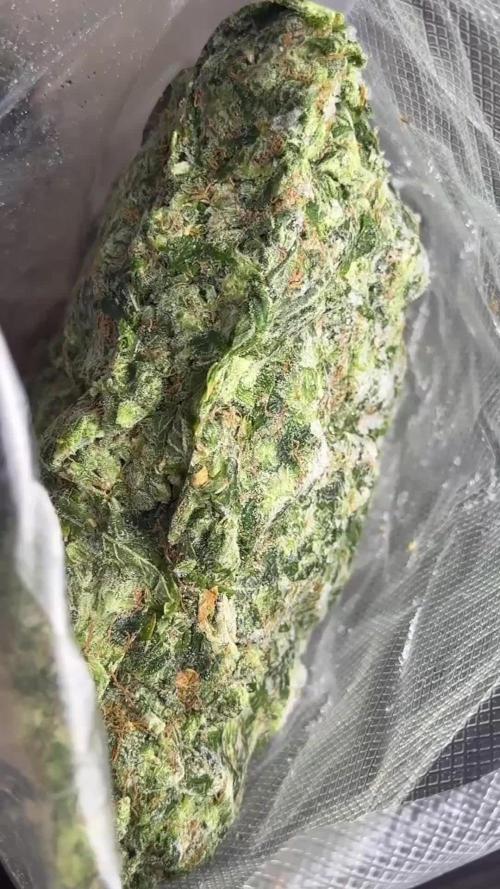
LSD Zamnesia Tripping 🙂 | Fresh Frozen, Ice Water & Temple Balls — Week 16 From Seed
First of all…
Yes 😄
We are once again dividing the harvest reports into multiple chapters, and once again we apologize for that. But honestly, there was simply no way to fit:
* harvest,
* drying,
* trimming,
* curing,
* smoke review,
* macro photography,
* fresh frozen work,
* washing,
* extraction,
* and hash making…
…into a single GrowDiaries update without rushing through important parts of the process.
And this part?
This part deserved its own spotlight completely.
Because this week was not about flower anymore.
This week was about resin.
Living resin.
Fresh frozen material.
Ice water extraction.
Patience.
Cold temperatures.
Sticky hands.
And slowly transforming trichomes into beautiful hash.
For everyone joining only now, quick recap:
These LSD girls were grown under 12/12 from seed from the very beginning. Minimal training, mostly natural structure, gentle leaf manipulation, and environmental balance instead of aggressive intervention.
Part of the harvest was dried traditionally and already covered in the previous report.
But another part…
…never got dried at all.
Straight during harvest, selected flowers were removed fresh from the plants and immediately vacuum sealed before going directly into the freezer.
No drying.
No curing.
No waiting.
Fresh frozen.
And that changes everything.
The goal here is preservation.
When flowers are frozen immediately after harvest, a large portion of the volatile compounds:
* terpenes,
* flavonoids,
* aromatic compounds,
* and delicate resin characteristics…
…can remain much closer to their living state compared to traditionally dried material.
This is why fresh frozen extraction became so respected in modern hash making.
It captures a version of the plant that only exists for a very short moment in time.
Alive.
Wet.
Fresh.
Fully expressed.
And honestly?
Opening those frozen bags weeks later felt like reopening harvest day itself 😄
The flowers still looked incredibly resinous even after sitting frozen for weeks waiting for wash day.
Now let’s talk process.
For the wash itself, we used the Bubbleator machine courtesy of Zamnesia , and honestly huge thanks to them for providing it. They knew I wanted to start exploring ice water extraction properly, and they were kind enough to support the journey.
The setup itself is actually beautifully simple.
First:
ice.
Lots of ice 😄
The machine was filled partially with ice first before adding the fresh frozen material inside the working bag.
The flowers themselves were placed inside a closed 220-micron washing bag. This is important because the bag keeps the plant material contained while still allowing the trichome heads to separate during agitation.
After placing the material inside:
* more ice on top,
* cold water added,
* everything submerged,
* and then…
…we waited.
Around 30 minutes or so.
And this step is actually extremely important.
A lot of people think washing starts when the machine turns on.
But honestly?
The wash starts before that.
This resting phase allows the frozen material to:
* slowly rehydrate,
* absorb water again,
* become fully saturated,
* and most importantly…
* become extremely cold throughout the entire plant material.
Why does this matter?
Because trichomes become brittle at very cold temperatures.
The colder everything gets:
* the easier the resin heads separate,
* the cleaner the release becomes,
* and the less physical force is required.
That is also why ice exists under and above the material:
* lower temperatures evenly,
* protect the resin,
* and maintain the cold environment throughout the wash.
Once the water temperature approached near freezing…
…the machine came alive 😄
And honestly?
Watching the water slowly transform during the wash is always magical.
At first:
just ice,
water,
and flowers.
Then slowly:
foam,
cloudiness,
resin separation,
and finally that beautiful milky golden water hash makers love seeing appear.
Meanwhile on the side, we prepared the filter bags.
We did not use every single micron separation individually because honestly sometimes over-separating becomes unnecessary depending on goals and material quality.
Instead, we focused on collecting the grades we actually wanted to work with and enjoy.
And then came one of the most satisfying parts of the entire process:
Collection 😄
Slowly lifting the bags.
Watching the resin gather.
Carefully scraping.
Separating grades.
Observing texture and color differences.
Beautiful creamy resin everywhere.
Some lighter.
Some slightly darker.
Some sandy.
Some greasy.
Every layer carrying slightly different characteristics.
After collection, the resin was carefully freeze-dried.
And this part also requires patience.
First freeze drying.
Then breaking it apart.
Then more drying.
Then more waiting 😄
Depending on environment and conditions, full drying can take several days because trapped moisture inside hash is dangerous long term. Rushing this step can ruin months of work later.
In this case, the process stretched closer to about a week before everything felt properly stable and ready to work.
And honestly…
This is where the magic really started.
Once dry enough, we allowed the hash to rest briefly before beginning the hand-working process.
No extreme heat.
No giant pressure.
No fancy machinery.
Just:
room temperature,
body warmth,
gentle pressure,
folding,
rolling,
stretching,
and patience.
The room itself stayed around 15°C, which turned out to be perfect for working the resin slowly without overheating it.
And this step matters far more than many people realize.
When hand-working hash properly:
* oils redistribute,
* compounds begin merging,
* terpenes spread through the material,
* oxidation starts slowly,
* texture evolves,
* and curing begins transforming the resin itself over time.
You are not simply “rolling hash.”
You are starting a living curing process.
And slowly…
The texture changed completely.
From sandy loose resin…
to creamy material…
to sticky dough…
to smooth beautiful temple balls.
Honestly, seeing that transformation happen in your hands never gets old 😄
Final result?
Three temple balls total:
* two smaller ones from smaller micron collections,
* and one large main temple ball that became the true star of the session.
Final weight:
46.5 grams.( big one )
And honestly?
I was extremely happy with that result.
Especially considering the quality, texture, color, and how beautifully this LSD washed overall.
Once formed, the temple balls were wrapped carefully in parchment paper before being vacuum sealed for long-term curing.
And now?
They rest.
Months.
Maybe longer.
Waiting.
Because the goal here is not “fresh hash.”
The goal is evolution.
Traditional temple ball style curing allows:
* oils to redistribute,
* compounds to merge,
* texture to transform,
* aroma to deepen,
* and the entire resin profile to mature over time.
Almost like aging wine.
Or curing cheese.
Or fermenting traditional products slowly and intentionally.
This is medicine with patience built into the process.
And honestly…
That part alone deserves respect.
We also included:
* detailed process photos,
* collection stages,
* macro photography,
* texture closeups,
* curing progression,
* and multiple stacked macro images showing the resin in insane detail.
Some of these stacks reached:
* 62 frames,
* 87 frames,
* 114 frames,
* and even 152-frame focus stacks.
Because honestly, hash under macro magnification becomes another universe completely.
The textures stop looking real.
Tiny resin mountains.
Oil rivers.
Micro-crystals.
Glossy surfaces.
Soft creamy structures.
It almost starts looking geological instead of botanical 😄
Mr. Baggy of course supervised the entire operation like the professional resin inspector he clearly believes he is.
And next week…
The final chapter arrives.
Smoke review.
Curing review.
Flower review.
Hash review.
Terpene evolution.
Effects.
Textures.
Lessons learned.
Mistakes made.
And final thoughts after this entire LSD journey from seed to cured medicine.
And finally…
Thank you.
To Zamnesia for the genetics and the Bubbleator.
To Plagron.
To F.O.G.
To all the LEDs, gear, and equipment involved.
To GrowDiaries.
To the community.
To the OG followers.
To the new curious visitors.
To the silent supporters.
To the skeptics.
To the lovers and even the haters 😄
To everyone spending time sharing this strange beautiful plant journey with us.
Wishing everyone:
cold water,
sticky fingers,
healthy plants,
beautiful resin,
and enough patience to let good hash become great hash 🌱
Likes
19
Share


@Woodcutter
Follow
Recovery ,recovery, recovery. Drowned them with nuts @1400 ppm. Hot for a hot soil mix. Soil mix was missing something different that 3 of the strains were needing.
I dropped the bomb on them, defoliated the hell out of them and lst . Dark Devil no lst.
Let the nutrients set 2 days and flushed with RO testing run off and ph. The plants that weren't showing to much signs of nutrient burn flushed with sledge hammer back to around 1200 ppm 6.5 ph. Plants with burn flushed back to 600 ppm wattered with dechlorinated tap at 7.0 ph.
Finally the seeds man white widow and the gg#4 started into flower.
The kera white widow
and the critcle purp are loving the environment and nutes.
May have to flush the Dark Devil a little more or full flush it. Still showing signs of nute burn.
Over all happy with the grow. I definitely know what each strain likes and what they dont.
I'm keeping a physical journal on each for future grows.
Lessons learned:
For a first indoor grow and a first auto grow, it would have been easier to select hybrids that were close in their sativa/indica ratio.
Sativas are sensitive temperamental little girls.
Get a dehumidifier so the room or tent can be contained with less co2 loss for summer.
Ventless blue flame wall heaters work great in the winter for heating the room and creating plenty of co2.
Running a test grow with 6 plants when your home only 40 hours then gone for 3 days is fun insanity.


Likes
7
Share


@Snooziecheesecake
Follow
Plants are continuing to ripen, I’m going to start flushing the older one tomorrow. The younger one still has a lot of white pistils, especially on some specific colas, so I’m gonna give it at least one more round of nutes before I start flushing her. These gals have been chugging their water recently, I’m changing the res like twice a week at this point :0
Finally got the first plant that I harvested into cure, pulled a whopping 50 grams from it so I am ecstatic about that, literally double what I was hoping for. These 2 are looking waaaaay larger and fatter so I can only imagine how much they will yield each... I could be looking at a 1/3 lb harvest!!!!

Likes
28
Share


@foxbberg
Follow
Hey Friends!
Was sick in bed for the entire week - i'll try to give a brief summary:
Kept feeding nutrients....... wasn't able to monitor the drain as close, but average pH was a bit high (+6.6) so i fed without ALL ESSENTIALS the other day.
Girl's kept growing, i kept weaving and defoliating......yet filled about 70% of the net......
still not too happy with the way i prepared them by LST....... i could easily spend another 7 to 14 days filling the net - but will flip them to 12/12 on monday.
Next week:
- flip
- giva a little phosphate boost
- switch to flowering-nutrition
Stay healthy🙏!
p.s:
A little LST on the side-shoots really helped bringing the girls in shape! All of a sudden it appears, there will be a SCROG one day :-))💪
Likes
9
Share


@phatty_mcnasty
Follow
Lot's more growth! It appears the stretch has mostly stopped. I put my zkittles on a platform to get it more in line with the canopy. The green crack/alaskan diesel really stretched. I have been pruning dying leaves and removed all of the LST. Letting the plants do their thing now that height has been controlled. It's looking like the zkittles will be my first strain available for harvest. Got my humidity down to around 40% after it drys out from watering. Still have a fan blowing air into the tent, and have been rotating the plants too for more even light/ to limit the risk of bud rot. Probably too many plants in my small space. Also noticed the light has always been at 24/0 as I never switched the timer on. Oh well!
Likes
21
Share


@Dunk_Junk
Follow
10cm vertical growth this week!
She's bushed out loads too.
Look at her stem. I'm trying some 'HST' if that's what its called? During last week I have crushed the stalk with pliers. Trying to crush and damage the outer 'skin' while leaving the core intact. The plant has already reacted by thickening/strengthening the stalk considerably. I am hoping to stress the plant to ultimately attain a bigger yield. But, as I have no idea what I'm doing, lets see where this journey takes me.
Also, only bottom watering from now on too.........

Likes
8
Share


@Kirsten
Follow
27.2.25:
Watermelon 🍉 and Purple Lemonade 💜🍋 are both far below the scrog net, they've definitely stopped stretching now.
My LST on these was much worse than even just using the net. 😅 That was certainly a valuable takeaway.
I'm sure Purple Lemonade 💜🍋 will be good.
Watermelon 🍉 was so stunted. It's not a tall strain, usually either, but nevertheless, the buds there are looking very frosty and are very, very sticky! 😅
Should be a good smoke, eventually, 🤗 just won't be much to bag unfortunately.

Processing
Likes
5
Share


@Cannibalgardens
Follow
Well not to much to report this week had a lot of tiny issues with the grow , the temperature was a big problem . Getting that fixed improved the overall health of this girl .. besides the cold she also had some air circulation problems as well plus lol the light switch for timer was put on 24h for a few days by the wife so I'm hoping for the best ..no hermies I hope ...cheers canna family
