The Grow Awards 2026 🏆 








Likes
Comments
Share
@CannaIGrow
Follow
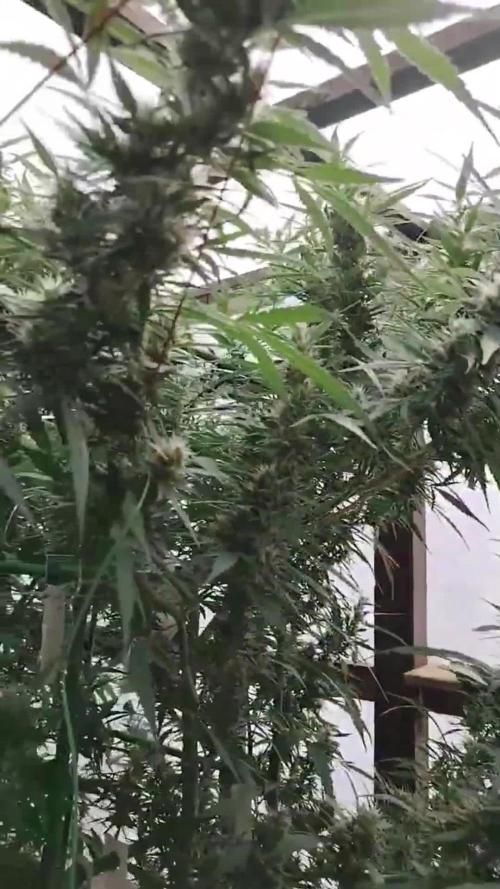
This plant seems to have grown much denser and better than my first plant. I just got the ac infinity ventilation setup with controller 69 for my 2x2, still trying to learn, hopefully grow #3 goes even better. Stay tuned
Likes
10
Share
@reirrac1
Follow
This is my first time topping a plant... and it ended up being the tallest I’ve ever grown lol. Tried to clean up the lower half of the plant pretty well. Ended up with a few stretchy stalks, but for the most part they stacked evenly and pretty close. Rubbing the stem smells like pungent clementine and cheese, excited to see what terpenes this one will produce.

Likes
3
Share
@dwotTV
Follow
8/23 - End of Week 3. Going to start some top feeding at like half strength for the Fox Farm Soil schedule in next few days. Drinking well and consistently from the self-watering bases. Bugs seem to be under control but will probably add some bits to the bases to make sure the gnats don't resurface. Stalk is strong and looking good and a good amount of new growth after taking some fan leaves off yesterday to "top". CO2 levels looking a little better, opened another vent in the tent.
8/22 - Adjusted light down to 80% after getting a lux meter and checking the intensity. Soil PH is slighly acidic at 6.1. Got some phUp and phDown but haven't adjusted yet. Trimmed top 4 fan leaves to stall out the top stalk and open up the bottom branches a bit. Added a mushroom exhale bag to increase co2 levels, were sitting around 500 ppm before I added.
8/21 - Still drying out the self-watering base a bit, will add water today. Sides of fabric pot still a bit wet to the touch but I think that's just the active wicking going on. Thought the initial canoe'ing leaves were from overwatering when overfilling the self-watering base but now I think it has more to do w/ some shock from the thrips and 24 hour light, or perhaps a bit of sunburn from being sprayed w/ the neem oil / bug killer.
8/16 - Had to fight off some thrips and still dialing in the tent conditions. Might be a little overwatered currently.

Likes
11
Share


Likes
1
Share
@Seldom_Seen
Follow
(Harvested on day 74) Small enough buds and not very dense by the looks of it. Leaves covered in crystals so didn’t trim buds.
Left hanging for only 3 days and then clipped off buds and put them in drying mesh to speed up the drying a bit. Rome is 20 degrees with humidity at 50%
Jarred 10 days later. Buds seem damp on the inside but I think it’s just because they are super sticky.


Likes
4
Share
@Ieiogrow94
Follow
Eccoci qui...
Tutto va per il meglio, questa settimana si inizia a vedere la resina e ora si inizieranno a formare le cime, per questo aggiungo Sugar Shot di @xpertnutrients vedremo l'evoluzione settimana prossima.
Odore intenso, non presenta carenze e spinge veramente forte.
Sono molto soddisfatto di aver provato questa bellezza, vedremo cosa ci riserva la fine della fioritura.
Grazie a tutti per il supporto🔥🌲❤️

Likes
27
Share
@DeepRootsGrowTrees
Follow
GELATO-K BY KANNABIA
Week #21 Mar.29-Apr.5th
Week #10 Flower
Checked trichomes they are about 60% clear 40% milky so this was the last week for feeding. Stay Growing!! Thank you for taking a look at the diary!!


Likes
24
Share
@DevokeOG
Follow
Week 7 the start of flowing and my ph and TDS meters have arrived which should make things a little easier for me to understand what is going on, I had changed the light schedule last week to 12-12 because I wasn’t really sure that it was an Autoflower or not due to it being bagseed but it looks as tho the pistols are getting bigger now that I have 🍁✌️🏻.
Likes
3
Share
@Trinidad
Follow
12.01.2026
Day 95
These ladies are coming along slowly due to low temp. Sometimes dropping to 1 degree C at night. The 3 clones are from bud budda cheese 2 in soil and 1 in hydro with heating elenent to keep the water from freezing. I put the mother plant into flowering today and give her veg nutes still. I have put a heater into the flowering tent set to 16 C. The badass og cheese is about 4 weeks into flower. The blue cheese from expert seeds is recovering.


Likes
2
Share
@autofloweronly
Follow
Week 6 from seed. No pollen on this run. I think the silver is old so better luck next time.



Likes
69
Share
@DogDoctorOfficial
Follow
Eternity Grow Cup - Week 11 VEG Report
This is a pivotal week in our Eternity Grow Cup journey as we wrap up VEG and prepare to transition into FLOWER. Our goal has been to ensure that the plants are thriving and optimized for the next phase. This report will detail everything that took place during this crucial week.
Mass Defoliation & Structural Training
We began the week with an extensive defoliation session. Every leaf with a stem was removed to clear space for optimal light penetration and airflow. This process was done mostly by hand, clicking them off in the opposite direction of growth, while some stubborn ones were snipped with scissors. By the end, it felt like we had taken out nearly half a kilo of leaves! The room now looks clean, structured, and ready to fill out the ScroggNet.
To further enhance the plant structure, branches were attached to the pots, allowing for better horizontal growth. This technique helps maximize canopy exposure and prepares the plants for even light distribution once flowering begins. Defoliation before flowering is a key step as it reduces overcrowding, improves airflow, and sets the plants up for efficient energy use in the next phase.
Light Schedule & Adjustments
This week, we introduced a subtle but effective light adjustment. While still maintaining an 18-hour light cycle, we initiated a 15-minute delay with the whites, allowing the reds to start first. This gradual shift signals the plants that a change is coming. Similarly, at the end of the light cycle, the whites turn off 15 minutes earlier, leaving the reds on for an extended period. This strategy mimics natural sunrise and sunset, helping the plants transition more smoothly into flowering.
Additionally, at the end of the week, we will be implementing 48 hours of darkness before the official flip to flower. This method has worked exceptionally well in past grows, helping plants recognize the transition and encouraging a strong start to flowering. However, it's important to emphasize that this is a personal technique and not a universal rule. Every grower should experiment with different methods to find what works best for their specific environment.
Environmental Conditions & Challenges
Currently, our temperature is at 27°C with 60% humidity, resulting in a VPD of 1.50. While slightly higher than the ideal for VEG, our CO2 levels are over 1000 ppm, and the light intensity is at 570 PPFD, making it a manageable balance. The solution pH is 5.79 (essentially 5.8), EC is 1.38, and water temperature is 17.7°C.
One challenge we are facing is maintaining optimal reservoir temperatures. Currently, it's a bit low at 17.7°C, and we are exploring solutions to raise it slightly. However, the medium temperature sits at 22.2°C, which is a good range. The humidifier is still in use, though it struggles to increase humidity further, so we are working with what we have to keep the VPD in check.
ICL-300s Integration
The ICL-300 lights are now fully active. Unlike the last grow, where we introduced them later, this time they are on from the start of flowering prep. This adjustment is an experiment to see if the plants respond better to an early introduction. Learning is at the core of this journey, and each grow offers new insights. Whether this proves to be the optimal strategy or not, it will be a valuable lesson for future grows.
TrolMaster Hub & Data Monitoring
Throughout the week, we have been closely monitoring our grow using the TrolMaster App TM+. We are displaying some of the collected data for everyone to see the details. Stay tuned as we explore this further in the next report!
As always, we want to extend a huge thank you to our sponsors and the amazing community. Special thanks to Aptus, Groovebags, Cannakan, Promix, Ziggy Papers, TrolMaster,and Plagron, Zamnesia and Grow Diaries for making the Eternity Cup possible.
I apprecilove the support from all sides—lovers, haters, competitors, and fellow growers. The competition continues to push us to improve, and i am thrilled to see the incredible reports from others. This is a challenging yet rewarding experience, and i couldn’t be happier to be part of it.
For those following along, we invite you to check out our YouTube channel, where we upload full 4K episodes showcasing the entire journey. Some episodes are too large to be uploaded directly to Grow Diaries, so YouTube is the best place to catch everything in high definition.
This marks the end of VEG, and we are officially ready to flip to FLOWER. Next week, we will dive into the TrolMaster System in action, check the data insights, and monitor how the garden adapts to the shift. Stay tuned!
Growers Love to all, happy growing, and best of luck to all competitors!
See you all in the next update!
Genetics - Runtz https://www.zamnesia.com/6000-zamnesia-seeds-runtz-feminized.html
Nutrients - Plagron https://plagron.com/en/hobby
- Aptus Holland https://aptus-holland.com/
Controls - Trol Master https://www.trolmaster.eu/
LED - https://www.futureofgrow.com/en
LED - https://www.thinkgrowled.com
Soil - https://www.promixgardening.com/en
Germination - Cannakan https://cannakan.com/?srsltid=AfmBOopXr-inLXajXu3QFgKXCXXos4F1oEvScjMKIB5MR5dk8-GJ-F49
DOGDOCTOR 15% off
Smoking Papers - https://ziggioriginal.com/
Terpene saver - https://grovebags.com/
As always thank you all for stopping by, for the love and for it all , this journey of mine wold just not be the same without you guys, the love and support is very much appreciloved and i fell honored with you all in my life
With true love comes happiness Always believe in your self and always do things expecting nothing and with an open heart , be a giver and the universe will give back to you in ways you could not even imagine so
As always, this is shared for educational purposes, aiming to spread understanding and appreciation for this plant. The journey with nature is one of discovery, creativity, and respect. Let’s celebrate it responsibly and continue to learn and grow together!
Growers Love To you All 💚
#EternityGrowCup #RuntzHunt #GrowersLove #CannabisCommunity #AptusHolland #ProMixSoil #TrolMaster #Zamnesia #Plagron #ZiggiPapers #Grovebags

Likes
5
Share
@BuddyHolly
Follow
Recovering very well, noticeable growth daily. Topped, Lst, and pruned over the last week. Adjusted light height and spectrum to encourage more lateral growth. Hope I didn’t overdo it. The og kush(right) growing a little slow, strawberry gorilla(left) is an autoflower and its leaves are looking a little funky.

Likes
2
Share
@frankterpenes
Follow
This is the last day of her life. Shes getting a bath of sun with 40c outside. After she will finish in the dark until i harvest her tomorrow
Shes trying to get pollinated by throwing some new pistils here and there, but trichomes are cloudy mostly with amber tone. Not a lot of clear one.


Likes
34
Share
@All_our_small_plants
Follow
Bewässerung: 30000 ml jeden 3 Tag in der dreiundzwanzigsten Woche
pH-Wert: 6,3
EC-Wert: 1,6 mS/cm
Temperatur: 24ºC
Luftfeuchtigkeit: 60%
Schädlingsbekämpfung: Raubmilben
Düngemittel: Sie bekommen ab jetzt Brenneseljauche da sie im Outdoor Bereich ist.
Besonderheiten: Der Boden um den still herum wurde mit Holzasche behandelt gegen Meltau.
-Tag 152 Heute haben wir sie nochmal etwas gebunden damit die Blüten mehr auseinander gehen und sich nicht berühren, das Wetter ist weiterhin sehr schlecht und es sieht so aus als ob der Rest der Woche nicht viel besser wird.

Likes
57
Share
@Kmikaz420
Follow
Et voilà la fin de se grow il me reste la magnifique orange scherbet de fast bud et les 2 dernière dos i dos de barney .
Demain je vais couper et sécher tous sa et après sa j aurai le temp de remplir les rapport de = recolte, fumer ,et surtout le poids totale de toutes ces weed voilà voilà c'est tous pour aujourd'hui..encore merci d avoir suivi mes journaux et qui sais peut être un jour je repasserai sur growdiaries..


Likes
13
Share
@Youngicons
Follow
Week 2 of flower and they have grown fast.
Incorporated flower fuel and calimagic into their watering. Definitely getting a bigger tent. They are about to explode I can tell.
I had one grow too tall and started to burn from the light so I'm trying to learn more about scrog and hst to help this grow flourish.
I also removed a few fan leaves that were dying and some others to allow more light to the bottom.