


Likes
Comments
Share


@Rinna
Follow
Looking okay, the highest leaves are burning quite a lot, but I’m not worried a lot as the buds are forming nicely. I’ll be feeding a little less from now on as she doesn’t seem to need a full dose every watering.

Likes
2
Share


@valiotoro
Follow
Hello everyone week 1 has passed for this Auto Kerosene Krash from Dutch Passion 😎
this plant is doing very well growing at fast pace and with a beautiful green colour on the leaves.
Spider Farmer SE-7000 50%
wish you all happy growing!

Likes
35
Share


@DudeGrowsWeed
Follow
Update February 4, 2019 (Video and Pics actually taken Feb 1).
I’m figuring I’m about mid-way into flower now with the 6 girls I have flowering. Overall, I’m very happy with how things are going. The buds are coming in strong on all plants, they are stinky and sticky and I’m not complaining about anything really. But, I still see more yellow than I like. Last week I fed Recharge, Mammoth P, MegaCrop, and CalMag+. I don’t feed all of those at once, Recharge & Mammoth P one time, MegaCrop & CalMag+ the next, then the 3rd is usually straight water. I also seem to be able to go at least a day between waterings/feedings. Anyway, yellowing leaves during flower seems to be most common with a Nitrogen deficiency as far as I can tell. I’m tempted to feed in a round or two of veg nutes to see how that goes.
One more thing… I transplanted my clones and seedlings into larger nursery pots today. They were transplanted into pots with soil that has been composting/recharging for almost a month now based on some of the tips from the books I have been reading. I’m excited to see how they react to their new environment.

Likes
8
Share

@BUZIMAN
Follow
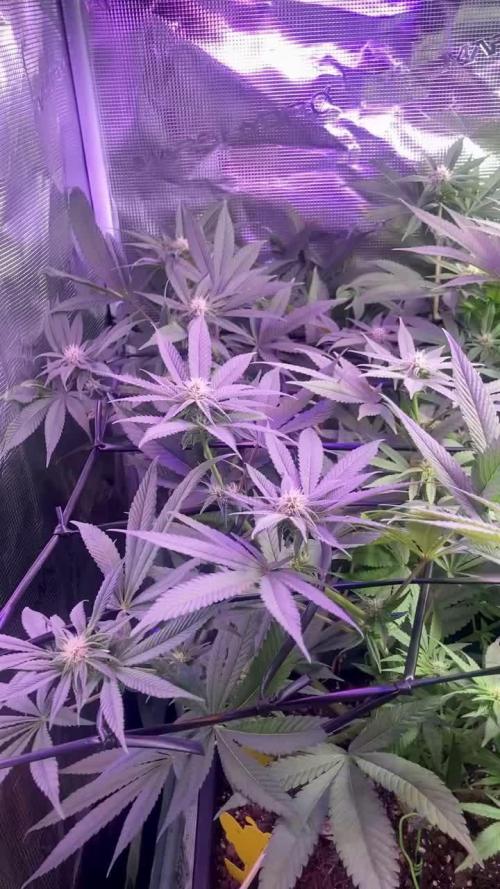
Last weekend, each plant underwent significant defoliation followed by a good watering. They're already starting to give off a pleasant, rather strong scent. 😎✌️

Likes
69
Share


@Mimi420
Follow
Hi growers!
The tent is looking gerrgus!They produce nice buds,and the smell from the tent is amazing!Can't wait to finish them....I had to remove some yelow leafs on the botom,becouse of bad airflow...But all in one they grow nice 🙂
Stay green!


Likes
33
Share


@Darksoul
Follow
Week 6 - Maybe the last vegetative week. Everyone is topped and LST. I think I will let them grow in peace this week (Ill just fix the lst, no more toppings or cutting fan leaves) and install my scrog net
Likes
4
Share

@GERGrowDesigns
Follow
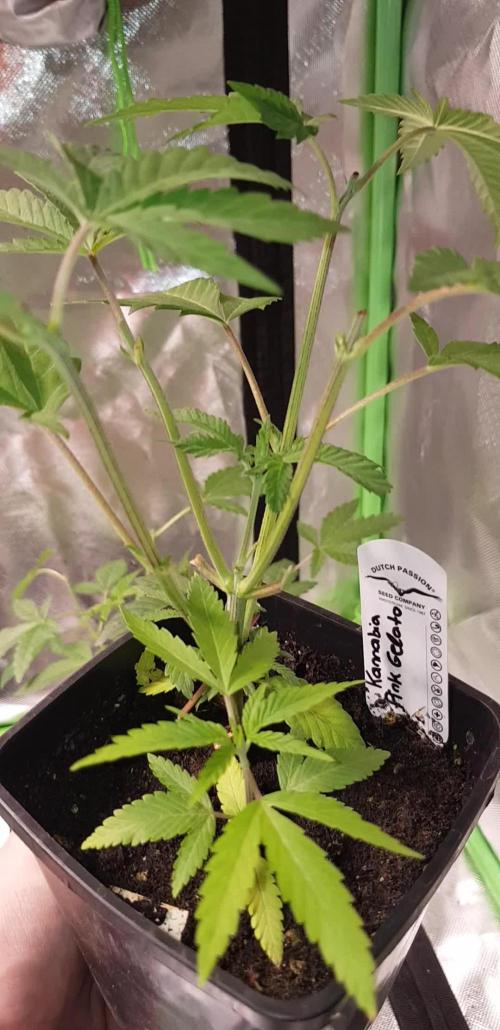
Welcome to Veg Week 3 of Kannabia Pink Gelato
I'm excited to share my grow journey with you from my
Kannabia Seeds Project . It's going to be an incredible ride, full of learning, growing, and connecting with fellow growers from all around the world!
Check out Kannabia Seeds with my link [https://www.kannabia.com/de?ref=61966] and grab the germination device or the strains I used . Trust me – it’s worth it for sure !
Get another 20% Discount at all products using the code [GGD] at the checkout. little Holiday Present to the Community btw ☃️
For this Project , I’ve chosen the Feminized Photo Strain Pink Gelato:
Here’s what I’m working with:
• 🌱 Tent: 120x60x80
• 🧑🌾 Breeder Company: Kannabia Seeds
• 💧 Humidity Range: 90
• ⏳ Flowering Time: 56-63 Days
• Strain Info: 23%THC
• 🌡️ Temperature: 26
• 🍵 Pot Size: 0.1
• Nutrient Brand: Hy-Pro
• ⚡ Lights : 600W x 2
A huge thank you to Kannabia Seeds for allowing me to try my Best with this amazing collection from Photo Strains they managed to Sponsore . Big thanks for supporting the grower community worldwide! Your genetics and passion speak for themselves!
Let’s grow together – and don’t forget to stop by again to see the latest updates!
Happy growing!
Stay lifted and stay curious!
Peace & Buds!

Likes
198
Share


@DevilsBud
Follow
WEEK 3 OF FLOWERING
@Spliffseeds and @Anesiaseeds
In the marshydro set-up
4'x4' tent
FC-4800 lamp
Absolutely awesome grow all strains have there own uniqueness to them some need more then other the Afghani Gold + hyper glue are drinkers 🍹
The rest around same but i am definitely very happy with grow so far.👌🏻 Not really a lot to say but only from what I can see and observe is that the difference between my first grow and this is that they are exploding 🤯.
There in beginning of week 3 but they look like when first grow was in week 4 and half lol . Soil the same nutrients the same but what makes this grow explode is the beast that is the FC-4800 and it's no promotion talk it's just plain truth this marshydro lamps are no joke 🤘🏻
I am gone refill the pots with some extra plagron batmix but will add a additional rqs bat guano to the top


Likes
6
Share


@PrinceOfHerbs
Follow
The plants look very healthy, on day 17 of flowering, the lollipopping method was applied and leaves were radically removed.
Flowers become larger and larger and resin begins to form.
Flowering day: 17


Processing
Likes
3
Share


@Kushizlez
Follow
Day 33-40 (May 24th-May 31st)
(Day 34) I just found a herm branch on the tight blueberry pheno. It looks like a random pollen sack opened right above a lower branch. I removed the sack but I saw a small amount of dust fall onto one of the lower branches. I’m going to leave it to see if it will pollinate that small branch at all. I spent a good 5 minutes looking closely for bananas or claws but couldn’t find anymore. The main bud is clearly unaffected so I will just leave it unless it is visibly seeding itself. Too bad because I’m really excited for this plant.
(Day 36) Not a lot has happened since I flushed them. Growth actually looks healthy and I don’t see any deficiencies on anything yet.
(Day 37) Both of these badazz cheese phenos are picture perfect and easily hold up against Canadian and California quad grade. I might try to reveg them at the end and take some clones. They have this unique pungent, grassy, sour milk smell that is just wonderful. The density and bud structure is looking great too. This whole plant will probably take 3 minutes to trim if that.
(Day 38) Just found a banana on the shitty blueberry pheno. This pheno is trash and I would honestly throw it away if it didn’t mess up the 3 perfect rows. It has almost no frost, no smell, is airy and has bad structure. I’ve actually never seen a plant with such little frost. Even outdoors.
(Day 39) I think most of this tent will be done by day 60 but I will probably ride it out until day 70+. I don’t think the blueberries or the jacks will fill out very much either way but taking it too day 70 will ensure maximum production from each plant.

Likes
4
Share


@Urunascar
Follow
Las retiré de la luz LED para pasarlas a floración, enmende el suelo con compost de la vermicompostera, bokashi, restos de una pequeña poda de bajos mínima (para descartar ciertas ramas que se veían feas) y cubrí con mulch.
La alimentación va a ser esta durante las primeras 2 semanas de flora, luego 3 semanas igual pero sin el FPJ, quizás le de más potencia con un bioflores de biocanna qué tengo de sobra del año pasado.
Iba a hacer lst pero apenas intente mover hacia abajo las dos principales se abrió al medio, selle con precinto, a rezar para que se cicatrice bien de manera sana, esta semana voy a echarle trichodermas en la zona por las dudas
Likes
10
Share


@Skinnytalls420
Follow
Day 1-12/12/21 placed seed into water for 24hours! Day 2-13/12/21 I placed the seed on a paper towel! Day 4-15/12/21 seed is in soil and in tent! Day 6-17/12/21 seeds are coming out showing first signs of leaf!!!


Likes
12
Share


@EliteGrower
Follow
Into final week flush began last Sat no nutes since then only water not the biggest plant but plant full of bud so can't complain il be happy with oz of both about and half foot hopefully buds are compact and heavy tops look a bit fluffy maybe light stress cause buds under seem a lot more dense well see


Likes
13
Share


@Robeeriegenetics
Follow
So despite many obstacles and hurdles, we are on the last week of flowering hopefully the heat stays down for the next few days, and I can get some color into these nugs the sativa Room may need a few more weeks no big deal. This is typical of sativa leaning strains. this will give me a bit of a stagger in between harvest so I don’t have to do all the work in one day which is a good thing .
Likes
6
Share


@Sliverconstruct
Follow
67 grams from 1 plant dried I will be doing the other plant tonight
Likes
2
Share


@Bluemels
Follow
Tag 70: Es läuft super mit der Green Gelato, sie ist jede Woche nur um 5cm gewachsen. Der Stetch sollte nun auch fast abgeschlossen sein 😃
Likes
16
Share

@Peca1973_Vv
Follow
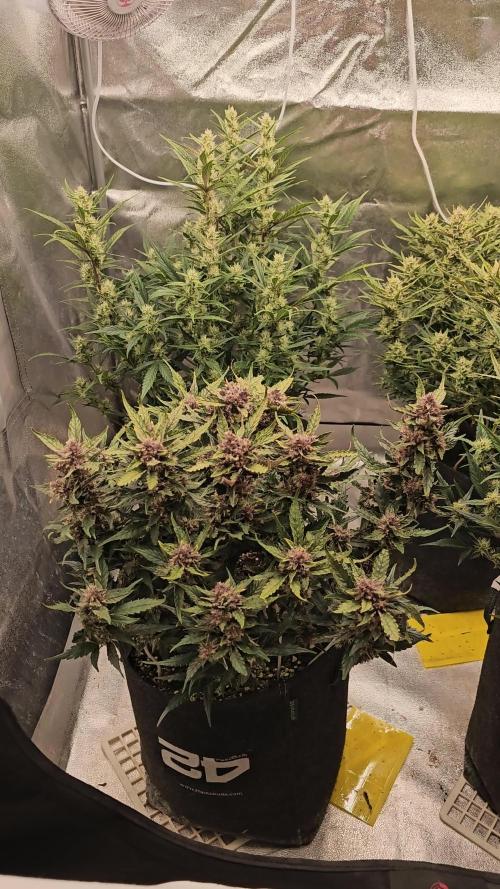
I don't see any change or difference from classic guava and guava RF3, except for a change in some nice told marketing story, the plants have a sweet, beautiful, strong smell. and a lot of glue, like I said, no difference from regular Guava. Average announced yield, average growth. whoever has more space can play. I'm limited by space, so I wouldn't experiment any further 😉.
Likes
11
Share

@Bud_vista
Follow
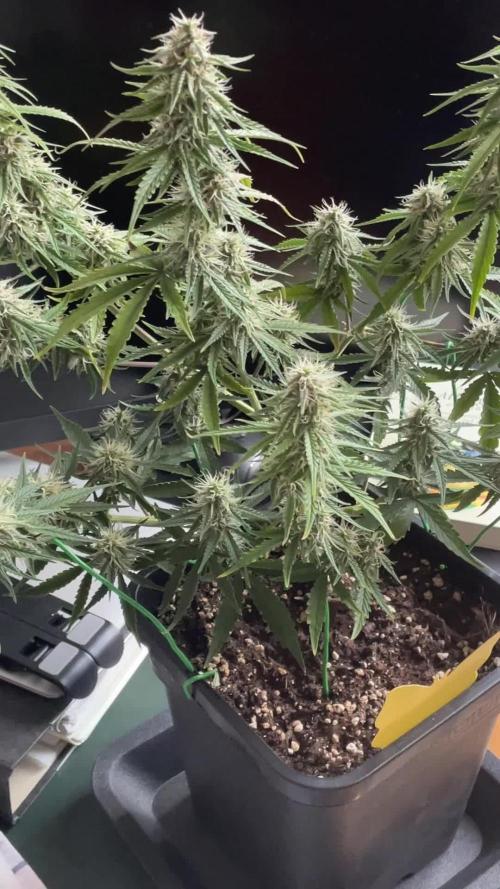
Week 7 began!
She’s gaining in bud size and smalls already crazy good. Until now I’m really happy with the genetic. She’s doing great and never had the feeling that she couldn’t take the stress.
I mean the pod is only 5liters(1.3gallons) large and the conditions are not the best.
Great genetic so far.