







Likes
57
Share


@Bread_n_Buds
Follow
** A tip if you like trichomes have the patience to scroll down to the micro photos, they are scary.
Black Runtz is a crazy beauty, a black isolate phenotype of the very famous Zamnesia Runtz. In the last week before this one you will find the white phenotype with a green apple flavor, but here is the spectacle of nature that manifests itself in the form of a stunning red/purple plant with spectacular trichomes and buds.
**Remember that for all the varieties we have at least two plants, one left to grow straight and one worked with the techniques. This is the plant left to grow straight.
Technique used // In this case we let the plant grow up to the 6th internode then we did the FIMMING or FIM (Fuck the Missed) - This technique by cutting about 70% of the brunch and the leaves growing in the center is going to give the plant the indication to slow down the growth upwards and distribute the power on the lateral branches that with a bit of LST in fact gave some wonderful secondary flowers. No popcorn thanks to Pruning of the things at the bottom, guys leave only everything that sees the light well in flower.
Better with the techniques or the normal ones? This time we have two very different phenotypes, a plant with medium internodal distance. I prefer the plant to grow straight, but I know that it can be obtained very well with a main lining or repeated topping.
Flower quality // From one to 10 stars 15. The plant has resined very well on all sides, the resin is really abundant and above average. The color of the trichomes is something exceptional really we have dark purple heads, light purple, lilac, really a racobalen of shades of red / purple.
The buds were washed as recommended by Zamnesia.
Check the article in your language // https://www.zamnesia.io/it/guida-growing-cannabis/333-lavaggio-delle-ceme
Fertilizers// I am very happy with how I managed to dispose of the plant that at a certain point, before going to the wash, was fed for a few days only with additives and then went to the wash and we are very very well discolored. I predict a very tasty flower, grown organically and washed successfully, the flavor and taste will be epic.
All the Plagron fertilizers and additives in the green / 100% organic version have fully satisfied me. Choose the soil according to your style and calculate the sheet on the website www.plagron.com -
Brother, if you are stubborn use additives, listen every now and then... and then come and tell me about it.
Fertilizers are available in convenient all-inclusive packages on the Zamnesia website.
This strain is already a legend in the normal version, imagine in the Black version... try it!
--- https://www.zamnesia.io/it/11159-zamnesia-seeds-black-runtz.html
Zamnesia Description // Black Runtz comes from a truly legendary genetic heritage. Our breeders used three modern classics from the United States to create this strain: Zkittlez, Gelato and Runtz. With 20% THC and aromas of grapes and berries, Zkittlez has passed on its delicious flavors and relaxing effects. The ice cream contributed to Black Runtz’s immense flavor profile, giving it high concentrations of the terpenes limonene and humulene. Finally, Black Runtz inherited the high potency of the original Runtz, a strain with a respectable 21% THC. The end result of this three-way cross is a strain with 55% indica genetics and 45% sativa. Black Runtz boasts a fast flowering time, very high potency, and contrasting yet balanced terpenes that enhance its delicious flavor profile.
Music and Frequencies // For about 4-6 hours a day, my plants listen to 432Hz frequencies specially designed for their well-being, and sometimes a little black music to give them those vibes that only music can give. www.radionula.com
All the best that mother nature has to offer is available at
---- www.zamnesia.com


Likes
11
Share

@TrickzGrowz
Follow
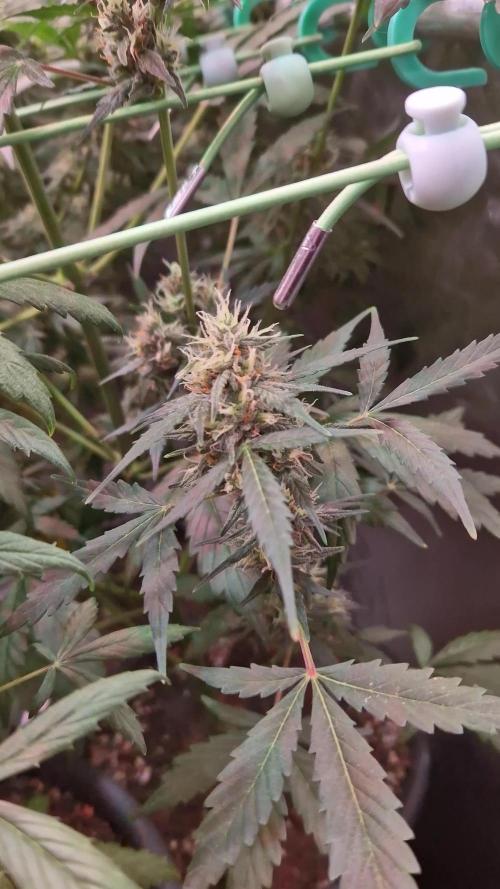
Ein wunderschöner dicker Headbud. Die unteren sehen auch mega lecker aus!
Likes
16
Share


@Cauli
Follow
Week 5 already of Guava.
She finally reached a good size and the first pistils started to show.
Very excited about her stretching and the growth in the next weeks.
Had some aphids this week, but spotted them early and could just remove them (about five or six only).
So far no new are visible, but will watch closely.
Likes
3
Share


@CanarianGrow92
Follow
Another week of veg for our Fast Version B from super sativa seeds club.
At the beginning of the week we gave some bactrex and orgatrex from biotabs.
The plant is evolving good! Nice and green
Likes
37
Share


@GreenHouseLab
Follow
No trimming required on this strain everything came out fire no larf all rocks.
Cheers and happy holidays to all growmies 👊
Likes
60
Share


@julian100614
Follow
La pequeña gorila sigue fabricando pistilos y sus tricomas siguen transparentes, con lo cual la dejaremos alguna semanas mas para ir viendo el proceso.
Los cogollos están realmente prensados y tiene un fuerte olor a cítricos 🔥 muy muy pegajosos
Con ganas de terminar esta maravilla para poder fumarla 👌

Likes
5
Share


@Ewok923
Follow
They are Blossoming going to remove some more fan leaves from the 4 hydro they are super bushy going to have a great Canopy.

Processing
Likes
154
Share


@CBD_Sweden
Follow
@FAST_BUDS,
Hi all the happy people here in GrowDiaries.
This is my second cultivation ever and it will be fun to try a bigger space than my closet grow.
First, I'm just going to say I'm done with the construction of my new growroom.
I put some pictures on the construction here in week one.
The room is 2.14 meters by 1.7 meters and has a ceiling height of 2 meters.
It provides a floor area of 3.6 square meters.
I use a 54 Watt Lightwawe T5 for germination and 2 Pcs 400 Watt HPS lamps.
I have a channel fan that replaces the room air about 40 times an hour to get a comfortable environment in the room, the air enters a fresh air intake from the outside.
The air is purified through a carbon filter to then leave the room to the rest of the basement.
Then I use that heat to heat the rest of the basement.
I will use 8 pcs 15 liter Autopots to grow with and a 100 liter water tank that supplies the pots of water and nutrition.
I will grow completely organically in soil and will watercure my buds to get the best possible medicine for me.
But there are no cultivation rooms to be displayed here, so I continue with what is most important.
Today I have put my seeds in my moisture dome and hope the seeds have germinated within a few days.
I am very excited to see how the new growroom will work and how this new secret CBD plant from @FAST_BUDS, will turn out.
..............................................................................................................................................................................................................................................................................................................................................
Update 2017-08-15. Both seeds have germinated and planted in small pots inside the humidity dome.
I'm so glad it worked so well and now it's just hoping they'll start growing and become 2 big healthy girls :)
...............................................................................................................................................................................................................................................................................................................................................
Update 2017-08-16. I have mixed my own soil today. Its 40% sieved peat harrow H2-H4 0-30 mm, 45% sieved peat harrow H4-H6 0-30 mm. 5% sand and 10% of compost soil. And i use 15% of perlite and mix it all together.
....................................................................................................................................................................................................................................................................................................................................................
2017-08-21 The 2 sisters are doing great, Nr2 is a bit after Nr1 . Some new pics.
............................................................................................................................................................................................................................................................................................................................................................................
2017-08-23. Transplanted from humidity dome and the small germinating pots to 15 liter autopots.
................................................................................................................................................................................................................................................................................................................................................................................
2017-08-27. The girls have settled in to there new home of the 15 liters autopot after a little transplant chock. Now the real week 1 starts for me and the girls. 4 new pics.
---------------------------------------------------------------------------------------------------------------------------------------------------------------------------------------------------------
2017-08-29. New movie of the girls. Its no water for 3 days now so the roots develop more and match the plant above the soil. The temp controlled fan is awesome, its easy to set what temp you like to have in the room. Right now its 28 celcius. And humidity is 56%.
--------------------------------------------------------------------------------------------------------------------------------------------------------------------------------------------------------------------------------------------------
2017-08-29.
Hello to you who read my diary, I just want to say that I am pleased that you have chosen to check in with me and in my diary.
I just want to say that I do this for myself and for a steady flow of my medicine.
Everything you read and see in my diary is 100% honest and I will never distort or beautify anything here.
I document my crops so that I can learn from my mistakes and also to look back at those different crops.
I try to update with pictures every day and with text if something special has happened in the garden.
This is my strainhunt for the best medicine and the beginning of my journey with cannabis and the cultivation of it.
-----------------------------------------------------------------------------------------------------------------------------------------------------------------------
2017-08-30. Cleaned the room this morning, just vacuuming and cleaning with chlorine solution. Im testing the fan to control temp and humidity, it works great.
Added some pics with measurements and a movie. Everything is looking great right now.
-----------------------------------------------------------------------------------------------------------------------------------------------------------------------------
2017-08-31. New video of the girls.
-------------------------------------------------------------------------------------------------------------------------------------------------------------------------------
2017-09-01. New pics and videos. Gave each of the girls with 2 ml Alg-A-Mic, 4ml Bio-Grow, 4ml Bio-Heaven and 10 ml Formulex mixed in 2 liters of water.
I hope they like it :)
-------------------------------------------------------------------------------------------------------------------------------------------------------------------------------------------------------------------------------------------
2017-09-02. New pics and the girls liked the water and nutrients yesterday.
-----------------------------------------------------------------------------------------
2017-09-03. Video of the girls this morning.
Kl 16.00. Did some defoliation on the girls. Videos added.
KL. 23.00. New video.
----------------------------------------------------------------------------------
2017-09-04. The start of week 3. New pics. Im trying to LST the girls.
KL 23.00. Added new video.
--------------------------------------------------------------------------------------------
2017-09-05. KL 08.00. Cleaned the room this morning, just vacuuming and cleaning with chlorine solution.
KL 12.00. The girls got 2 liters of water each with nutes in it, added a video.
-----------------------------------------------------------------------------------------------------------------------------------
2017-09-06. KL 08.00. The girls woke up after their beauty sleep, the leaves are always a bit down after 6 h of darkness, but they will stretch now when the HPS lamp starts.
Everything looks good and I keep trying to tuck the leaves so they get the maximum amount of light where needed. Added pics and video.
KL 23.30. Did some LST and leaftucking.
--------------------------------------------------------------------------------------------------------------------------------------------
2017-09-07. This is day 21 from sprouting. I have never tested PH in my grows, when growing organic in soil iv learned that it adapt PH by it self. But im curious by nature so i had to test.
Kl 10.00 Tested PH in the soil, it was 6.9 and tested my tap water and it was 6.8. Added video/pics of the girls, its 10 H after defoliation, LST and leaftucking. I think its looking good.
Kl 22.30. New pics
-------------------------------------------------------------------------------------------------------------------------------------------------------------------------
2017-09-08 KL 08.00. Good morning, added new video.
2017-09-08. Kl 23.50. Gave every girl 3 liters of water and nutes, added new video.
-----------------------------------------------------------------------------------------
2017-09-09. Kl 21.00. Defoliated a lot today, new pics.
---------------------------------------------------------------------------------
2017-09-10. Kl 08.00. Last day of week 3. New video.
2017-09-10. Kl 23.00. 3 New videos.
---------------------------------------------------------------------------------------------
Likes
12
Share


@Colepus
Follow
I tried wettrim and drytrim to understand what i prefer. The wettrim dried inside dryferm bags inside a drybox with ventilation that i build myself. The drytrim dried inside the tent and got a trim after 9 days. Havent tried the buds yet since they have to cure first but they smell very lemony so far. Curing happens in grovebags. Half of the bags also got a boveda to see the difference if its worth it for the future or not.
Likes
20
Share


@amazingautoflowers
Follow
Was not my best grow. But the ZKittles by Fast Buds were strong, grew well and I am sure the next grow will be much different. I would have liked a bigger harvest, but I did learn from my experimenting with the feeding schedule. I will definitely be growing these again.
Even with my getting off track the plants recovered quickly at a crucial time and produced some really nice buds. All in all, I'm happy
Processing
Likes
24
Share


@GrowGuy97
Follow
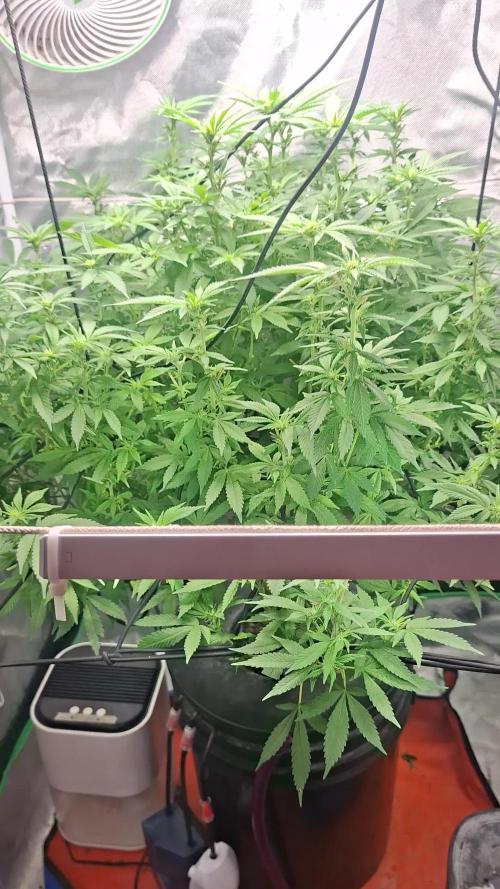
HUGE shoutout to Paul at New420GuySeeds for sending me these new 3 Run Homer test seeds to try out! I am extremely excited to see how this grow goes & to make it even more interesting there are currently no diary’s with this strain on GD! Everyone go check out their website & get some for yourself! I will be back tomorrow with day 1 pics when I get them planted! Keep watching & happy growing friends!✌️🏼🤙🏼🌱
Day 1 - Everything is going great all 3 seeds popped!👍🏼 Finally got them planted & watered with Fox Farm Big Bloom (6tsp per gallon)
Day 2 - I can see all 3 seeds starting to come up we are off to a great start👍🏼✌️🏼 Gave them a little more water this morning with big bloom, grow babies grow!
Day 3 - Everything is going great!🙏🏼
Day 4 - All 3 are growing strong👍🏼
Day 5 - PH water 6.4
Day 6 - end of week 1, everything is looking good✌️🏼🌱


Likes
25
Share


@herewegrow
Follow
Ordered a scale the other day so should have some more numbers tomorrow! Not going to sample anything until I get the scale, then I'll update with some more details.


Likes
5
Share

@Rare_Terps_5280
Follow
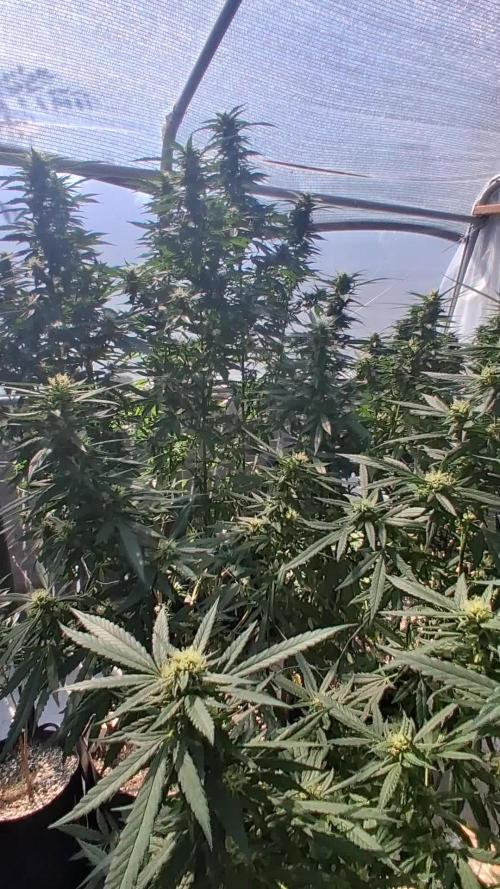
This Zoap is really doing well. Big sativa dom plant but the buds are coming in nicely so hoping it fills in. Not much in the smell department yet but super earthy bud.

Likes
15
Share


@Dico29
Follow
It’s now showing pistils pretty well, and I got some critical peyote from Barney farms In a napkin right now
There is a little burnt tip on fan leaves I think too much nitrogen since it’s in the big pot and the leaves are dark green. But looks good happy I picked the internodes during preflower too


Likes
20
Share


@eldruida_lamota
Follow
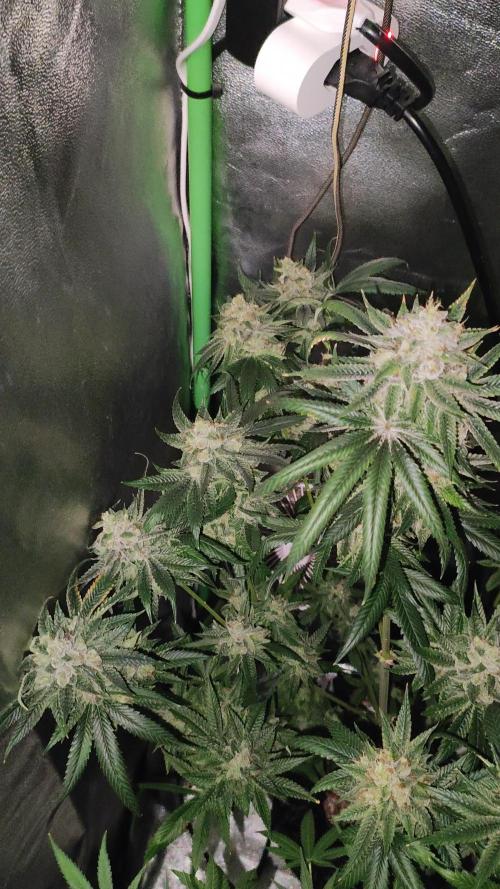
Que pasa familia, traemos nuevo diario, en primer lugar dar las gracias a Nara hydro que sin ellos esto no es posible.
Os enseño la primera semana de esta farm cheese de genofarm, una semilla con más de 3 años de conservación, tuvo un germinado en 48 horas sin problemas aparentes.
La introducimos a 0,5 cms en medio del sustrato, una maceta pequeña unas semanas mientras Coje fuerza.
Las vamos a crecer esta vez bajo un led TS-600 de la marca Mars hydro.
.
no olvidéis que comprando con el código an420 en mars-hydro.com obtendréis un pequeño descuento en cualquiera de sus productos.
.
Nos vemos la semana que viene con más familia 💪
