


Likes
Comments
Share


@Noname121r
Follow
Buds starting now. Seem a bit slow. Keeping an eye on environment. Possibly bit cold when lights off


Likes
4
Share

@Gratak
Follow
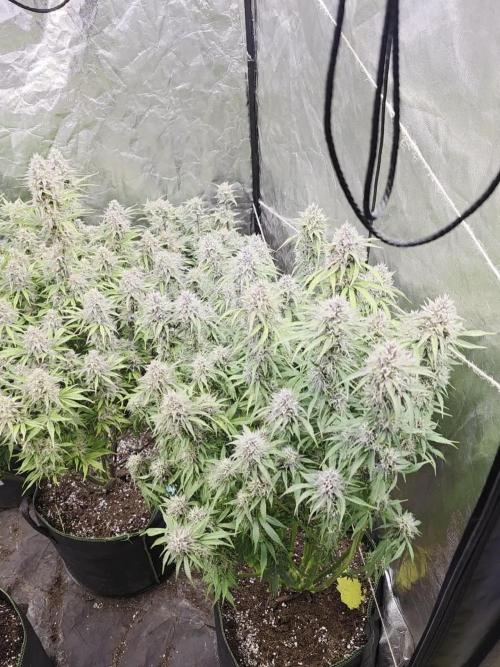
Die Hauptaufgabe bestand im Entlauben und entfernen der Blätter die Feuchtigkeit erzeugen, damit die Buds nicht schimmeln. Bis jetzt sieht alles gut aus und läuft nach Plan


Likes
38
Share


@Esoteric_growing
Follow
So I harvested the top half of the canopy at day 58 while leaving the bottom half to finish up for another week. Looks like the best yield so far running for my runtz muffin grows.
Also dropped the water temp at night to promote colouration of the buds which seems to be working very well.


Likes
26
Share


@Ukfarmer420
Follow
Hi guys
So we are on day 42 from switch so going into week 7 now, these are a 45-50 day flowering plant, I will be using a ripner for the next 10 days then give it a final flush of just water at ph 6.2.
So there starting there fade now on some of the leaves and the buds are are fattening up.
There really really sticky and covered in trichomes. I'm really looking forward to the end result.
Temps and humidity are all good I took a few leafs off that was blocking buds but other than that its been a normal week.
Happy growing guys and keep it up 💚💚💚
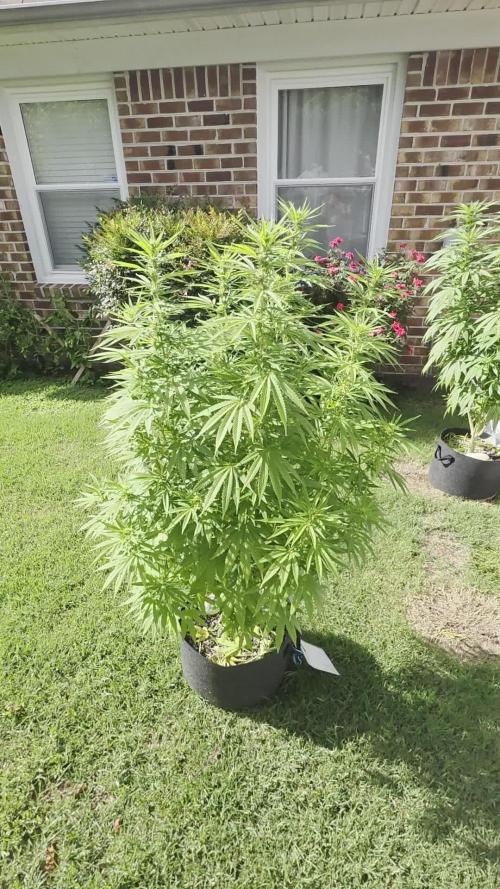
Day 44 on the scrog there fattening up but jeez there's so many white pistils.
I'm not sure whether to just flush with alternating water and molasses or to use a ripner on it???? Any suggestions🤔
Thanks guys 💚💚💚
Day 47, started feeding bio heaven, bloom and topmax again for the next 2 weeks after a discussion about the organic range im using.
Buds are swealing and really sticky, smell really sweet now. Humidity and room temps are consistent to where I want them, no signs of powdery mildew or rot of any sort.
Stacking on the trichomes now too I cant wait to see the final finished plant in her glory.
Happy growing guys I thanks for looking 💚👌

Processing
Likes
4
Share



Processing
Likes
3
Share


@DD_420
Follow
Getting close to the end here. Figure about 3 more weeks from harvest.
Hoping to see some purple any time now......
Tick ...... Tock


Likes
9
Share


@Lion25
Follow
I had a small yield because I had a 100w led and I had a potassium deficiency but otherwise it's fine, it is good



Likes
7
Share


@Organic473
Follow
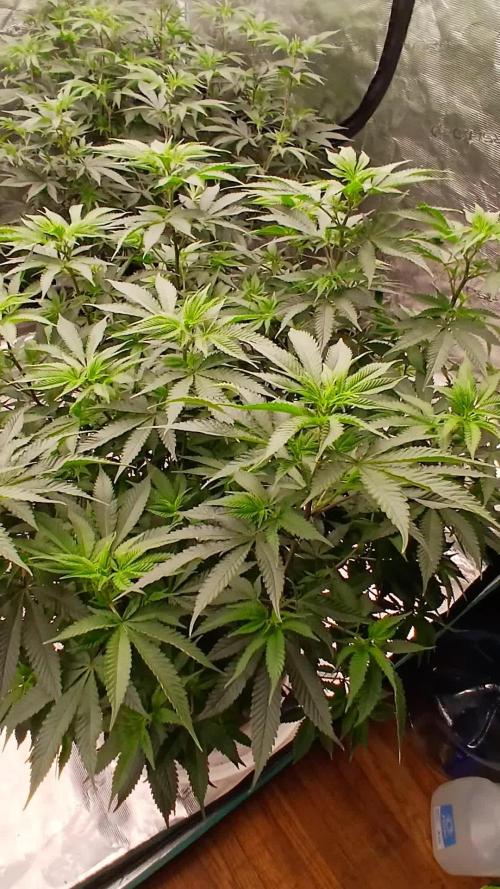
The sweet smell and her swelling of the buds is very evident mid flower glory. I gave her a mid flower flush of 2 gallons of water yesterday. From now on it’s just molasses and maybe some liquid budswell for the terps.

Likes
4
Share


@el_cultivito_colombia
Follow
Semana 1 (18/7/22 - 24/7/22)
Se preparo una solucion de Mills Start R:
- PPM : 100
-pH : 5.8
Se submergio cubos de roca de lana dentro de la soulcion.
Cada semilla que se germinara se paso a un cubo de roca de lana y se mantuvo sin luz.
Cuando las plantulas salian del cubo, se pasaron a otra bandeja de germinacion con domo de humedad bajo una luz T5.


Likes
229
Share


@Crashoverite
Follow
Week 7
Hi everyone 🙃
So far everything going well. Slower developed girl aka "Nuna" started slowly flowering couple days ago and hoping that under my best care she will catch up to the others.
Recently purchased small dehumidifier doing absolutely great job of keeping humidity on avg. 52% on 18h and avg. 65% on 6h of light schedule.
Will increase flowering nutrients in coming days and still trying to figure out when will be the best moment to apply my final nutrient - Green sensation from Plagron any advice very much welcome 😁
Will keep updating progress of this week every couple of days.
Peace ✌️
04/09 day 43
Started watering twice per day. Light power set on 90%
06/09 Day 45
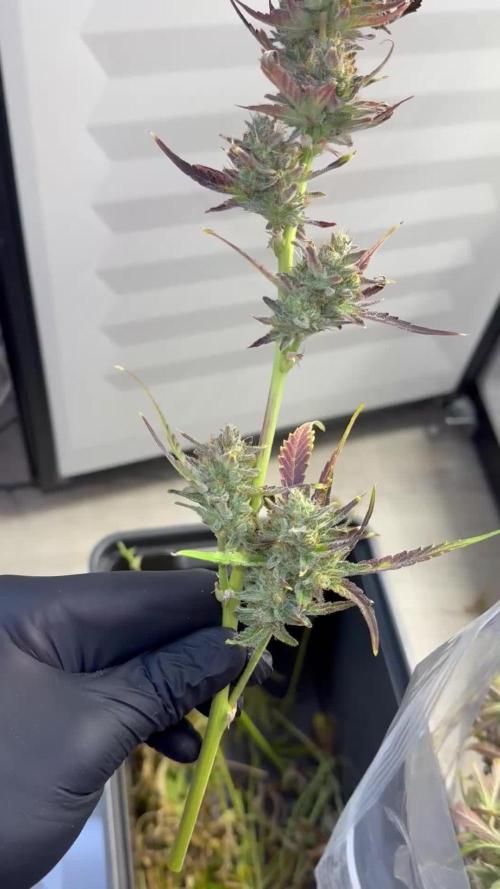
Removed some of the larger fan leaves to improve light on the lower parts of the net. It's plenty little flowers there so better they get some of this warm bright light 😊
08/09 Day 47
No stress signs after removing some of the fan leaves yesterday but noticed some calcium and magnesium deficiency in of the girls couple days ago did started adding biobizz calmag. Watered pots yesterday with approximately 1.5l each 300-400ml dosage every 20-30min. Won't water today or tomorrow. This morning I haven't noticed any extra leaves with symptoms in her so hopefully will back on the right track now
09/09 Day 48
"Nuna" slowly progressing but she still growing up like crazy. Need to tied 2 tallest branches as already at the bulbs. removed few more leaves this morning.
10/09 Day 49
It's the end of the week 7
Stay tuned for more updates on following week.
Peace and love brothers and sisters✌️


Likes
65
Share


@bypado_farm
Follow
Day 49:
Watered the plants 0.5L with nuts
678 ppm, 1446 us/cm, PH 6.4
Day 51:
Did some defoliation
Day 52:
Watered the plants 0.5L with nuts
781 ppm, 1665 us/cm, PH 6.4
Day 54:
Watered the plants 0.5L with nuts
712 ppm, 1560 us/cm, PH 6.4
Likes
3
Share

@ohcibi
Follow
Update June 4th
Another 3 liters fed today. As expected, this week is full of LST and scrogging only, but it’s going very well. The prep work I’m doing now is basically what I did in the first week(s) of flower in the last grow, so the foundation for flipping will be much better prepared this time. Maintenance on Taktlo$$ is even getting a tad bit simpler.
Flipping is expected on Sunday. I’ll just keep the same week marker for simplicity, even if I could flip earlier.
Update June 1st
Fed a full 3 liters again. Those plants are chugging like hell. Prolly just more developed overall from double the feeding since the start.
Maintenance on Royal Gorilla is still more demanding than Dynamite Diesel, but Takti is fully recovered from the extra topping. Scrogging is all that’s left now.
Update May 31st
FVW - Final veggie week. I’m not sure yet whether I will wait the entire week before flipping. I have no plans of further topping, so I might flip around Wednesday or something already. Strong feeding and light made this third of three Royal gorillas seeds grow like Ken. Very bushy and super large leaves. Stay tuned!
Likes
9
Share


@TiRobotProds
Follow
Nous somme à la 6ème semaines de floraison tout se passe comme prévu les bourgeons continuent de gonflés les paramètres sont excellents 24 degrés en température 55% en hydrometrie.
- L'ajout de RQS guano a redonner un coup pouce à la plante les bourgeons ont sacrément gonfler aimer et regarder par vous même. Cet semaine sera aussi la dernière irrigation avec nutes. Ce run est l'une de mes préférée.
Léger carences en azote post-stretch cela es dû a un faible apport de celui-ci mais rien de grave cela indique les derniers semaine de vie de cette dame le rinçage sera simple et éfficace.
L'odeur quelle dégage es fortement fruité cela sent le 🍬 🍬. A plus pour d'avantge d'informations.👍🏼

Likes
7
Share


@Bingbings_garden
Follow
Hello growers,
Another week down. Nothing major happening so keeping it short and simple.
After stretching she is 83cm from base to highest cola thanks to the training. I measured the main stem and it comes out around 1.4m in length. Flower development has gone into full effect. Decrease in temperature outside so hoping to get tight and dense nugs. Water 1.5L per day.