


Likes
Comments
Share


@FirstTime97
Follow
Left um 4 days over Christmas being a lazy bum and come back to half a tent off yellow a lot of fan leaves are looking sickly / fell off altogether most yellow leaves have been pulled off plants lost a lot of they fam leaves all in maybe abit too many , it’s hard because one person tells ya leave um all on and another person will tell ya take um all off so we just been seeing what works ourselfs and still ain’t got the foggiest , when ya rub the buds you get hints off lemon / pepper and fresh dog shit 🤣🤣 as I say we have um last feed of nutes this week and started to flush um they take about 6 litres of water through the pots untill any type of coloured run off and we only have 100l so 3 days at it we got through about 10 plants and we gave up 🤣🤣 so again intrested to see the finished prouduct if flushing does change the taste of the smoke , saying this the plants we have flushed seem to be looking alot more healthy than the ones we haven’t so deffo leaning towards a lockout or too high nutes for the girls , alot of rusting and alot of burnt frazzled tips one plant we chopped early and didn’t even get a gram of smoke able off it just alot of leaf n skinny buds , it being a first time go at this I’m not really too disappointed with the outcome but deffo kicking myself at how many I rammed in togther , some of the top Kolas are looking 10/10 but other than the top kolas the rest ain’t worth a wank to me , all in all learnt a lot though so excited to finish this one up and get cracking with number 2 I’m leaning towards bud Buddha seeds cheese puffs after smoking some zheez that’s going around the country at the minute cheese x zkittles , anyway happy growing people and don’t forget to drop a comment if you have anything to say or ask

Likes
8
Share


@BuddyHolly
Follow
2 plants made it to harvest. Small nugs, about an ounce per plant dry. A lot of frosty trim and small nugs I’ll be using for hash later. I had rooting issue when I flipped to flower that definitely negatively effected nutrient uptake. Small yield but quality is good. Smells almost like a sugary jelly bakery. Cured for a week, tastes sweet almost.

Likes
4
Share

@Anon73
Follow
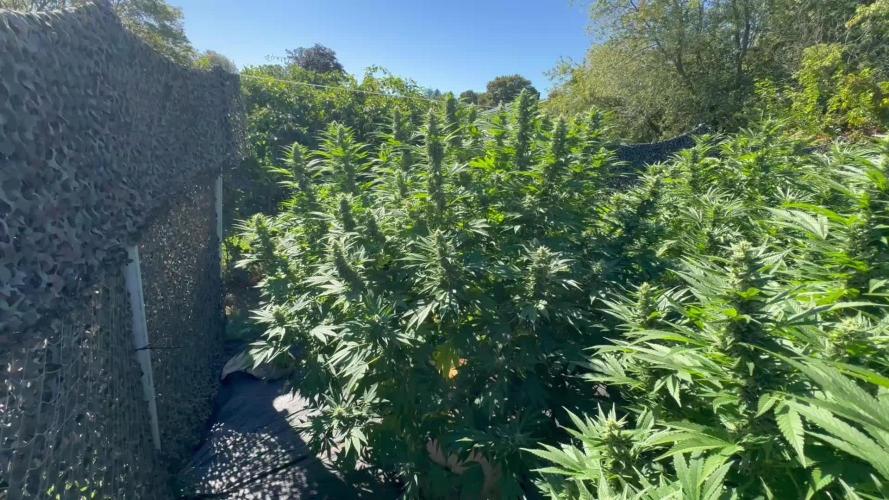
Victory over the moth larvae. Removed them with pipe cleaners. Still spraying Monterey BT.
No new larvae holes. Reinforced several plants with velcro tape.
The flowers are becoming heavy.
The scent is overpowering.
Sugar Cane is extraordinarily heavy and the flowers have not yet begun to swell.
Gorilla Glue 4 is heavy and the branches have started to bend outward from the weight. All three were reinforced. Garlic Z is not a large plant and the buds are behind all the rest in progress but the flowers are close and compact.

Likes
Comments
Share


@Robom069
Follow
Day 75/76
everything is going to grow together so the compounds the way they should and i dont get bugs or overstimulated effects
so it should be a pretty good harvest in 2 months

Likes
Comments
Share

@UDUDUDUDU
Follow
It iz funny to see malnutrition on a clone, beecuz it iz expected.
Likes
20
Share

@MrGrowDiarie
Follow
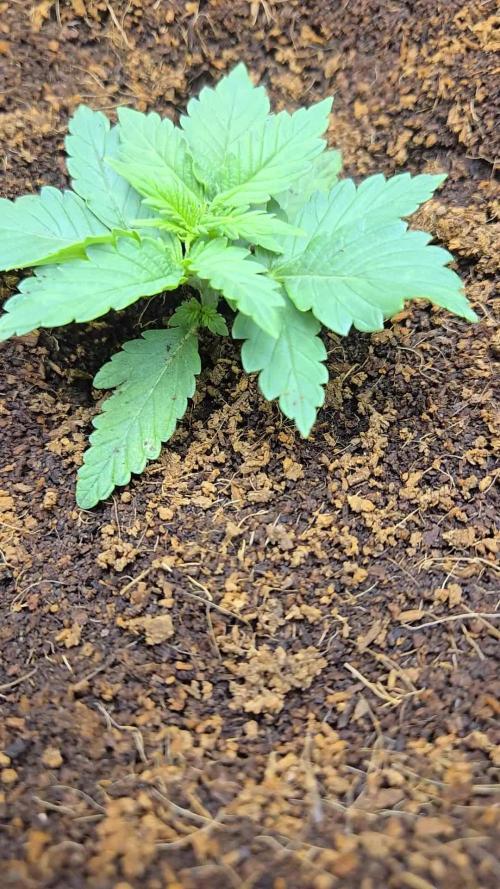
Week 3 – Compact but staying small
She's definitely healthy, but growth is staying tight and low to the ground. Very compact structure so far, not stretching much yet. Could just be her genetics, or she's focusing on building roots before taking off above ground. No signs of stress though – nice green color, strong leaves, and new growth coming in steadily. Hoping she picks up the pace soon, but sometimes the small ones surprise you later!

Likes
36
Share


@nonick123
Follow
Día 66 (05/08) Cerrado por vacaciones
Día 67 (06/08) Mi amigo viene a casa a hacer un riego con 1 Litro de H2O pH 6,5
Día 68 (07/08) Cerrado por vacaciones
Día 69 (08/08) Vuelta de vacaciones! A ver como están después de 5 días sin verlas... 😱
Riego con 1 litro. OnionOG con 1.5 L
Añado 3 cm de sustrato nuevo porque se ha compactado y se ven las raíces! 😢
Día 70 (09/08) Riego 500 ml H2O pH 6,55
Eliminación de algunas ramas bajas
Día 71 (10/08) OnionOG vuelvo a hacer topping a todas las ramas principales! 💥
Riego 500 ml H2O pH 6,55
Sesión de fotos semanal!
Día 72 (11/08) Riego con 1 Litro de Té Vegetativo de Lurpe Solutions. Preparación: 24 horas con bomba de aire (oxigenación) con ingredientes:
Green Sunrise 8 ml/L + Insect Frass 16 ml/L + Hummus Lombriz 8 ml/L + Melaza 1 ml/L + Kelp Hidrolizado 0,25 g/L
Aplicación foliar Kelp hidrolizado de Lurpe Solutions a 0,25 ml/l
💦Nutrients by Lurpe Solutions - www.lurpenaturalsolutions.com
🌱Substrate PRO-MIX HP BACILLUS + MYCORRHIZAE - www.pthorticulture.com/en/products/pro-mix-hp-biostimulant-plus-mycorrhizae

Likes
14
Share

@Radagast_
Follow
12.08.
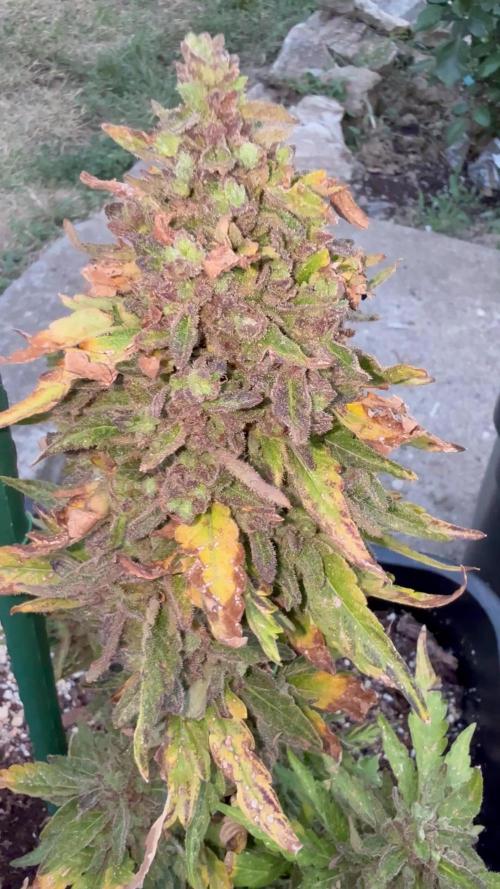
Runtz
Day 72# Flowering Day 55#
10.08.
4 more plants harvested and put to dry, two ripe just the way I like them, two not quite yet, but I didn't want to risk them being destroyed by the caterpillars.
The previous two dried and smoked lol
There are 3 plants left on the site, they need about 7 to 10 more days, 2 days ago he was with them
end of the 10th week.
Stay High and Keep Growing!!!

Likes
17
Share

@masterofsmeagol
Follow
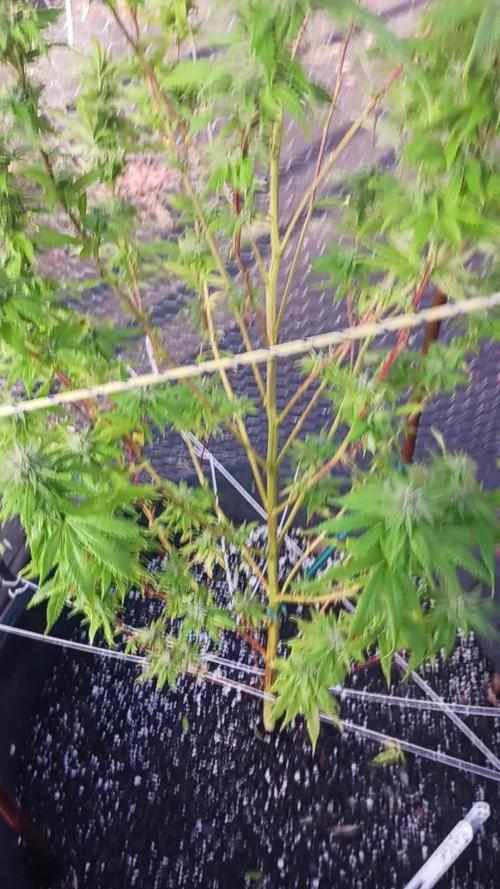
9/20 Man I've been busy. I'm sick too. Looking back at my diaries I get sick this time of year every year it seems. Once I get the important stuff done I'll put some pictures of finished product up. Sunny today and windy as hell. All the plants left seem to be doing good and look like they'll finish. The pink kush might not finish how I WANT but it's stinky and has lots of milky trichs. I'm playing with fire with this mk ultra. It's fucking done. It could get a LITTLE more amber and maybe come together a bit more but I don't know if it's smart to risk it. Frost warning in effect tonight. I'll probably check the forecast and harvest tomorrow. We're having some good weather just cold nights. Then it turns to like a 30% chance of rain for 4 or 5 days. I'll yank it before that. This actually turned out tp be a pretty good year. Haven't tested everything (especially shit in the ground) but what I have sampled I'm incredible happy with.
9/21 IT was a balmy 36° on my way to the garden. My windshield had frost on it. Surprisingly the TIGHT nugs of the pink kush and this phenome of 10th planet didn't seem to mind it. Both strains are still increasing in size, smell and trich development. Not just changing but adding more. Trichs on trichs. Very in hospital environment. It will be interesting to see what happens with these girls. We will be getting some rain. I mean we've had SOME but I mean real rain. If thays the case I'll put these in the garage for a little bit. Honestly I thought these would be goners. I've gotta get to work trimming bucking and manicuring flower. Doing a garden like this sure is an awful lot of work. But the reward is worth every penny. WATERED EVERYTHING LEFT A HALG GALLON APIECE. PROBABLY SHOULDVE GAVE A GALLON BUT THEY WERE STILL A LITTLE HEAVY.
9/22 It rained last night and we got another frost. HAD to cut a main branch of the tenth planet as it had stem rot. Lots more cold weather coming. If I could get it done and I wasnt sick and have all this other material to process I would probably pull then. It's getting really cold. We're going to be getting rain. I'll check the weather and hopfully I can just put the movable ones in the garage. Either way things will work out. Pictures that will be coming will be of the finished product!
9/23 Had a super busy day. Had to but a branch off the pink kush due to stem rot. If I had time I would've taken it. It rained today but I think the plants will be alright. I've been working non stop. I may not have the quantity I'm used too but the quality is AMAZING. I can't wait to do the smoke points and put up finished flower. The other 10th planet seems to be doing really well. I expected nothing off that. I'll keep it updated but it's hard with everything going on.
9/24 Had more emergencies. Raining and cold. Finding stem rot a boytritus but not much. We are getting an inch of rain tomorrow and rain the next day. I wasn't going to watch my shit rot as it was hard as hell and all milky so I quickly waited for a break in the rain and harvested two pink kushes. Still have one pink kush in the 50 and the 10th planet. I cut a cola off 10th planet just in case. This should've been done yesterday but it is what it is. Even with ALL the damage this had been a pretty good year. I can't believe the quality of....well....everything lol. A couple take the cake but I'll wait to do that. I gotta get back to work.
9/25 Heavy rains today and tomorrow. After seeing the damage on the 10th planet and the stripped branches and dying leaves I took out the loupe and checked the trichs. It was a rare break in rain and the plant was luckily dry. After seeing the pistols change on many buds to pure red and seeing lots of cloudy trichomes abd swollen buds I was able to harvest it. I have one pink kush left that sea7s like a willow. I probably should've taken that by looking at it but the trichs had some clear on it. Lots of damage this year on all plants but the first special kush. The quality is amazing though. I havent got to try every strain but I am incredibly impressed with what I have so far. I stopped smoking dabs (for now) in favor of switching my different strains up. I hope that every gardener is able to instil there energy in the plant and gets the same feeling that I do because it's wonderful. I will do an independent review of each strain, and keep updated on last pink kush.
9/26 Boy that was a lot of rain. Pulled ONE molded bud off that pink kush. Probably should've left the other 10th planet but I was losing so much to damage that I wanted to cut my losses. Trichs were milky but could've gone longer. My stash this year is potent. I'll have some time soon and I'll do the reports on the others.


Processing
Likes
38
Share


@GreenCasual
Follow
Getting bigger and bigger. Like really big. She’s ... like ... 27 inches high ! Do you people think that it will be bad for her blooming ?


Likes
15
Share


@Waveform
Follow
Day 17 (starting Aug. 2nd afternoon): Will water them with a lightly enhanced RO water that was imprinted with frequencies via a PEMF coli for about one day when their day starts.
After being away over the extended weekend, on day 20 ladies have grown very nicely. I topped nr# 1 and #2 after I took the photos and will give them a bit of water with Root Complex to compensate for the shock later. Sadly my brilliant control equipment has crashed completely and will not even take a photo currently. Yikes. Hope I can get it back alive this week again. Also turned the left light up by another 20%, now running at 40 W, and lifted it a bit. Eye inspection told me lights were lower here and ladies can get a bit more.
At the end of their day 20, they seem to have survived the topping well. I managed to cut right above the new nodes which are already growing. Ladies are at 20 cm height before going to sleep.
Day 21 shows great growth again, with lady #1 being at 22 cm now and lady #2, while being a bit less tall, extremely good side branch development. I hope that the rearranged lighting on the left side of the tent will make #1 grow a bit bushier too.
Besides from that, I am really happy I tested Hesi HPE. I had such enormous success with room plants that made me want to see how Cannabis plants react to it. It will not add much to salinity, so I dared to add it quite early. While the photos are processed to compensate the lighting, I did not add much to saturation, so leaves are indeed of a very vivid, luscious green and ladies looking extremely healthy. Speed of growth has increased too as the added video shows. It also tells me lighting is enough – they are turning their leaves away right at the end of their day. I am really uncertain if I will change to usual Hesi grow fertiliser at all …
Did a bit of LST to the lowest branches of lady #2 which spread almost to the border of her pot.
Both temporary girls will leave the tent soon, so that the competitors will have maximum space to develop.
Day 22, end of week 3:
Outside girl went to get fresh air from now on. Wishing her luck, good weather and not a single male in the vicinity.
I rearranged the lights and positioned them a bit higher. First preflower signs appeared on the ladies, so I will change the lighting phase when I return next week. Currently, I have them at 18/6, 45 cm above heads, with 80% running to a total of 80 W.
I wasn’t so lucky topping #2. She has only one "top side" branch now … But grows extremely well, so ok!

Likes
26
Share


@pifflestikkz
Follow
Day 79
17/09/24 Tuesday
Feed today using de-chlorinated tap water pH 6.
Seeing good developments, buds forming nicely, divines are smaller denser structures but the buds are not lacking!
Damn I'm surprised by 2L pots.
Day 81
19/09/24 Thursday
De-chlorinated tap water pH 6 only today.
Day 83
21/09/24 Saturday
Another feed to push this week they seem to be handling it 💚. Fattening up on the buds now and pistils starting to mature.
Day 84
22/09/24 Sunday (End of week)
Damn!!
Noticed I have leaf rollers!!! Damn caterpillar, from moths. So I have removed affected leaves and areas and this AGAIN will affect yeilds on all plants...but I have determined the strains I will re run !
Let's hope we make it too the chop 😅💚

Likes
Comments
Share


@Organic473
Follow
The struggle is real for her but she is pressing on. Not much growth this week but I look forward with a positive mind.

Likes
30
Share

@Scottydarkmoonbuds
Follow
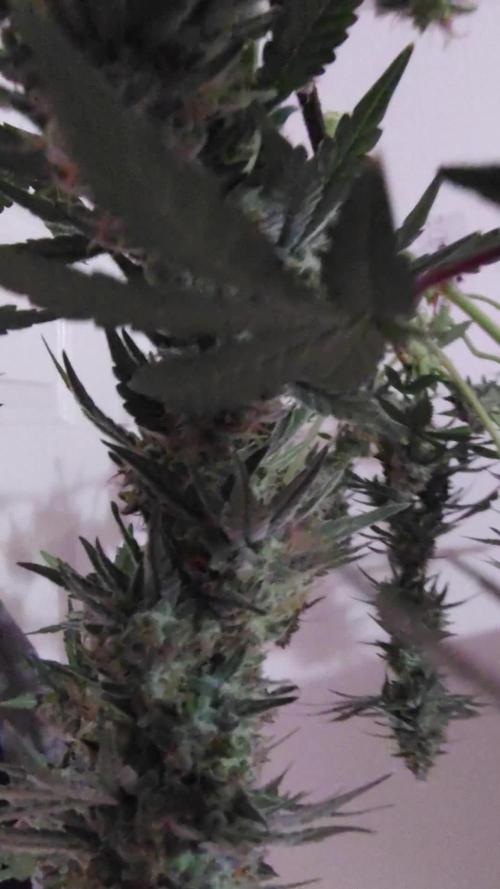
So exciting to finally harvest this plant, very excited to cure and see how she smokes ☺️
Likes
7
Share


@Chupus
Follow
everything goes well 20.06 planted in coconut fiber. temperature 24-26 humidity around 60%
Likes
56
Share


@Organic_LarF
Follow
High GD community,
Week 12,
Haze doing very good. Her sativa genes push her to grow big. But the stems are a bit thin. Hst and LST will help those branches get more solid.
She had a hard time in the beginning of her life, but now she is definitly on the good flow.
Thats it for this week boys and girls,
Thanks for reading and passing by and 💚💚💚👏👏👏👍👍👍 for Marshydro leds. Quality/price top!
Grow safe buds and feel free to check out my other ladies doing fine thanks!
🙏🌿🌿🌿🙏
Weedseedsexpress!!!! 👏👏👏
LarfxWSE for discount at weedseedsexpress!!! 15% off!!!
Zamnesia!!! 👽👽👽
Add OrganicLarF as a code when buying your own MarsHydro LED light and get a nice reduction!!!👽🚀🛸

Likes
25
Share


@Ratch33
Follow
Flipped May 2nd
*Selective defoliation (Open lower bud sites)
*PH 5.5 😶
*Hydrogen Peroxide Foliar Spray
*All set for now, hope all goes well from here!! Peace!🙌

Likes
26
Share


@TheWhiteRussian
Follow
This thing was very easy to grow. Liked low PPMs in flower. Around 600 was plenty for her. Will report taste and effects when curing is complete.

Likes
7
Share


@Tio_Shuni
Follow
Un hobby que demanda mucho tiempo, hago lo que puedo con los horarios, espero disfruten este crecimiento de las hermosas presentes.
Primera semana de Floración, espero las raíces dejen de crecer, no tengo contemplado hacer un cambio de macetas 😬
Riego cada 2 días, para ser invierno toman mucha agua 2L. por maceta 6.3 ph.

