The Grow Awards 2026 🏆
Likes
Comments
Share
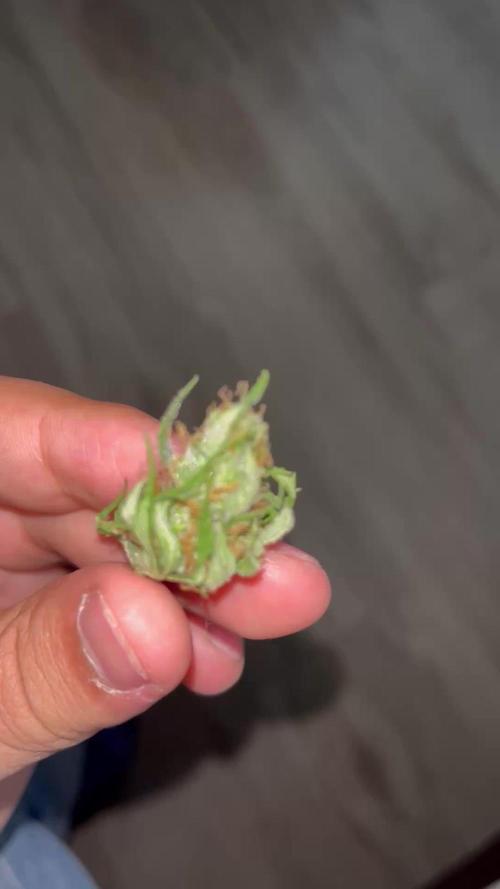
Commencing Week 8: day 50 on January 19th Update is late my sincerest apologies. I will make it up by giving a very thorough smoke report when all is done. Otherwise all is going very well 😁😁👏👏 On day 50 I took the head off of bloody skunk. I checked trichome colors under USB microscope. At least 90% fully milky-white with maybe 5 or 6% Amber and the remainder clear. 😁 On day 55 I gave all of the plants a fan leaf trim including the remaining bottom half of bloody skunk. as I sit here and think about it I believe this will help with ensuring the entire plant ripens and matures at the same time - versus the tops being ready before the bottoms. I still plan on letting the bottoms of all these plants go way beyond the recommended time to see if I can initiate the process of rodelization. Either way I am glad to report that Bloody skunks pollenization looks like it is resulting in some seeds. (See photo). In hindsight my only concern is that because the plant finished a bit earlier than I expected the seeds may not make it to full maturity but I believe it should be okay we'll just have to wait and find out. That being said besides the bloody skunk being done just a few days early everything else seems to be right on time as described in plant profiles on company websites.👍 That's all for now thank you for your patience and attention and support and as usual feel free to leave any suggestions comments or questions and I'll do my best to get back sooner rather than later 😁
Likes
21
Share
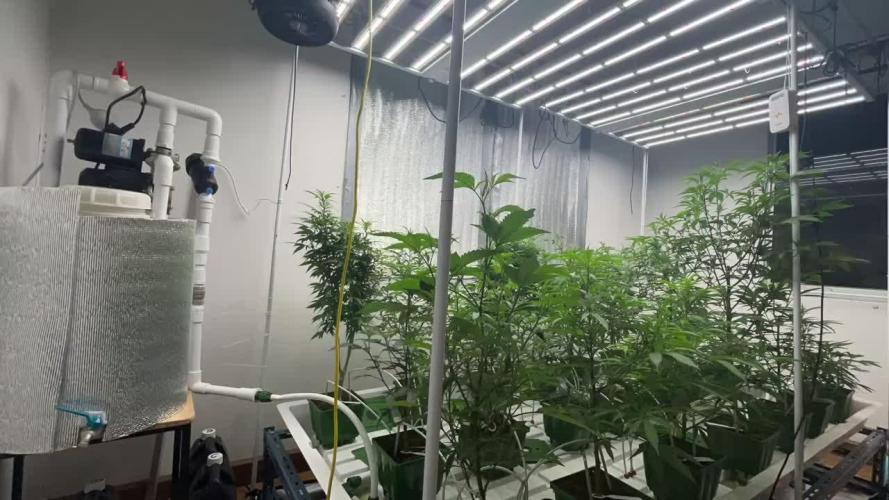
🍼Greenhouse Feeding BioGrow ⛺️MARSHYDRO The ⛺️ has a small door 🚪 on the sides which is useful for mid section groom room work. 🤩 ☀️ by VIPARSPECTRA (models: P2000 & XS 2000)
Likes
24
Share
Well had a lot of fun making my pot look amazing. There are some things hidden on here right now that will start to be reveled around weeks 4-6. At that time I will add the rest of the pot for everyone to enjoy. It's a fun one. Soaked her in water for 24 hours then planted her right in the Fox Farm - Happy Frog soil. Hopefully in a few days she will POP!! FYI the cover photo is of my wife's zombie corn tattoo. There is a reason for this. Will have to wait to see the surprise as to why it is relevant.
Likes
105
Share
Respect for all of you, brother farmers! masters and beginners! thank you again for gathering on the pages of my diaries! we carry out our work with dedication and live on ambition! This will be the last week of feeding before moving on to rinsing the roots in the soil One of the girls is developing artichokes on the tops... nothing but gems😉😄😋💕
Likes
61
Share
@Roberts
Follow
This was a great grow under the Unit Farm UF2000 light. Was a great yield for 100 watt light. Thank you again UNITFARMLED_justin. There will be more Unit Farm grows in the future. I will be conducting a photoperiod grow with a UF4000, and the UF2000 in my photoperiods room once my current grow is completed. The flower is very tasty, and potent as it has been in past. Thanks again grow diaries community for the likes, follows, and subscriptions on my YouTube channel. I greatly appreciate the support. Happy growing, and be safe out there 🤜🤛🌱🌱🌱 Ps I named this girl Gretchen, she has a sister plant named Ingrid for those who know where Ingrid is. 🤣🤣🤣
Likes
9
Share
Week2 of flowering and this baby is really stretching. She’s the tallest one in the tent 🏕️. And the smell of mango is great. I had to cut a lot of fan leaves off her for more light penetration. Lot of bud sites, can’t wait to see how she fills out.😎
Likes
1
Share
Week 9 for Strawberry gorilla by fast buds Shes getting so close to the end 😍 I had to remove a little bit of bud rot at the start of the week, but ever since haven't been able to find anymore developing 😇 Quite surprising how little water these girls drink... still only got fed once this week with a bit of (WCA) Water Soluble Calcium & (FFJ) Fermented fruit juice for its last few weeks of life now. Really excepted her to drink more with this hot hot weather.
Likes
15
Share
Last week the weather outside the window was terrible - it was raining and fog. This also affected the harvest - one cola was affected by mold! I managed to avoid extensive damage and I lowered the humidity in the tent. We continued, there was very little time left until the finish line.
Likes
14
Share
Harvest day 70 since time switch to 12 / 12 h Hey guys :-) Finally it's time 💚 The lady is done the large leaves have been removed and hung upside down to dry in the dark drying room. You can now stay there for 13-15 days at a temperature of 16-18 degrees and 55-59% humidity. After 13-15 days it is neatly trimmed by hand and placed in jars with boveda packs 62. After 4 weeks Boveda 58% come in and are ready for testing ;-). After everything has been cut cleanly, the last update comes with the smoke report and the finished pictures. Let's get to the plant 💚. Unfortunately, the rating system at Growdiaries is a bit strange because I have to give the stars before the Smoke Report and in the end it might have led to more stars in terms of taste. . The smell is great I'm curious about the taste 💚 Have fun and stay healthy 💚🙏🏻 👇🏼👇🏼👇🏼👇🏼👇🏼👇🏼👇🏼👇🏼👇🏼👇🏼👇🏼👇🏼 ‘Powered by GreenHouse Feeding’ Copy the link for 10% off all Nutrients 👇🏼 http://shop.greenhousefeeding.com/ affiliate/madelngermany_passiongrower/ 👇🏼👇🏼👇🏼👇🏼👇🏼👇🏼👇🏼👇🏼👇🏼👇🏼👇🏼👇🏼 Water 💧 💧💧 Osmosis water mixed with Cal/Mag (24 hours stale that the chlorine evaporates) to 290 ppm and Ph with Ph- to 5.8 - 6.4 MadeInGermany
Likes
44
Share
Welcome back to all of you, farmers friends. We have engaged this week with these beautiful feminized in the process with topping technique ... We test our qualities by challenging us every day!
Likes
37
Share
Bonjour à tous les padawans et les maîtres jedis La semaine 4 va être décisive pour cette demoiselle car je vais pratiquer sur elle un main-lining et un LST Je précise que le main-lining n'est pas recommandé pour les autofloraisons car son cycle de vie prédéfinie ne lui permet pas de ce remettre pleinement. Cela aura forcément un impact sur son rendement, pour des raisons esthétiques et un espace de culture restreint je n'ai pas d'autre choix. Pour ce main-lining j'ai attendu le jour 24 et l'apparition du septième noeuds. Une fois le main-linning terminé je pratiquerai la technique du LST ce qui me permettra d'avoir une canopé plus homogène donc une meilleure pénétration lumineuse et par conséquent un meilleur rendement. Vous pouvez voir une vidéo de mon main-lining qui détaille la manière dont je procède pour réaliser cette technique. Petit rappel et explications sur cette technique: Le main-lining a toujours été une technique très populaire parmi les cultivateurs, puisqu'avec des ajustements simples pendant la première étape de croissance, vous vous garantissez des récoltes plus que productives. Il s'agit de faire pousser la plante de façon verticale et symétrique afin de profiter au maximum de la lumière et de l'espace, des aspects très recherchés dans les cultures d'intérieur. En guidant les branches avec des cordes et une série de tailles initiales, vous établirez des patrons de croissances vigoureux pour vos plantes. COMMENT METTRE EN PLACE LE MAIN-LINING En partant de la graine, attendez que votre plante ait au moins développé 5 nœuds. Lorsqu’ils seront formés, taillez la plante au niveau du troisième nœud. Retirez tout ce qui s’est développé en dessous du troisième nœud(Moi j'enlève que le premier et garde le deuxième et troisième). Cela formera le Y ou le T initial que vous recherchez. Permettez à votre plante de se remettre de ce stress imposé durant quelques jours avant de passer à l’étape suivante. Votre plante comporte désormais deux pousses principales(ou 4 si vous gardez le deuxième noeud). Ces dernières devraient être attachées avec du fil ou de la ficelle(ou du fil de fer). Cela dirigera la croissance de manière horizontale. Faites bien attention en attachant les branches, ne les brisez surtout pas. Soyez doux. Une fois que la plante s’est un peu développée, vous vous retrouverez avec 4 tiges principales. Vous pourrez répéter ce processus autant de fois que vous le souhaiterez, accédant ainsi à de plus gros rendements. Rappelez-vous tout de même que plus vous répéterez ce processus, plus la période de croissance sera longue. Sauf pour les autofloraisons car étant donné le temps additionnel qu’il lui faut, le main-lining n’est pas compatible avec les variétés à autofloraison. Les autofloraisons ont des cycles de croissance très rapides, et d’ici à ce que la technique soit mise en place, la moitié de leur développement sera déjà passé. Cela pourrait potentiellement endommager les récoltes et cela influe sur le rendement Dès que vous aurez produit la quantité désirée de séparations, il ne sera plus qu’une question de temps avant que des têtes uniformes commencent à apparaître. Une légère défoliation régulière durant le cycle de croissance vous permettra également de vous assurer d’une distribution égale de la lumière, et empêchera votre plante de gâcher de l’énergie avec de grandes feuilles superflues. Retirez ces feuilles dès qu’elles commencent à prendre trop de place. Que la force soit avec vous 💪
Likes
37
Share
Progress and Observations In week 6 of flowering, my plants are displaying significant development. The buds are swelling noticeably, and resin production is increasing, filling the grow area with a rich aroma. Weather Conditions and Plant Health Unfortunately, the weather in Germany has turned to consistent rain over the next five days, which is less than ideal for the final growth phase. To protect the plants, I've moved them into the greenhouse full-time. This controlled environment shields them from adverse weather conditions, ensuring stable conditions for continued growth. Pest Management I'm pleased to report minimal pest issues thus far. Nightly patrols continue to manage the snail population effectively, supported by lettuce leaf traps. There have been no signs of spider mites, aphids, or thrips, providing relief. With the ongoing rainy weather, I remain vigilant against potential snail problems. Low-Stress Training (LST) Update The plants I trained with LST have responded positively and continue to develop well. I did some more LST to maximize light to the colas. The canopy remains even, and the bud sites are receiving ample light, allowing for a slight upward stretch to maximize bud growth during these final weeks of flowering. I try not to cut off any fan leaves because I think they're here for a reason. I like to tug them behind the steam or the side branches. Only if the leaves show significant signs of illness or pest then I remove them. Looking Ahead As we move further into the flowering stage, my focus will be on maintaining optimal conditions to maximize bud development and resin production. I am also diligently monitoring the humidity levels in the greenhouse, as this is crucial for preventing mold growth. The plants are looking promising, and I’m excited to see how they progress in the coming weeks. Update 03.07 What is noticeable is that both untrained plants are entering the full flowering mode faster than the trained ones. Have you had similar experiences? Update 05.07 Today I checked the girls and found the Banana purple punch with the top leaves starting to curl down. After asking the community I found out that everything looks like a starting nitrogen toxicity. But only on that plant. Seems kind of strange that the others having no issues at all despite having the same amount of nutes. I decided to treat the symptoms a once so I flushed with 5l PH water. The first runoff was a little lower (5.5 / EC 1.09) but not really concerning. Afterwards I give the plant the half amount of the tripart flowering scheme (with added CalMag 2 ml/l PH 6.2). Thanks again to AsNoriu and Hashy Stay tuned for updates and like always, feel free to give feedback about things I can improve🍀🥦
Likes
7
Share
@Pjm70
Follow
She seems to be doing well. Her buds get fatter and more smelly each day. Weather turned a bit cooler. Temps in the day are mid 70s to mid 60s. Nights are in the high 40s mid to upper 50s. So nights would be cold for her. Plus she was getting severe mornings dew. So I bring her in the the garage at night. The temperature in the garage is 70. So she is going to have a warmer night than day. This goes against nature. For some reason I think she will like it. Today I took off all of her LST ropes. My thinking is, she may see the tension as weight. Probably should have taken them off sooner. Bruce Banner strain is a 9 or 10 week flower strain. So I figure she is about half way through flower. Day 100. She has a lot of lower leaves yellowing and falling off. The yellow is starting to move up the branches. This plant is almost all tops. Most coloas are top and 2 nodes under it. There are a few that have 4 or 5 nodes under the top, but they get the light for it. This strain requires a lot of food. This I read from a lot of reviews on the strain. I should have read up the Bruce Banner strain much earlier. Although I think I did a great job with her, considering this was my first serious grow. I did some gorilla growing in my younger days. However I had no idea what I was doing. I use to plant them, give them some water. Then in a few weeks top them and check on them every few days to few weeks. If they were lucky they got some Miracle-Gro. There was not a lot of information on how to grow. I was harvesting way too early. 9/23 1 gallon of water PH 6.2. It's not as hot, so I don't think she needs 2 gallons everyday anymore. Day 100 9/24 Fed 4 tablespoons Foxfarm Big Bloom, 12 ml Foxfarm Tiger Bloom, half a teaspoon Foxfarm Beasti Bloom, 2 tablespoons of Foxfarm Kelp me Kelp you, per 2 gallons of 6.4 PH water. Day 101 9/25 Cloudy day, no need for food or water. Day 102 9/27 Sunny. Made a tea worm castings, poop, some powder baby food and black strap molasses. Also 24 MLs Foxfarm Tiger Bloom, per two gallons. Day 103. Day 103 I see her first orange hairs, just a few. She smells great. She is making some beautiful buds. Very exciting time, she is getting close. She is a short plant, if she were in the ground, she would be about 3 feet tall. She is about 3 and 1/2 feet wide. I had her tied down most of her life. My goal was to keep her as short as I could. I prefer the neighbors not see her. This grow was by design, I wanted her to have as many tops as possible. I bent her branches and did not let them grow straight up. Not sure if I would get more or less if i let the plant grow up. She sure is going to give me many top buds. Either way Im going to have very nice buds. So if there is a weight difference in growing styles I have no way of knowing, until this plant finishes and I grow another style. The weight does not really matter. This will be more bud than I need, for a while.
Likes
62
Share
I’ll updats my comment tomorrow Height Chart: Girls Scout Cookies: 31 inches (3gal) Stardawg: 35 inches Girls Scout Cookies: 40 1/4 inches (5gal) Gorilla Glue: 33 1/4 inches Lemon OG: 41 1/2 Inches
Likes
9
Share
She was a great girl all the way around. tired new Genetics and was not disappointed. Would grow her again. She smells super sweet and yielded pretty well. Stoked on her 👌🏻
Likes
3
Share
Just another week of flowering. Buds have set pretty good and I will be defoliating/taking clones and pinching off anything that will be larf soon. I think the "mainline approach may be effective.. very even budding across each main shoot. I usually just bend and train until theres enough tops, but they don't always flower evenly. Nute wise, since the buds started, I added in some liquid koolbloom to the mix and stopped the tarantula and Piranha powders. I have been feeding three separate one minute intervals per light period, and they're in one gallons. 2mins a night and they were getting dry, 3 is a bit heavy on the runoff so hoping they start drinking more as they get going more.
Likes
7
Share
Likes
2
Share
@Belivitez
Follow
Harvest for top buds which are already done ❤️ smell is strong sour/fruit/sweet. The rest of the plants i will leave in tent to be ready for harvest in few days... I will leave sugar leaves on for few days and then do the trimm work. Buds are rock hard and covered with trichomes!
Likes
8
Share
@Oldwied
Follow
Day 58 The colours of autum are so beautiful. 1 week left to haverst.
Likes
56
Share
Removed autoflower and put her in her own pot outside the tent. Foliars applied in strong blue 430nm with 4000Hz tone. 20-minute dose prior to application. In essence, you're seeing a combination of the infrared light reflected by the plant, which the camera perceives as red, and any residual visible blue light the plant reflects, which results in a purple hue. I was doing more stretching of the stems, adjusting weights, just a little too much, and it snapped almost clean. I got a little lucky in that it was still connected, wrapped her almost instantly while holding her in place with yoyos. I am hopeful she will recover and reconnect the xylem and phloem channels. Oopsy level stress event. A couple of days later, the stem was tied in place to hold it, and I spent some time gently caressing the stem, bending slowly over time as it becomes more pliable the more you bend it. A little delay, but the core framework is now in place. If your soil has high pH,it's not ideal, you want a pH of 6.4, 6.5, or 6.6, which is ideal. If you are over a pH of 7, you have no hydrogen on the clay colloid. If you want your pH down, add Carbon. If you keep the pH below 7, you will unlock hydrogen, a whole host of new microbes become active and begin working, the plant will now be able to make more sugar because she has microbes giving off carbon dioxide, and the carbon you added hangs onto water. Everything has electricity in it. When you get the microbes eating carbon, breathing oxygen, giving off CO2, those aerobic soil microbes will carry about 0.5V of electricity that makes up the EC, The microorganisms will take a metal-based mineral and a non-metal-based mineral with about 1000 different combinations, and they will create an organic salt! That doesn't kill them, that the plant loves, that the plant enjoys. This creates an environment that is conducive to growing its own food. Metal-based: Could include elements like iron, manganese, copper, or zinc, which are essential nutrients for plants but can exist in forms not readily accessible. Non-metal-based: Examples like calcium carbonate, phosphate, or sulfur, also important for plant growth and potentially serving as building blocks for the organic salt. Chelation in a plant medium is a chemical process where a chelating agent, a negatively charged organic compound, binds to positively charged metal ions, like iron, zinc, and manganese. This forms a stable, soluble complex that protects the micronutrient from becoming unavailable to the plant in the soil or solution. The chelate complex is then more easily absorbed by the plant's roots, preventing nutrient deficiency, improving nutrient uptake, and enhancing plant growth. Chelation is similar to how microorganisms create organic salts, as both involve using organic molecules to bind with metal ions, but chelation specifically forms ring-like structures, or chelates, while the "organic salts" of microorganisms primarily refer to metal-complexed low molecular weight organic acids like gluconic acid. Microorganisms use this process to solubilize soil phosphates by chelating cations such as iron (Fe) and calcium (Ca), increasing their availability. Added sugars stimulate soil microbial activity, but directly applying sugar, especially in viscous form, can be tricky to dilute. Adding to the soil is generally not a beneficial practice for the plant itself and is not a substitute for fertilizer. While beneficial microbes can be encouraged by the sugar, harmful ones may also be stimulated, and the added sugar is a poor source of essential plant nutrients. Sugar in soil acts as a food source for microbes, but its effects on plants vary significantly with the sugar's form and concentration: simple sugars like glucose can quickly boost microbial activity and nutrient release. But scavenge A LOT of oxygen in the process, precious oxygen. Overly high concentrations of any sugar can attract pests, cause root rot by disrupting osmotic balance, and lead to detrimental fungal growth. If you are one who likes warm tropical high rh, dead already. Beneficial, absolutely, but only to those who don't run out of oxygen. Blackstrap is mostly glucose, iirc regular molasses is mostly sucrose. Sugars, especially sucrose, act as signaling molecules that interact with plant hormones and regulate gene expression, which are critical for triggering the floral transition. When sucrose is added to the growth medium significantly influences its effect on floral transition. Probably wouldn't bother with blackstrap given its higher glucose content. Microbes in the soil consume the sugar and, in the process, draw nitrogen from the soil, which is the same nutrient the plant needs. Glucose is not an oxygen scavenger itself, but it acts as a substrate for the glucose oxidase (GOx) enzyme, effectively removing oxygen from a system. Regular molasses (powdered if you can) soon as she flips to flower or a week before, the wrong form of sugar can delay flower, or worse. Wrong quantity, not great either. The timing of sucrose application is crucial. It was more complicated than I gave it credit for, that's for sure. When a medium's carbon-to-nitrogen (C:N) ratio reaches 24:1, it signifies an optimal balance for soil microbes to thrive, leading to efficient decomposition and nutrient cycling. At this ratio, soil microorganisms have enough nitrogen for their metabolic needs, allowing them to break down organic matter and release vital nutrients like phosphorus and zinc for plants. Exceeding this ratio results in slower decomposition and nitrogen immobilization, while a ratio below 24:1 leads to faster breakdown and excess nitrogen availability. Carbon and nitrogen are two elements in soils and are required by most biology for energy. Carbon and nitrogen occur in the soil as both organic and inorganic forms. The inorganic carbon in the soil has minimal effect on soil biochemical activity, whereas the organic forms of carbon are essential for biological activity. Inorganic carbon in the soil is primarily present as carbonates, whereas organic carbon is present in many forms, including live and dead plant materials and microorganisms; some are more labile and therefore, can be easily decomposed, such as sugars, amino acids, and root exudates; while others are more recalcitrant, such as lignin, humin, and humic acids. Soil nitrogen is mostly present in organic forms (usually more than 95 % of the total soil nitrogen), but also in inorganic forms, such as nitrate and ammonium. Soil biology prefers a certain ratio of carbon to nitrogen (C:N). Amino acids make up proteins and are one of the nitrogen-containing compounds in the soil that are essential for biological energy. The C:N ratio of soil microbes is about 10:1, whereas the preferred C:N ratio of their food is 24:1 (USDA Natural Resource Conservation Service 2011). Soil bacteria (3-10:1 C:N ratio) generally have a lower C:N ratio than soil fungi (4-18:1 C:N ratio) (Hoorman & Islam 2010; Zhang and Elser 2017). It is also important to mention that the ratio of carbon to other nutrients, such as sulfur (S) and phosphorous (P) also are relevant to determine net mineralization/immobilization. For example, plant material with C:S ratio smaller than 200:1 will promote mineralization of sulfate, while C:S ratio higher than 400:1 will promote immobilization (Scherer 2001). In soil science and microbiology, the C:S ratio helps determine whether sulfur will be released (mineralized) or tied up (immobilized) by microorganisms. A carbon-to-sulfur (C:S) ratio smaller than 200:1 promotes the mineralization of sulfate, when the C:S ratio is low, it indicates that the organic matter decomposing in the soil is rich in sulfur relative to carbon. Microorganisms require both carbon and sulfur for their metabolic processes. With an excess of sulfur, microbes take what they need and release the surplus sulfur into the soil as plant-available sulfate A carbon-to-sulfur (C:S) ratio higher than 400:1 will promote the immobilization of sulfur from the soil. This occurs because when high-carbon, low-sulfur materials (like sawdust) are added to soil, microbes consume the carbon and pull sulfur from the soil to meet their nutritional needs, temporarily making it unavailable to plants. 200:1 C:S 400:1: In this range, both mineralization and immobilization can occur simultaneously, making the net availability of sulfur less predictable. This dynamic is similar to how the carbon-to-nitrogen (C:N) ratio regulates the availability of nitrogen in soil. Just as microbes need a certain amount of nitrogen to process carbon, they also require a balanced amount of sulfur. Both mineralization and immobilization are driven by the metabolic needs of the soil's microbial population. Sulfur is crucial for protein synthesis. A balanced ratio is particularly important in relation to nitrogen (N), as plants need adequate sulfur to efficiently use nitrogen. A severely imbalanced C:S ratio can hinder the efficient use of nitrogen, as seen in trials where adding nitrogen without balancing sulfur levels actually lowered crop yields. Maintaining a balanced carbon-to-sulfur (C:S) ratio is highly beneficial for plant growth, but this happens indirectly by regulating soil microbial activity. Unlike the C:N ratio, which is widely discussed for its direct effect on nutrient availability, the C:S ratio determines whether sulfur in the soil's organic matter is released (mineralized) or temporarily locked up (immobilized). Applied 3-day drought stress. Glucose will hinder oxygenation more than sucrose in a solution because glucose is consumed faster and has a higher oxygen demand, leading to a more rapid decrease in oxygen levels. When cells respire, they use oxygen to break down glucose, and this process requires more oxygen for glucose than for sucrose because sucrose must first be broken down into glucose and fructose before it can be metabolized. In a growth medium, glucose is a more immediate and universal signaling molecule for unicellular and multicellular organisms because it is directly used for energy and triggers a rapid gene expression response. In contrast, sucrose primarily acts as a signaling molecule in plants to regulate specific developmental processes by being transported or broken down, which can be a more complex and slower signaling process. Critical stuff. During wakefulness (DC electric current) life can not entangle electrons and protons. During daytime, the light is sensed multiple color frequencies in sunlight. Coherence requires monochromatic light. Therefore at night IR light dominates cell biology. This is another reason why the DC electric current disappears during the night. The coherence of water is maintained by using its density changes imparted by infrared light release from mitochondria in the absence of light. This density change can be examined by NMR analysis and water is found to be in its icosahedron molecular form. This is the state that water should be in at night. This is when a light frequency is lowest and when the wave part of the photoelectric effect is in maximum use. 3600