


Likes
Comments
Share


@elementhc
Follow
Almost week 6 in flower for Mandarin Cookies V2 and Mandarin Bubba.





Likes
4
Share


@JardineiroBr
Follow
Essa é a minha Moby que está mais bela , segue com muitos cristais de THC e um aroma bem forte, os tricomas estão transparentes então ainda leva umas semanas amadurecendo, o menor dos vasos , esse de 5 litros é me parece um dos melhores resultados , chego a conclusão que plantas automáticas rendem suficientemente bem em vasos den5 a 7 litros.


Likes
16
Share

@Radagast_
Follow
04.08.
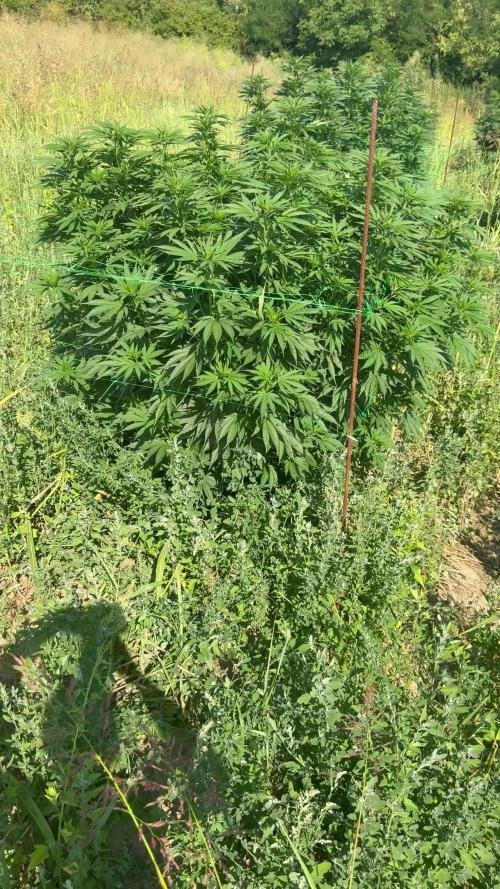
Dos Si Dos 33# 1# Day 101#
Dos si Dos 33# 2# Day 101#
The plants are progressing well, most of them went into preflower a few days ago, the others are slowly entering... I was too lazy to photograph and record each plant separately, so I took a picture and recorded everything together... this grass has grown too much, in some places it is half way up the plant and you can't see how big the plants actually are, these days I will mow it under them and around them and in the next update I will post individual pictures where everything will look nice...day before yesterday I watered them with clean water, the next watering also with clean water and then I will most likely switch to food for the flower, I will see from the situation.
Three days ago it was the end of their fourteenth week, the pictures and videos are from day before yesterday.
Stay High and Keep Growing!!!

Likes
4
Share


@LittleBigTrees
Follow
This week I've been pulling the top fan leaves to stop the plant growing taller and to allow the side branches to catch up. I also started feeding them.
I will probably repot and switch to flower next week now they've all outgrown their mutations.


Likes
5
Share


@CaptainKurryKush
Follow
Day 39
Light Cycle 18/06
Air Humidity 52~57%
Temp 20~26ºC
The plants are stretching up very fast and getting bushier. I moved the light cycle back to 18/06 and dimmed the TS 100 to 100%. The plant nº 3 is drinking more water so it was watered with 1 litter today.
Day 41
Light Cycle 18/06
Air Humidity 65 ~70%
Temp 20~28ºC
Yesterday, the plants were top dressed with 10g of EcoThrive Charge mix with soil and watered with 200ml plain water. and today I gave the regular dose of nutrients (1L on each)
The plants were defoliated, and I try to spread the maximum I could on the scrog.
Overall, they are looking very healthy and vigorous. All the secondary branches are stretching up rapidly. I can wait to see the results


Processing
Likes
15
Share


@DUBDOLLASIGN100
Follow
Little babies growing up fast with this cali weather at its best.
Likes
7
Share


@MomNPopOp
Follow
After the shock of all gelatos showing male signs, we got our shit together and removed all balls !! Zkittlez is getting out of tent for her black period tomorrow, giving our bigger gelato more space !! We still have one week and a half before Zki2 leave the tent and let the girls ride !! The final 4-5 weeks will go mad !! Need to clean our hps bulb and cooltube.. Tangie will go to their space, cuz she didnt show balls, so less maintance.. cheers and dont give up on hermies.. maybe it was just a bad day !!
Temp dropped with a polar mass coming to our town, and water was freezing !! Light leaks were considered too, overwatering/feeding were disconsidered
LST and rearrengement will be done as soon as Zkittlez mature..


Likes
16
Share


@Naujas
Follow
girl, from the beginning she was watered with water from the tap, the value of which is almost 350ppm. and a lot of lime, which prevents me from growing it bigger, but I'm happy with the result :) it's a small pot and only 50 w :) the flowers look very beautiful and sticky :) super

Likes
13
Share

@NSABND
Follow
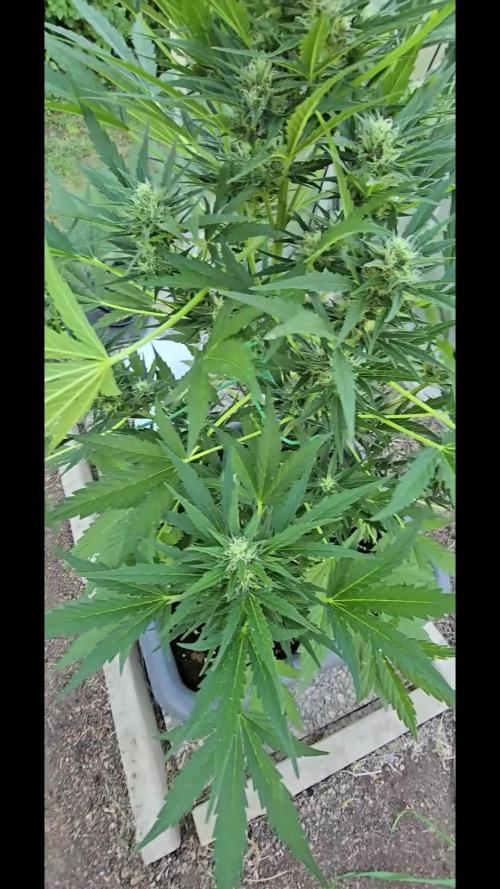
Day 50 and a new week... the summer comes back to germany and "Hilde 2.0" goes well 🙏😀
Day 51 ... the summer is back in germany ... sun and heat 😎👍... good for the Buds 😉🙏
Day 52 summer sun and warm weather....😎🙌🙏👍
Likes
7
Share


@Cultivatorcarlos
Follow
Week 4 was actually pretty smooth. she was showing nitrogen and potassium deficiencies because she was being terribly underfed and because i had weened her off the veg nutes WAY too soon. I found the dyna gro nutrient schedule and ive been following that. i will definitely be following the schedule much better next round as i wasnt actually aware they had a schedule out. Shes currently week 5 day 1 and shes already fat af and super trichomey.s he still got at least 2 weeks left. she might be ready by week 7 honestly tho who knows guess well see. Ive been giving her 1 gal each time of dechlorinated tap water just straight water. it has been phd to 6.6 ph. runoff tested at 6.3 ph. will probably flush one last time before continuing the bloom feed.

Likes
422
Share


@Crashoverite
Follow
Hi all,
Welcome to my🍌💜👊 week update
Thank you so much for all support on this bananas journey. Much appreciate all your likes, follows and comments. 🙏💚❤️💜
Week 13
Jan 8- Jan 14
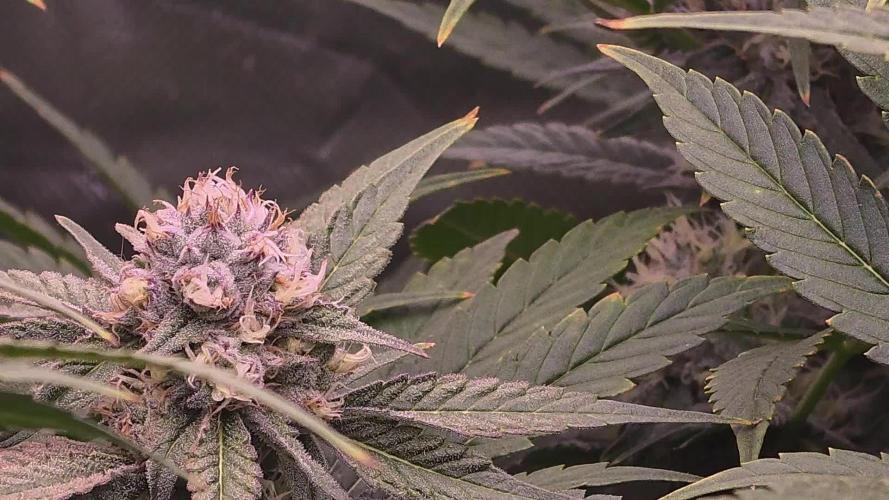
This was another amazing week. Girls are behaved very well. Drinking their juice like crazy. 2 waterings of 9ltrs on Jan 10th and Jan 13th. Runoffs at ph 6.2. Buds are gaining some serious weight and the trichomes development is of the charts. Girls are covered with frost. Trichomes are mainly milky now with individual ambers here and there. On Jan 10 noticed on one Athena top colas a white topped bud! It's something that has never happened to me. It may be only led bleach or it's something abnormal and phenomenal. It's white and has red and amber pistil hairs in between and all covered with trichomes. Few days after. White coulour is not spreading and not seeing any damages. The smell in my cabinet its insane. Very sweet scents. I wouldn't say bananas but definitely sweet berries and gummies 🤤 new dehumidifier doing an amazing job. Humidity when light is on is between 49-54% and 52-58% when lights are out.
It's all looking that my 🍌💜👊 girls will be ladies very soon. Harvest is coming big time. Next week planning to gradually cut nutrients down and prepare for flush.
Stay tuned for new week update very soon!
Peace and love brothers and sisters ✌️💚👨🌾
Links
https://2fast4buds.com/seeds/banana-purple-punch-auto
https://plagron.com
https://www.biobizz.com/
https://fishheadfarms.com/


Likes
18
Share

@wolfvb
Follow
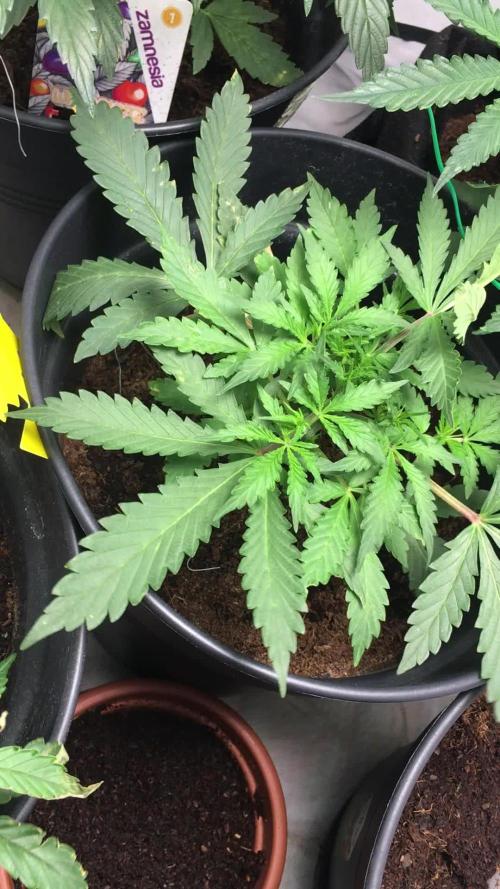
Our girl is doing really nice, the training was successful and now part of her is under ground and she is growing nice.
I have increased the water intake a bit more
6.01.26
Yesterday I have toped her and she took it well, and finished all training for her, she is late looking really nice and compact now.
7.01.26
Our girl is doing really well and already recovered and redirected the growth.
I have also Increased the lights to 70% and left it a bit more
Likes
14
Share


@Whiteybulger1814
Follow
Day 52 to 59
These girls are on autopilot been chasing VPD a bit opening flaps and closing them on the tent until it's as close as I can get but other then that it's a no brainer right now




Likes
9
Share


@World_Breeders
Follow
Pink Honey – Week 4 | Vegetative Stage
Week 4 is here, and Pink Honey is showing some nice progress!
The plant is developing a taller structure with large fan leaves, good lateral branching, and fresh growth emerging from the upper nodes.
The main stem is becoming more established, while the side branches are starting to create a wider canopy. The foliage looks well developed, although the pink lighting makes it difficult to judge the exact leaf coloration.
It's interesting to see how this phenotype is expressing its structure as the weeks go by. We're looking forward to documenting the next stage of its development.
Thanks to everyone following and supporting this journey! 🙌🔥
Seeds by World Breeders
Cultivated by Piperoots 🇲🇦 🌱🔥