The Grow Awards 2026 🏆
Likes
Comments
Share
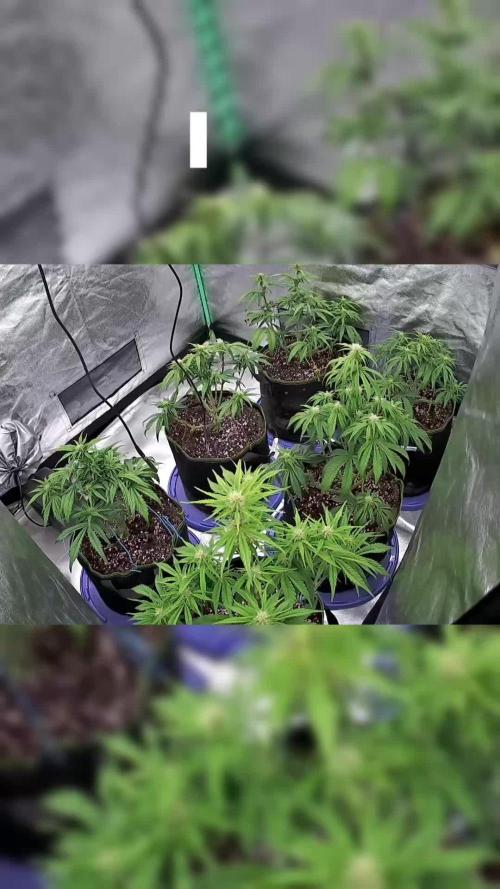
So far everything good! No severe nutrient shortage nor toxicity. No disease or pests. My Mexican Ladies just chilling and bulking. Starting to smell Wonderful!
Likes
29
Share
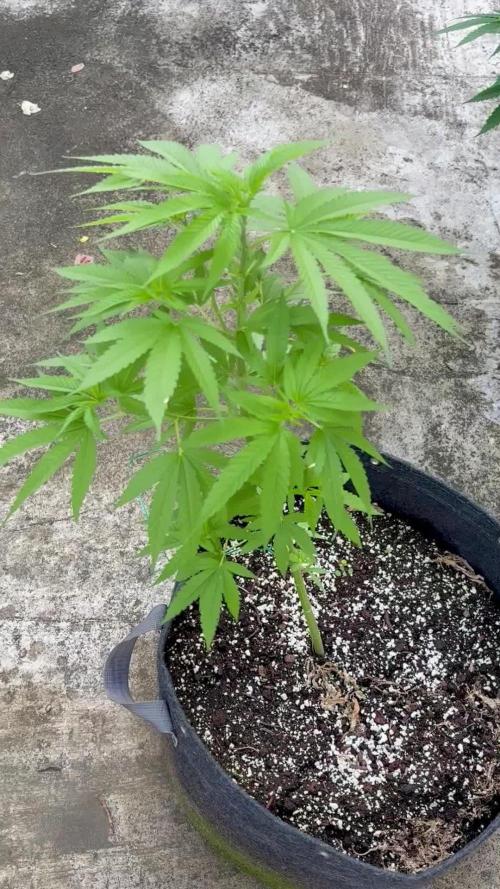
No problems. 👋Good I like her style. In maybe 1-2 weeks she becomes another place in my tent. If its free. Yes a big big tent.... 0,36 m². OK not so big, but hey, its still illegal in my land. And with such a small tent l=small yield im not in the heavy criminal scene. But sry law. Since the first time I smelled weed, not smoked, I knew. THIS IS IT! 24.09. 😛 💪 Nice girl.
Likes
13
Share
@Oyziphar
Follow
DAY 63 / 9 weeks of flowering. Last pictures of these sativa's. Ready to harvest 😛 Not all plants are equally ripe.. Some plants have hard ripen buds. But some plants could use one or more extra weeks of flowering, 😶 The fragrance varies widely. From fruity candies to strong diesel scent. 😊 The size and appearance of the plants also varies greatly. Not really suitable for SOG. 😪 This week only water. 😨 Low RH% 40-45 --------------------------------------------- Plant size and description : #1 89cm Promising in the first weeks, but ultimately only a small plant with a low yield.😥 #2 144cm Monster-tall beautiful large sativa-like plant, with beautiful fat buds. I love her. 😍 #3 144cm By far the most typical sativa plant. Enormous length with loose foxtail buds. Could use a few more weeks of flowering. 😵 #4 129cm Tall plant with fewer buds. Maybe because this girl is in the corner of the growing room where she doesn't get that much light. Nice and ripe anyway.😳 #5 117cm Beautiful semi-tall plant. The buds may not be as fat, but they are nicely ripe. 😉 #6 92cm Very photogenic rather small plant. The buds seem to spiral up to a fat top. 😃 #7 123cm Large plant with many sativa influences. Pointed hard top studded with trichomes. 😛 #8 124cm Like # 7, a nice big plant but with leaf greenery woven into the buds. 😋 #9 102cm Half to rather high plant endowed with one of the most beautiful buds. Sativa-style bud, but swollen, hard and ripe. Magnificent! A lust for the eye.😍 #10 65cm Small plant. Lower yield. Many brown hairs. Pretty ripe. 😄 #11 71cm Very small even thin plant. Pointed small tops. Undoubtedly the plant with the least yield. Still lovely. 😊 #12 111cm Semi-tall plant. Floppy side branches, but really nice buds. 😀 #13 113cm One of my favorites. Beautiful plant with very fine decorative flowers. Very fresh and tasty appearance. Delicious! 😍 #14 92cm Rather small plant, but with firm hard ripe swollen buds. Yummy. 😘 #15 126cm Incredible plant with a fist-sized huge super-fat head top. But also beautiful side branches with thick buds. Exteme heavy yielder! 😝 #16 88cm Small plant in the corner with relatively many buds. Pointed head top. 😚
Likes
61
Share
@Natrona
Follow
Auto Opium went outside on 7/19 because she grew to 46 inches. This past week has been rainy so I only got to feed once. I top dressed all gals with Bloom Soil. She is in 3 gal air pot and has already consumed all nutrients in the soil and has proven to be a hungry girl. Pics were taken on Friday and Saturday. Wow the amount of yellow leaves in one day. She had another growth spurt and is 53 inches tall. Her sister photo opium is 72 inches from t the pot. Her buds are forming nicely with some slight smell if I get close.
Likes
13
Share
Week 9 marks a turning point for the grow. The main plants are deep into flower now, with dense buds that glisten under the HPS light. Their smell is intoxicating, filling the room with the rich, sweet aroma that hints at the potency to come. Even the late bloomer has stepped up its game. While it’s still behind the others, it’s finally entering full flower, its smaller buds beginning to form. It’s got a unique charm, and I can’t help but root for it—sometimes the underdog ends up stealing the show. The grow room feels like it’s nearing its peak. The plants are massive now, with thick branches bending under the weight of their buds. Every day brings new changes, and I can see the finish line getting closer. The hard work is paying off, and I can’t wait to see how these beauties turn out in the final weeks.
Likes
15
Share
@DevelGrow
Follow
Hallo Freunde 👋 Frost Banger von Fast Buds ist 42 Tage Alt! Sie steht schön in Blüte und baut schön ihre Buds! ✌️🍀💚🍀
Likes
5
Share
🗓️ Week 10 complete – 6th week of flowering Seriotica Drain EC was a bit too high at the beginning of the week, but has now stabilized around ~1.5. She’s handling 1.0–1.2 EC input very well, showing no new signs of stress or deficiencies 🌿 Thanks to consistent monitoring and careful adjustments, flowering continues steadily – no surprises, no setbacks. Next week, the switch from Big Bud to Overdrive is coming up 🌸
Processing
Likes
40
Share
@Tazard
Follow
She looks totally awesome check out her leaves and side growth!!!! No sign whatsoever of male flowers from my S1 seeds!
Likes
6
Share
@pzwags420
Follow
On week 2 she is putting out much more preflowers. She is stretching for sure but still maintaining excellent node spacing. the average ppfd is 850.
Likes
7
Share
Likes
47
Share
What's in the soil? What's not in the soil would be an easier question to answer. 16-18 DLI @ the minute. +++ as she grows. Probably not recommended, but to get to where it needs to be, I need to start now. Vegetative @1400ppm 0.8–1.2 kPa 80–86°F (26.7–30°C) 65–75%, LST Day 10, Fim'd Day 11 CEC (Cation Exchange Capacity): This is a measure of a soil's ability to hold and exchange positively charged nutrients, like calcium, magnesium, and potassium. Soils with high CEC (more clay and organic matter) have more negative charges that attract and hold these essential nutrients, preventing them from leaching away. Biochar is highly efficient at increasing cation exchange capacity (CEC) compared to many other amendments. Biochar's high CEC potential stems from its negatively charged functional groups, and studies show it can increase CEC by over 90%. Amendments like compost also increase CEC but are often more prone to rapid biodegradation, which can make biochar's effect more long-lasting. biochar acts as a long-lasting Cation Exchange Capacity (CEC) enhancer because its porous, carbon-rich structure provides sites for nutrients to bind to, effectively improving nutrient retention in soil without relying on the short-term benefits of fresh organic matter like compost or manure. Biochar's stability means these benefits last much longer than those from traditional organic amendments, making it a sustainable way to improve soil fertility, water retention, and structure over time. Needs to be charged first, similar to Coco, or it will immobilize cations, but at a much higher ratio. a high cation exchange capacity (CEC) results in a high buffer protection, meaning the soil can better resist changes in pH and nutrient availability. This is because a high CEC soil has more negatively charged sites to hold onto essential positively charged nutrients, like calcium and magnesium, and to buffer against acid ions, such as hydrogen. EC (Electrical Conductivity): This measures the amount of soluble salts in the soil. High EC levels indicate a high concentration of dissolved salts and can be a sign of potential salinity issues that can harm plants. The stored cations associated with a medium's cation exchange capacity (CEC) do not directly contribute to a real-time electrical conductivity (EC) reading. A real-time EC measurement reflects only the concentration of free, dissolved salt ions in the water solution within the medium. 98% of a plants nutrients comes directly from the water solution. 2% come directly from soil particles. CEC is a mediums storage capacity for cations. These stored cations do not contribute to a mediums EC directly. Electrical Conductivity (EC) does not measure salt ions adsorbed (stored) onto a Cation Exchange Capacity (CEC) site, as EC measures the conductivity of ions in solution within a soil or water sample, not those held on soil particles. A medium releases stored cations to water by ion exchange, where a new, more desirable ion from the water solution temporarily displaces the stored cation from the medium's surface, a process also seen in plants absorbing nutrients via mass flow. For example, in water softeners, sodium ions are released from resin beads to bond with the medium's surface, displacing calcium and magnesium ions which then enter the water. This same principle applies when plants take up nutrients from the soil solution: the cations are released from the soil particles into the water in response to a concentration equilibrium, and then moved to the root surface via mass flow. An example of ion exchange within the context of Cation Exchange Capacity (CEC) is a soil particle with a negative charge attracting and holding positively charged nutrient ions, like potassium (K+) or calcium (Ca2+), and then exchanging them for other positive ions present in the soil solution. For instance, a negatively charged clay particle in soil can hold a K+ ion and later release it to a plant's roots when a different cation, such as calcium (Ca2+), is abundant and replaces the potassium. This process of holding and swapping positively charged ions is fundamental to soil fertility, as it provides plants with essential nutrients. Negative charges on soil particles: Soil particles, particularly clay and organic matter, have negatively charged surfaces due to their chemical structure. Attraction of cations: These negative charges attract and hold positively charged ions, or cations, such as: Potassium (K+) Calcium (Ca2+) Magnesium (Mg2+) Sodium (Na+) Ammonium (NH4+) Plant roots excrete hydrogen ions (H+) through the action of proton pumps embedded in the root cell membranes, which use ATP (energy) to actively transport H+ ions from inside the root cell into the surrounding soil. This process lowers the pH of the soil, which helps to make certain mineral nutrients, such as iron, more available for uptake by the plant. Mechanism of H+ Excretion Proton Pumps: Root cells contain specialized proteins called proton pumps (H+-ATPases) in their cell membranes. Active Transport: These proton pumps use energy from ATP to actively move H+ ions from the cytoplasm of the root cell into the soil, against their concentration gradient. Role in pH Regulation: This active excretion of H+ is a major way plants regulate their internal cytoplasmic pH. Nutrient Availability: The resulting decrease in soil pH makes certain essential mineral nutrients, like iron, more soluble and available for the root cells to absorb. Ion Exchange: The H+ ions also displace positively charged mineral cations from the soil particles, making them available for uptake. Iron Uptake: In response to iron deficiency stress, plants enhance H+ excretion and reductant release to lower the pH and convert Fe3+ to the more available form Fe2+. The altered pH can influence the activity and composition of beneficial microbes in the soil. The H+ gradient created by the proton pumps can also be used for other vital cell functions, such as ATP synthesis and the transport of other solutes. The hydrogen ions (H+) excreted during photosynthesis come from the splitting of water molecules. This splitting, called photolysis, occurs in Photosystem II to replace the electrons used in the light-dependent reactions. The released hydrogen ions are then pumped into the thylakoid lumen, creating a proton gradient that drives ATP synthesis. Plants release hydrogen ions (H+) from their roots into the soil, a process that occurs in conjunction with nutrient uptake and photosynthesis. These H+ ions compete with mineral cations for the negatively charged sites on soil particles, a phenomenon known as cation exchange. By displacing beneficial mineral cations, the excreted H+ ions make these nutrients available for the plant to absorb, which can also lower the soil pH and indirectly affect its Cation Exchange Capacity (CEC) by altering the pool of exchangeable cations in the soil solution. Plants use proton (H+) exudation, driven by the H+-ATPase enzyme, to release H+ ions into the soil, creating a more acidic rhizosphere, which enhances nutrient availability and influences nutrient cycling processes. This acidification mobilizes insoluble nutrients like iron (Fe) by breaking them down, while also facilitating the activity of beneficial microbes involved in the nutrient cycle. Therefore, H+ exudation is a critical plant strategy for nutrient acquisition and management, allowing plants to improve their access to essential elements from the soil. A lack of water splitting during photosynthesis can affect iron uptake because the resulting energy imbalance disrupts the plant's ability to produce ATP and NADPH, which are crucial for overall photosynthetic energy conversion and can trigger a deficiency in iron homeostasis pathways. While photosynthesis uses hydrogen ions produced from water splitting for the Calvin cycle, not to create a hydrogen gas deficiency, the overall process is sensitive to nutrient availability, and iron is essential for chloroplast function. In photosynthesis, water is split to provide electrons to replace those lost in Photosystem II, which is triggered by light absorption. These electrons then travel along a transport chain to generate ATP (energy currency) and NADPH (reducing power). Carbon Fixation: The generated ATP and NADPH are then used to convert carbon dioxide into carbohydrates in the Calvin cycle. Impaired water splitting (via water in or out) breaks the chain reaction of photosynthesis. This leads to an imbalance in ATP and NADPH levels, which disrupts the Calvin cycle and overall energy production in the plant. Plants require a sufficient supply of essential mineral elements like iron for photosynthesis. Iron is vital for chlorophyll formation and plays a crucial role in electron transport within the chloroplasts. The complex relationship between nutrient status and photosynthesis is evident when iron deficiency can be reverted by depleting other micronutrients like manganese. This highlights how nutrient homeostasis influences photosynthetic function. A lack of adequate energy and reducing power from photosynthesis, which is directly linked to water splitting, can trigger complex adaptive responses in the plant's iron uptake and distribution systems. Plants possess receptors called transceptors that can directly detect specific nutrient concentrations in the soil or within the plant's tissues. These receptors trigger signaling pathways, sometimes involving calcium influx or changes in protein complex activity, that then influence nutrient uptake by the roots. Plants use this information to make long-term adjustments, such as Increasing root biomass to explore more soil for nutrients. Modifying metabolic pathways to make better use of available resources. Adjusting the rate of nutrient transport into the roots. That's why I keep a high EC. Abundance resonates Abundance.
Likes
17
Share
@EXZELENS
Follow
Bud wet weight : 168,1g of trimmed medium to big sized buds 25,4g of tiny tiny buds/larfs = 193.5 grams of trimmed wet buds. Details on genetics and smoke report above. This, as my first grow, is way more than I ever expected it to be. I haven´t had that much fun and enthusiasm in a very very long time. I can´t even explain the feeling it is to harvest your own cannabis, but I know most of you know what I´m talking about haha. It was really nice to practice LST, even tho it was SO HARD, ´cause I didn´t had barely any space to work since I used a hard pot and did not fill nearly half the size of it and the walls of the pot were really high. It was even difficult to water without dropping water on the lower buds. I haven´t learnt much about defoliation tho, I feel I need to study a little more about the phases you should or should not do it. Also, I discovered thrips are a pain in the ass. I had 2 tough weeks dealing with thrips, but in the end it was alright. I don´t have any humidity control device, which I intend to buy for the next grows. Growdiaries was really helpful for me, it kept me motivated everyday (not that I wouldn´t have had it anyways), the Grow Questions are REALLY useful and all the community is awesome. Thanks to all people that helped me here on GD during this first grow! To conclude it: I am really happy and satisfied with how the grow turned out. They look incredible, it almost feels like I can´t believe it still. Peace. UPDATES: 07/10 : The buds are now dry and already in curing jars, one of them with a Boveda 58% humidity pack. The total grams of the dry buds are: 41.4g (medium to big sized buds) 4.1g (tiny buds) = 45.5 grams! I´m really happy with the results, I thought it would be around 30g so yeah, that´s a really good surprise! In 2 weeks I´ll be back to update the smoke report. Thanks so much for reading! Peace. 09/10 : I managed to fit everything in the same container with some space between them, so now every bud is with the Boveda pack. 14/10: It´s been a week and the smell improved, it still smells a little like hay/plant ( even tho it´s not too dry neither too wet ). 21/10: Now it´s been two weeks and even tho the smell isn´t anymore hay, it´s a lot herbal. I really think the aroma can get better, but the taste is already good enough for me. The smoke report has been done and in case I have something to add, I´ll report here. Thank you so much for reading! Peace.
Likes
17
Share
@m0use
Follow
This was a fun project that was a few years in the making and a year later to see if they would last a season for this upload to happen. Before any of this I would bike aorund town grabbing up all the old Ikea solid pine bed slats that I could find and storing them in the basement. I have a lot of wood down there, any size worked as long as I have enough of them. The hot days to find them were the first and last of the months because that's when people where moving in/out. I also kept an eye on the free section on local online classifieds as well. The entire purpose of this was to recycle as much off the streets as I could before buying anything to finalize the project. In the end I only bought sealer, screws and some takeaway/beers. All the wood was 100% free and salvaged off the streets of Toronto saving it from the dumpster bin. After collecting all the slats for about 2 years I was playing aorund with them on how I wanted to make this work. I had previously done a little project like this before but I messed it up and the boxes where crap. did not last longer then 2 seasons, they where thin and shallow as well could not grow much of anything in them. I Was talking to my friend who is renovating their house and we brainstormed some ideas on the boxes, I found some designs I liked online and said lets make something like this out of what I have here. We tossed out a few of the design features when looking at them as it would have been wasted wood and extra work not needed. If I had more wood them maybe it could have been an option but simple was the name of the game. They taught me what I needed to know like how the miter saw and sander worked, plus all the other tools I was using. They did help out with a table saw and creating the triangle support joints in the corners, They used some pine left overs they had while making a staircase indoors. I did not feel up to the task of using a table saw given all the relatives I know who have lost a finger to them. In the end we decided the design would be three boards high and take an alternating pattern on corners. layer one short, layer 2 long, layer 3 short. Went with a galvanized and painted deck screw so it can take the weathering. Ran into some problems like making everything level as some of the boards were warped and other ones had undesired aspects like knots and tacky sticker goo I could not remove. So I used them for the base that will not been seen so much. Clamped everything down and called it a day. Once it was all done and over with, I then brought them back home from my buddies work garage and started to seal them. I went with a boiled linseed oil as its a food safe option should the wood degrade into the soil I will plant in them. I will need to reapply it to the boxes year after year but the main coat is the most important one and I put it on 3 layers with a good dry in between coats. the inside of the boxes that where coated did not degrade at all as the sun did not hit them so it will not need a new coat just the outside. Overall the end result was very impressive for myself, I've never taken a woodworking class ever and It was a near perfect outcome for me. Heavy Duty Planter Boxes for all my gardening needs. I made a last min decision to add in a plastic liner to preserve the wood even longer and stapled that into the frame. it has held up quite well and may need replacing end of 2nd or 3rd year out in the sun. Used a thick moisture wrap plastic with UV protectors in its formula. Lets see what I can grow in them this year! m0use's haus of projects - garden box edition
Likes
32
Share
So the flower is a stunning colour and a lovely thick and dense flower , the smell and taste is fantastic , And the high is mild but a real nice euphoric head high and vapes a lovely gassy yet flavourful vape , I really am a fan of the balckberry kush gene , not only is it a joy too watch growing , but the end results are amazing too look at , hold , and vape , I think the photos in this diary speak for them selfs without all the fancy words , I highly recommend this strain and this seed bank as Dutch passion never fail too impress , A massive thank you too green buzz nutrients for all there help support and nutrients and Dutch passion for these free seeds too , I sometimes have too pinch my self that I am blessed with the support and help with free nutrients , seeds , and lights from kingbo , I just hope that I show all these amazing products off how they should be , Some of us are disabled ether physically or mentally and cannot compete with some of the growers on here diariys with the 500 word essays and big fancy words , But this for me is not a business , I do not make thousands of pounds too buy fancy lights or A/C units ect , Growing cannabis is a jail term for me if caught and with no financial gain at all , I turn absolutely everything into oils and tinctures And make my own medicine too treat autism and let me tell you it has given me a new lease of life , I have worked out that a single grow is costing me £500 in electric alone for a 3 month grow , and if I was not blessed with the help of green buzz nutrients and Dutch passion it would be much much more , I do not know people who smoke weed or any dealers if it too sell it even if I wanted too , so what I do is purely for medical reasons and the fear of getting caught , the noise of the fans , smell , and the cost is a real struggle some weeks , but it's all worth it when you know you have bottles of fantastic medicine in the freezer that you know will last you a very long time , Is a fantastic feeling , I really pray the day legalisation is soon for us, But for now I am so very thankful too grow diariys for this fantastic platform and all the sponcers for all there help ,
Likes
11
Share
4000 ml jeden 2 tag pH-Wert: 6 EC-Wert: 1 Temperatur: 22ºC Luftfeuchtigkeit 62% Schädlingsbekämpfung: Mikroorganismen und Raubmilben PPFD: 200 µmol/m²/s DLI: Düngemittel: mineralischer Dünger NPK 10-4-7 Besonderheiten: wir versuchen bei diesem Grow Effektive Mikroorganismen aus. Die Opfer Linsen sind wieder da 😜 -Tag 93 Heute wieder mit Wasser und Mikroorganismen gegossen, jetzt sieht sie wieder gesund aus 😍 Wir haben sie auch wieder entlaubt um Schimmel zu vermeiden. -Tag 95 Heute erhielt sie 4 l Wasser, versetzt mit 2,5 ml Calmag und 6,5 ml NPK 10-4-7. Der EC-Wert lag bei 1,020 mS/cm und der pH-Wert bei 5,9 😇 -Tag 97 Heute haben wir sie mit 4000 ml Wasser gegossen, angereichert mit 3,5 ml Calmag, 7,5 ml NPK 10-4-7, 10 ml HY-PRO Rootstimulator sowie 0,64 ml HY-PRO Generator. Der EC-Wert betrug 960 mS/cm und der pH-Wert lag bei 5,9 😍
Likes
4
Share
@pampa1989
Follow
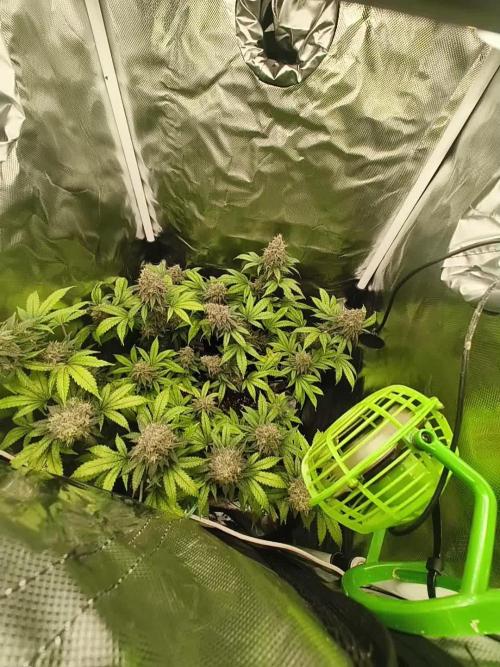
Finally my patience is showing the results I was wanting for. The plant is in full flowering a d the yields are growing everyday day more.
Likes
31
Share
@MxGrow
Follow
Feliz por como van mis gorilas, todos los días hay cambios y cada semana tengo que aumentar el riego, esta semana utilice en total 18 litros, 4.5 litros para cada planta aproximadamente. En los primeros 6 litros uso: ▪️︎4ml de Connoisseur A y B por litro de agua. ▪️︎2ml de Rhino por litro de agua. ▪️︎2ml de Bud Candy por litro de agua. ▪️︎2ml de Carboload por litro de agua. ▪️︎2ml de B-52 por litro de agua. Espero 30 minutos y despues aplico otros 6 litros con los siguientes nutrientes: ▪️︎4ml de Connoisseur A y B por litro de agua. ▪️︎2ml de Nirvana por litro de agua. ▪️︎2ml de Big Bud por litro de agua. ▪️︎2ml de Overdrive por litro de agua. ▪️︎2ml de Voodo Juice por litro de agua. No tengo medidor de EC, por lo tanto trato de que las mediciones en ml sean exactos con una jeringa. ☆ 1 día a la semana riego las plantas con 6 litros de agua sin nutrientes y con un PH en 6.0, hasta el momento no han presentado carencias pero tengo la duda si tienen exceso de nitrógeno por el color verde intenso de las hojas.