Likes
Comments
Share


@Growin_it
Follow
Harvest in two parts to fatten up the lower buds for a week or two. Likely, another good ounce to two of sweet buds.
Didn't quite lollipop, previously, but understand the benefits of the technique, especially if seeking a more standardized harvest in one chop.
Looking forward to the cure and terp retention/development.

Likes
67
Share


@Dunk_Junk
Follow
She only grew 8cm this week. Slowing down the stretch now She's doing well. Nothing else to the report as I'm just letting her do her own thing.
Some of her very lower leaves were quite spotty and discoloured. I pulled maybe 12 off her through the week. Not sure if it's a deficiency. New growth looks nice and healthy though, flowering is going well, trichomes are enlarging this week, she's getting quite frosty already!
Timelapse Sequence:
Blue Dream
Auto Jack
Pineapple Express
*** CBD Compassion ***
BLue Dream
Auto Jack
Pineapple Express
*** CBD Compassion ***


Likes
4
Share


@Mo_Powers
Follow
i have now moved it to its last pot. it was a bit stressful for it and i hope it recovers well. the root formation looked really good. it is now in an autopot system and is being fed with HESI fertiliser.

Likes
17
Share


@EXZELENS
Follow
Bud wet weight : 168,1g of trimmed medium to big sized buds
25,4g of tiny tiny buds/larfs = 193.5 grams of trimmed wet buds.
Details on genetics and smoke report above.
This, as my first grow, is way more than I ever expected it to be. I haven´t had that much fun and enthusiasm in a very very long time.
I can´t even explain the feeling it is to harvest your own cannabis, but I know most of you know what I´m talking about haha.
It was really nice to practice LST, even tho it was SO HARD, ´cause I didn´t had barely any space to work since I used a hard pot and did not fill nearly half the size of it and the walls of the pot were really high. It was even difficult to water without dropping water on the lower buds.
I haven´t learnt much about defoliation tho, I feel I need to study a little more about the phases you should or should not do it.
Also, I discovered thrips are a pain in the ass. I had 2 tough weeks dealing with thrips, but in the end it was alright.
I don´t have any humidity control device, which I intend to buy for the next grows.
Growdiaries was really helpful for me, it kept me motivated everyday (not that I wouldn´t have had it anyways), the Grow Questions are REALLY useful and all the community is awesome. Thanks to all people that helped me here on GD during this first grow!
To conclude it: I am really happy and satisfied with how the grow turned out. They look incredible, it almost feels like I can´t believe it still.
Peace.
UPDATES:
07/10 : The buds are now dry and already in curing jars, one of them with a Boveda 58% humidity pack.
The total grams of the dry buds are: 41.4g (medium to big sized buds)
4.1g (tiny buds) = 45.5 grams!
I´m really happy with the results, I thought it would be around 30g so yeah, that´s a really good surprise!
In 2 weeks I´ll be back to update the smoke report.
Thanks so much for reading! Peace.
09/10 : I managed to fit everything in the same container with some space between them, so now every bud is with the Boveda pack.
14/10: It´s been a week and the smell improved, it still smells a little like hay/plant ( even tho it´s not too dry neither too wet ).
21/10: Now it´s been two weeks and even tho the smell isn´t anymore hay, it´s a lot herbal. I really think the aroma can get better, but the taste is already good enough for me. The smoke report has been done and in case I have something to add, I´ll report here.
Thank you so much for reading! Peace.

Likes
18
Share


@DreamIT
Follow
Sponsored by:
🌴SPLIFF SEEDS🌴-💡VIPARSPECTRA💡-💐GREEN BUZZ LIQUIDS💐-🛠️WEDRYER🛠️
28/7 almost ready to go into bloom. They perform well and grow even better. we will see how they behave at the switch
2/8 it took a few days of absence to discolor the leaves and dry out the soil. Today I will be watering properly with Green buzz nutrients fertilizers before sending them into bloom
__________________________________________
Personal advertising (contains affiliate links)
__________________________________________
🦄 Are you new to the world of cultivation and don't know where to safely buy your seeds?
Fast and anonymous shipping. Check out their hilarious graphics. (no affiliate links)
✅https: //bit.ly/spliffseeds_
__________________________________________
Did you know that Green Buzz Liquids fertilizers are 100% vegan? A complete line of products ready to give the best to each of your plants! Visit the site and see my journals to see how they work 🦄
🤯 And with the code "dreamit" you will immediately receive a 15% discount on your purchases
✅https: //bit.ly/GreenBuzzLiquidsPro
__________________________________________
👀 Are you looking for a good lamp to start with? 👀
🌞Viparspectra has something more than the others, take a look at their site.
⏩ Use "GDVIP" for an extra discount or "DREAMIT3" for an extra 5 %% discount
👀 Search for it on Amazon
✅Amazon USA: https://amzn.to/30xSTVq
✅Amazon Canada: https://amzn.to/38udUVe
✅Viparspectra UE: bit.ly/ViparspectraUE
✅Viparspectra USA: bit.ly/ViparspectraUS
______________________________________________
🌈 Tired of blowing on your weed hoping it dries quickly? Check out the Wedryer website! You will find a well-made accessory that will help your weed dry in just 8-10 days without the annoying risk of finding mold or other annoyances! (no affiliate links)
✅https: //bit.ly/Wedryer_
______________________________________________
📷🥇Follow the best photos on Instagram 🥇📷
https://www.instagram.com/dreamit420/
Backup
https://www.instagram.com/dreamit4200/
🔻🔻Leave a comment with your opinion if you pass by here🔻🔻
🤟🦄💚 Thank you and good growth 💚🦄🤟

Likes
6
Share


@WeedM8
Follow
So beautiful looks its going vey well apart of thats its too hot the heat from the lights if there is no air circulation it gtes very humid and i have to leave the tent open

Likes
12
Share


@Amboss
Follow
2te Woche beginnt.
Bisher läuft es glaube recht gut …
Die kleinen wachsen brav …
Habe mal 2 weitere Nutrients hinzugefügt und Versuche den VPD Wert irgendwie konstant zuhalten 🙈👍
Dank 4 Blumat Classic pro Topf reicht ab und zu bisschen sprühen aus dem Befeuchter… heute das erste mal die kleine Pflanze abgedeckt und ganz leicht von oben die trockene Erde mit den neuen Nutrients zusätzlich befeuchtet.
Mal schauen was sie so bewirken …



Likes
51
Share


@eldruida_lamota
Follow
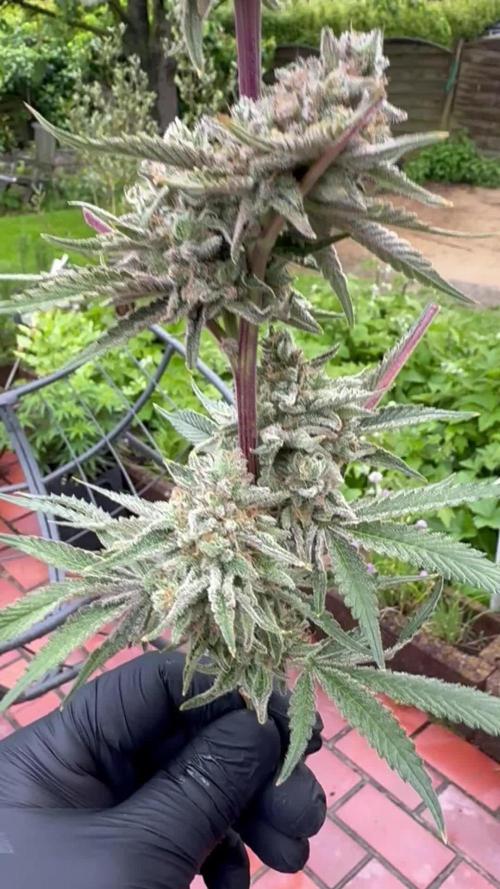
De nuevo familia, os actualizo la siguiente semana de estas maravillas, cookies gelato.
Hubo problemas ambientales, los cuales al romper el ciclo salieron plátanos , pero los pillamos a tiempo rociamos y eliminamos todos los posibles plátanos.
Veremos cómo avanza pero no se abandonará ningún trabajo, hasta el final.
.
La humedad esta al 45% la temperatura está entre 21/25 grados , y como siempre el ph , ya que es de lo más importante,está en 5,8/6,0.
.
AgroBeta:
1 ml x L Flowering black line , vía radicular.
0,2 ml x L Beta shark, vía radicular.
0,3 ml x L Tucán , vía radicular.
0,1 ml x L Betazyme, vía radicular.
0,05 ml x L Gold Joker, vía radicular.
0,2 ml x L Silver, vía radicular.
.
Hasta aquí todo familia 🕸️ , un saludo y buenos humos fumetillas💨💨💨.
Likes
6
Share


@Kifferluemmel
Follow
Umgetopft in 11L Topf - Light Mix. Keine PH Anpassung durchgeführt. Sie genießen die 11L Töpfe - die 6L Töpfe waren nach 7 Tagen vollständig durchwurzelt.

Likes
9
Share


@Chubbs
Follow
These ladies are growing amazing, so good I had to bend the tops and mainline them a little. I had to tie them down to themselves as they're trying to regrow upwards. They're definitely in full flower now and looking amazing besides some crispy edges on the leafs because of the heat. All in all Happy Growing.
Likes
3
Share

@Pompeyblue
Follow
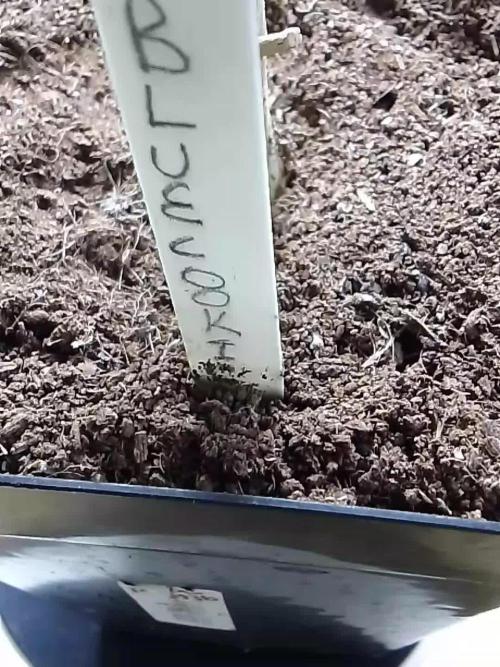
Going good
Got a great vision on the next stage for her but need the branches at the top of the cycle to get bigger then I can work it from there
Likes
7
Share

@NSABND
Follow
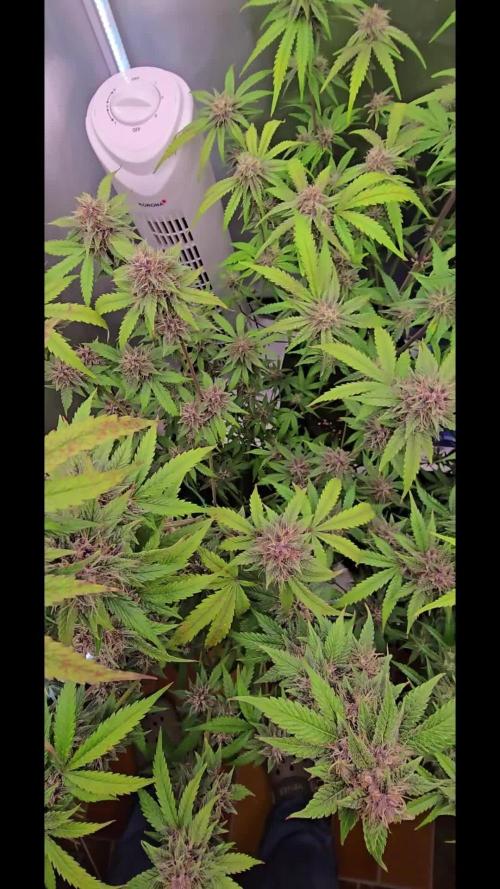
Day 57 😁👌all the queens are ok 🙏
Day 58 the queens got some fertilizer 💪😃👍
Day 59 what should i say... everything seems to fine 😃🙏👍
Day 60 the queens got some fertilizer 💪😃👍
Likes
35
Share


@MadeInGermany
Follow
Info:
Unfortunately, I had to find out that my account is used for fake pages in social media.
I am only active here on growdiaries.
I am not on facebook instagram twitter etc All accounts except this one are fake.
Hey everyone ☺️.
She developed very well 👍.
In the next 10-14 days she will be in the bloom tent :-).
1 g Enhancer Pro l cocos was added.
As always, a cuttings are cut before moving 👍.
Otherwise everything was cleaned and checked.
Have fun and stay healthy 🙏🏻
You can buy this Strain at :
https://www.exoticseed.eu/
Type:
Herz Og
☝️🏼
Genetics:
Larry OG X Kosher Kush
Indica 60 % / Sativa 40 %
👍
Vega lamp:
2 x Todogrow Led
Quantum Board 100 W
💡
Bloom Lamp :
2 x Todogrow Led
Cxb 3590 COB 3500 K 205W
💡💡☝️🏼
Soil :
Canna Coco Professional +
☝️🏼
Fertilizer:
Green House Powder Feeding
☝️🏼🌱
Water:
Osmosis water mixed with normal water (24 hours stale that the chlorine evaporates) to 0.2 EC. Add Cal / Mag to 0.4 Ec Ph with Organic Ph - to 5.5 - 5.8 .

Likes
7
Share


@Big0zGrower420
Follow
Everything is coming along nicely, getting some bud growth and looking better each week. I will probably add another top dressing here this week and let them do their thing.
Processing
Likes
4
Share


@LumberjackBuds
Follow
These guys seem to have some stunted growth from being in that shitty rock wool dish setup I had but they are making up for it now that they are in the air pots. I transplanted them into sunshine #4 because my other plants have had problems with N tox in coco loco, the only other soil mix I have...probably won’t ever be using fox farm soil again. Too expensive for what it is and it’s a pain in the ass dealing with nute probs.
Day 8: into the new grow tent tomorrow

Likes
34
Share


@AshBrand
Follow
Welcome!
In this grow we have:
2x Platinum Wedding Crasher
2x Gelato 41
1x Sour OG
2x Lemon Kush
Germination/Rooting - 14 Days
9/17/21 - The clones look good in solo cups of soil. We will transplant into 5 gallon pots in the grow tent after they fully root in the cups.
9/18/21 - Looks like the clones are doing well in soil! We are so excited to grow these out. The clones came from a very highly respected grower.
9/19/21 - No ugly growth. All clones look amazing! We upgraded the light to a Mars TSW 2000.
9/20/21 - They are looking good and most likely rooting throughout the cups. I’ll give them a little bit of water today. I want the roots to go looking for the water so I’ve kept them slightly dry.
9/21/21 - They look happy. I will let them just do their thing… We are waiting on our Mars TSW 2000 light to show up anyways. No roots visible from the drainage holes in the cups.
9/22/21 - Looking really healthy and growing nicely. I’m excited for them to fully root in the cups so we can transplant them into the tent. The Mars TSW 2000 should be here in the next few days.
9/23/21 - Looking so good! We can’t wait to get these under the Mars TSW 2000 in the tent. They smell and look great.
9/24/21 - The clones look really good except for one Sour OG. It wilted and died, roots did not take unfortunately. I have a Lemon Kush started from seed we will grow in place of the dead Sour OG. Today we got our Mars Hydro TSW 2000 light. We will be hanging it and updating with pics/videos.
9/25/21 - They look amazing. Lots of growth while rooting.
9/26/21 - So far so good. Watering when the cups get light in weight. In just a few days we will be transplanting. See the video for today, we hung the Mars Hydro TSW 2000!
9/27/21 - Watered them yesterday, they look healthy. The Lemon Kush isn’t a clone, it is from seed. It’s the smallest girl but it’ll perk up quickly.
9/28/21 - Transplant day!! The clones are looking really good and it’s time to transplant into the 4x4 under that Mars Hydro TSW 2000 at 50% intensity. Check out the pictures and videos from today!

Likes
Comments
Share


@JayGrows96
Follow
Plants are requiring more and more of a feed to put on development. I tried to slightly lower the N balances but some of the plants showed deficiency. Raised the N back up and deficiency went away.
Plants are fed almost daily, no watering in between. pH ranges from 5.7-6.5