


Likes
Comments
Share


@AkagamiWP
Follow
all the girls are doing well. I made a mistake when topping one SLH but ... not that bad :D.

Likes
5
Share

@Bear_Grows_Green
Follow
02/19 start of new week.
02/20 got 7 gallons of water
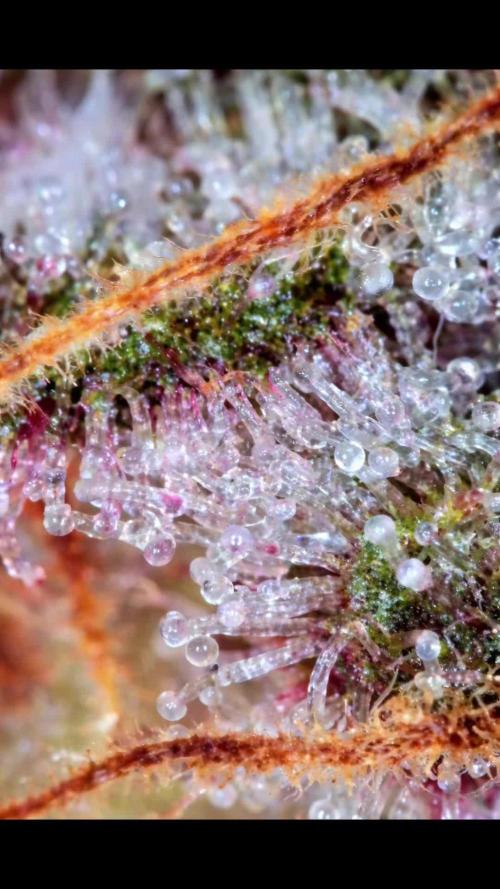
02/21 harvested a branch off each at 45 days flower
01/23 watered with 10.5 gallons 3.5 gallons of goodies
Processing
Likes
27
Share


@Silverback_Guerilla
Follow
4/5:
Took 4 cuttings from the shortie
4/12:
All 4 are rooted and growing!
5/1:
Transplanted from 1gallon pots to 5 gallon pots.
5/3:
Decided to grow one of them in my tiny tent and the other 3 will go outdoors.
5/4:
Took 2 of them outdoors under the 270w and sunshine.
5/6:
Trained all of them today and fed some boomerang along with the kelp, molasses, big bloom, and silica. Foliar fed and took the last one outdoors.
The one in the tent is really flourishing!
5/7 - 5/17:
Excellent growth! The supplemental lights are making all the difference.👍
Did some more training on all of them early in the week.
The one in the closet is spreading out nicely and budding up pretty quickly...but what's very cool is that all 4 clones outdoors are flowering?!?!? I sure hope they go ahead and finish rather than starting to revegetate as the days continue to get longer.
Much rain for the past few days, but it let up long enough for me to install another 200w of waterproof 3000k LED lights a couple of feet above them. Very intense lighting, great bang for the buck. So now, I've got 350w of 3000k and 120w of 6500k in the outdoor garden. That's gonna have to do it, as I also am using 1400w in my indoor gardens, plus a/c..bills are getting ridiculous.
5/18 - 5/28:
The clone in the tent is still stacking up really well. I guess the ones outdoors are too, but next to the seedling plants, they seem puny. Many buds though...
Since they decided to flower early, I sprayed them all down with a product that is loaded with hormones and auxins and stuff that's supposed to retard vertical growth and promote branching. It's also supposed to speed arvest time by as much as a week. I hope they can finish before the summer solstice (June 21), otherwise they might try to reveg instead of finishing..
Hopefully it helps keep them from stretching so much that I'll have to supercrop them. Their mamma was a shortie, so they really shouldn't get too tall anyway.
I also foliar fed them several times this week with something called MicroLife Maximum Blooms, Pow! They love the stuff!
5/28 - 5/31:
I did some training on a two of the outdoor clones early in the week between rain showers, and foliar fed with Microlife maximum bloom formula. She was looking a little N deficient, so I assume the dry amendments have petered out. They were dry enough, so I top-fed her with another couple tablespoons of cavern culture and on the 31st. I gave them big bloom, tiger bloom, grow big, beastie bloomz, silica, endoboost, signal, humic acid, liquid kelp/fish emulsion, and liquid molasses. The indoor clone is looking awesome. I fed her heavily on the 30th.
It just feels so strange that I'll be harvesting outdoor photos in June!?!
That's it for week 8-
6/1 - 6/8:
Early in the week I gave them about a half gallon of water with liquid molasses, cal-mag, silica, and beastie bloomz only.
I foliar fed them a couple of times during the week, right at daybreak.
I fed them on Saturday, the 6th..about a gallon each..beastie bloomz, microlife maximum blooms, cal-mag, humic acid, grow big, big bloom, sweet & sticky, and signal.
They are looking very good..buds galore. The indoor clone got the same nutes, but on different days. She's also covered in buds, and they are beginning to fatten up.👍
6/9-7/4:
Busy with other gardens, so not many updates...
Indoor clone got to spend the last 2 weeks of her life in my closet under the quantum boards and UVB. I harvested and washed her buds on 6/28, let her hang dry and weighed and jarred her up on the 4th of July. She came in a 111g of cola and 45g of lower bud with only about 5g of larf. Nice!👍
She smells just like her mommy and has the same uber-dense buds. She was topped, so the buds aren't as mighty as the mamma's, but much more plentiful.👌
Outdoor clones:
I had a massive spider mite attack, and during the same week, I had a grasshopper invasion...I lost a few plants, one of which as a FFT1 clone.
I had just harvested my autos and my indoor clones from the closet, so I moved the remaining two clones in under the quantum boards. I treated them for spider mites several ways for several days and have given them much TLC. Hopefully their buds fatten up some more. They stanky, but they kinda slim...
7/11:
I harvested the last two clones tonight. So sticky!!! I washed them and hung them to dry.

Processing
Likes
80
Share


@RickJames_Mcdank
Follow
Well she is grwoing nice and sweet. The smell is just so amazing. it smells like mixed berries and citrus.
The Plagron nutes are doing so well and she really likes it.
And as you can see its now fall and the fan leafs are turning yellow nicely.
The younger leafs are still green so its a good sign.
I am guessing its not a problem this supossed to happend during flower stage.
I don't take them off I just wait till they fall on its own. Its important because the leafs still contain sugar reserves.
Trichomes are being porduced allot and nice.
I am still trying to get the purple color but let see and wait.
So far so good.😀

Likes
Comments
Share



Likes
15
Share


@Viccrazyweed
Follow
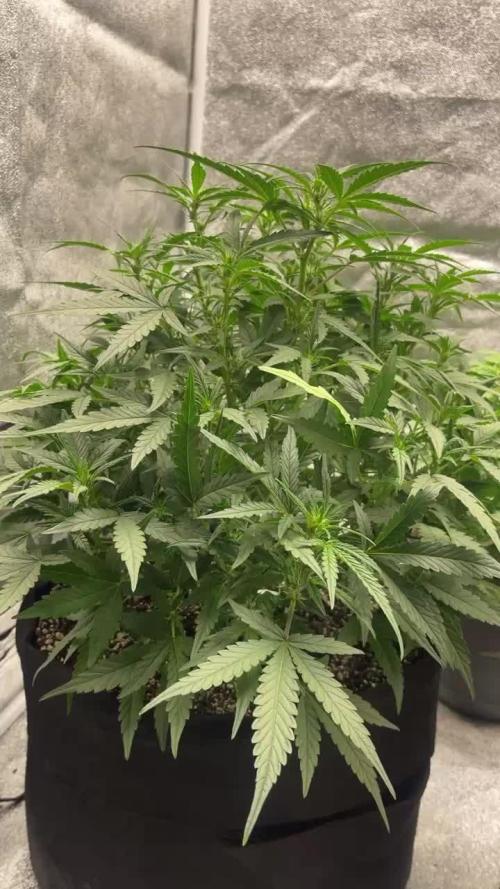
Guys, i don’t know where is going to take me but this trip is being awesome, as i wanted, the critikal plant has grown in spiral and she is developing a lot of little new leaves, growing gorgeous but im a newbie, i don’t not if its fem or not until flowering I guess (?)
Cookies was growing superslow and i don’t know why i topped it but she is recovering now, might not grow because of then injury
I know this “advanced” training methods are gonna make the growing stage last another month at least for sure
I have improved moist levels by spraying them quite a few times daily, tap water with 1ml of propolis 5% every 0.5L and have turned the ph correct with some natural orange juice, a few drops use to be enough
I turn the heather on sometimes and it comes with fan so perf but im worried the most of the time they are with low airflow levels due to the fact i have not a proper space and they are in a corner of my room
Likes
18
Share


@BABS_Babies
Follow
Things are really starting to smell strong and getting fun. Seeing some frosty Trichomes. Excited!


Likes
4
Share


@Big0zGrower420
Follow
Day 49!
Starting to give her just plain water for 2 weeks of flushing. Getting really excited to harvest and then get going on another grow.
See you next week.
Likes
Comments
Share

@HOME_GROWBOOK
Follow
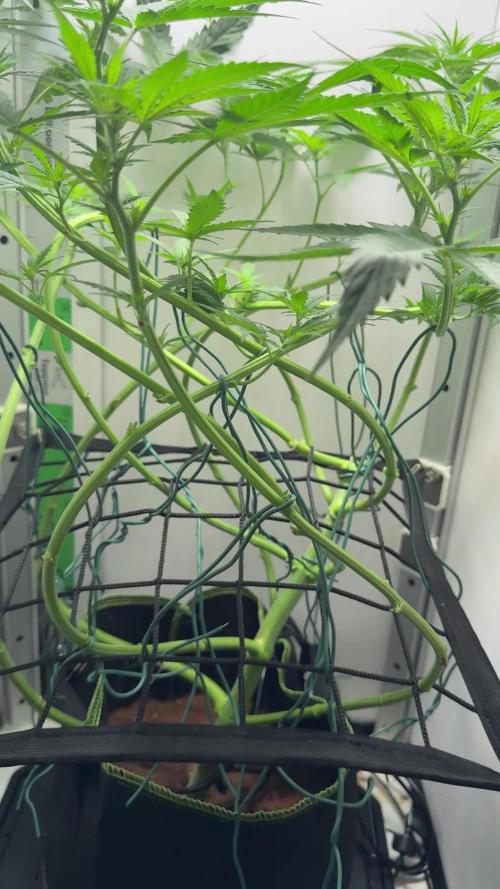
Die Pflanzen haben ihren Stretch voll eingesetzt – das Höhenwachstum ist deutlich sichtbar.
• Wuchs: Die Triebe sind stark nach oben geschossen und beginnen, die Blütepositionen zu bilden. Das Netz hilft dabei, die Struktur offen und gleichmäßig zu halten.
• Farbe: Leuchtend grünes, gesundes Laub ohne Anzeichen von Stress oder Mangel.
• Form & Struktur: Gleichmäßiger Aufbau mit stabilen Haupttrieben – ideale Vorbereitung auf die Blüte.
• Gesamtzustand: Vital, stark und optimal im Übergang zwischen Veg- und Flower-Phase.


Likes
6
Share

@India_Calcoen
Follow
27-08-2026
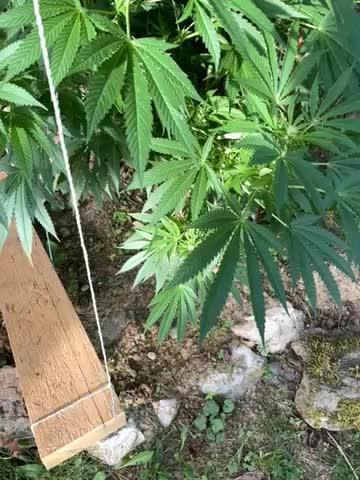
Somehow it’s hard for me to keep updating the progress of my cannabisplants. I wanted to do it weekly, but it just doesn’t happen. Our fruits and vegetables need to be harvested and our animals want a lot of attention too! I’m so happy growing with Biotabs, I hardly have to do anything and if I don’t have time, my plants are growing anyway.
In week 16 (first signs of pre-flowering) all the plants got watered with 5 litres of water with 20 ml of Bio PK 5-8 and in week 20 again, 20 ml of Bio PK 5-8 diluted in 5 litres of water. This is the third time I had to water the plants manually. I just love this way of growing. Perfect for someone with a chronic illness.
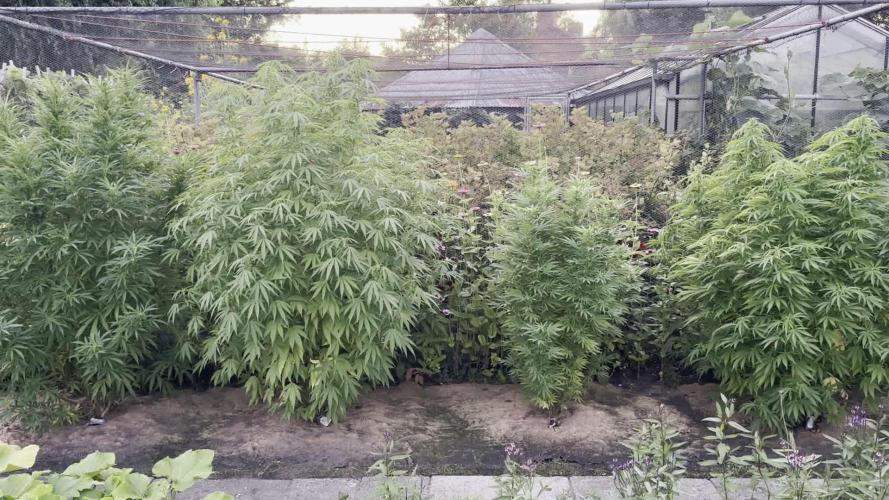
Flowering started earlier than last year. I’m so happy, maybe these Early Versions will finish in time, before the autumn rains are coming.
The plants have a nice green colour. I still need to ‘shave the legs’ and cut some branches and leaves away at the inside of the plant. Especially now when it rains sometimes I want them to dry quickly. I already removed two baskets of leaves and small branches from NL x Big Bud and Burger Kush.
GMO Fast isn’t flowering yet. She is only showing a few pre-flower hairs. I think she won’t make it in time… GMO Fast also had some issues during a summer storm with heavy winds and rain. One of her main branches came down. It was still attached to the centre of the plant, but it began to rot and I had to cut it out. I lost 25% of this plant. It’s my own fault. She is over 2,5 metres now and her height makes her susceptible for wind. It makes me think about securing all my plants with long bamboo-poles or sticks. If the flowers start growing, all those branches will get heavy eventually. Maybe it’s time to prioritize the cannabisplants at this moment…

Likes
25
Share


@TickleToast
Follow
One gal had a satellite branch shoot up to 67inches, so I opted for some HST to keep her from touching the LEDs, the next day she was perked back up at the light! Others seem to be fine and done stretching! (one is at about 7'' from lamp - if she looks like she's starting to burn I'll train her down as well)
No more silica!
Runt has a couple satellite branches at 40'' - stretched more than I expected her to!
~~~~~~~~~~
Questions & Feedback are welcomed, feel free to message me!
Thanks for stopping by growmies! 🤙🤙🤙🙏🙏🙏
Likes
6
Share


@SleepHuntMadScience
Follow
Got through the wet and grey of the last week, should see some sun in the next few days to help finish the plant off.
Quite aesthetic with gdp colours and whit widow scent coming on strong.
Lookin forward to havest in the next week or two. Thanks to everyone who answered my grow question last week


Likes
6
Share


@Frosty905budz
Follow
So i decide to make the switch to green plaent nutrients...
Was not to happy with my advanced nutrients,
Having wired stuff happening in my resivor again .. not sure if a bottle spoiled or what but not older then a year ... anyways got the Gp3 going .. Flushed plants and now feeding gp3 feed/water ... wow these buds looked iced AF ..
Also my new light is killing it !! Noticed leaf tips little crispy so running lightb@80-90% power ...
Let me tell you these buds got way more dense then they would have been with the mars lights and so early still ...
The colours and aroma is really starting to stand out ..
Also clones are super healthy..
Put them under my old ts600 mars and they are really taking off... will keep 3 to mother in about 3 weeks im hoping, the rest will be given to good homes

Likes
19
Share


@HeavyHead
Follow
Great week. Really starting to take off in growth. Onto full strength nutrients and going full power on the lights now :p
Going to start my LST soon possibly this week or early next week.
Will add more pictures and edit as the week goes :)

Likes
16
Share


@morganfreeman420
Follow
Creo que el filtro esta roto o dañado ya que el extractor larga todo hacia afuera todo el olor de la tienda


Likes
7
Share


@MediciGrade
Follow
January 31st - Day 120 from seed. I flushed twice with flawless finish over the past 8 days, and harvest day finally arrived for this freak show CBD Cheese Pheno. When I started this grow I had no idea a phenotype from an auto-flower strain could take 120 days from start to finish. That said I'm not complaining about the extra time because she turned out beautifully. Massive, dense, sticky, and aromatic flowers. Thanks for following along. I will update final details once dried. Stay tuned!
