


Likes
Comments
Share


@sunshinegroww
Follow
So this lady is almost ready quite few of the trichomes are starting to be milky ,so another 1-2 weeks and will start flushing smells rather gassy and stacking up nicely now 💪💪💪


Likes
10
Share


@teabee
Follow
Overall pretty happy with the grow, had a little mold issues but humidity was way to high for a while.

Likes
14
Share


@eldruida_lamota
Follow
Que pasa familia, vamos con la cosecha de estas Gorilla Zkittlez Auto de FastBuds.
Por dónde empezar, es una autofloreciente que es normalita de cultivar, tiene un periodo corto de crecimiento y de floración igual no es largo, o igual tendría que haberla dejado alguna semana más no entiendo bien.
En cuanto a la alimentación , pues la aplique una vez por semana y a sido suficiente, se a comportado bien en interior, la flor pues no es muy prieta porque no deja de ser una autofloreciente, pero es una flor que va repleta de tricomas.
El periodo de luz pues de principio a fin a 18 horas, fue suficiente para completar el ciclo de vida como esperaba.
Agrobeta:
https://www.agrobeta.com/agrobetatiendaonline/36-abonos-canamo
Hasta aquí todo, Buenos humos 💨💨💨

Likes
199
Share


@OrganicNature420
Follow
Germination date 🌰 14/03/2021
Day 63 🌱 16/05/2021
Strain 🍁
Peyote wi-fi, Seedsman
Nutrients 💉
Advanced nutrients
PH perfect sensi grow A+B (veg)
PH perfect sensi bloom A+b (flower)
B-52 (through veg until week2 of flower)
Voodoo juice (🖕🏻)
Tarantula (🖕🏻)
Piranha (🖕🏻)
Sensizym (all the way through)
Rhino skin (🖕🏻) add first leave for an hour
Big bud coco (week2+ of flower
Bud xfactor (🖕🏻)
Nirvana (🖕🏻)
Bud igniter (first 2weeks of flower)
Overdrive (last 2weeks of flower)
Flawless finish (flush week)
RockHoldings Rockresinator(week2+ of flower)
Vitalink calmag
Set Up
⛺ amazon special 1.2m x1.2m
💡 spiderfarmer sf4000
📤📥 AC infinity 6inch
💧 10lt dehumidifier
Notes🗒️✏️
Definitely the best shes looked and all ready for her to pack on some weight. Running well behind the purple matcha in looks so definitely going to be running this a couple of extra weeks longer which wasnt the plan 🙈 when ever does it work out 🤣
Thanks for all the ❤️
Happy growing everyone 🌱


Likes
Comments
Share

@DogDoctorOfficial
Follow
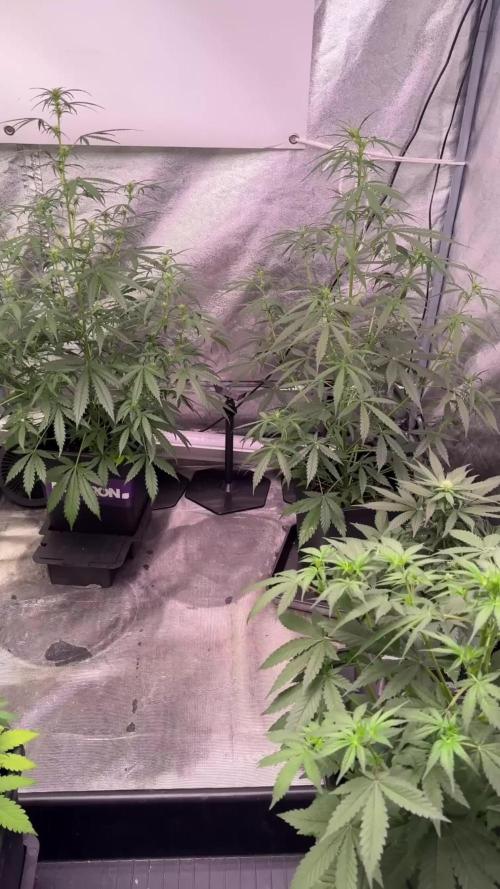
🌿 Frosted Guava Auto by Zamnesia | Pheno B | Week 5 (Early Flower)
🌱 A Different Personality, the Same Strong Foundation
One of the reasons I enjoy phenotype hunts so much is that even when two plants share exactly the same genetics, environment, and care, they still find their own way to express themselves.
Frosted Guava Pheno B is proving exactly that.
Growing alongside her sister inside the 8×8 Adventure, under the same 12/12 From Seed experiment, she has chosen a slightly different path. While Pheno A developed into a broader, more evenly spread canopy, this lady has remained a little more compact and slightly shorter, standing at 88 cm, with a beautiful upright structure that feels elegant and incredibly well organized.
Different personality.
Same healthy foundation.
And she’s looking absolutely fantastic.
⸻
🌸 Week 5 – A Beautiful Transition into Flower
The flowering stretch is beginning to slow, and the plant is now directing more of her energy toward what really matters—building flowers.
Despite being the smaller sister, there is nothing small about her health or vigor.
She has developed strong branching, excellent stem thickness, and a wonderfully open architecture that allows light to travel throughout the entire plant.
Looking at her from the side, every branch seems to have found its own space.
Looking from above, the canopy remains balanced, symmetrical, and full of promising flowering sites.
She carries herself with confidence.
⸻
🌿 Training & Structure
Like the rest of this project, the focus has never been on forcing the plant into shape.
Instead, careful Low Stress Training, gentle branch positioning, and occasional leaf tucking have allowed her natural structure to reveal itself.
This phenotype responded beautifully.
Rather than becoming extremely wide, she developed a more vertical framework while still maintaining excellent branch spacing and airflow.
Every flowering site now enjoys plenty of light exposure, and the open interior should help support healthy flower development throughout the coming weeks.
Sometimes the best training is simply allowing the plant to guide you.
⸻
? The Arrival of Flower
This week, flowering is no longer something that’s coming.
It’s here.
Fresh white pistils now decorate nearly every growing tip, transforming what were once simple shoots into the first true bud sites.
Those bright white hairs always bring a special feeling.
They’re the first real promise of what’s ahead.
The tops are beginning to stack, secondary branches are joining the party, and little by little, the architecture of the final harvest is starting to reveal itself.
It’s one of the most exciting moments of every grow.
⸻
🍃 Plant Health
Health remains exceptional across the entire plant.
The leaves display a rich, healthy green, with beautiful turgor and excellent posture from top to bottom.
The stems continue strengthening, new growth remains vibrant, and the overall appearance is one of complete balance.
She may be slightly more compact than her sister, but she radiates exactly the same vitality.
Every photo reflects a plant that is comfortable, thriving, and fully focused on flowering.
⸻
💧 Nutrition & Hand Watering
Unlike her sister, this Frosted Guava isn’t connected to the AutoPot system.
She has been hand-watered throughout the entire grow, receiving exactly the same nutrient solution and environmental conditions while allowing a little more hands-on interaction during irrigation.
Current feeding:
• Terra Grow — 1.8 ml/L
• Terra Bloom — 1.9 ml/L
• Pure Zym — 1 ml/L
• Sugar Royal — 1 ml/L
• Power Roots — 1 ml/L
• Power Buds — 1 ml/L
Maintaining:
* EC: 1.88 mS/cm
* pH: 6.05
Even with different irrigation methods, she’s demonstrating just how consistent the Plagron program can be when paired with careful observation and stable environmental conditions.
Different watering style.
Same excellent results.
⸻
🌡️ Environment
This entire project continues benefiting from an incredibly stable growing environment.
Current conditions:
* Day temperature: 31.1°C
* Night temperature: 25°C
* Relative humidity: 72%
* Solution temperature: 21°C
* Root zone temperature: 21°C
* CO₂: approximately 639 ppm
Every phenotype inside the room experiences the same carefully managed climate, allowing their unique genetic differences—not environmental inconsistencies—to tell the story.
That consistency is becoming more evident with every passing week.
⸻
👀 Looking Ahead
The stretch is nearly complete, and now the real excitement begins.
Over the coming weeks, I expect these fresh pistils to multiply rapidly as each flowering site begins stacking into properly formed buds.
Her slightly more compact stature could become a real advantage later in flower, potentially producing dense, well-supported colas throughout the canopy.
The structure is there.
The health is there.
Now it’s time to let the flowers take over.
⸻
🙏 Final Thoughts
Frosted Guava Pheno B is a wonderful reminder that every plant deserves to be appreciated for what it naturally wants to become.
She isn’t trying to compete with her sister.
She simply expresses the same genetics in her own unique way.
A little shorter.
A little more compact.
Just as healthy.
Just as beautiful.
Watching both Frosted Guava phenotypes develop side by side under identical conditions continues to be one of the most fascinating parts of this entire 8×8 Adventure. It’s these subtle differences that make every grow, every phenotype, and every harvest its own unique story.
A huge thank you to Zamnesia for the opportunity to explore these incredible genetics, Plagron for consistently outstanding nutrition, Future of Grow for the amazing lighting, TrolMaster for keeping the environment perfectly controlled, and to everyone following, commenting, and supporting this journey here on GrowDiaries.
Your encouragement makes every weekly update even more enjoyable to create.
Until next week…
Growers Love and happy growing! 🌱💚

Likes
17
Share

@Chucky324
Follow
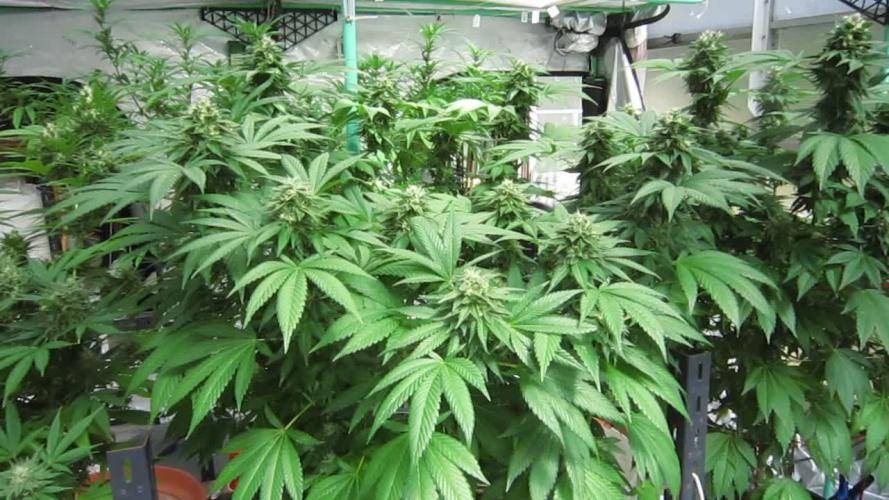
Hello This is the end of week 7 and the beginning of week 8 of flowering.
This plant has got a few spots of White Powdery Mildew - WPM -
See the bottom pics - I found this a couple of years ago... and it works.
So I will probably go 1 more week of flowering and 1 week of flushing then harvest.
I think I'll try my Oreck air cleaner in here at nights.
The greenhouse is open through the day, but closed up at night, That is when I'll use it.
OK Be Cool.
Chuck.
Likes
59
Share


@Schneidersitz
Follow
Der Herbst ist da! Wie wunderschön sich die Blätter zum Ende der BW7 färben. Traumhaft. Sie riecht köstlich nach Mandarine, aber auch etwas nach Kuchen. Sie reift unheimlich schnell aus. Lange dauert es nicht mehr. Die Trichome sind überwiegend milchig.
Likes
15
Share


@High_flying_scotsman
Follow
Over all an amazing grow from day one,
Had alot of problems through out the grow but with the help of fellow members of gd I managed to keep her going until the end,
Harvest her on day 65 was delighted with the colours and smell of the buds, hang dried in the tent for 5 days, then put in a sealed jar with a humidity pack.
I will definetly be growing this strain again but will have a browse through other diaries and see if another strain catches my eye😁
Thank you for all for all the help and support through out✌️🏻😎
Likes
18
Share


@Jays_Not_Here_Man
Follow
Moving along, no issues. Bring them outside around 10 am and back in around 8pm to put back under the blurples. Starting the early veg doses of nutrients with each feeding. I’m keeping the soil pretty dry in between watering.
Likes
99
Share


@TheFoxFarmer
Follow
Thanks once again to RQS for sending me this girl. She's not the most fruity smoke, but more of a pine with a unique tropical/banana peel to it. A nice strain for the cannasseur, and one I'm really enjoying, especially for my back. Thank you to everyone who follows, likes, comments and supports in any way. In means a lot and keeps the passion to grow and continue uploading content on here and IG.
Because I have 4 seperate plants/strains in one tent, under one light, I've had to calculate these by dividing the conditions by 4 (4 plants in total sharing same conditions). This is the fairest and only way to work it out on average as a full tent.
Happy growing! 🐺
Likes
5
Share


@GG4_in_COCO
Follow
Not a whole lot been going on, temps have still been a a battle the last week or so, kept them under control as much as I can, but the girls are coming along

Likes
19
Share


@growbville
Follow
Last week I fought some yellowing of the leaves. Did some small adjustments on PH to keep it in the 5.6 range. Seemed to stop it from progressing.
For Week 3 Veg I topped the plants. I plan to flip the lights at the end of week 3 and move into flower.
Day 15
I continued to have yellowing leaves even though I had everything looking right. (Added Pic). I decided to look into the PH to see if I was having issues with it. I have a meter in the water 100% of the time taking a reading every 1 sec. It all looked right. But I decided to Calibrate it in 4,7,10 solutions. Found out that my meter was off. So new to the check list is to calibrate the meter before each grow.
I was thinking my PH was High, when in reality it was low. put in some PH up to get it back to 5.5 and over the last 16 hours things look pretty good. Leaves look darker.
Day 17
Things are looking good. Leaves are getting darker and new growth coming in.
Day 18
Turned room temp down to 73F from 76F. Fearing it is warming up my res tank too much.
Day 19
Starting to get yellowing again. checked everything and can't find a good reason for it. Did notice some cloudiness in my res tank. Added 2 ML/Gal of peroxide. have Hydroguard on the way to help. I'll be adding more fans this weekend. I have light air movement currently.
Also found a few spider mites and sprayed Greencleaner to all plants.
Current environment settings:
Room Temp 72.74 F
Room Humidity 63.63% (After spraying, Trending down).
Room CO2 589PPM
Tank PH 5.70
Tank PPM (500 Scale) 953
Tank Temp 74.05 F
Day 20
Recalibrated my EC probe just to be sure it was also accurate. wasn't off by much.
Dialed back my flooding to every 5 hours to encourage Rooting. <-- Strong roots = strong Plants
Sprayed for mites
Likes
3
Share

@Organic473
Follow
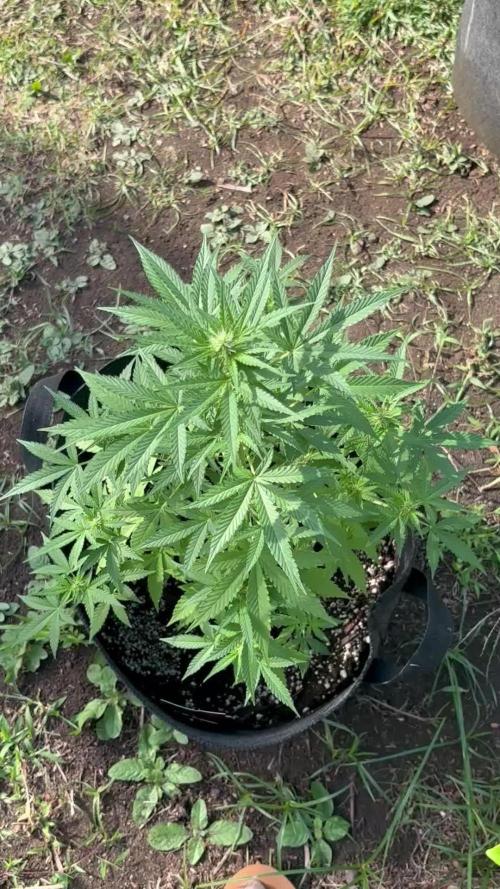
Bud sites everywhere from this girl. This girl gets little attention just water and fertilizer and she is performing.
Likes
24
Share


@Mathew
Follow
I feel like she's doing great, loving this batch of living soil. Still a bit confused on how watering at a ph of 5.3 is being buffered by the soil up to a runoff ph of 8. Not going to worry about it, she looks great and smells great and it's day 29-30 since flipped. The soil has her now.

Likes
14
Share


@LokalGrenz
Follow
The Amnesia haze 2 is turning light green yellowish some told me it could be deficiency or it could be just flowering taking energy from the leaves but I’m not sure I used Gaia green bloom recently thinking it would help I’m going to too water that haze from here out the other have and sour I’m going to continue to bottom feed
I took some trichome pics I don’t think there ready yet but I think I’m getting close to the date I feel the the amnesia haze 2 is going to hit 90+ days tho kind of hope not cause the other haze and
sour are probably going be done sooner I want to fry them all at the same time
March 7th I think the haze #2 and Sour d is ready but the other Haze is not I’m pretty sure I have another week pre maybe even two for it to be near ready I need the tent to harvest and dry what’s ready I’m going try leave the ready ones in for another week in hope it doesn’t mess them up

Likes
26
Share


@Snacks_for_Argus
Follow
Late to update this week. Was out of town and finally I found some time to update.
I started giving them a healthy dose of KoolBloom to start finish this grow off. Temperature is getting higher and I wish I started these girls 2 weeks earlier, but hindsight is 420.
I think these should be ready by week 9, so i’ll be looking at those trichomes at this stage of the grow. I like mine cloudy. What do you all prefer?


Likes
62
Share


@Santica_Garden
Follow
This is how things are looking for the Cheese, going really well, just need to keep on top of things and everything should go smoothly! I have uploaded a video for you guys with all the information you need 👍🏾🌱💚


